The Bat Segudo Show: Allegra Goodman

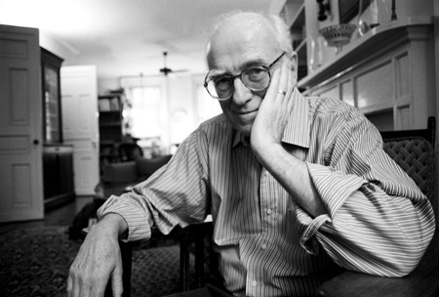
Allegra Goodman appeared on The Bat Segundo Show #355. She is most recently the author of The Cookbook Collector.

Condition of Mr. Segundo: Confusing cookbooks with novels.

Author: Allegra Goodman

Subjects Discussed: [List forthcoming]

EXCERPT FROM SHOW:

Correspondent: Jonathan’s dialogue is so reflective of Sergey Brin. I mean, he says things like “Introduce me. I’m serious.” Very Star Trek-like in his dialogue.

Goodman: Actually, I’m glad you raised that. Because in terms of research into the dot commers, I did not go to libraries obviously and do that kind of research. You can’t research them like you would a group of rare cookbooks. But my research consisted of listening to the way they talk. I’m very interested in voices. The way somebody like Bill Gates talks. The way somebody like Sergey Brin talks. I’m interested in their militant casualness. They’re very bright. They’re very ambitious. They’re very driven. And they’re very chummy and casual. Like “Let’s all just make this happen.” In a way, anti-intellectual in some ways. In their rhetoric. Not that they aren’t intellectual, a lot of them. And I don’t mean to lump all of them together. But I listened to the rhetoric that they used.

Correspondent: Who did you listen to? Specific tapes or recordings?

Goodman: I was interested in Steve Jobs, Bill Gates, and some of the younger voices that I was reading in interviews in magazines at the time. The way researchers talk. The way techie people talk. The way programmers talk. Not necessarily just the powerful ones. But these are the words that they use. And I was interested actually – you know, Jess and George are very literary. And their dialogue and their banter has a lot of references to books and things like that. People have mentioned this about my book. But there’s a counterweight that people don’t mention. Maybe they don’t hear it because it’s so obvious. It’s like what we hear all the time. It doesn’t stick out. But it’s very not literary. It’s very anti-intellectual. Techie.

Correspondent: Well, Jonathan quibbles with “tenuous” at one point, looking at it like a mystified word. But this is interesting. Because I’m wondering if one of the motivating factors to write this novel is because the 1990s – God, that time was incredible in the way we documented everything about the dot com era. We documented everything about our culture. We wanted to publicize our own vacuity, so to speak. I’m wondering if this made things easier from a novelistic standpoint.

Goodman: Well, it’s really interesting. Because we did document that era and we still do. It’s been so well documented. But what I always thin is, “Well, what can my contribution be as a novelist?” As opposed to being a historian or an economist. Or even a psychologist. A sociologist. People talked about the different syndromes of sudden wealth at the time. There was a tremendous amount of journalism at the time. And after. The aftermath. The postmortems. So what could I contribute as a novelist? And what I contribute is to write about it from the inside rather than the outside. To give an intimate portrait rather than the broad overview. And as I did in Intuition, to talk about motivation. Which journalists are really not allowed to talk about, but novelists get to do.

The Bat Segundo Show #355: Allegra Goodman (Download MP3)
This text will be replaced

The Bat Segundo Show: Prince of Broadway & Adam Langer II

Sean Baker, Darren Dean, and Adam Langer all appeared on The Bat Segundo Show #354.

Sean Baker is the director and co-writer (among other things) of Prince of Broadway. Darren Dean is the producer and co-writer of that same film.

Adam Langer is most recently the author of Thieves of Manhattan. He previously appeared on The Bat Segundo Show #175.

Condition of Mr. Segundo: Searching for princes and publishing insiders.

Guests: Sean Baker and Darren Dean, and Adam Langer

Subjects Discussed: [List forthcoming]

EXCERPTS FROM SHOW:

Correspondent: Because this was a low-budget operation, I have to say that there had to be at least one moment where it was guerrilla shooting.

Baker: Oh yeah.

Correspondent: Could you talk about this? I mean, how much of this was sneaked….

Baker: Do you want to talk about it?

Correspondent: Can you talk about it?

Baker: I don’t know if we can talk about this.

Dean: (laughs)

Correspondent: You can hint at it.

Baker: The fight scene.

Dean: Yeah, we can talk about it.

Baker: I think so.

Dean: We had permits for everything. Which fight scene? The first fight scene or the second fight scene?

Baker: No, the second fight scene.

Dean: We had permits for everything. And we just ran up against the wall. And at the very, very end, we were like, “Oh my god! We forgot this fight scene!”

Baker: Yeah.

Dean: But we shot in the parking lot. We got up that day and we said, “Well, we need to shoot this scene.” Our permits were gone.

Baker: We ran out of insurance that morning.

Correspondent: Wow.

Dean: Everything was gone. This was the last scene we had to shoot or one of the last scenes we had to shoot. And we got up. We went to Prince. And we said, “Here’s $10. Or $15. For each guy you can find. Tell them we need them for twenty minutes. There’s going to be a fight. And meet us at that garage over there.” I went over to the gate of the garage, talked to the guy who was working the garage. I gave him twenty bucks. I said, “We’re going to be here shooting for fifteen minutes and then we’re out.” Shot the scene and literally took off. And that was it.

Baker: That was the one point where we just had to resort to that. Because we were running out of money. We ran out of insurance. And to get the film completed, it took those drastic measures.

* * *

Correspondent: John McNally at the San Francisco Chronicle called you a “publishing insider.”

Langer: Oh yeah.

Correspondent: And I’m wondering why he thought this. This is a book, after all, that has the rather implausible idea of US News & World Report having a books editor. I thought that was rather absurd, I have to say. If you’re a “publishing insider,” that should have been the big tipoff.

Langer: Yeah, I know US News & World Report. But that’s also from the perspective of someone who doesn’t know a hell of a lot about the book industry. The guy who identifies himself as a US News & World Report guy. But publishing insider? I mean, I don’t know. I write books. So I’m inside publishing that way. I’ve never had a job in publishing. I worked as an editor for a book magazine. I don’t know. If you’re a sportswriter, are you inside the sports world? Maybe. I don’t know.

Correspondent: It could very well be that the literary world, or the publishing world, has only so many cliches or is so diaphanous in its subject matter that anyone could, by way of delving into it, could become a publishing insider.

Langer: Yes. Guilty as charged. But I never really thought of myself that way. And I wish I had a few more editorial jobs to give myself a little more streetcred in that regard.

Correspondent: Well, going back to the names of people you brought up, did you have to go through Legal to get permission in house? Was anything considered to be defamatory in any capacity?

Langer: No. Not everything is defamatory in the book necessarily. I mean, I really didn’t want to slag individual people in the book. But at the same time, I wanted it to be taking place in the real publishing world. So I didn’t want anything in there fictional. I mean, if someone’s at a party, I wanted people who would be at these parties intermingling with fictional characters. In the same way I like to talk about how you have Bob Hoskins in Who Framed Roger Rabbit? But you also have Jessica Rabbit running around. So I like the intermingling of cartoonish and reality. But I had no desire or interest in ragging on anybody specific in publishing. And anyone who is libeled in the book is fictional, I would say.

The Bat Segundo Show #354: Prince of Broadway & Adam Langer II (Download MP3)

This text will be replaced

Notice to Readers: Offline for Uncertain Period

I’m typing this in my neighborhood cafe. I just moved and I thought that the broadband transfer would be flawless. It has been anything but. An evil company* by the name of Ace Innovative lied and misrepresented what the true nature of service was in my new neighborhood was. (I will have more on this later. Also, please pardon the lack of contractions. I am typing this on a keyboard where I cannot do apostophres. This probably explains why I sound like Data from Star Trek.) I have also lost my landline number. So I cannot be contacted for a while. What this means is that I am essentially out of commission for the foreseeable future. Bat Segundo is now on hiatus. I cannot respond to email. Content has slowed to a halt. I hope to be back up and running sometime in the next few weeks. And hopefully I will be able to offer reviews of films that I have seen (which have apparently been released) and audio interviews that I have conducted. My apologies to the publicists who were counting upon timed release of said content and the readers and listeners who regularly come here. If you need to get in touch with me, try friends or email (very slow response time).

* — As is often the wont for expanding companies, Ace was wonderful until they decided to grow. It was a company run by Russian geeks. Now it is a company run by closet sociopaths.

9-1-10 UPDATE: I appear to have found alternative broadband service. A small independent company who has been nothing less than polite, professional, and transparent about getting this done. Should be back in about two weeks.

The Bat Segundo Show: Daniele Thompson

Daniele Thompson appeared on The Bat Segundo Show #353. Ms. Thompson is most recently the co-writer and director of Change of Plans — a movie that opens in theaters on August 27, 2010.

Condition of Mr. Segundo: Confusing his code with his plans.

Guest: Daniele Thopmson

Subjects Discussed: [List forthcoming]

EXCERPT FROM SHOW:

Correspondent: I wanted to start off about confinement and physical space. In Jet Lag, you have two characters who are predominantly occupying a hotel room. In Avenue Montaigne, you have a broader physical space with the cultural world. And in this [Change of Plans], you have, of course, the dinner party. Eleven characters. It’s the ultimate locked room mystery of life. So my question to you is whether you pursue this confinement as a way to generate dramatic conflict. Or whether this reflects more a concern with the home truths that come out with this human relationship with physical space.

Thompson: Well, we’re dealing with the question of time and space in all fiction!

Correspondent: Yes!

Thompson: It’s true that it’s a challenge to have eleven people in the same place one night, and then again one night a year after not in the same place. I don’t want to give out all the…(laughs)

Correspondent: Sure. But we’re talking predominantly the first dinner party.

Thompson: Right. It seemed that it was the ideal frame for the original idea for the film. The original idea for the film — my original ideas are usually very tiny. They’re like little seeds. And then we have to work on it for weeks, and sometimes months, to find out whether that seed is going to give out some kind of flower or tree or whatever.

Correspondent: Or transform in this case to a baroque redwood.

Thompson: Exactly. So the original idea was fascinating by the fact that when we meet friends in the evening, our friends and ourselves are not the same people in the afternoon. The afternoon or the day or whatever. Because I thought we all have few choices in life. Waking up in the morning and going to work is not a choice. It’s an obligation. 7:00, 6:00, 8:00 in France is later than in America. You can make a decision of not going out to dinner. You have that choice. You can call in sick. I have a headache. I have a problem. So if you do go out, the politeness — the least thing you can do is bring something of yourself. The more sunny side of yourself. And that’s what people do. And therefore people lie. People pretend. And the lovely thing about it, and this is why it’s kind of an apology. It’s an aspect of life that I think is very important in social life. You believe it in yourself. It makes you feel better. You have a sort of entr’acte. An intermission in your own life where you have laughed and told funny jokes, and pretended that everything is going well with your couple and your children and your work. And I thought it was a very funny idea to make the audience aware of what these people’s lives were really going on in the afternoon and then see what happens at night.

The Bat Segundo Show #353: Daniele Thompson (Download MP3)

This text will be replaced

Jonathan Franzen vs. Richard Stark: Which Writer Really “Knows” the World?

Sam Tanenhaus: “Once again Franzen has fashioned a capacious but intricately ordered narrative that in its majestic sweep seems to gather up every fresh datum of our shared millennial life. Franzen knows that college freshmen are today called ‘first years,’ like tender shoots in an overplanted garden; that a high-minded mom, however ruthless in her judgments of her neighbors’ ethical lapses, will condemn them with no epithet harsher than ‘weird’; that reckless drivers who barrel across lanes are ‘almost always youngish men for whom the use of blinkers was apparently an affront to their masculinity.'”

Here’s a passage from Richard Stark’s The Outfit:

All the money came to the Novelty Amusement Corporation. It started as small change, here and there throughout the city, and it all funneled into one central office, all the money bet every day on the numbers.

Take one dime. A lady goes into a magazine store and tells the man at the counter she wants to put ten cents on 734. If 734 hits she wins sixty dollars. The odds are 999 to one, but the pay-off is 600 to one. The magazine store owner writes 734 and 10¢ under it on two slips of paper. He gives the women one slip; he puts the other in a cigar box under the counter. He puts the dime into the cash register, but he rings No Sale. At three o’clock, his wife takes over at the counter while he takes the cigar box in back and adds up the amounts on all the slips. The amount is $18.60. He puts all the slips in an envelope and goes out to the cash register and from it he takes a ten dollar bill, a five, three ones, two quarters, and the dime. He puts this cash in the envelope with the slips. He places the envelope inside a science fiction magazine — on Wednesdays, it’s a science fiction magazine — and puts the magazine under the counter.

At three-thirty, the collector comes. The collector is a plump young man with a smiling face, a struggling writer making a few dollars while waiting to be discovered by Darryl Zanuck or Bennett Cerf. He drives up in a seven-year-old Plymouth that belongs to the local numbers organization and which he is allowed to drive only while making collections. He parks in front of the magazine store, goes inside, and asks for a copy of a particular science fiction magazine. The owner gives him the magazine and tells him that will be $1.86, but that’s what the young man hands over with no protest.

The young man then carries the magazine out to the car. He sits behind the wheel, takes the envelope from the magazine, puts it in a briefcase which is on the seat beside him. He tosses the magazine onto the back seat with seven other discarded magazines and taking a small notebook from his breast pocket, he writes in it after several other entries: “MPL 1.86.” Then he puts the notebook and pencil away and drives on to his next stop.

All in all, he buys fifteen magazines, then drives on to the Kenilworth Building and leaves the car in the lot next door. He carries the briefcase up to the seventh floor and enters the offices of the Novelty Amusement Corporation. He smiles at the receptionist, who never gives him a tumble, and goes into the second door on the right, where a sallow man with a cigarette dangling from his lips nods bleakly. The young man puts briefcase and notebook on the desk, and sits down to wait.

The sallow man has an adding machine on his desk. He opens the notebook and adds the figures for the day, coming up with $32.31, which should be ten percent of the day’s take. He then adds up the prices on the policy slips, and gets $323.10, which checks out. He finally adds together the actual money from all the envelopes, once again arrives at $323.10, and is satisfied. Out of this money, he gives the young man $32.31, which is what the young man paid for the magazines. In addition, he gives him $16.15, which is one-half percent of the day’s take from his area — his cut for making the collections. He averages $15 a day, for an hour’s work a day. Well pleased, the young man goes home to his cold typewriter.

The sallow man now takes out a ledger and enters it in the amount of, and the number of, each bet according to the exact location where each bet was made. He adds his figures again to check his work and gets the correct total. By then, another collector has come in. The sallow man is one of six men at Novelty Amusement who each take in the receipts from five collectors. They work at this approximately from four until six o’clock. Each of them clears about $1,500 a day — resulting in a grand total of about $9,000 a day for the entire operation.

Ten-and-a-half percent of this money has already been paid out. The receivers each get one percent. Additional office salaries, rent, utilities, and so on eat up about 3 1/2 percent more. When the sallow man stuffs the day’s proceeds into a canvas sack and carries it back to the room marked “Bookkeeping,” there’s about 85 percent of it left. On an average day, this leaves about $7,700. Ten percent more is deducted almost immediately and put into envelopes which are delivered to law officers and other local authorities. Twenty-five percent is retained by the local organization and split among its chief personnel; the remaining 50 percent is shipped weekly to Chicago — the national organization’s piece of the pie. In an average six-day week, this half of the pie comes to better than $25,000. Each day’s cut is put in the safe in the bookkeeping room, and, on Saturday nights, two armed men carry the cash in a briefcase to Chicago by plane. For security, one of the armed men is from the local organization and one is from the national organization.

On this Saturday, there was $27,549 earmarked for Chicago, in the safe. In the addition there was the $20,000 kept as a cash reserve — on the unlikely chance that, someday, there might be a run on a winning number, or for additional greasing when and if necessary, or for whatever unforeseeable emergency might arise. And further, there was $13,774,50, in the safe, which represents the week’s 25 percent cut for the local organization to be split on Monday. The total in the safe was $61,323.50. Including the dime.

Here’s a passage from Jonathan Franzen’s Freedom:

The most difficult problem he’d had to solve for the Trust had been what to do with the two hundred or so families, most of them very poor, who owned houses or trailers on small or smallish parcels of land within the Warbler Park’s proposed boundaries. Some of the men still worked in the coal industry, either underground or as drivers, but most were out of a job and passed their time with guns and internal-combustion engines, supplementing their families’ diets with game shot deeper in the hills and carried out on ATVs. Walter had moved quickly to buy out as many families as possible before the Trust attracted publicity; he’d paid as little as $250 an acre for certain hillside tracts. But when his attempts to woo the local environmentalist community backfired, and a scarily motivated activist named Jocelyn Zorn began to campaign against the Trust, there was still more than a hundred families holding out, most of them in the valley of Nine Mile Creek, which led up to Forster Hollow.

Expecting the problem of Forster Hollow, Vin Haven had found the perfect sixty-five thousand acres for the core reserve. The surface rights of ninety-eight percent of it were in the hands of just three corporations, two of them faceless and economically rational holding companies, the third wholly owned by a family named Forster which had fled the state more than a century ago and was comfortably dissipating itself in coastal affluence. All three companies were managing he land for certified forestry and had no reason not to sell it to the Trust at a fair market rate. There was also, near the center of Haven’s Hundred, an enormous, vaguely hourglass-shaped collection of very rich coal seams. Until now, nobody had mined these fourteen thousand acres, because Wyoming County was so remote and so hilly, even for West Virginia. One bad, narrow road, useless for coal trucks, wound up into the hills along Nine Mile Creek; at the top of the valley, situated near the hourglass’s pinch point, was Forster Hollow and the clan and friends of Coyle Mathis.

Over the years, Nardone and Blasco had each tried and failed to deal with Mathis, earning his abiding animosity for their trouble. Indeed, a major piece of bait that Vin Haven had offered the coal companies, during the initial negotiations, was a promise to rid them of the problem of Coyle. “It’s part of the magic synergy we got going here,” Haven had told Walter. “We’re a fresh player that Mathis’s got no reason to hold a grudge against. Nardone in particular I bargained way down on the reclamation front by promising to take Mathis off its hands. A little bit of goodwill I found lying by the side of the road, simply by virtue of me not being Nardone, turns out to be worth a couple million.”

If only!

Based on the above two passages, which writer do you think really “knows” the world better?