Sarah Churchwell (The Bat Segundo Show #535)

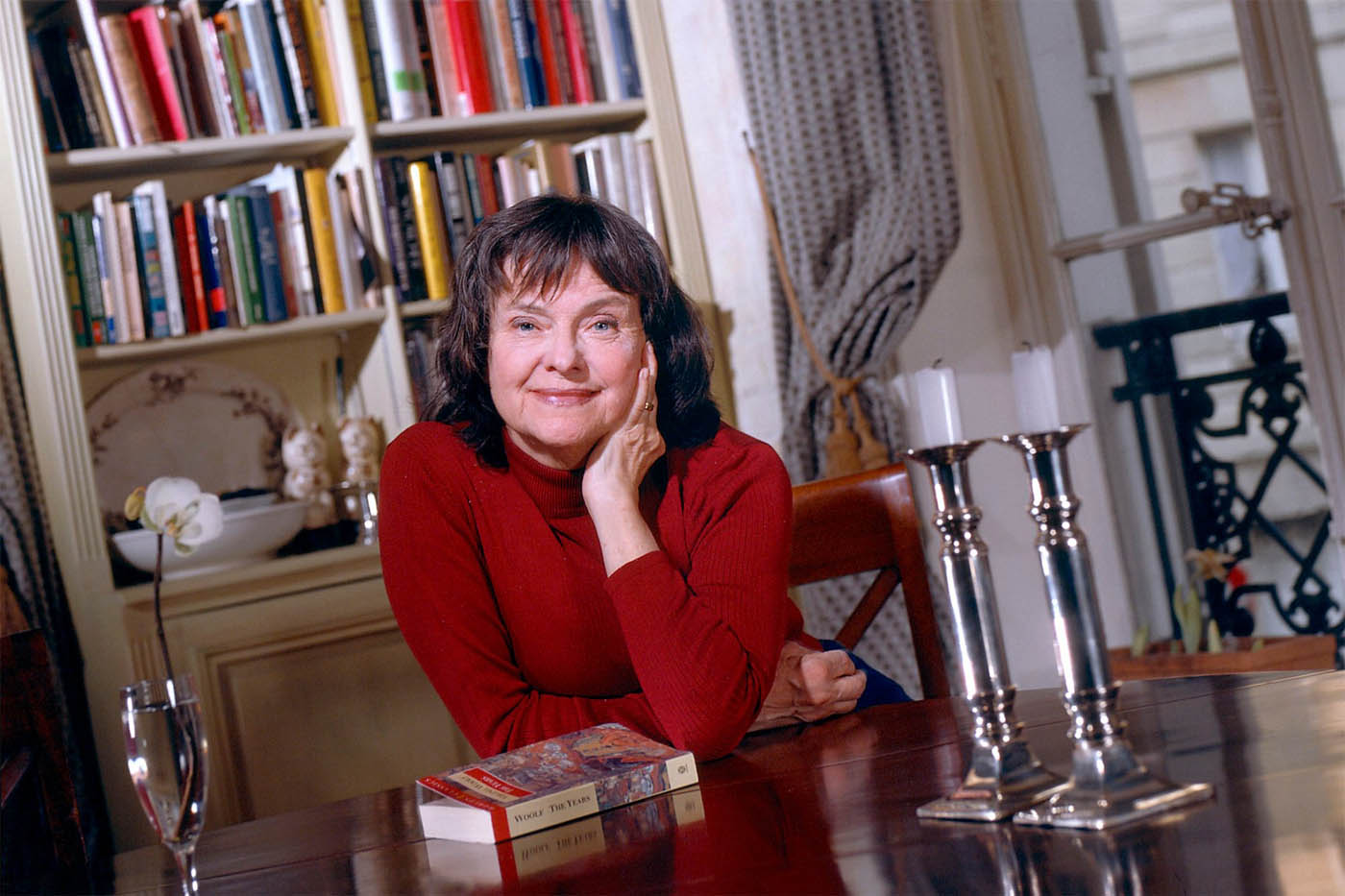
Sarah Churchwell is most recently the author of Careless People.

Author: Sarah Churchwell

Subjects Discussed: Max Gerlach and the possible origins of “old sport,” the current conditions of Fitzgerald’s scrapbook, working in the Princeton Archives, sifting through digital facsimiles, tape marks and PDFs, Fitzgerald’s “self-Googling,” illusory objects balanced on the edges of noses, balancing Gatsby‘s surrealism against real-world parallels, Gatsby as a distorted mirror to the 1920s, present-day misconceptions about the 1920s, history and imagination, Fitzgerald scholars arguing over niceties, analytical types who suck the joy out of novels, the hunt for facts that surprise the scholar, developing rules for inclusion, playing the game of “Who knew?” with Gatsby, what swastikas meant in 1922, wrangling through the variegated meanings of the green light, the risk of divagating from novels, Childs Restaurants, the New York Public Library’s extraordinary online menu collection, the hostility to close reading, Mary McCarthy’s Pale Fire review, Edmund Wilson’s role in restoring Fitzgerald’s reputation and his relationship with Gatsby, the effect of John Keats’s life and work on Gatsby, the difficulty of determining Fitzgerald’s compositional approach during Gatsby, Fitzgerald and the Romantics, Fitzgerald’s terrible French, the benefits of not reading living writers while working on a masterpiece, Zelda and Scott trading off lines and witticisms, Zelda’s influence on Gatsby, Zelda’s critical mind, how to distinguish Scott and Zelda’s writing, the helpful scholarship of James L.W. West III, Fitzgerald’s fear of being compared with Robert W. Chambers’s romantic fiction, Burton Rascoe, why Fitzgerald was so concerned with his reception, how Churchwell tracked down an obscure Rascoe review, Fitzgerald’s touchiness and his need for reassurance, Gertrude Stein, Fitzgerald’s all-or-nothing grab for literary respectability (and failure to get it) with Gatsby and Tender is the Night, Fitzgerald’s decline, Fitzgerald’s terrible spelling and This Side of Paradise, the Fitzgeralds’s trip to Europe in 1924, the Fitzgeraldian notion of holding two simultaneous ideas (or emotions) in a first-rate mind, Gatsby as a hymn to ambivalence, Zelda’s affairs in response to boredom, Fitzgerald’s unkindness to women in his fiction, 1920s etymology, Fitzgerald as the first man to use “cocktail” as a verb, guarding against linguistic anachronism, the development of merchant banking language during the 1920s, the owl-eyed man in Gatsby’s library, Eckleberg, the numerous large eyes within Gatsby, blindness and vision, racism during the 1920s, Edith Wharton’s anti-Semitism, Meyer Wolfsheim a Jewish stereotype, Thomas Powers’s essay in the LRB, Arnold Rothstein, Monroe Stahr in The Last Tycoon, whether or not Fitzgerald can be called an anti-Semite, Tom Buchanan’s white supremacy, “The Crack-Up,” being judged by character vs. being judged by social conditions, Wendy Smith’s review in Newsday, specious connections between Gatsby and the Hall-Mills murder case, Nancy Mitford’s lie about “Zelda and her abortionist” picked up by five other biographers, mistaken identity as part of the 1922 discourse, Leopold and Loeb, Myrtle Wilson and Tom Buchanan, William Desmond Taylor’s murder, Woody Allen and Dylan Farrow, serving as Booker judge, contending with the Booker Prize’s inclusion of American titles and the concomitant complaints about preferring British or American titles over the other, the Folio Prize’s American titles, and the 2012 Pulitzer Prize’s “no winner” controversy.

EXCERPT FROM SHOW:

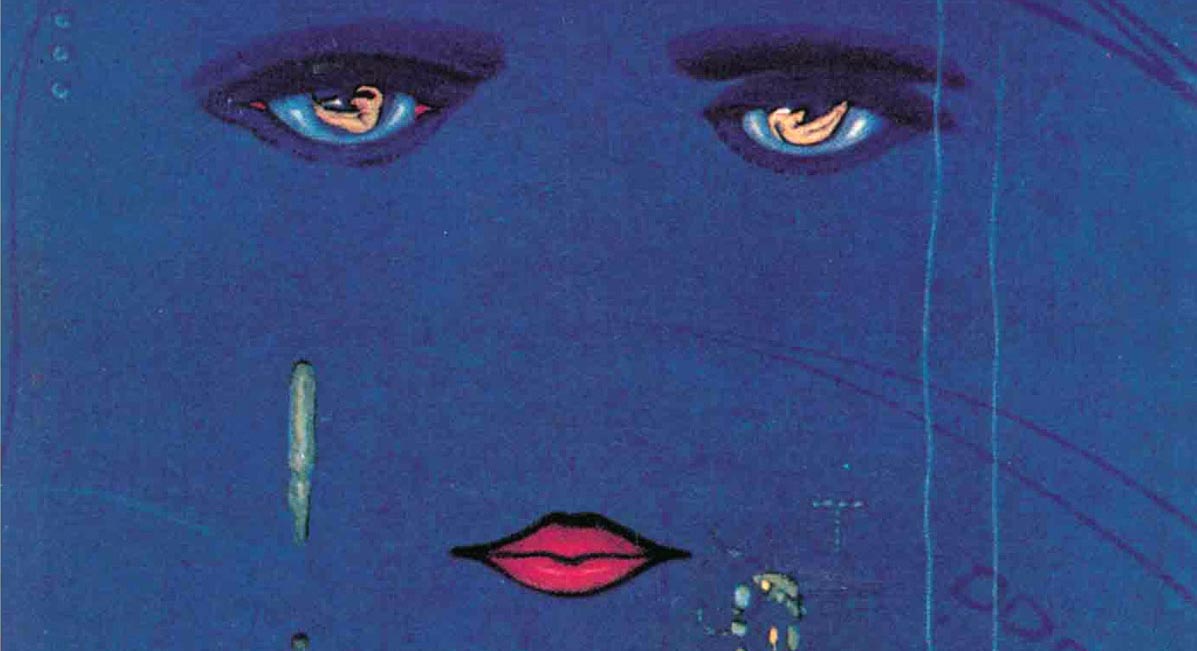
Correspondent: I’m really jazzed up because only a few days ago, you forced me to reread The Great Gatsby. And it was still great after four times! Have you ever gotten sick of that book?

Churchwell: No, I really haven’t. That’s why I wrote a book that’s kind of a tribute to it. And I got to live with it for five years. I got to reread it over and over and over.

Correspondent: How many times have you read it?

Churchwell: I don’t know. Because I’ve read it sequentially at least half a dozen times. But also I was going in and out of it. And so, all told, probably hundreds of times.

Correspondent: Wow. That’s incredible. Well, let’s start with the marvelous year of 1922. The year in which the book is set, The Great Gatsby, and the year in which both The Waste Land and Ulysses were published. You point out that scholars have used the reference to “a waste land” during that one description of the ash heaps as the smoking gun that Fitzgerald intended Gatsby as a literary homage to that particular year. But Fitzgerald was also to note in his “Ten Best Books I Have Ever Read” that Ulysses is “the great novel of the future.” So what is the true source really of the 1922 setting? And to what degree is it a mistake to assign a kind of explicit literary interpretation or homage to either Eliot or Joyce?

Churchwell: I think there are a couple of other meanings to 1922, which of course is the year that Fitzgerald sets Gatsby. And, yes, I think he is tipping his hat to those great writers of 1922 and to those two great works in particular. It’s also the year that the first English translation of Swann’s Way came out. So Proust is also making his way into that year. But it’s also the year that Scott and Zelda move to Long Island and began the parties that would inspire the novel. It was in 1922 in the summer that Fitzgerald wrote to his editor Max Perkins announcing that he wanted to write the novel that would become Gatsby. So I think in his head, there were a lot of reasons why 1922 was the right year to set the novel.

Correspondent: Did he ever toy around with other years?

Churchwell: He did actually in draft. He wrote 1921. He wrote 1923. So he always knew that he wanted it to be a modern novel. He wrote it in 1924. So it was always going to be the recent past. And then he finally settles on 1922. And we can only speculate as to why that is. Maybe it was totally random. But it doesn’t seem like it was. And then he went back and he tried to adjust the math and to make sure that everything worked out for it to be set in 1922.

Correspondent: Yeah. He had this really terrible thing about double digits. $13.13 at the end. That’s sad.

Churchwell: Yeah. (laughs)

Correspondent: I was really bummed out at the end when Fitzgerald is on the decline. I’m like, “Oh, come on, Scott! You can do it!”

Churchwell: I know.

Correspondent: “Don’t let the world beat you down!”

Churchwell: It’s so sad, but the world did beat him down in exactly that way that you just said. I mean, his last royalty check was $13.13.

Correspondent: I know.

Churchwell: It is crazy. But his life was in this really uncanny way, it often tended to be symbolic in that way. Life just kind of showered him with symbolism all the time. Even the bad kind.

Correspondent: When you live a life where you’re surrounded by subconscious doubles, inevitably subconscious doubles will appear in your work.

Churchwell: Exactly.

Correspondent: You also point out — and it’s worth reminding — that Fitzgerald had this deep admiration for Joseph Conrad. You quote Conrad’s line, “Fiction is history, human history, or it is nothing.” And you point to the middle-man inscription he offered to Gene Buck. You also note that Ring Lardner and Fitzgerald, they performed this drunken dance outside the Doubleday Estate in May 1923, only to be unceremoniously ejected by the night watchmen. I’m wondering. How obsessive was Fitzgerald about Conrad? Were you able to find any direct Gatsby lineage from Conrad or anything?

Churchwell: Not quite. But he was very open about his admiration for Conrad. And Conrad was certainly an important writer for him. In fact, one of the novels that Fitzgerald said was the novel that he wished he had written more than any other novel was Conrad’s Nostromo.

Correspondent: Nostromo, yeah.

Churchwell: Which is a novel that a lot of people…

Correspondent: …don’t read anymore.

Churchwell: …don’t read anymore. It’s really Heart of Darkness that tends to be the one.

Correspondent: Or even Lord Jim.

Churchwell: Or even Lord Jim. He definitely loved Lord Jim. I’ve seen Lord Jim in various places in his work. I think that where Conrad really comes into Gatsby most obviously is in the use of Nick Carraway as both character and narrator the way that Conrad used Marlow in several of his novels, including Heart of Darkness and Lord Jim. And it was understanding the way that that technique could help him tell his story, I think, that is Conrad’s greatest influence on Gatsby.

Correspondent: Did he really see novels as that history that Conrad said that it was?

Churchwell: I think he did absolutely. I mean, his novels tended to be contemporary. They tended to be drawn very much from his own experiences and based on people that he knew or had met. Most of his best work is, in some sense, based on these composite characters. So the character of Dick Diver in Tender is the Night is partly Fitzgerald, it’s partly his friend Gerald Murphy, and he kind of morphs the two together.

Correspondent: As any writer does really.

Churchwell: Absolutely. I mean, it’s something he had a big argument with Hemingway about. Because Hemingway said of Tender is the Night that this was an illegitimate technique. He got kind of high-handed and announced that there were some ways that you were allowed to write fiction and some ways that you’re not allowed to write fiction. Which is a bit rich coming from Hemingway, given that The Sun Also Rises is very much a roman à clef. (laughs)

Correspondent: Exactly. And what’s also terrible about Hemingway is his treatment of Fitzgerald. I mean, Fitzgerald is really on the down and out and he’s still saying, “Yes, yes, Ernest is putting out all these great books,” and Hemingway is basically totally shit-talking him the entire time. Which is really sad!

Churchwell: It is sad. Hemingway was not adverse to kicking Fitzgerald when he was down. (laughs)

Correspondent: (laughs) No! He must have had some machismo thing.

Churchwell: (laughs) Ya think?

(Loops for this program provided by JamieVega, JoeFunktastic, 40a, seankh, and kristijann.)

The Bat Segundo Show #535: Sarah Churchwell (Download MP3)

This text will be replaced

Jenny Offill (The Bat Segundo Show #534)

Jenny Offill is most recently the author of Dept. of Speculation.

Author: Jenny Offill

Subjects Discussed: Words dropped from ellipses, Thomas Edison quotes, digital binaries, John Keats, fabricated quotes, fact-checking fiction, David Markson, spreading false literary rumors, a writer’s obligation to resist the literary canon, destroying forms that came before, motherhood as a stigma war, merging the domestic novel with the novel of ideas, the mommy wars, “being pecked to death by little birds,” falling into the world of the body, motherhood erroneously framed as ambivalence, secular spirituality, Richard Powers, views of Jesus outside apartment windows, fake Buddhism, the tension between exploring vs. leaving material out in Dept. of Speculation, seeking emotional velocity in a novel, outrunning your precocity, the attempted novel before Dept. of Speculation, creating a compendium of consciousness, Samantha Hunt’s The Invention of Everything Else, the vaguely criminal impulse of secretly depositing meat you can’t eat from a massive plate into a napkin, extreme self-consciousness, the imitative fallacy, how deadpan humor allows the reader to confront despair, Jesus’ Son, John Berryman’s The Dream Songs, Renata Adler’s Speedboat, Janet Malcolm, how facts line up to a narrative, Freud’s Civilization and Its Discontents, the mutability of facts in the Ann Druyan/Carl Sagan marriage, Mary Ruefle, Ann Parson, the freedom to move essayistic in fiction, the brief “lyrical essay” movement, John D’Agata, the problem of novelists being asked about literal parallels to autobiographical details, author and character temperament, “doctor” and “daughter,” the risk of getting stuck in the wrong regions of the book, gaffes as creative possibilities, James Joyce, Gilbert Sorrentino and generative devices, having a permanent sense of loneliness, being awake to the world around you and porousness, a world populated by people with dead eyes, brightness as a qualifier for a worldview, the fun of listening, Kummerspeck, physical space defined more by how it is infested as opposed to its layout, proverbs about insects, words as insects, Voyager’s Golden Record, and making fiction more emotionally charged.

EXCERPT FROM SHOW:

Correspondent: One of the first things I noticed in this book — and it’s there from the opening epigraph — is the ellipses. This is definitely one of those books where close reading is greatly rewarded and I was fascinated by how you used ellipses to leave out very pivotal parts of quotes. Just to offer one example, you have the epigraph from Socrates. “Speculators on the universe…are no better than madmen.” But the words between the dots that you leave out are “and on the laws of the heavenly bodies.” Which is interesting. Because that’s cosmological and you also explore that later in the book. I also noticed later in the book that you have this Edison quote, which I believe you plucked from Gaby Wood’s Living Dolls: A Magical History of the Quest for Mechanical Life. Because the ellipses actually match the exact same citation that Wood did.

Offill: That is where it’s from.

Correspondent: Okay. Fantastic! So anyway, just to start off here, we are pressed in our life right now to confine our instant thoughts to 140 characters, to submit to the dreadful binary of +1 and Facebook liking and all that nonsense. So I’m wondering how you arrived at the ellipses as a way of reckoning with what we leave out and how what we leave out actually tells a story. How do you think these dropped phrases can possibly combat the digital reductionist age that we have to suffer in right now?

Offill: Oh my gosh. What an amazing question. I think that I’ve always been, as a writer, in compression and in how much you can distill in a small space. And so an ellipses is one of those ways to create either a pause — like you might have a breath in a poetry line — or also that trailing off feeling.

Correspondent: Sure.

Offill: Like there’s a moment in the book where the character says, “I was expecting to have the crackup with the head scarf and the people speaking kindly at my funeral.” And then it says, “Oh wait. Might still get that one.” And it trails off. And it’s because it’s meant to capture that feeling of thought where you get halfway through a thought and then you kind of stop. And I feel like instead of what we think of as the kind of digital version of compression, which is about pithiness and sound bites and more of that kind of thing, something that was more about when our thoughts hesitate and our words follow. That’s what I was trying to capture.

Correspondent: In a weird way, it almost responds to the subtweet, where you are talking about someone without really talking about someone. Except that actually ends up becoming more vulgar and not as interesting as, say, just leaving something out. Which is the ultimate way of responding to the world. Anyway, so the wife — I’m going to call her “the wife” because she’s the unnamed protagonist of this novel — she has this very unusual relationship with John Keats.

Offill: (laughs)

Correspondent: Keats, he informs her concern for death and dread, I think. I mean, her insistence that she is a part of a minority that experiences permanent anguish as opposed to the majority that experiences temporary anguish. There’s that distinction. But I caught the Keats thing. Because we first see this when she cites the words on Keats’s tombstone — “Here lies One whose Name was writ in Water” — without actually naming Keats! And then she claims later on — and this was amazing — she claims that Keats said, “No such thing as the world becoming an easy place to save your soul in.” I have done a thorough search. I have not found that quote from Keats. I did start to catch on. Hmmm, anytime that Jenny actually says, “What X said,” it’s not true for a large chunk of the book! And I wanted to ask you about this. Keats emboldens the wife to invent these further quotes, including one from Simone Weil. which Meg Wolitzer on NPR actually thought was true. But it was not. So I’m wondering what was it about Keats that triggered this particular impulse to invent quotes for this character?

Offill: I think that he’s always been a sort of Romantic ideal for most writers — or, at least, a certain type of writer. And that line about your gravestone being writ in water, I think for anyone who’s thinking, “Why am I doing this? This isn’t going to last. This isn’t anything,” it seems to have some kind of resonance. As for the other one, I do believe that I had a citation for it. But I also meant for the ones that say “What so-and-so said” to be filtered through her mind and slightly changed.

Correspondent: Yes.

Offill: So that may be why it was hard to Google. We did sort of extensively fact-check the quotes. I had to go through and give citations for all of them.

Correspondent: Really?

Offill: Yeah. So I could probably pull that out somewhere. But I noticed that even people who are far more eloquent than I am, I somehow had managed to take a word out or add a word. It was always that controlling writer impulse where you want to change rhythms and change everything to sound right to your ear.

Correspondent: Well, on the other hand, there’s a certain kind of fluidity in taking quotes and putting them into other people’s mouths. And changing one word, then actually frustrating the obsessive reader type like me…

Offill: Right. Right.

Correspondent: Because I can’t quite find the exactness. I mean, maybe this is also part of the problem, of having to scavenge from the guts of what has gone before in order to find new forms of expression, in order to come to terms with what we leave out of our stories.

Offill: Right. Well, I like writers like David Markson. And I like the way that he brings in those small literary anecdotes. And you also find, if you go through his books…

Correspondent: A lot of them are not true.

Offill: Yeah. A lot of them are not true. In fact, someone — I think it was Blake Butler — did a kind of hilarious thing recently that was “Literary Rumors.”

Correspondent: Yes.

Offill: They were all just like really absurd. And so I think that kind of — I want to call it the pattern-making part of our brain. It makes over even something that seems like it should be complete and puts it into the pattern of the world as that character sees it.

Correspondent: Do you think we have a certain obligation to resist the canon? Or to resist the cultural conditioning that we are inevitably going to take in when we read all sorts of books and we memorize quotes and memorize poems and we use that as a kind of reference for our lives? I mean, inevitably, we’re going to have to resist that, I think, to find some original form of expression. What are your thoughts on this? And is this book in some sense a solution to that?

Offill: I thought a lot about that. Because I was wondering if I should include quotes at all. And I certainly thought about not having any of them in there. Not least of which because it’s hard to put your writing next to some of the people I was quoting. But I also felt like I was trying — and whether I succeeded is really more for the reader to say — but I was trying to make a form that felt modern and new to me. And so the feeling of having those quotes as springboards into other thoughts — I do think you always have to go against and have a contrarian impulse to what’s been made before. And that’s how you make new things. And that’s how you startle and surprise yourself as a writer.

Correspondent: Maybe another way to approach this question is to ask you how you, as the author, and you, as the character, work together to mangle quotes in a very interesting way. Did you find that the vicarious…

Offill: You’re starting to worry me. How many did I mangle? You must have it worked out. (laughs)

Correspondent: No, no! I actually love the fact that some are mangled and some are unfindable. But I’m wondering — especially since you had mentioned the fact-checking earlier. I think writers have a duty to bust shit up. So the question I have is: how much of the tossing rocks through windows came from the character and came from you? And how did you work together to ensure there was a certain kind of nihilism that was healthy for this?

Offill: Right. Well, I definitely wanted to create in the character of the wife someone who was bolder and a little more “Fuck you” and “Fuck things up” than I am in my life. I’m a much more timid creature.

Correspondent: Which is why you’re holding the knife right now.

Offill: That’s why I’m holding the knife to your throat and making sure that you start to praise the book really soon. But I do think…

Correspondent: Can’t I just give you twenty dollars instead? Maybe a hundred?

Offill: Are you kidding? Yeah, when I’m done. I’ll take twenty dollars.

(Loops for this program provided by kraweic, mingote, 40a, and ebaby8119.)

The Bat Segundo Show #534: Jenny Offill (Download MP3)

This text will be replaced

Diane Johnson (The Bat Segundo Show #533)

Diane Johnson is most recently the author of Flyover Lives.

Author: Diane Johnson

Subjects Discussed: Knock-knock jokes*, vacationing in Provence, being married to a mysterious professor of medicine, being surrounded by generals who demand their fellow vacationing Americans to pay their fair share, why the French decry the professed American indifference to history, flowers, what the Americans and the French could learn from each other, the American propensity for tearing up train tracks, Anne Matthews’s Where the Buffalo Roam, the difficulty of traveling to the Dakotas, the destruction of national interconnectivity, America’s war on its own history, what America cultivated from European culture, Jefferson and the Library of Congress, freedom fries, the inspiration drawn from those who kept good records centuries ago, living in the most photographed age in the history of America, sharing our data with the NSA, multiculturalism and European roots, mutually assured destruction and Franco-American relations, Kevin Starr and California history, growing up in Moline, Illinois, Ranna Cossitt, Catharine Martin, the forced resignation of Johnson’s father, escaping a vocational destiny as a flight attendant, the benefits of being a voracious reader, what women were expected to do in the 1950s, Mad Men regimes, quilting as a pre-1950s pastime for women, Betty Freidan, matrimonial prospects as tickets out of town, pizza as a novelty, the Methodist practice of being frightened into good, Jonathan Edwards’s sermon language, looking up profane Latin, living in language-based religious torment, skepticism as a Midwestern feature, learning language as a weapon, the first excuse note that Johnson wrote in grade school and the beginnings of fiction, the origins of The Shadow Knows, crazy housekeepers, the delayed impulse in exploring a feeling in fiction, the migratory impulse, the Land Act of 1820, the American ideal expressed through settling and appropriation, Sarah Palin, the future of Detroit, similar historical currents in France and America, creating something new from the historical dregs of expansionism, the foodie movement, promiscuity without consequences, Henry James, stylistic tension when existing somewhere between two nations, chick lit and book covers, the hidden politics within Johnson’s novels, Lulu in Marrakech, exploring Islam and America’s relationship with the Middle East, Theodore Dreiser, Thomas Wolfe’s former reputation as one of the greatest American writers, Gaston Bachelord’s notion of the “hut dream,” an ideal coziness desired by everybody, infant mortality during the 19th century, how much of recent life is indebted to a simulacrum of 19th century life, the increasing shift of humans living in cities, co-writing an episode of My Three Sons, being rewritten by Francis Ford Coppola, having to schmaltz up description for Hollywood, attempting to explain things in language that studio executives can understand, working with Stanley Kubrick on The Shining, mining through Freud with Kubrick to determine what frightens people, the terror of eyes, Stephen King and Kubrick, supernatural forces as a projection of the consciousness, the typical questions that Kubrick asked over the telephone, Kubrick’s literary qualities, Madame Bovary, a planned eight hour structure for The Shining, Zeno’s dichotomy paradox, Room 237, The Shining projected forwards and backwards, Kubrick’s sense of mathematics, exploring narrative forms, the Overlook Hotel’s labyrinth, critics who overanalyze art, reference books consulted during The Shining, seeing the Holocaust in newsreel images as a girl, contending with work adapted for the screen, Faye Dunaway, Richard Roth, Sydney Pollack, and thwarted adaptations of The Shadow Knows.

EXCERPT FROM SHOW:

Correspondent: You’ve bookended this particular volume with a personal episode at a vacation retreat in Provence, where you and your husband — the mysterious professor of medicine, who I thought was here — were surrounded by these generals demanding that you pay your fair share, while the French are decrying the professed American indifference to history. I’m wondering. How do you think Americans are failing to pay their fair share in knowing history? You bring up this American late in the book who you overhear saying, “You know what’s a good civilization? By the way they always have fresh flowers everywhere, every day.” But if nobody knows how the flowers are arriving there or how frequent they are, well, are Americans really equipped to complain about this? Or to adequately respond to the French? Let’s talk about this parallel. What do you think?

Johnson: Well, I’m not sure we are in some departments. We could learn a lot from the French. And they could learn a lot from us. But that’s not our subject here.

Correspondent: (laughs) Well, we could unpack that. Yeah.

Johnson: Yeah. We could learn that we shouldn’t tear up our train tracks. That’s one of my particular pet peeves about America. Because once you live in France for any reason, you can take the train everywhere. And it’s so great. So that would be one example.

Correspondent: Well, you describe late in the book, I know, that in areas of the Midwest where you used to travel by train, those rails are gone.

Johnson: Yes. Exactly.

Correspondent: And that to me — I mean, I’ve never been in those areas of the Midwest. But I was like, “Wow, if I wanted to get there, it would be a hassle.”

Johnson: That’s right. You can’t even get to some places. Because in South Dakota, I read — that book was called Where the Buffalo Roam. I don’t know if you ever read that. It was written about South Dakota or maybe the Dakotas. And there was no longer any Greyhound bus, airplane, or train to get to North Dakota and certain areas of the Dakotas. And the suggestions of the author to just turn it back to the buffalo and have it be a glamorous nature experience with resorts. Because there’s no point in trying to grow anything up there, since you can’t get there anyway.

Correspondent: Well, that’s also quite interesting. Because if the French are tagging us with this label of not knowing our own history, well, our nation is doing a remarkable job at gutting the interconnectivity and the urban hubs and even the hubs into the Midwest that allows us to really…

Johnson: …keep ourselves together.

Correspondent: Yeah. To unite the States. And that’s quite something.

Johnson: I think it is. And I think it does show that we don’t really care about history or see its value. And that may have been some way we were programmed at the beginning by the idea that we were separating ourselves from Europe and improving upon it. Which was, I’m sure, the idea of the founders. But they didn’t really mean that we’d have nothing to do with Europe and not adopt their ways. They assumed…

Correspondent: …we’d figure out our own system. (laughs)

Johnson: Well, we carried over things that were valuable like universities and the wine culture that Thomas Jefferson was careful to transplant. I’m sure they always envisioned a continuity in everything except politics.

Correspondent: The beginnings of the Library of Congress also came from Jefferson, from his book collection. So it almost seems like we’re looking towards figures who could somehow do this. And that actually became the beginnings of our public institutions.

Johnson: Absolutely. So there was no way we really wanted to cut ourselves off and completely throw out all that European culture. But somehow it got transmogrified — maybe at the time of the Revolution — into a sort of ill-natured mistrust of Europe. Especially France for some reason. I don’t know why there’s a special antagonism for France.

Correspondent: Well, I think it works both ways. With the freedom fries incident.

Johnson: Yeah. That’s what I was thinking of.

Correspondent: There’s that. But at the same time, this leads me to wonder. Well, what is our present relationship with history and how does Europe figure into it? And how did this help you mine your own past going back to Moline and even before that?

Johnson: Well, the connections that helped me were the good records of things that people kept at the beginning of the country. So the earliest thing I found was 1711. The first document to do with one of these people in the book. So obviously people were cherishing history, keeping faithful records of what was going on.

Correspondent: Well, centuries ago. But what about now?

Johnson: Well, now, it’s all turned sour in some funny way.

Correspondent: In the past, we were meticulous documenters of our own history.

Johnson: Do you have another theory about that?

Correspondent: I do actually. I mean, I was going to point to the fact that here we are in this digital age and we take all sorts of photos of ourselves. This is perhaps the most photographed aged in the entire history of America. And yet we don’t actually want to look to our past to see if that can inform our present document taking, our present struggle, in terms of revealing our data to the NSA. Things like that.

Johnson: (laughs) Yeah.

Correspondent: We’re happy to go ahead and share every single private part of ourselves. But it is fascinating to me that we aren’t willing to look to the past to see how that could inform.

Johnson: Exactly. How we could have learned from that. I think part of my theory is that with multiculturalism, one consequence of it, although not intended by it, was to interrupt those early roots with France and England in order to not disappoint people who were coming from other places or seeming to privilege those early arrivals with later immigrant groups. People had to say, “Well, what about the Irish?” And, you know, “My folks came from Russia.” And so everybody acknowledged the richness of those other traditions and maybe just decided, well, okay, then let’s just call it a truce and we’re not going to really think about what happened back there.

Correspondent: I love this theory that the clash of Franco-American cultures has everything to do with each culture not wanting to disappoint the other. It’s kind of like a mutually assured destruction, culturally speaking.

Johnson: I think so.

(Loops provided for this program by JoeFunktastic, FerryTerry, smpulse, and buffalonugaluss.)

* — During the early part of this conversation, Ms. Johnson identifies a knock-knock joke involving Kilroy that neither Our Correspondent nor Johnson could remember. It may be this one:

“Knock knock.”
“Who’s there?”
“Kilroy.”
“Kilroy who?”
“Kill Roy Rogers. I’m Gene Autry’s fan!”

The Bat Segundo Show #533: Diane Johnson (Download MP3)

This text will be replaced

RIP Philip Seymour Hoffman

On Sunday morning, Philip Seymour Hoffman was found dead in his New York apartment. He was the victim of an apparent heroin overdose. The New York Police Department found a syringe sticking out of his arm. He was only 46.

Hoffman was a rara avis: an energetic and unforgettable vessel of thespic truth that comes once in a generation, if not every two. His dramatic range was as wide and as variegated as such indelible character actors as Paul Muni, John Cazale, or Lon Chaney Jr. You could watch three minutes of any Hoffman performance, even when he was cast in a mediocre movie, and learn six new things about acting. Hoffman’s smartest directors often imbued this great and irreplaceable performer with some physical limitation. In Charlie Wilson’s War, Mike Nichols put Hoffman behind glasses, dyed hair, and a mustache and Hoffman’s body moved inward, almost of its own will. One of his most memorable early performances was in Paul Thomas Anderson’s Hard Eight, a scene in which Hoffman is situated behind a craps table for three minutes, and the force of nature that emerged when Hoffman ferociously fired up a cigarette or addressed his audience simply could not be contained as he stood coiled in the same place.

The man never gave a boring or derivative performance. He could swing from Lester Bangs’s cautious idealism in Almost Famous, masticating ever so slightly while addressing the young music journalist as if his own convictions were malleable, to vampiric addiction in Owning Mahowny, always keeping his head down in shame and his arms scooping up sad racks of chips with the routine need of a man who knows nothing else. He played heroes, losers, villains, and psychotics, but he used the titanic force of his charisma to demand that we peer inside men we would otherwise avoid. In this sense and many more, Philip Seymour Hoffman was a true artist.

He walked on the stage and screen as if he had a thousand souls trapped inside him, all screaming to come out. Yet he was also fighting a chronic drug addition. There were reports last year of Hoffman falling off the wagon and entering rehab. It is truly tragic that drugs got him in the end.

We may never know the true totality of Hoffman’s demons, or what Hoffman had to sacrifice to give us his electric performances. It seems vulgar to probe further, even as any cursory flip through his cinematic performances reveals that they were all great, not a dud among them.

The loss of a talent as huge as Philip Seymour Hoffman feels like a referendum on American culture: a baleful strike against the waning truth and intelligence increasingly in short supply within our motion pictures. You could find the people that Hoffman played all across America, yet neither time nor place could contain this giant. Philip Seymour Hoffman will not be easily forgotten.

Okey Ndibe (The Bat Segundo Show #532)

Okey Ndibe is most recently the author of Foreign Gods, Inc.

Author: Okey Ndibe

Subjects Discussed: The tendency of authors to gravitate to specific locations to find a city’s identity, Ndibe’s fictitious village of Utonki, Barclay Center’s encroachment upon Brooklyn, how eating fish can help you to better understand Nigeria, whether or not people who live close to water are more equipped to deal with life, conjuring up a novel from a 1,000 page draft, writing “the Great Nigerian Novel,” the Nigerian census problem, Festus Odiemegwu’s controversial remarks about Nigeria not having a reliable census since 1816, Nigeria as the third most populous nation in the world by the end of the 21st century, what the inability to track a population does to a national identity and a fictional identity, Nigeria as a country where absurdity makes sense, the disastrous Yar-Adua-Goodluck government, Nigeria ascribing honesty to criminals and criminal enterprises that masquerade as governments, Nigeria’s “honest criminals,” Gov. James Ibori’s 13 year sentence, bribery, American vs. Nigerian corruption, why it’s so difficult to end corrupt Nigerian politicians to jail, Ndibe’s arrest at the Lagos Airport, Nigeria’s Enemies of the State list vs. America’s No Fly list, Umaru Musa Yar’Adua and the do-or-die affair, Yar’Adua’s attempts to reach Ndibe after Ndibe refused to address him as President, anonymous messages sent to Ndibe in 2009 threatening arrest, decrying corruption and crime, the state of dissident writing in Nigeria, public and private media distinctions in Nigeria, the influence of journalism upon fiction, the lengthy italicized chapter in Foreign Gods, Inc., the impact of colonialism and religiosity on Nigeria, how certain events can encroach upon a reader’s experience comparable to imperialism, how past relationships between Europe and Nigeria affects current relationships, African artifacts, fuel and oil prices, spiritual implication, religious origins for a fictitious war god, settling on the right types of allegorical men to represent Nigeria, gourmands, poetic talkers, reformed Marxists, religion and performance artists, Igbo religious innovations compared against Christianity, the human qualities of gods in Igbo culture, why orthodoxy is incompatible with Igbo sensibilities, sectarian extremism in Nigeria, jihads against western values, rogue pastors, Nigeria’s 400 to 500 languages, Chinua Achebe’s No Longer at Ease, The Complete Review‘s pedantic review of Foreign Gods, Inc., Africans with considerable educational credentials who can’t get jobs in the United States, the common experience of educated immigrants shut out of the American job market (and trying to pinpoint why contemporary narratives don’t always consider Africans), American exclusion, the role of taste and experience in the editing process, the current renaissance of African fiction, how market conditions affect translated fiction, names and cultural differences, why Nigerian immigrants do better in the States than in England, Ndibe’s debt to Chinua Achebe and Wole Soyinka, Ngugi wa Thiong’o, how Soyinka saved Ndibe’s Christmas, malfunctioning tape recorders, how Achebe brought Ndibe to the United States,

EXCERPT FROM SHOW:

Correspondent: I wanted to start off from a very odd angle. James Joyce had Eccles Street. James Baldwin had, of course, areas of Paris and southern France. I couldn’t help but notice that in Foreign Gods, Inc., in concentrating on both Nigeria and Brooklyn, you look to very specific regions. In the case of southeastern Nigeria — that’s where you’re looking at — you have this fictitious village named Utonki.

Ndibe: Yes.

Correspondent: Which was also featured in Arrows of Rain, your previous book. And then for the Brooklyn stretch, you have 99 Flatbush Avenue, this second-story flat that Ike — I hope I don’t have the ass pronunciation.

Ndibe: It’s actually Eekeh. Ike [correct] is strength. ị́kẹ̀ [incorrect] is the buttocks.

Correspondent: Okay. I’ve got that right. So Ike, he lives in this second-story flat at 99 Flatbush Avenue. And I know that because my book drop is actually not far from there. What’s interesting about that is that if you go there now, you’ve got Barclay Center there. And it’s completely different from whatever regional inspiration you had when you first decided upon it. So I wanted to talk about Utonki and 99 Flatbush Ave as the representative area for which to draw a larger idea about what Nigeria is and what Brooklyn is, and why these particular places were draws for you and why it needed to start there.

Ndibe: Well, for Utonki, I wanted to set a location in Nigeria that is close to my hometown, which is Adamawa. Now in writing my first novel, I am drawn to water, to rivers and so on. And my hometown doesn’t have much by way of the river. We have a few streams. So there is a stream called Benue, which figures in this novel. So Utonki is actually based on a part of Nigeria that I had visited to see a friend of mine from years ago. And I was drawn there because this friend told me that the village is surrounded by this river and they ate a lot of fish. And I’ve always been a sucker for fish. So I went to his village and spent a whole week eating a lot of fish. So this becomes my hommage to this village where I ate fish and which is surrounded by water.

Correspondent: Where did you eat fish in Brooklyn then? (laughs) There’s a fish market downtown.

Ndibe: So in Brooklyn, I actually happened to have a cousin who lives in Brooklyn. And so the apartment and my description of it is my cousin’s apartment. But the address is different. My cousin lives on Lafayette, but I decided to name it a different address in the novel. So again, aware of having something, an image in my mind, but also inventing, as it were.

Correspondent: I’m still drawn to this idea of you in this Nigerian village eating fish and using this to zero in on what the country is about. What does fish eating allow you — and fish eating, of course, is a euphemism for something else as well (laughs) — but what does that do to get you to fixate your geographical energies in fiction? Or your sense of place on what it is to be a Nigerian?

Ndibe: Yes. Well, again, I’m intrigued by bodies of water. I’m intrigued by the ocean, by rivers, by lakes and so on. And so Utonki was, if you like — my mother in Nigeria is from Jimeta, which is on the banks of the river Niger, which is the grand river of Nigeria. And so I’ve always been intrigued by bodies of water, partly because I don’t swim a lake. I can’t swim to save my life. My wife actually was going to represent Nigeria in swimming at the Olympic Games. But I tell people that our winning record is for the fastest to sink to the bottom to any body of water. So in a lot of ways when I see water, or when I see a community with water, there is a part of me that wants to pay hommage to it. And so Utonki, which has a river but also brings me to that fish that I’ve always loved all my life. So if I have an ideal community, if I was going to make myself come from someplace, it would be a place like Utonki. So I invented it. So I would inhabit it, as it were.

Correspondent: This may seem a bizarre question, but it comes to mind in hearing you talk about being near bodies of water. Do you think that people who have a tendency to live near water tend to be more interesting than the people who live inland or who are landlocked?

Ndibe: I believe so. At least those who live close to water. Just like, for me, anybody who can swim becomes exceedingly interesting for me. Which is part of why perhaps I found my wife, Sheri, extraordinarily interesting. Just the fact that she can move with such ease, with such comfort, and with such gusto in water. So, yes, I do believe that those who inhabit the river, who live near bodies of water, are more resourceful. I don’t know if this can hold up to scientific scrutiny.

Correspondent: No.

Ndibe: But in my imaginative world, I think that this is true. Very much so.

Correspondent: It totally makes sense. I mean, I’ve lived pretty much near water in my adult life. I was in San Francisco, then New York. So I think we’re on the same level — even though I also recognize that this is a completely bizarre, tendentious principle. (laughs)

Ndibe: Yes. (laughs)

Correspondent: Speaking of location, I wanted to get into the contrast between Ike’s apartment at 99 Flatbush Ave, which you describe often very specifically. And near the end, we really know the geography of that place. Because some things happen, which I won’t give away, involving furniture. But after Ike’s first trip through the Lagos Airport, you almost avoid describing the look of Nigeria. I mean, we have a better sense also, for example, of the art dealer’s layout than the house late in the book where there’s all this basketball boasting. All these guys saying, “Hey, if you pay me that kind of money, I can go ahead and play like Michael Jordan.” I wanted to ask why that was. Do you think that Nigeria is marked more by this kind of general approach to existence? That, whether consciously or subconsciously, you’re going to just describe the country that way because there just are no specifics. I have a followup in relation to this, but I wanted to get your thoughts as to the level of self-awareness here and what it is to live and describe something that is often abstract.

Ndibe: Yes. Well, first of all, when I finished this novel, it actually came to more than a thousand pages.

Correspondent: Wow!

Ndibe: So there was a lot of editing. A lot of sloughing off huge swaths of the novel. And so when Ike’s plane is hovering over Lagos, there’s a long scene in the original draft of the novel where I describe how he sees Nigeria.

Correspondent: That’s fascinating.

Ndibe: In the original draft, he actually spends a week in Lagos with a friend of his who’s become very wealthy from doing all kinds of underhanded deals with the politicians and so on. And so we get to see Lagos, through Ike’s eyes, as his friend takes him to various parties of the rich and famous in Nigeria. All of those scenes became a casualty, if you like, of this huge cutting process. But that’s going to be worked into a different novel. Because I actually cut about 300 pages from the middle of the novel. And so I had Ike stay that night in a stop-off motel when, in the original draft of the novel, he spends a week in Lagos with this classmate of his who has a lot of money. So that’s one. But once he goes to his village, I guess there’s the sense of familiarity, the sense that he’s returning to a place where he was born. And so I allowed the novel to achieve, if you like, a sense of the unstated. So again, because this is filtered constantly through Ike’s consciousness, the village changes a lot when he returns to it. And there’s this classmate of his, Tony Iba, who has become a very wealthy, local politician and who has a sense that he’s giving back to poor people by building a small room where they can watch television and daydream about American life and so forth. So that kind of absence, if you like, of this particularity in the way that Nigeria is described owes to the process of editing that entailed a lot of cutting of details. And also the fact that Ike wants this in his village, the descriptions become physical locations muted, except in areas where he notes the dramatic changes in that landscape.

The Bat Segundo Show #532: Okey Ndibe (Download MP3)

This text will be replaced