The Bat Segundo Show: Norah Vincent

Norah Vincent appeared on The Bat Segundo Show #258.

Norah Vincent is most recently the author of Voluntary Madness.
segundo258

Condition of Mr. Segundo: Challenging pseudonymous authorities about his voluntary commitment.

Author: Norah Vincent

Subjects Discussed: The Lanterman-Petris-Short Act, homelessness and mental health care, the revolving door of mental institutions, Marvin Olasky and community responsibility, the bureaucratic process of mental health care, why Vincent didn’t break down the costs of staying in pseudonymous institutions, the unwillingness of Vincent’s health care provider to have Vincent pay for her stay in these institutions, experiential journalism vs. objective journalism, the trouble with corroborating stories within Vincent’s books, setting limits and journalistic ethics, quibbling with the term “diagnosis,” the distinction between psychotics and psychopathics, care for dangerous people, antipsychotic drugs, counseling vs. drugs, empirical solutions vs. medical expertise without arrogance, the moral question of whether or not doctors should inform psychopathics about the effects of drugs, the issue of consent in medicine and journalism, whether regular “reality checks” can help a psychotic improves her mental condition, and happiness vs. getting better.

EXCERPT FROM SHOW:
nvincentCorrespondent: You quibble with the term “diagnosis.” You write, “There are no diagnoses in psychiatry. Only umbrella terms for observed patterns of complaint, groupings of symptoms given names, and oversimplified, and assigned what are probably erroneous causes because these erroneous causes can be medicated. And then both the drug and the supposed disease are made legitimate, and thus the profession as well as the patient legitimized, too, by those magical words going hand in hand to the insurance company ‘Diagnosis’ and ‘It’s not your fault.’” But if there are no diagnoses in psychiatry, well, where is the starting point? I mean, obviously, you have to start somewhere and identify a particular problem — even on a simplistic level — in order to help another person. So what of this?

Vincent: Well, yeah, that’s the difficulty, I guess. Right now, we don’t have a test that can tell you, “You’ve got bipolar disorder” or you’ve got any number of all these so-called illnesses. Which I don’t doubt are real entities. Clearly, when you see enough of these patients, you see the patterns that they’re describing. And people who are schizophrenic tend to be paranoid. All these various things that — it’s not that the groupings are illegitimate in that way or the observations are wrong. It’s just that it does leave an enormous gray area. And it means that you can diagnose somebody as having this thing without any really concrete way of knowing that they do, in fact, have it. And I do think that can lead to a lot of problems. Such as, for example, people again have written a lot about the way that diagnoses of depression have, I don’t know, tripled in the last ten or fifteen years. And I think you have to ask yourself how many of those people have something that’s a pathological depression. Or is it a situational depression? Not being able to distinguish between those two things is, I think, problematic.

Correspondent: We’re talking then largely about the specific difference between someone who is psychotic, who is merely someone who cannot properly distinguish between their reality and their imagination and their dreams, and is not necessarily violent, versus someone who is psychopathic. Who is going to be prone to violent behavior and the like. Certainly there has to be some degree in which we have to prevent people from harming themselves or harming other particular people. I agree with you that “psychotic” does, in fact, get a bad rap. But nevertheless, there is this larger term of people who are, in fact, going to be committing violent behavior. So I’m wondering. Why quibble with the notion, as you do in one of the interim moments in the book, about this impression between so-called psychotics in movies and everything? When, in fact, there are dangerous people out there.

Vincent: Oh yeah. And there’s no question that, right now, medication and, in some cases, putting these people into an environment where they can’t hurt people is all that we have. It’s the best that we have right now. I would hope that someday we would have medications, for example, that can specifically address what’s going wrong in the brain of a schizophrenic person. And that’s just something we don’t have right now. We don’t know. We don’t understand the mechanisms of schizophrenia. Or what appears to be. There again is the question. Well, you may appear to be schizophrenic. But without a test that can tell us, we don’t actually know whether you are or not. Or whether you’re manifesting symptoms that may be entirely something else. An allergy. I mean, think about if you were to go to the hospital and say, “I’m having terrible chest pains.” And you were assuming you were having a heart attack. And there was no way to know whether it was that or indigestion. There are a lot of symptoms that can be caused by various different things. And I think that’s the part that’s missing for us right now.

BSS #258: Norah Vincent (Download MP3)

This text will be replaced

The Bat Segundo Show: Patricia Cornwell

Patricia Cornwell appeared on The Bat Segundo Show #257.

Patricia Cornwell is most recently the author of Scarpetta. This interview serves as a companion piece to Sarah Weinman’s Los Angeles Times profile.

segundo257

Condition of Mr. Segundo: Checked in for narcissistic personality disorder.

Author: Patricia Cornwell

Subjects Discussed: The genesis of Kay Scarpetta after three unpublished novels, Sara Ann Freed’s input into Cornwell’s early career, on being rejected by the Mysterious Press, Susanne Kirk, the unexpected success of Postmortem, how Charles Champlin’s Los Angeles Times review changed the publisher’s perception, writing a Scarpetta book before the last one was published, switching from first-person to third-person midway through the series, tinkering around in the movie business, being unable to write anymore in the first-person perspective, on later books lacking the warm element of character interaction, trying to get better through experimentation, listening to fans and readers, bringing back Benton Wesley from the dead, the differences between Cornwell and Scarpetta, writing sex scenes, privacy and reluctant fame, reporters who have the temerity to follow Cornwell into the bathroom, cops and submachine guns, Ab Fab, Judd Apatow’s films, Cornwell’s continued involvement with forensic science, taking out full-page ads to correct being misquoted by a journalist, pursuing the Jack the Ripper case, making various investments, surviving in the dour economy, and Cornwell’s political involvement.

EXCERPT FROM SHOW:

PATRICIA CORNWALLCorrespondent: What’s interesting too is that your career essentially started at the behest of very legendary people in the mystery world.
Cornwell: Right. That’s right.

Correspondent: And then Susanne Kirk found it at Scribner and picked it up from there.

Cornwell: And she was quite a champion for it. Because the publishing house, from my understanding back then, was very dubious about it. This was so different. Nobody wrote books like this back then really. First of all, you had a serial killer who was a stranger to the victims and a stranger to everybody. And the tradition of “mysteries” is that it was someone in your midst. And there were so many traditions that were shattered. Because real crime shatters those traditions. And I was writing about what I saw, and really taking a journalistic point of view. Although I was weaving it into fiction. And some of the rejection letters were “Nobody wants to read about morgues or laboratories.” And certainly not a woman who works in an environment like this and sees what she does. It seems silly now. But back then, that just wasn’t done.

Susanne though had the futuristic vision to think, “This is new and different. And this is pretty cool. And I want to publish this book.” But she had to have yet another opinion. She had to have another person read it. And they deliberated. And they just barely decided. In fact, the telephone call I got — the famous telephone call that changes your life — it was iffy. It was “We think we’re going to publish Postmortem, but we want to get one more person to read it.”

Correspondent: So it had to go to the editorial board in other words.

Cornwell: It was actually an outside consultant they had. Someone they considered an expert. A man, whose name I don’t remember. And they needed one more person to look at it to see if they really were going to do this. And that was my great turning point. My telephone call was a maybe. And then they did decide to take it on. But it was a very small printing. 6,000 copies. $6,000 is what I got paid. No advertising. No marketing. No nothing. And by the time people discovered it, it was out of print in hardcover.

BSS #257: Patricia Cornwell (Download MP3)

This text will be replaced

The Bat Segundo Show: Allison Amend

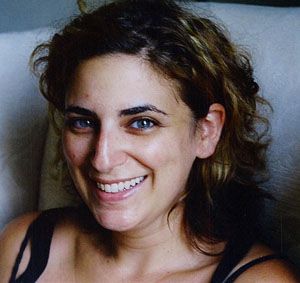
Allison Amend most recently appeared on The Bat Segundo Show #256.

Allison Amend is the author of Things That Pass for Love.

segundo256

Condition of Mr. Segundo: Pondering the troubling things that pass for love.

Author: Allison Amend

Subjects Discussed: Dealings with the Atlantic Monthly, what constitutes a proper golf story, miniature golf, how Jewishness and faith relates to sustaining a narrative, speaking multiple languages, Pig Latin, the connotations of “molested,” small animals in short stories, whether an author should be concerned about manipulating the reader, grabbing the interviewer by the beard, discovering stories through subconscious intent, stories that “need more gerbil,” writing stories that run counter to an innate perspective, verisimilitude, magical realism, whether multifarious themes and motifs disguise the primary premise of a story, the narrative complexities of romantic intimacy, avoiding the “chick lit” label, Curtis Sittenfeld, the Glimmer Train essay, Amend’s two unpublished novels, dealing with potential editors who issue demands to include a love story, how much one should compromise for art, authenticity vs. marketability, frequent appearances of Zima within Amend’s stories, authors who include brand names in fiction, experimenting with lists and found documents, planning the endings of stories, selecting stories for the collection, and thematic unity.

EXCERPT FROM SHOW:

Correspondent: Golf figures prominently into a number of these stories. In “How Much Greater the Miracle,” you write, “The soul and golf are interrelated. I try not to wax too philosophical, but the soul is like a golf ball.” Now is this particular statement one of the reasons you frequently return to golf in your writing? Do you feel that golf gets a bad rap? Is this your way of essentially taking it, or absconding it, from the upper-class country club associations? Are you trying to counter the John Updike/Richard Ford/Kevin Costner kind of approach to golf? I think this is a very important question!
Amend: Sure, sure. I think that your answer is much better than the one I’m going to give you.

Correspondent: No, I’m sure your answer is going to be fantastic.

Amend: Which is that back when I was in grad school, Michael Curtis, who edits the fiction for the Atlantic Monthly, requested some golf stories. He was editing the fiction section of Golf Digest.

Correspondent: Oh wow.

Amend: And he needed some golf stories. So I was like, “I can write a golf story.” And he said, “Oh, it’s very good. I don’t want it. But it’s a good story.” And I said, “Thank you. I’ll write another one.” So I wrote another golf story.

Correspondent: Aha!

Amend: He said, “I don’t want this either. But I like your writing.” So I wrote one more just to see. But actually I do really like golf as a literary theme. Because, first of all, it’s something for your characters to do without really having to have them do a lot of business. So everyone knows how you play. I mean, everyone sort of knows the theory of golf. You hit a ball towards a hole. And so your characters can talk a lot and can think about things without — it’s not like it’s basketball, where you have to describe the reaction all the time. So I really like golf that way. But also it’s this really absurd game. I played a lot when I was younger and don’t play so much now. But if you told me that you can’t see there’s a hole about the size of your palm and you can’t see it from here. But if you hit the ball three times, you will hit it in the hole. I would never have believed it.

Correspondent: Now you say that you had had golf experience before when you had been asked to do these stories. Or did you have to go into golf again and do a refresher course so to speak? Or a refresher run?

Amend: Well, I was at Iowa. We had a lot of free time.

Correspondent: Okay. They have golf in Iowa.

Amend: They do have golf in Iowa. And it’s actually pretty accessible. There’s a great municipal golf course. A nine hole golf course. And so I actually played a decent round of golf. But mostly I just asked my parents. They are very into golf. And so when I needed some golf details to make the story seem more authentic, I just asked them. I said, “What do you do if the ball’s on the side of a hill?” And my dad’s like, “Well, you hit down on it obviously.” I’m like, “Oh, of course.” And I’m taking notes as I’m talking to them. So that was my golf experience.

Correspondent: But this is an interesting notion of what a golf story is.

Amend: Right.

Correspondent: Because if one plays golf, it’s automatically a golf story? Or golf happens to be a motif? I mean, how golf-intensive does a golf story have to be?

Amend: You know, I don’t know. I don’t think that the golf story is going to be the next hot genre. Although there is the golf novel that does pretty well — apparently every year. But for me, it’s just a story where I have to ask my parents a lot of questions about golf to write it. So to me, that’s a golf story.

Correspondent: I’m just wondering if there’s any golf criteria for a golf story. I’ve never been asked to write a golf story. And I’ve never actually considered, until we just talked about this subject, about what a golf story entails. And so I’m wondering. Maybe it’s like a Christmas story.

Amend: It just has to be some Christmas.

Correspondent: Yeah, I don’t know.

Amend: Yeah, I think so. I’m not sure that I’m the best person to ask, since none of my stories were accepted for Golf Digest.

Correspondent: But they’re in here! There’s like three golf stories in here.

Amend: But they’re in there. In which case, golf is sort of a theme.

Correspondent: Yeah! So you are a golf story person.

Amend: Apparently, I’m a golf story person.

Correspondent: Among many other things. Well, okay.

Amend: Well, I could be. I’ve been called worse.

BSS #256: Allison Amend (Download MP3)

This text will be replaced

The Bat Segundo Show: Christopher Plummer

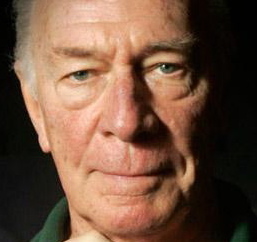
Christopher Plummer appeared on The Bat Segundo Show #253.

Mr. Plummer is the author of In Spite of Myself. He is also a highly talented and very distinguished actor.

Condition of Mr. Segundo: Fleeing from Mr. Plummer’s considerable achievements.

Author: Christopher Plummer

Subjects Discussed: The roles that get Mr. Plummer the best seats at a restaurant, Lillian Hellman’s control over director Joseph Anthony during The Lark, whether or not playwrights understand the interpretation of their work, Death of a Salesman, Elia Kazan, the notion of Hamlet as an Everyman, Shakespearean adaptations, creative interpretations, Amanda Plummer’s creative freedom, being turned down for Gladiator, turning down David O. Selznick, the theatrical problems with Arch Oboler’s Night of the Auk, not always knowing when a play or a script is suitable, Christopher Fry, the virtues of radio drama, the lack of decent writing and the commercialization of the media, helping young actors, success in the acting industry being predicated on who you know, being sandbagged by an understudy named William Shatner, Geoffrey Unsworth, concentration during preparation, throwing people out during rehearsals, getting crushes on actresses, when an actor should demand rewrites, the sacredness of text, and being pummeled with rewrites from Neil Simon.

EXCERPT FROM SHOW:

Plummer: There is an Everyman in Hamlet. And every member of the audience must, whether they like it or not, try to identify with him in this sense. And there is the chance in that extraordinary role of them being able to do that. Then there’s the remoter side of Hamlet, which is the urbane and the wit and the wisdom in one so young. And the style that perhaps takes him away from being identified, but particularly with modern audiences, who probably don’t know what style is. So it is such a melange of extraordinary qualities, Hamlet, that it makes the greatest role ever written. There is no doubt of that. And he must have also the great temper. He must possess the great temper in order to frighten the audience. He must have all sorts of qualities all in one. Because it’s written that way. It’s written as a great symphony of a part. And unless you obey the codas, the climaxes, and the stresses, musically, you’re not anywhere near finished playing Hamlet.
Correspondent: Well, this is an interesting distinction. Because I also know that you took James Earl Jones to task in this book for approaching Othello with a more analytical framework.

Plummer: Yes.

Correspondent: And I’m wondering if you believe that Shakespeare needs to always have this great emotional poetry to it or whether there is room, given the complexities, for numerous types of adaptations.

Plummer: Well, of course there’s room. But you’ve got to have all of them. You can’t come on and just sort of say, “Alright, I’m going to play Hamlet as a junkie. Period.” Please! Where would he be able to think so clearly? And how could he give out such brilliant thoughts if he was a junkie? It would take him days to say one line. So, of course, James Earl Jones was fantastic in the prose section of the play. What interested me, and what disappointed me at the same time, was — with his great organ of voice, which he has to his fingertips — why he did not let go in the great poetic passages.

Correspodent: Yeah.

Plummer: He just decided not to. Whether he was embarrassed or he decided he would do them in more monotone realistic way. There was only one great moment where he let fly. It was about the Pontic sea, and that whole imagery in the famous scene with Iago. There, he let fly. And it was absolutely wonderful. And then you wanted him to go on at moments doing the same thing again.

Correspondent: So I take it then that you’re not really a fan of creative interpretations like, say, the R & J or the Baz Luhrmann approach to….

Plummer: Oh, I thought that as a contemporary Romeo & Juliet, it was [the Luhrmann] by far the best I’d ever seen. I thought it was excellent. And I didn’t think that the poetry was mangled. Because I think that somebody helped — obviously, I don’t know if this is true, but it seemed as if someone had helped Leonardo DiCaprio with his words. Because he stretched them out correctly. So even though it was a modern piece, he obeyed the rhythm of the poetry. And I thought that the girl did too. She was a little behind him in that. But he was excellent. And I thought that was remarkable. Because that was an honest departure all the way down the line. It didn’t pretend to be half-modern, half a sort of allegiance to Shakespeare. It was a modern take on Romeo and Juliet.

BSS #253: Christopher Plummer (Download MP3)

This text will be replaced

The Bat Segundo Show: 2008 National Book Awards

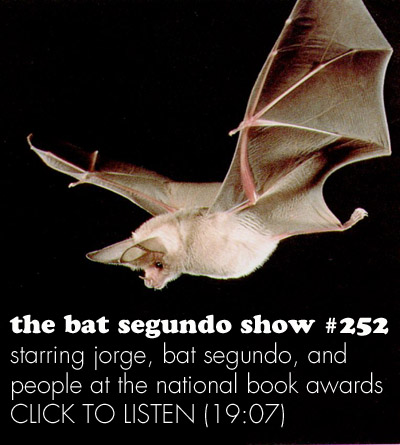
Our reports from the National Book Awards previously appeared in piecemeal on these pages, and have also appeared on The Bat Segundo Show #252.

So far as we know, the National Book Awards has not authored anything aside from programs and informational pamphlets. The people that Our Young, Roving Correspondent talked with on that fateful night, however, have authored a few books. Or at least, this is what they have told us.

Condition of Mr. Segundo: Deeply suspicious of Harold Augenbraum.

Authors: Joan Wickersham, Annette Gordon-Reed, Salvatore Scibona, Mark Doty, Candace Bushnell, and Richard Howard.

Subjects Discussed: The difficulties of writing a memoir in straight chronological order, the paradox of suicide, having a handrail to guide you through the writing of a book, the Hemmings family, endnotes, the perils of plunging into research, working on a book for nine years, narrative arcs, attempts by finalists to describe a book in 100 words, planning a book for ten years, writing and throwing things away, typewriters and distractions, mixing up Cs and Ds, the difficulties of selecting poetry for a volume, wrestling with Walt Whitman, why Candace Bushnell reads what she reads, attempting to get an answer on how one exudes glamor at the National Book Awards, and how long it takes Richard Howard to write a poem.

EXCERPT FROM SHOW:

Correspondent: How are you wrestling with Whitman exactly?

Doty: Well, I want to think about the common ground that I share with Whitman. A real interest in the relationship between the individual — the single self — to the community. Whitman is always trying to figure out where the margins of himself are, and often he feels like he doesn’t have any. That’s been an obsession of mine too. He’s a person who was so interested in affirming the body, and the pleasures of sex and of physical life. And at the same time, he was a person who was absolutely obsessed with mortality and the end of physical life. So those are all things that matter to me. And I love the way that he really thought his poems could change the world.

* * *

Correspondent: And you’re here for the National Book Awards specifically in what capacity? To exude glamor or what?

Bushnell: To celebrate books. This is the business that I’m in. Publishing. I’ve written five novels. And this is about publishing. So it’s always a treat for writers to come out and see other writers.

BSS #252: 2008 National book Awards (Download MP3)

This text will be replaced