The Bat Segudo Show: Allegra Goodman

Allegra Goodman appeared on The Bat Segundo Show #355. She is most recently the author of The Cookbook Collector.

Condition of Mr. Segundo: Confusing cookbooks with novels.

Author: Allegra Goodman

Subjects Discussed: [List forthcoming]

EXCERPT FROM SHOW:

Correspondent: Jonathan’s dialogue is so reflective of Sergey Brin. I mean, he says things like “Introduce me. I’m serious.” Very Star Trek-like in his dialogue.

Goodman: Actually, I’m glad you raised that. Because in terms of research into the dot commers, I did not go to libraries obviously and do that kind of research. You can’t research them like you would a group of rare cookbooks. But my research consisted of listening to the way they talk. I’m very interested in voices. The way somebody like Bill Gates talks. The way somebody like Sergey Brin talks. I’m interested in their militant casualness. They’re very bright. They’re very ambitious. They’re very driven. And they’re very chummy and casual. Like “Let’s all just make this happen.” In a way, anti-intellectual in some ways. In their rhetoric. Not that they aren’t intellectual, a lot of them. And I don’t mean to lump all of them together. But I listened to the rhetoric that they used.

Correspondent: Who did you listen to? Specific tapes or recordings?

Goodman: I was interested in Steve Jobs, Bill Gates, and some of the younger voices that I was reading in interviews in magazines at the time. The way researchers talk. The way techie people talk. The way programmers talk. Not necessarily just the powerful ones. But these are the words that they use. And I was interested actually – you know, Jess and George are very literary. And their dialogue and their banter has a lot of references to books and things like that. People have mentioned this about my book. But there’s a counterweight that people don’t mention. Maybe they don’t hear it because it’s so obvious. It’s like what we hear all the time. It doesn’t stick out. But it’s very not literary. It’s very anti-intellectual. Techie.

Correspondent: Well, Jonathan quibbles with “tenuous” at one point, looking at it like a mystified word. But this is interesting. Because I’m wondering if one of the motivating factors to write this novel is because the 1990s – God, that time was incredible in the way we documented everything about the dot com era. We documented everything about our culture. We wanted to publicize our own vacuity, so to speak. I’m wondering if this made things easier from a novelistic standpoint.

Goodman: Well, it’s really interesting. Because we did document that era and we still do. It’s been so well documented. But what I always thin is, “Well, what can my contribution be as a novelist?” As opposed to being a historian or an economist. Or even a psychologist. A sociologist. People talked about the different syndromes of sudden wealth at the time. There was a tremendous amount of journalism at the time. And after. The aftermath. The postmortems. So what could I contribute as a novelist? And what I contribute is to write about it from the inside rather than the outside. To give an intimate portrait rather than the broad overview. And as I did in Intuition, to talk about motivation. Which journalists are really not allowed to talk about, but novelists get to do.

The Bat Segundo Show #355: Allegra Goodman (Download MP3)

This text will be replaced

The Bat Segundo Show: Prince of Broadway & Adam Langer II

Sean Baker, Darren Dean, and Adam Langer all appeared on The Bat Segundo Show #354.

Sean Baker is the director and co-writer (among other things) of Prince of Broadway. Darren Dean is the producer and co-writer of that same film.

Adam Langer is most recently the author of Thieves of Manhattan. He previously appeared on The Bat Segundo Show #175.

Condition of Mr. Segundo: Searching for princes and publishing insiders.

Guests: Sean Baker and Darren Dean, and Adam Langer

Subjects Discussed: [List forthcoming]

EXCERPTS FROM SHOW:

Correspondent: Because this was a low-budget operation, I have to say that there had to be at least one moment where it was guerrilla shooting.

Baker: Oh yeah.

Correspondent: Could you talk about this? I mean, how much of this was sneaked….

Baker: Do you want to talk about it?

Correspondent: Can you talk about it?

Baker: I don’t know if we can talk about this.

Dean: (laughs)

Correspondent: You can hint at it.

Baker: The fight scene.

Dean: Yeah, we can talk about it.

Baker: I think so.

Dean: We had permits for everything. Which fight scene? The first fight scene or the second fight scene?

Baker: No, the second fight scene.

Dean: We had permits for everything. And we just ran up against the wall. And at the very, very end, we were like, “Oh my god! We forgot this fight scene!”

Baker: Yeah.

Dean: But we shot in the parking lot. We got up that day and we said, “Well, we need to shoot this scene.” Our permits were gone.

Baker: We ran out of insurance that morning.

Correspondent: Wow.

Dean: Everything was gone. This was the last scene we had to shoot or one of the last scenes we had to shoot. And we got up. We went to Prince. And we said, “Here’s $10. Or $15. For each guy you can find. Tell them we need them for twenty minutes. There’s going to be a fight. And meet us at that garage over there.” I went over to the gate of the garage, talked to the guy who was working the garage. I gave him twenty bucks. I said, “We’re going to be here shooting for fifteen minutes and then we’re out.” Shot the scene and literally took off. And that was it.

Baker: That was the one point where we just had to resort to that. Because we were running out of money. We ran out of insurance. And to get the film completed, it took those drastic measures.

* * *

Correspondent: John McNally at the San Francisco Chronicle called you a “publishing insider.”

Langer: Oh yeah.

Correspondent: And I’m wondering why he thought this. This is a book, after all, that has the rather implausible idea of US News & World Report having a books editor. I thought that was rather absurd, I have to say. If you’re a “publishing insider,” that should have been the big tipoff.

Langer: Yeah, I know US News & World Report. But that’s also from the perspective of someone who doesn’t know a hell of a lot about the book industry. The guy who identifies himself as a US News & World Report guy. But publishing insider? I mean, I don’t know. I write books. So I’m inside publishing that way. I’ve never had a job in publishing. I worked as an editor for a book magazine. I don’t know. If you’re a sportswriter, are you inside the sports world? Maybe. I don’t know.

Correspondent: It could very well be that the literary world, or the publishing world, has only so many cliches or is so diaphanous in its subject matter that anyone could, by way of delving into it, could become a publishing insider.

Langer: Yes. Guilty as charged. But I never really thought of myself that way. And I wish I had a few more editorial jobs to give myself a little more streetcred in that regard.

Correspondent: Well, going back to the names of people you brought up, did you have to go through Legal to get permission in house? Was anything considered to be defamatory in any capacity?

Langer: No. Not everything is defamatory in the book necessarily. I mean, I really didn’t want to slag individual people in the book. But at the same time, I wanted it to be taking place in the real publishing world. So I didn’t want anything in there fictional. I mean, if someone’s at a party, I wanted people who would be at these parties intermingling with fictional characters. In the same way I like to talk about how you have Bob Hoskins in Who Framed Roger Rabbit? But you also have Jessica Rabbit running around. So I like the intermingling of cartoonish and reality. But I had no desire or interest in ragging on anybody specific in publishing. And anyone who is libeled in the book is fictional, I would say.

The Bat Segundo Show #354: Prince of Broadway & Adam Langer II (Download MP3)

This text will be replaced

The Bat Segundo Show: Dan Chaon

Dan Chaon appeared on The Bat Segundo Show #345. Mr. Chaon is most recently the author of Await Your Reply.

[PROGRAM NOTES: This conversation, conducted in May, was almost lost when a Seagate drive bit the dust. Considerable gratitude to data recovery specialist Wayman Ng, who managed to resuscitate this conversation from the grave. My apologies also to the very kind and patient Dan Chaon for the unanticipated two month delay, which came after an aborted attempt to talk with the man during the book’s hardcover release. Additionally, during a moment in which the conversation shifts to Lost, narrative momentum, and concision, the Correspondent misidentifies Charles Beaumont’s “The Howling Man” as “The Wolf Man.” The short story, not to be confused with the Twilight Zone adaptation, can be found in Beaumont’s Night Ride and Other Journeys, along with several collections and is well worth reading (along with Dan’s books, for that matter).]

Condition of Mr. Segundo: Tired of waiting on dying hard drives.

Author: Dan Chaon

Subjects Discussed: [List forthcoming]

EXCERPT FROM SHOW:

Correspondent: I have to remark upon the frequency of auto accidents in your work. In Await Your Reply, Lucy Lattimore’s parents die in an automobile accident. There’s the car accident excuse offered by Jonah in You Remind Me of Me. The car accident identity similarly appropriated by George Orson. And all this reminded me of Charlotte Haze’s death in Lolita. Similarly, in You Remind Me of Me, Jonah kidnaps Loomis in a car. And this reminds me very much of Humbert Humbert taking away Lolita. And, of course, the epigraph for the second part in Await Your Reply is from The Real Life of Sebastian Knight: “Whatever his secret was, I have learnt one secret too, and namely: that the soul is a manner of being – not a constant state…” So I must ask you, first and foremost, about the Nabokov influence in these books and whether this preoccupation with cars is sort of a Lolita thing. I’m curious.

Chaon: The car thing is not a Lolita thing. It’s just that I spend a lot of time in cars. And when I was in my twenties, a psychic told me that I would die in a car accident.

Correspondent: (laughs) Really?

Chaon: I haven’t yet. But I have a fear of car accidents. Partially because I do a lot of driving, but I’m not known as the best driver. I’m a spacey driver. My sister has me listed as one of her top five worst drivers that she’s ever driven with. I’m only at five though.

Correspondent: This psychic premonition — were there any other premonitions? Did they have any effect on your stature as a writer? “Go write, young man?”

Chaon: No. It was one of those things where it was like this weird friend of my wife who fancied herself a medium type person and was always making pronouncements and things like that. But it did stick with me. So I guess car accidents are one of my fears, along with being in a house that’s burning down. Which is also something that I tend to write about a lot. Burning houses. The Nabokov stuff though — I mean, I do feel like it’s a big influence on me. I mean, both Lolita and Sebastian Knight. Despair as well. Which is also about identity theft. I don’t know if you’ve — have you read Despair?

Correspondent: I haven’t.

Chaon: It’s about someone who switches identities with a hobo. So, yeah, I definitely think about the big in quite a bit. In terms of people that I’ve read over and over, he’s one of the main ones.

Correspondent: Was Despair one of the guides for this particular book? Or the plot?

Chaon: I guess I had it in mind to some extent. I mean, I don’t feel like I have the same kind of intellectual or verbal chops that Nabokov does, of course. But I certainly admire his work and I think about him a lot as a writer.

Correspondent: I wanted to also ask, since we were on the topic of mediums and the like — I mean, there are a lot of aphorisms contained in this book. The Eleanor Roosevelt maxim “Nobody can make you feel inferior without your consent.” And these aphorisms are almost out there — little driftwood that the characters can clutch upon. But they don’t actually take heed or comprehend the aphorisms. And I’m curious how that came about.

Chaon: Well, I wanted the book to be full of a kind of webbing of different references and a level of gamesmanship that was thinking about the ways we put together ideas about the self and ideas about our lives through various quotations and mediums, and the way that that’s actually encouraged in our education, right? We’re being presented with various models about how to behave and how to think about ourselves, and so on and so forth. So I had a lot of these things that I was playing with. I mean, there’s self-help stuff. There’s the kind of quotes that you see in high schools to encourage kids to be good citizens or whatever. And there’s the kind of things that people try to pull out when they’re trying to make intellectual pronouncements — some of which are real and some of which are made up. And some of them — I found some interesting quotes that are misattributed. There’s a [Anais] Nin quote in there that is often attributed to her. But she never really said it. And that’s another fun thing. There are all these quotes out there that people get attached to, but they don’t really belong to those people.

Correspondent: This may be an obvious observation, but I wanted to compare You Remind Me of Me with Await Your Reply. You Remind Me of Me reveals, to my mind, how characters cannot fit into the world before them. And then in Await Your Reply, you have a situation in which, well, let’s go further. Now you have to invent an identity to fit within the world. And I’m wondering if the idea here with Await Your Reply was to approach the same idea of You Remind Me of Me in a manner that was (a) more representative of 21st century life and (b) represented a greater pigeonholing of possibility through this invention of identity.

Chaon: Yeah, I think to some extent. You Remind Me of Me is very much a regionalist novel in some ways. I mean, I think I was still thinking about myself in terms of the Midwest and in terms of what the possibilities of the Midwest are. And Await Your Reply, I think, comes out of having, for the first time in my life, traveled a lot. I mean, in some ways, it comes out of book touring.

Correspondent: (laughs) Free research. I know David Mitchell, he keeps meticulous notebooks when he is on tour.

Chaon: Yeah. But I guess I started to think about the way the characters — even in Await Your Reply — would, by this point, be in larger touch with the world. Whether they wanted to or not. In Await Your Reply, people are affected by the globalization of media and by all that stuff in a way that probably the people in You Remind Me of Me weren’t — only because of the time period that they were living in.

Correspondent: I’m curious about this Midwestern jumping point. I’m not sure if that was really a straitjacket for you. But I’m curious if it was difficult, when you’re starting to envelop a larger world with this book, to really keep those limitations which you set up in You Remind Me of Me — the bar and so forth. I’m curious to what degree this was a challenge with Await Your Reply.

Chaon: Well, I wouldn’t say that it’s a challenge. A lot of the energy that I get from the landscape of the Midwest is fed into my inspiration for writing. A lot of times I’ll start out with landscape. And a lot of times, I’ll start out with these isolated places that, for whatever reason, are emotional touchstones for me. That’s the place where I’m usually starting. It was fun to start to branch out and start writing about places that I never tried to write about before. Like the Arctic. Or like Ecuador. Or like Las Vegas. And it was also fun realizing that I didn’t necessarily have to have lived in those places to write about them. I think there was a part of me that always felt that you had to have this deep instinctive sense of a place before you could write about it. And I guess I feel, after writing this, less constrained by that sense.

The Bat Segundo Show #345: Dan Chaon (Download MP3)

This text will be replaced

(Image: ALA)

The Bat Segundo Show: Adam Thirlwell

Adam Thirlwell appeared on The Bat Segundo Show #332. Mr. Thirlwell is most recently the author of The Escape.

Condition of Mr. Segundo: Wondering if a piña colada might serve as literary escape.

Author: Adam Thirlwell

Subjects Discussed: The narrator device in Politics and The Escape, not understanding an early attempt to write a Henry James novel, the S&M of a writer being both eager to please and eager to annoy, Lautréamont and the bifurcation of voice, self-indulgence, the ethical concerns of Politics and The Escape, total selfishness and hurting others in the pursuit of pleasure, Western society and the hedonistic ideal, Goldwagen and Yiddish opera, character names lifted from cultural references, Walter Benjamin’s “The Work of Art in the Age of Mechanical Reproduction,” Lubitsch’s To Be or Not To Be, defending immaturity from the prism of not being able to tell the difference between the past and the future, Velimir Khlebnikov’s imagery transformed into narrative structure, “plucking” and collage, defining magic in The Delighted States, anticipating what people on television are going to say, the uncommon joys of predictability in pop culture, trying to write a novel that felt like a coda, Gertrude Stein’s idea of methods of the 20th century being used to advance the 19th, attempting to pinpoint the artistic methods of the 21st century, Geoff Dyer, Reality Hunger and appropriation, singularity, Barbara Wright and translation, the difficulties of finding “Beckettian style” in untranslated Beckett, the problems with the chronology of a style, being obsessed with the present moment, the Tea Party, great artists and plagiarism, creative theft, reading a phrase containing “blowjob” before an audience of 500 people, the unanticipated boundaries between private amusement and the public dissemination of literature, degrees of literary intimacy, the 1925 crash as “the Universal Crash,” elegant style and originality, style and unseen neurotic drama, short sentences and rhythm, the evils of passive construction, originality as fluke, unplanned sex scenes, Edmund White, Bohemian as a way of being the “absolute insider,” pithy maxims, blasphemy and belief, the classical equaling the decadent, Lives of the Caesars, Caligula, salacious gossip, and reader motivation.

EXCERPT FROM SHOW:

Thirlwell: I think there are similarities between Politics and The Escape in their ethical concerns. In both cases, weirdly, but through different routes. They’re about saying, “Well, what if you were to be totally selfish? Why is it so wrong to not follow your appetites or hurt people? Is it genuinely bad to hurt someone in the pursuit of your own pleasure?” And whereas in Politics, it’s because there are these cute kids who are incapable of hurting someone else, and thus create a nightmare scenario for themselves, which they think iis a kind of utopia, here you get the kind of old guy who is an entirely selfish person. Or seems so. And so I suppose it’s true that I definitely thought that one of the problems for the reader was going to be that what I wanted to do was present this character who would at first seem mildly repellent. This voyeur in a wardrobe staring at two strangers having sex. But by the end of the novel, if it worked, you were going to actually feel both that he did have a coherent moral structure and also is rather likable. And I suppose, yeah, the game of Politics was that they were like words. So all of the exhibitionists who are going to like these people was because there was a sense that this was . Politics was set in a likable world. It was set in a Coetzee, hipsterish world. Whereas this is much more slightly. There are things about Haffner that, I suppose, I myself don’t like. And I wanted to create a character where I wasn’t as sold on the character myself. Though I wanted to create a little machine where you would have to actually change your moral values, or examine your own moral values as a reader.

Correspondent: So this is your worldview. With decades of experience comes decades of a capacity to hurt other people? (laughs)

Thirlwell: (laughs) I’m only thirty-one!

Correspondent: Okay. (laughs) All right.

Thirlwell: No, I have no conclusion. I am interested in hedonism, I think, and why there seems to be two levels of it. On the one hand, it seems that our society — that English/American society, in particular; Western society — is deeply devoted to some ideals of pleasure. But I think there’s a real Puritanical core actually to a lot of the ways in which we still value the couple, the family. There is something that is very much about: that you should be altruistic and you shouldn’t hurt. And in one way, I suppose, I think that’s slightly immature as a moral system. There are going to be conflicts. And where Politics, I think I was interested in showing some kind of self-destruction in that, here you have someone who seems to be outside those moral values. So, no, it’s not like I’m saying, “Everybody should now go out and be horribly unfaithful to everybody.”

Correspondent: It was a bit of a joke, you know.

Thirlwell: But on the other hand. (laughs) It’s maybe not such a terrible thing.

Correspondent: I wanted to ask about the names. Goldfaden, of course, is the guy who came up with the first Yiddish opera.

Thirlwell: Yeah.

Correspondent: You have, of course, Haffner. Which is close to Hugh Hefner. And which is in fact mentioned in this book — that particular association. And I don’t think it’s an accident that Benji might, in fact, be construed with Walter Benjamin. “The Work of Art in the Age of Mechanical Reproduction,” of which this book does considerable reproduction. I’m curious why you were interested in using character names that were essentially lifted from popular and cultural references. And also this note at the end of the book, in which you say that you quote all these various people. Digging through it, it seemed to me as if you didn’t so much quote them, as take stories and shift them around. At least, it didn’t feel like this. Either you pulled one on me. I don’t think it was absolutely paraphrased or even remotely paraphrased. So I was curious about why recycling of this nature occurred, both with the names and also with the so-called quotes.

Thirlwell: Wow, that’s huge. On the names, I think names are really odd. Because there’s something, I think, almost Freudian about it. You’re not always aware about why a name feels right to you, I think. And Haffner, I actually chose — I’d always wanted to write an ambivalent character called Haffner. After a boy who bullied me at school, who’s called Haffner.

Correspondent: Named close to Haffner?

Thirlwell: No, he was actually called Haffner. It was his second name. So that was when I was nine. But I also actually rather liked it as a name. And then, it was actually only halfway through writing the book that I thought, “Oh fuck. Everyone is going to think that this is a joke on Hefner.” So that’s why I put the joke in. To defuse it.

Correspondent: Nullify it.

Thirlwell: To nullify that one. Goldfaden was deliberately the Yiddish dramatist. And Benji, it wasn’t so much from Walter Benjamin. Although I’m sure that was at the back of my mind. That wasn’t deliberate. But I’m sure it was there unconsciously. But certainly the idea of the Biblical younger son. And I think that with the names — with the very Jewish names like “Goldfaden” — that was because I was very interested in almost doing a caricature of Jewishness. Or a particular type of East European Jewishness. Of immigrant Jewishness. Because one of the things that this novel is in dialogue with, and what Haffner the character is in dialogue with, is a particular version of Jewishness. So I think the Jewish names, they were there as deliberately East European. There was an air of competition. I mean, the other source of the names that I’d completely forgotten about, but only remembered recently when I saw this film again. To Be or Not to Be. Ernst Lubitsch’s To Be or Not to Be. And for some reason, I’d seen it early on when I was writing this book. I mean, just before I started the book. And I had a kind of cast list. Some handout that I’d got. And so a lot of the names were actually from that. Like Tummel — Frau Tummel — is taken from someone who’s like the production manager on To Be or Not to Be. But then the names come from this locus of Central Europe. And it’s true. And I suppose that leads to the quotations. Because there was a way in which I was definitely interested in doing a miniature recapitulation in this book of my entire literary past. I think, slightly to then move away from it. To finish with it. So that hopefully, what I’d then write would be freer or something completely different.

The Bat Segundo Show #332: Adam Thirlwell (Download MP3)

This text will be replaced
The Bat Segundo Show: Chang-Rae Lee

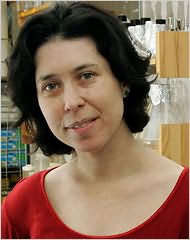
Chang-Rae Lee appeared on The Bat Segundo Show #327. Mr. Lee is most recently the author of The Surrendered

Condition of Mr. Segundo: Searching for the middle-ground between “beat” and “sweet.”

Author: Chang-Rae Lee

Subjects Discussed: The similarities and differences between writing in first-person vs. third-person, the advantages of sitting in the god’s seat, infinite choices within sentences, the difficulties in pursuing the “inner life” on the page, becoming imbued by character consciousness, feeling obliterated when writing about the ravages of war, Brian Evenson, Lee’s ongoing fascination with violence, pursuing time and space within sentences, contending with false starts, agonizing over sentences, Lee’s perfectionism in relation to revision and line editing, the reasons behind the two year publishing delay for The Surrendered, the problems with possessing a hard work ethic and producing slow, writing the first chapter in a swift period of time, distrusting prose results, the difficulty of final chapters, writing as a medium for thinking and character development, character names and historical references, the Battle of Solferino, Hector as a Jean-Henri Dunant type, Hector’s creative origins as a guy from Southwest Texas, the town of Iliad, New York, Hector’s design as an immortal, the double-edged sword of persistence, the influence of Cheever and Updike, and the need to mature (as a writer and as a person) before tackling a serious story.

EXCERPT FROM SHOW:

Lee: I’ve always been very conscious of language. It might seem silly of me to say, given all of the things that have happened in my books. I’m not terribly interested in plot. (laughs) I mean, I enjoy it. But I find, for me, the real action in drama is in the play of the sentences and in the play of the words. That’s what draws me through the story too. I mean, in some ways, unless I hear the sentence, I don’t understand what it really means. And even back in school, when I was writing a lot more essays, I would always try to craft it so that it felt like something and it sounded like something to me, rather than just said something. And particularly vis-à-vis the scenes of violence, I wanted — I think in this book and in A Gesture Life — I tried to think to myself, “What was the most, in some ways, unlikely way to describe this?” With perhaps spare and beautiful language that would add a layer of a different kind of horror to the moment. Just the contrast between how not lovely, but how handsome everything seemed and normal, given what was happening.

Correspondent: Well, that’s interesting. It also makes me ask whether you could ever possibly stop work in the middle of a sentence or whether this would actually drive you insane over the course of a day.

Lee: No, no. I can never do that. That’s my problem as a writer. I work the sentences so long. And even the very plain ones that probably don’t seem to anyone to be worth it. (laughs)

Correspondent: A five-word sentence? (laughs)

Lee: (laughs) I work them and work them until each one satisfies certain requirements and follows up the last sentence, and fulfills and promises something about the next one. You know, it’s not a great way to write in some ways. Because at the end of a paragraph, I often feel, “Okay, this is a pretty good paragraph.” But sometimes that paragraph is completely useless. Because it’s irrelevant or it’s not quite looking at the right thing.

Correspondent: Well, let’s expand this to chapter units. These are rather lengthy chapters. And so this also makes me wonder when you knew the chapter was done, if you’re constantly working and crafting these sentences.

Lee: Well, let me tell you. I threw away chapters. I threw away many chapters. They do get done. But often they’re just irrelevant. And this has been my mode in all my novels. (laughs) And it’s a maddening, frustrating mode. Because I do tend to write chapters that are a little bit longer. It just appeals to me somehow. The rhythm that I get in having a little full narrative in each chapter. A fully detailed scene. And again, for me, they’re all like little tiny books.

Correspondent: Well, this also leads me to ask quite naturally, there has to be an advantage in tossing away a chapter. Because you didn’t get it this time. But you may have had a rough idea of what worked. And you know that you can possibly recapture those particular elements and try again and get it right. Or does the process work like that for you?

Lee: No, no. It definitely helps. I mean, the second time around, you’re much more aware. You have to get over the excruciating pain of having thrown away that chapter and feeling as if there were good parts of it, but that I probably can’t use anymore. Because the whole thing for me is — again, the whole chapter has to feel that it has a certain kind of rhetorical orchestration. And even a musical orchestration, for me at least, that I hear. And maybe it’s because I grew up writing poetry first. And, in some ways, I was raised by poets as I was learning the craft. And I’m still learning. But I’ve always been attuned to meter and a certain kind of stressing and a certain kind of musicality.

Correspondent: So you cannibalize essentially with the subconscious. With these second attempts. Is that how you might put it? You throw it away. You don’t look at it again. The false starts.

Lee: I’ll sometimes look at them. But again, it’s painful to look at them. Because in and of themselves, they seem okay. And that’s what I tell my writing students. It’s not a matter of writing well ultimately. I mean, that’s not the only matter, right? It has to fulfill all the things that you’ve been writing to up to that moment and connect up in a mysterious way, in an ineffable way, with what you’ve laid down and what you might lay down. So I don’t know. Sometimes I feel as if maybe that’s the way I have to do it. I have to write every novel four times. Not four different novels. But in the process of it. Just kind of work it and work it and work it. And I’m a slow writer too. I’m pretty methodical. I’m not the sort of writer who can jam out 2,000 words and then go back and fix them and be happy with it. So it’s coalmining. (laughs)

(Image: Daniel Hulshizer)

The Bat Segundo Show #327: Chang-Raee Lee (Download MP3)

This text will be replaced