Main Street (Modern Library #68)

(This is the thirty-third entry in the The Modern Library Reading Challenge, an ambitious project to read the entire Modern Library from #100 to #1. Previous entry: The House of Mirth.)

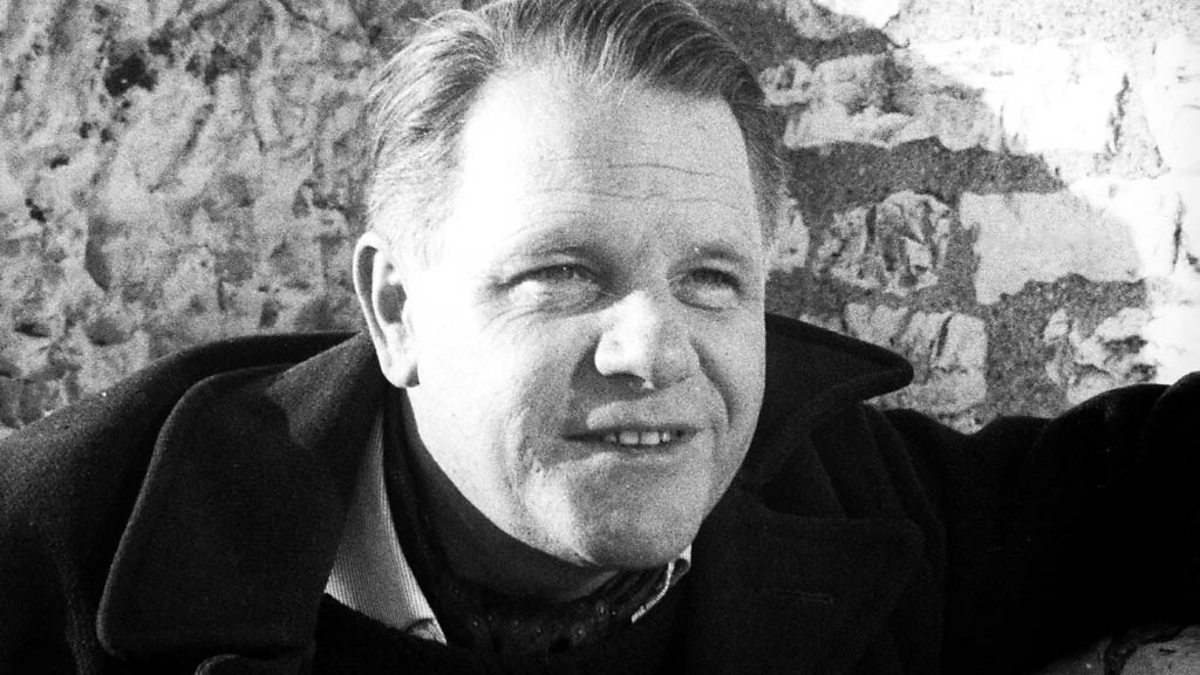
Evelyn Waugh, Erskine Caldwell, Iris Murdoch, Nathanael West, George Orwell, Joseph Heller, James Joyce, Rebecca West. They — and so many other writers — were far nimbler in their shellacking of institutional norms than Sinclair Lewis ever was. Yet it was Lewis who won the Nobel Prize. And they didn’t. Why? Likely because the Nobel Prize Committee had it in for Edith Wharton and the Norwegian cultural oligarchs may have secretly believed they were correcting a “wrong.” Just nine years before, Lewis quietly seethed after the Pulitzer Prize Board changed its mind and awarded the Fiction Prize to Edith Wharton for The Age of Innocence instead of Main Street. It was an appropriate correction. Not only is The Age of Innocence a far superior novel to Main Street, but this was also the first Pulitzer Prize for Fiction awarded to a woman. And Edith Wharton could write Sinclair Lewis’s wino ass under the table. (Meet me in a coffeehouse and I will argue this point for hours! I am Team Wharton all the way!) We also know from Hermione Lee’s biography that Wharton, who was tremendously gracious and got along with nearly everyone, became disappointed in Lewis after he revealed himself for the self-serving drunk he truly was. She wrote to Gaillard Lapseley that Lewis was “utterly unperceiving, & frankly interested only in the sale of Arrowsmith! What a queer product — for he really is an artist, though he is so unaware of it.”

Wharton was being kind. Sheldon N. Grebstein suggested that Lewis’s clear disinterest in style is one of the reasons why he is not more widely read today. And even Grebstein, who was in the tank for Lewis, pointed out that the Minnesota bard was not exactly your goto guy when it came to unpacking the complexities of human behavior. (Main Street, in particular, fails on this front. More anon.) But Grebstein also held up this absence of eclat as a virtue, for Lewis’s primordial approach liberated him to explore chance and contrivance. And when his id was hitting the right targets, he could be just as efficiently brutal as any twentieth century writer. (Lewis’s line in Elmer Gantry about the preacher flunking Greek, but winning a ten dollar prize for “Sixteen Ways of Paying a Church Debt” is a genuinely funny one.) Perhaps this is one big reason why Gore Vidal declared Lewis a romantic.

But ultimately Sinclair Lewis’s visceral qualities are often vitiated by his limited understanding of human behavior. Jealousy is one of the cornerstones to the Sinclair Lewis formula. Martin Arrowsmith hates the starry-eyed men who fawn over his wife, as well as the success of his associates. In his 1930 Nobel lecture, Lewis was to invoke jealousy as one salient reason for American literature being poorly regarded in Europe. In his biography Rebel from Main Street, Richard R. Lingeman makes a persuasive case that Lewis’s late-life romantic relationship with Marcella Powers was cemented in jealousy. It’s certainly true that jealousy can take you far in life. Sure, you may end up looking and behaving like Emperor Palpatine near the end of your days. And you probably won’t have a sense of humor. And countless people will secretly hate you even after you achieve a modicum of fame and renown. But, by Jove, you tripled down on your reach and you got somewhere! And in Lewis’s case, it landed him a Nobel and a slot on the Modern Library list.

Lewis’s canonical “importance” has been greatly inflated because Lewis cloaked his privilege in Midwestern roots. Even those who were enlisted to stump for Lewis in his prime did so with great reluctance. (In 1961, Mark Schorer wrote a Lewis biography for the money and dreaded every minute of it.)

To my mind, Lewis’s strongest novels are Babbit, Elmer Gantry, and the underrated It Can’t Happen Here. All three of these books document the peculiarly American dangers of obsession and conformity. Read this triptych today and you feel that Lewis was writing from a place of great urgency. Read his other work and you will find slipshod prose (Lewis was an alcoholic and it has been suggested by a few scholars that he wrote most of Arrowsmith completely blotto), rambling and often incoherent narratives (particularly in his later work), and wildly inconsistent quality. To write well, Lewis needed beastly instinct and emotional angst. And when he didn’t have that, he floundered along with bloat and bitterness.

Sadly, Main Street is the only Lewis volume represented on the Modern Library list. And the unfortunate truth is that this is a vastly overesteemed, doughty, and ponderous volume — not entirely without merit — that will surely fade from public memory by the middle of the 21st century. Its attempts at Minnesota vernacular feel belabored rather than felt. (“W a’n’t it in 1979?” “Why no ‘twa’n’t.” Yeah, whole pages like that.) Yes, Carol Kennincott does try to bring culture and progressive values to a town steeped in bland vanilla values. But her calls for revolution are unpersuasive:

We want our Utopia now — and we’re going to try our hands at it. All we want is — everything for all of us! For every housewife and every longshoreman and every Hindu nationalist and every teacher. We want everything. We sha’n’t get it. So we sh’n’t ever be content —

Frankly I’ve heard more convincing platitudes from some “mic check” kid at a protest

Granted, Lewis is very good at showing how the town of Gopher Prairie subsumes Carol’s identity and erodes her standards. These uneducated Caucasian hicks — the great grandparents to today’s right-wing morons who rapturously pay attention to Tucker Carlson and other hate merchants with a bafflingly big draw when not donning their red hats and fascist paraphernalia and claiming to be victimized by critical race theory even as they espouse racism — truly believe that they are remarkable (Mrs. Ole Jenson’s “thoughts” on Shakespeare are the apotheosis of incuriosity and are truly more pitiful than a poorly sourced Wikipedia entry) and that they are “just as good as anybody in Minneapolis.” Midway through the novel, Carol and her husband actually make a trip to Minneapolis (the only place to see happening new plays and buy fashionable new threads) and we see just how residing so long in a backwards town has altered her:

She felt rustic in this once familiar city, after a year an a half of Gopher Prairie. She was certain that Kennincott was taking the wrong trolley-car. By dusk, the liquor warehouses, Hebraic clothing-shops, and lodging-houses on lower Hennepin Avenue were smoky, hideous, ill-tempered. She was battered by the noise and shuttling of the rush-hour traffic. When a clerk in an overcoat too closely fitted at the waist stared at her, she moved nearer to Kennincott’s arm. The clerk was flippant and urban. He was a superior person, used to this tumult. Was he laughing at her?

As someone who spent half his life slowly migrating his way from the colorless doldrums of the California Central Valley to the thrilling possibilities of New York City, Carol’s uncertainty and anxieties truly resonated with me. When Lewis juxtaposes Carol against the relentless judgment of Gopher Prairie, Main Street is good. Carol can’t even have a quiet moment of joy to herself without inciting the judgmental scrutiny of being a doctor’s wife. She can’t be anonymous. Her every move is written up with illiterate relish in the local newspaper. (These days, the libeling and shaming and speculation can now be found on the great hellscape of social media, where your residency in a big city or a small town no longer matters to the twisted hateful losers who condemn you for living a fun and interesting life clearly beyond their talent and initiative.)

Yet despite Lewis’s attempts to show how Carol is victimized for being a woman, the sad irony is that Carol is less of a character and more of an object. We really don’t have a strong sense of what attracts Carol to her husband Will other than his neck. (Look, I’m not going to kink-shame. But seriously? One of the interesting eccentricities about Main Street is its relentless neck imagery, applied equally to humans and horses. When Lewis preposterously described how Carol is attracted to “the last light brought out the planes of his neck, his flat ruddied cheeks, the side of his nose, the depression of his temples,” I laughed so hard on the subway that two otherwise indifferent New Yorkers shot me disapproving glances. Even accounting for the unconsummated lust that Carol is acting out in this late section of the novel, it’s abundantly clear that Lewis didn’t really understand what women are attracted to.) We are told at the start of one chapter about how Carol suddenly loves her husband Will — this mediocre scumbag who won’t even give her enough money to buy groceries — but why? Then when Carol pops out a baby, we are told that “she loved him with all the devotion and instinct at which she had scoffed.” Sinclair, buddy, put the bottle down and give us more than these superficial details!

I didn’t outright hate Main Street, but I was greatly disappointed by it. After a hundred pages of this, all the potshots at Gopher Prairie locals feel like Lewis shooting monkeys in a barrel. Sinclair Lewis either lacked the desire or the talent to portray small town people as anything other than caricatures. But three years ago, the town of Sauk Centre erected a statue to the man. And in the immediate wake of the book’s publications, many rural Minnesotans proudly called themselves “Main Streeters.” Either they missed the point of the book or, more likely, they never bothered to read it.

Next Up: Joseph Conrad’s Heart of Darkness!
The House of Mirth (Modern Library #69)

(This is the thirty-second entry in the The Modern Library Reading Challenge, an ambitious project to read the entire Modern Library from #100 to #1. Previous entry: The Alexandria Quartet.)

“But brilliant young ladies, a little blinded by their own effulgence, are apt to forget that the modest satellite drowned in their light is still performing its own revolutions and generating heat at its own rate.” — The House of Mirth

Our universe has become more hopelessly transactional. Vile narcissists with limitless greed and an absence of smarts and empathy have taken over the landscape with their blunt bullhorns. At every socioeconomic level, you will find a plurality of mercenaries who will push any bright and promising head beneath the waterline with ruthless cruelty. Perhaps I’m finally understanding, at an embarrassingly late age, just how commonplace such self-serving treachery is in our world. But what’s the alternative? Cynicism? At times, I have a sense of humor that is darker than the nightscape above the Roque de los Muchachos Observatory, but no thanks. I’ve always been a cautious optimist with a healthy handle on reality, but I still detest this state of affairs. I will still speak out vociferously against it and fight the business-as-usual cowards who uphold this great sham known as the status quo at any personal cost. I stump for the outliers and the misfits. The people who have authentic and vital voices. I don’t care who they are or where they come from. I will stick up for the gas station attendants and the baristas. I will listen to their full stories rather than judge them from a fleeting glance or a superficial and supercilious position. I despise bullies and opportunists. I believe in affording everyone basic dignity. I believe that everyone has it within them to grow and to learn and that inquisitive efforts should never be mocked, especially when genuine curiosity is now in such short supply. Reprobates who use their positions of power to denigrate the marginalized and the underprivileged are scumbags who need to be fought and, if necessary, destroyed.

So you can probably imagine how much The House of Mirth means to me. It is one of the best books on the Modern Library list and it should have been ranked much higher. This is my favorite Edith Wharton novel, although The Custom of the Country is a close second. Just this year, I have purchased four copies of this book for friends, urging them to read it with every ounce of exuberance I can summon. And you need to read it too, if you haven’t already. This book is vivacious and brilliant and funny and utterly heartbreaking. I rooted for Lily Bart. I wept for her. Even when I knew her fate. She did not deserve her downfall. She is one of the great tragic heroines in all of literature, right up there with Emma Bovary, Dido, Anna Karenina, Ophelia, Bertha Mason, and Francesca da Rimini. Much like Muriel Spark’s masterpiece The Prime of Miss Jean Brodie, you can read this novel multiple times and always discover a new angle. That the rules of the game haven’t changed all that much in the one hundred and seventeen years since this classic was published is a great testament to Wharton’s sagacious and prescient genius. And if you finish this novel and you’re not in the “ride or die” wagon for Edith Wharton, then I’m sorry, but you simply have no literary taste.

Should Lily Bart be blamed for her fate? Conservatives (and privileged neoliberals) will likely condemn her for her apparent financial irresponsibility, but the peer pressure from her rich friends to gamble away vast sums she doesn’t have at bridge will be deeply felt by anyone who can recall the youthful horrors of trying to fit in. (In fact, I’d say the only contemporary writer today who could be an Edith Wharton in the making is the ferociously talented Adelle Waldman, whose excellent novel, The Love Affairs of Nathaniel P, mined similar territory. MacArthur people, are you listening? Award her a fellowship already! We really need to get her writing more books so we can find out!) And Wharton is exquisite in communicating to us precisely why Lily is so susceptible to social pressure from these higher-ups and hangers-on:

Her naturally good temper had been disciplined by years of enforced compliance, since she had almost always had to attain her ends by the circuitous path of other people’s; and, being naturally inclined to face unpleasant facts as soon as they presented themselves, she was not sorry to hear an impartial statement of what her folly was likely to cost, the more so as her own thoughts were still insisting on the other side of the case.

More than a century later, with the Dobbs Supreme Court decision and the Democrats’ failure to revive the Equal Rights Amendment serving as disheartening signs that a Handmaid’s Tale future could be in store for us, women are still pressured to be “good” and compliant. And while women have a lot more freedom today than they did in 1905, patriarchal conformity upheld through peer pressure has ensured that a lot of women silently endure such internal and external conflict.

Lily is lucky to have true friends like Carry Fisher (initially described as a “professional sponge” and “a mental habit corresponding to the physical titillations of the cigarette or the cock-tail,” but she turns out to be a hell of a lot more than this) and Gerty Farish (an indefatigable charity worker who doesn’t easily buy into any of the false charges eventually leveled towards Lily) when she eventually slips, but the affluent allure of the Trenors and their circle amaurotizes (and thus amortizes and possibly amouritizes?) her to the deadly puppetry of the Trenors and, most diabolically, the repellent and calculating bedhopper Bertha Dorset, whose doctors, we are informed, forbid “her from exposing herself to the crude air of the morning.” (Such a beautifully compact way of foreshadowing Bertha’s vampiric nature!)

Wharton was a master of gentle ambiguity nestling just beneath the surface of narrative clarity. The first time you read Mirth, you don’t buy Simon Rosedale’s mercy near the end. With his “small stock-taking eyes,” he’s little more than a bean-counting arriviste and his despicable tabulating also applies to people. (When Rosedale says, “I can’t help making love to you” to Lily near the end of the book, he’s basically every vulpine loser hitting a singles bar at 3 AM, scoping out the remaining women who haven’t gone home with anyone.) But the second time you read Mirth, you’re not so sure. Rosedale says, “The wonder to me is that you’ve waited so long to get square with that woman.” Can Rosedale be forgiven for simply being socially clueless? Is he a product of the system? And does his gesture actually mean anything? I’ll leave it to the capable writers of Jezebel and The Cut to argue the culpability of mediocre men.

Mirth‘s vast cast of characters tend to glom onto the split-second flourish of a socialite’s physical gesture to fuel gossip and umbrage. Consider the way that Mrs. Peniston is described as “the kind of woman who wore jet at breakfast.” But Wharton’s meticulous study of mercenary manipulators is far from vapid. She hoped to show that “a society of irresponsible pleasure-seekers…can acquire dramatic significance only through what its frivolity destroys.”

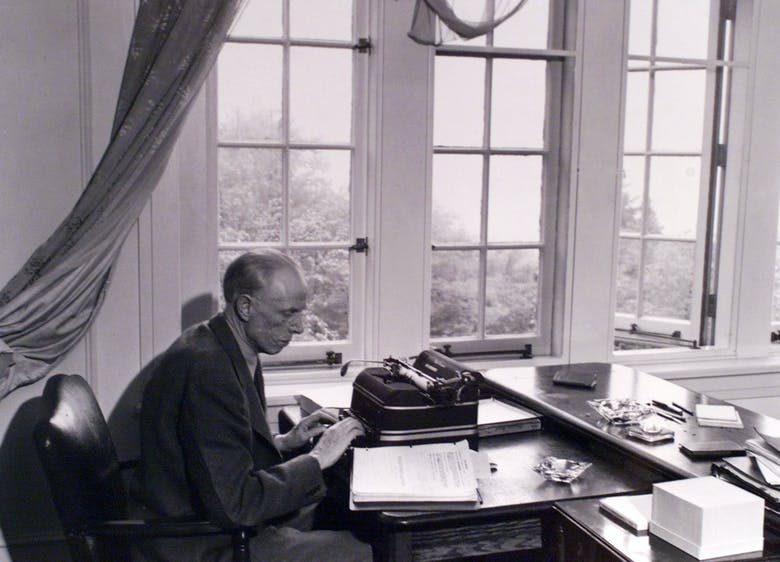
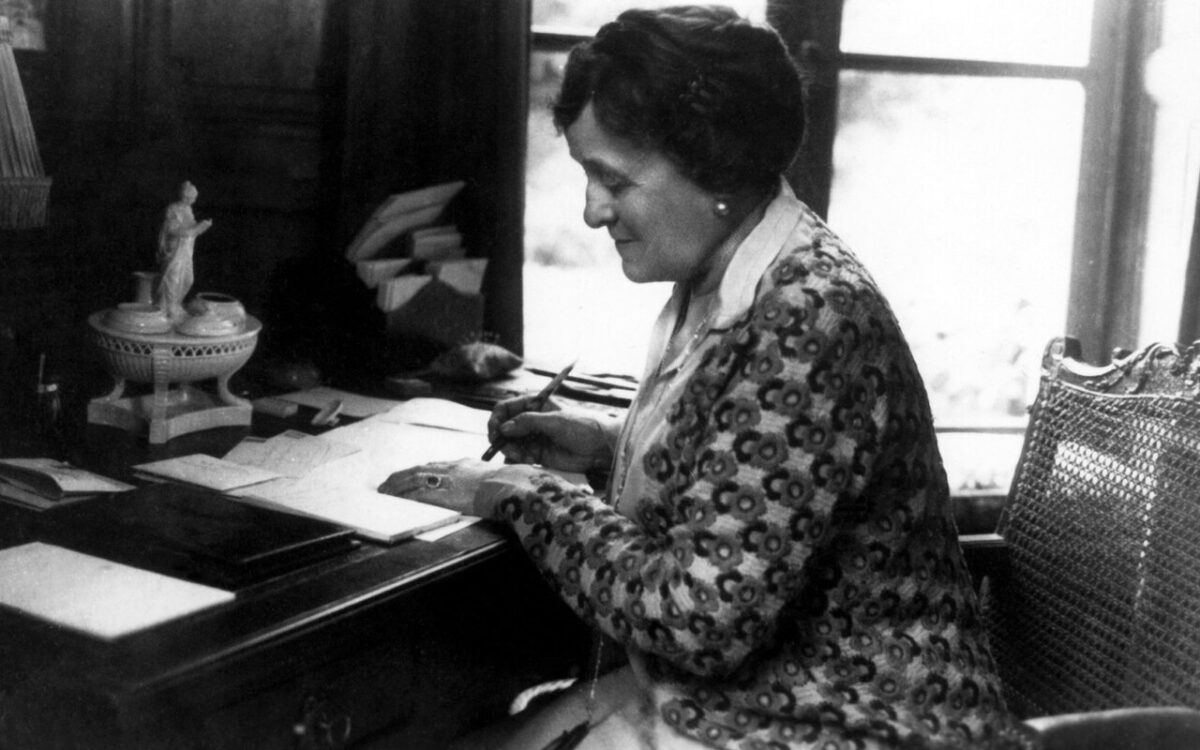
Perhaps one of the reasons why The House of Mirth is so authentically devastating is because Wharton was undergoing a great deal of stress as she wrote it. Her husband Teddy had just experienced a nervous breakdown and his erratic behavior was worse than ever. Her fiction was in demand and was being published everywhere, but her social calendar was spiraling out of control. Scribner’s editor Edward Burligname needed a serialized novel at the last minute after another writer had dropped out. And amazingly, Wharton produced this masterpiece in ten monthly installments, with Mirth appearing in publication before Wharton had even finished it (although the tale had gestated in her notebooks for at least five years under the working title “A Moment’s Ornament,” taken from a Wordsworth poem).

Scribner’s knew that it had a big hit on its hands and promptly placed sensationalist ads on the cover — packaging that Wharton objected to — when The House of Mirth hit bookstores in October 1905. The publicity forces also talked up Wharton’s social movements and, while Wharton was happy to have her novel read, she feared that her work would be seen as nothing more than a juicy gossipfest.

She need not have worried. The book was fiercely debated in various letters sections, with many wondering if Wharton was accurately portraying the leisure class or mercilessly skewering them for her own gain. And the robust discussion lent greater credibility to Mirth‘s considerable literary merits.

In her excellent Wharton biography, Hermione Lee has suggested that The House of Mirth can be defined by the presence of books within the book: largely decorative and untouched by few outside Lawrence Selden, the young lawyer who toys with Lily Bart’s need to land a husband. But Mirth can also be epitomized by the actors recruited to entertain the wealthy at Bellomont:

Indeed, so skillfully had the personality of the actors been subdued to the scenes they figured in that even the least imaginative of the audience must have felt a thrill of contrast when the curtain suddenly parted on a picture which was simply and undisguisedly the portrait of Miss Bart.

If all the world’s a stage, why then are we still susceptible to objectifying people? It’s actually quite astonishing how effortless it is to transpose the cruelty of class trappings to the casual character assassination that now passes for “truth” on social media. (As Wai-Chee Dimock has observed, Lily Bart spends most of the novel marketing herself, attempting to appeal to the highest bidder. This is not unlike the behavior of a comely Instagram influencer or, if we want to take Gus Trenor’s sinister insinuation on its face, an OnlyFans model willing to say or do almost anything to extract money.)

Many disgusting creatures in high places fancy themselves Lily Barts — even as they stab with the fierce sociopathic duplicity of Bertha Dorset. (On literary Twitter, there can be no better contemporary parallel to Bertha than the monstrous bully and largely mediocre writer Jennifer Weiner, whose relentless attacks on other writers are quietly circulated among those in the know and whose odious demands for “literary respect” were smartly captured by The New Yorker‘s Rebecca Mead in 2014.) They jockey for precarious perches to cleave to their careers while piling onto the week’s “main character” with gossip and lies. An otherwise innocent figure’s glaring mistake is used to perpetuate further prevarications and even those in the know, like Rosedale, will not lift a finger to salvage their own shaky ascent into a perceived predominance. Indeed, as someone who has been the target of multiple smear campaigns, I can report that a literary man of modest renown — a figure who once maintained a blog inspired by Wharton — treated me, when I was homeless, with the same false solicitude that Rosedale tenders to Lily Bart in the final crushing pages of The House of Mirth. He strung me along with phony plaudits about my writing talent and he offered me the sham promise of a prominent magazine gig that I would have killed to land at the time. He was not unlike Rosedale. Indeed, like all of Wharton’s socialites, he inevitably deemed me invisible — likely with a cognizant irony. It is doubtful that I will ever forgive this motherfucker for tinkering with my dignity and my then shaky self-respect to delude himself into thinking that he was a “kind and decent man.”

So Lily Bart’s awful and needless plunge into the abyss resonates deeply and painfully with me. Today I am tremendously grateful to be gainfully employed, doing what I love, tackling new creative mediums, and to be very much alive. That there are so many “influencers” who hold this book up without comprehending or practicing its emotionally instructive lessons about the need for empathy says everything about the vicious myopia of the contemporary literary world, which now thrives on stubbing out noisemakers and ruining outliers. They cancel anyone with an even remotely disagreeable opinion and they murder anyone who stands in their way of their self-serving and meretriciously earned “success.” Cutthroat capitalism and opprobrious opportunism at its finest! Edith Wharton had her finger on the pulse of 1905 life. And sadly 2022 life.

Next Up: Sinclair Lewis’s Main Street!

Florence Nightingale (Modern Library Nonfiction #74)

(This is the twenty-seventh entry in The Modern Library Nonfiction Challenge, an ambitious project to read and write about the Modern Library Nonfiction books from #100 to #1. There is also The Modern Library Reading Challenge, a fiction-based counterpart to this list. Previous entry: The Great War and Modern Memory.)

Of the four illustrious figures cannonaded in Eminent Victorians, Florence Nightingale somehow evaded the relentless reports of Lytton Strachey’s hard-hitting flintlocks. Strachey, of course, was constitutionally incapable of entirely refraining from his bloodthirsty barbs, yet even he could not find it within himself to stick his dirk into “the delicate maiden of high degree who threw aside the pleasures of a life of ease to succor the afflicted.” Despite this rare backpedaling from an acerbic male tyrant, Nightingale was belittled, demeaned, and vitiated for many decades by do-nothings who lacked her brash initiative and who were dispossessed of the ability to match her bold moves and her indefatigable logistical acumen, which were likely fueled by undiagnosed bipolar disorder.
As someone who has been diagnosed with bipolar, I am inclined to stick up for my fellow aggrieved weirdos. We bipolar types can be quite difficult, but you can’t gainsay our superpowers. A relentlessly productive drive, a magnetism and a magnanimity that bubbles up at our high points, an overwhelming need to help and empathize with others, and a crushing paralysis during depressive spells that often has us fighting the urge to stay in bed. And yet we get up every day anyway, evincing an energy and an eccentric worldview that others sometimes perceive as magical, but that our enemies cherrypick for lulz and fodder — the basis for unfounded character assassin campaigns, if not permanent exile. Hell hath no greater fury than that of aimless and inexplicably heralded mediocrities puffed up on their own prestige and press.

But regular people who aren’t driven by the resentful lilts of petty careerism do get us. And during her life, they got Florence Nightingale. She was flooded with marriage proposals, all of which she rebuffed and not always gently. She was celebrated with great reverence by otherwise foulmouthed soldiers. Yet she also suffered the slings and arrows of bitter schemers who resented her for doing what they could not: obtaining fresh shirts and socks and trays and tables and clocks and soap and any number of now vital items that one can find ubiquitously in any ward, but that were largely invisible in 19th century hospitals and medical military theatres. She had the foresight to study the statistics and the fortitude to work eighteen hour days practicing and demanding reform. And whatever one can say about Nightingale’s mental state, it is nigh impossible to strike at Florence Nightingale without coming across as some hot take vagabond cynically cleaving to some bloodless Weltanschauung that swiftly reveals the superficial mercenary mask of a boorish bargain hunter.

Florence Nightingale nobly and selflessly turned her back from the purse strings of privilege, hearing voices caracoling within her head that urged her to do more. While she was not the only nurse who believed in going to the front lines to improve conditions (the greatly overlooked Mary Seacole, recently portrayed by the wildly gifted and underrated Tina Fabrique in a play, also went to Crimea), it is now pretty much beyond question that she revolutionized nursing and military medicine through her uncommon will and a duty to others in which she sacrificed her own needs (and caused a few early suitors to suffer broken hearts). That she was able to do all this while battling her own demons is a testament to her redoubtable strength. That her allies returned to her, determined to see the best in her even after she was vituperative and difficult, is a tribute to one of humanity’s noblest qualities: putting your ego aside for the greater good.

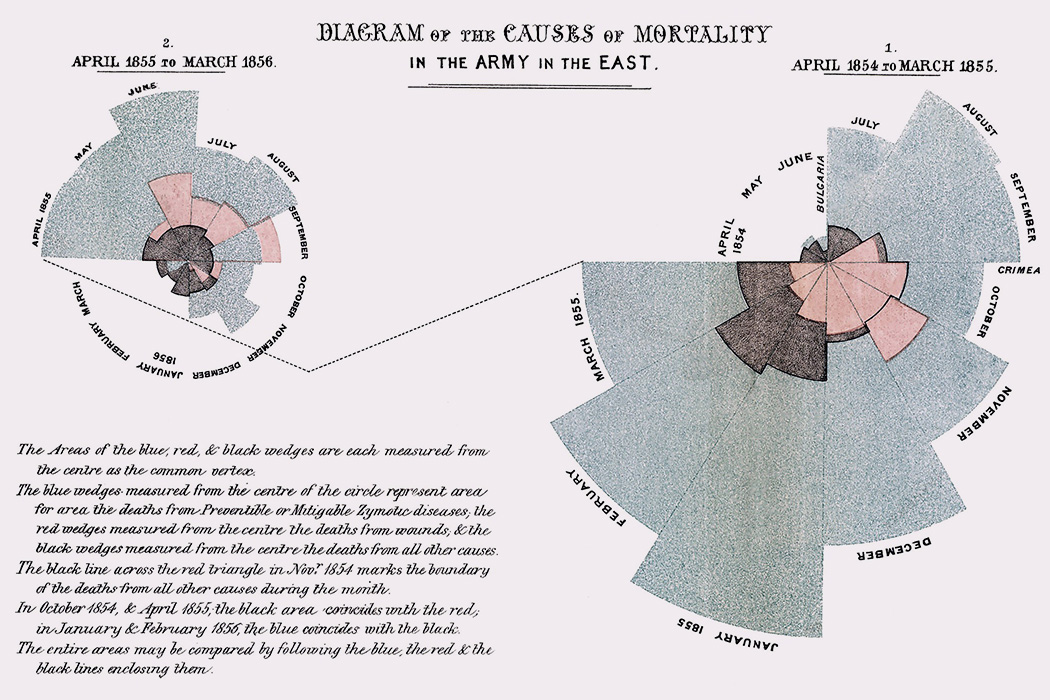
A century before PowerPoint turned 90% of all meetings into meaningless displays of vacuous egotism, Florence Nightingale was quite possibly the first person to use colorful graphical data at great financial expense (see above — it’s beautiful, ain’t it?) to persuade complacent men in power to care for overlooked underlings wounded in war and dying of septic complications in overcrowded and unhygienic hospitals. She was savvy and charismatic enough to win the advocacy of Lord Sidney Herbert, who, despite being a Conservative MP, had the generosity and the foresight to understand the urgent need for Nightingale’s call for revolution. Herbert secured funds. The two became close confidants. Yet poor Herbert suffered a significant erosion in his health and died at the age of fifty because he could not keep up with Nightingale’s demands.

I suspect that men in power resented such noble sacrifices, which could account for why Nightingale was often portrayed as a freak and a deranged outlier in the years immediately following her death. But biographer Cecil Woodham-Smith saw a different and far more complex woman than the haters. Her terrific and mesmerizing and well-researched 1950 biography on Nightingale greatly helped to turn the tide against one of the most astonishing and inspiring women that medicine has ever known. And Woodham-Smith did so not through preordained hagiography, but by taking the time to carefully and properly sift through her papers (and even a well-preserved lock of her bright chestnut hair, still as robust and as lambent as the lamp Nightingale carried in the dark more than a century later). There is a vital lesson here for today’s social media castigators, especially the testosterone-charged troglodytes who casually smear women, that they will likely ignore.

Next Up: Richard Ellmann’s James Joyce!

The Alexandria Quartet (Modern Library #70)

(This is the thirty-first entry in the The Modern Library Reading Challenge, an ambitious project to read the entire Modern Library from #100 to #1. Previous entry: A High Wind in Jamaica.)

In a previous life, when talent and bonhomie mattered more than sad resentful ciphers dedicating their wasteful energies to demolishing rivals on social media, I had the great privilege to interview authors. I once made a northeastern trek by train to talk with a literary titan — a formidable essayist, a first-rate fiction writer, and a mischievous wit with a bright high voice who is still blessedly alive and who remains quite undersung today. After I pressed the square STOP button on my bulky black recording unit, we got to gabbing for two more hours off-tape — an act of generosity that stunned my companion and me. The author surprised us by confessing that she had played the then-in-vogue Angry Birds and we discussed the literary classics that young people read (or, more frequently, neglect). She was very likely picking our unweaned and less wiser brains in that pre-Trumpian epoch when, even then, declining erudition was a growing pestilence, as it wasn’t all too often that she had the company of young strangers at her long refectory table, which was punctuated by a plate of store-bought cookies that no one touched. The first name that this author mentioned was Lawrence Durrell.

“Does anyone even read him anymore?” she asked.

Neither my companion nor I had read a single word of this almighty author at the time. As I was to learn only in the last few months, I missed the teenage ritual of diving into Durrell by about five to ten years. Justine, Balthazar, Mountolive, and Clea. These were the four volumes read by an impressionable generation just before me. My older literary friends describe soaking up Durrell’s words with wide and voracious eyes around seventeen — just before they joined the less exclusive liturgical practice of tossing their tasseled caps into the heavens preceding the uncertain foray into higher education and the newfound duty of negotiating injurious capitalism (clearly not redeemable by taxation these days, contrary to sentiments expressed by the novelist Pursewarden in Mountolive).
Now that I have finally read the mighty quartet — with its gorgeous sentences, its exotic vernacular (which caused even a rhapsodic word nut and undefeated Wordle regular like me to make repeat trips to the dictionary), its bold meditations on “modern love” (a term of art regrettably coarsened by the New York Times‘s often vapid essays and an even more vacuous television offshoot) and intertextuality (most notably, Balthazar‘s Interlineal), its vast tapestry of unreliable narrators and colorful characters (many marked by disease and disfigurement and, most tellingly, the absence of eyes; the number of one-eyed characters throughout the Quartet greatly overshadows the sum of spastic dancers you’ll find in any Brooklyn nightclub on a Saturday night), and the hypnotic and baleful city at the center of all these proceedings — I am frankly kicking myself for not getting around to it much earlier. My reading experience was a true coup de foudre.

This tetralogy is clearly one of the 20th century’s greatest literary achievements. I suspect, as I crest closer to the age of fifty and reckon with surprising strains of unsummoned maturity that have often bemused me, that this was the last possible moment of my life in which I could have supped upon Durrell with an eager appetite. There are only a handful of living writers whose command of the written word beckons you to slow down and imbibe the text ever so delicately — much like a pied crested cuckoo leisurely supping on drops of rain water. Of Alexandria itself, we learn of warm winds that strike against the cheek as “soft as the brush of a fox” from an enchanting near-phantom city “whose pearly skies are broken in spring only by the white stalks of the minarets and the flocks of pigeons turning in clouds of silver and amethyst; whose veridian and black marble habour-water reflects the snouts of foreign men-of-war turning through their slow arcs.” Even if one is blind and cannot see the Nile’s adjacent estuary, there is eldritch life within the “gloomy subterranean library with its pools of shadow and light,” where “fingers [move] like ants across the perforated surfaces of books engraved for them by a machine.”

Shallow word-wasters have abseiled down the other side of once robust parapets with evermore ubiquity these days, emboldened by the narcotic allure of likes and follows rather than the purer and more rewarding journey set by the instinctive tempo of their distinct voices. But Durrell (whose name rhymes with “squirrel” and not the inexact “laurel,” as I have unknowingly mispronounced for decades) is very much on the level. Given the astronomical prices of his non-Alexandria volumes online — despite a well-received four season television series on the Durrell family in recent years and an enthusiastic nonprofit society sustaining a cheery and active Twitter presence — it appears likely that Lawrence Durrell is fated to be forgotten. All writers, of course, have their time and eventually fade into the sunset. Very few of today’s readers speak of Naipaul, Ford Maddox Ford, John Dos Passos, or even Anthony Burgess anymore. For some of these plodding stampeders now collecting well-earned dust in used bookstores from here to Gehenna, there is sturdy raison that only a handful of graying hangers-on will dispute. (Besides, what kind of giddy and obsessive bastard reckons with ancient canons when one is regularly unsettled by the cannonades of apocalyptic headlines and the high probability of a third world war? An increasingly shrinking number these days, easily a hundredfold more minuscule than the combined tally of all who still collect vinyl and Beanie Babies.) But in Durrell’s case, this feels like a notable criminal oversight. Particularly since crossing the four book Rubicon was, not so long ago, a vital rite for any stripling with unquenchable curiosity.

It all starts with an unnamed Irishman (whose name is revealed to be Darley a few books later) in exile on an island with a child, recalling his passionate affair with a woman named Justine.  Justine is married to a distinguished Copt diplomat named Nessim.  Before that, Justine had been married to a tyrannical French national and that life has been captured in a book called Moeurs written by some guy named Jacob Arnauti. Intertexuality and the struggle to make sense of ineffable feelings through words (or even the words from another committed and capricious chronicler) is very much a Durrell motif.  Darley has abandoned a devoted and far too patient dancer named Melissa for the sake of this seemingly distinguished affair.  There is also a mysterious painter named Clea, who smartly tells Darley, “Love is horribly stable, and each of us is only allotted a certain portion of it, a ration. It is capable of appearing in an infinity of forms and attaching itself to an infinity of people.”

But what if the “love” that Darley feels has not been reciprocated in the way that he has believed? Durrell’s second volume, Balthazar, calls into question all the events of the first volume, with Balthazar himself (a mystical Jewish doctor who is involved with the Cabal) arriving by sea with an annotated version of Darley’s manuscript.  The third volume, Mountolive, not only expands these angsty escapades to the vaster canvas of surprising espionage developments that often crackle with the griping momentum of a John le Carre novel, but reveals the tableau from the third-person vantage point of the titular diplomat, where we not only learn that Nessim has an unhinged brother named Narouz, but that Mountolive himself is mad about their mother, Leila. Finally, in Clea, we return back to the narrator Darley, five years after the Rashomon-like events of the first three volumes. The Second World War now unsettles the city. And the characters we have been rapturously following are still trying to make sense of the events that have happened, but what living now encompasses. Which is not all that removed from today’s practice of doomscrolling, dodging new variants, and submitting one’s deltoid for yet anther booster shot. As Darley himself puts it:

I am hunting for metaphors which mighty convey something of the piercing happiness too seldom granted to those who love; but words, which were first invented against despair, are too crude to mirror the properties of something so profoundly at peace with itself, at one with itself.  Words are the mirrors of our discontents merely; they contain all the huge unhatched eggs of the world’s sorrows.

Amazingly, Durrell wrote Clea in four weeks.

It may seem from my description that Durrell was merely a relentless brooder, but he was often quite witty with his pen. Biographies from Ian MacNiven and Gordon Bowker both depict Durrell’s obsession with the great P.G. Wodehouse.  And Durrell fueled these comic energies in humorous stories about a diplomat named Antrobus.  While the tableau of Scobie cross-dressing as Dolly Varten in Balthazar possesses the dowdy feel of an entry in the Carry On film franchise, Sir Louis’s eccentricities in Mountolive could almost be interposed to an Evelyn Waugh novel:

Within the last year, and on the eve of retirement, the Ambassador had begun to drink rather too heavily — though never quite reaching the borders of incoherence. In the same period a new and somewhat surprising tic had developed. Enlivened by one cocktail too many he had formed the habit of uttering a low continuous humming noise at receptions which had earned him a rather questionable notoriety. But he himself had been unaware of this habit, and indeed at first indignantly denied its existence. He found to his surprise that he was in the habit of humming, over and over again, in basso profundo, a passage from the Dead March in Saul. It summed up, appropriately enough, a lifetime of acute boredom spent in the company of friendless officials and empty dignitaries.

One reason why Durrell’s voice is so distinct on the page — and why it has been so inimitable since (only Malcolm Bradbury and Roger Angell have attempted Durrell parodies, with unsustainable and ineffectual results) — is because he needed a fellow outlier (specifically, Henry Miller) and a commitment to impropriety and originality to get there. Indeed, as Durrell himself observed in a January 12, 1972 appearance at UCLA, his febrile dilettantism was his lodestar:

But it seems that every writer need a kind of placental relationship with another writer to approve of him and to help him. To reassure him. And it seems very curious how they come up in doubles in such very dissimilar people. I’m very frequently asked, “How could a writer like you admire Miller? And what on earth could he see in you?” The second question is difficult, I know. But a friendship is not qualified by the actual material one produces. And in our case, what we had in common was an unprofessional attitude to literature. In other words, neither of us were really interested in literature. Nor was Anais Nin. We were interested in other things. That is to say that we were not professional litterateurs. And we didn’t think professionally about writing. Writing, for us, was a kind of windscreen wiper which might help us to look ourselves in the eye a little more clearly. To liberate ourselves or to realize ourselves. In other words, our occupation was not literary, but philosophic really.

The journalist Peter Pomerantsev has suggested that Durrell only appeals to “the ‘cross-patriates,’ the hyphenated.” And he may very well be right. As a writer, audio producer, journalist, theatre producer, radio dramatist, sound designer, performer, voiceover man, TikTok microinfluencer (this still puzzles me),  and (just weeks ago) soundtrack composer, it’s becoming increasingly harder these days to find people who aren’t so singular and unadventurous in their passions and interests. As Cormac McCarthy has said, “Of all the subjects I’m interested in, it would be extremely difficult to find one I wasn’t. Writing is way, way down at the bottom of the list.” Those of us who find joie de vivre in living as widely and as fulsomely as we can are increasingly becoming exiles like Darley.

It’s also difficult to fathom the lion’s share of today’s emerging writers being driven by the same impetus. One’s individuality is now drowned out by the unceasing firth of social media’s brackish tide, its morass of groupthink. The urge to please, to install one’s self as some influential pinnacle who plays it safe, is diametrically opposed to the noble pairing of future artists who can provide mutual succor, possibly shaking the very foundations of an increasingly stodgy medium that rewards uninventive bougie hokum and shameless mimesis. Inimical idiocrats with such stultifying surnames as Athitakis, Ulin, Kellogg, Kachka, Kreizman, Miller, Grady, Romano, Freeman, and Schaub regularly stump for what Durrell identified (through his novelist character Pursehaven) as “the ancient tinned salad of the subsidised novel.” All of them, unlike Durrell, will scarcely be recalled by anyone fifteen years after they pass. They will live out their dull and unadventurous lives and take out their parasitic resentiment on true originals with pablumatic “hot takes” that are largely mercantile and self-serving. Having abdicated their sense of humor sometime in their thirties or forties, and expressing little more than a perfunctory interest in other things, these egregious weasels continue to wage war on any dazzling lights casting a lambent heat upon their cold and cozy conformity. And contemporary literature is lesser for it.

So it becomes increasingly urgent these days to not tuck true talents like Durrell into the granules of forgotten history. Literary achievement is consummated by puckish punks who stand against the boring norms, by young writers who pay close attention to the dazzling output of all the eclectic outliers who presaged them and who summon the instinctive effrontery to pick a crucial and principled fight in the mystifying battles against misfits.

Next Up: Edith Wharton, The House of Mirth!

The Great War and Modern Memory (Modern Library Nonfiction #75)

(This is the twenty-sixth entry in The Modern Library Nonfiction Challenge, an ambitious project to read and write about the Modern Library Nonfiction books from #100 to #1. There is also The Modern Library Reading Challenge, a fiction-based counterpart to this list. Previous entry: The City in History.)

The men went to war. Their psyches were scarred and sotted by the sights and sounds of death and dreary dissolution — all doled out at a hellish and unprecedented new normal. Machine guns, mustard gas, the ear-piercing shrieks of shrapnel and shells, rats gnawing on nearby corpses. The lush fields of France anfracted into a dark flat wasteland.

The war was only supposed to last a few months, but it went on for more than four years. Twenty-two million lost their lives in the First World War. Many millions more — the ones who were lucky to live — were shattered by the experience. Their bodies were bent and their souls were broken. As Richard Aldington observed in his bleak comic novel, Death of a Hero, the trauma that the soldiers carried home became all too common, unworthy of commiseration and often received with scorn.

But, despite the scars and notwithstanding the cruel homeland rebuke, these men somehow sustained a culture during hard-won moments when they weren’t fighting in the trenches and when they weren’t watching their close friends mowed down by the newer and deadlier weapons. Their noble commitment, their fervent faith in some lambent hope plucked from the maws of a mottled landscape, forever changed the way we saw, heard, and expressed ourselves. As Paul Fussell nimbly argues in The Great War and Modern Memory, we are indebted to these soldiers in ways that most people today cannot appreciate.

* * *

While The Great War and Modern Memory doesn’t contain the intoxicating sweep and ambition of Frazer’s The Golden Bough in identifying the underlying rituals that have come to define the manner in which we reckon with disruptive and often inexplicable quagmires, it is nevertheless a remarkable volume, one quite essential in charting the trajectory of how humans expressed themselves through poetry, letters, fiction, and even postwar mediums. I first read this book in my early twenties — many years before I would stumble onto sound design as a method of communicating feelings often untranslatable through words — and, even then, I was startled by how Fussell identified early phonographic recordings as a liminal theatre sprinkled with sounds of attack. This was evidenced not only in the hit novelty records scooped up by supercilious aristocrats comfortably ensconced in cushy sacrosanct parlors without a care in the world, but further immortalized in such unlikely texts as Anthony Burgess’s underrated dystopian novel, The Wanting Seed.

There are so many bones baked into the silt of the Somme that human remains were still being exhumed in Fussell’s day. Forensic experts have continued to make efforts to identify skulls in more recent years. But beyond all these history-shattering casualties, there were also significantly influential linguistic precedents derived from these disfiguring events. The “us vs. them” vernacular that was to become a regular feature of all subsequent wars began with the Great War’s “we” and the xenophobia that was swiftly ascribed to the other side through epithets like “Boche,” as well as the cartoonish pastiches that no soldier in history has been immune from assigning to a mortal enemy. Germans were depicted as giants, memorialized in Robert Graves’s “David and Goliath.” Blunden’s Undertones of War described German barbed wire with “more barbs in it and foreign-looking.” Whether John Crowe Ransom explicitly derived his notion of the other from Blunden, as Fussell imputes, is anyone’s guess. But Fussell’s confidence and deep dive into phrases and terms of art is strangely persuasive. He has, unlike any other scholar since, made a vigorous and spellbinding examination of how language pertaining to division and the unshakeable sense that the war would go on forever influenced the Modernists (and even the postmodernists) as they rolled out their comparatively more peaceful masterpieces to the literary front lines in the 1920s.

Contrary to the cliches, life on the front wasn’t just about poetry and gardening. There was the unappetizing perdition of stale biscuits and Maconochie stew, a hideous tinned concoction (which at least one YouTuber has attempted to recreate!) involving bully beef that reminded the men of meals tendered to dogs. There were startlingly brave figures like Siegfried Sassoon, who not only took a bold stance against the war, but evoked the sordid memories of the trenches and a forgotten England in his Sherston trilogy (which dropped just as autofiction practiced by the likes of Dorothy Richardson and Proust was being quietly celebrated and, in turn, inspired Pat Barker to write her terrific Regeneration trilogy). The stertorous gunfire on the front was so loud that, as Fussell helpfully notes, even Pynchon was compelled to memorialize the idea of shells being heard hundreds of miles away in Gravity’s Rainbow. There was even a series of Illustrated Michelin Guides to the Battlefields that made the rounds after the Treaty of Versailles. Fussell repeatedly points to maps as shaky palimpsests staggered with thick wavy lines and often wry notations, but the lack of tangible geography had to spill over somewhere. Poetry was fated to account for the ambiguity.

Fussell makes a strong case for a tectonic shift in expression being practiced even before the war began. Indeed, the war gave E.M. Forster’s famous “Only connect” sentiment some completely unanticipated momentum as the landed gentry attempted to reckon with the period between the two world wars. If the Great War had not happened, what would be the trajectory of literature? Fussell doesn’t mention Rebecca West’s 1918 novel, The Return of the Soldier, but this was one of the first Great War novels to explicitly deal with shellshock and one can read this book today as a fascinating glimpse into a period between frivolous prewar innocence and the stark and gravid sentences that were to come with Eliot, Hemingway, Woolf, and Fitzgerald. Fussell suggests that the young Evelyn Waugh was emboldened in his poetic and often brutal satire by much of the lingering language that the war had extracted from the patina of once regular summer comforts. The charred scenery on the front lines caused soldiers and servicemen to look upward into the possibilities contained within the sky — itself a predominant fixation within Ruskin’s Modern Painters — and not only did Waugh mimic this in the opening pages of his later novel, Officers and Gentlemen, but one cannot read John McCrae’s “In Flanders Fields” without being acutely aware of the “sunset glow” or the sky serving as an anchor for the poppies blowing beneath the crosses or the singing larks still “bravely singing” amidst the destruction.

It’s possible that Fussell may not have arrived at his perspicacious observations had he not gone through wartime and its preceding ablutions himself. In his memoir Doing Battle, Fussell notes that he could not have unpacked Wilfred Owen’s veiled sensuality had he not been smitten himself with the looks of boys in his adolescent years. He also writes of identifying strongly with Robert Graves’s sentiment that one could not easily be alone in the thronged throes of battle. In The Great War and Modern Memory, Fussell sought to unpack irony and poetic elegy as it became increasingly expressed during the First World War. He claimed his study to be “an act of implicit autobiography” and “a refraction of current events.” In Fussell’s case, he had sickened of the Vietnam War’s overuse of “body count” and perceived perspicacious parallels between Owen’s “Insensibility,” a poem which suggests that expressing “sufferings” is simply not enough to understand real loss. One must have palpable experience of warfare’s devastation in order to reckon properly with it.

And perhaps The Great War and Modern Memory is more serious than Fussell’s “stunt books” (Class, which The Atlantic‘s Sandra Tsing Loh rightfully described as a “snide, martini-dry American classic,” and Bad) because Fussell could not find it within himself to betray his own personal connection to war.

Even so, Jay Winter, Daniel Swift, and Dan Todman have rightfully censured Fussell for leaving out or even demeaning the contributions of working stiffs. Make no mistake: Paul Fussell is an elitist snob and more than a bit of a sneering egomaniac. To cite but one of countless examples, Fussell overreaches and reveals his true colors when he suggests that all letters home from the soldiers adhered to what he calls “British Phelgm” (“The trick here is to affect to be entirely unflappable; one speaks as if the war were entirely normal and matter-of-fact.”). War censors certainly created a creative smorgasbord of workaround phrases, but, as someone who has reviewed World War I letters for research, this is an unequivocal load of bollocks — as a cursory plunge into the National Archives swiftly reveals. Fussell is much better tracking idioms like “in the pink” and using his mighty forensic chops to expose undeniable lexical influence.

As our present world moves ever closer to a potential third world war — with Ukraine standing in for a “trouble in the Balkans” — The Great War and Modern Memory reminds us that all the trauma on our shoulders — whether endured by soldiers or civilians — is destined to spill somewhere. We may not have five centuries of democracy and peace to give us the cuckoo clock that Orson Welles famously snarked up in The Third Man, but there are certainly plenty of unknown Michelangelos and da Vincis waiting in the wings to make sense of the ordeals of 2022 life. History, to paraphrase Stephen Dedalus’s famous sentiment, is a nightmare from which all of us are trying to awake.

Next Up: Cecil Woodham-Smith’s Florence Nightingale!