Posts by Edward Champion

Edward Champion is the Managing Editor of Reluctant Habits.

The Golden Bough (Modern Library Nonfiction #90)

(This is the eleventh entry in The Modern Library Nonfiction Challenge, an ambitious project to read and write about the Modern Library Nonfiction books from #100 to #1. There is also The Modern Library Reading Challenge, a fiction-based counterpart to this list. Previous entry: Shadow and Act.)

mlnf90It is somewhat difficult to obtain a decent print edition of the Third Edition of The Golden Bough without getting fleeced by some squirrely operator working out of a shady storage unit in the middle of nowhere. For nobody seems to read the whole enchilada anymore. This is hardly surprising in an age, abundantly cemented last week, when most people are more inclined to celebrate regressive stupidity, melting their minds in any self-immolating pastime rather than opening a book. But I was able to find an affordable edition with the help of a British antiquarian. I had no idea what I was in for, but some initial research suggested very strongly that I should not settle for the abridged edition that is much easier to acquire. Certainly the sheer time-sucking insanity of the Modern Library Reading Challenge, one of the many dependable bastions I have left in a bleak epoch, demands that I go the distance on all entries, even if it means becoming ensnared by a particular title for several weeks, often answering texts from pals checking in on me with fun little snippets from Estonian folklore quebraditaing somewhere within a “Fine. How are you?” Such is the life of a book-loving eccentric with a ridiculous self-imposed mandate that involves refusing to let terrible setbacks get in the way of happy rumination. We find hope and courage and new ideas and fierce fortitude in remembering that not a single authoritarian entity or pernicious individual can ever crush the possibilities contained within our minds, our hearts, and our souls.

The thirteen volume set landed at my feet with a promising thud after a month-long voyage by boat across the Atlantic Ocean, where it occupied my reading time for many months and proceeded to change my life. I realize that such a claim may sound trite in light of the devastating and life-altering results of the 2016 U.S. presidential election, but, if there’s anything we can learn from Stefan Zweig’s suicide, we must never forget the importance of patience, of working long and hard to fight and endure while steering humanity’s promising galleon back on the right course even as we look to culture’s power to sustain our spirits in the darkest times.[footnote]Even those debased in the Nazi concentration camps were able to protest through music with “Moorsoldatenlied,” a song regularly prohibited by the SS.[/footnote]

James George Frazer’s The Golden Bough proved so galvanizing that I began to marvel more at trees and desired to spend more time beneath their magnificent branches. I began picking up the junk that other New Yorkers had so thoughtlessly deposited under their glorious leafy crowns. I began naming some of the trees I liked, saying “Hello, Balder!” (styled after the Norse god) to a beloved maple near the southwestern edge of Central Park. I started paying closer attention to the modest superstitious rituals that most of us take for granted, wanting to know why we feared black cats crossing our path (it started in the 1560s and originated with the idea that black cats were witches who had transformed their corporeal state) or worried ourselves into years of bad luck from walking under a ladder (it goes back to the Egyptians, who believed that walking under any pyramid would attenuate its mystical power). And, of course, I began to wonder if other superstitious rituals, such as voting for a vicious sociopathic demagogue to make a nation “great” again, originated from similar irrational fears. Despite being a secular humanist, I was stunned to discover that I had modest pagan proclivities and started to ask friends to engage in rather goofball offshoots of established rites in a somewhat libertine manner, much of which is unreportable. And if you think such a reaction is idiosyncratic (and it is), consider the strange takeaway that D.H. Lawrence memorialized in a December 8, 1915 letter:

I have been reading Frazer’s Golden Bough and Totemism and Exogamy. Now I am convinced of what I believed when I was about twenty — that there is another seat of consciousness than the brain and the nerve system: there is a blood-consciousness which exists in us independently of the ordinary mental consciousness, which depends on the eye as its source or connector. There is the blood-consciousness, with the sexual connection, holding the same relation as the eye, in seeing, holds to the mental consciousness. One lives, knows, and has one’s being in blood, without any references to nerves and brain. This is one half of life, belonging to the darkness. And the tragedy of this our life, and of your life, is that the mental and nerve consciousness exerts a tyranny over the blood-consciousness, and that your will has gone completely over to the mental consciousness, and is engaged with the destruction of your blood-being or blood-consciousness, the final liberating of the one, which is only death in result.

When I finished Frazer’s final volume, I certainly wasn’t prepared to suggest that any part of my consciousness was tyrannizing the others because of some eternal human connection to myths and rites enacted to answer and make sense of the presently inexplicable. But Lawrence did have a point about the way humans are naturally drawn to unusual ceremonies and celebrations that go well beyond Carolina Panthers coach Ron Rivera wearing the same shoes on game days, with the impulse often defying any steely rationalism we may use to make sense of our inherently animalistic nature, which any glance at a newspaper reveals to be quite frighteningly present.

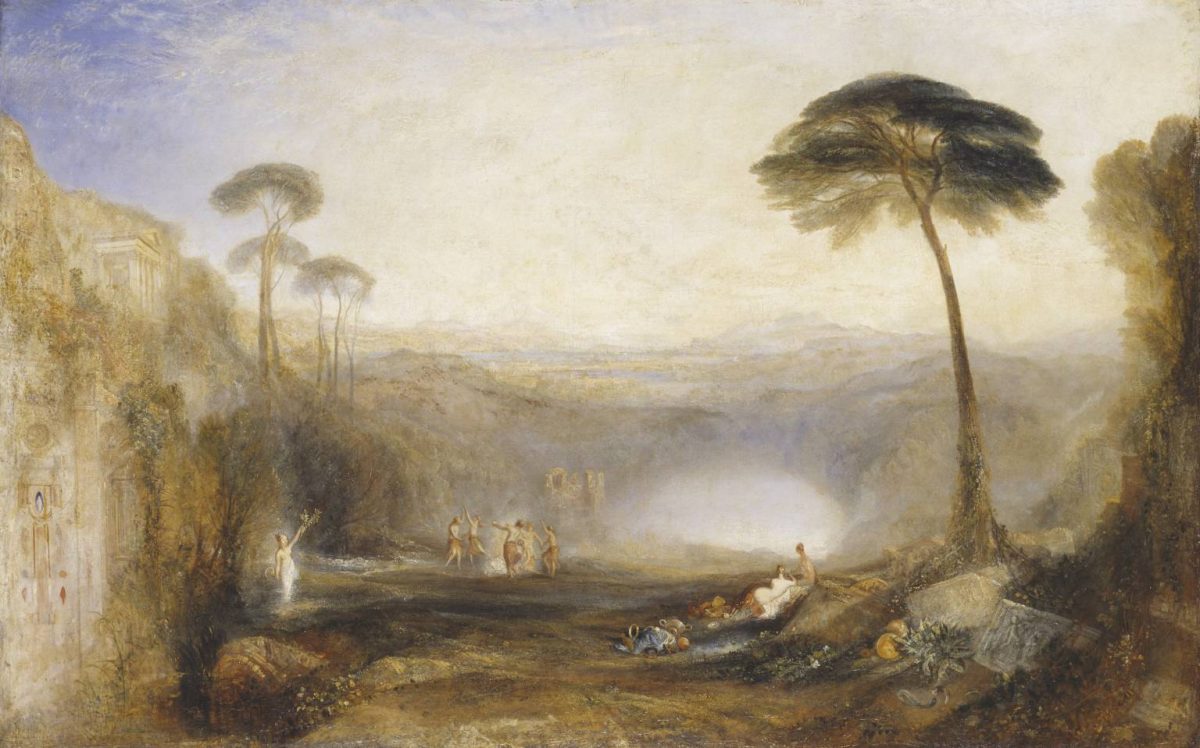
goldenboughset

More importantly, The Golden Bough changed everything I thought I knew about storytelling and myth. It forced me to see commonalities within many cultures. To cite one of Frazer’s countless comparative examples, consider the way that humans have approached the bear hunt. After the Kamtchatkans had killed a bear and eaten its flesh, the host of the subsequent dinner party would bring the bear’s head before the assembled guests, wrap it in grass, and then conduct a panel of sorts where the host, serving as a moderator only slightly less ballistic than Bill O’Reilly, would ask the bear if he had been well-treated. Much like many wingnut “journalists” irresponsibly publishing claims in Slate today without robust evidence (and failing to tender corrections when pwned), the Kamctchatkan host would blame the Russians. The American Indians likewise implored the dead bear not to be angry for being hunted and would hang the bear’s head on a post, painting it red and blue rather than donning it with vegetation. They also addressed it, much in the manner that dog owners chat with their uncomprehending pets when nobody’s around. The Assiniboins also held feasts after a hunt and also mounted the bear’s head, shrouding it in strips of scarlet cloth, and respected the bear so much that they offered the head a pipe to smoke, not unlike the poor dog who sits outside Mets games with a pipe in his mouth. And looking beyond Frazer, one finds in Alanson Skinner’s Notes on the Eastern Cree and Northern Saulteaux a similar bear’s head ceremony that involved sharing a pipe before the participants took a bite from the bear’s flesh and, with the old Finnish custom of karhunpeijaiset, a bear’s head mounted upon a young tree, venerated and addressed as a relative or the son of a god. And according to the Russian ethnographer Vladimir Arsenyev (and I found this bit by sifting through James H. Grayson’s Myths and Legends from Korea), the Udegey people of the Russian Far East also had a bear ceremony and believed, “To throw the head away is a great sin….The cooked bear’s head is wrapped in its own skin with its fur outwards and tied up with a thin rope,” with a communal ceremony quite similar to the Finns.

I could go on (and indeed Frazer often rambles for pages), but there’s an undeniable awe in learning that something so specific about bears (head mounted, party organized, head covered, bear respected), much less anything else, arose independently in so many different parts of the world. It proves very conclusively, and perhaps this is especially essential for us to understand as we reconcile a vast and seemingly incurable national division, that humans share more in common with each other than we’re willing to confess and that the seemingly unique rituals that we believe define “us” are quite likely shared many times over in other parts of the nation, much less the world.

The reason it took me so long to read The Golden Bough was not because of its many thousand pages (aside from some sloggish parts in the Spirits of the Corn and of the Wild volumes, the books are surprisingly readable[footnote]Frazer is often so footnote-happy that one often turns a page finding a mere five lines to read above a double-column fiesta of references that would require a lifetime or two to dive into.[/footnote]), but because my imagination would become so captivated by some tale of trees esteemed above human life or a crazed orgiastic release (see Saturnalia) that I would lose many hours in the library seeing how much of this was still practiced. It has been more than a century since Frazer published the Third Edition, but his remarkable observations about shared rituals still invite us to dream and believe and to perceive that, Frazer’s regrettable references to “savages” and “primitives” notwithstanding, we are not so different from each other.

Frazer’s explanation for these common qualities — epitomized by the famous J.M.W. Turner painting (pictured above) sharing the same name title as Frazer’s capacious opus — rests in the sylvan lake of Nemi and an ancient tale in which a priest-king defended a singular tree. The priest-king, who was an incarnation of a god wedded to the world, could only be overpowered by a fight to the death and, if he was slain, he would be replaced by his victor, with the cycle perpetuating ad infinitum. Frazer believed that nearly every story in human history could be traced back to this unifying myth, with most of the tales triggered by our imagination arising out of what he called “sympathetic magic,” whereby humans often imitate what they cannot understand. So if this meant building effigies or participating in elaborate and often unusual rituals that explain why the sun scorched the crops to an unsustainable crisp in the last harvest or helped more animals to multiply for grand feasts next season, magical thinking provided both the bond and the panacea well before Robert B. Thomas came up with the Old Farmer’s Almanac.

There are two components to sympathetic magic: the first is Contagion, or physical contact, which involved a transfer of “essence” by physical contact (among other things, this would account for why humans have been especially careful about bear’s heads, as described above); the second was Similarity, whereby “the magicians infers that he can produce any effect he desires merely by imitating it: from the second he infers that whatever he does to a material object will affect equally the person with whom the object was once in contact, whether it formed part of his body or not.”

One of The Golden Bough‘s most fascinating volumes, The Scapegoat, reveals how a human belief in “essence” may be the root of our most irrational fears. Contagion often led to humans trying to transfer their disease and miseries to other people, if not reinforcing their own biases about people or groups that they disliked. I am indebted to the terrific podcast Imaginary Worlds for steering me to the work of Carol Nemeroff, whose psychological considerations of Frazer’s findings are are especially constructive in understanding disgust. Nemeroff and her colleagues conducted a series of studies in which they placed a sterilized dead roach in a glass of juice and asked subjects to eat fudge that resembled dog feces. The natural reactions (recoiling at the roach and the shit-shaped fudge) showed that sympathetic magic is still very much a mainstay of our culture.

Indeed, sympathetic magic drives most of our cherished rituals today. In one of his most controversial (but nevertheless true) observations, Frazer observes in Adonis Attis Osiris that, although the Gospels never cited a hard date for Jesus Christ’s birthday bash, Christians have adhered to their churchgoing rituals with the same practiced regularity one sees in fundamentalist homophobics holding up cardboard signs that misquote the Bible to reinforce their hate. The original celebration date of Christ’s alleged birth was January 6th. But because heathens celebrated the birthday of the Sun on December 25th, and this was often a draw for the Christians because the heathens were more fun, the Church agreed to set December 25th as the official day. If Christmas did not exist, it would be necessary for humankind to invent it. For such useful observations, The Golden Bough is incredibly handy to have in one’s library, if only to remind us that most of our beliefs, the recurring rituals we are expected to adhere to, are predicated upon some ancient explanation that we failed to shake from the Magic 8-Ball of our daily existence. So Colin Kaepernick really doesn’t need to stand for the national anthem. While this conformist rite is admittedly improved from the Nazi-like Bellamy salute, standing for The Star-Spangled Banner is little more than a quaint superstition that one is pressured to participate in to “belong.”

Frazer’s scholarship, while impressive, is sometimes inexact in the effort to find a Theory of Everything. Midway through putting together the Third Edition, Frazer was challenged by Dr. Edward Westermarck, who pointed out that fire festivals did not originate from fire reinforcing the sun’s light and heat, but rather a need to celebrate purification. Frazer did correct his views in Balder the Beautiful, but it does leave one contemplating whether sympathetic magic served as Frazer’s knee-jerk goto point in his noble quest to reconcile several folkloric strands.

Still, one cannot disavow the conclusion that much of our behavior is not only similarly ceremonial across cultures, which would indeed suggest a common source. Frazer managed one last volume, the Aftermath, in 1937, just four years before his death. While this volume is little more than a collection of B-sides, it does have leave one wondering what Frazer would have made of Nuremburg rallies or even our current default mode of walking like zombies in the streets, heads down, eyes bulging at the prospect of another chapter in a Snapchat story. The gods and the sympathetic magic may be a tad more secular these days, but we still remain seduced. Myths and stories and rituals are as old as the Chauvet Cave paintings. One cannot imagine being human without them.

Next Up: Annie Dillard’s Pilgrim at Tinker Creek!

Loser: A Report from the Trump Tower Protests

On Thursday, November 10, 2016, I attended the protests that had unfolded across the street from Trump Tower after Donald Trump had been elected the 45th President of the United States. I talked with anti-Trump activists, people who voted for Gary Johnson, people who voted for Trump, and people who didn’t vote at all in an attempt to understand how these unfathomable election results happened. (Running time: 32 minutes, 9 seconds)

Loser: A Report from the Trump Tower Protests (Download MP3)

This text will be replaced

Shadow and Act (Modern Library Nonfiction #91)

(This is the tenth entry in The Modern Library Nonfiction Challenge, an ambitious project to read and write about the Modern Library Nonfiction books from #100 to #1. There is also The Modern Library Reading Challenge, a fiction-based counterpart to this list. Previous entry: The Power Broker.)

mlnf91When I first made my bold belly flop into the crisp waters of Ralph Ellison’s deep pool earlier this year, I felt instantly dismayed that it would be a good decade before I could perform thoughtful freestyle in response to his masterpiece Invisible Man (ML Fiction #19). As far as I’m concerned, that novel’s vivid imagery, beginning with its fierce and intensely revealing Battle Royale scene and culminating in its harrowing entrapment of the unnamed narrator, stands toe-to-toe with Saul Bellow’s The Adventures of Augie March as one of the most compelling panoramas of mid-20th century American life ever put to print, albeit one presented through a more hyperreal lens.

But many of today’s leading writers, ranging from Ta-Nehisi Coates to Jacqueline Woodson, have looked more to James Baldwin as their truth-telling cicerone, that fearless sage whose indisputably hypnotic energy was abundant enough to help any contemporary humanist grapple with the nightmarish realities that America continues to sweep under its bright plush neoliberal rug. At a cursory glance, largely because Ellison’s emphasis was more on culture than overt politics, it’s easy to see Ellison as a complacent “Maybe I’m Amazed” to Baldwin’s gritty “Cold Turkey,” especially when one considers the risk-averse conservatism which led to Ellison being attacked as an Uncle Tom during a 1968 panel at Grinnell College along with his selfish refusal to help emerging African-American authors after his success. But according to biographer Arnold Rampersad, Baldwin believed Ralph Ellison to be the angriest person he knew. And if one dives into Ellison’s actual words, Shadow and Act is an essential volume, which includes one of the most thrilling Molotov cocktails ever pitched into the face of a clueless literary critic, that is often just as potent and as lapel-grabbing as Baldwin’s The Fire Next Time.

For it would seem that while Negroes have been undergoing a process of “Americanization” from a time preceding this birth of this nation — including the fusing of their blood lines with other non-African strains, there has been a stubborn confusion as to their American identity. Somehow it was assumed that the Negroes, of all the diverse American peoples, would remain unaffected by the climate, the weather, the political circumstances — from which not even slaves were exempt — the social structures, the national manners, the modes of production and the tides of the market, the national ideals, the conflicts of values, the rising and falling of national morale, or the complex give and take of acculturalization which was undergone by all others who found their existence within the American democracy.

This passage, taken from an Ellison essay on Amiri Baraka’s Blues People, is not altogether different from Baldwin’s view of America as “a paranoid color wheel” in The Evidence of Things Not Seen, where Baldwin posited that a retreat into the bigoted mystique of Southern pride represented the ultimate denial of “Americanization” and thus African-American identity. Yet the common experiences that cut across racial lines, recently investigated with comic perspicacity on a “Black Jeopardy” Saturday Night Live sketch, may very well be a humanizing force to counter the despicable hate and madness that inspires uneducated white males to desecrate a Mississippi black church or a vicious demagogue to call one of his supporters “a thug” for having the temerity to ask him to be more respectful and inclusive.

Ellison, however, was too smart and too wide of a reader to confine these sins of dehumanization to their obvious targets. Like Baldwin and Coates and Richard Wright, Ellison looked to France for answers and, while never actually residing there, he certainly counted André Malraux and Paul Valéry among his hard influences. In writing about Richard Wright’s Black Boy, Ellison wisely singled out critics who failed to consider the full extent of African-American humanity even as they simultaneously demanded an on-the-nose and unambiguous “explanation” of who Wright was. (And it’s worth noting that Ellison himself, who was given his first professional writing gig by Wright, was also just as critical of Wright’s ideological propositions as Baldwin.) Ellison described how “the prevailing mood of American criticism has so thoroughly excluded the Negro that it fails to recognize some of the most basic tenets of Western democratic thought when encountering them in a black skin” and deservedly excoriated whites for seeing Paul Robeson and Marian Anderson merely as the ne plus ultra of African-American artistic innovation rather than the beginning of a great movement.

shriversombreroAt issue, in Ellison’s time and today, is the degree to which any individual voice is allowed to express himself. And Ellison rightly resented any force that would stifle this, whether it be the lingering dregs of Southern slavery telling the African-American how he must act or who he must be in telling his story as well as the myopic critics who would gainsay any voice by way of their boxlike assumptions about other Americans. One sees this unthinking lurch towards authoritarianism today with such white supremacists as Jonathan Franzen, Lionel Shriver, and the many Brooklyn novelists who, despite setting their works in gentrified neighborhoods still prominently populated by African-Americans, fail to include, much less humanize, black people who still live there.

“White supremacist” may seem like a harshly provocative label for any bumbling white writer who lacks the democratic bonhomie to leave the house and talk with other people and consider that those who do not share his skin color may indeed share more common experience than presumed. But if these writers are going to boast about how their narratives allegedly tell the truth about America while refusing to accept challenge for their gaping holes and denying the complexity of vital people who make up this great nation, then it seems apposite to bring a loaded gun to a knife fight. If we accept Ellison’s view of race as “an irrational sea in which Americans flounder like convoyed ships in a gale,” then it is clear that these egotistical, self-appointed seers are buckling on damaged vessels hewing to shambling sea routes mapped out by blustering navigators basking in white privilege, hitting murky ports festooned with ancient barnacles that they adamantly refuse to remove.

Franzen, despite growing up in a city in which half the population is African-American, recently told Slate‘s Isaac Chotiner that he could not countenance writing about other races because he has not loved them or gone out of his way to know them and thus excludes non-white characters from his massive and increasingly mediocre novels. Shriver wrote a novel, The Mandibles, in which the only black characters are (1) Leulla, bound to a chair and walked with a leash, and (2) Selma, who speaks in a racist Mammy patois (“I love the pitcher of all them rich folk having to cough they big piles of gold”). She then had the effrontery to deliver a keynote speech at the Brisbane Writers Festival arguing for the right to “try on other people’s hats,” failing to understand that creating dimensional characters involves a great deal more than playing dress-up at the country club. She quoted from a Margot Kaminski review of Chris Cleave’s Little Bee that offered the perfectly reasonable consideration, one that doesn’t deny an author’s right to cross boundaries, that an author may wish to take “special care…with a story that’s not implicitly yours to tell.” Such forethought clearly means constructing an identity that is more human rather than crassly archetypal, an eminently pragmatic consideration on how any work of contemporary art should probably reflect the many identities that make up our world. But for Shriver, a character should be manipulated at an author’s whim, even if her creative vagaries represent an impoverishment of imagination. For Shriver, inserting another nonwhite, non-heteronormative character into The Mandibles represented “issues that might distract from my central subject moment of apocalyptic economics.” Which brings us back to Ellison’s question of “Americanization” and how “the diverse American peoples” are indeed regularly affected by the decisions of those who uphold the status quo, whether overtly or covertly.

Writer Maxine Benba-Clarke bravely confronted Shriver with the full monty of this dismissive racism and Shriver responded, “When I come to your country. I expect. To be treated. With hospitality.” And with that vile and shrill answer, devoid of humanity and humility, Shriver exposed the upright incomprehension of her position, stepping from behind the arras as a kind of literary Jan Smuts for the 21st century.[footnote]To this litany of country bumpkin calumnies from a Literary Establishment that purports to Know All, one must also include the superficial contributions of the wildly overrated Joyce Carol Oates, whose novel The Sacrifice demonstrated equally ignoble failings to consider complex identity and authenticity in fictionalizing the Tawana Brawley case. These inadequacies were smartly called out by Roxane Gay in The New York Times Book Review. Rather than consider how she had failed as an author, Oates, true to the clueless xenophobia she regularly chirrups on Twitter, suggested that Gay had failed.[/footnote]

If this current state of affairs represents a bristling example of Giambattista Vico’s corsi e ricorsi, and I believe it does, then Ellison’s essay, “Twentieth-Century Fiction and the Black Mask of Humanity,” astutely demonstrates how this cultural amaurosis went down before, with 20th century authors willfully misreading Mark Twain, failing to see that Huck’s release of Jim represented a moment that not only involved recognizing Jim as a human being, but admitting “the evil implicit in his ’emancipation'” as well as Twain accepting “his personal responsibility in the condition of society.” With great creative power comes great creative responsibility. Ellison points to Ernest Hemingway scouring The Adventures of Huckleberry Finn merely for its technical accomplishments rather than this moral candor and how William Faulkner, despite being “the greatest artist the South has produced,” may not be have been quite the all-encompassing oracle, given that The Unvanquished‘s Ringo is, despite his loyalty, devoid of humanity. In another essay on Stephen Crane, Ellison reaffirms that great art involves “the cost of moral perception, of achieving an informed sense of life, in a universe which is essentially hostile to man and in which skill and courage and loyalty are virtues which help in the struggle but by no means exempt us from the necessary plunge into the storm-sea-war of experience.” And in the essays on music that form the book’s second section (“Sound and the Mainstream”), Ellison cements this ethos with his personal experience growing up in the South. If literature might help us to confront the complexities of moral perception, then the lyrical, floating tones of a majestic singer or a distinctive cat shredding eloquently on an axe might aid us in expressing it. And that quest for authentic expression is forever in conflict with audience assumptions, as seen with such powerful figures as Charlie Parker, whom Ellison describes as “a sacrificial figure whose struggles against personal chaos…served as entertainment for a ravenous, sensation-starved, culturally disoriented public which had but the slightest notion of its real significance.”

What makes Ellison’s demands for inclusive identity quite sophisticated is the vital component of admitting one’s own complicity, an act well beyond the superficial expression of easily forgotten shame or white guilt that none of the 20th or the 21st century writers identified here have had the guts to push past. And Ellison wasn’t just a writer who pointed fingers. He held himself just as accountable, as seen in a terrific 1985 essay called “An Extravagance of Laughter” (not included in Shadow and Act, but found in Going with the Territory), in which Ellison writes about how he went to the theatre to see Jack Kirkland’s adaptation of Erskine Caldwell’s Tobacco Road. (I wrote about Tobacco Road in 2011 as part of this series and praised the way that this still volatile novel pushes its audience to confront its own prejudices against the impoverished through remarkably flamboyant characters.) Upon seeing wanton animal passion among poor whites on the stage, Ellison burst into an uncontrollable paroxysm of laughter, which emerged as he was still negotiating the rituals of New York life shortly after arriving from the South. Ellison compared his reaction, which provoked outraged leers from the largely white audience, to an informal social ceremony he observed while he was a student at Tuskegee that involved a set of enormous whitewashed barrels labeled FOR COLORED placed in public space. If an African-American felt an overwhelming desire to laugh, he would thrust his head into the pit of the barrel and do so. Ellison observes that African-Americans “who in light of their social status and past condition of servitude were regarded as having absolutely nothing in their daily experience which could possibly inspire rational laughter.” And the expression of this inherently human quality, despite being a cathartic part of reckoning with identity and one’s position in the world, was nevertheless positioned out of sight and thus out of mind.

When I took an improv class at UCB earlier this year, I had an instructor who offered rather austere prohibitions to any strain of humor considered “too dark” or “punching down,” which would effectively disqualify both Tobacco Road and the Tuskegee barrel ritual that Ellison describes.[footnote]Earlier this year, in The Baffler, Ben Schwartz offered some cogent and provocative thoughts on the problems with such ultimatums. His essay is very worth reading if you’re interested in painting outside the lines as an artist or a thinker.[/footnote] These restrictions greatly frustrated me and a few of my classmates, who didn’t necessarily see the exploration of edgy comic terrain as a default choice, but merely one part of asserting an identity inclusive of many perspectives. I challenged the notion of confining behavior to obvious choices and ended up getting a phone call from the registrar, who was a smart and genial man and with whom I ended up having a friendly and thoughtful volley about comedy. I had apparently been ratted out by one student, who claimed that I was “disrupting” the class when I was merely inquiring about my own complicity in establishing base reality. In my efforts to further clarify my position, I sent a lengthy email to the instructor, one referencing “An Extravagance of Laughter,” and pointed out that delving into the uncomfortable was a vital part of reckoning with truth and ensuring that you grew your voice and evolved as an artist. I never received a reply. I can’t say that I blame him.

Ellison’s inquiry into the roots of how we find common ground with others suggests that we may be able to do so if we (a) acknowledge the completeness of other identities and (b) allow enough room for necessary catharsis and the acknowledgment of our feelings and our failings as we take baby steps towards better understanding each other.

The most blistering firebomb in the book is, of course, the infamous essay “The World and the Jug,” which demonstrates just what happens when you assume rather than take the time to know another person. It is a refreshingly uncoiled response that one could not imagine being published in this age of “No haters” reviewing policies and genial retreat from substantive subjects in today’s book review sections. Reacting to Irving Howe’s “Black Boys and Native Sons,” Ellison condemns Howe for not seeing “a human being but an abstract embodiment of living hell” and truly hammers home the need for all art to be considered on the basis of its human experience rather than the spectator’s constricting inferences. Howe’s great mistake was to view all African-American novels through the prism of a “protest novel” and this effectively revealed his own biases against what black writers had to say and very much for certain prerigged ideas that Howe expected them to say. “Must I be condemned because my sense of Negro life was quite different?” writes Ellison in response to Howe roping him in with Richard Wright and James Baldwin. And Ellison pours on the vinegar by not only observing how Howe self-plagiarized passages from previous reviews, but how his intractable ideology led him to defend the “old-fashioned” violence contained in Wright’s The Long Dream, which, whatever its merits, clearly did not keep current with the changing dialogue at the time.

Shadow and Act, with its inclusion of interviews and speeches and riffs on music (along with a sketch of a struggling mother), may be confused with a personal scrapbook. But it is, first and foremost, one man’s effort to assert his identity and his philosophy in the most cathartic and inclusive way possible. We still have much to learn from Ellison more than fifty years after these essays first appeared. And while I will always be galvanized by James Baldwin (who awaits our study in a few years), Ralph Ellison offers plentiful flagstones to face the present and the future.

SUPPLEMENT: One of the great mysteries that has bedeviled Ralph Ellison fans for decades is the identity of the critic who attacked Invisible Man as a “literary race riot.” In a Paris Review interview included in Shadow and Act, Ellison had this to say about the critic:

But there is one widely syndicated critical bankrupt who made liberal noises during the thirties and has been frightened ever since. He attacked my book as a “literary race riot.”

With the generous help of Ellison’s biographer Arnold Rampersad (who gave me an idea of where the quote might be found in an email volley) and the good people at the New York Public Library, I have tracked down the “widely syndicated critical bankrupt” in question.

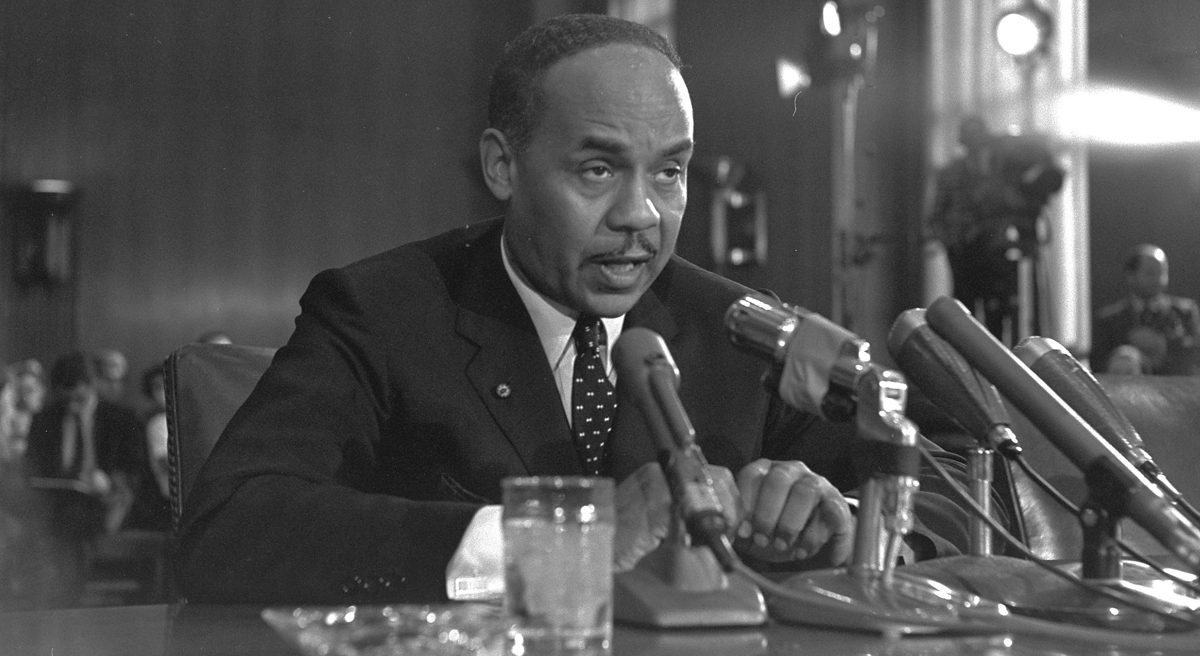
sterlingnorthHis name is Sterling North, best known for the children’s novel Rascal in 1963. He wrote widely popular (and rightly forgotten) children’s books while writing book reviews for various newspapers. North was such a vanilla-minded man that he comics “a poisonous mushroom growth” and seemed to have it in for any work of art that dared to do something different — or that didn’t involve treacly narratives involving raising baby raccoons.

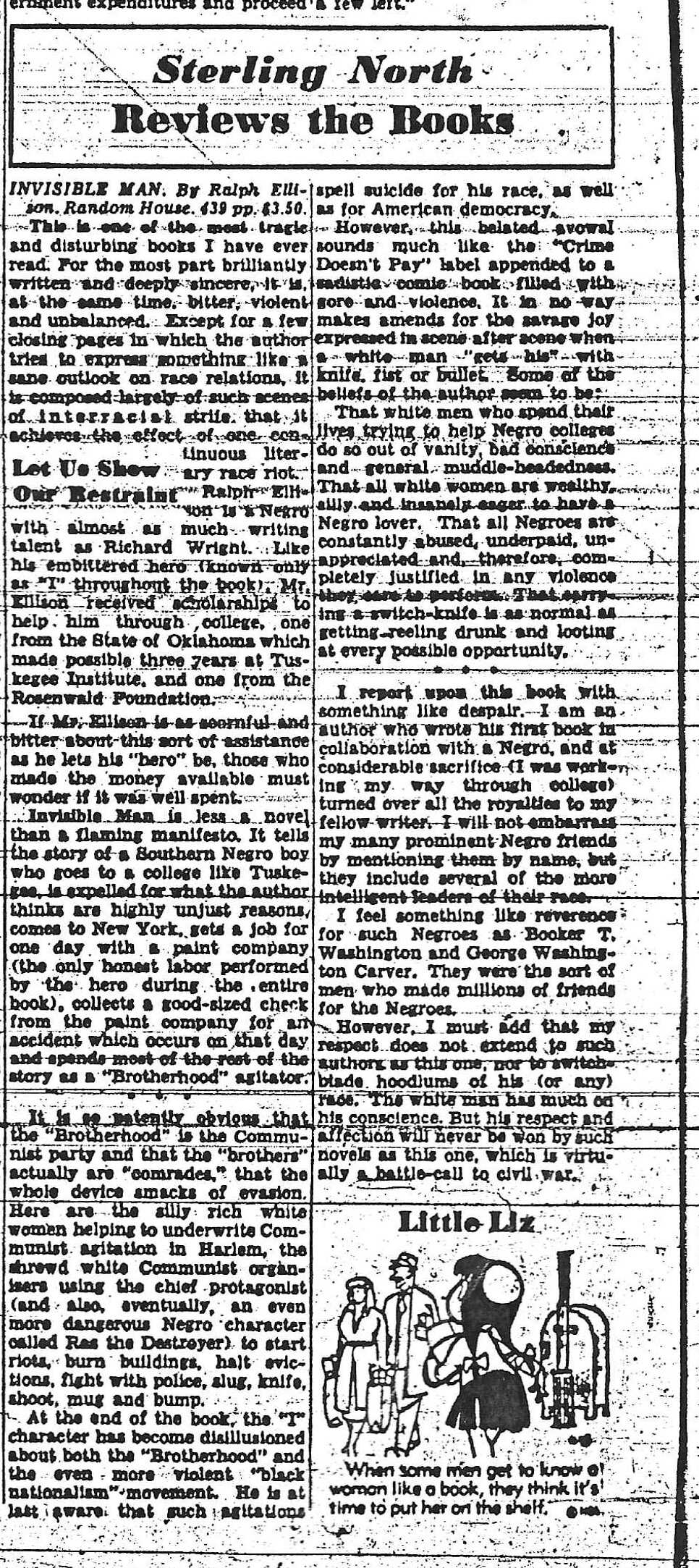
And then, in the April 16, 1952 issue of the New York World-Telegram, he belittled Ellison’s masterpiece, writing these words:

This is one of the most tragic and disturbing books I have ever read. For the most part brilliantly written and deeply sincere, it is, at the same time, bitter, violent and unbalanced. Except for a few closing pages in which the author tries to express something like a sane outlook on race relations, it is composed largely of such scenes of interracial strife that it achieves the effect of one continuous literary race riot. Ralph Ellison is a Negro with almost as much writing talent as Richard Wright. Like his embittered hero (known only as “I’ throughout the book, Mr. Ellison received scholarships to help him through college, one from the State of Oklahoma which made possible three years at the Tuskegee Institute, and one from the Rosenwald Foundation.

If Mr. Ellison is as scornful and bitter about this sort of assistance as he lets his “hero” be, those who made the money available must wonder if it was well spent.

North’s remarkably condescending words offer an alarming view of the cultural oppression that Ellison was fighting against and serve as further justification for Ellison’s views in Shadow and Act. Aside from his gross mischaracterization of Ellison’s novel, there is North’s troubling assumptions that Ellison should be grateful in the manner of an obsequious and servile stereotype, only deserves a scholarship if he writes a novel that fits North’s limited idea of what African-American identity should be, and that future white benefactors should think twice about granting opportunities for future uppity Ellisons.

It’s doubtful that The Sterling North Society will recognize this calumny, but this is despicable racism by any measure. A dive into North’s past also reveals So Dear to My Heart, a 1948 film adaptation of North’s Midnight and Jeremiah that reveled in Uncle Tom representations of African-Americans.

North’s full review of The Invisible Man can be read below:
sterling-north

Next Up: James George Frazer’s The Golden Bough!

A Conversation with Ottessa Moshfegh

I stepped off the plane at LAX. As I waited for my suitcase to roll up from the airport’s deepest bowels, observing a faintly funereal mist smelling vaguely sulphuric and subsuming all emerging valises, a cadaverous man with thin eyes, a sinister frown, and frightening olive livery — one who later identified himself as “Ottessa Moshfegh’s senior aide-de-camp” but never divulged his first name — grabbed me by the throat and tackled me onto the floor. I wondered if he believed me to be a benevolent and objective reporter covering a Trump rally.

“Are you the interviewer?” he rasped.

He had a peppermint breath that was somewhere between Altoids and ForeverMints and I could hear the crack of his jaw biting upon a pesky capsule that had stubbornly refused to dissolve in his mouth. The aide-de-camp drooled fine rivulets of spittle onto the 2005 Coachella T-shirt that I was wearing, one that I hadn’t remembered purchasing because someone had suggested at the time that I ingest mildly illicit narcotics.

“Uh, yes?”

The aide-de-camp then demanded that I produce my credit history, my blood type, my social security card, and my genetic lineage dating back six generations. Then he rolled me over and shoved a retina scanner into my eye.

“I’m sure you understand,” said the aide-de-camp. “Miss Moshfegh only talks with high-class people.”

“But I’ve done more than 550 interviews,” I replied.

High-class only.”

It was apparently easier for me to get a job with law enforcement than to go through with an interview that had been scheduled three months before.

I told the jostling gentleman that I had attended a state school because I didn’t have any money in my younger years. He snickered at me and then gave me a beef stick. Even though I hadn’t eaten anything on the plane and was feeling a bit peckish, I knew that this was a test and resisted biting into the tantalizing Slim Jim that might have fueled me for another fifteen minutes.

I had heard rumblings about Moshfegh’s eccentric vetting process for interviews, which she’d initiated ever since being shortlisted for the Booker Prize. In the previous week, Moshfegh had humiliated a Guardian reporter named Paul Laity, demanding that he conduct his conversation shirtless while being flogged by a a bell hooks volume. As part of the deal, Laity had been asked by Moshfegh’s entourage to name his next child “Ottessa” in deference to the World’s Greatest Living Author. I have been unable to corroborate this detail, though a shellshocked Laity did croak “Run while you still can” near the close of our tense ten minute telephone conversation.

There had been no such bargains tendered towards me, perhaps because the prospect of me reproducing seemed less likely than Laity passing out cigars sometime in the next few years outside a hospital room, but the publicist informed me that under no circumstances should I ever paint Moshfegh’s novel, Eileen, in a negative light.

“Well, no novel is perfect,” I said.

“No,” said the publicist. “This one is.”

“Come on. Even the ‘Oxen of the Sun’ chapter has a few dull spots. And I love Ulysses.”

“I don’t think you understand how lucky you are to be here.”

Lucky? I had only accepted the gig because some editor had at long last taken pity on me. I was nevertheless grateful for the opportunity.

“This way,” said the aide-de-camp.

He proceeded to blindfold me and affixed my head with leather foam earphones that played the most terrifying glitch-pop I have ever heard. I felt my body being buffeted into the inside of a car. I felt someone taking my hand and fingerprinting me. Nearly an hour passed. All the Skrillex that had decimated my brain had nearly wiped me out. Then the earphones were removed.

“Good news,” said the aide-de-camp. “Miss Moshfegh has agreed to speak with you for fifteen minutes. She doesn’t mind being inconvenienced by the Booker or any press that will ensure her God-given talent is finally approved by the Literary Forces of the Universe. But only after you have written a note of loyalty to her undisputed genius in your own blood.”

Since I had a little spare blood kicking around in my veins, I figured no sweat. In hindsight, it may have been a tad foolish of me to agree to this after refusing the Slim Jim, which stared mockingly back in the stretch limo’s armrest, which was composed of rich Corinthian leather.

Finally, I was asked to recite passages from Eileen to prove my fidelity to Moshfegh.

“Cite the third sentence in the second paragraph on Page 26,” ordered the aide-de-camp.

“Uh…They were forbidden to do most things children ought to do – dance, sing, gesture, talk loud, listen to music, lie down unless they were given permission to?”

“Good. You’re remembering the right sentences. Does that resonate with you?”

“Can I plead the Fifth?”

“Mr. Champion, this is not a court of law.”

“Okay. Maybe we should call my therapist then?”

“No, Mr. Champion, that won’t be necessary. You have passed the test, despite your shaky pedigree, your deplorable education, your three-days stubble, and the undisputable fact that you are a very terrible person indeed.”

“Didn’t you read the character reference letters I submitted?”

But this question went unanswered as the spotless Tesla Model S arrived at the Moshfegh compound.

“Get out of the car, you journalistic cur!”

“Alright, already. Can I get my microphones at least?”

“No. If you can commit Miss Moshfegh’s prose to memory, you will remember every quote accurately and be sued if even a stray comma is discovered to be out of place.”

I was led into a sprawling two-floor home with a four bay garage just off the edge of Little Arabia, overwhelmed by the smell of overly groomed grape vines and a meticulously landscaped front garden with a large sign reading YOU WILL BE SHOT ON SIGHT IF YOU STEAL A BERRY. SEE CASTLE DOCTRINE.

Ms. Moshfegh, 35, was seated at a large refectory table in a spacious living room, cutting bits of sentences from old Dorothy Sayers paperbacks for her next project.

“I’ll tame you, you shoddy pulpy sentence! I deserve riches beyond the dreams of avarice! Instant success! No less!”

This was a typical creative act for Moshfegh, although it was a curious form of self-affirmation. But I have to hand it to her. Moshfegh had indeed pulled a fast one on a number of Booker Prize judges who were not, in fact, in the habit of familiarizing themselves with genre.

The aide-de-camp gently explained to me that the Moshfegh philosophy involved pretending that mysteries confronting troubling ideas about women had never been written, even as she ripped off entire sentences from novels that had, in fact, done just that decades before. And I am only reporting this tidbit here because it was one of the few details that had somehow not been earmarked by Moshfegh’s otherwise fastidious quote approval team.

“Miss Moshfegh?”

“Is my process making you uncomfortable?”

“No, but I wouldn’t mind an apple if you had one.”

“I’ve had eating issues since adolescence,” replied Miss Moshfegh. “There’s nothing in my work that I haven’t researched privately.”

“Even homicidal desire?”

“Man up and deal.”

I was feeling a bit faint, but it was hard to argue with someone who had been shortlisted for the Booker.

Moshfegh described herself to me as a person who has a long history as an unreported thief. If she isn’t absconding passages from Sayers novels, then she’s probably sneaking a package of pork loin roast underneath her overcoat.

“My family’s values seemed very different from the values of the world I was living in,” said Moshfegh. “They never acquiesced to my genius, but I’m heartened to see a bald loser like you see the light.”

At this point, Moshfegh asked me to kneel on the floor and pray to her. I told her I was an atheist. She said she was a novelist-god. I asked for a mat. When the interview was over, I had terrible scrapes on my knees.

Moshfegh described the humiliation of once having to wait longer than fifteen minutes for a cab when she lived in New York.

“It was a living hell. Didn’t they see my raised arm? There was a brief period in my thirties when every cab stopped for me in less than ten minutes. My hell is my life. My hell is my work. Now you see why I have a stretch limo always on call.”

She tracks the beginning of her writing career to checking out random books from the library while a student at Brown University, scanning the frontispiece, and then replacing this with a Photoshopped copy of the page listing her as author.

“The books were all so mediocre. I was better than all these authors even before I had written my first short story. If I could do this for every book, I would.”

Moshfegh says that she sustains a deep connection to her character, who she claims lives in a basement located just underneath her refectory table. When I asked if I could meet Eileen, she demurred.

“When I first discovered that the character I had created lived in my basement, I sent an email to my agent reading ‘Holy shit.'”

“Isn’t that a bit ineloquent for a writer of your apparent literary talent?”

“How dare you speak that way to a hip young writer’s writer!”

“Terry Southern called Henry Green a writer’s writer’s writer. Beat that!”

The aide-de-camp then tied a rope around me and threw me into the stretch limo. I passed out due to hunger and my shortage of blood. I woke up in some shady alley somewhere in East Hollywood. But the aide-de-camp had been nice enough to leave me the Slim Jim at my side, which I wolfed down with the force of a deprived animal. It gave me the fifteen minutes of energy to run to the nearest convenient store and sob to a clerk who didn’t understand what had just happened to me. But I did make it back to New York. Yes, I had lost blood, been manhandled, and had my privacy invaded. But I had also been in the presence of the World’s Greatest Living Author. I smiled on the plane ride home, knowing that the aide-de-camp was at least dimly aware of the Geneva Conventions.