Posts by Edward Champion

Edward Champion is the Managing Editor of Reluctant Habits.

How to Spot Lines That Reveal Bad Storytelling, Part One

This is the first in a series of occasional posts in which I will identify dialogue that reveals bad storytelling. I’m writing this because I’ve grown increasingly frustrated with the many rookie mistakes that I continue to observe from storytellers who should know better, whereby the artifices of an otherwise convincing narrative are swiftly exposed because the writer hasn’t thought out character motivation or has missed out on opportunities to create a memorable work of art.

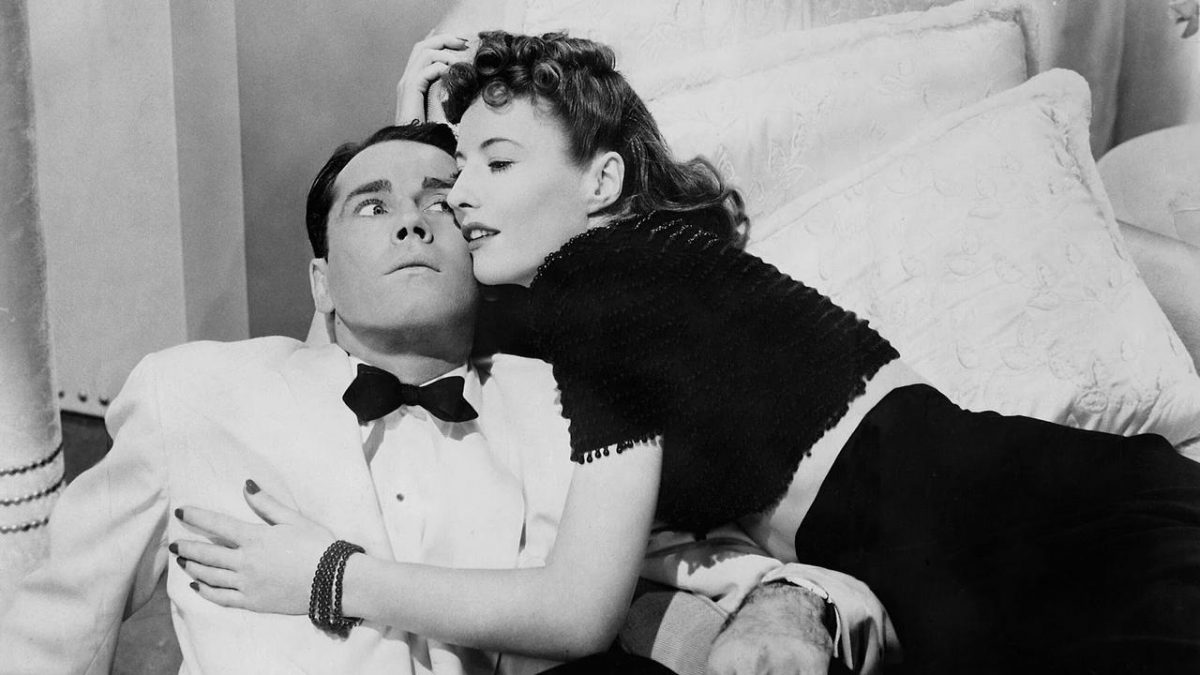
“That’s interesting!” Imagine that you just watched your best friend turn into a werewolf or that the spouse of your best friend revealed that he was in love with you. Would you say “That’s interesting!” or would you respond with something a bit less general and more heartfelt? A writer should never have to telegraph to the audience that an action is interesting. If an action is interesting to a character (and thus interesting to an audience), then a character will react to it in a way in which we know that it’s interesting. For example, here is an exchange from Preston Sturges’s wonderful film The Lady Eve:

Gerald: What I can’t understand is how he finished fifth!
Jean: There were only five horses in the race. What do you expect when you bet on a goat called After You?

If Jean had reacted to Gerald’s observation with “That’s interesting,” then we would have missed this great opportunity to see a con artist who observes all the specifics of a situation and who has no illusions about the way the world works. And when Jean falls in love with Hopsie, this transformation attracts our interest.

Even the person who questions another character doesn’t have to say “That’s interesting!” during the exchange. From The Big Lebowski:

The Big Lebowski: Are you employed, sir?
The Dude: Employed?
The Big Lebowski: You don’t go out looking for a job dressed like that? On a weekday?
The Dude: Is this a… what day is this?
The Big Lebowski: Well, I do work sir, so if you don’t mind…
The Dude: I do mind, the Dude minds. This will not stand, ya know, this aggression will not stand, man.

We see how The Big Lebowski is appalled, but genuinely interested, with the way in which The Dude can spend his unemployed life not doing much. The Dude, in turn, responds with his philosophy, which is parroted from George Bush’s 1990 speech on Kuwait. And the result is a deservedly famous, very funny, and referential exchange.

Indeed, it’s no surprise that “That’s so interesting! Tell me more!” has turned into an Internet meme, often introduced sarcastically into forum threads, that is largely identified with the late great Gene Wilder playing Willy Wonka. Although that line did not appear in the movie, it nevertheless reveals how audiences are aware that saying “That’s interesting!” may represent the heights of condescension or artificiality.

So instead of having a character say “That’s interesting,” why not delve into her philosophy? Why would she feel that the situation is interesting? Moreover, when a character states her philosophy, it can be wonderfully revealing. In Mike Leigh’s Vera Drake, for example, the title character says that she “helps young girls out,” not that she performs illegal abortions. And it is this simple reframing that not only allows Vera to be tremendously fascinating and complex, but permits the audience to empathize with her persecution.

“I hope I’m not interrupting.”: Very often, a writer will have a character intrude upon two other characters who are talking and deliver this very common line. It will never occur to the writer that there could be a more interesting dynamic if the interrupting character is either clueless about the intrusion or has willfully interrupted. Indeed, interruption is often better conveyed through subtext rather than an explicit pronouncement.

One of my favorite interruption moments comes from John Cassevetes’s extraordinary film Faces. There’s an incredible scene in which Richard (John Marley) and Freddie (Fred Draper) are competing for the attentions of Jeannie (played by Gena Rowlands), with the three all dancing around a living room. Jeannie increasingly drifts towards Richard. Freddie attempts to get Jeannie’s attention, but is rebuffed. He is very much a third wheel. And this fascinating scene unfolds with all of the characters singing “I Dream of Jeannie with the Light Brown Hair.” This creates an incredible tension which sets up some emotionally revealing moments that follow. If Freddie had explicitly remarked, “I hope I’m not interrupting you two dancing,” it wouldn’t be nearly as interesting.

“Start from the beginning. Tell us what happened.” Bad storytelling often involves characters calling attention to the fact that they are asking for story details within a story. But that’s usually not the way storytelling works when you hang out with people. In real life, people hear a modest detail, maybe about something wild that the storyteller did the previous night. And that detail may beget another detail. The person listening to the story may try to persuade the storyteller to spill the whole tale, especially if the other person has said something curious or unusual. If you’re going to tell a story within a story, then it needs to be motivated by human curiosity or the story needs to reveal the character, such as Quint’s famous Indianapolis speech from Jaws. “Start from the beginning. Tell us what happened” is what a programmer with Asperger syndrome is likely to say. “Come on, man! You’ve gotta spill!” or “Wait! You swam in the water with a knife in your mouth?” Isn’t that more like it? Dialogue must sustain the illusion that it is natural. And if the audience senses that storytelling is being shoehorned into a story to advance plot details that the writer didn’t have the chops to convey through action, then it will start to catch on that a script is, well, more of a programmed script (especially if the dialogue is solely Q&A, the telltale sign of bad storytelling) rather than something that should be revealing the human condition. Nobody wants to be mansplained when watching a TV show or listening to an audio drama.

Against Online Community

The word “community,” which comes from the Latin communitatem, suggests a place whereby many souls of differing opinions and temperaments come together for discourse and bonhomie. In its public form, usually in the form of churches or bars or groups united by common interests that assemble in halls, communities can indeed be pretty wonderful and welcoming, with members working to make sure that disputes are swiftly resolved, that disagreements are cleared up, and that people take the necessary time to get to know each other so that they can become better attuned with each other’s quirks and eccentricities. But in its online version, “community,” which is little more than a groupthink dive where people of identical mindsets largely agree with each other, is a marvelous lie in which the slightest disagreement is often enough to paint a person with a differing opinion as something akin to a toxic and irredeemable sex offender, if not a sinister monster who should be taken out with a sniper rifle at a cocktail party, saddling the outlier with an ineffable stigma that she cannot shake.

Perhaps the heightened sensitivity to words and sentiments expressed digitally, often with relentless speed, has much to do with their inaccurately assessed force. For if we are not careful with our app settings, the buzzing push notifications from our phones turn any expression, even an innocuous one, into an alarm rather than a relatively amicable exchange of opposing views. This atmospheric dilemma, in addition to killing off vital dialogues we need to have about very serious problems, causes the recipient of the message to, in turn, transmute the disagreement into a greatly magnified monster, a contretemps in which the shameful warm blanket of toxic gossip greatly outweighs the initial thoughtfulness of the exchange. The push notification becomes a trigger. Enter trigger warnings. The original expression, even if it is proffered benignly and with a level head, becomes a violation of the community’s “safe space,” willfully misperceived because the first responders, pressured by the rewards of quick quips that are liked and favorited in the heat of the moment, are often reacting from a place of emotion rather than thought.

The responses are frequently laced with umbrage. The umbrage is heightened. The responses to the responses become increasingly magnified. Enter outrage and public shaming. People are blocked or ostracized, depending upon whether the message has “offended” a community member of prominent standing. And a benign colloquy turns what might have been a civil debate into a vulgar cartoon, whereby the “offender”‘s motives and intentions are placed under a strange microscope.

In most cases, there is never any attempt to take up the “offense” directly with the “offender.” And even if there is, the “offender,” by way of having “offended,” is greeted with steadfast suspicion (“Is there anything I can Google about this son of a bitch?” thinks the easily agitated responder before firing off another fusillade), which causes some “offenders” to become offenders without the quote marks: bona-fide trolls who capitulate their intelligence for the sake of “winning” the argument. And the original intellectual kernels that might have forged a meaningful essay or persuaded some party to change her mind become bar brawls expressed in 140 character sentiments. Calm people may wish to intercede and tone down the dialogue through reason, but the sheer amount of time and energy is usually never worth it. Because those who are hopped up on the fumes of outrage are determined to duke it out and become increasingly incoherent, even if they are possessed of high intelligence and would not speak this way if the other party was standing before them in a face-to-face, real life setting. Alleged “community managers” on websites, who are subject to high stress and frequent burnout and far too much content to manage, have either become too jaded by all the nastiness to nip any problem quickly in the bud or simply do not give a fuck. And who can blame them?

All this is a roundabout way of saying that it is nigh impossible for me to have any faith in online exchanges anymore, much less “community.” While I have adopted a pragmatic stance that might be interpreted as cynicism, there is nevertheless an optimistic part of me that wonders whether online communities might be fixed or redeemed if they remember that real world communities don’t have nearly this degree or frequency of bad blood. For now, I stand firmly against online communities. I believe online communities to be baleful wastelands of hatred and negativity. And I’m going to frequent them a lot less. Because I’m learning far more and having far more fun talking with people in person and on the phone.

The next time you get upset at someone for a few words she expresses online, you may want to ask yourself why you’re spending so much of your precious time condemning someone you’ve never bothered to meet and escalating the melee rather than marveling at what you might learn from another soul. If you can endure your uncle’s drunken FOX News monologue during Thanksgiving, surely you can find the strength and the wherewithal to take a step back and reach out to the people you’ve decided are unforgivable curs because they didn’t like your favorite band or they said something you mildly disagreed with or they actually exposed their feelings with the hope that others might understand them.

How to Deal with Slimy Men Who Hit on You While You’re Trying to Listen to Music

These days, many men of boorish deportment, low intelligence, and diminutive stature seem to fancy themselves Masters of the Universe, believing, when they aren’t scouring porn sites for desperate fantasies or reading despicable articles written by Dan Bacon on how to be a top-notch bro, that every woman is a ripe conquest. They walk around, sometimes feeling the need to disrupt women who are trying to enjoy a peaceful moment listening to music through their headphones. It should seem patently obvious to anyone with a brain that these women really want to be left alone and have zero desire in some vulpine boor trying to elicit attention or a phone number.

Yet that doesn’t mean you can’t kick these men in the nuts.

Of course, not all men (hashtag!) are going to approach women like this or view the better gender with the vulgar eyes of a meat inspector.

However, if a man really wants attention and sincerely believes that his unoriginal and invasive lines are going to get him somewhere, there’s no reason why you can’t take off your headphones, give him a shit-eating grin that he will misread as interest, and inflict humiliation and violence as a form of self-defense. You’ll be surprised by how swiftly the arrogant man’s ego can get bruised!

The invasive man trying to get you to take off your headphones (which he will perceive as a crude kind of underwear for the ears) is very open to just about anything you say and will be dopey enough to believe that you have some interest in him. In such situations, it is often helpful to use the element of surprise to teach the boor a lesson.

How to Respond to a Slimy Man

1. Remember that the slimy man is confident enough to tell you everything and he will be stupid enough to divulge almost every personal detail about himself. Be sure to get his full name and autobiographical details so that you can add him to our National Sexist Registry.

2. He will probably ask you to talk for a minute. If he continues to pester you after you have said no, smile and then be sure to target his face with a bottle of Mace. (If you need to improve your aim, you can enroll in one of our mace spraying workshops for only $99.99!) Observe the man’s hubris dissolve instantly into a delightful display of pain and horror as the stinging spray works its magic, entering his eyes and crumbling his flimsy manhood faster than you can heat up a Hot Pocket in the microwave.

3. If you don’t feel comfortable with the violent approach, obtain the man’s phone number. Tell him to send you a naughty text to your phone to see if he’s got the goods. Then tell the man that, if he doesn’t go away, you will report him to the police for harassment with this hastily obtained evidence. Carry a series of blank affidavits that can be signed and notarized in which the slimy man vows never to harass a woman wearing headphones again.

4. Kick him in the nuts and run. This is a somewhat more riskier solution, but, if you are in good physical shape, you may able to elude the slimy man, who will have about thirty seconds to recover from the blow. This may give you enough time to run to the nearest public space and tell all and sundry that there is a maniac loose in the neighborhood.

Yes, you should be free to enjoy music through your headphones without being harangued. But unfortunately the early twenty-first century remains a barbaric time.

The key to stopping a slimy man is to be confident, prepared to beat him to a pulp, and utterly ruthless if he carries on with his unwelcome and sociopathic advances.

Dramatic Reading of Jonathan Safran Foer’s Emails

On July 14, 2016, as part of an in-depth feature on Natalie Portman, The New York Times published an email exchange between Portman and the novelist Jonathan Safran Foer (inexplicably featuring many photos of Portman wearing scant clothing). Foer’s emails represented some of the strangest malaise ever expressed in a major American newspaper. In an effort to plunge into the tortured depths of Foer’s soul, I have recorded a dramatic reading of the emails, with the hope that this recording might help future generations make sense of the Foer predicament.

Ghostbusters: The Compromise Candidate of Summer Blockbusters

When Sony announced that it would be remaking the rightly beloved 1984 Ghostbusters movie, with women wearing the proton packs and Bridesmaids‘s Paul Feig on board to direct, you didn’t have to look too hard at the galleon being craned up for a retrofit to see the unsavory barnacles of terrified white manboys clutching onto the hull for dear life. Fan entitlement, long rooted in a patriarchal sense of childhood nostalgia that the Daily Beast‘s Arthur Chu shrewdly pinpointed as “‘pickup artist’ snake oil — started by nerdy guys, for nerdy guys — filled with techniques to manipulate, pressure and in some cases outright assault women to get what they want,” once again failed to do a little soul-searching and reflection on what its inflexible stance against the natural evolution of art truly means.

Just as some vocal fans protested the excellent film Mad Max: Fury Road for being “a piece of American culture ruined and rewritten right in front of their eyes,” the Ghostbusters absolutists knew that the studios wanted their dollars and that they could still get away with voicing their reactionary sentiments through the same cowardly anonymity that allowed Donald Trump to emerge as presidential candidate.

Much as a “silent majority” had propped up Trump under the illusion that a billionaire’s outspoken sexism and bigotry somehow represented an anti-establishment “candidate like we’ve never seen before,” these fans downvoted the new Ghostbusters trailer in droves when it was released online in April. One month later, a smug bespectacled mansplainer by the name of James Rolfe put a human face to this underlying sexism, posting a video (viewed by nearly two million), shot in what appeared to be a creepily appropriate basement, in which he vowed not to review the new remake:

You know what everybody’s been calling it? The female Ghostbusters. I hear that all the time. The female Ghostbusters. Does that mean we have to call the old one the male Ghostbusters? It doesn’t matter. But I can’t blame everybody for identifying that way. Because there’s no other way to identify the movies. There’s no other name for it.

Maybe you’d view movies this way if you’d spent a lifetime refusing to live with your shortcomings, carving the likenesses of Stallone and Schwarzenegger onto your own personal Mount Rushmore when not ordering vacuum devices or getting easily duped by Cialis scams. But the crazed notion that gender isn’t just the first way to identify a remake, but the only way to do so, speaks to a disturbing cultural epidemic that must be swiftly remedied by more movies and television starring women in smart and active roles, unsullied by the sexualized gaze of a pornographic oaf like James Rolfe.

It’s worth observing that Sony — a multinational corporation; not the National Organization of Women, lest we forget — had been in talks with the Russo Brothers well before Feig for an all-male remake, a fact also confirmed in a leaked email from Hannah Minghella. The Hollywood machine only cares about gender parity when it is profitable. It continues to promulgate superhero movie posters that are demeaning to women. It erects large outdoor ads flaunting violence against women. (Deadline Hollywood reported that the infamous X-Men Apocalypse ad featuring Mystique in a chokehold was approved by a top female executive at 20th Century Fox.) And when the studios do flirt with “feminist” blockbusters — such as Zack Snyder’s Sucker Punchthe results are dismayingly objectifying.

Despite all this, I entered the press screening of the Ghostbusters remake with an open mind and the faint hope that there could be at least a few baby steps towards the game-changing blockbuster that America so desperately needs to redress these many wrongs.

carolmarcusI’m pleased to report that the new Ghostbusters movie does give us somewhat reasonable depictions of women as scrappy scientists, at least for a mainstream movie. The film is refreshingly devoid of Faustian feminist bargains such as Sandra Bullock floating around in her underwear in Gravity or Dr. Carol Marcus flaunting her flesh in Star Trek: Into Darkness. We are introduced to Erin Gilbert (Kristen Wiig) practicing a lecture in an empty Colubmbia University classroom, having to contend with an embarrassing pro-ghost book (Ghosts from Our Past: Both Literally and Figuratively) that she co-wrote years before with her friend and academic peer, Abby Yates (played with the expected enjoyable verve by Melissa McCarthy). Erin, who dresses in wonderfully dorky plaid suits that the dean cavils about, is up for tenure and is understandably queasy about anything that stands in the way of her reputation. Leslie Jones plays Patty Tolan, an MTA inspector with a necklace telegraphing her name who serves as a counterpart to Winston from the original film, and has far more scenes to establish her character than poor Ernie Hudson ever did. Screenwriters Katie Dippold and Feig deserve credit for making Patty more than a token African-American, active enough to ensconce herself with the founding trio and provide some New York know-how in a way that Winston, confined to “Do you believe in God?” car banter and doing what he was told, never quite received in the original.

katemckinnonThe sole disappointment among the new quartet is Kate McKinnon as weapons expert Jillian Holtzmann. McKinnon mugs artlessly throughout the film, almost as if she’s channeling William Shatner or Jim Carrey at their worst, too smitten with an impressionist’s toolbox of overly eccentric tics. While McKinnon’s performances have worked in five minute doses (especially in her very funny impressions of Hillary Clinton on Saturday Night Live), this is not an approach that is especially suited for ensemble work on an IMAX screen. McKinnon quavers her bottom lip and enters each shot with a distracting “funny” walk that contributes nothing whatsoever to her character or the scene. The effect is that of an actor exceedingly ungenerous to her colleagues, one that not even the continuity person can track. (Jillian’s glasses disappear and reappear several times during any given scene.)

loripettytankgirlMcKinnon seems to be doing a caffeinated and charmless impression of Lori Petty from Tank Girl. She’s a terrible stage hog throughout the film, whether by her own choice or by Feig’s design. Even accounting for the script supervisor’s absenteeism, one gets the suspicion it’s more of the latter, perhaps shoehorned into this movie because of a studio note. How else can one explain an early moment in the film where McKinnon stands passive before a ghost and says, “You try saying no to these salty parabolas” while chomping potato chips? This line, which sounded more like bottom-of-the-barrel Madison Avenue than a honed sentence written by Parks and Recreation alumni, justifiably did not get much of a laugh, not even among the ringers who were planted in the middle rows at the screening I attended. And when your source text has indelible lines like “Back off, man, I’m a scientist” and “You….you’ve earned it,” it’s probably best to work interactive human behavior rather than commentary upon a snack.

haroldramistwinkieI’ve long maintained a loose theory that you can tell a lot about a comedy movie by the way it refers to food. Weird Al Yankovic’s gloriously underappreciated UHF celebrates its benign strangeness with a Twinkie wiener sandwich (and the original Ghostbusters, of course, features Harold Ramis holding up a Twinkie with some class). Zoolander revels in its splashy flash with an orange mocha frappuccino. Shaun of the Dead features a completely invented snack called Hog Lumps, suggesting the mad invention pulled from cultural reference.

The Ghostbusters remake features a tired repeat gag of Abby constantly complaining about the lunch delivery man not including enough wontons in her soup. And there’s really no better metaphor to pinpoint what’s so wrong about this movie. Because while I loved 75% of the ladies here (and grew to tolerate McKinnon’s annoyingly spastic presence as the film went on), there weren’t enough dependable wontons floating in this movie. Not the dialogue, which isn’t as sharp and snappy as it needs to be. Not the generic CGI look of the ghosts (including Slimer), which can’t top the organic librarian and taxi driver in the original film. Not the story of a bellhop who hopes to unleash a torrent of trapped spirits into New York (although this is better than Ghostbusters II‘s river of slime). And based on the exasperated sighs and silence I heard around me, I wasn’t the only one. It says something, I think, that the Ghostbusters end up fighting a giant version of their own logo at one point.

I really believe that there’s a very smart story buried somewhere within this somewhat pleasing, if not altogether funny, offering. For example, Dippold and Feig have replaced the original film’s EPA as meddlesome government entity with the Department of Homeland Security, which wants the nation to believe that the Ghostbusters are cranks. This is an interesting and timely premise to pursue in a reboot made in a surveillance and smartphone age. (Indeed, there’s even an appropriate selfie stick gag halfway through the film.) It’s moments like this where the Ghostbusters remake wins back your trust after a clunky moment. But there comes a point when the movie decides to throw its hands in the air, becoming yet another loud, boring, and predictable romp featuring the destruction of Manhattan. Again?

And there are cameos. Annoying, purposeless, time-sucking cameos from the surviving members of the original Ghostbusters cast. This not only adds needless bulk to the story, but it isn’t especially fair to the new cast trying to establish themselves, especially in a movie that is already on somewhat shaky ground. Bill Murray as a famous debunker is the only cameo that is fun (and it also buttresses the film’s half-hearted exploration into belief). But instead of confining Murray to a walk-on role, the filmmakers have Murray show up at Ghostbusters HQ (a Chinese restaurant instead of a firehouse), where one can’t help but be reminded of the original’s considerable strengths.

Feig and his collaborators have forgotten what made the first film become a classic. It was the funny human touches of Rick Moranis parroting William Atherton’s pointing as Louis was possessed by Vinz Clortho or Bill Murray wincing as he opened up the lid of Dana’s leftovers or Janine peering around a partition in the back (a shot repeated in the remake, but with tighter focus and less art and subtlety) as Venkman and Walter Peck squared off at the firehouse. There simply isn’t enough of this in the remake. Today’s filmmakers — even somewhat decent ones like Feig — seem to have turned their backs on why we identify with characters and why we go to the movies. And who the hell needs to pay a babysitter and bust out the credit card for a far too large tub of popcorn when there are far more interesting characters on television?

I want to be clear that I am not here to write a hit piece. This remake isn’t awful in the way that Ghostbusters II was, but it’s far from great in the way the original film was. This should have been a groundbreaking motion picture. It damn well needed to be to beat back the James Rolfes and the Gamergate trolls and any other boneheaded atavist with a keyboard and an Internet connection.

We sometimes have to vote for compromise candidates in two party political races. But when the summer gives us several dozen blockbusters to choose from, is the half-hearted Ghostbusters remake really the progressive-minded movie we should accept? Is an incremental step forward in mass culture enough to be happy with? Or should we demand more? I’ve thought about this for the past few days and I’ve increasingly come around to believing that audiences — and women in particular — deserve far better soup and a hell of a lot more wontons.