The Bat Segundo Show: Carol Emshwiller & Sharifa Rhodes-Pitts

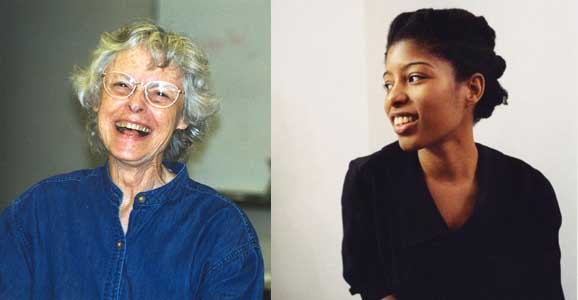
Carol Emshwiller and Sharifa Rhodes-Pitts appeared on The Bat Segundo Show #389.

Today is Carol Emshwiller’s 90th birthday. She is the author of Carmen Dog, The Mount, and numerous stories. Nonstop Press has recently issued The Collected Stories of Carol Emshwiller. Her work can be thoroughly investigated through The Carol Emshwiller Project. (Many thanks to Gavin Grant for his assistance in setting up this conversation.)

Sharifa Rhodes-Pitts is the author of Harlem is Nowhere.

Condition of Mr. Segundo: Wondering why there’s a sentient mount attached to his back.

Authors: Carol Emshwiller and Sharifa Rhodes-Pitts

Subjects Discussed: Bears that Ms. Emshwiller keeps in her house, writing to please one’s self, fooling Harlan Ellison, slanting a story to sell it to a science fiction magazine, throwing strange ideas into short stories on purpose, increased short story competition, selling a story in a day, commercial value vs. name value, not writing for eight months, dealing with blindness, working on multiple stories at the same time, the difficulties of writing fiction vs. the ease of nonfiction and email, Kate Wilhelm, the visual components of sentences, being advised to purchase $150 glasses, inventing a fictional family as a way of coping with grief, how a single line of dialogue can stop a writer in her tracks, not forcing the creative process vs. keeping productivity going, whether or not Ms. Emshwiller has ever been terrified of her own ideas, the torture within Carmen Dog, Kafka’s influence, authors who laugh at terrible events on the page, the emotional truth of dangerous ideas, collaborating with Ed Emshwiller on films, formulating plot and looking ahead, repeating an idea, the cheat of characters who go for a walk, twisting an emotion, kindness as a wild emotion in “Creature,” studying animal psychology before The Mount, being seized an idea, reading for pleasure, the inseparable connections between reading and writing, books on tape, loss of reading desire with blindness, how blindness causes everything to take six times as long, competing notions of what Harlem’s boundaries are, balancing a view through books and a view through people, capturing “snapshots” of neglected figures as an observer, James Baldwin’s “Jimmy moment,” personal evasions, Rhodes-Pitts speculating on Harlem based on observing funeral parlors, having a relationship to a place without going in, aligning a piece of information from the library to personal experience, serendipity, Rhodes-Pitts’s film background, how films and photographs help make sense of a neighborhood, Aaron Siskind’s Harlem Document Series, photographs as a residue of living, addressing Dwight Garner’s white bread vantage point, interpretive demands from critics, parallels between the African American Day Parade crowd and the 1919 Harlem Hellfighters, ongoing familiarity with historical figures among Harlem residents, the applicability of historical framework, Ralph Ellison and the Federal Writers’ Project, Invisible Man, Zora Neale Hurston, 1944’s “Harlem Hunches,” quibbles with WPA oral history and manipulated slave narratives, phony dialect created by white writers, attempting to write a hopeful account when there’s a historical sense of pain, and the shock waves of Harlem gentrification.

EXCERPTS FROM SHOW:
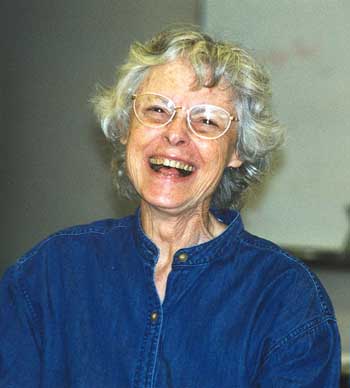
Correspondent: In the introduction for The Collected Stories, which has been collected all in one book and published just in time for your birthday, you allude to there being five different phases of your writing life. What was interesting to me was that you mentioned the fourth phase, which was just after your husband had passed away, and you say that you were writing stories and these Western novels because you wanted to have a family. Your kids had gone away and all that. I was curious why the family on page meant more or needed to be there in addition to the real people in your life.

Emshwiller: Well, my family wasn’t there. (laughs) That’s the point! You know, the kids had all gone off. And I didn’t have any kids anymore near me. And then I didn’t have a husband anymore. And I was by myself. And what I did was — well, it’s sort of a long story. The very first thing, to get into that cowboy stuff, my daughter had a wonderful idea. She said, “Why don’t you go to this dude ranch that I know of?” Right? And I said, “I don’t even like horses anymore!” And I didn’t want to go. And I just fought her and fought her. And she said, “You gotta do something. You gotta go some place you never went before. Do something you never did before.” And she pushed me up there. And then, in two days, I was just back to horses and farm life and cows and everything. They had everything up there. Pigs and chickens. Everything.

Correspondent: Why the aversion to horses?

Emshwiller: What?

Correspondent: Why the aversion to horses?

Emshwiller: Oh, before, you mean?

Correspondent: Yeah.

Emshwiller: Well, when I was a twelve-year-old girl, I was into horses. And if I had a dollar, which I didn’t have very often, I would go and ride. Which was not every often. And after that, I grew up.

Correspondent: Horses? Yeah. Big deal. In the boonies.

Emshwiller: (laughs) Yeah, right! I didn’t hear anything about them anymore. But then it only took two days to realize that this was really great. And my daughter was absolutely right. I would just switch away into another life. And then when I came home though, I didn’t write another line for a year.

Correspondent: Oh wow.

Emshwiller: After Ed [Emshwiller] had died. And I lay comatose in front of the TV set, looking at Westerns. Trying to see. Watching horses and watching mountains, which I really learned to love the mountains with Ed. When we were together, we used to climb around a lot. And then, after I got through mourning for a year and not doing anything, then I started writing the Westerns. I made myself a family. The thing is: I wrote. I can see a lot of people doing this though. For those two novels, I wrote like I never wrote before. I didn’t go anywhere. Those people were more real than my friends.

Correspondent: Wow.

Emshwiller: More real. And they were my life. For two years. Or three years. I don’t know how long it took to write both those novels. I thought of nobody else. And I didn’t go to any movies. My friends would give readings and I didn’t go. I didn’t go to everything.

Correspondent: They were more real than your real friends. Why do you think that is? Why did they…?

Emshwiller: I don’t know how that happened! (laughs)

Correspondent: Your imagination was that powerful, I suppose.

Emshwiller: And my writing changed completely during that. Then I went back to science fiction. From that experience, I think it expanded deeper into people, I think. Although I don’t think I’m as deep as U was into those people now. I think I squeezed back a little bit to the science fiction things.

Correspondent: You needed to invent people in order to understand them?

Emshwiller: I think. I don’t know. Of course, they were my invention. I understood. (laughs)

Correspondent: (laughs) Yeah, it’s tilted the balance there.

Emshwiller: Of course they don’t always do what you want them to do.

Correspondent: Of course. Which is why I suggested an invented simulacrum of people might almost be more effective. Because they’re coming from your subconscious. It’s not like you are controlling them completely.

Emshwiller: No. I found that out. (laughs)

* * *

Correspondent: I wanted to first of all start with the notion of Harlem as an area. There are numerous skirmishes throughout history, some of them based off of racist fears about what Harlem’s boundaries are. And even when you were in Texas, you describe in this book creating an imaginary map of Manhattan. So given this, and given the fact that one person will call Harlem “a ruin,” another person will call it “an East Berlin whose wall is 110th Street,” how can any one person describe its totality? I mean, can this book or can any book really capture it? Or do you essentially fall into the Alexander Gumby problem of an overflowing collection of clippings?

Rhodes-Pitts: My attempt was not to give a description of Harlem in the colonial sense, when cartographers would go off into the bush and make a map that attempts to be true to life. It remains an idiosyncratic map of this place that is outlined by my personal experiences and my personal curiosity. And in the midst of living here — and really it was living here that helped for the book, it wasn’t the other way around; I didn’t move here to write this book — my own personal obsessions and curiosity collided with those of other people. And some of those encounters are captured in the book. Now whether it’s — I mean, I guess I don’t trust the project of someone who would claim that they were setting out to describe the totality of any place. It’s simply as that.

Correspondent: How about this? I’m curious about the different worlds between your peregrinations through the neighborhood, talking with people who live here, versus your dutiful efforts in the library to make sense of the history. You say that the personal quest encouraged this more scholarly quest. And I’m not sure if it’s fair to necessarily call it a dichotomy, but I’m curious how the two worked in relation to each other in terms of this book.

Rhodes-Pitts: Well, it’s a funny way of running back and forth between two fields in a way. And clearly my first encounters in Harlem, as I described in the book, were through literature, through books. And then I guess you could say I run to the field of experience when I actually move here. And then I’m simultaneously collecting things from the field of experience and from the field of the archive. And I guess as I finally set down to sort through everything that I gathered in my imagination and my experience and my reading, I was conscious of one way to make all of those things on one plane as best as I could. And I think I tried to do that through the way certain fictional characters move through that one chapter as characters and plucking them from their environment and colliding them together as figures in one scene from their different respective homes in literature. And then also making those figures live alongside the people that I knew and who told me their stories, or shared not even their whole stories but snippets of stories that come out in casual conversation. Not through interviews. Which I was really conscious about. So I just think my attempt was always to make the things equal in my treatment of them, and not to privilege one over the other.

Correspondent: Well, for example, you do write about going out of the library and seeing a man there who is reading the Koran. And you observe this tableau. But the question of what you memorialize — and this is also in relation to that photograph you mention — is something interesting and oscillates between these two points. I detected in reading this book that there was a little bit of “Should I impede on the person who’s practicing this private ceremony, but is nevertheless part of the neighborhood or should I observe him?” Was this a struggle in terms of deciding which characters to pick for the book? Who to populate the book to really present your view of Harlem?

Rhodes-Pitts: Again, I think a lot of that is defined by temperament. And I don’t think there was a method to it as much as there was my way of moving through the world, which is often as an observer, and completely aware that what I observe and then choose to describe is part of a selection process. And it was really important. The book is in no way my unscented notebook of seven years in Harlem. It’s very specific images — whether they’re flashes in the case of that particular man, who, for me, sitting outside the library. Clearly some sort of dedicated scholar or man of religion, who was also selling incense and shea butter as a street vendor. Probably not making that much money. Which is an interesting tableau, as you put it, of the pursuit of knowledge happening right outside the door of this other shrine to that pursuit. And I was always very interested in how a lot of the figures — especially the ones that I knew — when I tell their stories, it’s not just a funny story he told me, but it’s really often those stories are about an exchange of knowledge. The impossibility of seeking the stories and the truth and history in some ways. The evasiveness of those stories. And so I guess when I do go through my — whether memory or notes or the histories that I read, it’s very much with a direction. So there’s always a choice. You know, I have a background in film. So I’m very much aware of what it means to edit. To seek and to edit. To capture and sift.

The Bat Segundo Show #389: Carol Emshwiller & Sharifa Rhodes-Pitts (Download MP3)

This text will be replaced

The Bat Segundo Show: Holly Tucker

Holly Tucker appeared on The Bat Segundo Show #388. She is most recently the author of Blood Work.

Condition of Mr. Segundo: Wondering why his bank statements come back bloody.

Author: Holly Tucker

Subjects Discussed: Early philosophical notions of blood, ill humors, whether science without the scientific method can be adequately called science, the Royal Society, William Harvey and the discovery of circulation, Descartes and mind/body dualism, the ethics of unmitigated animal torture, Sir Christopher Wren’s city plan and the Great Fire of London, the connections between architecture and medicine, Claude Perrault, Da Vinci’s The Vitruvian Man, the physiology of architecture, Wren’s animal experiments at Oxford, early scientific interest in the brain, French rejection of English scientific theory in the 17th century, medical theory and medical practice, questioning everything as a sport, prostitutes vs. Protestants, claims that the English are liars, royal censorship and Henry Oldenburg, the medical culture wars between France and England, monarchies and clear ideas, staving off espionage issues while pursuing science, the Parisian medical elite, the role of women in 17th century medicine, Jean-Baptiste Denis, the remarkable sacrifice of Antoine Mauroy, throwing a scientific temper tantrum, the charming nature of megalomaniacs, whether early scientists took delight in making dogs miserable, Robert Hooke’s tracheotomy experiments, writing about dogs being muzzled and experimented upon with a dog sitting at your feet, remorse in early medicine, the Tuskegee syphilis experiment, Arthur Coga, experimenting upon the poor and the vulnerable, Bethlem Royal Hospital, the shifting nature of medical consent over the centuries, and the relative “grisliness” of medicine.

EXCERPT FROM SHOW:

Correspondent: I know bloodletting. And I know bleeding. Not personally. But I do understand that its historical basis was based off of trying to release the ill humors out of the blood. And all that.

Tucker: Absolutely.

Correspondent: The big question I think we should start off with, so that people know what we’re talking about, is: How did such a primitive approach to blood become something? Why did people start thinking, “Oh! We could probably use this for transfusion purposes! We could probably use this for transferring one blood to another!” It seems, in light of its early use before the 17th century, that there was nothing in the cards to suggest that human beings would come up with something like this.

Tucker: No. The fact that they did in the 17th century is, in itself, the story that we’re telling. Because for millennia, they believed that the body was just this mix of fluids. As you said, humors. Blood, phlegm, bile, black bile. Ill health was when those fluids were out of balance. And good health was when they were in balance. We laugh now about bloodletting. Because we think it’s the most gruesome and horrific thing. And it was. But it made total sense to them. That they would need to — well, that and purging and laxatives. So what you tried to do was rid the body, where you could, of all these foul humors. So you’re going to ask me about how they got to blood transfusion.

Correspondent: Yes.

Tucker: I’m trying to make my answer nice and compact for you.

Correspondent: Oh, I see!

Tucker: Because what happened — I will go for the next ten minutes.

Correspondent: Well, go for a protracted answer. Protracted answers, by the way, are welcome here.

Tucker: So when you start dozing off, you tell me.

Correspondent: Oh no. No, no, no.

Tucker: And jump in with questions.

Correspondent: There won’t be any dozing here. I assure you. I’m fascinated by the subject. We’re talking about blood! We’re talking about gore!

Tucker: Gore.

Correspondent: We’re talking about viscera. Okay? You note that some of the natural philosophers were so duped by their own success that they couldn’t actually judge the results objectively. Edmund King reported that sheep he had infused with milk and sugar were more than ordinarily sweet. I’m curious, just talking about the Royal Society. We’ll get into the French later. What were some of the chief factors that made the Royal Society carry on with these things without this scientific oversight that we now know in the 20th and the 21st centuries? Can we really call these early efforts “science” if there was — well, first of all, they lacked the vigorous oversight. But, second of all, the unmitigated torture of animals, which we can also get into.

Tucker: Well, I would say that what they were doing was science. They believed that what they were doing was science. In fact, early blood transfusion happened because of one of the biggest and most important scientific discoveries in medicine, which was the discovery of blood circulation, right? And William Harvey was very methodical about how he went about discovering blood circulation in 1628. So he was really confused by this idea of humors. He shouldn’t have been. Because it had been the dominant way of viewing the body for millennia, as I said. He said that there has to be a better explanation. Or at least there has to be a good scientific explanation about how these humors work. And he was suspect about the whole idea that blood was produced in the stomach and then was distilled into the liver and moved up to the heart, where it burned off like a furnace, and that breathing was a way to stoke fire and also blow off the fumes. And that’s what they believed up until Harvey. So he started to do some detailed methodical experiments by, first, dissections. Animal and human. Looking at how much blood was in the heart. And then he noticed in a human heart that there was about two ounces of human blood in the heart. Multiply that by the number of heartbeats. He found this obscene number. Forty-one pounds of blood would have to be produced in a half hour. So he said, “This cannot be.” So then he started doing experiments on live animals. Particularly coldblooded animals. And he said, “Aha. No. Blood is circulating.” So you know, for as much as we look back and, yeah, there’s a lot to laugh about in previous periods.

Correspondent: A lot to laugh about. Torturing animals? A barrel of laughs.

Tucker: Okay. A lot to laugh about as far as how they understood the body. And the way the worldview dictated the questions they could ask and the answers they could then get. Because it’s a completely different philosophical, economical, and political framework that we have now. Yeah. Torturing animals is not a cool thing. It never has been. It never will be. But there too, you can start to see what’s happening. It came from a notion of the body and the mind and the soul being distinct. And that’s an idea that’s coming out in the 17th century in the works of, for example, Rene Descartes. Quiz. Who’s Rene Descartes?

Correspondent: He’s some guy who was all about thinking. Maybe therefore. Something along those lines?

Tucker: Maybe “I think therefore I am.” We associate him with the scientific method, right? My daughter is in grade school and she just did one of her first science fair projects and came home and did the poster. And it was almost like watching Cartesian indoctrination in her science. Because he put that idea forward and he also put that idea forward along with another one — which was mind/body dualism. He said, “Hmmm. What differentiates animals from humans? Both animals and humans have bodies. And those bodies are very likely similar. Maybe they’re machines.” And this is the age of hydraulics. This is science being invented. Barometers, you name it. So it makes sense that they’re viewing the body as a machine. And he says, “Well, if we broke machines in bodies, there has to be something that is different. Well, we have minds. We think. We speak. We have souls.” And those souls and the capacity for thought can’t be in the body. Because animals, he said, don’t have that. And so if we take the soul of an animal, and they become nothing more than machines, then it’s a bit like working on your car. Are you really torturing that animal? Now I’m not saying that I think that. But that’s what Descartes allowed the natural philosophers, as scientists were called, to be able to do. It’s to start taking apart those machines. Those animals.

Correspondent: We’ll get more specific into animal torture in just a bit. But I do want to actually jump off…

Tucker: That’s a nice segue.

The Bat Segundo Show #388: Holly Tucker (Download MP3)

This text will be replaced

The Bat Segundo Show: Michael Crummey

Michael Crummey recently appeared on The Bat Segundo Show #387. He is most recently the author of Galore.

Condition of Mr. Segundo: Wondering if you can rent a motel room in the whale of a belly.

Author: Michael Crummey

Subjects Discussed: Childbearing in poor families, grisly deaths and irresponsible life decisions, infant mortality in the early 20th century, the relationship between historical investigation and magical realism, Crummey’s intense dislike of the term “magical realism,” dominant spectres and other ghosts, how the stench of death encourages the reader to get acquainted with new characters, the complexities in basing novels on historical events, aligning Galore‘s narrative to the Great War, not mentioning dates, the advance of religion before medicine in 19th century Newfoundland, the dissolute nature of Father Phelan, the netherworld beneath the real world, the truck system and fishing unions, whether Yoknapatawpha-like organization is required in building a world, avoiding Gabriel Garcia Marquez’s One Hundred Years of Solitude and learning to love it, alcoholic opera singers, balancing multiple characters into a narrative coherence, being saved by having family characteristics, being influenced by Marquez, another book as a road map, the unavoidable serendipity of reading, “happening” onto books with which to inspire a novel, Moby Dick, riffing on other people’s work, being suspicious of magical realism, magical realism as a cheat, not being able to talk about Newfoundland folklore, the importance of mechanical laws in the telling of the story, what readers are willing to accept, the song “Jack Was Every Inch a Sailor” as an unexpected inspirational force, magical realism as an interpretive notion similar to the Bible, and having faith in characters and fakery.

EXCERPT FROM SHOW:

Correspondent: In terms of character balancing, if you’re running into the jungle and wildly whacking around with a machete, there needs to be something systematic. Particularly if you hope to arrange it in any sort of coherence.

Crummey: (laughs) Right. Well, I definitely had particular themes the book was following that, in a way, matched the trajectories for each of these characters for each of the generations. I was playing with the whole notion. Newfoundland is a tiny place. About a half million people. I mean, it’s big geographically. But it’s a tiny community. Half a million people today. A hundred years ago, I think it was less than half of that. And a hundred years before that, it was miniscule. Maybe twenty, thirty thousand people. So everybody’s related. And the gene lines between those generations. I mean, there are researchers from all over the world in Newfoundland studying because they can map how these genes crossed generations. Because there’s been so little contamination. For lack of a better word. So I wanted to play with that in the book. So when I started off with Judah, for example, I knew that the book was going to end with a direct descendant of Judah — and, of course, some of Judah’s characteristics; the smell, the white skin, and all that sort of stuff was passed on. And I knew that I wanted the book to end with someone who was in some way saved by being the direct descendant and having those characteristics. So all the way along, of course, I have this map to follow where these particular characteristics had to be passed down and then to do something interesting with those characteristics, all the way along, before I got to this end point.

Correspondent: Does this explain in part some of the copious cock imagery throughout the book? I mean, lots of blades and penises.

Crummey: Right.

Correspondent: Lots of propagation I found.

Crummey: Yeah. Well, I mean, partly that was homage to [Gabriel Garcia] Marquez as well.

Correspondent: Yes.

Crummey: Because every penis in Marquez is monstrous.

Correspondent: Yes. No pun intended.

Crummey: It’s huge. And that was just something else again I stole from Marquez. (laughs) But the whole sense of propagation — I mean, this was a place that was incredibly difficult to survive in. And my sense of it is that only people with an incredible life force in them would have made it.

Correspondent: This explains in part the considerable virility of many of these characters.

Crummey: That’s right. And it is rather astonishing when you go to the old graveyards in Newfoundland. The graves seem primarily to be divided into two categories. There are people who died before they were fifteen, often of some disease or drowning or whatever. And then there are people who died when they were ninety-eight. So the people who were strong enough to survive past the fifteenth year seemed to go on forever. So there is a sense of unbelievable stubborn virility in these communities. And often, sometimes there’s not much life-affirming about it even. I wanted to get that sense across and, in some sense, it just seems like a stupid animal stubbornness that keeps these people going.

Correspondent: Well, based off your research, what’s the dip like in terms of the middle aged? In terms of death.

Crummey: Well, I mean, to be fair, I would say that most people didn’t live much past fifty-five. Right? And that fifty was considered to be old. And in every community, there’s this group of people who live to ancient years. But for most people, I think they were broken by the life they were supposed to live. By the time they were fifty, they were probably crippled by the work that they were forced to do and by the fact that women, in particular, probably started having children in their teens and would continue to have them until it killed them almost.

Correspondent: I’m curious. You’ve brought up Marquez a couple of times. And I’m wondering at what point during the writing did you shake off the inevitable yoke of influence?

Crummey: Right. Well, I mean, I was a little concerned when I first started talking about this book with people about even bringing Marquez up.

Correspondent: You brought him up here. Just for the record.

Crummey: I’m much more comfortable with it now over time. Because it’s ridiculous. There’s Marquez and then there’s me. But I think the thing that gave me the courage to try the book was the fact that I felt like Newfoundland and Newfoundland culture was every bit as rich and bizarre and otherworldly and maddening as the world that Marquez was writing about. And I trusted that to create its own uniqueness as I wrote the book. So it made me unafraid to steal what I needed from Marquez and to see that almost as a road map for a way to tell the story. Because I knew that the stories and the places I was writing about were so unique onto themselves that they could create their own. If I let them be, they could create their own world. And I feel like I did that. A lot of people when they read this book, I think, think of Marquez. But I haven’t — at least I haven’t heard anyone yet — heard anyone say it’s just a Marquez knockoff. Because the place itself is so completely different. It stands on its own feet as a culture.

Correspondent: It was more of a narrative canvas. A map on the wall with which to go ahead and put your pushpins in.

Marquez: Sure.

The Bat Segundo Show #387: Michael Crummey (Download MP3)

This text will be replaced

The Bat Segundo Show: Deb Olin Unferth

Deb Olin Unferth appeared on The Bat Segundo Show #386. She is most recently the author of Revolution.

PROGRAM NOTE: Just before the tape rolled, Our Correspondent, who met with Deb Olin Unferth at a Vegan restaurant, had casually mentioned (in an entirely different context) that he was a meat eater. Our Correspondent’s revelation was rejoined by a scowl from a man sitting directly behind Ms. Unferth. The scowl was so minatory that Our Correspondent, not an especially homicidal individual, wondered if he had killed a few random New Yorkers on the way to the restaurant. And then he realized that he had unthinkingly revealed his carnivorous habits in a Vegan restaurant. Had the story stopped there, it would not be worth reporting. But as it turned out, the Vegan’s fury made its way into our program. At about the 35:30 mark in this program, Ms. Unferth noted that a strange man was photographing both she and Our Correspondent through the window, just outside the restaurant. And this wasn’t just a one-time snapshot, but multiple angles. For all we know, there are photographs of us on some “meat is murder” website. Our Correspondent fully accepts the blame for his gustatory effrontery. Our Correspondent respectfully requests that Ms. Unferth, who is a very nice person and not a meat eater, not be implicated in any Angry Vegan movement that arises from this conversation.

Condition of Mr. Segundo: Wondering if he accidentally signed up for a revolution sometime in the late 1980s.

Author: Deb Olin Unferth

Subjects Discussed: The nonfiction volume Revolution containing echoes of the fictional Vacation, the Bowles-like distinction between tourist and traveler, Unferth’s early efforts to write about her Nicaraguan experiences as a murder mystery, Minor Robberies as a warmup for the memorialized document, the key qualities that Unferth sought in a revolution in 1987, the influence of Marxism, taping people for interviews, capturing history, lasting urgencies vs. ephemeral urgencies, how urgencies are captured into text, the Farabundo Marti National Liberation Front, the El Salvador peace accords of 1992, revolutionizing your way into legitimacy, remembering what you did at eighteen, confusion and youth, sufficiently recapturing certain feelings in book form, being harassed by men, violence from men as a deliberate omission, making choices about what to reveal in a book, whether two bad boat tales are balanced by one good tail, having confidence in adages, alliteration, Gertrude Stein’s The Autobiography of Alice B. Toklas, comedy and disturbing situations that are poignant, the pleasant sound of “so say sailors,” whether it’s possible to run away and have it mean something, the fear of being left, being rejected as a writer, early success with McSweeney’s, the inspiration that comes from fleeing, multiple acts of creation, Unferth’s storytelling efforts as a child, unanticipated reverberations in life that aren’t remembered, taking dialogue verbatim from old notebooks, La Prensa and censored newspapers, competing mnemonic notions of what you lived, contending with Angry Vegans taking photographs of Our Correspondent and Deb Olin Unferth, tracking down an ex-fiance, the need for corroboration, the private investigator’s role in assembling the memoir, legal reasons as a convenient excuse, “if I could write the book,” the first question Unferth would say to her ex-fiance, and chronicling the unique voice.

EXCERPT FROM SHOW:

Correspondent: As the interviewer, I feel compelled to ask why you felt taping the people was the best way for understanding them. You describe this bundle of tapes. And later you were stopped because of these particular tapes. And thankfully they weren’t actually played. But it is rather curious that recording these stories seemed to be the best way for you to try and understand them. Why do you think that was?
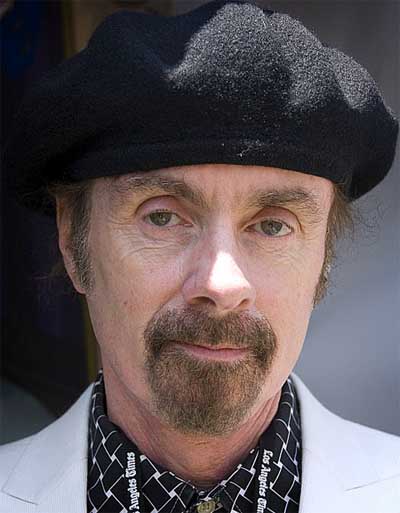
Unferth: That’s a good question. I think it was that we felt that maybe the tapes — we would be able to go back and listen to the tapes later. That the tapes would be useful in some way at a later date. That we felt that we could understand the people we were interviewing better and have opportunities to meet them if we had a tape recorder and were saying, “You know, we’re asking questions.” I don’t know. I could ask you the same question. Why do you feel it’s important to interview people?

Correspondent: Well, that’s a good question. Well, to my mind, in some vague way, I perhaps would like to — and this almost sounds hubristic, even though I don’t mean it to sound like that. I would like to think that I’m recording a history of some kind. That let’s say, in ten years, you Deb produce your masterpiece. And we can go back ten years before and see, well, what were you thinking before these germinations? The three books leading up to what ended up being an even bigger book. Well, there’s the trajectory right there. It’s also why I like to talk with people multiple times. I’ve talked with TC Boyle now four times. And even then, I find that he’s a little bit different each time. So maybe history was perhaps the draw for you at a very young age?

Unferth: Yeah. But if I think about you, and what you do, it seems like you’re also recording the echoes of contemporary culture.

Correspondent: Yes.

Unferth: So you are getting — because you’ve interviewed quite a few people. So you’re getting a wide swath of contemporary letters and what are people thinking about in contemporary letters at this time.

Correspondent: Yes.

Unferth: And so I would say that it’s a similar thing to what we were trying to do. To establish the tone and the concerns of liberation theologians and people who were involved in these revolutions at the time.

Correspondent: We have to capture the present moment in an effort to see it differently five years from now. Or ten years from now. Or twenty years from now.

Unferth: That’s true. Yeah.

Correspondent: Does text for you serve the same function? Or a similar function? Or is it a little bit different? By coming at it from memory, from research, from your notebooks at the time, I presume. You allude to those in the book. What is the effort of this cycle for you? What is the ultimate purpose? That’s a very general question. But since we’re talking about this.

Unferth: The ultimate purpose of writing Revolution?

Correspondent: Yes! Exactly!

Unferth: Well, I mean, it felt like an urgent thing to do. It felt like I really really wanted to write it. Which is also how it felt with Vacation and Minor Robberies. And I haven’t felt that way about many other things in my life. So I would say that’s the primary thing. It’s a personal urgency. And just a desire to untangle the questions that were being asked for myself. But then if I look at it with a broader — like what place does this book have? I really wanted it to contribute to the conversation about memoirs. Was one thing. I wanted to be thinking about what a memoir is. And I wanted to expand that a little bit. I wanted to do something a little different from most memoirists. Because I feel like memoir is such an interesting form. And then I wanted to write a coming-of-age story that isn’t quite as simple as “something is learned and then someone grows as a result of it.” I mean, I think that there are so many different ways to approach coming-of-age stories. And so in this one, it’s almost like someone becomes slowly disillusioned. And that’s how the coming of age is accomplished in some way. So I think that was part of it. And then also I think my continued fascination with those countries — especially Nicaragua. Nicaragua to me just seems like such a fascinating place. And El Salvador. Both just fascinating places. And they were these people who did these incredibly courageous things and developed whole philosophies and risked their lives and all these things. And now we’ve just forgotten about it.

Correspondent: Sure.

Unferth: And I find that to be so heartbreaking. I haven’t forgotten. So I want to talk about it.

Correspondent: Well, to go back to what you were saying at the beginning of that answer about this sense of urgency. It is very interesting to me that you have chosen perhaps the least urgent of all mediums. The book, which takes a long time to write. Which then has to go through editing. Which then has to sit in drydock for two years before it’s published. And then here you are two years later talking about something. And we’re not talking about the urgent moment. This is the difficulty, I suppose, of some of these conversations. Because you’re probably working on something else right now. And yet, that spirit of urgency is what was the guiding principle of this particular project. Why try urgency in such a slow burn medium?

Unferth: Because my moments of urgency last a long time.

Correspondent: Aha! So it’s lasting urgency you seek.

Unferth: Yeah. It’s not that my urgencies aren’t something that sweep in on me and last for a moment and then flee. They just sit inside me for a long time.

Correspondent: So, for you, some of your very taut paragraphs, your one-sentence paragraphs, they’re almost an attempt to capture a lasting urgency. And then the ephemeral urgencies don’t actually make it into your book. Would that be safe to say?

Unferth: What do you mean by my ephemeral urgencies?

Correspondent: Well, would you say that all of your urgencies are lasting? Or is some of it ephemeral?

Unferth: No. Some are. I guess in many ways we’re all sort of a bundle of urgencies, right? We’re all trying to do all sorts of things to stay calm. To try and stay calm. And some of those things are satisfied very easily. Just by eating something if I’m hungry. And others feel deep and existential and possibly without solution.

Correspondent: Yeah.

Unferth: So there are many different levels of urgencies, I suppose.

Correspondent: When your urgencies are captured into text, is it less urgent? Or does it still last?

Unferth: Maybe it feels less urgent once it’s done and out there. Like this particular topic. Now that it’s written and it’s done and the book is out, I don’t feel as urgent about that topic anymore.

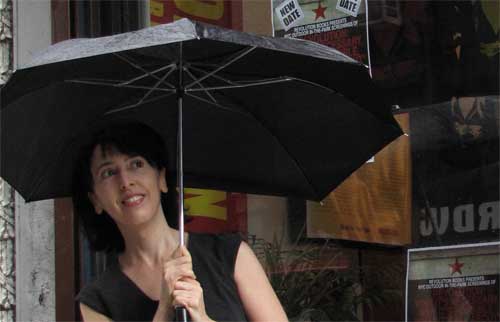
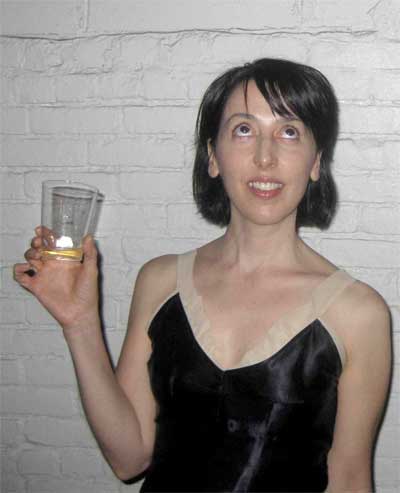
(Image: Meghan Kenny)

The Bat Segundo Show #386: Deb Olin Unferth (Download MP3)

This text will be replaced

The Bat Segundo Show: TC Boyle IV

TC Boyle appeared on The Bat Segundo Show #385. He is most recently the author of When the Killing’s Done. This is his fourth appearance on the program. He has previously appeared on The Bat Segundo #273, The Bat Segundo Show #70, and The Bat Segundo Show #10.

Condition of Mr. Segundo: Considering a savage swim to the Channel Islands.

Author: T. Coraghessan Boyle

Subjects Discussed: Whether one can look dapper while being under the weather, Boyle’s powerful immune system, connections between Wild Child‘s stories and When the Killing’s Done, fishing expeditions gone awry, early subconscious efforts to hone the narrative framework, the short story “Anacapa,” “Question 62,” who has the ethical result to control all creatures, details on the next novel San Miguel, the Channel Islands, the bleak winds of San Miguel, straightforward historical narrative vs. exuberant adventure, Boyle’s prodigious description of hair, folk singers and massive hair, writing about women, Ruth Dershowitz in East is East and Dana in Talk Talk, basing When the Killing’s Done on news accounts without meeting anybody involved, Dave LaJoy and megalomaniacs, readers who take hard sides in response to the book, whether the portrayal of an exuberant megalomaniac causes an unintended ideological tilt, sympathizing with an animal rights activist, not being able to look at the PETA slaughterhouse videos, Diane Johnson’s essay in the New York Review of Books, whether Boyle’s sense of the ridiculous overcomes moments of gravity, the role of literature within Killing, Madame Bovary “in the Jean Renoir original,” Island of the Blue Dolphins, Boyle’s pessimism, being thrust into the lap of the existentialists, Jeffrey Dahmer, the comforts of irrelevance, Flannery O’Connor’s “A Good Man is Hard to Find,” spirituality, feeling the pulse of nature and being humbled by it, Boyle’s pilgrimages, blocking out terrible news, the role of art in a nihilistic viewpoint, the geography of Santa Cruz and Anacapa, Boyle’s mother-in-law, the degree of geographical exploration required for Drop City and When the Killing’s Done, the Judas pig, Tom Wolfe’s journalistic approach to novel writing, passages written by “Boyle the historian,” being in the clear when using real people for fiction, when fiction is more real than reality, riffing on history, Home Depot as “the loneliest place in the world,” not having material goods, and escaping to the mountain.

EXCERPTS FROM SHOW:

Correspondent: I wanted to remark upon a recent essay by Diane Johnson in The New York Review of Books. I’m sure you’ve probably seen it by now.

Boyle: Yes, I have.

Correspondent: She wrote something that I happen to agree with. “Because his sense of the ridiculous usually overcomes his moments of gravity, he rarely departs from a comic mode that precludes tears even in the most tragic circumstances.” I think that this is a fair point, especially in this book. But if your book is informed with this sense of the ridiculousness, I’m wondering if this is going to impede upon writing in more serious or greater turf.

Boyle: It might. Which is precisely why I’m doing a non-comic straightforward historical narrative right now. Just to see how that might be and what might happen. Don’t forget. I’m the guy who wrote Water Music as my first novel, which turned the historical novel on its head and subverted and pulled the rug out and nudged you constantly about the unreliability of fiction and of history too. Now I am trying to write something without any irony or any comedy. Straightforward drama. Straightforward realism. Just because I’ve never done it before. I’ve done it in short stories. But I’ve never done it at length. And I found this wonderful story, a historical story, which I’m telling as best I can. We shall see what the results are. In fact, if we’re very lucky, you and I will be sitting here in three years discussing that one. And we’ll find out. (laughs)

Correspondent: Well, maybe we will. But I want to see if we can get to When the Killing’s Done and this problem of adopting the comic exuberant tone. I think this book does really present some very important issues, which we were getting to earlier, about how does humanity play god in the animal kingdom. I mean, this is a very serious topic. And the comedy is almost a mask over something which is — well, if you think about it from either side — really depressing. So I’m wondering if, in not permitting us to share tears (as Diane Johnson believes), it almost trivializes the issue to some degree. Does it present a problem? Or is your strategy more laying a few comic exuberant bombs to blow up in the reader’s head in about a week or so?

Boyle: Wow. Neither of the above. I’ll go for Choice C. I don’t see this as necessarily a comic novel. Certainly there are many varieties of comedy, of course. And I’ve used every possible mode I can think of. This has its moments, of course. And I think it allows the reader to stand back at times and view the characters with some kind of ironic detachment perhaps. But I don’t see this as essentially a comic novel. I see this as a dramatic novel. And further — and we’ve talked about this in the past — I often find that using the comic mode can be more emotionally wrenching then writing a straightforward drama. Because it subverts your expectations. And in this one. Well, look at the ending to this book. It should punch you right in the heart. I hope it does.

Correspondent: But I don’t know. From my standpoint, it read very much like a comic novel. To me. Particularly every time LaJoy came up. I mean, this guy is such a hilarious…

Boyle: Because he’s exaggerated to a degree. And yet, and yet, he’s also real. And I wouldn’t want to say, as I said earlier, that he represents a large part of me. But certainly that part is there. And certainly, Ed, we are both of us pretty much perfect and beautifully emotionally adjusted. But a lot of people out there are not. There are a lot of people out thee who make LaJoy look calm.

* * *

Correspondent: Do you have anything that you feel optimistic or joyful about?

Boyle: No.

Correspondent: No? Nothing optimistic?

Boyle: No. Since I discovered death at a very young age, it has obsessed me. And the whole purpose of our endeavors obsesses me. And in a larger scale, of course, our human endeavors on the planet, which will of course be burned to a cinder in there and a half billion years anyway. So what does anything matter? Etcetera. As I probably have said to you before, you know, I went from a Roman Catholic boy with god and his heaven and Santa Claus at the age of eleven or twelve or whatever, realizing that it’s all completely phony and it’s just some myth that we’ve been fed to prevent us from committing suicide at a young age. And within three or four years of that, I was thrust into the lap of the existentialists. And I’ve never come back.

Correspondent: Then is work really the only way, the only reason to stay alive?

Boyle: All work is irrelevant. Everything is irrelevant. Our conversation is irrelevant. Literature is irrelevant. Films, love, everything is utterly irrelevant in the face of utter meaninglessness and death. That’s what we live with. Everybody lives with every minute of every day. On the other hand, if you’re not going to shoot yourself tonight, do what satisfies you. What satisfies me is making literature and then sitting here with you talking about it. And also I have honor. I really believe in the power of literature and I like to promote it. I’ve never cheated anybody or hurt anybody — you know, that sort of thing. And that’s simply because that’s my own code. It doesn’t make me any worse than Jeffrey Dahmer, for instance.

Correspondent: Who’s dead.

Boyle: It’s just my point of existence.

(Image: Mark Coggins)

The Bat Segundo Show #385: TC Boyle IV (Download MP3)

This text will be replaced