BEA 2011: The Future of Ebooks Publishing Executive Panel

The Future of eBooks Publishing Executive Panel

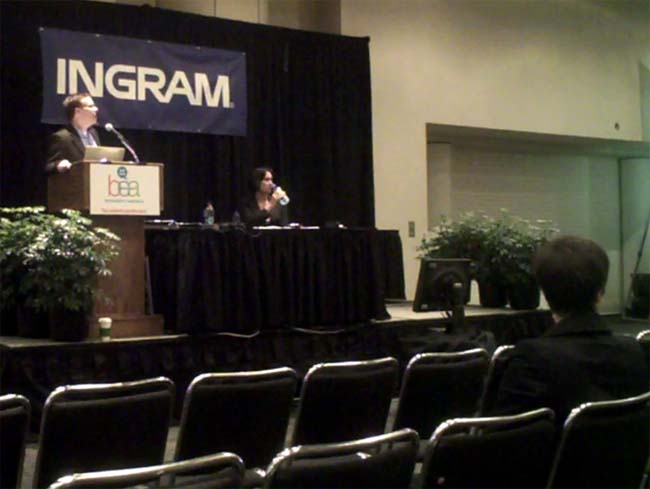
Participants: Tom Turvey (Google Books – moderator), Andrew Savikas (O’Reilly/Safari Books Online), Evan Schnittman (Bloomsbury), Amanda Close (Random House), and David Steinberger (Perseus)

If you were an industry type giving a half goddam about the future of publishing on a late Tuesday afternoon in New York, you had two venues at BEA to deposit your worries. If you were a squeaky kidult wishing to rah rah rah rather than stare into hard reality, there was the 7x20x21 series of self-congrulatory dispatches competing with the floor’s mad transactional noise. But if you were an adult and if you understood why the maxim “follow the money” is not one to blithely ignore, then you headed downstairs into a spacious room, where corporate executives discussed the future of ebooks.

It was a packed house attracting no specific type. Italians chatted behind me. There were guys in the back finding ideal standing positions to make a quick escape if the panel went bust. But nearly every seat was filled through the end. I suppose that when you promise an audience some glimpse of the future, it’s a guaranteed draw. Except for the young people too busy with the collective adulation upstairs.

“The book business is a very long tail business,” began moderator Tom Turvey. I knew he was with Google even before he even said “long tail.” For not more than a minute before heading to the lectern, he checked his phone: one final hit from the electronic communications crack pipe.

As one of the Google People, Turvey had the nerdy nihilism you’d expect from a director of strategic partnerships. He was careful not to express too much enthusiasm, but he did seem to relish the idea of print being as dead as the gramophone, especially midway through the discussion when he asked three of the panelists (excluding Amanda Close) if the agency model was a feature or a bug. “Personally I think it’s a bug, not a feature,” replied O’Reilly’s Andrew Savikas. “It was a moment in time,” replied Bloomsbury’s Evan Schnittman. Perseus’s David Steinberger was the most practical of the four: “I would just say it’s too early. I think we’re overexcited about this issue.”

But Steinberger’s wise response didn’t stop Turvey from pushing further on the topic. Indeed, there is little doubt in my mind that the man spends many evenings in hotel rooms wiping the gushing drool from his chin after marinating his mind in some Bradbury-like vision of a world without books. (When asked by an audience member if Google was working on replicating the experience of a bookstore, Turvey replied, “We have some of our best engineers working on this very topic.” Never mind that the panel demonstrated that ebooks have created problems for consumers that these five corporate titans didn’t really wish to address.)

“Publishing does not know how to market ebooks yet,” said Schnittman. “You’re looking at bestsellers tracking with bestsellers. Everything that we’re marketing in the stores is selling just as well.” I became skeptical of Schnittman when he started clenching his left hand, a gesture reminding me of some dodgy villain from a melodrama. Schnittman liked to talk quite a bit.

“Let’s be honest with ourselves,” continued Schnittman. “We’ve never marketed backlist before.”

These rather assumptive generalizations had me wondering if Schnittman had ever settled his precious hands onto the raw joys of genre or contemplated the way in which an author winning an award often results in backlist titles being repackaged. And what about presses like the University of Chicago Press, finding new life for Anthony Powell and Richard Stark?

“The big challenge that we’re all facing is the digital world,” said David Steinberger. Steinberger was more interested in the way in which consumers discovered books. “Digital is very good for hunters and not so for gatherers.” These were metaphors that a male computer geek could understand, but when he presented specific data about the bottom 50% of Perseus’s titles earning 2% of the print revenue and 12% of the ebook revenue, these statistics helped steer the conversation away from Turvey’s regrettable Gladwellian terminology.

“Those books are not easily found in the physical world,” continued Steinberger. He brought up Dancing in the Glory of Monsters, which had very poor distribution, but managed to nab 62% in ebook revenue. The same went for Poor Economics: A Radical Rethinking of the Way to Fight Global Poverty. Not a sexy title for the Grisham crowd, but the book managed to secure 60% in ebook revenue. “I think you are seeing a lift in the tail,” said Steinberger. “If you’re publishing John Grisham or Tom Clancy, you have another set of rules.”

Random House’s Amanda Close didn’t close the deal upon her turn at the mike. Overly general in her answers and needlessly self-congratulatory in tone (though not haughty like Schnittman, of which more anon), Close wallowed in general corporatese. “I would argue that it’s early days in retail and that we are working with our partners every day to collaboratively work on that browsing experience. That discoverability is really coming through online to replace certain things.” But if Close admitted her desire to argue, it was all for naught. For she brought no argument to the table. “Things in the physical world can reiterate things in the digital world.” You can probably say this about getting lucky after a long dry spell downloading porn. “Our challenge is to deeply understand the dynamics of the marketplace.” Close’s challenge was to deeply understand that a panel of this ilk requires something a bit more than reductionist statements. From the perspective of this observer, she failed. It didn’t help that she smiled brightly and nodded her head after spouting off some of this malarkey.

“Digital distribution is extremely efficient at meeting demand,” offered Andrew Savikas. Yet he also conceded that much of the demand is due to consumers discovering the books. He was right to note the “popularity within the store which generates the feedback loop,” but he wasn’t willing to distinguish the differences between discoverability in a physical bookstore (accompanied by a skilled bookseller) and an e-bookstore. Perhaps it was because he preferred to hawk Safari Books, which has “both lengthened and fattened the tail.”

“While I do expect there to continue to be perhaps a need for the biggest players to focus on those hot titles,” continued Savikas, “I think this ecosystem offers an opportunity for smaller players to find a niche.”

But who are these smaller players? Safari Books? Authors who self-publish at the Kindle Store? Much as yesterday’s panel failed to establish terms, I kept wondering why a thoughtful if somewhat long-winded guy like Savikas couldn’t espouse the pragmatism offered by Steinberger. Savikas was holistic enough to consider Netflix’s current domination of bandwidth, but does this even apply to books, which are an entirely different medium requiring an entirely different commitment?

“I think everybody starts seeing the phenomenon where something hits the list and it becomes self-perpetuating, you know?” responded Close on a question relating to bestseller lists. “I actually look forward to the retail experience evolving so that we can see some segmentation.”

But how can you have an evolving retail experience when there’s a reluctance to experiment? Turvey questioned Close minutes later when he asked her, quite fairly, if Random House’s organizational attitude had changed in light of the fact that more self-published authors had entered the ebook arena.

“Um, you know the way I would actually answer that is we are always testing things with our new authors.” But how? “It’s not a phenomenon that has been driven by the self-publishing platform.” I’m guessing that Amanda Hocking would disagree with this.

Steinberger brought up Go the Fuck to Sleep as an example of online conversation translating into sales. He then quoted The Cluetrain Manifesto: “A market is not me telling you something. A market is a conversation.” But while it’s undeniable that some conversation has started with Go the Fuck to Sleep, nobody on the panel wanted to admit that this was a bit of a fluke. But it did cause Schnittman to reveal more than a bit of resentment towards the consumer.

“Consumers need help,” he said. “We throw at them how many thousands of books?” He then hunched forward. “What matters is there’s an authority. It’s the free market, baby.”

When Turvey asked why all the book recommendation engines sucked, he allowed Schnittman to fall into his Socratic trap. (The unvoiced assumption: what is a bookseller but the ultimate book recommendation engine?)

“I think people do use it,” huffed Schnittman, when Turvey brought up the failed Genius feature in iTunes. “You use it with a caveat that it sucks.”

Then he got a little defensive. “You in the world of algorithms, you’ll figure out something theoretically better and better.” He then suggested that “the tail was wagging the dog,” before attempting to retract this because he had “used it yesterday. Nobody quote me on that one.”

I kept wondering why this apparent professional was more concerned with l’esprit de l’escalier rather than legitimate ideas. But at least he wasn’t as bad as Close, who again declared her willingness to argue in lieu of a legitimate argument: “I would argue we have always cared deeply about our consumers.” But for Close, that care has more to do with “buzz meters” and point-of-sale data.

Schnitmann got very riled up about territorial sales, which has presented many ebook customers from accessing certain titles. “Where we see the Internet as a world that doesn’t respect any borders, we’ve actually set up the system to present consumes to buy.”

This caused Savikas to question the wisdom of such an approach: “The notion that we can or should enforce geographic restrictions on web-generated content is a lost cause. And I feel sorry for your customers.”

“I don’t have the rights to them though!” whimpered Schnittman.

“I don’t believe territorial restrictions make sense in relation to content.”

Savikas elaborated on this, believing that electronic sales would eventually become the primary way of doing business and that territorial restrictions don’t reflect the fabric of the Web. Schnittman countered, with more Palpatine-like hand cluthing gestures, by suggesting that “different economies have different needs.” Savikas replied, “I don’t think there’s anything wrong in adjusting the pricing geographically.”

Territorial copyright is certainly an issue. But when a woman approached the mike and declared herself a “frustrated customer,” explaining quite pasionately to Schnittman, “I don’t think that you’re respecting the consumer at all,” it became clear that the panel didn’t want to discuss the real issue: the customer is always right. “Do you have a question?” sneered Turvey from the podium. “Why don’t you think more about the consumer?” said the woman, not missing a beat.

Schnittman did not offer an answer. Nor did any of the other four. And their silence spoke volumes about their collective comprehension of business-customer relations.

The Bat Segundo Show: Tayari Jones II

Tayari Jones appeared on The Bat Segundo Show #395. She is most recently the author of Silver Sparrow. She previously appeared on The Bat Segundo Show #99.

Condition of Mr. Segundo: Resisting the creative death knell kickstarted by marketing forces.

Author: Tayari Jones

Subjects Discussed: The limitless stories contained within any one city, writing about Atlanta, not living in a place you’re writing about, unanticipated shifts in character perspective midway through a massive project, numerous tips from Ron Carlson, tapping out a voice, writing a last chapter from every character, the origins of Raleigh, Hemingway’s iceberg theory, inventing an extended family and ambiguity, the two types of writers, working things out on the page, finding the story from a large bundle of pages, James’s stammering, being attracted to characters who are autonomous entrepreneurs, American fiction’s failings in depicting work, bigamists, how fathers are evaluated, whether bigamy is a pack of lies, taking lines from ridiculous ex-boyfriends, perspectives guided by time and situation, [12]

EXCERPT FROM SHOW:

Correspondent: I also wanted to ask you about James’s stuttering. This was a very interesting character quality. Because here’s a man who has two wives and it seems almost as if he’s stuttering wives. And so I’m curious about when the stuttering entered into the equation of his character. Was it there all along? Or did it come as you were writing the dialogue?

Jones: James always had a stammer. I knew that I didn’t want him to be like a smooth operator. Two wives, two kids. I wanted him to be kind of an awkward person and, in a way, with his two wives an embarrassment of riches. He can’t believe he had one wife. Now he has two wives. So his stammer just came as this kind of awkwardness for him. I don’t remember coming up with it. It’s always been a part of him. I mean, one of the things that came later for him was his profession as a driver. And that came later. He needed something to do. And he needed something to do that would allow him to have these two wives. And I was thinking, “Oh, he’s a driver.” And I liked the idea of him being an entrepreneur. I think I’m attracted in stories — because I have one in Leaving Atlanta — of these men who are their own bosses. They’re not rich. But they’re their own bosses. This kind of autonomous man.

Correspondent: The self-made man. Exactly.

Jones: And they get written up in their local paper in small articles. Like they have lives to be proud of. But they’re not rich. And I like my characters to work. I like my characters to have jobs. I hate the way that in so much of American fiction you have no idea how these people are supporting themselves. Every person in this story has a job.

Correspondent: Or worse yet, you have the protagonist as a writer or an artist or some sort of stand-in for the actual writer who’s writing.

Jones: Or you give them some crazy inheritance.

Correspondent: (laughs)

Jones: So that the story can happen. You need your character to take a nine year trip. But you have to give them an inheritance to take the trip. Which makes them in a different class. I think that real stories happen as people work. I know my life is happening. And I work every day. So I like to write characters as well.

Correspondent: This also leads me to ask. Did you contact any bigamists? Whether past or present practitioners?

Jones: No, no. I don’t know any bigamists. But you know, the thing about people having these half-siblings who share a father, I know a lot of people who have called them silver sparrows. I know a lot of silver sparrows. And I have talked to a number of them. Everywhere I go, I meet one. Since this book has not even been out, since it’s been in the world and people know it exists, I get emails from people that say, “I’m a silver sparrow. My father had another family.” And I’m interested in this idea of how do you evaluate a father. Because there are a lot of men with more than one set of children. And the different children have a different relationship. Just the other day at the Florida festival, a woman said to me that she had written on Facebook her status on Father’s Day. You know, “Happy Father’s Day to my amazing dad. La la la la.” And she saw her sister, who has the same father and a different mother. And for her status, she wrote, “I never had a father because the coward wasn’t there.” And it’s the same man. Is he a good man or not? How do you judge him? Do you judge him the way that he treats his best child? The way he behaves best? The way he behaves worst? Do you come up with an arithmetic mean? What do you do? So many people have this issue.

Correspondent: You approach bigamy from the vantage point of “This is a pack of lies.” On the other hand, what is a novelist but someone who also promulgates a pack of lies? Who is worse? A novelist or a bigamist?

Jones: I did not say that this bigamy is a pack of lies! I think I approach this bigamy as practical. He’s not lying to everybody. He’s not lying to his second wife. So it’s not a pack of lies. It’s a pack that involves lies.

The Bat Segundo Show #395: Tayari Jones II (Download MP3)

This text will be replaced

BEA 2011: “The E-Book Era is Now”

The E-Book Era is Now: What Does It Look Like From the Consumer Perspective? And What Do We Do About It?

Participants: Kelly Gallagher, RR Bowker; Angela Bole, Book Industry Study Group

On Monday morning, approximately one hundred besuited souls assembled in a large conference room without a single distinguishing architectural feature. Like much of the Jacob K. Javits Convention Center, it was an ideal place to commit suicide if you were having second thoughts.

But the occasion on Monday morning was slightly cheerier. After Angela Bole, an executive director at the Book Industry Study Group announced, “Shrinkage is not an option,” leaving me to wonder whether there was some detumescent publishing commodity comparable to cold water, a man with a speaking style somewhere between a regular guy and one of those obnoxious autistic types who fly in from Mountain View and walk into a room as if they own the place prepared to discuss a “most unique” [sic] situation.

Kelly Gallagher, a vice president at R.R. Bowker, delivered a presentation called “The E-Book Era is Now.” I didn’t realize you could call a two year period an “era,” but I was curious to learn how this “looked like from the consumer perspective.” I also wondered if Harry Selfridge’s maxim was applicable in the Internet age. Was the customer right? Or were much of the players full of hot air? As it turned out, it was a little of both.

Five minutes before the panel began, I was handed a flyer announcing a study conducted by the Book Industry Study Group. Some of the cited results: print customers who have download ebooks have jumped from 5% of the total in October 2010 to almost 13% in January 2011. Fiction has dominated downloads as a whole. Free samples and low prices win customers. There are “power buyers.”

What the hell was a power buyer? Well, as our somewhat suspicious friend from RR Bowker informed us, it was a catch-all term not unlike “artificial sweetener.” You could call a power buyer (as Gallagher did) a 44-year-old woman who made $77,000 a year who sits on a beach buying predominantly fiction (mostly romance). Or you could settle for a more general idea: the power buyer as someone who purchases an e-book every week. As a Powerpoint slide later revealed, that definition wasn’t entirely right either. I was told that, in March 2011, about 18% of power buyers acquired ebooks weekly, that about 52% purchased ebooks once or twice a month, and that about 28% “rarely/sporadically buy.” I suppose that if you fall into that latter category, everybody with a portable reading device can be called a “power buyer.” So if you happen to own an e-reader, feel free to shout “I’m a power buyer!” just after the Romans nail you to the cross. Either that or someone in the Bowker office had that catchy Snap! song on repeat.

When Gallagher opened his presentation with an awkward metaphor about the blue people from Avatar, it was clear that he hadn’t quite studied the film’s imperialistic message – even if he did close with a slide suggesting a sunny if somewhat backhanded multiculturalism. But he did offer some information about the state of ebooks that was helpful for today’s digital movers and shakers.

“That’s what we call the hockey stick,” said Gallagher as he presented a line plotted by rising percentage points with a noticeable dive last month. In April 2011, ebooks had fallen to about 11% of the market. This was the first dip that ebooks had seen and the closest thing this Gallagher had to a Sledge-O-Matic. But Gallagher was careful to suggest that this had more to do with “fluctuations” of a nebulous nature.

“The e-buyer today is really moving the market,” said Gallagher. But he didn’t quite say how. He did note that “power buyers” were very dedicated to their personal devices and had largely abandoned their PCs. And the power buyer, whether a 44-year-old woman or a guy wearing nothing but his underwear in a dark room compulsively hitting a one click button, was different from the core e-textbook buyer, who is a 23-year-old male grad student (or distance learner) who was more likely to pirate than underclassmen and who purchased 17% of his textbooks in “e.” (Wild stab in the dark, but I’m guessing that Gallagher didn’t attend a lot of raves back in the day.) This textbook buyer, whoever she may be, does not have a clear sense of download. Unlike ebooks, there are certain barriers with e-textbooks — namely the fact that e-textbooks cannot compete with physical textbooks — that prevent the e-textbook from growing. It wasn’t a surprise to learn that the laptop (51%) and the desktop (20%) reflect the top shares of the e-textbook market, with dedicated devices not really fitting the bill. Students want highlighting, note taking, and searchability. But the e-textbook market isn’t giving it to them. 75% of students still want the physical textbook.

But on the trade front, Kindle is the dominant source, still growing in market share. It is estimated that Kindle reflects about 65% of the ebook market. Dedicated e-readers have replaced the PC, which was once the #1 device for the ebook market in 2009.

Gallagher presented some interesting stats on price. For both ebooks and e-textbooks, price comes in as the sixth most compelling reason (behind portability and convenience) for why people purchase them. Topping the wishlist of wants on ebooks? “Give or lend ebook after you’re one with it.” This suggests very highly that present DRM factors are not the way to win your customers. What was especially interesting about Gallagher’s presentation is that the Kindle has only just recently reached a 50% customer satisfaction rate. And the Nook hasn’t made that much of a customer satisfaction dent at all. Gallagher didn’t elaborate on whether this was the tendency for customers to complain or a closet loathing for portable readers. But as he put it, “We still haven’t delivered the ultimate experience for the consumer if they’re not operating over 50%.” (One also wonders how e-readers would stack up against smartphones. This seems like a pivotal customer satisfaction comparison to run if one is to talk about being in “the e-book era.”)

Gallagher brought up “digital fatigue” as one explanation for the poor performance of e-textbooks. “They are continually wired in their lives,” he said. “Many are indicating they just don’t want to go there with books.” On the other hand, another slide informed the audience that it was “too early to tell” about the effect that digital fatigue is having.

While some “power buyers” were still buying print books, the numbers suggested that 45% of “power buyers” were buying a decreased number of hardcovers and 50% were buying a decreased number of paperbacks. If this sounds gloomy for print acolytes, the other side of the coin is that ebooks have greatly helped to expand the total market. Gallagher didn’t have specific numbers or dollar figures on this front to offer. I presume that one will have to cough up the dough to buy his report. But near his conclusion, he did say, “We need to understand which part of the market we’re really talking about. Are we focusing on the right power buyer?” That’s a good question. But if a “power buyer” is such a plastic idea, shouldn’t the ebook industry focus on solidifying that before talking about “focus?” Especially when it comes from a guy who claimed that authors can “manage their own destiny” online. While Gallagher’s data was mostly useful, I felt at times that the audience was collectively reading a Choose Your Own Adventure novel rather than seriously considering the future of publishing.

92nd Street Y: Elaine May and Ishtar

On Tuesday night, the 79-year-old Elaine May made a rare 92nd Street Y appearance, spending forty minutes poking at a severely undermatched bird who made the mistake of confessing that he didn’t have a whit of creative writing talent.

“Are you, like, an interviewer?” asked May.

The man may as well have told May that he was an alcoholic sitting at a bar doing his best not to order a drink. He confessed that he was a curator for the Museum of the Moving Image and that he wrote reviews and programmed films. “New films for a museum?” asked May, doing the best she could with this third-rate Nichols stand-in.

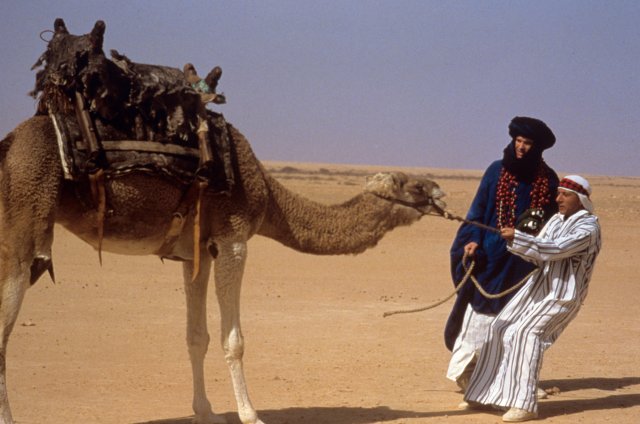
May, a trim presence in a dark two-piece pantsuit, was on stage to discuss Ishtar — the last feature film that she directed. The movie was an homage to the Hope-Crosby Road movies, with Dustin Hoffman and Warren Beatty playing two washed-up songwriters who head to Morocco for a gig and get involved with a woman on the run, a CIA agent played by Charles Grodin, a blind camel, and gunrunners. The film had been a critical and commercial disaster upon its 1987 release (Roger Ebert called it “a lifeless, massive, lumbering exercise in failed comedy”. It has since garnered its share of defenders over the years — including The New Yorker‘s Richard Brody, who has declared Ishtar “among the most original, audacious, and inventive movies—and funniest comedies—of modern times.”

As the director’s cut of Ishtar played, the crowd was split evenly between rabid fans who felt obliged to titter at every moment (even the moments that weren’t intended to be funny) and those who watched with a quiet yet somewhat disappointed curiosity.

David Schwartz — the dopey interlocutor who wanted May to discuss how certain aspects of her work were “part of the discovery” and who offered such profound insights as “you really feel that these two are meant to get together” — didn’t have the guts to follow up on some of the more pivotal topics, such as the kind of material that might have lured May back to the director’s chair. “You have to be offered a movie that’s worth your time,” said May. “And I haven’t been.” Schwartz was too timorous to pursue further.

Judging by the precise manner in which May outlined her science of comedy (“If you’re going to do a a funny scene when someone gets killed, the gun jams. The finger gets stuck in the trigger…”), it appeared that the reticent May was eager to talk about comedy rather than be subjected to vapid adulations. “It’s hard to know how to respond to a complaint, isn’t it?” said May halfway through the colloquy. If there was a slight hauteur to her answers, there was also a carefully concealed humility. She seemed genuinely touched that so many people came, even underreporting the audience tally.

“Either you like the movie or I’m very sick,” she said minutes after the curtain went up.

When asked what she thought of the film now, May replied, “I thought the mix was off. That’s really all you think. I thought it was funny. I think of those people who try out for American Idol.”

Of Ishtar‘s songs, most of them written by Paul Williams, she was proud to point out that she had written the worst of the bad lyrics.

May also alluded to a run-in with Ronald Reagan. “I met him,” she said. “He’s an amazingly naive person. A charming guy who really cared about show business.” Reagan apparently knew the Nichols-May albums so well that he could recite all the lines. “He did the telephone routine. And he was the President!”

May offered some thoughts on Ishtar‘s use of animals. In one scene, Dustin Hoffman’s supine form in the sand attracts vultures. Hoffman agreed to be slathered in raw meat to ensure that enough birds would come. As for the camels, May said, “We tried camels out. A lot of camels came.” She did not elaborate on whether any of these camels made their way to the dinner table, but had mock prognostication at her disposal. “Do they eat camels?” she asked. “Yes, I guess they do.”

May insisted that Ishtar‘s harsh reception had much to do with David Puttnam replacing Guy McElwaine as Columbia’s head of production. Puttnam had produced Chariots of Fire, a film that competed in the Oscar race against Warren Beatty’s Reds. This led Puttnam to harbor resentment towards Beatty during the making of Ishtar. May claimed that Puttnam had called Beatty “self-indulgent” and said that he “should be spanked.” May claimed that Puttnam targeted Isthar in an op-ed in the Los Angeles Times. (I’ve been unable to locate the op-ed in the Los Angeles Times archive, but May may have been referring to a lengthy Tina Brown profile that appeared in Vanity Fair. This helpful David Blum article from New York Magazine contains additional details.) Mike Nichols had said of Puttnam’s actions that this had represented “an entire studio committing suicide.”

May suggested that much of the hostile press notices had to do with Puttnam planting items, especially in relation to how much Ishtar cost. The continued fixation on Ishtar‘s budget apparently was enough to unsettle Charles Grodin, who once shouted to an audience, “What do you care? It’s not your money. It’s Coca-Cola’s money.”

Puttnam didn’t stay with Columbia much longer after Ishtar. May said that he tried to do the same thing to Bill Murray and Bill Cosby. “So they threw him out.”

“If half the people who had made cracks about Ishtar had seen it,” said May, “I would be a rich woman today.”

The original title for the film was to be Road to Ishtar, but Beatty rejected it. May was careful to point out that there was no improv in the film, except when Hoffman and Beatty were making up lyrics at the beginning and during a scene in which Hoffman plays an auctioneer. “You can’t really improv a joke,” said May, “because it has to do with the way it’s worded. Most comic movies aren’t improv. You hope stuff happens.”

May came into film directing entirely by accident. When she wrote A New Leaf, she had merely sought directorial approval. When her manager Hilly Elkins told her that Carol Channing was up for the part that she would play, pointing out that the studio wouldn’t give her approval but would let her direct, she decided to do it.

On A New Leaf, May claimed to confuse one of the big lights for the camera. But because she relied on a meticulously planned shot list, she was surprised to find herself four weeks ahead of shooting schedule. When the editor informed May that some scenes were too long and that she didn’t have any coverage, she adjusted her directorial style and was four weeks behind schedule. Of the “big corporate guy” who gave her the okay, May responded, “How he let me do this, I have no idea.”

May said that she was more frightened during her third time behind the camera than her first time. “If you screw up enough,” she said, “you really learn a lot.” Is there a difference between directing comedic scenes and dramatic scenes (such as the ones contained in Mikey and Nicky)? Not really, but details matter more in comedy. “If you do what would happen in life, it will still be a mess and it becomes funny.”

There were a number of quick questions from the audience.

Warren Beatty: “He’s a Southern boy”

The Heartbreak Kid: “I didn’t see the remake.”

Tina Fey: “I think she’s terrific.”

Does she see movies today? She sees many and especially liked The Hurt Locker.

She mentioned that some actors had recently asked her what she was doing. She replied, “Nothing.” But this was akin to announcing that you havecancer. “No one had ever said, ‘Nothing.'” May is compelled to work these days when hired for scripts (“a good way to work”) or when she happens to write a play.

Of course, an event like this isn’t organized unless there’s a very good marketing reason. There have been past rumblings about Ishtar getting a Blu-ray release, but May revealed that Sony told her that they didn’t have a Blu-ray film to show. The audience last night was shown a so-so print (although I can report that the red headbands worn by Hoffman and Beatty made a serious impression). This suggests very highly that a transfer has not yet been made and that much of the online conjecture — most of it promulgated by aging lunatics harassing Warren Beatty, Sony, and various people who work for Mike Nichols — is unsubstantiated.

“I read on the Net that the impending release of Ishtar had been delayed by my people,” said May. “I was so thrilled to learn that I had people.”

May was carefully to clarify that she was not a profound Hollywood player. “So to some degree,” she said, “they don’t tell me anything.”

Will Ishtar be released on Blu-ray or DVD?

“They say they want to,” said May. Maybe it will “if you all clap your hands and believe in them.”

Tobacco Road (Modern Library #91)

(This is the tenth entry in the The Modern Library Reading Challenge, an ambitious project to read the entire Modern Library from #100 to #1. Previous entry: Ironweed)

Like many great writers of the 20th century, Erskine Caldwell experienced difficulties keeping his dick in his pants. While such bulging foibles aren’t normally the stuff of pertinent consideration, Erskine Caldwell Reconsidered (edited by Edwin T. Arnold and published by the University Press of Mississippi) is the rare academic volume offering a partially persuasive case that Caldwell’s philandering was one throbbing element of the creative package.

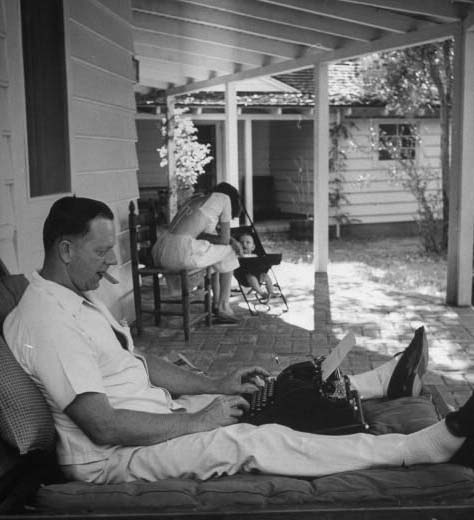
In an essay titled “Caldwell’s Women,” Harvey L. Klevar writes, “During the first decade of his career — during the period he was married to Helen — he published quality novels and stories enough to satisfy a lifetime’s quota for an average writer.” Helen Caldwell Cushman, Erskine’s first wife, didn’t just correct Erskine’s mistakes and critique and type his fiction. She apparently allowed Erskine to carry on extramarital affairs, with the family living in near destitution as Erskine plugged away. How does Klevar know all this? Well, in the same volume, Klevar scored an interview with Helen, digging up considerable dirt. On their first date, Erskine told Helen, “I’d like to knock you in the head with a rock and go to bed with you.” As pickup lines go, that’s somewhat audacious for the early 1920s. Yet Helen managed to stick around. Erskine’s effrontery carried on into their wedding night, when Erskine took Helen to five burlesque shows. Years into the marriage, Erskine’s reliance on Helen had reached remarkable heights:

I used to cut his work. I used to cut through with a big blue pencil. And I corrected his errors. When he was in the throes of creation, shall we call it, he was completely inapproachable, and nobody was allowed to make any noise in this house. And don’t think that was easy, with two young children. I had to keep them out of the way. He wrote very painfully and was possessed to write. He had this internal compulsion. And I was truly interested in his work or I would have left him long, long before.

Many floundering marriages squeeze in a few additional years because of money or children or tax advantages or a capitulation to religious hypocrisy. But I was amazed that Helen suffered Erskine’s cavalier caprices simply because she was curious about his writing. It’s a testament to either Erskine’s wild originality or Helen’s supreme patience.

Klevar also reports in his book-length biography that Caldwell started work on his first novel, Tobacco Road, not long after Helen’s father died, just after Christmas 1930. It’s also worth noting that Caldwell informed legendary Scribner’s editor Maxwell Perkins that he was “trying to get a new book started,” only to finish the novel in rough draft less than three months later. On May 4, 1931, Perkins received the manuscript, a little more than two weeks after Caldwell finished the rough draft. Was Helen instrumental in getting the book up to speed in such a short time? Perkins would later reply, “I’ll tell you plainly that I think myself [Tobacco Road] is well nigh perfect within its limits.” Another biography by Dan B. Miller suggests that Caldwell began writing Tobacco Road “six months before in California, and completed the actual writing in only three months.” On the other hand, Miller also writes that, despite Helen trimming “a bit here and there,” “the bulk of the novel remained as Caldwell had originally written it.”

I bring up the salacious details not to impugn or slander Erskine Caldwell, although there are many reasons for austere moralists to disapprove of his life choices (in Erskine’s defense, he would stay with his fourth and final wife Virginia — initially his editorial assistant and secretary — for close to thirty years). One must take great care to separate the art from the artist. Yet Caldwell’s fiction, with its truths about human perversity rooted in the libidinal and the louche, often resonates so strongly that one cannot help but consider these personal circumstances.

* * *

I will say that I’ve enjoyed Erskine Caldwell’s writing a great deal ever since I first read his salacious short stories (along with Cheever, de Maupssant, Maugham, and many others) as an aimless yet endlessly curious undergrad reading books while working evening and graveyard shifts as a desk clerk at a halfway house in the Tenderloin. When you’re a shy kid scrutinizing and buzzing in recovering heroin addicts and former alcoholics and ex-prostitutes and sundry streetwise fulminators, you become more willing to give people a second chance. Caldwell’s outlandish tales, especially when read at 3AM, were helpful vessels for this raucous world.

Yet for some reason (likely laziness or obliviousness), I never got around to reading Tobacco Road until a few weeks ago. I hadn’t read Caldwell in recent years, mainly because I have resisted revisiting authors who meant much to me as a young man. The profound insights one purports to detect at twenty are silly and superficial when one edges closer to forty.

Still, I was pleasantly surprised to enjoy Tobacco Road as much as I did. This is a rare novel that not only gets the vernacular exact, but that forces an audience outside this world to confront its own inherent prejudices about the impoverished. (When Tobacco Road was turned into a play by Jack Kirkland — the 15th longest running Broadway show in history — did its success have more to do with New York audiences laughing at their own biases about the seemingly backward or the overt sexuality? Caldwell’s most lucid answer on the subject came from a 1941 interview in The Washington Star: “When people laugh at the antics of Jeeter Lester, they’re only trying to cover up their feelings. They see what they might sink to.”)

Five pages into the book, Lov Bensey, just after walking seven and a half miles with a sack of turnips on his back (no convenience stores in Depression era Georgia, of course) and just after complaining about his twelve-year-old wife not sleeping with him, is already “thinking about taking some plow-lines and tying Pearl in the bed at night. He had tried everything he could think of so far, except force, and he was still determined to make her act as he thought a wife should.” I love how Caldwell orphans the phrase “except force” in commas, suggesting that there’s another level to Lov’s ruminations. What makes this situation perversely funny is how Lov seeks advice from his father-in-law Jeeter Lester before going ahead with this plan. He requires confirmation from another that this terrible idea is terrible.

While it’s certainly true that we all possess terrible ideas, if you subscribe to any religious or philosophical ideas of universal enlightenment, you’re probably inclined to believe that there is a common goodness within every soul which repairs these base instincts. This essential goodness generates remorse, reconsideration, penitence, and numerous other feelings in response to previous actions.

The Lester family contains seventeen kids (at least one of them not sired by Jeeter) who have all occupied the ramshackle environs of Tobacco Road and have largely stuck it out waiting to be married off. When the aptly named Lov shows up at the beginning of Tobacco Road to complain about Pearl, there are only two kids left: the harelipped Ellie May and the baseball thumping and car horn blasting Dude. (Physical infirmities abound in this novel. When Bessie Rice shows up later, tricking Dude into a shotgun wedding without the premarital fumbling, her underdeveloped and boneless nose is compared to “looking down the end of a double-barrel shotgun.”)

Escape would seem to be the only option for the Lester kids. Yet in fleeing this poverty, do they not become as sneering in their own way as the judgmental northern audiences reading this book? We learn that the oldest child, Tom, has become a successful cross-tie contractor “at a place about twenty miles away.” Later, when members of the family attempt to pay Tom a visit in Burke County, Tom wants nothing to do with them. Upon hearing this news, Jeeter repeats the phrase, “That sure don’t sound like Tom talking,” almost as if it’s a curative mantra to help one cope with an unforgiving reality. Another child, Lizzie Belle, has fled to a cotton mill, but “had not said which one she was going to work in.”

Are these characters good in some way? Have the Lesters developed any standards approximating some form of enlightenment? These questions of civilization — the brutal northern metric Caldwell passes along uncomfortably to the reader — hardly matter when these people are so impoverished. Especially when the impoverishment hinges upon how they believe the world operates (rather than how it really operates) and how capitalism has exploited them. Unable to raise a profitable cotton crop and denied the credit to purchase guano and seed-cotton, we learn that Jeeter has been forced to take a high-interest loan where it’s impossible for him to get back into the black. The financial situation sounds eerily similar to predatory lending during the recent subprime crisis:

The interest on the loan amounted to three per cent a month to start with, and at the end of ten months he had been charged thirty per cent, and on top of that another thirty per cent on the unpaid interest. Then to make sure that the loan was fully protected, Jeeter had to pay the sum of fifty dollars. He could never understand why he had to pay that, and the company did not undertake to explain it to him. when he had asked what the fifty dollars was meant to cover, he was told that it was merely the fee for making the loan….Seven dollars for a year’s labor did not seem to him a fair portion of the proceeds from the cotton, especially as he had done all the work, and had furnished the land and mule, too.

Jeeter still believes that he can get the farm back, even though he has sold off nearly every possession. And it is this tragicomic belief which sustains the Lester legacy, even after death and tragedy, in the book’s final paragraph. Should the Lesters, however repugnant they are perceived, be condemned because they have aspirations? This is a difficult question for elitists to swallow. Even the seemingly progressive-minded Kenneth White, writing in the July 16, 1932 issue of The Nation, complained, “There is nothing sentimental, for example, about Jeeter’s lyrical speeches of complaint, for everything is complained about. The error of the last words of the book is the error of dropping the comic method to point a moral.” What White failed to understand was that the comic, the sentimental, and the moral exist simultaneously in Caldwell’s novel. Judging by some of the surprisingly harsh reactions to Tobacco Road on Goodreads (“it seems like we were meant to laugh at the horrible people doing stupid things and making disastrous decisions, but what’s the fun in that?” or “I was horrified at what I perceived Caldwell was trying to do: get us to laugh at abject poverty, ignorance, and low down misery.”), it would appear that people remain just as uncomfortable contending with these blended emotions nearly eight decades after the book’s publication.

Caldwell is careful to demonstrate that surviving based on how one thinks isn’t confined to the low-class Lesters. When Bessie Rice cajoles Dude Lester into marrying her, bribing the young Dude with the purchase of a car with nearly the total savings of her recently departed husband, the Clerk asks the couple how they intend to support each other. “Is that in the law, too?” asks Bessie. “Well, no,” replies the Clerk. “The law doesn’t require that question, but I thought I’d like to know about it myself.”

Does the answer to one simple question offer the smoking gun? People, even the ones we frown upon, are more complicated than this. Should we judge Erskine Caldwell on his adultery or the Lesters on their apparent atavism? If all of us remain judgmental to some degree, believing we know or assuming we are entitled to know, perhaps all of us occupy some form of Tobacco Road.

Next: Salman Rushdie’s Midnight’s Children!