NYPL: Nicholson Baker & Simon Winchester

On Thursday night, a crowd congregated into a subterranean hall of the New York Public Library to listen to Simon Winchester interview Nicholson Baker. Mr. Baker wore a green vest and a low-key suit. Mr. Winchester was dressed in a gaudy blue pinstriped suit and a yellow shirt, with a dark red handkerchief drifting out of his outer pocket like a haphazard eleventh-hour accessory.

nickbaker.jpgBaker was soft-spoken, effusive with his hands, and sometimes quietly gushed, particularly when talking about the “lush, colorful” nature of the New York World, one of the early 20th century newspapers that had been in his prodigious collection. Winchester was often sharp and crisp with his questioning, exuding the aura of a fussy countertenor waiting for a cadre choristers to marvel upon his ostensible magnificence, but he was good enough to point out that it was “Nick’s night.” At one point, Winchester poured water only into his glass. Baker, by contrast, filled both his own glass and Winchester’s. Winchester kept his gaze upon Baker throughout the conversation, rarely glancing to the audience. Baker, by contrast, regularly opened himself to the audience when expressing himself.

Shortly after sitting in his seat, Winchester announced to the crowd, “This is not going to be a lovefest.” But despite this pledge of pugilism, Winchester played it relatively safe. He had snide comments pertaining to Adam Kirsch’s review. Contra Kirsch, he pointed out that “stupid, but scary” seemed an appropriate line to discuss war.

Alluding to Checkpoint, Baker observed that his purpose in writing that novel was to ask a simple question: “If you think that your single action can solve the problem, is there a way that someone can talk you out of the problem?” But Baker pointed to Emily Dickinson’s maxim about telling all the truth but telling it slant. Fiction could only go so far. And thus, Human Smoke emerged from these meditations.

Baker pointed out that for every book he has written, he would generally get one third of the way into it before “something goes wrong.” Then, he sets it aside. But he had been working on a book-length history of the Library of Congress, dwelling in particular upon Archibald MacLeish, who was the Librarian of Congress in 1939. MacLeish would go onto become a key propaganda figure during the war. And thus Baker found himself immersed in “an interpretive problem.” He had to understand World War II. So he put aside this project and Human Smoke began to take shape.

In discussing the difference between his fiction and nonfiction, Baker noted, “Fear plays a large part in all this. You want to avoid exposing himself.” It was with this attitude that he tackled the more elaborate project of Human Smoke, of which he pointed out that he couldn’t do justice to the full experience of the war.

Winchester asked Baker about whether it was reasonable to rely almost exclusively on newspapers — the so-called first draft of history — for his book at the expense of historians who came later. Baker pointed out that the reporter who wrote about a major event he experienced “had the balance of things in his mind that brings you to the moment.” He cited the exploding soup cans during the bombing of Coventry — a detail that seemed particularly apposite to his framing of history. He pointed out that newspapers would reprint the entire text of a radio speech and noted that, within the letters to the editor section, one could find a great array of voices.

In dwelling upon Human Smoke‘s cast of characters, Baker expressed great curiosity about Herbert Hoover and pointed out that Victor Klemperer was “an interesting man, a sad man.” But he pointed out that just because he put a quote into the book, this did not mean that he necessarily believed in it. Of Gandhi, he observed, “Sometimes there’s a coldness that’s very disturbing.”

Baker appeared deeply troubled by World War II priorities. He said, “It was easier to fight a war against Germans than it was to allow Jewish refugees.” But he pointed out that he was not qualified. On the question of whether America knew about the Pearl Harbor invasion in advance, Baker opted to “defer to the experts.” Later in the evening, Baker said, “Who were the people who came out of the war with greatness and nobility? The Jews.” And there was an uncomfortable silence from the audience, who began to grow a bit restless.

When I interviewed Mr. Winchester in late 2006, he insisted to me that he was a historian, not a journalist, and expressed umbrage at my notion that he was “covering” the 1906 earthquake, pointing out that historians look back on events with “perspective.” This perspective, however, was not particularly evident last night.

Four of his questions pilfered very specific points that were presented during the Human Smoke roundtable discussion — all, of course, without reference. Not only did Winchester read aloud the exact same section from Checkpoint that was referenced on these pages, but he also brought up Jeanette Rankin, the controversy involving the Treaty of Versailles (raised by Colleen Mondor), and the efforts by Cardinal Clemens von Galen to suspend the T-4 program. I wondered if Winchester had spent that afternoon Googling to prepare for a book that had slipped his mind since he blurbed it many months ago.

There was a telling indicator of this propensity during the post-discussion Q&A. Asked about Human Smoke, Mr. Winchester pointed out that he had problems with Baker’s book, but that he would defend his right to write it. The delightful and quick-thinking Paul Holdengräber pointed out that Winchester’s line had originated from Voltaire.

Despite these quibbles, I actually liked Winchester. He was dry and mostly unsmiling, save through a few belabored grimaces that seemed more directed at the CSPAN cameras dutifully videotaping this conversation for Book TV than the audience who had shelled out $15 a head to see this. But he was quite entertaining as a Jeremy Paxman-style interviewer. At one point, he asked Baker point blank about the apparently unquestionable natural impulses that cause people and creatures to kill, citing a gorilla video that had been emailed to him, and some incident involving chickens on his cozy farm in Connecticut as evidence of these apparent impulses. He even managed to find a way to name drop Tom Brokaw — “who is a friend and who I like.” Winchester was an enjoyable blowhard, more Phineas Barnum than Phineas Finn. And juxtaposing his blustery presence with the more empathic Baker worked quite well.

Despite revealing himself later to be a dedicated Malthusian (and this charge seemed more a piece of contrarian theater than bona-fide ideology), Mr. Winchester partially acquitted himself when he bailed Baker out as he was responding to a question from the audience about whether America should now begin negotiating with Islamic fundamentalists. As Baker fumbled for an answer, Winchester quickly pointed out that the Northern Ireland crisis was resolved by talking the issue out through back doors.

As the crowd dissembled, Winchester ran up and down the signing line, balancing books like a juggler signed on for a circus at the last minute. I kept wondering whether he was carrying out some intriguing one-man dramatization of a Tom and Jerry cartoon, but this was not the case. He asked a few folks in the queue if anyone else wanted him to sign his book so that he could go home.

Baker appeared a bit worn out by all the publicity he’s been doing for Human Smoke. But despite his energies waning near the end, he maintained a great humility and offered some lively remarks for a book that is likely to keep fanning the flames of controversy for quite some time.

Growing Pains for the Litblog

As observed yesterday by Dan Green, the Litblog Co-Op is shutting down. This is a pity, because the LBC was a remarkable conduit for many overlooked authors to receive dutiful attention often denied them by more traditional outlets. (To get a sense of perspective on what this means, as observed last week by The Book Publicity Blog, collectively, all of the national NPR programs interview a mere 600 authors a year. Thus, there can never be enough conduits for long-form discussions and interviews with authors. The world needs more litblogs, more literary podcasts, and more literary teleprojects, however clumsily executed.)

Thankfully, none of this has stopped litbloggers from committing these energies on their own sites — see, for example, Colleen Mondor‘s invaluable roundtable discussions of YA and genre authors, aptly demonstrating that there remains plenty of room for community left in litblogs. But litblogging itself, as Dan quite rightly observes, has become more decentralized, with the litbloggers themselves becoming immersed in the great demands of their own projects. (Mark Sarvas has written a novel, Dan Wickett has formed a publishing company, many litbloggers have become regular print critics, while others have become dedicated bloggers for newspapers.) While I had a long run with the LBC, I was forced to back out for similar reasons. There were too many nights mastering podcasts until 3:30 AM when I had to wake up only a few hours later. I love literature as much as anybody. But it became necessary to step away, if only to ensure my own sanity. I didn’t want to become jaded or indolent about the authors I devoted time, thought, and attention to. (And, in fact, a number of forthcoming Segundo podcasts will feature return appearances by authors featured by the LBC.)

Stepping down from the LBC saw much of this approach shifted over to this site. While I have attempted to go out of my way to involve other voices in generating content and to include authors that Sam Tanenhaus would never devote even a column inch to, I nevertheless contemplate my own culpability in “doing my own thing.” If litblogging is galvanized by community, then does doing one’s own thing run counter to this medium’s strengths?

I find myself somewhat troubled by where litblogs are now heading. I certainly don’t exonerate myself from these developments. To use a pop cultural metaphor, it is as if the Beatles have broken up, with all of us pursuing our metaphorical solo albums. The early energy of individual projects is certainly there, but let’s not forget that John Lennon followed up his classic album, Plastic Ono Band, with the decidedly spotty Mind Games. But the communal DIY punk rock ethos that was once an inseparable component from what litblogging was about has been replaced by a competitive streak of who gets the story first. (Indeed, Galleycat’s tagline is “the first word on the book publishing industry,” when being “first” doesn’t always mean that you’re going to write something sufficiently purposeful.) Litblogs have been redesigned to accommodate advertising — in some cases, with intrusive graphics embedded within posts that detract from the thoughtful content. (What next? Newspaper-style pop ups and registration?) Some bloggers have even taken money from publishers and have flown, Harry Knowles-style, around the globe. Meanwhile, other voices are ignored because of personal differences, with variegated parties not understanding that this runs counter to the great neural network that litbloggers laid down. (And why can’t there be civil disagreement as well as lively fireworks?)

So what makes this fragmentation any less different from the tendentious gatekeeping one sometimes sees in newspapers? I think it’s safe to say that the print vs. online debate is more or less moot. Litblogging is here to stay. And while I certainly can’t speak for other bloggers, I believe the early passion that drove litbloggers to create a fantastic medium has been partially replaced by an obligation to put something up on a daily basis.

If bloggers are to hold themselves up to the same standards with which they frequently (and justifiably) savage newspaper critics, then the time has come to look inward and consider the things they may be doing wrong. The time has come to be humble and inclusive towards the community. Bud Parr had this idea very much in mind with Metaxucafe. Bud dutifully (and remarkably) tracked all the known litblogs and united them under one umbrella. But what was once a centralized site with considerable discussion has regrettably become less vociferous. This may be because the spirit of interconnectedness starts from individual litblogs, however “clubby” it may be (as once described by Jennifer Howard in November 2003; in a troubling indicator of online newspaper impermanence, her article has regrettably been removed from the Washington Post site).

The bloggers who best accomplish this interconnectedness are Maud Newton and Frank Wilson. Maud is perhaps the most concise of all litbloggers, and is very good about acknowledging where she has located her links (a basic courtesy that seems to be falling out of practice and that, oddly enough, was the subject of a controversy in the early days of litblogging.) Frank often links to litblogs that I haven’t heard of, and which I frequently add to my RSS feeds.

But I don’t know if these individual efforts really go far enough. If litblogging is becoming exclusively about promoting one’s own personal connection to books, at the expense of other personal connections, the litblog, as we once knew it, is dead. The Internet, lest we forget, has a very important prefix that caused this marvelous literary community to propagate. And when projects like the LBC die, I can’t help but wonder if we’re all just as incorrigible as the print critics we once railed against.

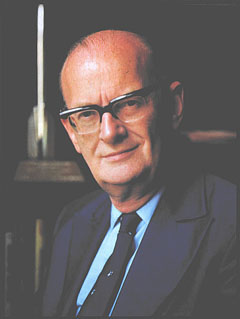
RIP Arthur C. Clarke

Nobody will replace Arthur C. Clarke. Not by a long shot. The inner cylindrical mysteries of Rama. The monolith concocted in collaboration with Stanley Kubrick. The sad calculated way in which aliens conquered the human race in the unforgettable Childhood’s End.

He was one of the last of the Golden Age giants. Born close to the end of one world war and becoming a man in the middle of another war, where he served with the Royal Air Force, Clarke looked to the stars and to his imagination, creating a body of work that will live on for decades to come.

I was a scrawny and curious kid who found him on the rackety stacks of an underfunded public library. My mother had gone through her second divorce. There wasn’t a lot of food in the house. There were holes in my T-shirts, and no money. But then one Saturday afternoon in the library, I opened up a musty volume and discovered these amazing words:

The next time you see the full Moon high in the south, look carefully at its right-hand edge and let your eye travel upward along the curve of the disk. Round about two o’clock you will notice a small, dark oval: anyone with normal eyesight can find it quite easily. It is the greatest walled plain, one of the finest on the Moon, known as the Mare Crisium — the Sea of Crises. Three hundred miles in diameter, and almost completely surrounded by a ring of magnificent mountains, it had never been explored until we entered it in the late summer of 1996.

clarke.jpgThe story, of course, was “The Sentinel.” And I read it all in one gulp. I took to craning my head out the window late at night when nobody was looking, spying during hours when nobody knew I was awake. And I did catch a pockmarked indentation, wondering if this was indeed the Mare Crisium. (A later look at a picture book on the moon confirmed that this wasn’t quite the case. But I took to calling any detail I could see a Sea of Crises, for reasons that were comical to me.)
And I became indebted to Mr. Clarke for granting me a grand galaxy of awe, intrigue, and possibility. This was needed. Because at the time, my universe was quite limited.

So Clarke’s death came as a tremendous blow to me. I never got to meet him. Never got to thank him. Never got to tell him that he helped some kid get through a turbulent time.

And I really have nothing more to say.

Arthur C. Clarke, thanks for being there when I needed you.

How Drugged is That Doggie in the Window?

Pretzel on Prozac
By Ellen Palestrant, Elusive Press, 124pp., $12.95

dogskank.jpgIt’s become pretty hip these days to put the hate on Prozac. The drug has been accused of causing suicides, bringing about violence, of being ineffective and, most damningly, of making hipsters unable to love. Yet, even as Prozac-hating becomes a cause célèbre, it and and other antidepressants in the SSRI class are being prescribed in record numbers — and not just to humans, but to their pets. And what could be a surer sign of a decadent, wasteful and solipsistic society than putting your dog on an antidepressant?

Unfortunately, this question isn’t asked by Pretzel on Prozac: The Story of an Immigrant Dog, a book the bills itself as an “autobiodography”—a particularly weird neologism since “auto” makes me picture this dog hunched over a typewriter, wagging his angst-ridden tail between cigarettes and shots of Jim Beam. In this slim, self-published memoir, the only introspective hint on the value of giving a dog Prozac is a moment where the author hopes that the pharmacist doesn’t call out her name too loudly when he dispenses the medication; the author is clearly insecure about being judged by others on what she’s doing, but a discussion exploring why is conspicuously absent.

Pretzel, the titular dog, is described as being “neurotic” after being shuttled from South Africa to Arizona by his owners. Does Pretzel actually need Prozac? As portrayed, the dog has problems which the drug seems to diminish, problems that another dog owned by the author doesn’t have. (The other dog merely acts like a spoiled brat.) After witnessing a dish breaking, Pretzel runs scared any time the dishwasher is being unloaded. He digs holes in the backyard and refuses to come out of them. He refuses to eat whenever guests come to the house. But it’s suspicious that Palestrant (the author) spends no time at all discussing nature versus nurture. Pretzel is “just like this.” And it’s hard to overstate just how spoiled this dog is. When Pretzel runs into the bedroom at the sound of a dishwasher being unloaded, Palestrant stuffs a towel under the bedroom door to help muffle this din. When Pretzel is finicky about his food, she starts leaving five different bowls of food out every night, so Pretzel can have his fill. (If the other dog eats all of Pretzel’s food first, then five more bowls are set out.) Whenever Pretzel refuses to eat altogether for a night, Palestrant takes it to the vet to be fed intravenously. When Pretzel will not use the doggie door, instead of simply letting the dog in and out every once and a while, she is forced “to keep the doggie door permanently open for Pretzel—and for all the mosquitos, cockroaches, crickets, spiders, and scorpions wishing to enter our house. Because we allow the hot air in summer and cold in winter, we can’t conserve energy. Instead we increase the load on the heating and cooling systems and on our bank account.”

It’s hard to trust the author when she talks about Pretzel’s problems because there are levels upon levels to the anthropomorphism involved in her idea of him and of animals in general. The dog doesn’t just dig a hole and sit in it. He “wants to disappear into it and die.” After the dogs get off the plane, “immigrating” from South Africa along with the author, we learn:

They jumped and jumped and jumped and continued jumping the next day when we arrived. They were trying to tell us they’d been flying.

A cat who falls off a table is “embarrassed” afterward. A dog seeks the “respect” of other dogs. One dog assigns blame to another dog for actions beyond their control. A dog who is dying is described: “He’d had a long life and in the end dwelled more frequently outside his body than in it. But now his re-entry visa has expired.” How, exactly, is the dog dwelling outside of its body? We are told no more.

dogjump.jpgPalestrant enjoys “mentally instructing” Pretzel: “Be receptive to new ideas, Pretzel. Transcend boundaries. Try this new doggie biscuit.” At first I thought maybe the author was intentionally using Pretzel as a lens to examine her own thoughts and fears about immigrating. But nothing so subtle is going on; she is doing exactly what she says she’s doing: mentally instructing her dog. And the author appears to be writing with complete seriousness, “I enjoy communicating with Pretzel because he is a listener.”

A minor crisis comes about when the author, who had been told Pretzel was a Maltese, instead discovers he’s a Bichon. “Pretzel, I’m sorry, sorry, sorry,” Palestrant writes, talking to the dog, “I know you’ve been deprived of your essence. You’ve been what you’re not for far too long. … At least you know what you are: a Bichon and not a Maltese. Forget the past. Give yourself a second chance. Take charge of your salvation. Don’t be a Dodo-dog, Pretzel. Learn to fly. … We’ll stop encouraging you to wade in the lake, Pretzel, or cool yourself under the sprinklers.”

Pretzel is described repeatedly as being “confused about his identity” because of this.

But then, race is a very strange subject in Palestrant’s hands. Much is made of the fact that the dog and author are coming from South Africa. Early on the author writes, “We feel guilty for having been born into a country that adheres to a system of separating groups according to race. We know we must leave.” It’s hard not to insert the word “white” in between “born” and “into”, and it seems bizarre that the reason the author and her partner are leaving the country is simply “guilt”. If one really felt guilty wouldn’t one want to stay and try to make things better? If she had instead said (as I think is more likely) that they’d left the country because it was unpleasant for them to live in a place where their kind oppressed and was despised by the majority of the population, that at least would be more honest. Whatever the real reason, “guilt” doesn’t make any sense in this context.

The author prides herself on being broadminded about race and knowing that things she’d been taught in school about it were lies. However, the irony that someone is leaving apartheid because of race guilt and yet only owns purebred dogs is completely unexplored. She does say, she’s “never been dazzled by titles. Always felt that a dependency on family trees, designer labels, and on the broadcast of one’s accomplishments … are [sic] signs of weakness. … So why now, do we have four pedigreed dogs?” The question is never answered.

Indeed, Palestrant has positively Lamarckian ideas of racial inheritance, at one point wondering if Pretzel might fear water because one of his ancestors had a near-drowning experience. At another point a look from the dog is interpreted like this:

Do you know how depressed I am? Do you have any idea of the burden I carry—the collective sufferings of my ancestors?

Things get weirder when she tries to contemplate the situation in South African in relation to her dogs. She writes, “Pretzel, glued to his neuroses, is poor immigrant material as he still lives in a past that wasn’t that vast. Pretzel, accept change. Look, if your old government can finally reinvent itself, so can you.” Yes, Pretzel, your plight is just like that of South Africa.

South African dogs dominated the sidewalks during apartheid. They had terrible attitudes. Attacked passersby. Having been brought up in a society where many of the laws were difficult to respect, some dogs, like their owners, broke them.

Now that the old laws in South Africa are obsolete are people free to stroll the sidewalks, while dogs are gated?

Many, many times while reading this book, I had to stop, read the sentences again and realize I still didn’t have the foggiest idea what Palestrant was talking about. Is Palestrant actually suggesting that the dogs were biting people out of some kind of civil disobedience toward Apartheid? And now that Apartheid is over, she wonders if dogs are kept behind gates—it’s suggested that they won’t bite people in the name of Mandela?

Ultimately, Palestrant’s anthropomorphism gets really batty, as when she buys a new dinner service and shoves it unsteadily in with an old one from South Africa. When the dishes burst out of the cupboard and smash all over the floor, she reads it as her old country’s tableware physically fighting the American tableware. In reference to Pretzel’s old fear of broken dishes, she says (in all apparent seriousness), “Had Pretzel, years ago, sensed the pent-up emotions of the dishes in our cupboard?”

The truth is, I know from personal experience that SSRI drugs have helped a lot of people, and I would have really liked to read a book which explored legitimate psychological disturbance in animals and the ability of Prozac to treat it. Such a book might be very interesting.

Pretzel on Prozac, on the other hand, is less about disturbed psychology than the product of it, and something that the Prozac-haters out there could easily hold up as a clear example of everything they are complaining about; someone using medication (in this case, on their dog) because of a clear inability to address their own problems. It is an extreme example of the way that many parents want to blame anything but themselves for their child’s shortcomings; Pretzel is the way he is because he’s a Bichon, an identity-confused Bichon, an identity-confused Bichon from South Africa, an identity-confused immigrant Bichon from South Africa. Anything but because he is Ellen Palestrant’s dog. And clearly, he needs drugs.

Did Pretzel really need Prozac? Could Pretzel’s problems have been solved by being given to another owner? Or by having been raised by a different owner? We’ll never know the answer to these questions.

As for Prozac in general, one day a book will come out that neither vilifies nor glorifies it, that speaks compassionately about the people it’s helped and looks carefully at those using it for the wrong reasons. That’s a book I’m waiting for.