Like Schrödinger’s Cat, the new Ghostbusters remake is neither dead nor alive. But the more important question is whether it needs to be big enough to defeat Hollywood sexism and the backlash of absolutist fans.
When Sony announced that it would be remaking the rightly beloved 1984 Ghostbusters movie, with women wearing the proton packs and Bridesmaids‘s Paul Feig on board to direct, you didn’t have to look too hard at the galleon being craned up for a retrofit to see the unsavory barnacles of terrified white manboys clutching onto the hull for dear life. Fan entitlement, long rooted in a patriarchal sense of childhood nostalgia that the Daily Beast‘s Arthur Chu shrewdly pinpointed as “‘pickup artist’ snake oil — started by nerdy guys, for nerdy guys — filled with techniques to manipulate, pressure and in some cases outright assault women to get what they want,” once again failed to do a little soul-searching and reflection on what its inflexible stance against the natural evolution of art truly means.
Just as some vocal fans protested the excellent film Mad Max: Fury Road for being “a piece of American culture ruined and rewritten right in front of their eyes,” the Ghostbusters absolutists knew that the studios wanted their dollars and that they could still get away with voicing their reactionary sentiments through the same cowardly anonymity that allowed Donald Trump to emerge as presidential candidate.
You know what everybody’s been calling it? The female Ghostbusters. I hear that all the time. The female Ghostbusters. Does that mean we have to call the old one the male Ghostbusters? It doesn’t matter. But I can’t blame everybody for identifying that way. Because there’s no other way to identify the movies. There’s no other name for it.
Maybe you’d view movies this way if you’d spent a lifetime refusing to live with your shortcomings, carving the likenesses of Stallone and Schwarzenegger onto your own personal Mount Rushmore when not ordering vacuum devices or getting easily duped by Cialis scams. But the crazed notion that gender isn’t just the first way to identify a remake, but the only way to do so, speaks to a disturbing cultural epidemic that must be swiftly remedied by more movies and television starring women in smart and active roles, unsullied by the sexualized gaze of a pornographic oaf like James Rolfe.
Despite all this, I entered the press screening of the Ghostbusters remake with an open mind and the faint hope that there could be at least a few baby steps towards the game-changing blockbuster that America so desperately needs to redress these many wrongs.
I’m pleased to report that the new Ghostbusters movie does give us somewhat reasonable depictions of women as scrappy scientists, at least for a mainstream movie. The film is refreshingly devoid of Faustian feminist bargains such as Sandra Bullock floating around in her underwear in Gravity or Dr. Carol Marcus flaunting her flesh in Star Trek: Into Darkness. We are introduced to Erin Gilbert (Kristen Wiig) practicing a lecture in an empty Colubmbia University classroom, having to contend with an embarrassing pro-ghost book (Ghosts from Our Past: Both Literally and Figuratively) that she co-wrote years before with her friend and academic peer, Abby Yates (played with the expected enjoyable verve by Melissa McCarthy). Erin, who dresses in wonderfully dorky plaid suits that the dean cavils about, is up for tenure and is understandably queasy about anything that stands in the way of her reputation. Leslie Jones plays Patty Tolan, an MTA inspector with a necklace telegraphing her name who serves as a counterpart to Winston from the original film, and has far more scenes to establish her character than poor Ernie Hudson ever did. Screenwriters Katie Dippold and Feig deserve credit for making Patty more than a token African-American, active enough to ensconce herself with the founding trio and provide some New York know-how in a way that Winston, confined to “Do you believe in God?” car banter and doing what he was told, never quite received in the original.
The sole disappointment among the new quartet is Kate McKinnon as weapons expert Jillian Holtzmann. McKinnon mugs artlessly throughout the film, almost as if she’s channeling William Shatner or Jim Carrey at their worst, too smitten with an impressionist’s toolbox of overly eccentric tics. While McKinnon’s performances have worked in five minute doses (especially in her very funny impressions of Hillary Clinton on Saturday Night Live), this is not an approach that is especially suited for ensemble work on an IMAX screen. McKinnon quavers her bottom lip and enters each shot with a distracting “funny” walk that contributes nothing whatsoever to her character or the scene. The effect is that of an actor exceedingly ungenerous to her colleagues, one that not even the continuity person can track. (Jillian’s glasses disappear and reappear several times during any given scene.)
McKinnon seems to be doing a caffeinated and charmless impression of Lori Petty from Tank Girl. She’s a terrible stage hog throughout the film, whether by her own choice or by Feig’s design. Even accounting for the script supervisor’s absenteeism, one gets the suspicion it’s more of the latter, perhaps shoehorned into this movie because of a studio note. How else can one explain an early moment in the film where McKinnon stands passive before a ghost and says, “You try saying no to these salty parabolas” while chomping potato chips? This line, which sounded more like bottom-of-the-barrel Madison Avenue than a honed sentence written by Parks and Recreation alumni, justifiably did not get much of a laugh, not even among the ringers who were planted in the middle rows at the screening I attended. And when your source text has indelible lines like “Back off, man, I’m a scientist” and “You….you’ve earned it,” it’s probably best to work interactive human behavior rather than commentary upon a snack.
I’ve long maintained a loose theory that you can tell a lot about a comedy movie by the way it refers to food. Weird Al Yankovic’s gloriously underappreciated UHF celebrates its benign strangeness with a Twinkie wiener sandwich (and the original Ghostbusters, of course, features Harold Ramis holding up a Twinkie with some class). Zoolander revels in its splashy flash with an orange mocha frappuccino. Shaun of the Dead features a completely invented snack called Hog Lumps, suggesting the mad invention pulled from cultural reference.
The Ghostbusters remake features a tired repeat gag of Abby constantly complaining about the lunch delivery man not including enough wontons in her soup. And there’s really no better metaphor to pinpoint what’s so wrong about this movie. Because while I loved 75% of the ladies here (and grew to tolerate McKinnon’s annoyingly spastic presence as the film went on), there weren’t enough dependable wontons floating in this movie. Not the dialogue, which isn’t as sharp and snappy as it needs to be. Not the generic CGI look of the ghosts (including Slimer), which can’t top the organic librarian and taxi driver in the original film. Not the story of a bellhop who hopes to unleash a torrent of trapped spirits into New York (although this is better than Ghostbusters II‘s river of slime). And based on the exasperated sighs and silence I heard around me, I wasn’t the only one. It says something, I think, that the Ghostbusters end up fighting a giant version of their own logo at one point.
I really believe that there’s a very smart story buried somewhere within this somewhat pleasing, if not altogether funny, offering. For example, Dippold and Feig have replaced the original film’s EPA as meddlesome government entity with the Department of Homeland Security, which wants the nation to believe that the Ghostbusters are cranks. This is an interesting and timely premise to pursue in a reboot made in a surveillance and smartphone age. (Indeed, there’s even an appropriate selfie stick gag halfway through the film.) It’s moments like this where the Ghostbusters remake wins back your trust after a clunky moment. But there comes a point when the movie decides to throw its hands in the air, becoming yet another loud, boring, and predictable romp featuring the destruction of Manhattan. Again?
And there are cameos. Annoying, purposeless, time-sucking cameos from the surviving members of the original Ghostbusters cast. This not only adds needless bulk to the story, but it isn’t especially fair to the new cast trying to establish themselves, especially in a movie that is already on somewhat shaky ground. Bill Murray as a famous debunker is the only cameo that is fun (and it also buttresses the film’s half-hearted exploration into belief). But instead of confining Murray to a walk-on role, the filmmakers have Murray show up at Ghostbusters HQ (a Chinese restaurant instead of a firehouse), where one can’t help but be reminded of the original’s considerable strengths.
Feig and his collaborators have forgotten what made the first film become a classic. It was the funny human touches of Rick Moranis parroting William Atherton’s pointing as Louis was possessed by Vinz Clortho or Bill Murray wincing as he opened up the lid of Dana’s leftovers or Janine peering around a partition in the back (a shot repeated in the remake, but with tighter focus and less art and subtlety) as Venkman and Walter Peck squared off at the firehouse. There simply isn’t enough of this in the remake. Today’s filmmakers — even somewhat decent ones like Feig — seem to have turned their backs on why we identify with characters and why we go to the movies. And who the hell needs to pay a babysitter and bust out the credit card for a far too large tub of popcorn when there are far more interesting characters on television?
I want to be clear that I am not here to write a hit piece. This remake isn’t awful in the way that Ghostbusters II was, but it’s far from great in the way the original film was. This should have been a groundbreaking motion picture. It damn well needed to be to beat back the James Rolfes and the Gamergate trolls and any other boneheaded atavist with a keyboard and an Internet connection.
We sometimes have to vote for compromise candidates in two party political races. But when the summer gives us several dozen blockbusters to choose from, is the half-hearted Ghostbusters remake really the progressive-minded movie we should accept? Is an incremental step forward in mass culture enough to be happy with? Or should we demand more? I’ve thought about this for the past few days and I’ve increasingly come around to believing that audiences — and women in particular — deserve far better soup and a hell of a lot more wontons.
Two years ago, I wrote a short story about police brutality that proved too controversial for any literary journal to publish. In the wake of recent shootings, I have decided to publish the story here in the hopes that it will help a few readers to come to understanding about our current American nightmare and find a few solutions.
EDITOR’S NOTE: Two years ago, in response to the senseless deaths of Michael Brown and Eric Garner at the abusive hands of the police, I wrote what turned out to be a highly controversial short story called “To Serve and Protect.” It was my effort to portray the institutional trappings that perpetuate racism, police brutality, and our endemic gun culture. I submitted the story to several literary journals. All rejected it. While many of these outlets praised the story, the editors were greatly unnerved by the story’s hard truths. One editor informed me that she didn’t want to alienate her readers. And as my story made the rounds at a snail’s crawl, there were more murders, needless murders, of innocent and unarmed men by the police all around the nation. In the past week, Alton Sterling and Philando Castile also lost their lives, their final moments recorded in harrowing video that will numb and horrify anyone who is human. And that wasn’t all. Last night, five police officers were killed by snipers during a Dallas protest against police brutality. Clearly, the problem that I was attempting to dramatize isn’t going away. Clearly, the literary world is a timid and gutless bunch when it comes to publishing fiction that provokes and reflects the realities of our time. What is especially shocking to me is that, while I have not changed my story in any way, every sentence still applies. I cannot stay silent about the headlines any longer. So I have decided to publish my story here, with the hope that it might help at least a few readers to make sense and find solutions to the terrible American nightmare. Silence is not an option when it comes to stopping racism and violence. It’s on us to confront the ugly realities — through peace, art, and action — that cause these pointless plagues to endure.
* * *
We left the nigger’s body rotting on the dark and filthy asphalt for four hours as we swatted away the flies swirling around the exit wounds in drunken loops. The insects hoped to plug their thin trunks into six fresh holes spilling out the nigger’s once young blood, which dried into the baking black cracks, absorbing the funhouse light of our whirling sirens. You chided us for hitching the yellow tape into your front yards, but we can’t fulfill our duties if we don’t stretch the perimeter of a crime scene into your personal space. We asked you to move back as you lashed out with rubber necks and flimsy accusations. We enforced curfew so you wouldn’t kill yourselves and you scolded us for not calling the paramedics fast enough. You aligned yourselves with the helicopter journalists after we threw those pesky gnats into vans and cells and any space we could call prison when they pressed past the limits of their credentials and tried churning their tyro familiarity with our precinct into a national story. You never saw the fear that clouded inside the whites of our eyes.
Not that we’d let you.
Modern policing demands the deafening squelch of our sound cannons when you won’t heed our crystal-clear commands through the speakers. We are the ones in control. Not you. We crank up our warnings because your ears choose to deafen.
The nigger wasn’t armed, or maybe he was. Maybe it was a gun we couldn’t find. Maybe it was the half-melted Hershey’s bar we found buried in his hoodie pocket or the burner phone lodged in the seat of his jeans. The evidence will show that we had to take the nigger down, that he was a credible threat, and all this will wash out your social media speculations. We are working with the FBI, the Department of Justice, the Highway Patrol, any old coot with a badge pushing his beak into our jurisdiction. We will never have our men found guilty. We have the President of the United States, the Governor, and the Mayor all on our side. We can produce videos, radio scanner chatter, logs, reports, just about anything needed for a slam-dunk case. We will respond to your sunshine requests, but you must understand that it will take time for our overworked and underpaid staff to sift through your poorly worded entreaties. And by the time you get the docs you so desperately crave, it will be too late. Our first priority is to keep the community safe.
We asked the nigger to cooperate, but he wouldn’t raise his hands in the air. Dig all you want into the back story of the two primary officers involved. Why do you think we gave you their names? We know when whiny lions need measly scraps to chew on. We can assure you that every member of our department hoped the nigger would adhere to our request and step peacefully into our protective arms. The tape will show that our voices did not quaver or waver once when we crooned through our bullhorns. We were calm and professional and the nigger told us to fuck off. He cited an institution abolished 150 years ago, but we’ve read our history and we know that we’re on the right side. The nigger told us that he was tired of being harassed and that he would never be questioned or taken in. And he started waving his arms and jumping up and down, which is something you should never do in front of boys in blue. It was a common tale we see all the time: a terrified man hiding behind bold talk and false bluster. So we shot him. Because we never look in the mirror. All told, it took about two seconds. Happens all the time. If you were walking in our lead brogans and you saw that the devil had something more than fight or flight to offer the universe, wouldn’t you make the same call? Are you up on this year’s statistics? Do you have any real idea how many niggers have reached into their pockets to shoot our guys? And don’t give us that old song and dance about banning firearms or limiting our supplies. We know the Constitution (including the Thirteenth Amendment) as well as the local criminal codes, but there’s only enough room to enforce one canon. We’re here because you couldn’t form a well-regulated militia to save your hides. You’re so busy shooting up your families and blowing up stores that you never notice the bullets hurled our way as we’re trying to help you. So we’re the ones who take the rap and the crap. Look at it from our perspective. If we let one nigger walk away, then all of you will. And, yes, contrary to your racial profiling conspiracies, we’d let a dumb cracker who won’t show us his ID expire in the street the same way. There are monkeys of every color on the rainbow and they all need to learn how to behave.
So now that the nigger is dead, what do you want us to do? Stop our operations? String up the guilty parties in front of the central precinct? You don’t want to work with us and we don’t want to work with you. We know you’ll always view us as grim grunts lusting over the next 1033 shipment from the Beltway. You think our cocks harden over the wet dream of rushing into a broken hood with fresh Hummers. Well, if we were so committed to shooting tear gas at you at all hours, why do you think we let you steal some of our toys? Sure, there’s some under-the-table income that smooths out our take home pay, but maybe we wanted to give you mouthy cunts a fighting chance. You were the ones who photographed us and shared your slanted stories on YouTube. You call us pigs and crackers (and Oreos and Uncle Toms if we share your shade).
All told, we’ve been pretty fucking forgiving. It isn’t our fault that we have quotas to meet and misdemeanors to invent. We’ve given you plenty of opportunities to wiggle out of a trivial ticket, but you still insist that you’re better, even as you slip up and give us lip. Do you want this to become Detroit? How long would you uppity fuckers last if we left the streets? If you think we’re putting down our guns and letting you animals take over our turf after we’ve managed to make a few blocks safe over fifteen patient years, then we’ve got a subprime mortgage for you to sign. By all means, shoot yourselves up with semiautomatics. If you’re going to shoot someone, why not kill all the bankers? Get the city council to pay one of our officers more than thirty-five thou a year and we wouldn’t have to take any…
…time before I punch out, as soon as I squared away the next shift with the sarge. Eight years of this shit and the gray was debuting at the top of my chops and my heavy body was coming home more sore with the shellacking each night. Chasing down suspects, perp walks executed with a more elaborate show, more time testing out the latest from Washington, having to fire back shots more and more as the crime rate soared and we were busting our asses to beat the CompStat numbers and our computers malfunctioned and the paperwork rose in tall rough impossible towers. Fiddling thumbs before the door, watching the sarge lurch left, right, left, right, as a burly suspect was two minutes away from confessing to a crime he never committed, the good cop burning the sin into his brain with a bullshit plea bargain from the Frank Castle playbook. Empty squares on the shift sheet staring back, the texts coming in from the wife, who was waiting, like me, to know when I had free time.
“Tomorrow,” said the sarge. “Collect your car at midnight.”
The kid’s shift. Rodriguez, that hotshot flyboy who’d only been here two years. He called in a favor. The way I once did before they tilted their ears to the new blood. That gave me eight hours to unwind, including sleep. I’d supported Gibson and Jiminez when they shot up that unarmed kid. Fingers were itching harder these days. No more apprentice period. Small wonder that the community we tried to defend didn’t trust us anymore.
I checked my gear into the locker. In desperate need of a shower, but I never hit the stalls with these guys. They’re still shaking off the sticky dregs of rapid-fire indignities doled out by the top brass when they can’t type out their reports on time or they don’t meet the daily quota. The same eyes that size up a crime scene have a way of searing into you. I can’t even count the times that something I’ve muttered in a stressful haze gets recalled by another grunt fond of chewing out my ass when the captain calls us in for a new sting.
Sure, I’ll meet the boys for basketball and barbeques and donuts. Never in bars. I know other cops get off on walking behind a 7-11 counter and grabbing the greasy pot that’s been rusting there for hours and hours. They fill up their Styrofoam cups of shady joe without paying a dime. That’s never been my way. These guys mark their territory because there’s nobody waiting at home. You learn who the lonely ones are because you forge tight bonds fast, especially if you want to survive. The endless stream of code and calm crackling through the radio leaves little time for jokes, unless, by some miracle, you’re ahead on the calls. But the never-ending pace doesn’t halt the young hungry fucks, the ones hungering for a detective badge, from nipping at your battered heels.
I’m a good cop compared to most of these animals. But even good cops lose their cool and take out their shit on a casual scumbag. You don’t rat out your peers, not if you want to live tomorrow. You look the other way and hope that the other guy softens over time.
I don’t take bribes, but I will take gifts. I stick within my salary. I take the old lady out for dinner at the seafood place once a year on her birthday, but we do have two kids and that sucks up expenses. It’s hard enough to come home and not beat the brats within an inch of their lives for something that has nothing to do with them. I don’t know what’s harder. Keeping expenses within your frugal budget or never blowing up. But it’s too late to change. By the time my youngest hits eighteen, I’ll be well past the age for a graceful career change.
I never would have had this life if I hadn’t walked into a donut shop one foggy morning. I helped nab one of those scam artists who target the dopey guys working the register. The fucker was a big man with long dreads grown from some reggae obsession lasting longer than an old fuck’s Reader’s Digest subscription. I watched the scammer lay into the register guy, claiming he never got change back from his twenty. He came in during the rush, scoping out the place to make sure it was understaffed. There are better ways to squeeze ten bucks out of a dummy, but his crime was so small time that nobody wanted to step in. Nobody wants to do anything anymore. But I saw the whole thing. The bastard had to be stopped. So I grabbed his arms and slammed his head onto the counter and told him that I was making a citizen’s arrest. The dopey guy behind the counter called the cops. The whole donut shop cheered me on, telling me that I was a hero, telling me that they wished they had my courage because the scammer was a big man with the kind of presence that suggests homicidal intent. It was the last time anyone told me that I did a good job, that I had a place in life. I told the detective everything: the crooked slant of the scammer’s upper teeth, the faint scar he had on his chin, the suspicious boom of his voice, the banged up Chevy Beretta with its dopey diagonal frame. He laughed, fired up two cigarettes, passed me one, and said I’d be a good cop. I called the recruitment line. The rest is my sad personal history.
We hate ourselves. We go to bed angry and wake up angrier the next morning. If we could blow our collective brains out, we would. We’re so wiped out at the end of the day. It’s an exhaustion most of you can only dream about.
Yes, we shot the nigger. We aren’t going to deny that. But we became the niggers of the workforce a long fucking time ago. There’s no escaping our destiny. We’ll go on killing niggers until the captain gives us the bright gold watch and sends our spent and battered husks to Florida. There’s no room for idealism in this job. If you want uplift, join a glee club.
The one thing that keeps us going is our responsibility to stub out crime, to do the best we can. But sooner or later, you come to understand that everyone is a criminal. And while you can check in your brain and keep your head down and wonder how the years rolled by so fast, we have to endure the riffraff and live with the burden of too much authority. But we’ll keep on going. We’ll keep on going because our mission is to serve and protect.
We talk with Mischa Stanton, the producer of a time travel audio drama involving scientists, secret codes, and the Cold War, about how ars PARADOXICA came into being and what its future is.
Ever since Samuel Madden responded to Swift in 1733 with the satirical Memoirs of the Twentieth Century, in which letters from a Jesuit-ruled future were magically received in 1728, time travel narratives have proven difficult for many artists to resist. And the audio drama ars PARADOXICA is a terrific one.
Created by Mischa Stanton and Daniel Manning, the program follows Dr. Sally Grissom (played by Kristen DiMercurio) as she records various tapes after inadvertently landing in the early days of the Cold War, forced to work as a wage slave for Uncle Sam and soon finding herself forging friendships and paths to further scientific discovery with other scientists. It is a brainy and sometimes quietly goofy narrative, with null fields, strange small towns, time travel murders, reverse engineered answered machines, and crazed trips to Las Vegas, all buttressed by fantastic vocal work, an expansive narrative, and mysterious numbers that punctuate the end of each episode.
Aside from its growing family of notable characters and surprise plots, one of the reasons why ars PARADOXICA works so well is its careful attention to sound. In the show’s most recent episode, “Anchor,” we hear two characters discussing how “quiet” the 1940s are. This is then followed by a scene in a hotel room that seems a little quieter than one might expect, almost as if the previous reference to silence served as an excuse to avoid hustle and bustle in the mixing. So the listener becomes accustomed to a certain tone, only for that tone to be jarred by events that go down during a road trip later in the episode.
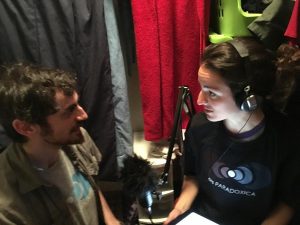
To learn more about the show’s origins, I contacted Mischa Stanton, who was kind enough to answer my many questions over a few weeks. We talked time travel, Stanton’s work as producer on The Bright Sessions, eccentric scientists, and how characters and stories inevitably change no matter how much you plan a grand narrative.
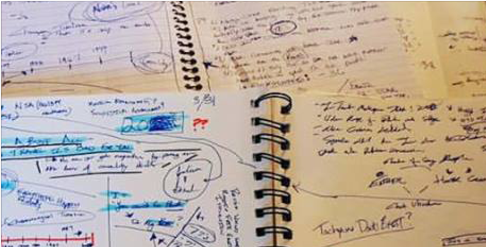
EDWARD CHAMPION: I’d argue that there are two types of time travel narratives: the heady and complicated versions populated by Shane Carruth’s Primer and Donnie Darko and the fun-filled versions seen with Nacho Vigalondo’s Timecrimes and, most prominently, Back to the Future (which ars PARADOXICA has extensively name-checked). Then there are films like Looper and 12 Monkeys (or, for that matter, Audrey Niffenegger’s novel The Time Traveler’s Wife), which split the difference between the two varieties. ars PARADOXICA seems to be aiming for that happy compromise. And in asking the inevitable question about how you and head writer Daniel Manning came up with ars PARADOXICA, I’m wondering if you set out to find a middle ground between heady and entertaining (not that they can’t coexist!). How does audio drama lend itself more towards a viable execution of this theoretical Venn diagram? Had you told versions of this story before? I have seen photos of timelines scrawled out on paper that appear to have been devised by one “Mischa Stanton” (answering to the names of Aaron and Abe?). What did you do to plan for this?
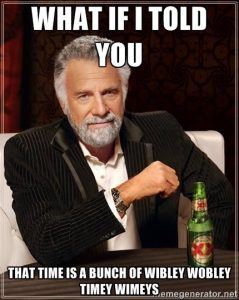
MISCHA STANTON: Wow, I’m really glad we’re hitting the mid-point between relaxed and serious time travel! To be perfectly honest, we definitely set out to make the most dark, the most serious, and above all the most logically-sound time travel story we possibly could. Daniel and I were frustrated by the proliferation of time travel media that had flimsy rules that weren’t based in any sort of reality. The likes of The Butterfly Effect, that movie adaptation of Ray Bradbury’s “A Sound of Thunder,” and Doctor Who. (Oh man, if I never hear the phrase “timey-wimey” again, it’ll be way too soon.) We wanted a world with rules, and a story with strict adherence to those rules. That the show is any funny at all comes from Dan’s writing of Sally (Sally is basically female-Dan) and Kristen DiMercurio’s absolutely killer performance.
That said, the way we approach the show is by having the characters go through some seriously heavy and mind-bending business. So the only way to deal with that and still keep the story swimming is to recognize the utter absurdity of the scenario (in our case, the scenario being “a cold unfeeling universe”), laugh, and carry on. That carries over from how I view life, which is that it’s an absurd and cacophonous mess that is almost entirely out of any one person’s control. So you just gotta laugh!
The time travel concept in and of itself isn’t what drove us to audio. In fact, our very first crack at this “brand” of storytelling we’ve cultivated wasn’t even a time travel story at all. The show started as a numbers station (of which listeners can find an example at the end of each episode) that Daniel and I recorded in our dorm at Emerson College, and then snuck onto the radio in the dead of night while no one was listening. It was only after we did it once that we begin to consider, “Okay, why does this numbers station exist? Who is it from? Who is it to?” And from there, we expanded out to “a secret government time travel conspiracy.”
As for how much we have planned, without giving too much away, I’ll say this: We had the last episode outlined before the pilot. I think that’s probably the best way to write a time travel story: write the ending first. That way, all of your logical knots untangle into something concrete at the end. You also get a ton of opportunities to foreshadow plot threads and plant little seeds for later that we, as fans, love to pick apart and unravel.
CHAMPION: I had a feeling that you and Daniel knew each other, but I didn’t realize how far back the connection went! And it does have me wondering if anybody ever replied to your college radio cryptographic code. (Certainly, I felt compelled to tweet back minutes after listening to the first episode of ars PARADOXICA!) This leads me to wonder how you managed to land the magnificent Kristen DiMercurio and how you went about casting this. Did you rely largely on people you knew? Did you willfully establish a universe with constraints because the best creative work typically emerges out of creative limitations? The fact that you bleep out the year that Sally came from and that you regularly bombard Sally’s diary entries with interference suggests a keen commitment to creative obfuscation! I’m almost wondering how much you folks obsess over the minutest details. The Wooden Overcoats fellows told me that they even have “placeholder” jokes until they can get it right. If you are sitting on a massive pile of paperwork (and I suspect you are!), what freedom do you allow yourself to deviate or improvise — whether in the writing or the recording of ars PARADOXICA?
STANTON: We’ve had a few die-hard fans figure out the codes— which is a lot of fun for us because that just means we get to come up with harder codes! Shoutout to Brian B and Phoebe S, the lead code-breakers out there.
aP is actually Kristen’s first voice acting gig! I knew her in college (not super well, but we often attended the same theatre program parties), and she posted on our college’s alumni Facebook group asking if anyone had any leads on classes for voice acting. We messaged her the same day: “Wanna read for a lead role in our show?” And now she’s absolutely blowing up the scene. She’s working with Two-Up Productions on their next thing. She’s playing Selina Kyle in an adaptation of Batman: Year One. She’s getting casting calls left and right for different audio dramas. We really found something special with Kristen, and the show wouldn’t be nearly as good without her.
A lot of the cast are just actor friends of mine. I knew Reyn Beeler, Dan Anderson, Katie Speed, and Lee Satterwhite from college (along with a lot of our “additional voices” cast), and Zach Ehrlich and Susanna Kavee and I go all the way back to high school. The one big find I made outside of my friend group was Robin Gabrielli, who plays Anthony Partridge. I met him through the director of a play I designed back in Boston. Man, is that guy just a treasure. And of course, now that I’m out of college and working in the Los Angeles entertainment industry, I have a much wider base to pull new actors from!
As far as constraints, one of my design heroes, Mark Rosewater, likes to reiterate “restrictions breed creativity.” The blank page can be intimidating. So giving yourself conditions to go by helps to realize your story a long way. That’s why we keep to such strict rules in aP. We think the “Only to the past, not before 1943” framework makes for a more interesting story. But within that, we try to keep an open mind about what is possible. It’s been especially interesting in Season 2, since we’ve opened the world up to a new writing staff. And now they come to me with questions of “Does this work?” or “Can I do this?” or “Will this break the rules?” And it’s great to have clear yes/no answers, to work with the writers to fit their grand ideas into this framework.
Once the scripts are written, the story is mostly locked-in. We do a lot of work with the writers to make sure everything (a) makes sense within the world, (b) sounds consistent with how we want to portray the characters, and (c) sets up the plot threads needed for future stories. However, when I get in the booth with an actor, often we’ll find something that doesn’t make sense or that sounds awkward to say. Or we’ll find a leftover line from a previous edit that doesn’t fit anymore and we change it up. We’re not married to the text of each individual line. I’ve also recorded whole scenes and then cut them in editing (usually I run this by the writer first). “No scene is worth a line and no show is worth a scene,” as Daniel likes to say!
CHAMPION: I presume that some of the newer actors, such as L. Jeffrey Moore and Alexander Cole in “Asset,” are people you haven’t known before. How did you go about finding actors once your creative universe started to expand? What difference is there in working with someone you’ve known for a long time and someone new? Have you had to make adjustments when, say, Kristen wasn’t available for an episode? One common suggestion I’ve heard among radio drama producers is “Don’t look at your actors” and I have to confess that, while this is eminently pragmatic and sensible, it does suggest a queasy parallel to certain big name Hollywood actors who secure guarantees that crew members should never give them eye contact when they are on set. Given that eye contact is pretty damn essential in talking with and working with people, even for something that is designed for the ear, what do you do to cultivate an atmosphere of intimacy? How have you become better at directing the actors? Have you ever had to bend the draconian rules that you and Daniel established at the beginning to serve the characters?
STANTON: As we’ve expanded our cast (and we have a huge cast) I’ve relied on people I know, or friends of people who are already involved. I met Jeff through Robin Gabrielli, Alex is a fellow audio producer. I was the audio engineer for a musical produced in LA written by Rebekah Allen, who plays Bridget in Episode 13. There was a similar case with Arjun Gupta, who will be in Episode 14. Collaborative art forms, especially audio drama, are all about building your networks outward until you find who you need. Fortunately, the audio drama community has been incredibly welcoming!
I have never heard about “no eye contact,” but I wouldn’t subscribe to that even if I had. A lot of our recording sessions are done by remote. Rather than send an actor off to record on their own, I almost always schedule a time to read with them over Skype. I find it creates a much more personal experience for the actor, which translates to their relationship with the audience in a tangible way.
When we started, I had absolutely no experience directing voice actors. I learned everything I know while creating this show. The biggest lesson I’ve learned is knowing what you want going in and not being afraid to ask for this plainly and without fear. You also shouldn’t be afraid to re-take a line until you’re satisfied!
Fortunately, we’ve only had to bend the script to accommodate an unavailable actor once. And even then, the actress had recorded material previously that we were able to use. As far as bending the story, I like to think of it as a bonsai tree: We can bend as we move forward. But once we make a bend, we have to stick to it. What comes before, even the bends, become the solid foundation for everything that comes after.
CHAMPION: So your story is as naturally expansive as matter contending with repulsive gravity! Since we’re finding a cosmological constant of sorts and since you’ve previously expressed how you put a hard foot down on “timey wimey,” I’m wondering what you’ve done in the name of research. Do you have any salivating physicists trapped in a closet who are willing to unpack entropy and effective field theory for a few scraps of food? Have you relied on any particular books or texts? I get a general Harvard-MIT vibe (a good one, not an obnoxious one!) from ars PARADOXICA and I’m curious what background you, Daniel, and your nimble gang of collaborators have in science? Do you ever find that the dramatization of science or theory gets in the way of exploring characters? Perhaps this was one reason you had the team go to Vegas?
STANTON: I can tell you straight off that we only barely have a background in science. As far as formal training goes, I studied psychology and psychoacoustics (the study of sound perception) in college, and I’m an audio and acoustical engineer by trade; and Daniel like…got an A- in 10th grade Chemistry. Beyond that, the only things we know about particle physics and entropy are what we’ve researched for the show, and most of that was just hours and hours combing Wikipedia articles and their sources (here’s a pro tip for anyone writing a college paper: don’t cite Wikipedia, cite Wikipedia’s sources). I’ve never considered myself a scientist. I’m more of an artist heavily influenced by scientific discoveries, information, and techniques.
The Vegas episode (03: Trinity, Acts I & II) was definitely a point where writing the story butted up against our lack of formal scientific training. In that episode, the characters have to present time travel as a viable tool for the US government muckety-mucks, and then spend weeks trying to devise a presentation. But we found while writing the episode that we couldn’t actually come up with a viable presentation to even write into the show! We had the same struggle as the characters in creating a formal time travel presentation that wasn’t just sleight-of-hand. So that’s what we had the characters do. In the end, they just do some sleight-of-hand. And it doesn’t work. They fail their presentation. The program shuts down. And they end up having to move to a tiny town in Colorado. So in that way, the science and our understanding of it (or lack thereof) really informed the direction of the entire show.
That said, we wrote Episode 03 in the very first batch of scripts, before we even had Kristen on the show, before it was out in the world. Working with the show out in the world for over a year now has given us a better grasp on what we can and can’t do. And I’m proud to say we’ve finally figured out how to design some really cool time travel experiments. Stay tuned for Episode 15, I’m really proud of it.
CHAMPION: You also produce The Bright Sessions and I’m terribly curious about (a) how this happened, (b) how working within another person’s vision differs from what you and the gang have established at ars PARADOXICA, and (c) what you did to make Lauren’s job easier? Was there anything she wasn’t doing that you implemented?
STANTON: I found The Bright Sessions as a fan first! I was trying to find other shows like ours, and I kept seeing people mention The Bright Sessions, so back in March I listened to the first season on a plane ride. I was hooked. And then there was a mid-season announcement on her feed, where Lauren said that if she made enough Patreon money she’d be able to hire an audio producer who actually knew audio. And I said to myself, “I’m an audio producer!” So I emailed Lauren the next day offering to jump in with her. She’s got the acting and directing stuff down, but she wasn’t as well-versed in the audio production, the mixing, the creation of sound effects. So I’ve helped prop up what she doesn’t know, so that she has been able to tell bigger and more ambitious stories. Before I started, the show was still mostly two people in a room. But once I joined she was able to give her characters more things to do and more space to do them in. As I checked my email to respond to this question, Lauren just sent me confirmation that The Bright Sessions #24 (“Zero Hour,” her Season 2 finale) is ready for launch. And, of course, your readers will have already heard it by the time this interview comes out. So they’ll know that it’s our most ambitious episode yet.
I’ve been working in collaborative theatre environments for twelve years. So designing to someone else’s vision is actually pretty par for the course for me (that I have so much more creative control on aP than I usually do is probably why I push so hard with it). Lauren is an amazing boss. She has such a clear pictures of these characters in her head. It’s like they’re all real people she knows and hangs out with, but that I’ve never met. She always knows exactly what she wants, even if she doesn’t always have the best words to describe it. We’ve developed a lot of trust. So she gives me a lot of freedom to craft the soundscapes of the show. But that’s my job! Lauren asks for a mood, a general feel to the episode (or she suggests it in her writing) and it’s my job to take that mood and interpret it as a soundscape. That’s what a sound designer does: takes the tool of sound, and uses it to provoke emotional responses to tell a unified story. (Are you listening, Tony Awards?)
CHAMPION: I should probably disclose that I am terribly fond of fun dramatizations of science and scientists, whether they hit the more eccentric strains seen with John Noble’s Dr. Walter Bishop in Fringe, Dr. Emilio Lizardo in The Adventures of Buckaroo Banzai, or Dr. Herbert West in Re-Animator or the more straight-laced eccentric seen with Jeff Goldblum’s Dr. Seth Brundle in The Fly, Dr. Hubert J. Farnswoth in Futurama, or (more medical than physics) Dr. Dana Scully in The X-Files (which seems to be the closest model for Dr. Sally Grissom). What impresses me about ars PARADOXICA is how you’ve rooted Dr. Grissom in reality and that scientists as a whole don’t fall into the authoritative eccentric model that we’ve become so accustomed to. I’m very interested if any of this factored into the writing and devising of these episodes, even before you had Kristen. To what degree is your background in acoustics responsible for a similarly dogged commitment to the real? (The Truth‘s Jonathan Mitchell also has an extensive audio and music background, which I suspect is heavily responsible for that marvelous program’s commitment to grounding his stories in base reality.)
STANTON: I think stories have a tendency to boil down a knowledgeable character into a one-dimensional role— “the Scientist/the Smart One.” And with good reason. It’s a great exposition machine when you need the story to move along, especially in media where you’re on a strict time limit like TV. Cop shows do this a lot with the ME/Coroner character, just as a way to spit out pertinent medical information and move the plot forward. And then, often to give a bit of color to it, a producer will throw in a generalized “eccentricity,” as you call it, to make the character at least partly memorable. But with a show like ours, something that is all about the science and how it affects the people close to it, being smart or being a scientist is a given. So yeah, Esther is smart, but she’s also caring, calculating, judgmental, and ambitious. Yeah, Sally’s a scientist, but she’s also a movie lover, a stranger in a foreign land, and an amateur comedian (one of our tenants of writing Sally is “she thinks she’s hilarious”). When “scientist” is the norm, there’s no need to stick to the trope. So it gives us far more room to play in.
A lot of what our show explores is the morality of discovery. I’ve often said that science tells us what we can do. But it’s up to humanity to decide what we should do. Often you don’t know what you should do until you’ve already made a mistake. I think that’s part of what makes Sally such an interesting character to listen to. She invented this time machine entirely by accident and, before anyone could ask her what she thinks should be done with the technology, the tech is already in the hands of one of the most powerful governments on Earth in the middle of a war. So a lot of the show is Sally reconciling her love of unbounded discovery with the fear of moving ahead too fast, before she’s able to consider the consequences of her actions.
As far as my own acoustical background, I think that’s what allows me to imagine what a room sounds like, to determine which elements are vital to conveying action and which ones just get in the way. Wherever I go, I always take a moment to listen to a room and break apart the tone into pieces for later use. For example, in Episode 13, there’s a moment where two characters travel from drinking in a crowded bar in New York City to post-sex in an empty apartment. For me, setting up that scene meant: (1) muffled city noise behind the apartment walls, (2) heavy breathing, (3) rustling bedsheets, (4) grabbing a lighter and lighting a cigarette. These moments are all disconnected pieces when you listen to them individually. But when put together there’s really only one thing that could have happened in the intervening space. And that’s the trick to building convincing scenes in audio drama. It’s not just finding the right sound effects. It’s finding the exact combination of elements that can only mean what you want these to say.
And thank you so much for that comparison! Jonathan is an incredible artist, and The Truth was a huge inspiration to me. I had just picked it up as I was mixing our first episode. It really showed me what a podcast can do, and pushed me to make aP even better.
CHAMPION: I completely detected the “she thinks she’s hilarious” vibe from Sally as she records her diary entries, which is a peculiar cousin to loneliness. It’s not unlike the relentless pop cultural references that fuel Eiffel’s monologues in Wolf 359. Eiffel believes he’s a standup comic to some degree, but he’s also deeply flustered in deep space. In my conversation with The Bright Sessions‘s Lauren Shippens, we discussed how the natural intimacy of radio often lends itself to this therapeutic feeling, almost as if you’re eavesdropping upon a rather naked portrait of human emotions. With Sally, we often have her zest colliding with her frustration and ennui, almost as if she’s masking her true feelings as dutifully as you’re bleeping out the year she came from. How long can you sustain these emotional revelations by omission in a long-running serial? Was this one of the reasons you juxtaposed Sally’s life and explorations with the tension between Partridge and his wife? Also, the two-part episode “Consequence” almost tips the balance of the show altogether by showing another side of Partridge and the larger panorama of the research program. And it does have me wondering if much of this episode (and ars PARADOXICA as a whole) was designed to avoid what I call the Cuse-Lindeloff Enigmatic Storytelling Paradox, whereby a series dollops endless mysteries to rope the audience in, keeps bombarding the audience with more mysteries (perhaps as seductive as the earlier ones) while failing to resolve the previous mysteries, and only succeeds in infuriating the audience for not resolving story strands either fast or satisfyingly enough. The audience comes to resent the show and the mysteries, wondering why they bothered to tune in altogether, and turns their pitchforks on the creators for their storytelling gaffes. You alluded earlier to having a vision for the ending. While it’s impossible for any producer to anticipate the full extent of how an audience reacts, you do have a massive story. And I’m wondering the extent that you’ve addressed or anticipated this!
STANTON: We are definitely reaching a tipping point with Sally. She’s resilient, but… Okay I really don’t want to give anything away. But we’re not ignoring the compounded effects of the utter heaps of tragedies that our show has been heaping onto her. The next few episodes are really going to bring that to a head.
As for why she masks her feelings that way? That’s a byproduct of Sally being basically an amalgam of Daniel, Kristen, myself, and someone who actually knows science. I think that the three of us have a lot of zest, a lot of ideas we want to explore and a lot of things we want to say and do, as well as a lot of frustration with the world we’re living in. So we use pop culture, just like Sally does (or wishes she could) as a place that is comfortable to hide our true feelings about everything going on around us. And I think you can probably say that about a lot of people right now.
And that’s coming through in a bunch of audio dramas as well. A lot of shows, like Welcome to Night Vale and The Black Tapes and Small Town Horror, are all about living on the very edge of the unknown and getting your hands and your mind around it, trying to make some sense of the world. A lot of the things about the world that I believed to be true changed as I grew up in it. Now I think that a lot of us don’t know what to expect anymore. But we don’t want to hide from the world. So the only other option is to embrace the unknown. And pop culture references.
As for “Consequence,”Season 1 (and yes, the show from start to finish) was 100% a response to the kind of storytelling that use questions first and answers maybe. All of our questions have answers. Of course, we adapt that answer to what happens in the middle, but we are always moving toward the answer. I want our fans — or people who invest hours of their time and thought to us at the very least — to be satisfied that what we’ve built was always with purpose. I want our ending to seem unexpected yet inevitable.
CHAMPION:“Signal”‘s journey through airports allowed us to learn a few qualities about Sally — that she smokes, that she prefers jeans to sweatpants (which the part of me that bemoans sweatpants as the default American sartorial choice was pleased to learn!). And I am curious about the extent that you have worked out little personality quirks with the actors. Obviously, a story as intricate and imbricated as ars PARADOXICA is going to serve plot more than character. But how much character work do you do? Do you and Daniel struggle sometimes to find character moments? And how fixed are the answers to your questions? Have there been any radical shifts that you’ve made during the course of production? Has a read on a take ever drastically altered your story?
STANTON: I’m not sure if she smokes as a habit! Of course a lot of people did in the 40s so she may have picked it up, but she does know how bad it is for her. No, I think we wrote that in because it’s something you can’t do on planes now, and Sally is, above all, a rebel.
We’ve built the characters slowly over time. In the beginning we didn’t know much. But after casting, the actors’ readings of the scripts definitely changed how we portrayed them. Esther Roberts wouldn’t be half as interesting if it wasn’t for the amount of work Katie Speed has put into the show. Now she might be my favorite character. Chet Whickman was supposed to be a one-off soldier guy, but when Reyn [Beeler] came to record, he had put such thought and care into his performance that we knew we had to keep him on.
Our answers are usually fairly set things, but the path we take to get there is mutable. For instance, we thought we were going to stay in Polvo New Mexico for a lot longer (as an analogue to the Manhattan Project). But then we rewrote Episode 03 so that they failed in their presentation and the town got shut down, which informed a lot of how we wrote the rest of Season 1 — coming from that place of failure as opposed to being in the successful environment they had in Polvo.
CHAMPION: What’s the biggest blunder you made in the first season? What would you do differently? What’s the biggest piece of advice you could offer to any emerging audio drama producer?
STANTON: I don’t really have a great answer to this. We never made one big blunder. It just felt like a rolling series of tiny blunders. Errors in pre-planning, in communication, that made us scramble to meet deadlines a couple of times. Errors in marketing, and in how we set up the technical back-end. Not knowing my software as well as I could. aP is the first audio drama we’ve made, we’re so new to the medium, I learned so much making that first season. And I think that’s the biggest piece of advice I can give: You’re not going to get everything right the first time, or even the second time. It’s really important to forgive your own mistakes as you’re learning.
I think Ira Glass really said it best:
All of us who do creative work, we get into it because we have good taste. But it’s like there is this gap. For the first couple years that you’re making stuff, what you’re making isn’t so good. It’s not that great. It’s trying to be good, it has ambition to be good, but it’s not that good. But your taste, the thing that got you into the game, is still killer. And your taste is good enough that you can tell that what you’re making is kind of a disappointment to you. A lot of people never get past that phase. They quit.
Everybody I know who does interesting, creative work they went through years where they had really good taste and they could tell that what they were making wasn’t as good as they wanted it to be. They knew it fell short. Everybody goes through that.
And if you are just starting out or if you are still in this phase, you gotta know its normal and the most important thing you can do is do a lot of work. Do a huge volume of work. Put yourself on a deadline so that every week or every month you know you’re going to finish one story. It is only by going through a volume of work that you’re going to catch up and close that gap. And the work you’re making will be as good as your ambitions.
I took longer to figure out how to do this than anyone I’ve ever met. It takes awhile. It’s gonna take you a while. It’s normal to take a while. You just have to fight your way through that.
I said before before that I wouldn’t do anything beyond voting for her in November. She was a Wall Street crony, someone who wasn’t looking after working people, someone who wasn’t going far enough with her progressive politics, someone who conveniently changed her stance to suit the exigencies of her present office. All this remains true. I am still hesitant, but far less so now.
Because as political sins go, Hillary’s perceived hypocrisies are nothing compared to throwing your nation into a ruinous xenophobic cesspool in which your currency drops 8% in twelve hours and you open the floodgates to hatred and insanity. It’s nothing compared to fomenting cataclysmic policies that involve building walls or erecting borders because you’re terrified of people who have a different skin color, in which you willingly court the collapse of opportunity and somehow deny the beginnings of rampant unemployment and international instability even as the stock market drops into a harrowing crescendo of chaos.
The Brexit vote sets an example that will not only create a shock wave of duplicate referendums in other EU nations (52% of the French public supported a similar exit referendum in March and who knows how Greece will react?), but turns the promise of democracy in any nation into little more than a preposterous joke, albeit one not confined to a comedy club or a movie. This is horror with a deadly apocalyptic edge that will permanently alter lives. It is something that any proponent of democracy should be very afraid of yet find the courage to face and act upon.
I don’t think any of us thought that politics would come to this. But there are deeply angry people who have been left in the cold for years and this is what they do when we stop listening to them. These are the same people who have flocked to Trump. And they’re not going away. And the longer we ignore them, the harder their vote turns. We need to start listening to them. We need to start talking with them. We need to find points of agreement. And we need to start winning them over to our side, even if it means committing great patience and expending much time and wincing through some of their extremist and uncomfortable sentiments. Above all, the presidential election isn’t something that we should sit out.
So we all need to stand for Hillary. Right now. Not just vote for her, but volunteer for her. Not just have conversations with the people we can reach, but make phone calls to those who may not be expecting our voice. Because the alternative is so much worse.
I say this as someone who was very much pro-Bernie, who still believes that social democracy that corrects income inequality can and should happen and who still very much believes that we can put policies into place that help people. But if we allow our nation to elect Trump, we will have a situation that is very much like the UK right now, possibly unsalvageable and ensnared within a vicious framework that will make truly progressive reform close to impossible. So this is a big deal. The future of our nation and the happiness of many lives depends upon our actions today. Because, not to put too fine a point, America, with its terrible history of slavery and all the subsequent atavism that has emerged from this inhumane shadow, is more poised to unleash its inner id in November than the UK did last night.
We have a little less than five months. It will be very hard. But we can do this. We must do this.
For Audio Drama Sunday, we chat with writer-director Andrew Kaberline about The Grayscale, a production that started out as a Twilight Zone knockoff before finding its voices and winning awards.
Andrew Kaberline is one of the many affable figures behind the tremendously fun podcast, The Grayscale, a Twilight Zone-style anthology that captured my ears with an amusing over-the-top presenter sounding an awful lot like someone wanting to be Rod Serling known only as The Voice Inside Your Head (played by Nate Betancourt). I started from the beginning and listened to all of the episodes.
And then I heard “Jess Dempsey, First Woman on Mars,” a gripping and must listen tale written and directed by Kaberline that involves a woman living on the fourth planet in complete solitude who hears voices. It was this story, with an ace performance from Kristin Macomber and a devastating twist ending, that broke the back of The Grayscale‘s formula and turned me into a regular listener. The Grayscale, which is now in its second season, has won five Audio Verse Awards — largely for “Jess Dempsey.” I contacted Kaberline and he was tremendously gracious to become part of what is now apparently a regular Audio Drama Sunday interview series. (We’ll have another interview next Sunday.)
Many audio dramas seem to spring from enthusiastic genre geeks and sound engineers. But The Grayscale is somewhat unusual because it emerged from a nonprofit theatre called Critical Point that decided to experiment with a podcasting arm a few years ago. And while the show is clearly influenced by The Twilight Zone, there is something instructive in the way that Kaberline and company’s close copy of its source text resulted in something that was quite distinct. It’s not unlike the “missing tapes” genre that I discussed with The Bright Sessions‘s Lauren Shippen, whereby an audio drama takes on the form of a police procedural with a Serial-like approach. A radio producer or someone with a box of tapes often stands in for the detective and, instead of a crime, the investigation is directed towards something of a strange and supernatural nature.
While audio drama’s riffs on the “missing tapes” idea have spawned many magnificent programs (Archive 81 is a particular standout), The Grayscale demonstrates that radio doesn’t always have to tug at the same source to create something original and enthralling. Rather than mimic the most popular podcast of all time, why not try from a celebrated TV series, an obscure Swedish film, or a well-loved book? As I learned in talking with Kaberline, the form and creative logistics of audio drama result in inevitable transmutations during the production process. That may very well be why The Grayscale is such a wonderful program and why audio drama has a very ripe future.
EDWARD CHAMPION: As someone who watched many Memorial Day marathons of The Twilight Zone growing up, and who has held that series very close to his heart ever since, I was perhaps constitutionally incapable of not appreciating your own riff on the anthology format. You, good sir, have been quite candid about the influence! Not only do you include a “Companion Guide” pointing to the specific TZ episodes that informed The Grayscale, but you have also written an essay called “How I Justify Stealing,” in which you copped to stealing an idea from a production of Chekhov’s The Vagabond to find an ending for A List of Irrational Fears for Future Leaders of the World. Speaking as someone who once made a Super 8mm film of a woman trapped in a room filled with newspaper attempting to subsume her (which was a riff on a moment in Terry Glliam’s Brazil, in which Tuttle gets absorbed by newspaper), I’m no stranger to this conundrum myself. On one hand, your goal as an artist is to find your voice. On another hand, you need something to start from. I’d say that Season 2 does represent something a bit more “original,” departing from the overt Twilight Zone lifting into a more natural expression. What steps did you take between the seasons to get to this point? Or was the act of producing audio drama and putting several episodes behind you enough to get you to this place?
ANDREW KABERLINE: Firstly, I’m so happy that you mentioned that Tuttle scene in Brazil. I have said to my fellow ensemble members that if we get to do Fears again with a bigger budget, that we’re going to try to steal that moment for the ending this time!
As far as dropping bits of our Twilight Zone “tributing,” I would say that it was a natural progression, in that we never said, “Okay, this year, no references,” but it certainly has gone that way.
I do think getting more comfortable as podcast producers is the reason for that change. As a team we have got sharper at scheduling and recording with efficiency, and we gathered most of the scripts for this season before we ever premiered Season 2, which has let me avoid those situations where you go, “Oh crap, we need an episode next month. Which Twilight Zone premise can I riff on?”
The main team for The Grayscale (myself, showrunner Dylan Amick, and master sound engineer/editor/the voice inside the credits, Chelsea Rugg) did have a long talk about what was going to be different this season. We wanted it to feel like a step forward. We wanted to get different voices (you’ll notice Dylan and I have only penned one episode each so far). We wanted to explore new themes. We wanted to create a larger universe (as kicked off in our Twitter Fiction Story, which will really take shape in the second half of this season. Even the theme song was different! We built a nice little audience after Season One, and from the opening seconds of season 2 we wanted the listeners to instantly go, “Well, this is new.”
CHAMPION: Your talk of showrunners and engineers leads me to point out that The Grayscale is a bit different from other audio dramas, in that it emerged from Critical Point Theatre. I don’t know of any other theatre that is doing quite what you’re doing and, indeed, I wasn’t aware that you were producing any other podcasts until your “State of the Podcasts” address cropped up on the feed. I had initially anticipated some satirical spinoff story, with The Voice Inside Your Head announcing a podcastocratic government, only to be quite pleasantly astonished at your bona-fide commitment! Why did your theatre company feel that audio drama was the best step forward? Has it had any impact on your theatrical productions? And let me get this straight: you were writing, producing, and editing each show one at a time rather than getting the scripts for a season ready in advance? My goodness! You folks are troopers! How did you manage that insane production process? Were there scripts written in one or two nights when you knew you needed an episode? Also, since you have a new musical theme, how did music gradually encroach its way into what seems to me a pretty arduous on-the-job training process during the first season?
KABERLNE: Tiny spoiler, you will be seeing The Voice Inside Your Head getting into hot water with a strange government later this season!
I’m actually kind of shocked that more theatre companies aren’t taking this same approach. All of our work is original and we create our stage productions through weekly rehearsals and a laboratory process. It leads to great work, but the one downside is that it takes a lot of time. We were worried about staying active while slowly building this content, so the emergence of a podcast wing allows us to put out work more frequently and in different disciplines.
Audio storytelling has worked its way into our theatrical storytelling too. The show that we are working on now, Phreaking, is a sort of psychological hacker melodrama, that explores the state of masculinity on the Internet, and has a forum theatre element to it, so the audience is in control. We’re creating an expanded universe for the characters in the play, that will include some blogs, videos, and even a spin-off podcast limited series. Who knows? You might even see one of the characters in the play end up being judged by The Grayscale. Time will tell. But we are having fun using our audio skills to open up our plays past the edge of the stage.
And yes, for a little while we were doing Grayscale episodes one at time, meaning that we only were a month ahead with our ideas. But it wasn’t as bad as that sentence just made it sound (except for Chelsea; rule number one of audio storytelling: don’t abuse your editors). Critical Point kinda jumped into the podcast game before we were as capable as we are now. With just one show it takes a few months to get your groove and really find the best way to do that show, but we launched five shows simultaneously. It was too much to handle, and not every show survived.
The Grayscale idea was thought up by myself and Matthew Schott during an infamous “pizza meeting,” where we created what the feeling of the show would be, and worked through five or six ideas for episodes. So while we were flying by the seat of our pants there at the beginning, we had those ideas in our back pocket at least. Four of those pizza episodes ended up running in Season One, including “Jess Dempsey.”
But yes, there was a lot of quick writing for a while. When it comes to the Rod Serling half hour formula, I’m a very speedy writer. When I’m writing full length plays… not so much.
As an ensemble we cover a lot of skills. Music composition is not one of them. We started with a theme by Sammy Pisano that I like very much. We were lucky to find Sammy through a co-worker of Chelsea’s, and he was on board very quickly. We started asking him to score the episodes themselves with that quick turnaround, and I don’t think we realized that was impossible and, quite frankly, kind of rude to ask of someone. We had to tell the stories with less music and more silence out of necessity, but I think we really prefer it now. Silence is dramatic over the radio. You’re only using one sense listening to our show and we’re taking it away. It inherently makes you feel like something is going wrong, which is great, because usually things are going wrong for our characters!
We got better at sound design too. We’re so lucky to have Chelsea Rugg. She holds the show together and is an expert at finding and making soundscapes and effects from various free and paid sound subscriptions that we have. It’s also forced Dylan and I as the primary writers to be more specific when we write sounds into the margins, and it’s only made our world of the show more specific. We learned quick. The best example of this is in “Jess Dempsey.” Chelsea had learned how to add mass and direction to something while it moved, and it allowed me to then write that effect into a major plot line. Throwing on the headphones and hearing the monster circle Jess Dempsey’s compound is still my favorite moment of the show.
We do have a new theme for the show by Isaac Aaron Jones, a friend of Dylan’s, that I love as well. We were going to do different things this season and felt a new theme was appropriate. We will likely do the same each season hereon out. My advice to audio drama makers out there is that if you don’t have the skill yourself to write music, start making friends with anyone and everyone who does.
CHAMPION: I’m keen to know more about your sound design. My feeling is that every audio drama should try to sound as distinct as possible. Certainly The Voice Inside Your Head — somewhere between a Rod Serling knockoff and a booming grandiloquent presence who, despite his alleged omniscience, may not know as much as he thinks! — is a fun and a very distinct way to steer a listener into your program and helped to land me on board for the entire run. To what extent have you employed more foley work over preexisting sounds? And I’m glad you brought up “Jess Dempsey, First Woman on Mars.” To my mind, that was the the first episode in which The Grayscale really threw off the shackles of its Twilight Zone roots and became its own separate beast. I’m wondering if you were at a “Do or Die” moment while coming up with that script, where you asked yourself the hard question, “Okay, do I want to keep on making a Twilight Zone knockoff or do I want to make something that can stand on its own?” Perhaps one inevitably resists the wiseacres offering a “tracer” argument through constant production! Also, how did you get used to directing audio drama knowing quite well that the audience wouldn’t be able to see the actors other than within the confines of their imagination?
KABERLINE: You hit the nail on the head with TVIYH. He is not as smart and powerful as he presents himself to be. He’s like if someone who loved The Twilight Zone, like you or me, answered a personal ad looking for a spooky narrator, and then was troubled to find out it was all too real once he got the job. There are much larger strings pulling TVIYH. He’s a pretty lowly company man.
We have been hit or miss with our foley. Sometimes when we want a simple sound effect, and all of our resource sounds are trying too hard, we will just do it ourselves. These don’t stand out too much in the actual episodes, because they are sounds that are supposed to just blend anyway.
Our first episode was a monster episode, and we had this idea to have the monster noises come from the sounds our cat makes when you accidentally lock him in a room. He was known to make some terrible noises, so we tried to replicate the conditions, and turns out he didn’t want to make those noises when we wanted him to. So that kind of soured us on foley for the complex sounds. For that episode, Matthew Schott (the writer/star) actually made about 90% of the monster noises himself, without a lot of manipulation from us in editing, and that worked great!
Another technique we like to employ is taking sounds from one thing and using it to represent something else. There is a lot of this in our recent episode “Nasty Things, Anachronisms.” A character spontaneously combusts and that sound is made up of a jet turbine, a trash bag ripping, a tea kettle screaming, and a few other things.
I don’t believe that we intended for Jess Dempsey to be the defining go-to episode that it became for the series. We want all the episodes to be that way, of course, but that one was a nice surprise. When we were producing Jess, we were also doing a lot of pre-production work on the next two episodes “Penelope Loves You” and “A Jitter In The Life Of Danny Wampler.” We knew those two were going to be production heavy. So the idea was for me to write one that would be simple and quick. One character alone talking to herself. That turned out to be “Jess.”
I wrote “Jess” while on an overnight shift working the front desk at a hotel, which can be as lonely and terrifying as the version of Mars in our episode. I really hated the first draft. So much so that I didn’t want to do the episode. I showed it to Dylan and Chelsea and they were like, “Are you stupid? Of course we’re doing this episode!” They understood the potential better than I did.
I don’t think we were consciously trying to move away from The Twilight Zone with that episode. In fact, I remember wanting to really go after something as issue-based as a Rod Serling script. I think part of the reason that it felt so different from our normal formula might be chalked up to tricks that were unavailable to Rod, like that kind of found footage style. And the episode was very easy to direct. One of our quickest recording sessions. Kristin Macomber came into the room knowing exactly who Jess was. She made our jobs easy.
That leads nicely into your directing question! Dylan and I do most of the directing, and we couldn’t be more different. Dylan comes in with a million ideas, and has a director’s playbook of ways to get the actor to say a line better. I can hear the greatest performance ever and seem like I’d want to be anywhere else. Both of these approaches have worked for us so far.
I think directing audio drama can be a really frustrating venture at first, especially for those with film or theatre backgrounds. A lot of those techniques simply do not work here. It hurts to have to tell some actors to fight against their good acting impulses to jump on the ends of lines or do physical work. It hurts to say, “That conservatory you paid all that money for really did teach you to act! We can control the jumping of lines better in editing than you can do in person. And when you get all physical, we can hear you hitting your lap with your hands. So here’s a pillow for you to put there so it doesn’t happen again.”
It’s a different art and it should be treated as such. The best piece of advice I can give to a new audio director is simply not to look at the actor while they’re performing. Close your eyes. They might be doing great work, making lots of choices, but then when you listen back you say, “Huh, that performance didn’t end up as good as I remembered.” Well yeah, because you were looking at the performance instead of listening to it. It is audio drama after all.
CHAMPION: I’ve also found that asking animals to convey interesting sounds on cue is indeed a challenging proposition. Sure, they’re more than happy to claim allegiance when you have food, but is a well-timed roar too much to ask from time to time? Nevertheless, I greatly admire your quixotic efforts to introduce your cat to such strange human philosophies as hitting your mark! So it sounds as if The Grayscale‘s success very much revolves around insane deadlines! I’m now very curious how fast you write those first drafts, how you revise the scripts, and whether writing for the ear represents a greater challenge for you than writing a short play. Do you often have an actor in mind during revision? And is this of help in figuring out what a story is about? Do the actors have any input upon the scripts? I won’t be uncouth enough to ask Dylan to reveal how he extracts the rabbits out of his hat, but can you divulge one or two of his most effective techniques? What do you do to make the actors feel comfortable, given that you and Dylan are spending quite a lot of time pretending to be in a witness relocation program?
KABERLINE: I write those drafts lightning fast, like two to three hours. To be fair though, most of the time I have spent a lot of my daily daydreams thinking through these episodes. So by the time I sit at my desk, it’s just about execution.
There tend to be two or three drafts total for each episode. I have become the script doctor for the show. So when I write an episode I do draft one, sleep on it, then do a revision usually the next day. When it is someone else’s script, it’s a different process.
They pitch us an outline, then Dylan, Chelsea, and I give notes. Then they give a first draft and we do another round of notes. Then they return with a second draft. And at that point, I get a final pass to punch it up and we have the final script.
Most of the time, my role in that final punch-up is to make judicious line cuts so that the episode fits in the time frame that we would like. It felt rude at first, but it has made me a much better writer across the board.
Writing for the ear has a very specific set of challenges. You can’t write in anything visual unless you want your character to state it aloud. It’s actually easier than when I sit down to write my full length plays, which tend to become abstract and don’t have abide to these rules! When I write for the ear, I already know what I can’t do. So I don’t even bother to go down those roads. What’s really rewarding is succeeding at the challenge of having clear action without dialogue. In the second episode of this season, a woman falls to the center of the Earth after the ground opens beneath her. She doesn’t say, “Oh man! I’m falling through the ground!” or anything like that. But I’m proud of how clear the action of that moment, and the action right after it, is.
I’d say that we rarely have an actor in mind when writing a Grayscale script. I certainly do it for my stage plays, but again for that you have to consider visuals. We are really really lucky to have a large pool of actors available to us who seem to enjoy working on the show. Our goal every episode is to get a new voice that has never appeared on the show, and thus far we’ve been successful. The actors don’t get any input on the creation of the script, though, in the room while recording we will often tweak lines or let them play around. Those ramblings from Becky Granger and Matthew Schott at the end of scenes from our recent episode about time travel were 100% unscripted.
Dylan won’t even tell me some of those tricks because he directs me sometimes! A magician can never reveal his secrets. But I can tell you that Dylan is really strong at giving notes to a struggling actor, without letting them know that they are struggling. I have witnessed him do this thing where an actor struggles with a line. So Dylan gives a direction that is wrong, which leads to an even worse read. Then Dylan is able to shift the cause of it not working onto him, which takes the pressure off the actor. Then Dylan gives them the actual direction/note that he wants to give them, and they are out of their head and able to take it confidently because they know whatever they do will be better than that last take. It’s really impressive.
Actor’s comfort is a large thing for us. I think what we are most conscious of is not wasting people’s time. We don’t like having people sitting around waiting for their scene, so we spend extra time on making scheduling air tight. A lot of our actors are stage actors who have never done voice-only stuff before. So, we like to let them do a first run of the scene without much direction, let them do everything their training has taught them. We react positively to that run, which isn’t hard because it’s usually compelling live theatre, and then give them the parameters of only being heard. If you try to throw all of that at an actor before they even say a word, you guarantee yourself a performer who will be entirely in their own head.
CHAMPION: One of the things I appreciate about The Grayscale is its willingness to go very big — not unlike the mysterious New Zealanders who run The Witching Hours — another anthology series for the ear operating out of a theatre! “Who Sins Most?” is almost a cousin to broad comedy in its depiction of a cruel and uptight priest (who is often quite casual about his callousness) who arrives in heaven. I’m also strangely fond of the over-the-top ending of “Applaud My Friends, The Comedy is Over,” which works to a crescendo that is absurd (albeit in an increasingly absurd age of a reality TV show host as presidential candidate) but that finds its own particular tone in the telling. Some audio drama producers are quite committed to keeping their shows steeped in the real. Do you feel that there are inherent limits on how over-the-top an audio drama can go? What concerns do you have for keeping The Grayscale grounded in reality? Have there ever been vociferous arguments within Critical Point on this point?
KABERLINE: Yeah, we got really absurd at the end of Season One with those last two episodes.
My advice to anyone making audio stories is to go as over the top as you want to be, unless your being over the top makes the listening experience exhausting. We certainly go over the top on occasion. It is a sci-fi show, you know?
Our thing is that, while our stories involve magical elements, we rarely tell the actors to play against the truth. “Applaud My Friends” is a great example. The ending is really absurd and unsettling (Dylan and I were trying to match “The Obsolete Man”), but as actors we played it really honestly. I don’t think it would’ve worked if we were just as weird or goofy as the premise.
In our comedies we tend to have the actors go more broad, but i would contest that they are still acting truthfully. Our comedy characters tend to be closer to Marty McFly than The Three Stooges.
Something has to stay true to make the episodes relatable. For us, that’s usually the acting. This is the big thing that bad anthologies seem to miss.
I don’t think we’ve ever had a conservation about making sure the show is realistic enough. What we do aim for is variety. If this month we do a dark realistic found footage horror, then next month we will probably do a sitcom-like comedy of errors with a robot that makes quiches. It’s all about switching up the tone. If you’re going to do anthology, you have to be flexible.
The stuff I write that isn’t The Grayscale is so much more off the walls that Critical Point never tends to have a problem with what I turn in for this show.
CHAMPION:“The Effect of Fog at the Overlook” features a very large performance from Tyler Ward, especially when he channels his angst. And there’s something about Matthew Schott’s sniveling doormat character in “The Best Version of Myself” (as well as his alter ego through the wormhole) that comes across as both grandiose and true. Do you feel that genre and anthology naturally leads to performances veering more towards melodrama? Or is this generally the Critical Point m.o.? I have noticed more of a mix-up of real and hyperreal in the Season 2 performances (such as “A Peck of Dirt Before You Die”). How many variations on large can one have? This doesn’t seem to be a problem at this stage in The Grayscale‘s existence, but, performance and story-wise, what are you doing to mix up the tones so that you don’t find yourself repeating tropes?
KABERLINE: I think there is some truth to anthology leading to melodrama. I would say that’s not the Critical Point m.o though. Dylan has this idea that when you take away visuals in storytelling, that you should absolutely try to start with as high of stakes as possible, which I think in turn does lead to some melodrama, or those big acting moments.
I don’t think we are worrying about having too many moments of someone going big. Conflict will lead to big moments more often than not, and when you change the laws of science in your show as well, then it’s only going to get bigger.
We are hyper-aware of not trying to recycle the same story elements as far as premises or the “magic” of the episode. I had an idea that was going to be a sort of woman vs her GPS story this season, but we had already done an aware robot in “Now Back To Your Scheduled Programming.” So we went another direction. Now that we have our episodes figured out before the start of the season, we are able to order them in a way where you have different tones and styles continuously. You’re not going to see two alien episodes in a row on The Grayscale.
CHAMPION: What was your biggest mistake on Season One? What would you now not do? How much time does it take for you and the Critical Point gang to produce a typical episode? What kind of system have you worked out so that none of your crew gets burned out or too creatively taxed?
KABERLINE: Our biggest mistake was in “Fog” when we switched the room halfway through recording. Never do that. Wherever you decide to record, stick to it!
I want to say our big mistake was jumping into something really difficult with very little specific knowledge of the medium, but I’d also say this forced us to learn quickly. What we absolutely wouldn’t do now, that we did a lot of in Season One, was over-record. It might feel nice to really explore a scene and get fifteen takes, but you’re only making your editor’s job harder.
We treated the whole process and show very precious in Season One. Now we happily attack the show.
I would say that from pre-production to the episode airing, it takes a little more than a month. Of course, the writing is now done far in advance, but we try to cast and schedule recordings about a month and half before the episode comes out. Then, we record an entire episode in one day (sometimes two). And then editing can last between 1-3 weeks. We get our scripts to Jackie Mullen about a month out, and she takes that time to give us our artwork that accompanies our posts.
We get burned out. All the time. That’s the thing, is beyond Grayscale, we are working on other podcasts, and also doing weekly rehearsals to devise our theatrical pieces. We’re always doing too much. Like right now, I’m answering these questions on a plane leaving San Francisco where we just did a theatre festival. Burnout is real and sometimes unavoidable.
How we try to curb this, is by having a condensed work flow. Generally, I take care of a lot of preproduction as far as gathering and editing scripts, Dylan takes care of production (casting/scheduling), and Chelsea engineers and then takes over in post-production as the editor. We will move these roles around on occasion, but locking in to a system where we know exactly what is expected has worked well for us. The more specific you can be early on in assigning roles, the less energy you will exert filling in cracks. This year, we are taking a break in the month of July and I think that will become permanent. You gotta take care of your own mental fatigue, and making good audio drama is very, very exhausting.
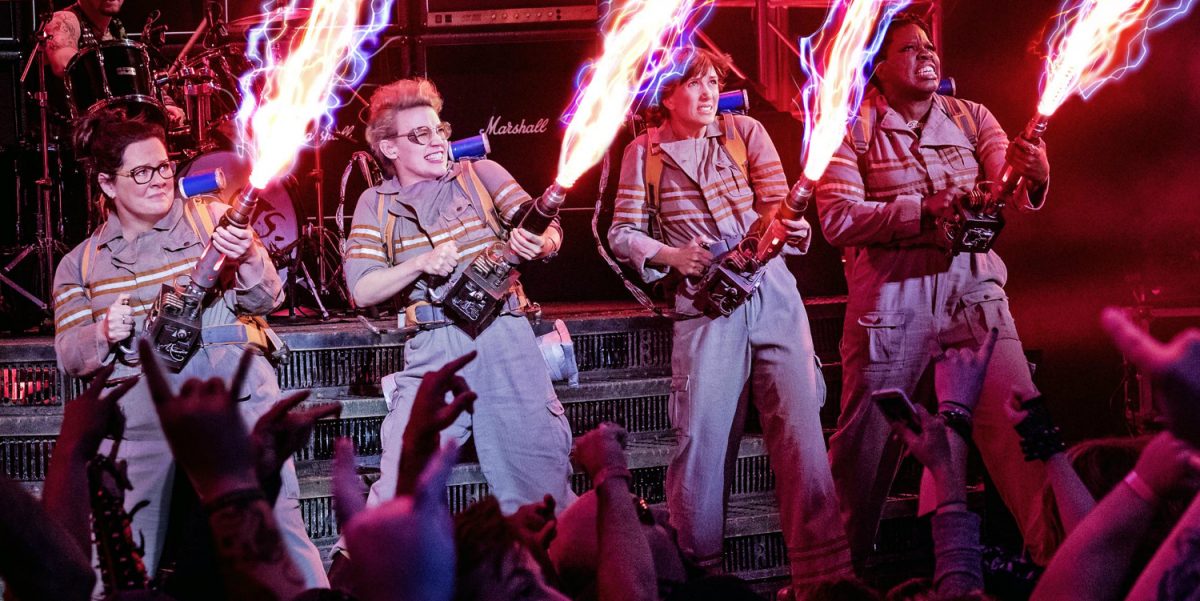
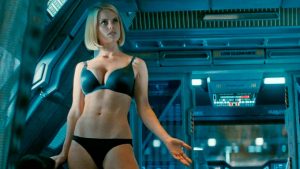 I’m pleased to report that the new Ghostbusters movie does give us somewhat reasonable depictions of women as scrappy scientists, at least for a mainstream movie. The film is refreshingly devoid of Faustian feminist bargains such as Sandra Bullock floating around in her underwear in Gravity or Dr. Carol Marcus flaunting her flesh in Star Trek: Into Darkness. We are introduced to Erin Gilbert (Kristen Wiig) practicing a lecture in an empty Colubmbia University classroom, having to contend with an embarrassing pro-ghost book (Ghosts from Our Past: Both Literally and Figuratively) that she co-wrote years before with her friend and academic peer, Abby Yates (played with the expected enjoyable verve by Melissa McCarthy). Erin, who dresses in wonderfully dorky plaid suits that the dean cavils about, is up for tenure and is understandably queasy about anything that stands in the way of her reputation. Leslie Jones plays Patty Tolan, an MTA inspector with a necklace telegraphing her name who serves as a counterpart to Winston from the original film, and has far more scenes to establish her character than poor Ernie Hudson ever did. Screenwriters Katie Dippold and Feig deserve credit for making Patty more than a token African-American, active enough to ensconce herself with the founding trio and provide some New York know-how in a way that Winston, confined to “Do you believe in God?” car banter and doing what he was told, never quite received in the original.
 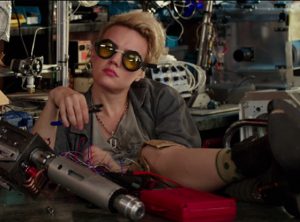 The sole disappointment among the new quartet is Kate McKinnon as weapons expert Jillian Holtzmann. McKinnon mugs artlessly throughout the film, almost as if she’s channeling William Shatner or Jim Carrey at their worst, too smitten with an impressionist’s toolbox of overly eccentric tics. While McKinnon’s performances have worked in five minute doses (especially in her very funny impressions of Hillary Clinton on Saturday Night Live), this is not an approach that is especially suited for ensemble work on an IMAX screen. McKinnon quavers her bottom lip and enters each shot with a distracting “funny” walk that contributes nothing whatsoever to her character or the scene. The effect is that of an actor exceedingly ungenerous to her colleagues, one that not even the continuity person can track. (Jillian’s glasses disappear and reappear several times during any given scene.)
 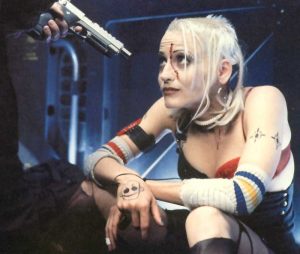 McKinnon seems to be doing a caffeinated and charmless impression of Lori Petty from Tank Girl. She’s a terrible stage hog throughout the film, whether by her own choice or by Feig’s design. Even accounting for the script supervisor’s absenteeism, one gets the suspicion it’s more of the latter, perhaps shoehorned into this movie because of a studio note. How else can one explain an early moment in the film where McKinnon stands passive before a ghost and says, “You try saying no to these salty parabolas” while chomping potato chips? This line, which sounded more like bottom-of-the-barrel Madison Avenue than a honed sentence written by Parks and Recreation alumni, justifiably did not get much of a laugh, not even among the ringers who were planted in the middle rows at the screening I attended. And when your source text has indelible lines like “Back off, man, I’m a scientist” and “You….you’ve earned it,” it’s probably best to work interactive human behavior rather than commentary upon a snack.
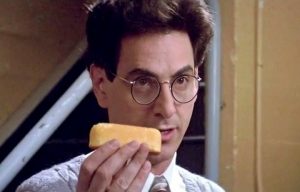 I’ve long maintained a loose theory that you can tell a lot about a comedy movie by the way it refers to food. Weird Al Yankovic’s gloriously underappreciated UHF celebrates its benign strangeness with a Twinkie wiener sandwich (and the original Ghostbusters, of course, features Harold Ramis holding up a Twinkie with some class). Zoolander revels in its splashy flash with an orange mocha frappuccino. Shaun of the Dead features a completely invented snack called Hog Lumps, suggesting the mad invention pulled from cultural reference.