Blake Bailey (The Bat Segundo Show #530)

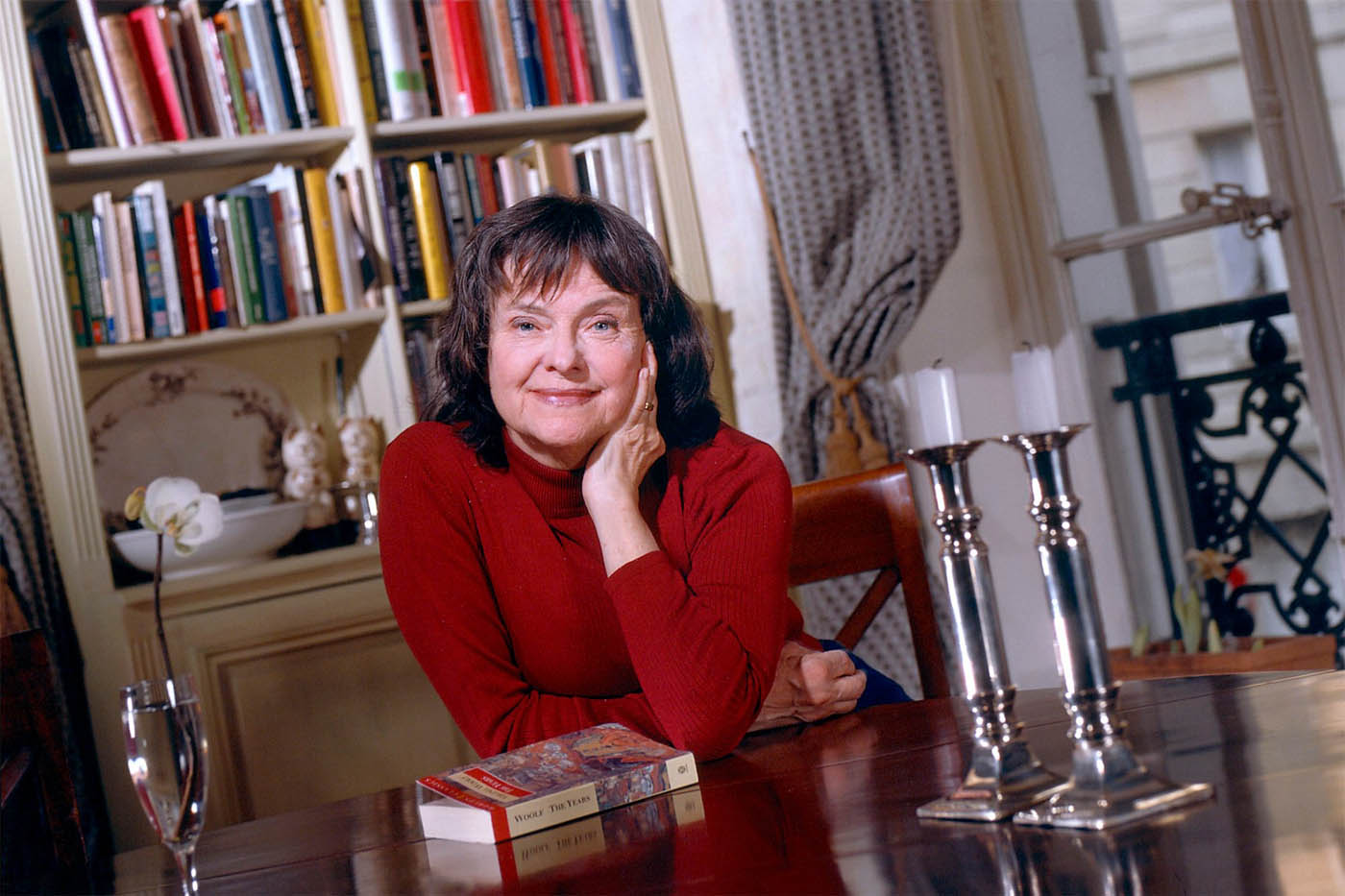
Blake Bailey is most recently the author of Farther and Wilder: The Lost Weekends and Literary Dreams of Charles Jackson. He is also the author of the forthcoming The Splendid Things We Planned, to be published in March. Both books, along with every Charles Jackson volume ever published, were read and consulted for this comprehensive conversation. He previously appeared on The Bat Segundo Show #284.

Author: Blake Bailey

[PROGRAM NOTE: In Farther & Wilder, Blake Bailey mentioned an extraordinary radio program called The Author Meets the Critics, in which authors confronted their critics live on radio. After a diligent search, I was able to locate 46 episodes of this program and I’ve collected them at the Internet Archive, where they can be downloaded for your enjoyment.]

Subjects Discussed: Jackson’s need for money, how The Lost Weekend‘s success freaked him out, Jackson’s self-perception as a misfit, becoming an unintentional spokesman for dipsomania, Jackson’s block after The Lost Weekend, Seconal addiction, Jackson’s hospitalization, Mary McCarthy’s fictionalized version of Jackson, McCarthy’s unfinished manuscript The Lost Week, John P. Marquand, vacations in Truro, the friendship between McCarthy and Jackson, why one shouldn’t read all of Charles Jackson, Jackson vs. Cheever and Yates, the perversity of reading A Second-Hand Life, prosaic sexual affairs in Jackson’s later work, Jackson’s obsession with Shakespeare busts, Adam Kirsch’s review of Farther & Wilder, average writers who long to be geniuses, literary failures, the origins of Farther & Wilder, Calvin Kentfield, Nathan Asch, Flannery Lewis, Jackson’s death by overdose at the Chelsea, undiscovered papers at Dartmouth, the impossible-to-find TV adaptation of Waugh’s “The Man Who Liked Dickens” directed by Nicholas Ray and written by Jackson, Jackson’s involvement with radio and television, the nineteen years when Jackson didn’t publish a novel, William Inge, how television affected Jackson’s storytelling abilities, comparisons between “The Outlander” and The Fall of Valor, the way that Jackson wrote about writers, the stories that Jackson wrote sober, Jackson’s writing difficulties when stoned on Seconal, how Jackson’s fiction explored writing ego, Jackson being ahead of postmodernism with “The Sunnier Side,” what literary biography can do, The Author Meets the Critics (in which Jackson appeared three times), Dwight Macdonald’s “By Cozzens Possessed,” when literary critics had the power to destroy a career, James Agee’s A Death to the Family, the mid-20th century war on midcult, why Jonathan Yardley is a terrible critic, Yardley’s negative review of Norman Rush’s Mating, John P. Marquand’s overlooked novels (The Late George Apley, Sincerely, Willis Wayde, and So Little Time), Roger Straus financing Jackson’s life, Philip Wylie, Wylie’s futile attempts to respond to The Fall of Valor‘s terrible qualities, when critics used to give talented writers a fair pass for sophomore slumps, Daniel Mendelsohn’s attempted takedown of Mad Men, Rhoda Jackson’s tolerance for her husband’s behavior, how the Jacksons managed their money, the many literary people who got their start at Fortune Magazine, Ron Sproat, Rhoda’s acceptance of Charlie’s sexuality, Jackson coming out of the closet, the weirdly limited way in which Jackson’s fictional wives were portrayed, D.T. Max’s Every Love Story is a Ghost Story, Max angling for motive about David Foster Wallace, the importance to double source details and relate it to a writer’s career, Mary Karr’s response to D.T. Max on Twitter, Alan Hollinghurst’s The Stranger’s Child, Bailey’s work on the Roth biography, how to ensure that people don’t come at you with pitchforks on Twitter while working on a literary biography, Karen Green’s Bough Down, DFW’s saintlike image, Infinite Jest, DFW’s nonfiction, literary biographers addressing issues of posterity, the DFW death porn industry, J.D. Salinger’s legacy held hostage by commercial interests, the collaboration between Roth and Bailey, Bailey’s access to Roth’s papers (sealed through 2050), coaxing Claire Bloom to talk, Philip Roth’s retirement, Bailey’s forthcoming memoir The Splendid Things We Planned, similarities and differences between memoir and literary biography, how hard you need to be on yourself when writing about yourself, Blake Bailey’s appearance diminishing somewhat in the second half of The Splendid Things We Planned, and writing about family.

EXCERPT FROM SHOW:

Correspondent: So I basically surprised you by pointing to the fact that I think you and I may be among the few people in America who have actually read all of Charles Jackson’s work.

Bailey: Living people. You know, Ed, probably the only two. His own daughters, who are alive and well, they have not read the oeuvre of Charles Jackson.

Correspondent: Wow.

Bailey: No. It’s you and me.

Correspondent: That’s it? Wow. So let’s talk. Charles Jackson, best known as the author of The Lost Weekend. Let’s get into what he did. I mean, he was adamantly determined in his early days to write what he knew, as you outline in your biography of him. Don Birnam, the protagonist of The Lost Weekend, many of Jackson’s short stories, and also the hero of this unfinished multivolume book project, What Happened? — this is basically Jackson’s life. This is what Jackson drew heavily on for his fiction. But then you have Jackson’s later fiction — The Outer Edges, A Second-Hand Life, and “The Outlander,” which I’m happy to argue with you about. These are adamantly determined to suggest deviance or behavioral aberration in common everyday fallacies, often out of step with the cultural mores of the time. And then, of course, you have “The Sunnier Side,” this story in which Charles Jackson himself appears and is commenting upon various people in Newark. So just to get started here — and that’s a lot to talk about — why do you think Jackson was so terrified of his own life in fiction? And so willing to castigate himself? Why did he need to pit his real and his fictional selves against each other and against society?

Bailey: Well, it’s interesting. You mention Newark. And I want to clarify for your listeners that is not Newark, New Jersey — the hometown of my current subject, Philip Roth. That is Newark, New York in the township of Arcadia. Up in the Finger Lakes region of upstate New York. It was a little town of about six thousand souls where Charles Jackson led a very tortured childhood and idyllic childhood. It was a little of both. Beautiful region. And people are kind to you in a sort of condescending way there. Charlie and his brother Fred, known always throughout his adult life as Boom, were the town sissies.

Correspondent: There’s also a beefcake shot of Boom in the book as well.

Bailey: A gorgeous beefcake shot of Boom taken by the famous gay photographer George Platt Lynes. There are photos by Man Ray of Boom at the Hood Museum at Dartmouth. Anyway, Charlie kind of deplored the way that people gossiped maliciously in small towns such as Newark and yet put a good face on things. And when the worst catastrophes happened — for example, Charlie was molested by the choirmaster of his church; a man named Herbert Quance, who appears in Charlie’s first published story, “Palm Sunday,” which was a pioneering work. It appeared in Partisan Review in 1939 and nobody was writing about pedophilia. And it’s quite frank in its treatment of that. It’s a terrific story. And it caused as much of a ripple at Partisan Review as Delmore Schwartz’s “In Dreams Begin Responsibilities”. So he was molested at age 14. The year before, his 16-year-old sister Thelma and 4-year-old brother Richard were killed by a train. And the egregious phony kindness with which he was treated — and meanwhile people knew about this pedophiliac choirmaster, but nice people didn’t talk about that sort of thing. You didn’t talk about touching little boys and what not. So he was tolerated, even though they knew that their own children were in danger of being molested. So long story short: Charlie regarded this as a deplorable state of affairs and he thinks that human beings should face up to their vagaries. And so that’s what he chose to write about. The vagaries in himself, which were considerable, and in humankind very much at large.

Correspondent: But, with “The Sunnier Side,” he’s there to castigate these three real-life women in Newark, which is also quite interesting. And that also is sort of a You Can’t Go Home Again/Thomas Wolfe type of thing too. But at the same time, with The Outer Edges, this book is utterly bizarre. Especially the guilt of the dog. That whole incident. This protagonist. He runs over a dog. And then he’s comparing himself to this true sociopath. So there’s this weird impulse going along in Jackson’s fiction as well. On one hand, he wants to go ahead and out the truth. On the other hand, he wants to hold everybody, including himself, accountable for every conceivable moral failing — even putting it up there and comparing it with a rapist and so forth. He’s a really bizarre guy.

Bailey: Okay. Let me explain The Outer Edges. It is based on the Edward Haight murders. Edward Haight, when he was sixteen years old, gave a lift to two kids — two girls, 11 and 9. Not only did he rape them, he tied them up, put them in the street, ran over them repeatedly. I mean, it was horrific. And Charlie was deeply disturbed by that. Now Charlie was disturbed by the viciousness of Edward Haight. Because Charlie was a married father of two girls and a homosexual. These days, people don’t understand the opprobrium in middle-class, mid-century America. Especially gay men, who presumed to get married and lead a normal life and were still seeing men on the side, as Charlie certainly was. So he did feel this kind of horrifying kinship with this child murderer Edward Haight. So how to acceptably portray that in fiction? He comes up with a Charlie-like character who, like him, is married to a long suffering woman and he’s a doting father, as Charlie was. And he feels a kinship with the murder in the book because he’s having an affair. Heterosexual with this tootsie. And because he inadvertently runs over a dog, now that, of course, is the fatal flaw with The Outer Edges. It doesn’t work and everyone told Charlie it doesn’t work.

Correspondent: But also there’s that weird phone call heard through the gas station restroom, which makes absolutely no sense. Like this is the reason why the wife decides to leave. Because she’s speculating upon a phone call. Just as he’s actually more concerned about driving over the dog than this particular affair. He just has a really bizarre moral compass.

Bailey: Yeah. Well, but I don’t want to dismiss The Outer Edges out of hand. Because certainly Charlie wrote worse books than The Outer Edges.

Correspondent: [looking at the stack of Jackson books on the table] He looks at A Second-Hand Life. (laughs)

Bailey: Oh my god. Let’s save that. What does work in The Outer Edges is the portrayal of the murderer himself, which really captures this whole Hannah Arendt notion of the banality of evil in a way that I think is sort of pioneering and very effective. And it’s a very episodic book. The French, Bovary-esque woman whose stuck in the boring marriage and tries for her maids not to see her having nothing to do. All that was very astute. I mean, again, no less than — I’m blanking on his name, which is terrible. A great British novelist. Sort of out of favor now. Anyway, he reviewed the book in The Listener and said, “Charlie Jackson is the man to write the Great American Novel of suburban ennui.” And if he wasn’t such a complete pill freak, he might have pulled it off.

Correspondent: Well, let’s talk about this. Okay, so he’s an alcoholic. And he uses this to write The Lost Weekend. Then he becomes this big AA spokesperson. But he’s also this go-to guy for Spencer Tracy, Robert Benchley, Dorothy Parker. He chronicles this problem — alcoholism — and, as you say, at the time this had not been pursued to this depth in fiction. And then this is interesting. He pitches his Uncle Mr. Kinbar to Roger Straus and he writes, “This book has everything. Humor, pathos, real social comment.” There’s the story idea that Jackson conveys to Sandy with the wife as “a shock absorber between him and the world around him.” Given Jackson’s keen interest in Thomas Mann, I’m wondering why he felt the need to mimic or outperform his better. I mean, the Fitzgerald passage in The Lost Weekend, where he just speaks glowingly about Fitzgerald, you would think that Jackson could have figured out that one of Fitzgerald’s fatal flaws was trying to actually reproduce Gatsby. So why was he just not self-aware enough to realize that masterpieces just kind of happen by accident?

Bailey: Well, I think that Charlie had a taste for fine things, which was very much like Scott Fitzgerald. Scott Fitzgerald had a very big nut. He liked to live lavishly and that meant writing trashy stories for the Saturday Evening Post and not writing great novels. So there it is. Charlie, his great surrogate parents in Newark was the Bloomer family in town. And he wrote a story, Charlie did, called “Tenting Tonight.” In the midst of this dreary provincial place, here are people with real tastes, who have culture, who have this opulent house. And this is something that Charlie aspires to. And then later, this man, this gay bachelor, this Wall Street lawyer with a fabulous fortune whose father was Edith Wharton’s best friend, Bronson Winthrop, takes Charlie and his brother Boom under his wing and really gives them a taste for fine things. You know, they both had tuberculosis. Bronson Winthrop sent them to these luxury sanitoria in Davos, Switzerland. So Charlie said, “I want to live like that.” And he managed miraculously — we’re condensing a lot, but he went through this period of horrific alcoholism where he miraculously got sober. He wrote The Lost Weekend, which was not only regarded critically as a masterpiece. That’s the very word that The New York Times used.

Correspondent: I’d call it a masterpiece.

Bailey: I would too. I think that Don Birnam is still the definitive portrait of an alcoholic in American literature. And he goes to Hollywood and suddenly he’s this alcoholism guru, which you pointed out. People like Spencer Tracy and Dorothy Parker and Benchley and so on. And, you know, he wants to keep living like that. He wants to still have the celebrity friends. He wants Judy Garland to remain his pal. And he buys this ridiculous federal mansion in New Hampshire and finds that he can’t keep it up without writing dreck. And pretty soon, he falls into the same trap that poor Fitzgerald did, which was writing terrible short stories for the slicks.

Correspondent: Was it Hollywood that forced him to have this yardstick to measure himself by? Or was it the success of The Lost Weekend? Because that sold like crazy. Like Franzen style at the time.

Bailey: It did sell like Franzen style. But what happened was — he goes to Hollywood. Everything’s going Charlie’s way. He’s the most popular man in town. He was very endearing and very charming. Everyone invited him. He never had to dine alone in Hollywood. All the stars loved him, especially all the alcoholic stars. Which was every one of them. What was the question again?

Correspondent: I’m trying to get from you why he felt the need to be this great social novelist and I gave you a hint with the Thomas Mann thing.

Bailey: Right. Charlie had a terrible need to be loved. And he adored the work of Thomas Mann. And Mann — they had sort of an Eckermann/Goethe-like relationship. Mann met him in Hollywood. And they became correspondents and friends who saw each other maybe three times. It wasn’t misguided for Charlie to aspire to write great books. He’d written one. And to his credit, he terminated his contract at MGM. He didn’t want to stay in Hollywood and be this hack. He wanted to write The Fall of Valor, which was the first mainstream novel about homosexuality in American fiction. 1946. Two years ahead of Gore Vidal’s The City and the Pillar. The problem was it wasn’t that great of a novel. Now if you want to talk about what the real reason that Charlie’s fiction never equaled The Lost Weekend, we can do that.

Correspondent: Well, sure. Feel free. We’re getting into some really high-end reading geek things.

(Loops for this program provided by danke, ozzi, 40a, and bedenney.)

The Bat Segundo Show #530: Blake Bailey II (Download MP3)

This text will be replaced

The Best Books of 2013

It is quite possible that I sacrificed some of my best reading hours in 2013 wading through anything written by or having to do with James Joyce: all part of my slow yet methodical efforts to advance behind #77 in the Modern Library Reading Challenge.* I’ve been working on Joyce since November 20, 2012. It’s a healthy relationship. He cooks dinner. I wash the dishes. On pleasant days, we go for long walks together. Sometimes, we even cuddle. Reading Finnegans Wake at a near glacial pace has forced me to revisit Dubliners, Portrait, and Ulysses, which has summoned Richard Ellmann, Gordon Bowker, and Homer from the stacks and Frank Delaney through the earbuds. I have looked up endless esoteric references. I have met with Joyce acolytes in secret dens. I have spent many late nights contemplating everything from Vico’s New Science to back issues of Tit-Bits published around 1904. All this will be written about in depth — hopefully sometime in 2014, when I reach the mighty “A way a lone a last a loved a long the” wending its cyclical posterior back to “riverrun.”

Despite all this, I did manage to read 125 books in 2013. The fifteen titles below all popped out like scandalous performers exploding from a giant birthday cake. I also started Karl Ove Knausgaard’s My Struggle, a wise and breathtaking autobiographical novel that chronicles the pains and pleasures of existence. I didn’t include My Struggle on my list because, as marvelous as it is, I really need to see how it ends. (There are six volumes in total. Only the first two have been translated into English, with the third due in May.) But I am fairly certain that Knausgaard will make the cut in the future, once the extraordinarily capable Don Bartlett concludes his fine translation work on this quite important contribution to literature.

Here are my fifteen favorite books from 2013, in alphabetical order. I was able to interview many of these writers for The Bat Segundo Show and Follow Your Ears and have provided links to the shows.

mattbellMatt Bell, In the House Upon the Dirt Between the Lake and the Woods: It remains my belief that bears are among the most underrated animals in fiction. Not enough novelists use them. When bears do show up in narratives, they are often found in trite poems written by addled hipsters who are more concerned with courting shallow attention than writing real literature. Bell’s debut novel not only contains a bear. It includes a whole universe of squids and “fingerlings” that could be fabulist creations or could originate from intricate grief. It uses minimalist designators (“the husband,” “the wife,” “the fingerling,” a fixed location seemingly in the middle of nowhere) to grow a maximalist universe, with endless rooms in the titular house propagating in direct proportion with complicated feelings. Language itself obscures and deepens seemingly simplistic sentiments. (It wasn’t a surprise to see the unadventurous reactionaries at the New York Times Book Review willfully misunderstand that last flourish, not kenning how Bell’s repetition and emphasis on physicality could be part of the puzzle.) After one too many wretched novels written by loathsome subjects of vapid Thought Catalog essays, it turned out that Bell’s book was the surreal corrective we needed all along. (Bat Segundo interview, 62 minutes)

Eleanor CattonEleanor Catton, The Luminaries: What if you designed a 900 page novel around the dichotomy paradox, where each section was half the length of the previous section? What if you also attempted to work in the golden ratio? And just for the hell of it, what if you decided to set the action in 1865 and 1866, aligning the temperament of twelve characters to astrology? But let’s not stop there. What if you also injected this novel with slyly accurate historical detail and a shifting relationship between what is articulated to the reader and what is not? You’d have Eleanor Catton’s extraordinary second novel, which has been wrongfully trivialized in America as a mere Dickens pastiche. I’m sure that if you’re a joyless illiterate dope like Janet Maslin, this probably is a “critic’s nightmare.” But here’s the truth: I have not read a contemporary novel that has so adroitly manipulated massive strands of storytelling with an ambitious thematic structure since David Mitchell’s Cloud Atlas. There is much in this great book to chew on: what we know about people through facts and gossip, how wealth becomes fluid through avarice and want. Even the way in which narrative information is conveyed and reader assumptions is skillfully challenged, forming almost an alternative astrology beneath the apparent astrological structure. Catton is a novelist of the first rank. She absolutely deserved the Booker for this. And I urge all interested parties to read this massive novel when they have the chance. (Bat Segundo interview, 71 minutes)

duplexcoverKathryn Davis, Duplex: I must confess that I have a slight prejudice against novels that go out of their way to destroy the underlying structure every other chapter. Yet it is to Davis’s tremendous credit that I was not only won over by her remarkably inventive and deeply emotional novel, but that I found myself urging strangers in bookstores to buy it. This novel, with its robots, dogs, sorcerers, outlandish suburbs, tsunamis, and rabbits, is almost impossible to describe. But it offers its own unusual argument for the promising anarchism of life. When we stick to our conclusive guns, what do we give up in knowing people? Are there indeed duplexes we will discover when we’re not looking? I found myself greatly enjoying the fluidity of Davis’s universe, in part because of the novel’s descriptive precision (“The Woodard Estate used to be a brilliant jewel on the brow of the third of the three little green hills you come to upon leaving the schoolyard, after passing the water tower and crossing the old railroad bridge.”). You may very well enjoy meticulous geography as you experience it, but Davis’s provocative question involves knowing how to survive when it disappears tomorrow. (Bat Segundo interview, 62 minutes)

elliottholtElliott Holt, You Are One of Them: It’s fascinating to me that two coruscating works of art in 2013 — Elliott Holt’s debut novel and the wonderful television series, The Americans — have involved revisiting the end of the Cold War. There’s a part of me that would like to think that the artists in question were preparing themselves for Edward Snowden’s extremely disturbing revelations about our surveillance state. But exploring defection, in both cases, reveals that pivotal tie between loyalty and memory. You Are One of Them starts with the most seemingly innocuous of premises: idealistic letters sent by two schoolgirls to Premier Andropov beseeching peace. One of the sisters gets an answer and a Samantha Smith-style invitation to visit the Soviet Union. Fame follows. So does death. Or does it? Years later, Sarah Zuckerman (the other schoolgirl) takes a trip to Russia. And her journey, intermingled with such exacting details expat nightclubs in Moscow, the Russian advertising world, and American cleanliness, is a painful unveiling of how to contend with the lies and deceits of other people as an adult while holding onto your dignity. (Bat Segundo interview, 65 minutes)

kieselaymonKiese Laymon, Long Division: While other writers squandered the sad scraps of their waning talent with inane books about zombies and poker, beckoning empty nostalgic calories to fulfill a book contract, Kiese Laymon — much like James McBride and Mitchell S. Jackson — had the vivacity and the stones to explore the uncomfortable truths about what it means to live in America, specifically Mississippi, through genre’s empowering possibilities. Long Division is a bold time-traveling saga unafraid to take risks, recalling the biting ire of a young Percival Everett. It includes daring comparisons between slavery and the Holocaust. It’s one of the few novels I read this year exploring how a community survives on throwaway book culture (“the Bible was better than those other spinach-colored Classic books that spent most of their time flossing with long sentences about pastures and fake sunsets and white dudes named Spence”), even as it stares down the influence of viral videos, teenage sex, and celebrity. In offering two versions of a 14-year-old boy named City Coldson, one in 1985 and one in 2013, Laymon confronts how black identity remains rooted in fragmentation, what he has identified in a separate essay as “the worst of white folks.” Long Division‘s original corporate publisher was too afraid to put out this book. Fortunately, the good folks at Agate Publishing allowed Kiese to be Kiese. Let us hope that more important voices like Laymons’s are allowed to storm the gates in 2014. (Bat Segundo interview, 54 minutes)

mailerJ. Michael Lennon, Norman Mailer: A Double Life: It’s easy to dog on Norman Mailer. He stabbed his second wife Adele and didn’t suffer any consequences. He helped to get Jack Henry Abbott released from prison, only to see Abbott stab a waiter to death as he was loose on the streets. He stood against women’s liberation. There is an undeniably savage quality to Mailer as a writer and Mailer as a man. Indeed, I penned a vituperative obituary not long after Mailer kicked the bucket. (I had not read The Armies of the Night, arguably a Mailer masterpiece, at the time.) Lennon’s biography does a remarkable job at getting 21st century readers to understand that there was more to Mailer than his sins would lead us to believe. Lennon doesn’t flinch from many of Mailer’s indiscretions, nor is he diffident in pointing out just how crazy some of his arguments were. This biography makes such a persuasive case for Mailer that it actually compelled me to read all of Mind of an Outlaw (a big, carefully edited essay collection released by Random House this year), as well as other Mailer books. It turns out that Mailer’s spirit is strangely inspiring amid the turmoil of today. And one comes away from this book wondering whether any talent close to Mailer could flourish in today’s atmosphere of instant digital gratification. Perhaps within Mailer’s double life are some kernels of tomorrow’s possibilities. (Bat Segundo interview, 63 minutes)

messudClaire Messud, The Woman Upstairs: “How angry am I? You don’t want to know. Nobody wants to know about that.” So begins The Woman Upstairs. Nora Eldridge, the self-proclaimed “good girl” who narrates Messud’s latest novel, has the kind of anger that seethes just underneath the surface of American life, but that is rarely voiced in fiction and in public debate: in part because Nora is a woman and in part because she thinks and feels in ways we’re not expected to express anymore. Of course, none of these prohibitions stops Nora. As Nora tells us more about her life, we begin to wonder just how responsible she is for the place she’s in. Does cruelty from others beget more cruelty? Or are we all the victims of, quite literally, naked opportunism? Many literary tastemakers leaned toward Rachel Kushner’s The Flamethrowers, which was a laudable portrait of 1970s radicalism. But, for me, Messud’s was the more slyly political and visceral novel. In an age where people are more determined to hide how they really feel, what’s more subversive than telling someone what’s really on your mind? (Bat Segundo interview, 51 minutes)

alissanuttingAlissa Nutting, Tampa: So Nutting’s controversial novel about a Florida middle-school teacher named Celeste Price who seduces and sexually abuses her students makes you uncomfortable? Cry me a fucking river. Life is uncomfortable. Like all great art, Tampa enters into dangerous territory. But it is brave, vivacious, and it has the courage to pursue its subject with a sense of humor. The people who have condemned this book have done so without actually engaging with the text. Earlier this year, at the Strand Bookstore, I observed an obnoxious and humorless freelance book critic, someone who has been published in several outlets, speak very loudly about how she couldn’t be bothered to make it past Page 50 because she was so offended by the book. She derided Tampa in the strongest possible terms, even though she had never finished it. I also got into an online argument with some illiterate nitwit who writes for Book Riot because she too had condemned the book as “unbelievable” even though she couldn’t cite a specific example when I challenged her. If you feel the need to condemn a book and you can cannot be bothered to read it or cite it, then you don’t have the right to venture an opinion. You are lazy, ignorant, and uninformed. No better than some Tea Party type holding the government hostage. More importantly, you’re missing out on one of the best books of 2013. (Bat Segundo interview, 75 minutes)

bleedingedgeThomas Pynchon, Bleeding Edge: Several reviewers were needlessly hostile to Pynchon’s latest volume, blaming the famous recluse for not delivering another Gravity’s Rainbow. But Bleeding Edge is not only a very funny book stacked to the nines with references (meticulously documented by the good folks at Pynchon Wiki). It’s a loving and sometimes irreverent portrait of the end of the 20th century and perhaps the end of America’s soul, reading at times like a call and response to William Gibson’s Pattern Recognition with its many simulacra, its worlds within worlds, and its fraud investigator Maxine Tarnow, much like Cayce Pollard, trying to make sense of some digital plot tied in with organized crime as the very real factor of family comes increasingly closer into the picture.

roxanaorbinsonRoxana Robinson, Sparta: It’s absolutely criminal that Roxana Robinson’s carefully observed study of an Iraq War veteran returning home hasn’t received wider recognition. Perhaps some readers were too busy wasting their time blasting Jonathan Franzen over his latest grumbling or writing another installment in the meaningless snark vs. smarm war. Whatever the reason, it’s a poor excuse to ignore this honed, gut-wrenching novel revealing just what happens when you cannot return to the life you gave up, along with the psychological costs of being left for dead even after you escape a mortal fate on the battlefield. Like Messud, Robinson probes with wisdom and sensitivity into every anger-inducing quality of her protagonist, Conrad Farrell, who cannot even be solaced by his classics education. As we come to realize that not even a stable family is panacea for PTSD or returning home without a clearly defined role, we begin to understand how callous this nation has been to the men we asked to do the dirty work. And if the “hard, burnished carapace” of spent men hollowed out Sparta, what is it doing to our nation today? This is a vital and needlessly ignored work of fiction. (Bat Segundo interview, 55 minutes)

nucleartestEric Schlosser, Command and Control: Thirty-three years ago, the United States came very close to a nuclear holocaust in Damascus, Arkansas. In a Titan II silo, an overworked airman dropped a socket wrench, which pierced the skin on the missile’s fuel tank, causing poisonous oxidizer to permeate through the air. The W-53 nuclear warhead mounted at the top of the missile came very close to exploding. This is all documented in Command and Control, which also covers our reckless history of avoiding safety and taking shortcuts to maintain missiles. It’s a sobering and necessary reminder on how unsafe we have been in the past and how reckless we may be operating today, as other nations develop the same nuclear capabilities (and concomitant measures) that we once had. (Bat Segundo interview, 56 minutes)

sloukacloseMark Slouka, Brewster: I’m going to confess that when I first read Mark Slouka’s novel, I was a little suspicious of its narrative swagger. Here was a book told from the story of a teenager named Jon Mosher who seemed to talk just a little too tough. But as I read on, I realized that this was the point. If you’re not part of the panorama that other people insist is the one to watch, then aren’t you going to speak a little louder? Brewster describes life in the more blue-collar area of upstate New York, portraying teenagers who didn’t have the bread to attend Woodstock and who need friendship to make it past the hidden brutality of daily life. Slouka is smart enough to reveal Brewster as a town where nearly everyone comes from somewhere else. Jon Mosher, the book’s narrator, portrays Ray Cappicciano is a sleek bad boy who can skim his finger across any metal surface. But as the reader gets to know Ray Cap, we come to understand how not being known reveals hidden torrents of other people’s cruelty. (Bat Segundo interview, 61 minutes)

dukeellingtonTerry Teachout, Duke: Teachout’s biography of Duke Ellington is arguably his smoothest and best-researched book. Longlisted for the National Book Awards, Duke demonstrates, like the best of arts-related biographies, that it is as much about chronicling the culture that allowed Ellington to flourish as it is about revealing the niceties of this titanic jazz figure. Thanks to Teachout, I spent large chunks of a weekend listening to all sorts of music, tracing, for example, Bubber Miley’s solo on “East St. Louis Toodle-oo” to Jimi Hendrix’s wah-wah work on “All Along the Watchtower” after Teachout found a fascinating connection. I was happy to fall down this YouTube rabbit hole and follow the eventful ups and downs of a man who could be found dazzling audiences at the Newport Jazz Festival one minute and appearing with Herman’s Hermits on The Ed Sullivan Show the next. (Bat Segundo interview, 50 minutes)

rosaparksJeanne Theoharis, The Rebellious Life of Mrs. Rosa Parks: Released at the beginning of the year, Theoharis’s meticulously researched volume of the woman who refused to give up her seat reveals a far more sophisticated and politically active figure than the one in the history books. This is a much needed replacement for such cheap hagiographies as David Brinkley’s Rosa Parks: A Life that reveals everything that happened after the famous day in Montgomery. It exposes the sexism of Black Power, shows how numerous statesmen attempted to co-opt Parks to gain extra footing during their careers, and illustrates the costs and personal hardships of being a revolutionary. (Follow Your Ears #5, “Rosa Parks: Not Just a Meek Seamstress” radio segment at 47:16)

jesmynward3Jesmyn Ward, Men We Reaped: Jesmyn Ward remains one of our most vital chroniclers of American life. This searing yet understated memoir examines why racism continues to flourish and why so many young black men continue to die. It looks into how five needless deaths, including West’s own brother, affected and informed her own life. It’s a deeply affecting book which points out how the deck is stacked against you if you’re a young African-American living in Mississippi. But it also reveals how stories allow us to live and understand and possibly break out of some of these vicious cycles. Maybe if we focus our attention into how other people live, we may just come up with a new way of storytelling that allows us to lob some stones at the incompetent political forces that would prefer to shut down our government than address our deepest needs and our greatest ills. (Bat Segundo interview, 42 minutes)

* I also started another reading project, The Modern Library Nonfiction Challenge. I am presently reading Ian Hacking’s The Taming of Chance and will be writing about the volumes before this in the next few weeks.

Ignored and Overlooked Books in 2013

(A version of this post originally appeared at Our Man in Boston. This piece was copyedited — with all book titles and author spellings corrected — before being published on Reluctant Habits.)

[EDITOR’S NOTE: Prolific literary journalist Robert Birnbaum, whose conversations have adorned The Morning News, Identity Theory, and The Los Angeles Review of Books, decided to combat year-end list fatigue by contacting several esteemed authors. He asked them to remark upon books they felt were ignored or overlooked. Some of the authors named titles published in 2013. Others expanded the possibilities to the entire history of published literature. What follows is the result of Birnbaum’s grand experiment, along with some sentiments from Birnbaum himself.]

* * *

b13aAdult onset solipsism can be distinguished from the youth version of self-centeredness by the admission that, as Van Morrison croons in “The Meaning of Loneliness,” “it takes a lifetime just to know yourself.” Thus, one is beset with constant instances of self-doubt and self-interrogation. One coping mechanism or technique I have employed to gain a foothold on serenity and enlightenment is to regulate or gate-keep my intake of information, allowing my intuition to guide me. For example, I am prepared to make decisions on what to investigate further past a snappy headline or synopsis. As in my immediate disinterest for going any further in the text when I encountered this fatuous mandate at Arts and Letters Daily: “‘Undergraduates should be kept away from theory at all costs,’ says _____ __________. ‘They should read Kael, not Derrida…'” Immediately sensing its syllogistic unsoundness, I saw this bit of grandiloquence as the kind of Tourette’s outburst one might encounter at a faculty meeting or a party. Of course, one of the joys of engaging this form of short form journalism (web journalizing) is the opportunity to engage in such orotund pronouncements.

(Photo: Robert Birnbaum)

Some Ignored Titles (Photo: Robert Birnbaum)

Okay. For the longest time, I had an aversion to lists, viewing them as a lazy journalistic ploy to contribute to the ongoing dumbing down of everything (uh, I still think I am correct about that). On the other hand, I can see some creative usefulness in lists. Umberto Eco creates some that interesting. And then there is Paul Zimmer’s poem, “Zimmer Imagines Heaven,” where in his recording of it introduces it as a “list” and encourages people to make their own lists:

I sit with Joseph Conrad in Monet’s garden,
We are listening to Yeats chant his poems,
A breeze stirs through Thomas Hardy’s moustache,
John Skelton has gone to the house for beer,
Wanda Landowska lightly fingers a clavichord,
Along the spruce tree walk Roberto Clemente and
Thurman Munson whistle a baseball back and forth.
Mozart chats with Ellington in the roses.

Monet smokes and dabs his canvas in the sun,
Brueghel and Turner set easels behind the wisteria.
the band is warming up in the Big Studio:
Bean, Brute, Bird and Serge on saxes,
Kai, Bill Harris, Lawrence Brown, trombones,
Klook plays drums, Mingus bass, Bud the piano.
Later Madam Schumann-Heink will sing Schubert,
The monks of bendictine Abbey will chant.
There will be more poems from Emily Dickinson,
James Wright, John Clare, Walt Whitman.
Shakespeare rehearses players for King Lear.

At dusk Alice Toklas brings out platters
Of Sweetbreads à la Napolitaine, Salad Livonière,
And a tureen of Gaspacho of Malaga.
After the meal Brahms passes fine cigars.
God comes then, radiant with a bottle of cognac,
She pours generously into the snifters,
I tell Her I have begun to learn what
Heaven is about. She wants to hear.
It is, I say, being thankful for eternity.
Her smile is the best part of the day.

So, here’s a list (of sorts) that I created. I considered offering reasons for my choices, but I decided to rely on your good opinion of me and your curiosity:

b13c

Additionally, I asked some bookish acquaintances for their recommendations of overlooked books that come to mind. (These are pretty much reprinted as I received them.)

b13dElizabeth Cox, novelist, Night Talk (Random House):

One overlooked novel I would like to add to the list is The Iguana Tree by Michel Stone. My husband (Mike Curtis) edited that novel and it is a good story.

* * *

David Rieff, author, Swimming in a Sea of Death: A Son’s Memoir (Simon & Schuster):

Randall Jarrell’s Pictures from an Institution

* * *

b13fRobert Stone, novelist, Death of the Black-Haired Girl (Houghton Mifflin Harcourt):

Off the top of my head, I recall only one, and I’ve forgotten the author’s name. There was a novel about a man in Maine published some years ago, called Harbor Lights. It was reviewed “In Brief” at the New York Times Book Review. A short, excellent novel.

* * *

b13gKatherine Powers, literary personage, author, Suitable Accommodations: An Autobiographical Story of Family Life (FSG):

So, I don’t know about “tragically.” By “overlooked,” I would mean that most people haven’t heard of the following titles. They are all A+:

20,000 Streets Under the Sky by Patrick Hamilton
The Armstrong Trilogy by Roy Heath
In Hazard by Richard Hughes
The Golovlyov Family by Mikhail Saltykov-Shchedrin

* * *

Richard Russo, award winning novelist, author of Elsewhere, (Knopf), screenwriter (The Ice Harvest):

But for my bookseller daughter Emily’s recommendation, I doubt I’d have come across A Marker to Measure Drift. You might want to check to see if it did better than I imagine, but my sense is that it slipped into oblivion, and the last scene in the novel is as brutal and breathtaking as anything I’ve read in a long time.

* * *

b13hRon Rash, novelist, The Cove (ECCO):

With by Donald Harington. Harington is America’s Chaucer.

* * *

b13iEdwidge Danticat, novelist, Claire of the Sea Light (Knopf), humanitarian:

I’d say many of Percival Everett‘s novels including Erasure. Everett is as a brilliant at creating narratives as he is at bending genres. He has one of the least classifiable careers, but one of the most brilliant, in American letters. Everett’s 2001 masterpiece, Erasure — a parody of the African-American urban novel — offers a lyrical critique of a publishing establishment which continues to pigeonhole writers, particular African-American writers. Everett is also a respected poet and painter. His previous honors include: The PEN Center USA Award for Fiction, the Hurston/Wright Legacy Award for Fiction and the Dos Passos Prize.

* * *

b13jJoseph O’Connor, overlooked Irish novelist, Where Have You Been? (Harvill Secker):

Tragically overlooked novels? Well, all of mine, for a start. But do you mean tragically overlooked novels from 2013 or in general? In my view, Death and Nightingales by Eugene McCabe is one of the great novels of the late 20th Century. It’s a story of thwarted love set in 1883 in rural County Fermanagh, on the border of Ulster and what is now as the Republic of Ireland. The events of a single day in the life of Elizabeth Winters provide the plot, which is so utterly gripping that you can’t stop reading. But McCabe smuggles in all sorts of darkness and depth. This is a truly brilliant book about racism, gender politics, and political rage, but the subtle (and supple) language weaves you into the story with such fierce and clever grace that you never feel you’re attending a lecture. It’s got touches of Coetzee and Faulkner, but it’s a mesmerizing smolder all on its own. If you’ve ever doubted the novel’s power to express realities that politics can’t reach, you need to read this magnificent thing.

* * *

b13kStuart Dybek, author, Northwestern University mentor, Paper Lantern: Love Stories (FSG, forthcoming):

I don’t know how “overlooked” Peter Matthiessen’s Far Tortuga is, but I saw it on no lists whatsoever when the millennium nonsense was going on and I don’t think there’s been a change since.

* * *

David Thomson, cultural encyclopedia, author Moments That Made the Movies (Thames & Hudson):

Troubles by J.G Farrell. If you don’t think it’s overlooked, then try The Purchase by Linda Spalding.

* * *

b13lDarin Strauss, author, Half a Life: A Memoir (McSweeney’s), NYU mentor:

I don’t know what counts as forgotten anymore. The Fixer, which is tough and beautiful and unsentimental in its treatment of something awful? Perhaps Memento Mori, which I just read and which taught me about the consoling half-thoughts and cruelties, the passing cruelties of stupid people. (In other words, most dumbasses will act dumb and assy and never feel bad about it, will come up with reasons, in fact, to feel good about the immoral way they act.) Or maybe The Statement by Brian Moore, which is a perfect thriller, a smart philosophical treatment of evil and racism, a fun read, and about an afternoon’s read?

All of the above?

* * *

b13mBrian Doyle, novelist, Mink River (University of Oregon Press), editor of Portland:

Hmmm. Maybe The Horse’s Mouth by Joyce Cary. Best novel I ever read, period, but not one that many people have on their shelves. Also made into a terrific movie, which is a rare case of a glorious novel being made into a glorious movie. The few others I know: Little Big Man, To Kill a Mockingbird, A River Runs Through It, Lord of the Rings, The Year of Living Dangerously, maybe The English Patient, maybe Master and Commander.

* * *

b13nDaniel Olivas, novelist, The Book of Want (University of Arizona Press):

The Old Man’s Love Story by Rudolfo Anaya

I interviewed him for the first print. Enjoy the list-making edition of the Los Angeles Review of Books regarding this novel. It’s quite beautiful, but did not receive the kind of coverage it should have.

* * *

Michael A. Orthofer, editor, éminence grise, editor of The Complete Review:

Way too much gets way too overlooked, but I guess I’d suggest: Where Tigers Are at Home by Jean-Marie Blas de Roblès (which seems to have gotten almost no review — and little reader-attention). Runner-up: Tirza by Arnon Grunberg, which got a bit more attention but nowhere what it deserves (it’s a best-of-year contender) —- perhaps overshadowed by Herman Koch’s somewhat similar (and considerably inferior) The Dinner. Still: that’s just the tip of the overlooked iceberg.

* * *

Ben Fountain, award-winning author, Billy Lynn’s Long Halftime Walk (Ecco):

Several come to mind:

Little Big Man by Thomas Berger. I don’t know if it could be called “tragically overlooked,” given that it was made into a blockbuster movie in the late ’60s, but nobody talks about it much these days. I think it’s one of the Great American Novels. Top ten for sure, maybe top five.

We Agreed to Meet Just Here by Scott Blackwood. A lovely, short novel that came out about seven to eight years ago. It won the AWP award, and Scott subsequently got a Whiting Award on the strength of it. It’s just about perfect. His forthcoming novel from Knopf is even better.

The Gay Place by Billy Lee Brammer. A novel of Texas politics, published 1961 or ’62.

* * *

Robert McCrum, author, Globish: How English Became the World’s Language (W.W. Norton):

Hadrian the Seventh by Frederick Rolfe.

* * *

b13oAllan Gurganus, novella-ist, Local Souls:

The Book of Ebenezer Le Page by G.B. Edwards: This is the single novel by a bureaucrat who spent his life on the Isle of Guernsey. G.B. Edwards imagined a trilogy of such works but he died in a mainland boarding house with this manuscript under his bed. The landlady got it published in 1981. The work is erotic, tumultuous and heroic as a Beethoven symphony. We get the twisted history of incestuous island families. We get the German occupation of the island during World War II. Love stories are offset by men battling the ocean and its creatures. This novel, a rare instance of folk art in narrative, deserves a larger readership, a secure place in our literature.

* * *

b13pGary Fisketjon, veteran editor at Knopf:

Indeed, I could fill a volume in that category with many new additions every fucking year. But given that we’re in 2013, I’d say that Steve Yarbrough’s The Realm of Last Chances has been overlooked most tragically. That’s one reason my only lingering resolution -– to quit smoking -– always fails to get any real traction.

* * *

Billy Giraldi, novelist, Busy Monsters (WW Norton), critic, essayist, long-form journalist editor, Agni:

Indeed. Caleb Williams by William Godwin and The Woman in White by Wilkie Collins. Neglected masterworks of suspense, both of them. Divinely written.

* * *

b13q
Hari Kunzru, novelist, Gods without Men (Knopf):

I’ll nominate Walter Tevis’s The Man Who Fell To Earth. Bowie fans have seen the movie, but the book is beautiful and poised. As if Richard Yates wrote speculative fiction.

* * *

b13rJoseph Epstein, short fiction writer, The Love Song of A. Jerome Minkoff: And Other Stories (HMH):

1. Giuseppe Di Lampedusa’s The Leopard.
2. Sándor Márai’s Embers.

I’m not sure if these are tragically overlooked or merely insufficiently well-known, but both are swell novels.

* * *

b13sSven Birkerts, Literary Man for All Seasons, editor, Agni, memoirist, writing program administrator (Bennington):

I’m Not Stiller by Max Frisch
The German Lesson by Siegfried Lenz
The Death of a Beekeeper by Lars Gustafsson

* * *

b13tTom Piazza, novelist, City of Refuge (Ecco), screenwriter (Treme), musical connoisseur:

I’d have to vote for Buddenbrooks by Thomas Mann, in the H.T. Lowe-Porter translation. Mann is underread in general these days, but Buddenbrooks was a masterpiece. People tend to think it’s just a 19th century family saga, but it’s really a book that combines 19th century techniques and sonorities with startlingly modern technical strategies that get missed because they work wholly in the service of the narrative. It’s almost like a Mahler symphony — one foot in the 19th century and one stepping off the cliff into the unspooling chaos of the 20th. Very important to get the old Lowe-Porter translation. Random House made the mistake of letting somebody “update” the translation and they ruined it, sort of the way Pevear and Volokhonsky ruin the Russians.

Among contemporary books, Lives of the Monster Dogs should have made Kirsten Bakis a big literary star.

* * *

Susan Bergholz, nonpareil and sage literary agent (Eduardo Galeano, et al):

Here you go. Can’t do just one! Log of the S.S. The Mrs. Unguentine by Stanley Crawford, simply the best book about marriage ever written in the US by a living treasure. The Power of the Dog by Thomas Savage: dead now, extraordinary work. An Imaginary Life by David Malouf: a pitch-perfect novel, except for the Afterword. The Time of Our Singing by Richard Powers, our most brilliant and amazing male novelist; makes Franzen and company sound as though they are writing soap operas. Prepare for his novel out in January, Orfeo: stunning!

I forgot one very important novel: Caramelo by Sandra Cisneros
And another one: In the Palm of Darkness by Mayra Montero
And: Their Dogs Came with Them by Helena Maria Viramontes.
Okay. I’ll stop now!

* * *

b13u
Blake Bailey, literary biographer, Farther & Wilder: The Lost Weekends and Literary Dreams of Charles Jackson (Knopf):

The Lost Weekend, of course. And Anthony Powell’s first novel, Afternoon Men.

* * *

Alissa Nutting (The Bat Segundo Show #529)

Alissa Nutting is most recently the author of Tampa.

Author: Alissa Nutting

Subjects Discussed: Unclean Jobs for Women and Girls as preparation for Tampa, how to build up immunization against narcissism and sociopathy, people who have called for Nutting’s demise, becoming enslaved to a character, contending with a protagonist who has no moral compass, incorporating hate mail into your daily routine, writers who are able to manage intense emotional characters, writers as mediums, Sylvia Browne, avoiding novels that are sunshine and teddy bears, pleasant weather in Tampa, PTSD moments that novelists experience, how Celeste encouraged the propagation of mean jokes inside Nutting’s head, attempts to be a positive person, why horror writers are so nice, literary novelists as passive-aggressive dicks, parallels between acting and teaching, teachers who can’t remember students, a porous memory as an occupational advantage, the state of being 400% bubbly, parents and memory vacations, Celeste’s sexuality defined almost exclusively in power, the inability of America to consider that women in power can abuse it, the evils of Slate articles, people who get riled up by The Cuckoo Clock of Doom, the advantages of not having a safe place, the scourge of happy movies, being angered by The Sound of Music, obnoxious musicals, the benefits of gloomy art, Kiese Laymon, the problems with cultural engagement, A.M. Homes’s early fiction, violence within David Foster Wallace’s short stories, why America is growing more reactionary in its fiction tastes, side characters within Tampa, Celeste pinpointing upon the corporeal form of people she isn’t attracted to, operating within a world of physical perfection, assumptions made by TV pundits, how Celeste doesn’t talk about her parents, examining extraordinary behavior without explanation, the best male monsters in fiction, how being a daughter can be a powerless role, Samuel R. Delany and poronotopia, Through the Valley of the Nest of Spiders, Fatal Attraction, Dhalgren, teachers at the mercy of No Child Left Behind, students who are bound by an anti-PDA contract, martyrs who live on the poverty line, reduced freedom of expression for teachers, the teacher surveillance state, trading in your classics degree for an educational one, why today’s kids are still interested in engaging with literature, Lord of the Flies as a Christmas story, teaching “The Pit and the Pendulum” without understanding it, when kids are smarter and more curious than adults, shock collar fantasies, teachers who go crazy, education as a dating service, Celeste’s metaphysical ideas about the soul and the body, language and metaphor, impoverished bands who refuse to write pop songs, how similes can kick you in the brain, Nutting’s love for the first-person, the contrast between thought and action, the inspiration that emerges from a boring childhood, Nutting’s Catholicism, John Waters, giving characters “thought vacations,” America’s indebtedness to religious language and principles, having family conversations about how we pretend, the extraordinary conditions it takes to miss church, taking off the Catholicism glasses to get inside the head of a pedophile, hedging your bets against intense obsession, when teachers teach behavior more than knowledge, Celeste being dictated by her smells, the Jack-Celeste relationship defined by food, insouciant perversity, why comedy is the scariest thing in the world, obsession and objectivity, the presentation of moral behavior and problems with neutrality, the desire to write a book with a soulless protagonist, soulless characters conveyed through language rooted in soul, men with monosyllabic names who transform into steak-eating, cigar-chomping, bear-swilling Visigoths, exhibition and parental duties, the terror of returning to the womb, notions of the dream woman, and being oblivious when everybody is watching.

EXCERPT FROM SHOW:

Correspondent: I wanted to start with some of the stories in Unclean Jobs for Women and Girls. Because I read this collection, and it seems to me that this was unknowing preparation for developing Celeste’s character in Tampa. We see in “Teenager” that it depicts much of the familiarity with school-related procedures, adults who determine what behavior is appropriate, the counselor who says, “I’m here to tell you all about your choices.” But then you have these — and I’m out of breath because I was running around cleaning up a beer mess.

Nutting: That is true.

Correspondent: So if I sound like I’m hehuhhehuh, suitably like some of the male characters in Tampa

Nutting: (laughs)

Correspondent: Anyway…but then you have these surrealistic stories like “Ant Colony” and “Porn Star,” where you’re examining behavior related to intimacy in this kind of phantasmagorical context. So I’m wondering. How did writing these stories force you to get at the truths of Celeste’s aberrant behavior or deviant behavior in general? How did a fantastical tilt towards perversity aid you in becoming braver and truer as a writer?

Nutting: Yeah. That’s a great question. I mean, I’ve always been really attracted to female characters that are on the margins. And I think that this was. I can kind of relate it to immunizations, where you get a tiny bit of a virus and then you build up more and more immunity.

Correspondent: A virus? (laughs)

Nutting: Yes. I think these stories were my first experience with a virus. And after I was done with all of them, I could just withstand such a walloping dose or narcissism and sociopathy. Celeste was a pretty natural progression.

Correspondent: So you joined the Peace Corps, went to faraway countries, inoculated yourself from all hypothetical problems.

Nutting: (laughs) Right, right.

Correspondent: Do you think you developed empathy for this type of scoundrel?

Nutting: You know, what I did develop is this ease to see the humor in extremity and in perversity. That’s one of the questions that I get most often about Celeste. To what extent do you empathize with her or not? And it’s funny. Because I don’t think Celeste cares if someone empathizes with her. I feel a little proud that I made a character that is that much beyond my judgment. I mean, she just would not give a shit what I think about her. Or anyone else. I think that that’s kind of great. Because one of the things that I’ve explored so much in Unclean Jobs is different social pressures for women. And a lot of the characters really experienced and felt those social pressures as a form of pain. Because they didn’t live up to them or they didn’t resonate with them or they were not that individual’s experience of being in the world. It did not match what they saw. The behaviors they were asked to do and emulate. So I think in that way too, it was a fine marriage to pair myself with someone that just was further past anyone I’d written about before.

Correspondent: Well, what you just said there about how Celeste just really wouldn’t care if you empathized with her — if the writer, if her god, empathized with her — that is interesting to me. Because she is very clearly an emotional character. So if you have an emotional relationship with the character, how do you do it without empathy? How do you summon it like that? Or do you feel that such moral definitions are just outside the scope of what you should be doing as a fiction writer?

Nutting: Yeah. And that’s another huge aspect of the discussion.

Correspondent: The Discussion? (laughs)

Nutting: Yes, The Discussion.

Correspondent: The people with pitchforks calling for your demise. (laughs)

Nutting: (laughs) Yeah, and the pitchforks are on fire. And there’s all kinds of pyrotechnics when people are talking about you.

Correspondent: Burning crosses on various literary websites.

Nutting: Oh definitely.

Correspondent: What should be done with you? Have you been getting serious…

Nutting: Oh yes. Yes. I get hate mail. Like I wake up getting hate mail.

Correspondent: Like how much do you get generally?

Nutting: Well, it’s tapered a bit since the fall. In the summer, I was getting five or six a day.

Correspondent: Oh okay. I’ve gotten about that much when I write something inflammatory. So you and I are buds here. (laughs)

Nutting: Nice! And it was weird. Because it actually became integrated into my day.

Correspondent: (laughs) The routine of responding to hate mail!

Nutting: Yeah. It was like make my coffee, see who wants to kill me.

Correspondent: (laughs)

Nutting: Move my bowels and go to Pilates.

Correspondent: Maybe the best way is to check your mail when you’re moving your bowels.

Nutting: Yeah.

Correspondent: On the phone? It’s the best way to deal with it in that position.

Nutting: It’s funny.

Correspondent: If you’re going to get shit, you may as well expel it.

Nutting: Right! Right. I never respond to it.

Correspondent: Well, we got scatological pretty quick. (laughs)

Nutting: Sorry. That’s the hazard of having a conversation with me.

Correspondent: Or me.

Nutting: I mean, it’s interesting. Because partially, once I really got into her voice. Once that template was melded into my brain, I mean, I really feel like she just rode me around like a horse. And I was just crawling on my knees in a dog collar. “Yes, Celeste. Okay, Celeste. I will, Celeste.” Like it wasn’t…

Correspondent: You couldn’t just manage the character and say, “No. You know what? Celeste, you can do whatever you want. But you ain’t going to get me!”

Nutting: (laughs) No.

Correspondent: Really?

Nutting: I mean, I just felt like I had to submit to her truly. But one of the conversation aspects that the book has sparked is that, on one count, it’s literature must be redemptive. And if it is not redemptive, it shouldn’t be written about. Or it’s a worthless book. And then on the other side, it’s people who can see worth in a book that is not redemptive.

Correspondent: That has no moral compass whatsoever.

Nutting: That has zero moral compass. That is what I felt I had to do, particularly with the subject, with a female protagonist. Particularly as a female writer. I just felt that the expected trajectory to write about the situation would be to do it dramatically and with sympathy and have some kind of level of rationalization that would be easily digestible for readers. Which is exactly why I felt that I can’t do any of that. I have to do the opposite. Because I don’t think people would blink. That conversation’s already out there. We’re already taking that line to its thus far unproductive end. And I wanted to do something that would shake up the patterns that we seem to have fallen into in talking about this behavior.

Correspondent: At the risk of possibly objectifying you, I still have this image of you on all fours answering to Celeste’s orders.

Nutting: (laughs)

Correspondent: I’m curious to know more about what this was like. You’re the author. You say what goes. You can push back against a character’s whims or you can go ahead and say, “Yeah! Do it! It’s not going to affect me.” I’m wondering why you felt you were basically the bottom here. (laughs)

Nutting: Yeah, yeah. I mean, intellectually, what you’re saying makes perfect sense. But that was not how it felt to me. Like that was not how she felt to me. And I mean, I really was a wreck. It was not uncommon for me to just work on the manuscript eight or nine hours a day, not leave the house, not eat except for coffee. It was just manic. And my partner would come home and we’d be talking. He was like, “Where are you?” And it would take me a while to get out from under. I mean, she likes slipped me roofies on the regular.

Correspondent: Wow.

Nutting: I mean, that’s how it felt. I’m like, “What happened? Where am I?” I have these hazy, disturbing images in my head.

Correspondent: Did she cause you to wake up on a park bench somewhere in Cleveland?

Nutting: (laughs) Luckily it didn’t go that far.

Correspondent: So you do have some control against Celeste!

Nutting: I think that if I had resisted her, she would have shown me zero mercy. And, yeah, I would have woken up on a Greyhound bus having urinated all over myself.

Correspondent: You would have knocked on this door and we would have had to check you in somewhere.

(Loops for this program provided by 40a, bdenney, striddy2, and hennasee.)

The Bat Segundo Show #529: Alissa Nutting (Download MP3)

This text will be replaced

Elissa Wald (The Bat Segundo Show #528)

Elissa Wald is most recently the author of The Secret Lives of Married Women.

[PROGRAM NOTE: Halfway through this conversation, Our Correspondent, frustrated at getting minor details wrong about Elissa Wald’s novel and not establishing a sufficient rapport with Wald, packed up his gear and was prepared to leave, due to his incredibly high standards and his tendency to implicate and incriminate himself when these standards drop. Wald, to her great credit, persuaded Our Correspondent to stay. So in the second half, we describe what went wrong and we talk through it, finding a new area to chat without any notes or prerigged questions. We have aired the conversation in its entirety because it is important to be transparent about flaws as well as strengths.]

Author: Elissa Wald

Subjects Discussed: Returning to New York after living here for eighteen years, Portland, having an accidental noir subconscious sense, expanding a 96 page story into a viable book without padding it out, meeting Charles Ardai, being influenced by Alice Munro, how Munro works a lifetime of material into a short piece, defying the “literary vs. genre” war, authors who use twists to advance narrative, Stephen King, why erotic fiction isn’t taken seriously, Meeting the Master, being beholden to the category whims of bookstore chains, the erotic qualities of reading something aloud, Hysterical Literature, Beautiful Agony, the mind and body relationship and implicating the reader, sexual intimacy at a distance of six feet, literal vs. enhanced intimacy, differing perceptions of soft porn, feelings of class affinity, an unanticipated two part interview format, how Wald first started writing, not being a good singer, passing notes in class as a storytelling medium, early BDSM fantasies, differing notions of slavery, Roots, addressing transgression, noir as a natural vehicle, growing up with non-mainstream longings, the Society for Creative Anachronism, having a radar for BDSM types, mental blue screens of death, the instinct to be drawn to libertine types, first becoming aware of your provocative nature, becoming aware of morality through being provocative, the 7 Most Controversial Erotic Novels, the importance of candor and giving something up, the many different ways to be married, accepting another person’s transgressions, exploring marital truths in fiction, when readers trust novelists on dangerous subjects, and sheer invention vs. fictitious moments that are closer to home.

EXCERPT FROM SHOW:

Correspondent: I wanted to bring up Norman Mailer’s review of American Psycho in Vanity Fair in 1991. He was one of the first figures to defend that book. And he wrote, “Nowhere in American literature can one point to an inhumanity of the monied upon the afflicted equal to the following description.” And he proceeded to describe Patrick Bateman’s assault on the bum. Mailer also tied this in with Hannah Arendt’s notion of the banality of evil. But this is all very much in line with the first novella in your book, “Man Under the House,” because the treatment that Stas offers this laborer Jack hits many of the same notes. And it got me thinking, “Wow, we really don’t have this idea in fiction these days.” And I wanted to ask. In the last twenty-two years, why do you think American literature has not been especially concerned with this notion of class violence? To what degree were you aware of it? And did you hope to respond to it in any way?

Wald: Well, before we get to that, could you clarify what you mean by Stas’s treatment of the…

Correspondent: Of Jack?

Wald: Yes.

Correspondent: Well, in the sense that there seems to be this strange resentment. Not just in relation to obviously his wife, Leda, but also in relation to how he kind of resents the guy. There’s this moment where he is humiliated in Home Depot. So I picked up on this kind of class resentment that dictates Stas. And we can talk about how also it informs his past in Russia. Because he was indeed a handyman in his early days, as we learn in New York. But that notion of violence with this kind of class-to-class idea attached to it was something that was different and what I don’t usually see in fiction, which is one of the reasons why I wanted to talk with you. One of the reasons I wanted to get your answer on the subject.

Wald: That’s a fascinating question and I actually would not have thought about it that way at all. I don’t think Stas is drawing a distinction between himself and the workman on a class level. I think he just felt like this man is overly interested in my wife. I think he noticed that before the wife did, and that was what he was reacting to.

Correspondent: Even though we have this move from New York to Portland suburbia, where there’s the grand announcement, “Hey! I have a backyard.” And all this. I mean, none of that was really a concern of yours? Were you playing with some of the ideas of middle-class strivings or anything like that? Were you thinking about any of this?

Wald: Not consciously. No. I mean I can’t. People bring all kinds of interpretations to your work. And I never will say, “Oh, that’s not what it’s about.” Because I don’t know, you know? I can only say it’s not consciously what it’s about. It was nowhere in my mind.

Correspondent: Class was never a factor at all?

Wald: It wasn’t.

Correspondent: Wow.

Wald: It never crossed my mind.

Correspondent: What do you think — now that I’ve rambled quite a bit about it, why do you think that I got this particular reaction from it? I mean, were you ever concerned with any socioeconomics at all?

Wald: Well, I guess the one place where I can see what you’re saying maybe is that there’s a moment when Jack is literally under the house. He’s looking at the pipes. And she flashes on this picture of this proletariat wrestling. And so, yeah, I did say a member of the underworld bent on mutiny. So, yeah, this is what I mean. I’m not dismissing your interpretation. Just saying that I wasn’t consciously aware of it for much of the book.

Correspondent: So what interested you about exploring this dynamic with Jack and with Stas? What kept the conflict brewing as you were writing this?

Wald: Well, so interestingly, my husband and I decided to buy a house. There was a very attentive worker next door. And I spun the story into something so much more dramatic and involved than anything that really happened. But something that did happen early on was that my husband really didn’t like this guy right away. And I thought he was overreacting at first. And by the time I started to feel like this guy was overbearing, I didn’t want to tell my husband. And there were a few reasons for that. But one of them was that I thought that if I tell him, then there’s going to be a war. There’s going to be a war on some level. We just moved into this house. This guy is right next door. He’s essentially a neighbor for the time being. I don’t want an open war with this person. We just moved in. I don’t want this around my home. So I think most writers are to an extent a participant/observer in life. So they’re living their lives and they’re very much a participant. But there’s also, I think, a part of the writer’s mind that’s always observing. And so I thought, “Isn’t this interesting? I’m not only becoming nervous about this man. But I feel like he’s driving an emotional wedge between my husband and myself.” And that was fascinating. Even while it was wildly uncomfortable to experience it, it was still fascinating to the writer in me. And so I just took it from there and spun it.

Correspondent: Your husband isn’t Russian by chance?

Wald: He is.

Correspondent: He is! My goodness. So you were really drawing from reality.

Wald: So like a lot of writers — you know I know a lot of writers even give their protagonists their own names. But it’s still fiction. Like Philip Roth does that a lot. So I really do draw honestly from life a lot of the time and yet it’s unequivocally fiction. I make all kinds of stuff up. So it’s really a blur.

Correspondent: Do you have any legal background at all?

Wald: No. I did work for an attorney as an assistant.

Correspondent: Was he blind?

Wald: No. I did work for a blind man.

Correspondent: Oh, okay.

Wald: But he wasn’t a lawyer.

Correspondent: So the first part, interestingly enough, is truer to your life than the second part.

Wald: You know, I think everything’s true to my life on some level. I mean, I identify with all the characters on some level. All the female characters.

Correspondent: In the New York Times Book Review, I wanted to bring up Megan Abbott’s review. She wrote about your book. She brought up James M. Cain’s notion of the “love rack,” which involves finding a way to manipulate the readers into caring for criminal figures. The way into that, she said, is often through lust or desire. That’s how you get that vicarious solicitude for a scumbag. I’m wondering to what degree the idea of planting Leda in this suburban splendor or Lillian in this seemingly stable world, vocationally as an attorney, was kind of your 21st century answer to the love rack. I mean, was one of your goals to reach these vanilla middle-class readers or anything?

Wald: You know, interestingly, we talked a moment ago about how people bring their own interpretations. It was very amusing to me — I mean, Megan Abbott is a phenomenal writer. I appreciated her review deeply. But she imagined that it was a deep, deliberate bow to legendary noir author James M. Cain and I’ve never read a word of Cain in my life.

Correspondent: You have not!

Wald: Never. Not once. Never seen a film based on any of his books. Never given him a moment’s thought.

Correspondent: My goodness.

Wald: So that was interesting to me that she decided that.

Correspondent: Well, and I apparently have done the same thing. My goodness. I mean, have you read any books? (laughs)

Wald: Actually, I think it’s great that people bring their own interpretations. To me, that means it’s speaking directly to a reader’s experience and their frame of reference. So I don’t mind that people do that.

Correspondent: But actually I agree with Megan to a large degree. Because it does fulfill some of the relationship that books have to noir, while simultaneously also breaking from them. And this leads me to ask you. I mean, what kind of criminal fiction or noir have you soaked up? Or are you just basically living a noir life and that’s where it comes from?

Wald: I’ve read almost no noir in my entire life.

Correspondent: (laughs) Wow.

Wald: This is a new genre for me. I didn’t set out to write a crime novel. What happened was that Charles Ardai is a long-time friend of mine. Charles Ardai, the publisher of Hard Case Crime.

Correspondent: He’s great.

Wald: And I have sent him everything I’ve written for the last twenty-five years. Because he’s a great reader. He’s a great editor.

Correspondent: Yes.

Wald: And it never occurred to me ever that I would ever be a Hard Case author. Because I don’t write crime fiction.

Correspondent: Well you do now. (laughs)

Wald: And it’s been wonderful. So I sent him the manuscript, “Man Under the House.” It was just a long story. And I was aware that I was trying my hand at a psychological thriller. But it honestly hadn’t crossed my mind that it was also a crime story. I just hadn’t thought of it that way. So I was astonished when he said, “I want this for Hard Case.” But, no, this isn’t my genre. It’s never been my genre. I’ve read no crime writers. Scott Turow is the one thriller writer that I’ve read and loved.

(Loops for this program provided by mingote and ebaby8119.)

The Bat Segundo Show #528: Elissa Wald (Download MP3)

This text will be replaced