The Bat Segundo Show: Susan Straight

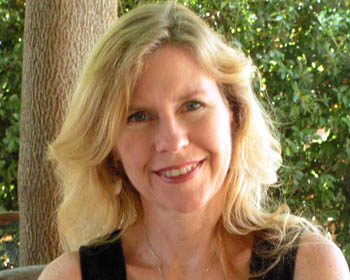
Susan Straight recently appeared on The Bat Segundo Show #367. Ms. Straight is most recently the author of Take One Candle Light a Room.

Condition of Mr. Segundo: Exploding Roman candles overlooked by the elite.

Author: Susan Straight

Subjects Discussed: [List forthcoming]

EXCERPT FROM SHOW:

Straight: I think what I’m trying to say about America is that it’s a series of villages. And everyone has a village. Again, people stay or people leave. But the idea that Americans want to forget that you come from a village — whether it’s the Upper East Side or Clackmannan Parish — that’s your village and you have to honor it. Fantine is the ultimate rootless traveler who goes on the road trip from hell with her father. Her father was really a pivotal character to me. I thought about Gustave and Enrique for months before I wrote this. And I wrote two short stories about them. The way that they became brothers was based to me on a true story told to me by an elderly neighbor. He came to my house for me to write letters to him. Because he couldn’t read or write. And I wrote letters to the VA. He was missing a little finger from the Korean War. And he was still trying to get money for it. And I grew up with his son. So he would come to my house. And I would write letters for him. And one day, we were sitting on the porch. And he told me this story of how he was an orphan. I mean, his dad was killed when his mom was pregnant with him. And he was seven years old. And he was hungry. And he wanted some meat. And nobody would give him any meat. No one would go get any meat. So he took a hammer. He walked three miles. He found a pig on a farm, killed it, dragged it three miles back to his house. Seven years old. And said, “Cook me some meat.” So that to me — the Enrique/Gustave — those are the men that I grew up listening to their stories of immense deprivation. Of walking fifty miles to go find a job. Of not ever having a mother and father, and making themselves into brothers. So that meant a lot to me too. That family at the end of the Clackmannan Parish Delta would say, “We’re still here.” It doesn’t matter what you do to us. We will still be here. Enrique was a big part of that for me.

Correspondent: Related to this desperate hunting, I have to ask you: Where did you get the idea of wrapping bacon around a gunshot wound as a home remedy? I asked a forensic science masters. I asked a medical student. And they had not heard of this. And I had not heard of this.

Straight: (nodding her head)

Correspondent: Aha! You did.

Straight: My mother-in-law told me that. My mother-in-law, I miss her so much. She died the year that that youngest child was born. And the last thing we whispered in her ear was that I was pregnant with her third granddaughter of our family. I mean, she had twenty-five grandchildren. My mother-in-law could have been born in Mississippi. She could have been born in Arkansas. She could have been born in Calexico. Nobody ever knew where she was born. We had to get her a birth certificate when she was fifty. My mother-in-law told me that when they were so poor — probably in Mississippi — that you would wrap bacon around the wound or salt meat. More likely salt meat. And that the salt pulled out the infection. She told me that when my children were really, really young. I mean, I knew her from the time I was sixteen on. And [my daughter] Rosette had this horrible infection on her leg. And we couldn’t figure out what it was. And we had tried everything. Antibiotics. Everything. One night, it was as if my mother-in-law spoke to me. And I had a piece of maple cured bacon. Farmer John. Stupid maple cured bacon. And I took that part. And I put it on Rosette’s wound. And I wrapped a dish towel around it. And the only thing I had to tie it with was Christmas tool. Like wrapping ribbon.

Correspondent: Wow.

Straight: She kept it on all night and all morning. Pulled it off. And the infection came out with the piece of bacon. It was the most disgusting thing you can imagine. And her wound healed over. And I just thought, “Okay, this is Alberta telling me what to do from the beyond.” And that’s exactly where that came from.

Correspondent: I’m shocked that, if this has happened, no mystery novel has picked this up. Or anything like that.

Straight: Exactly!

Correspondent: It sounds like the coolest way to get rid of a wound.

Straight: I took her to the dermatologist, who was Chinese. And she was like, “No, that’s not true. That’s not true at all. It couldn’t have happened.” And she dug a big hole in Rosette’s leg after that. And Rosette has a horrible scar now.

Correspondent: Oh wow.

Straight: So for us, the bacon. We should have just stuck with Grandma Alberta.

Correspondent: Quite literally, you must bring home the bacon.

Straight: Well, the sad thing is that that is one of those folk remedies that was passed down to me from my mother-in-law. Along with the title of the book. Take One Candle, Light a Room is something I’ve heard some older women say at some family reunion. And someone said, “Oh, is that your only child?” And she was like, “Take one candle, light a room.” And I was like, “Wow.” That’s the best phrase I could ever imagine. In a kind of defiant way to say, “Yes, I have one child. And that’s all I ever needed to make my life.” So everything I’ve been given like that is kind of like a gift from listening, I think. I’m the person who listens.

The Bat Segundo Show #367: Susan Straight (Download MP3)
This text will be replaced

The Bat Segundo Show: Matthew Sharpe II

Matthew Sharpe appeared on The Bat Segundo Show #358. He is most recently the author of You Were Wrong. He previously appeared on The Bat Segundo Show #132.

Condition of Mr. Segundo: Abandoning the animal experiment.

Author: Matthew Sharpe

Subjects Discussed: [The truth of the matter is that there doesn’t appear to be enough time in the day for me to summarize subjects anymore . Again, I am sorry and can only offer the lame “forthcoming” answer. Please beat me with a pool cue should we next meet, if this proves unsatisfactory for your capsule needs.]

EXCERPT FROM SHOW:

Correspondent: Does this improvisational nature explain in part why the book is so violent? I mean, it has the rather extremely creative usage of a pool cue against a gentleman’s head. Which I thought was a very idiosyncratic form of violence. I’m curious why the book was so violent, number one. Number two, how you settled on the pool cue to the head?

Sharpe: Um…

Correspondent: That’s not an easy thing to do, you know. The head is going to move around.

Sharpe: It’s not an easy thing to…

Correspondent: To hit the head, yes.

Sharpe: To brain someone with a pool cue?

Correspondent: Yeah, I know.

Sharpe: Well, if it’s an old guy and he’s not expecting it. (laughs) Let’s see, why was it so violent? That’s a really hard question to answer. I really — it’s not a part of my temperament as a social being or even as a private individual in this house. For whatever reason, when I write fiction, I guess I’m on the lookout for conflicts. And in some way, pain and impediments — as my friend the writer Lynne says, the body is the first and last metaphor. And if you want to show someone in difficulties, show somebody whose body is being impinged upon.

Correspondent: But you also are playing a bit of a marionette with these characters — the characters serve as marionettes. Because you often have Sylvia, for example, you are extremely specific about the way she sits on the bed, about her posture. And speaking of the body, there’s also much imagery with the face. Particularly with relation to Karl and how he views people. In fact, one of the curious things about this book that I have to ask you about is that Karl perceives Sylvia only in terms of the color and the generic item of clothing. Like “a blue shirt” and “an indigo bra” or what not. And that goes on throughout the entire book. There’s probably about seven or eight of them. So how did you arrive at that generic syntax? That shorthand for Karl perceiving Sylvia? And what of this idea of these characters placed in very specific forms of posture? I mean, to some degree, it’s very hyperspecific. To some degree, it’s almost mathlike in its generic description as well. From Karl’s perspective.

Sharpe: Yeah. Wow, you notice stuff that nobody else notices by the way. So I have to think about these answers. But I just actually want to circle back to a question I didn’t answer, which is the pool cue. You know, I really wanted to place the pool table and the piano next to each other. Because I wanted this very much to be a novel about a bourgeois home. Of the kind that I grew up in. Though luckily I didn’t grow up with the kind of family that Karl had.

Correspondent: (laughs) I would hope not!

Sharpe: But I was thinking at that moment of the beating on the head of John Millington Synge’s Playboy of the Western World. Which I’m sort of deciding whether to give away a major plot surprise. I think I probably won’t give it away. But that’s a play in which a guy walks into a bar in a strange town at the beginning, having just beaten his father with some kind of implement. I can’t remember what kind. But he beats him in the head. And so I was thinking, okay, how do I transpose Synge’s rural Irish play to Long Island at the beginning of the 21st century? And I thought, okay, I actually can’t remember right now what he beats him with. Maybe a farming implement? So I’m thinking, okay, what would be handy in a house like this? So that’s the answer to that question.

About the careful description of the people’s bodies and their posture, I think I just became fascinated through Karl’s eyes with the body of his beloved. Which he is very, very attuned to. Because he really, really digs it. And he’s constantly looking at it. He just is fascinated by her body. And Karl knowing in a sense that maybe he has something like what we could call Asperger’s. Or some kind of weird disorder where he’s not very good at reading faces. He’s always trying super hard to read faces and he really thinks, “If I can only learn the vocabulary of facial expressions, I will finally be able to decipher what the hell people are ever intending toward me.”

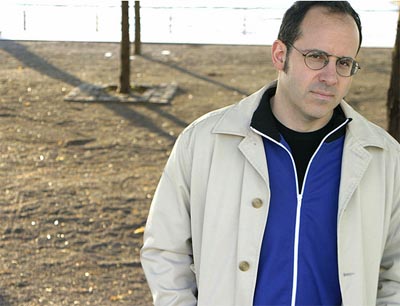
(Image: Felicia C. Sullivan)

The Bat Segundo Show #358: Matthew Sharpe II (Download MP3)

This text will be replaced

Video: Bat Segundo Visits the 2010 Brooklyn Book Festival

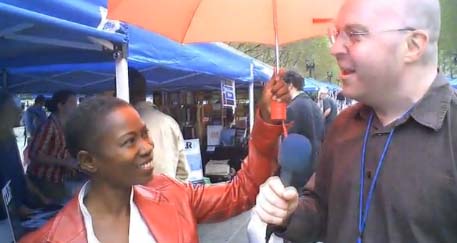
On Sunday, September 12, 2010, Bat Segundo — or some gentleman claiming to be him — went to the Brooklyn Book Festival to conduct some slipshod journalism. While Mr. Segundo did catch sight of a television truck, he did not observe any attractive reporters walking the quad and talking to the many amicable literary people who had taken the time to congregate in the rain.

Fearing that there was a journalistic vacuum, Mr. Segundo attempted to fill in the gap. He did not know how to hold an umbrella and asked the authors to do this for him.

In his first interview, Bat Segundo met up with Karen Lord, a very friendly woman who happened to be a novelist. She identified herself as the author of Redemption in Indigo, a novel put out by Small Beer Press. Mr. Segundo learned more about the book, but proceeded to complain about New York literary snobs who look down on genre. Despite this apparently egalitarian position, Mr. Segundo failed to understand his philosophical hypocrisy when considering who was actually holding the umbrella.

More rain poured. And Mr. Segundo had more interviews to conduct. The precipitation did not deter Mr. Segundo’s efforts to talk with Sean Ferrell, the author of a novel named Numb. Mr. Ferrell had a booth of his own — quite far away from the Harper Perennial booth. Yet while Harper Perennial had a tent covering, Mr. Ferrell was provided with no such protection, save for a dutiful smile and a can-do attitude. The two gentlemen discussed the weather and just what it takes to attract a literary crowd on a rainy day. He too proved unexpectedly cooperative in holding the umbrella above Mr. Segundo’s head.

In the early afternoon, Mr. Segundo accosted a very excitable gentleman named Michael Northrop. There was apparently something called a “flashmob” set to go down at the stroke of two o’clock. And Mr. Segundo had the good fortune of arriving only a few minutes before the momentous clang! He remained uncertain as to what a flashmob was, but he was informed that some fly-by-night outfit called One Story had set it all up.

The Bat Segundo Show: Scarlett Thomas II

Scarlett Thomas appeared on The Bat Segundo Show #357. Ms. Thomas is most recently the author of Our Tragic Universe. She previously appeared on The Bat Segundo Show #117.

Condition of Mr. Segundo: Unusually pedantic about modifiers.

Author: Scarlett Thomas

Subjects Discussed: [List forthcoming]

EXCERPT FROM SHOW:

Correspondent: I wanted to address one review. Jessa Crispin in The Smart Set. She said, “Well, you adhered to the two laziest storylines that the world of fiction has ever thrown up. Love Conquers All and Secretly a Princess.” But to my mind, I thought this was a severe misreading and misunderstanding of the book. I mean, the book is very much concerned with how narrative must rely on contrivances in order to present life. On the other hand, when you have, for example, the deus ex machina of the magic money appearing in Meg’s account, this is something of a risky proposition for someone who is accustomed to the page-turning of your previous books. So I’m curious as to how much you worried or agonized over this, coming off of a fairly substantial success — particularly in the UK and particularly here among bloggers and the like. Did you just not care? Or did you worry about people misreading this? Because you’re presenting narrative within narrative within narrative and some people are clearly not picking this up.

Thomas: Yeah, I mean — God, there’s quite a lot there. I read the Jessa Crispin piece and I feel quite frustrated with it. Because the reading that she presents is the reading that’s set up for you in the book. That, in fact, it’s one character’s analysis of what’s happened. But the book sets it up as probably wrong. The reading that’s there –- I mean, this is just my own reading. Everybody is welcome to read it the way they like.

Correspondent: Sure.

Thomas: But the idea is that you actively go through and think, “Oh! Aha! So it was the cosmic ordering that gave her the money. And then this and that and the other. Oh my god, everything’s prearranged. And there’s no free will and everything’s perfectly placid. And it’s just like Kelsey Newman. Do I actually want to live like that? Or would I rather read it a different way?” So that’s what you’re supposed to be doing with those ideas. And Jessa seems to have stopped a bit too early. The money device – it’s not really a deus ex machina. Because Meg has written these novels. And they have been optioned for TV. And she has got the money for it. And I think, as most writers know, you do these things. And everybody’s always talking about optioning this and optioning that. And you might get some money. And you never do. And one day, you open your online banking. And there’s some money. And it does kind of change your life. For me, The End of Mr. Y did so well in the UK and Europe that there were days when I’d open up my bank account and think, “Whoa! Where has that come from?” For the first time in my life. Because, you know, I’ve always been pretty poor. And I wanted to try and write out that experience of suddenly having some money. But, of course, it’s really hard to do in a novel. Because the novels are supposed to be about drama and struggle and conflict, and somebody striving. You’re supposed to get the money at the very end of the book. I wanted to play with the idea of getting the treasure in the middle. And then what happens to life after that? But I have to say that Meg is not really a princess. Not for me anyway. What was the other thing?

Correspondent: I was going on about how narrative has to rely on contrivances to some degree in order to represent life. But to phrase that in light of your last answer, what I think we’re talking about here is the problem with coincidences, which occur in reality and life all the time. And yet when you put them into a novel, then, all of a sudden, it seems like “Oh, that can’t possibly happen!” And that’s the problem with structure, I suspect.

Thomas: Well, you see, another thing I’m trying to do in the novel – maybe not so obviously; well, maybe it is obvious – is to look at coincidence. Is the world and our experience of it – is that somehow structured in a scientific or positivist and rationalist way? Is it structured on the spiritualists on some level? Because that’s also a structure that’s imposed. Is it completely random? Or the fourth option – I may have just said there are three.

Correspondent: Well, that’s okay. We’re not counting.

Thomas: (laughs) Yeah, I don’t think you can count. But the fourth option is more interesting to me. And I think that there is no structure. But there are lots of people who are aware of lots of different structures. Which is interesting. And there are things that happen that aren’t pure coincidence. So that things don’t just happen out of nowhere. But they happen through plots or series of events leading up to that that are so minute that you almost can’t see them. So, for example, towards the end of the novel, Frank and Vi turn up miraculously on the River Dart, where The Beast maybe is, and end up taking place in some action there. And for me, I really liked putting them there. Because I thought they were there because they read Alice Oswald’s poem about the Dart. So it’s not that they weren’t there randomly by complete chance. Everybody does everything for a reason. I’m really interested in that. And so looking at the reasons for why people do things, and why that might lead to something else, that’s what’s really fascinated me in this book. So I really don’t believe in complete coincidence. I believe in choices and desire and motivation of characters, and just how interesting it is when you look at the tiny aspects of that.

Correspondent: You’ve created almost by necessity, however, a system. And life is what happens when you make other plans. So I’m not certain if I entirely buy your causist explanation for these characters. Because I think you also portray much of the attempt to explain the universe, or explain the world around us, as a trap. And a way to avoid living without absolute cognizance. So I’m curious about how you managed to depict this double-edged sword here.

Thomas: Yeah, it might. I don’t know. I mean, you don’t have to buy it. But it’s absolutely how I wrote the book. That okay, on some level, when you write a novel, you do have to impose some kind of scheme on things which don’t have a scheme like that. You need a beginning, a middle, and an end. You need to choose when you take up with the carrots. When you let them go. All of that. Yes, you do impose a structure. But for me, one of the most interesting moments in the book was when I realized that Arthur Conan Doyle, when he believed in the Cottingley Fairies. For him, the fairies were more believable than these working-class girls who could actually forge pictures of fairies. I found that so fascinating. Because for that to be your explanation – because it was impossible for him to believe in the motivation of the girls, for him to think his way into their lives and the way they would have planned something, wasn’t just a coincidence. They didn’t just happen upon the pictures. They actually made them. And that’s a wonderful thing to imagine. I think it’s great and so inventive. And then, for him, it was easier to believe in the fairies. For him, the more believable plot or the more believable story is that the fairies exist. And, for me, that was a really central image in the whole book.

Correspondent: So even if you don’t clutch to the Kelsey Newman-like idea, you still can find solace in either the Conan Doyle fairies or, as Meg has in this childhood flashback, where there’s this guy who says, “I can teach you magic.” Which is interesting in light of the fact that her father is very much about finding an explanation for the universe with numbers. And so it seems to me that the burden of these characters is very much to find any kind of explanation –- or even the self-help books that Meg must review for this particular column. That this is really the onus for almost all the characters. Either that or you have the option of just tossing your car into the river.

Thomas: Yeah, absolutely. I’m fascinated with the process of looking for explanations for things, and understanding things scientifically. Which has always been my urge. Even though I’m not into the kind of — this nouveau atheist movement is not my thing at all. Because any explanation that makes sense would be okay for me. Usually it’s a kind of scientific explanation. Sometimes, it’s not. But if I’m up in a plane, I want to know how it flies. I want to know why I’m not crashing.

The Bat Segundo Show #357: Scarlett Thomas II (Download MP3)

This text will be replaced

The Bat Segundo Show: Mary Robinette Kowal

Mary Robinette Kowal appeared on The Bat Segundo Show #356. Ms. Kowal is most recently the author of Shades of Milk and Honey.

Condition of Mr. Segundo: Confusing magic with milkshakes.

Author: Mary Robinette Kowal

Subjects Discussed: [List forthcoming]

EXCERPT FROM SHOW:

Correspondent: I wanted to start with the specific language in this book. The specific Jane Austen template that you laid out. You took great care to mimic Jane Austen’s particular spellings. You used chuse with a U instead of choose with double O. Shew instead of show. Surprize and teaze spelled with a Z. But on the other hand, you didn’t, for example, hyphenate today. And things along those lines. And nuncheon! Jane Austen never used nuncheon!

Kowal: That’s not true. She used it twice.

Correspondent: When? And where?

Kowal: She used it in Lady Susan and Sense and Sensibility.

Correspondent: Ah, okay. Well, in any event, the hard choices of vocabulary. I wanted to first of all start with how this came about. Why go ahead and emulate this language? Was the idea here to create a series of limitations with which to approach a long-form novel? What came first here?

Kowal: I thought that language reflects society very closely. The reason I wound up using some of her spellings, it’s really an affectation. I am trying to pretend that this is something that could have been written then. I deviated from her spellings in places where I thought it would be confusing. In places where I didn’t feel the word was going to appear often enough for a reader to get used to it. An example of a word that was confusing was that she spelled stayed – like stayed at home – S-T-A-I-D.

Correspondent: That’s right.

Kowal: Which is a different word now. The word sofa appears, I think, once in the novel. And she spelled it S-O-P-H-A. And there’s not actually a reason to stop people. I actually thought that they were going to make me change all of the spellings. But I guess you can think of it as dressing up in Regency clothes, but remembering of course that it’s still going to a costume party.

Correspondent: By “they,” are you referring to Liz Gorinsky?

Kowal: Yes.

Correspondent: Or the copy editors?

Kowal: Well, Liz Gorinsky. The production department. I thought that someone in the editing line was going to say, “Hey, we need to change that.” The copy editor, once we had decided with Liz and marketing to keep the spellings — and we did lift out some of them – then I gave the copy editor a style sheet that said, “These are the correctly misspelled words. Please do not change them.”

Correspondent: Which words didn’t make the cut? I’m curious.

Kowal: Sopha. Staid. All of the to-days and to-morrows.

Correspondent: Oh! So those were originally spelled that way in your original draft.

Kowal: Yeah.

Correspondent: Okay. Wow.

Kowal: I can’t remember what some of the others were. But I did a find/replace. I can’t remember where I found it, but I found a Jane Austen spelling list. And I went through and did a find/replace on everything. And then they went back and undid that. So it’s funny. There’s a couple of places. I know that there’s at least one chuse that we missed and it’s still spelled with two Os. But you know.

Correspondent: Well, goodbye to that, I suppose.

Kowal: You know. Second edition.

Correspondent: Well, this is interesting. Because I’m wondering if it took you several practice tries to write in this particular meticulous style.

Kowal: I would read a chapter of Jane Austen and then write a chapter of Jane Austen. So I was reading Persuasion while I was writing this. And one of the things I picked up from the puppetry is that I frequently have to mimic somebody else’s style. So once I decided to do this, I sat down and started reading Austen. And then the reason that I was writing right after finishing reading a chapter was because I knew that the language would stick and the rhythms would stick. But I don’t really think I did a practice run.

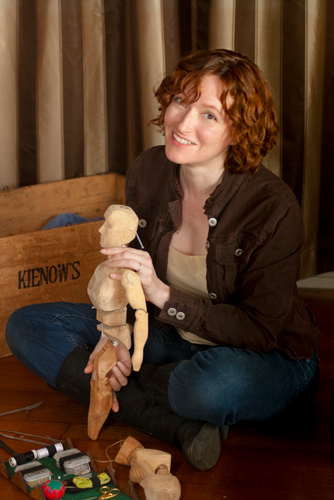
Photo: Annaliese Moyer

The Bat Segundo Show #356: Mary Robinette Kowal (Download MP3)

This text will be replaced