New Directors/New Films: Beautiful Darling (2010)

[This is the second in a series of dispatches relating to the New Directors/New Films series, running between March 24, 2010 and April 4, 2010 at MOMA and the Film Society of Lincoln Center.]

“You must always be yourself, no matter what the price.” — Candy Darling’s diary

Candy Darling — born James L. Slattery — was arguably the most intriguing of Andy Warhol’s fearless thespians. She was not only talented enough to dupe The New York Times‘s critical acumen (“this is the first impersonation of a female impersonator I have ever seen,” read one of the Gray Lady’s reviews), but she inspired Lou Reed to write one of his most famous songs and Tennessee William wrote Small Craft Warnings for her. But was Darling, who died of lymphoma at the needlessly young age of 29, truly herself even while charming the thriving New York art scene of the late 1960s and early 1970s?

A fascinating new documentary, Beautiful Darling, produced by Darling’s friend Jeremiah Newton, doesn’t entirely answer this question. But it does offer an invaluable perspective on what it was like to struggle as a transsexual during that time. If the film errs on the side of cautious hagiography, it atones for this understandable partisanship by highlighting some too easily forgotten truths, pointing to certain liberties and folkways now taken for granted. Female impersonation was a dangerous criminal charge during the time, considered an indecent aberration that was doggedly upheld by the police. Drag queens were forced to carry their sartorial bundles during the day and change clandestinely within buildings. The empowering compromise one could get away with, as identified in the film by Agosto Machado, was “a little mascara and a mohair coat.” Triumphant bon vivants would happily shout the name of Gay Street at the intersection of Christopher. New York, now a less tolerant playground for the rich, was then considered, as Fran Lebowitz suggests in the film, “a place for people who couldn’t fit in. People who actually did something that nobody was interested in.” Speed was heavily ingested. Bohos and misfits were often forced to find their meals at parties thrown by the affluently curious, taking home the remains for tomorrow’s lunch.

Darling thrived within this harsh yet permissive climate, attracting a league of potential dates and hanging out in the permissive backroom of Max’s Kansas City, where the squares couldn’t make it past the velvet rope. But the seeds for this twentysomething transformation were sown in Massapequa Park, Long Island, where a young Darling waded through movie magazines, spent an entire day staring at a Kim Novak photo, and endured a nearly soul-crushing wave of isolation. In Beautiful Darling, the diary entries — the words solipsistic but uncompromising — are read by Chloe Sevigny. One harrowing photo that accompanies these narrations, showing a pre-Darling Slattery with a painful look on his face, his arm gripped by his mother, is more than enough to convey a sad backstory. Thankfully, additional details are filled in beyond these primary sources. Aside from the film’s many interviews, which include numerous Factory acolytes and Warhol’s decidedly unnerved former secretary, by Newton’s many interviews in the mid-1970s, conducted after Darling’s death. We learn that Darling’s mother married another man who was anti-gay. An anonymous Long Island acquaintance declares her hatred for Darling, once she saw her adopting her truer identity.

But was Darling’s identity genuine? Or some compromise? The film delicately tiptoes over these questions, but it does point to Warhol’s eventual abandonment of Darling so that he can cash in on the forthcoming yuppie-fueled lucre. He later proved, as one former associate puts it, more interested in selling ads for Interview. Darling declares in her diary, “I’m not a genuine woman. But I’m not interested in genuineness.” Yet Darling was driven to Warhol as a genuine benefactor. The Factory’s obsessiveness with pop culture served as a vital surrogate for Hollywood, even if the remunerative pickings were slim (merely $25 to appear in a Warhol scene). There seemed no other place for Darling to thrive. But she was dogged enough to make this difficult situation work, even after being shunned by Warhol. She proudly boasted that she collected no money and would crash on friends’ couches, sleeping until six or seven at night.

“I must conquer New York or be conquered,” wrote Darling in her diaries. It was a daring ultimatum that seems unthinkable for most artists of her type today. After seeing this film, I wondered what Darling would have made of herself had she lived longer. Would she have been co-opted by marketing forces during the Reagan years? Would she have been shunned further? Darling claimed that she wanted to be loved, but one wonders whether the pop cultural construct and the tolerance would have expired. Beautiful Darling works so well because of the way it quietly reveals the unforgiving characters within alternative culture. If you write off or forget the misunderstood, or you’re too busy designing soup cans or collecting corporate revenue, are you really all that different from a narrow-minded stockbroker?
Review: Cop Out (2010)

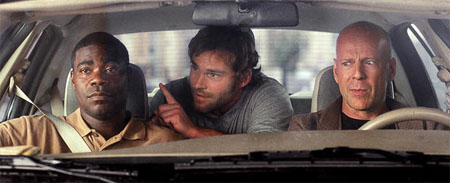
As suggested by Peter Biskind’s Down and Dirty Pictures, Steven Soderbergh initiated his “one for us, one for them” plunge into the Hollywood ocean with 1998’s Out of Sight. Richard Linklater’s occasional dips began with 2003’s School of Rock. Both were perfectly respectable movies, but it wasn’t much of a surprise when these distinctive directors’s later compromises floundered. Now Kevin Smith, a tardy arriviste into the strange club of indie filmmakers turned hired hands, has copped a Hollywood feel with Cop Out, a buddy movie that so desperately wants to be Beverly Hills Cop or Fletch (even composer Harold Faltermeyer has been coaxed out of near-retirement to score this flick), but that squeaks like some by-the-numbers franchise sequel co-directed by Brett Ratner and Abraham Zapruder. Cop Out is a hack movie directed as if it were a home movie, a big shaggy dog that really, really wants to be loved. One feels a bit embarrassed watching Smith attempt to put together a car chase, relying on a routine vehicle spin to win some half-baked sense of excitement. And the film’s firm commitment to choppy amateurism is equally evident in the sloppy attention to detail. There’s one scene where, in a stunning display of shoddy script supervision, a slice of pizza disappears from Kevin Pollack’s right hand. In a later shootout, there’s a lazy nod to John Woo’s double-fisted gunning. The visual palette is, as expected, little more than static shots and long takes, with half-hearted efforts at a TV-friendly color scheme. A primitive amber aura for a restaurant showdown. Willis backlit by blue in a bar. These are a student filmmaker’s templates. With eight feature films under his belt, the fair pass that Smith has received for this type of shoddy camerawork must end. It doesn’t help that Smith has this tendency to film his actors with all that dead space at the top of the frame, as if these characters are awaiting some comic book caption or the audience is enduring some bumbling community theater production.

On the other hand, if the Hollywood hostlers give you a cliche-ridden horse (“These assholes are crazy, brother,” reads one of the unnecessary Spanish subtitles) saddled with dated cultural references (the first ten minutes is a tedious farrago of movie quotes and the film’s later use of “All your base are belong to us” is so 2001), why not direct it like a home movie? Unlike Brett Ratner’s films, one can safely assert that home movies emerge from good intentions. Smith is known for badgering his poor actors into highly specific and highly unnatural line delivery. But Bruce Willis, perhaps because he is too big a star to be prodded by an unambitious filmmaker, plays a very good straight man. He reacts to the anarchy around him with John McClane-like head cocks and James Cole-like introspection. Tracy Morgan, whom I’ve long suspected is more than the loudmouth immortalized on 30 Rock and Saturday Night Live, is refreshingly played against type. His character is given numerous opportunities to spout obscure facts and his monologue with a teddy bear nannycam should not work as well as it does. The material is weak, but Morgan thankfully isn’t. Worrying about his wife’s possible infidelities, Morgan momentarily turns a character who might have become a stock wiseacre into a bustling bundle of neuroses. The film is also wise enough to cast the ass-kicking Susie Essman in a small role. Unfortunately, the underrated Seann William Scott, who showed that he was far more than Steve Stifler in the little-seen 2008 film, The Promotion, is given very little to work with.

I can’t say that I hated this movie — certainly not as much as the people around me. But I also can’t say that I loved the movie either. I’m as fond of crass humor and dick jokes as the next guy. And to ensure that I absconded with any lingering pretensions, I took along the thriller novelist Jason Pinter to the screening. But he felt the same way. While there are a few funny moments, there isn’t a single gag in this movie that is as creative or as funny as Axel Foley stuffing hot dogs up a tailpipe. And while Morgan may have energy, despite my praise for what he does with the material (including a funny scene where he insensitively crunches on tortilla chips), he’s simply not given much of a character to work with. Sitting in a hotel room with a sexy woman has only so many variations before the material gets old. And say what you will about 1985’s Fletch, but Chevy Chase owned that role, even if the script wasn’t nearly as good as Gregory McDonald’s books. Willis may anchor this movie with his serious presence, but because Cop Out hasn’t been written to fit Morgan, what should have been a breakout role for him devolves into more of the same. He’s far more interesting than Chris Tucker, but, unfortuantely, thanks to writers Robb Cullen and Mark Cullen, he’s just as forgettable.

Smith, of course, came very close to rebooting Fletch for the big screen, with Jason Lee set to play McDonald’s famous reporter. And the closing credits, just before a scene set in a morgue, grace us with Stephanie Mills’s “Bit by Bit,” the theme song from Michael Ritchie’s 1985 movie. Clearly, Cop Out, a film that more than lives up to its title, must have appealed to Smith as a fun substitute for the aborted Fletch remake. (Indeed, Smith took a reported pay cut to ensure the R rating, although the film flinches from depicting violence and is about as safe as a PG-13 movie.) But if Cop Out is the lackluster result, it appears that audiences may have dodged a bullet.

Review: Happy Tears (2010)

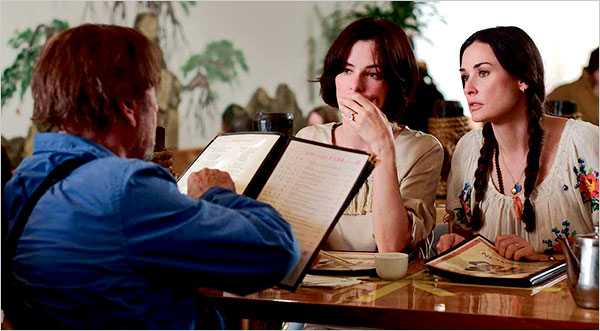
It is difficult to muster much enthusiasm for Mitchell Lichtenstein’s latest film, Happy Tears — in part because Tamara Jenkins gave us the similarly-themed The Savages three years ago, a remarkably moving film about middle-aged scions learning to care for a decaying father — and in part because Lichtenstein strikes me as an insensitive dilettante all too happy to humiliate the talent he has at his disposal. I could very well be wrong, but a gnawing feeling kicked in upon seeing Rip Torn, a talented actor who has had a series of alcohol problems preceding this film’s production period, cast as an alcoholic man climbing into the rough crag of dementia with two near-the-hill daughters. It continued with Ellen Barkin, a talented thespian who, like many aging actresses, has had an army of surgeons carve up her face into something bearing little resemblance to natural physiognomy, cast here as a cartoonish junkie. To a lesser extent, it carried on with Parker Posey, an enjoyable indie film queen whose peppy demeanor has worn a bit thin, who is cast here as a flighty and imbalanced woman wanting to pop a baby with her flighty and imbalanced husband. There’s one point in the film where Lichtenstein is so desperate to pound home this tired character trope that he places a denuded Posey in a cheap-looking CGI aura, the result of drugs, where a voice chants, “Everything turns out for the best.” If that isn’t a desperate deus ex machina originating from an “artist” uninterested or incapable of examining human behavior, then I don’t know what is.

But I’m straying a bit from my point. Torn, Barkin, and Posey were certainly complicit in taking these roles. Still, from an ethical standpoint, it seems to me that a writer-director, working in an occupation that involves protecting the actors, bears a sizable responsibility for ensuring that his cast is given the best opportunities to demonstrate why we marvel at them in the first place. If a director has any decency, he will be aware of where an actor is presently situated in the careerist food chain and will do his damnedest to accommodate. Even Quentin Tarantino, doped up as he is on too many movies, has sought second chances for his overlooked actors. No such luck with Lichtenstein. Judging by the needlessly glossy press booklet I received from the amicable publicist, and from Lichtenstein’s ability to nab Demi Moore for this film, I’m guessing that Lichtenstein made this movie shortly after running into a bit of money from his father’s comic book painting magic. Again, I could be wrong. But I was so underwhelmed by this film that I’m too lazy to Google it. Still, let’s go with it. If Happy Tears (rather than A Single Man) is the result of such lavish self-financing, then perhaps the presentation of connective failings isn’t always compatible with the unfettered expansion of purse strings.

There’s a plotline in this film involving Torn’s character hiding some buried treasure somewhere in his Pittsburgh backyard. One gets the strong sense that this reflected Lichtenstein’s muddled creative process. When Posey’s character divests the family home of furniture, instead of being drawn into the film, I envisioned Lichtenstein tapping away at the keyboard, wondering how he could squeeze some life out of this minimalist situation (and failing). The characters are given cardboard-thin domestic situations with which to mutter predictable lines. Lacking the ability to make these characters pop, Lichtenstein tosses in random backstory (both daughters stripped at one point; dad slept around) that is presumably intended to shock, but that draws additional attention to how one-dimensional these characters are. He can’t even capture Alleghany County very well. He throws his characters in flat-looking Chinese restaurants, but lacks the contrapuntal ability to extend his visuals beyond the mundane. This seems counter-intuitive, seeing as how Lichtenstein wants to make a greater point about what it takes to move forward and stay relatively sanguine when you regularly have to clean up your father’s shit (quite literally). Altman would have made something of this. But Lichtenstein, despite appearing as one of the fresh Vietnam recruits in Streamers, is no Altman. I don’t even know if he’s even a real filmmaker.

New Review: Gail Godwin’s Unfinished Desires

My review of Gail Godwin’s Unfinished Desires appears in today’s Chicago Sun-Times. Here’s the first paragraph:

Over the past half-century, the extreme religious right, as documented in Michelle Goldberg’s Kingdom Coming, has transformed certain fidelities about faith into snaky traducements that resemble a spastic Tex Avery cartoon. This surrender of common sense has sullied the more sober connections between spirituality and American life, creating an exploratory reticence among novelists that has softly settled into the cultural berm. But Gail Godwin, one of American literature’s best-kept secrets, has quietly eked out a thoughtful bypass in which orthodoxy and human folly are often entangled.

You can also listen to my recent interview with Godwin on The Bat Segundo Show.

New Review: Charlie Huston

I’ve interviewed the extremely entertaining writer Charlie Huston twice now for The Bat Segundo Show: once in 2007, where Huston rather devilishly attempted (and failed) to employ a minor Yojimbo between the good Rick Kleffel (also a Huston fan) and me, and again in last February (accompanied by a short video excerpt). But as funny and as enthralling as his last standalone novel was (The Mystic Arts of Erasing All Signs of Death, nominated days ago for an Edgar), Huston’s most recent novel, Sleepless, as I argue in today’s Barnes and Noble Review, represents a major step forward as a writer. Sleepless is an unusual fusion of dystopian cyberpunk, multiple perspectives, and fatherhood, and it really deserves more press. But, as John Fox has thoughtfully observed, today’s book reviewers have permitted idiosyncratic gripes and personal prejudices to intrude upon the sheer pleasure of reading. Small wonder that genre gets ignored or writers who attempt something different are castigated, and that today’s critics, with rare exception, remain about as adventurous as a company man too terrified of venturing more than six blocks away from his workplace during lunch hour.

Whether Huston will ever breach past these retroussé-nosed sentinels, now working themselves into a needlessly vigilant lather over Joshua Ferris’s sophomore slump, is anyone’s guess. The newspaper book review sections, for the most part, remain dull and uninviting in this volatile economic climate, too afraid to take chances or to offer space to thoughtful contrarians, and too diffident to hand over their column inches to anyone possessing even a modest strain of passion. But for those of us who still love fiction, and who can still remember the first time they were excited by a novel, I’m here to tell you that Huston is the real deal. In just five years, the writer who has savagely tortured animals and ushered his two series protagonists (bartender turned vigilante Hank Thompson and New York vampire Joe Pitt) through gritty and gleeful perdition is beginning to blossom before our eyes. As such, Sleepless is the first great novel I’ve read in 2010. And you can read why in today’s Barnes & Noble Review.