Posts by Edward Champion

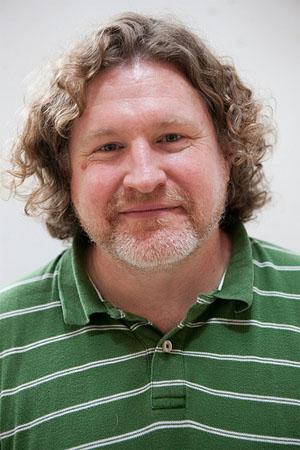
Edward Champion is the Managing Editor of Reluctant Habits.

Nitrous Oxide

Reality is a toxic oxidant that we inhale at least eight hours a day. We take in the redolent whiff of the shit-stained social contract that we never got a chance to revise or look over. Learn the language and you get lost in clauses, becoming one of the lawdogs barking a sweet song in court just after spooning oodles of corn-based sugar in a rushed breakfast of dry cereal. It is hard to dwell on this nightmare without sounding like a strident agitator. They’ve taken our passions and transmuted them into cliches. Those great quotidian moments are corrupted by the sharp clacks of harsh teeth clasping upon a small shred of meat that has to be chewed up to go around six times. The portions are wrong. The plates are big. The eyes are bigger. The stomachs grow. And any decent gesture is declared a collective and contrarian sully upon all the agents pumping savagely into the air.

Reality. Confess it and you’ll be deemed pathetic. Sing true only in code. Don’t mention the pennies you’re collecting from the insides of the couch. Don’t mention the finite nature of this sad copper supply. Bring up the Socratic method and you’ll see your queries misconstrued as endorsement. Your options are the limp pose of reason and the unsettling truth of passion, but never anything in between. The eccentric’s teeth is a bit crooked. Never mind all the good ideas she’s had. Throw her out on her ass. She’ll be homeless in six weeks. Then maybe she’ll change.

Can’t handle that? There’s plenty of fantasies and parallel universes to choose from. Take your pick. If you don’t have cash to nurse a beer in a bar or you can’t trust anybody, there’s always the men confessing their private griefs to strangers over the microphones during a first-person shooter. Be careful with what you disseminate though. It could be picked up later. They haven’t quite put a microphone on every street light. But that camera wasn’t there last year. That’s not paranoia. It’s reality. Or is that fantasy? Open your eyes long enough and you’ll believe they’ve stayed closed.

Simulacra are dangerous. But several realities run atop and intertwine with each other. There are cities within cities. People within people. Nobility within nobility. Boxes within boxes. It’s just a question of how far you want to dig, and most people are getting a bit tired with the shovel.

Effects of nitrous oxide: dizziness, depersonalization, analgesia. We could all use a little analgesia right now, right? But who will narc on the narcotics? When the rubber bullets send you to a rubber room, the linguistic symmetry becomes a discordant shock to the system. We talked of the Bush Doctrine, but nobody knows the Obama Doctrine. They raise their voices with hysteria and the truth gets confused with lunacy. Hold the line. Love isn’t always on time. Freedom’s just another word for nothing left to lose, but that was forty years ago. When nouns were customizable shoes rather than rigid marketing terms. Hope. Just do it. Dance your ass off. Who wants to be a millionaire? Who really can be a millionaire?

Freedom of Assembly

Pittsburgh Post-Gazette: “‘It was all students and no protesters — it looked like any Friday night in Oakland but with more people,’ said Nathan Lanzendorfer, 23, of Mt. Lebanon. He went to Oakland out of curiosity to see the protests. Shortly before midnight he was caught on Forbes Avenue, with police deploying OC gas from two directions.

“He was hit with a rubber bullet in his right leg and his left, started to run, and was then hit in an arm and his lower back.

“‘I never heard any warning to leave the area — all four [rubber bullet] shots were within five seconds,’ he said. ‘All the wounds on my back. If I was opposing [the police] at all you’d think I’d have a front wound.’

“Mr. Lanzendorfer went to UPMC Presbyterian for treatment of his contusions, one of which is softball-sized, he said.”

The Bat Segundo Show: Nicholas Meyer

Nicholas Meyer appeared on The Bat Segundo Show #310.

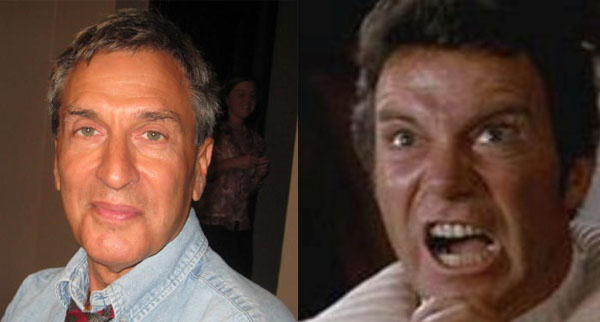
Nicholas Meyer is perhaps best known for his work on Star Trek II: The Wrath of Khan. He is most recently the author of The View from the Bridge.
segundo310

Condition of Mr. Segundo: Ah, listener my old friend, do you know the Klingon proverb that tells us revenge is a dish best served cold?

Author: Nicholas Meyer

Subjects Discussed: Lotus positions, talking back to prescience, writing books when the Writers Guild goes on strike, Samuel Johnson, the origins of The Seven Per-Cent Solution, words as a place of retreat, William S. Baring-Gould, generating “scholarly” commentary, Meyer’s dislike of Sherlock Holmes movies, Watson being portrayed as a buffoon, using the old Warner shield for Time After Time, the unusual opening shot of Time After Time and developing a directorial voice, Stanley Kubrick on the set of Spartacus, on-the-job training about cinematography, directing Ricardo Montalban, making specific choices, directors who don’t know what they want, the importance of understanding actors, finding distinct style with a preexisting Star Trek cast, William Shatner’s concerns on Star Trek II, the Coca-Cola product placement in Volunteers, responding to Ken Levine’s remarks on the scene that ruined Volunteers, Meyer’s problematic metrics with cinematic comedy, Black Orchid, whittling down the original draft of The View from the Bridge, being a script doctor on Fatal Attraction and determining Meyer’s precise involvement with the bathtub ending, calculating a film for an audience and the problems with doing so, how to write a good screenplay with Philip Roth’s source material, the differences between source material and other versions of the story, The Wizard of Oz, arguments about Dickens film adaptations, thoughts on Josh Olson’s “I Will Not Read Your Fucking Script,” The Avengers, and why Meyer’s frequent flyer miles are in the University of Iowa archive.
nmeyer

EXCERPT FROM SHOW:

Correspondent: You’re sitting in a rather strange lotus position.

Meyer: No.

Correspondent: Do you sit like this often?

Meyer: I’m not lotus actually.

Correspondent: Oh. Not lotus.

Meyer: You can’t see, but, underneath this table, my legs are stretched out in a very conventional position.

Correspondent: I’m sorry I wasn’t noticing your muscular legs.

Meyer: The anti-lotus.

Correspondent: How are you doing?

Meyer: I’m doing fine so far.

Correspondent: Okay. I had a question pertaining to recent events and also pertaining to your work and your tendency to have scripts mirror certain international events. I think, going back to Star Trek VI and Company Business, how real events tended to unfold in relation to those particular scripts. But simultaneously I might argue that you were prescient with one particular character in the Star Trek films. Most recently, as you’ve probably been reading the headlines or seeing various clips, a certain Congressman from South Carolina basically said something to the President. And I couldn’t help but think when that happened, Chekhov saying to Khan, “You lie!” Which I thought was quite prescient of you possibly. But simultaneously, in relation to Chekhov and Presidents, I should point out that Chekhov was able to correctly pronounce “nuclear,” whereas the previous President was not. So what do you attribute this linguistic prescience on your part?

Meyer: Well, talking back to prescience is like one of the weirder things that you can do. And I think the fact that Chekhov addressed Khan so disrespectfully in the well of the Botany Bay obviously qualifies him for a Federation reprimand.

Correspondent: Yeah.

Meyer: Does this address your question?

Correspondent: It sort of does. But it’s interesting that Chekhov could pronounce “nuclear” where George Bush could not. 43.

Meyer: The list of things that George Bush was unable to pronounce. In order to pronounce some of these things, I think you have to conceive of what they are first.

Correspondent: And Chekhov was able to conceive of what they were. I mean, it’s funny that Chekhov was the guy here. This could also have a lot to do with my own particular connections to your work and the larger canvas. But you did bring this up in your book and so I was tempted to infer many things in your scripts that possibly were intended or prescient or seer-like.

Meyer: Well, I think Chekhov’s remark clearly, as far as Congressman Wilson is concerned, is an accident. It was about thirty years before. And there are people who go around saying “You lie!” at the drop of a hat. Chekhov, I think, is more right than not when he accuses Khan.

Correspondent: Yeah. I also wanted to ask — just to go to a general question that isn’t so convoluted or so crazy. This particular book. Was this written during the writers strike at all?

Meyer: Yes.

Correspondent: It was.

Meyer: I write my books when the Writers Guild goes on strike. You’re not allowed to write screenplays. And I usually write it because I have to make money. And Dr. Johnson said a man is a blockhead who writes for any reason except money.

Correspondent: Yes. Well, that’s paraphrasing it a bit. But it’s close enough.

Meyer: Well, I got “blockhead” and…

Correspondent: You got “blockhead” and “money” definitely. Nobody but a fool wrote for money…

Meyer: For anything except for money, yes.

Correspondent: I think I’m mangling it now. Yeah, I’m familiar with that quote. You were a movie reviewer at the University of Iowa. You then wrote press kits for Paramount. And then you wrote The Love Story Story. And then you headed out west to become a screenwriter and what was, of course, this novel that came about. Quite a circuitous route in terms of approaching the inevitable. And so I’m curious why you postponed it for so long over the years. Was there a definitive answer? You say that you’re not an analytical person. But I’m sure you’ve had many years to think about this roundabout way of going to your present profession.

Meyer: Well, I always wanted to make movies from the time I was very young. I never thought much about the writing part of it. Which is interesting, because I’ve been writing since I was five years old. Writing was just something I always did. Words were the place to which I retreated. Sort of instinctively and intuitively all my life. I tried writing novels as a young man and I didn’t like my novels very much. And by the way, neither did anyone else. So I went to California eventually to seek my fortune and try and get into the movie business. And I was lucky. I started to make some progress. And then just as I was starting to have stuff produced, the Writers Guild did go on strike. This was back in 1972 or ’73, I think. And I was sharing digs with a young woman who said, “Well now, since you’re not allowed to write screenplays, you can write that book you are always talking about.” And that book was my fanciful notion of a Sherlock Holmes adventure, in which Holmes met and joined forces intellectually as well as narratively with Sigmund Freud. And there really wasn’t any good reason at that point not to try doing it. I don’t think I was expecting it to add up to much. But it was as much a way of passing the time when I wasn’t on the strike line as anything else.

And so, yes, it became a big success. It was the number one best-selling novel for a while in the United States. And then when it was optioned for the movies, I said, “Yes, I will sell you the option on condition that I write the script.” And the script with all its faults was lucky enough to be nominated for an Oscar. And so that sort of led me to the next level. And the next screenplay I wrote, I said, “Yes, I will sell you the script, but I must direct the movie.” And so I leapfrogged my way into my profession.

BSS #310: Nicholas Meyer (Download MP3)

This text will be replaced

The Bat Segundo Show: Brian Evenson

Brian Evenson appeared on The Bat Segundo Show #309.

Brian Evenson is most recently the author of Fugue State and Last Days.

segundo309

Condition of Mr. Segundo: Latching onto toccata.

Author: Brian Evenson

Subjects Discussed: Knowing when a story concept has legs, ideas that never come to anything, the origins of “A Pursuit,” The Open Curtain, maintaining surprise, text sources vs. personal experience, writing fiction moments that hit two simultaneous emotions, grisly moments and descriptive detail, the reader’s imagination, revision and rhythm, not showing work to people, the surprise of audience responses, Bjorn Verenson, certain similarities with characters in “Ninety Over Ninety” and publishing people, Morgan Entreiken, determining the precise moment in which a story ends, open endings and critical theory, story concepts as building blocks for novels, similarities between “An Accounting” and Last Days, conversations between stories, bureaucratic language, investigating religious communities, solitary figures being pursued by men vs. the recurrent theme of community, expanding on conclusions from Ryan Call’s Collagist essay, literalisms and tributes to pulp, challenging the assumptions of “human,” translating, Antoine Volodine, how a line from The Savage Detectives inspired a short story, dwelling upon consciousness, intertextual aspects, absurdity and violence, characters who plunge into dark chambers to experience horror, being the dungeonmaster at 12, knowing the environment, Evenson’s concern for numbers and scales, Flann O’Brien’s The Third Policeman, postmodernism and theft, and the satisfaction of genre literature.

EXCERPT FROM SHOW:

evensonCorrespondent: Do you need to have a source text more than, I suppose, a personal experience? I mean, I could inquire as to whether you had sex with a mime. I don’t know whether you have or not.

Evenson: No, no, I didn’t. I did meet someone, after I read that story aloud, who had had sex with a mime. It made me think that maybe I could have gone even farther in that story than I did. But not a lot of it is from personal experience. I mean, I think the things that are from personal experience are not the things that you would expect. So in “Younger” and in “Girls in Tents,” you know, when I was a kid, I used to make tents out of blankets. Which I think a lot of kids did.

Correspondent: I did myself.

Evenson: Yeah. But my daughters never did. So there is a kind of personal thing there. There’s a moment in one of my stories — I think actually that it’s in The Wavering Knife, in that collection — in which someone is taking bread and squishing it until it makes a ball of bread. And that’s something that’s incredibly vivid to me from my childhood. But the main thrusts of the plot and those sorts of things are not personal experience so much. But they do respond to a lot of other things.

Correspondent: But then you’re also dealing with a lot of mutilation and violence.

Evenson:Correspondent: Like, in particular, Last Days. I mean clearly, I see that you are a zero according to that particular scale.

Evenson: Right, right, right.

Correspondent: Unless there’s something you’re not showing me.

Evenson: No, no, no.

Correspondent: How do you get into that particular mind set to make a narrative along those lines real when you have not personally experienced it?

Evenson: (laughs)

Correspondent: There’s the old famous story. Well, Stephen Crane never experienced or witnessed any kind of war. So how does reality come about for you? When do you know it’s real when you haven’t experienced it? Or are we underestimating verisimilitude and not always capitulating to that wonderful imagination?

Evenson: Well, I really do think a lot about how things would feel. Even if I haven’t experienced them. I really see myself as partly a — I don’t know quite how to describe it, but I want to create a world that the reader experiences as if they’re living through it more than something that they can see as a representation on the page. And to do that, I spend a lot of time thinking how things would feel, how things would occur. What would happen to a limb if you did something to it in Last Days. And I read a fair amount and try and figure things out that way. But mostly it’s just trying. What you say. The primacy of the imagination. Trying to imagine yourself into a space where you really are experiencing something on the page in a very visceral way. One of things that people say about my stories, both for better and for worse, is that there are stories that you don’t forget and there are stories that you feel like you’re suffering through them in some ways. While the character suffers. And as a writer, I think that’s very much what I do. I try to put myself very much in the position of the characters in the story. So in Last Days, there’s all these moments in the hospital bed. And trying to figure out how you see around the curtain if you have one kind of mirror and another kind of mirror. If you can’t move this bar to your body, then what do you do? And I took a lot of time thinking very seriously about that and trying to figure out what would I do.

(Image: Beowulf Sheehan)

BSS #309: Brian Evenson (Download MP3)

This text will be replaced

Review: Capitalism: A Love Story

capitalismlovestory

It seems to me that, if you’re rolling out the howitzers with the intent to destroy an ideology, you should probably blow the shit out of everything. But Michael Moore’s latest film, Capitalism: A Love Story, feels passe and diffident, despite the fact that it has gone out of its way to include footage from only a few weeks ago. Maybe this film’s dated feel has much to do with our present information age. In an age of YouTube and Twitter, how can any well-meaning documentary capture a permanent image for posterity? But Moore’s best films (Bowling for Columbine and Sicko) have worked because they operated within a specific focus. By examining one aspect of the failed American system, Moore has demonstrated a knack for showing a regular audience how the world works according to his mind. But with a more general emphasis, Capitalism: A Love Story, much like Moore’s narcissistic offering The Big One, is unfocused, messy, and even contemptuous of its intended audience.

For example, Moore suggests that the derivatives which guide the stock market cannot be understood by anybody but the Wall Street guys. As one economist explains a derivative to Moore, we see Moore’s eyes glaze over. Moore then cuts to an academic having difficulty explaining a derivative. Lost within all this didactic comedy is the fact that a collective website called Wikipedia allowed people to come together to explain a derivative in fairly straightforward terms .

But forget how the Internet can galvanize the people (and lead Obama to presidential victory). Let’s talk about the distinct possibility that Moore’s starting to rust within his gilded cage. Since Moore has clearly not thought much about his thesis, he seems to have fallen asleep at the wheel of his liberal limousine. He looks into the recent Pennsylvania child care scandal, in which two Pennsylvania judges bartered kids for cash. But he doesn’t use his ambush tactics to interview the two judges. (In fact, unlike Moore’s other films, this film lacks a heavy along the lines of Phil Knight or Charlton Heston for Moore to confront at the end. And without that perceived villain, Moore’s hollow demagoguery is revealed for what it is.)

To the film’s credit, it does go after Democrats — including Senator Christopher Dodd — and points to Democratic complicity in the Goldman Sachs bailout. Moore hasn’t been this vocal about the lies of the two-party system since he campaigned for Ralph Nader in 2000. (He later campaigned against him in 2004.) But Moore is hardly the fearless agitator he thinks he is. He’s too afraid to criticize Obama’s many failings, preferring instead to dwell on that hopeful day in November when we elected “our” candidate and we used “our” votes to get the Democrats into office. Of course, months later, millions of jobs have been lost, the unemployment rate hovers around 10%, and universal health care — part of FDR’s Second Bills of Rights, a clip of which is included in this film — remains distant. But Moore doesn’t pin any of this on Obama. In fact, Bush 43 receives more camera time than Obama. (That’s a bit like a bunch of philosophers arguing about the 1968 riots as people are losing their jobs. Oh wait. I saw that happen last year when Bernard-Henri Levy and Slavoj Žižek argued last year at the Celeste Bartos Forum. I guess we’ll never have the guts to discuss current predicaments.)

Moore points out that Jonas Salk offered his polio vaccine for free. And at the film’s end, Moore suggests that the audience should be doing what Moore’s doing. Of course, this comes after we’ve paid $10 to see the movie. Moore stands to make millions from this movie. Is he really all that different from a rapacious CEO? Glenn Beck may want all of his pie, but then so does Moore. It’s insulting to have someone in the film referring to mainstream media coverage as “propaganda,” when this film clearly serves the same function.

This is not to suggest that our nation doesn’t need a corrective or that Moore’s services are no longer required. There is, frankly, no other filmmaker out there who can get progressive messages out to a mass audience. He is not, as The New York Times suggested, our little tramp, but there’s nobody else out there stepping up to the plate in quite this way. But Moore’s party mix of stock footage, snarky narration, and righteous indignation is starting to wear thin. It’s the kind of thing we expect out of a filmmaker in his twenties and his thirties, not a 55-year-old filmmaker. Moore naively believes that Wallace Shawn’s presence will somehow attract his established liberal affluent audience. But this is clearly a film made for Middle America, and it doesn’t understand that Middle Americans are often much smarter than bicoastal elitists.

Case in point. The naive majorette Rachel Sklar, who participated in an intellectual sweatshop during her tenure at the Huffington Post by collecting a salary while not paying her contributors, tweeted in response: “WOW. Michael Moore’s latest movie is gonna stir up some SERIOUS shit. Wow. Wow. One more time: Wow.”

No, it’s not. You can cream your pants like it’s the first time all you want, but capitalism isn’t going away.

In fact, Moore’s film really isn’t all that anticapitalist. As Moore points out, capitalism under a more equitable tax system wasn’t so bad for the middle-class. (See this helpful spreadsheet from the IRS containing lowest and highest bracket tax rats from 1913 through 2008. From 1944 to 1963, the highest bracket tax rate hovered around 91%.)

Moore pins the blame on Reagan. And the highest bracket tax rate did indeed fall from 70% to 50% in 1982, eventually down to 30% in Reagan’s second term. But drops, as we all know, occur in degrees. This didn’t happen overnight. Surely President Johnson should be held just as accountable.

So if we accept Michael Moore’s latest film, Capitalism: A Love Story, as a series of generalist sentiments designed to fire up the masses, then, to my mind, it’s probably Moore’s most toothless and tepid film. The film is entertaining enough. We get the obligatory shots of Moore being denied entrance into corporate buildings by security and Moore shouting through a bullhorn. We are horrified by Wal-Mart filing a life insurance policy against one of its employees and collecting a tidy sum (without a cent going to the family), as well as the phrase “dead peasants” used in the insurance policy. On the other hand, if people have allowed capitalism to continue, shouldn’t they be taken to task just as much as the corporations? The film’s credits feature numerous quotes from John Adams and Thomas Jefferson. One key Jeffersonian sentiment that’s missing: People get the government they deserve.