The Bat Segundo Show: Michael Crummey

Michael Crummey recently appeared on The Bat Segundo Show #387. He is most recently the author of Galore.

Condition of Mr. Segundo: Wondering if you can rent a motel room in the whale of a belly.

Author: Michael Crummey

Subjects Discussed: Childbearing in poor families, grisly deaths and irresponsible life decisions, infant mortality in the early 20th century, the relationship between historical investigation and magical realism, Crummey’s intense dislike of the term “magical realism,” dominant spectres and other ghosts, how the stench of death encourages the reader to get acquainted with new characters, the complexities in basing novels on historical events, aligning Galore‘s narrative to the Great War, not mentioning dates, the advance of religion before medicine in 19th century Newfoundland, the dissolute nature of Father Phelan, the netherworld beneath the real world, the truck system and fishing unions, whether Yoknapatawpha-like organization is required in building a world, avoiding Gabriel Garcia Marquez’s One Hundred Years of Solitude and learning to love it, alcoholic opera singers, balancing multiple characters into a narrative coherence, being saved by having family characteristics, being influenced by Marquez, another book as a road map, the unavoidable serendipity of reading, “happening” onto books with which to inspire a novel, Moby Dick, riffing on other people’s work, being suspicious of magical realism, magical realism as a cheat, not being able to talk about Newfoundland folklore, the importance of mechanical laws in the telling of the story, what readers are willing to accept, the song “Jack Was Every Inch a Sailor” as an unexpected inspirational force, magical realism as an interpretive notion similar to the Bible, and having faith in characters and fakery.

EXCERPT FROM SHOW:

Correspondent: In terms of character balancing, if you’re running into the jungle and wildly whacking around with a machete, there needs to be something systematic. Particularly if you hope to arrange it in any sort of coherence.

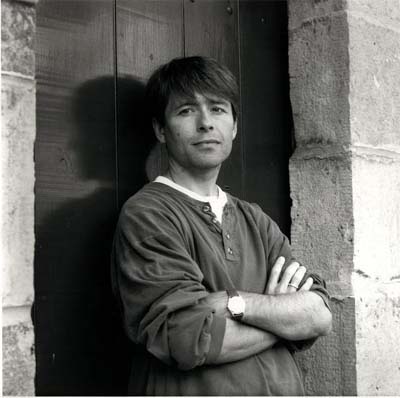
Crummey: (laughs) Right. Well, I definitely had particular themes the book was following that, in a way, matched the trajectories for each of these characters for each of the generations. I was playing with the whole notion. Newfoundland is a tiny place. About a half million people. I mean, it’s big geographically. But it’s a tiny community. Half a million people today. A hundred years ago, I think it was less than half of that. And a hundred years before that, it was miniscule. Maybe twenty, thirty thousand people. So everybody’s related. And the gene lines between those generations. I mean, there are researchers from all over the world in Newfoundland studying because they can map how these genes crossed generations. Because there’s been so little contamination. For lack of a better word. So I wanted to play with that in the book. So when I started off with Judah, for example, I knew that the book was going to end with a direct descendant of Judah — and, of course, some of Judah’s characteristics; the smell, the white skin, and all that sort of stuff was passed on. And I knew that I wanted the book to end with someone who was in some way saved by being the direct descendant and having those characteristics. So all the way along, of course, I have this map to follow where these particular characteristics had to be passed down and then to do something interesting with those characteristics, all the way along, before I got to this end point.

Correspondent: Does this explain in part some of the copious cock imagery throughout the book? I mean, lots of blades and penises.

Crummey: Right.

Correspondent: Lots of propagation I found.

Crummey: Yeah. Well, I mean, partly that was homage to [Gabriel Garcia] Marquez as well.

Correspondent: Yes.

Crummey: Because every penis in Marquez is monstrous.

Correspondent: Yes. No pun intended.

Crummey: It’s huge. And that was just something else again I stole from Marquez. (laughs) But the whole sense of propagation — I mean, this was a place that was incredibly difficult to survive in. And my sense of it is that only people with an incredible life force in them would have made it.

Correspondent: This explains in part the considerable virility of many of these characters.

Crummey: That’s right. And it is rather astonishing when you go to the old graveyards in Newfoundland. The graves seem primarily to be divided into two categories. There are people who died before they were fifteen, often of some disease or drowning or whatever. And then there are people who died when they were ninety-eight. So the people who were strong enough to survive past the fifteenth year seemed to go on forever. So there is a sense of unbelievable stubborn virility in these communities. And often, sometimes there’s not much life-affirming about it even. I wanted to get that sense across and, in some sense, it just seems like a stupid animal stubbornness that keeps these people going.

Correspondent: Well, based off your research, what’s the dip like in terms of the middle aged? In terms of death.

Crummey: Well, I mean, to be fair, I would say that most people didn’t live much past fifty-five. Right? And that fifty was considered to be old. And in every community, there’s this group of people who live to ancient years. But for most people, I think they were broken by the life they were supposed to live. By the time they were fifty, they were probably crippled by the work that they were forced to do and by the fact that women, in particular, probably started having children in their teens and would continue to have them until it killed them almost.

Correspondent: I’m curious. You’ve brought up Marquez a couple of times. And I’m wondering at what point during the writing did you shake off the inevitable yoke of influence?

Crummey: Right. Well, I mean, I was a little concerned when I first started talking about this book with people about even bringing Marquez up.

Correspondent: You brought him up here. Just for the record.

Crummey: I’m much more comfortable with it now over time. Because it’s ridiculous. There’s Marquez and then there’s me. But I think the thing that gave me the courage to try the book was the fact that I felt like Newfoundland and Newfoundland culture was every bit as rich and bizarre and otherworldly and maddening as the world that Marquez was writing about. And I trusted that to create its own uniqueness as I wrote the book. So it made me unafraid to steal what I needed from Marquez and to see that almost as a road map for a way to tell the story. Because I knew that the stories and the places I was writing about were so unique onto themselves that they could create their own. If I let them be, they could create their own world. And I feel like I did that. A lot of people when they read this book, I think, think of Marquez. But I haven’t — at least I haven’t heard anyone yet — heard anyone say it’s just a Marquez knockoff. Because the place itself is so completely different. It stands on its own feet as a culture.

Correspondent: It was more of a narrative canvas. A map on the wall with which to go ahead and put your pushpins in.

Marquez: Sure.

The Bat Segundo Show #387: Michael Crummey (Download MP3)
This text will be replaced

The Bat Segundo Show: Deb Olin Unferth

Deb Olin Unferth appeared on The Bat Segundo Show #386. She is most recently the author of Revolution.

PROGRAM NOTE: Just before the tape rolled, Our Correspondent, who met with Deb Olin Unferth at a Vegan restaurant, had casually mentioned (in an entirely different context) that he was a meat eater. Our Correspondent’s revelation was rejoined by a scowl from a man sitting directly behind Ms. Unferth. The scowl was so minatory that Our Correspondent, not an especially homicidal individual, wondered if he had killed a few random New Yorkers on the way to the restaurant. And then he realized that he had unthinkingly revealed his carnivorous habits in a Vegan restaurant. Had the story stopped there, it would not be worth reporting. But as it turned out, the Vegan’s fury made its way into our program. At about the 35:30 mark in this program, Ms. Unferth noted that a strange man was photographing both she and Our Correspondent through the window, just outside the restaurant. And this wasn’t just a one-time snapshot, but multiple angles. For all we know, there are photographs of us on some “meat is murder” website. Our Correspondent fully accepts the blame for his gustatory effrontery. Our Correspondent respectfully requests that Ms. Unferth, who is a very nice person and not a meat eater, not be implicated in any Angry Vegan movement that arises from this conversation.

Condition of Mr. Segundo: Wondering if he accidentally signed up for a revolution sometime in the late 1980s.

Author: Deb Olin Unferth

Subjects Discussed: The nonfiction volume Revolution containing echoes of the fictional Vacation, the Bowles-like distinction between tourist and traveler, Unferth’s early efforts to write about her Nicaraguan experiences as a murder mystery, Minor Robberies as a warmup for the memorialized document, the key qualities that Unferth sought in a revolution in 1987, the influence of Marxism, taping people for interviews, capturing history, lasting urgencies vs. ephemeral urgencies, how urgencies are captured into text, the Farabundo Marti National Liberation Front, the El Salvador peace accords of 1992, revolutionizing your way into legitimacy, remembering what you did at eighteen, confusion and youth, sufficiently recapturing certain feelings in book form, being harassed by men, violence from men as a deliberate omission, making choices about what to reveal in a book, whether two bad boat tales are balanced by one good tail, having confidence in adages, alliteration, Gertrude Stein’s The Autobiography of Alice B. Toklas, comedy and disturbing situations that are poignant, the pleasant sound of “so say sailors,” whether it’s possible to run away and have it mean something, the fear of being left, being rejected as a writer, early success with McSweeney’s, the inspiration that comes from fleeing, multiple acts of creation, Unferth’s storytelling efforts as a child, unanticipated reverberations in life that aren’t remembered, taking dialogue verbatim from old notebooks, La Prensa and censored newspapers, competing mnemonic notions of what you lived, contending with Angry Vegans taking photographs of Our Correspondent and Deb Olin Unferth, tracking down an ex-fiance, the need for corroboration, the private investigator’s role in assembling the memoir, legal reasons as a convenient excuse, “if I could write the book,” the first question Unferth would say to her ex-fiance, and chronicling the unique voice.

EXCERPT FROM SHOW:

Correspondent: As the interviewer, I feel compelled to ask why you felt taping the people was the best way for understanding them. You describe this bundle of tapes. And later you were stopped because of these particular tapes. And thankfully they weren’t actually played. But it is rather curious that recording these stories seemed to be the best way for you to try and understand them. Why do you think that was?
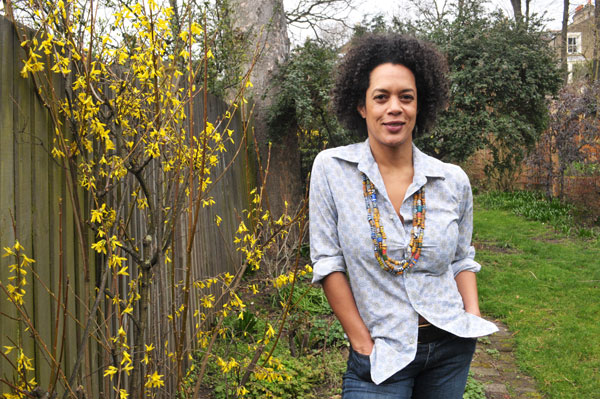
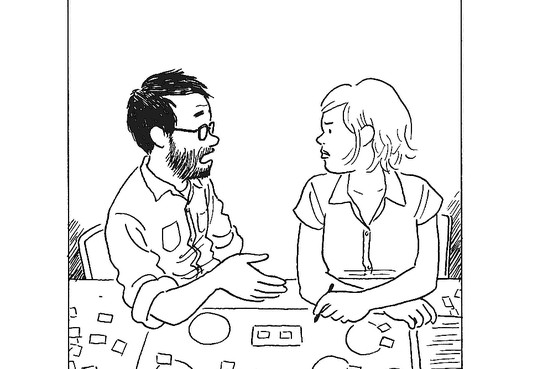
Unferth: That’s a good question. I think it was that we felt that maybe the tapes — we would be able to go back and listen to the tapes later. That the tapes would be useful in some way at a later date. That we felt that we could understand the people we were interviewing better and have opportunities to meet them if we had a tape recorder and were saying, “You know, we’re asking questions.” I don’t know. I could ask you the same question. Why do you feel it’s important to interview people?

Correspondent: Well, that’s a good question. Well, to my mind, in some vague way, I perhaps would like to — and this almost sounds hubristic, even though I don’t mean it to sound like that. I would like to think that I’m recording a history of some kind. That let’s say, in ten years, you Deb produce your masterpiece. And we can go back ten years before and see, well, what were you thinking before these germinations? The three books leading up to what ended up being an even bigger book. Well, there’s the trajectory right there. It’s also why I like to talk with people multiple times. I’ve talked with TC Boyle now four times. And even then, I find that he’s a little bit different each time. So maybe history was perhaps the draw for you at a very young age?

Unferth: Yeah. But if I think about you, and what you do, it seems like you’re also recording the echoes of contemporary culture.

Correspondent: Yes.

Unferth: So you are getting — because you’ve interviewed quite a few people. So you’re getting a wide swath of contemporary letters and what are people thinking about in contemporary letters at this time.

Correspondent: Yes.

Unferth: And so I would say that it’s a similar thing to what we were trying to do. To establish the tone and the concerns of liberation theologians and people who were involved in these revolutions at the time.

Correspondent: We have to capture the present moment in an effort to see it differently five years from now. Or ten years from now. Or twenty years from now.

Unferth: That’s true. Yeah.

Correspondent: Does text for you serve the same function? Or a similar function? Or is it a little bit different? By coming at it from memory, from research, from your notebooks at the time, I presume. You allude to those in the book. What is the effort of this cycle for you? What is the ultimate purpose? That’s a very general question. But since we’re talking about this.

Unferth: The ultimate purpose of writing Revolution?

Correspondent: Yes! Exactly!

Unferth: Well, I mean, it felt like an urgent thing to do. It felt like I really really wanted to write it. Which is also how it felt with Vacation and Minor Robberies. And I haven’t felt that way about many other things in my life. So I would say that’s the primary thing. It’s a personal urgency. And just a desire to untangle the questions that were being asked for myself. But then if I look at it with a broader — like what place does this book have? I really wanted it to contribute to the conversation about memoirs. Was one thing. I wanted to be thinking about what a memoir is. And I wanted to expand that a little bit. I wanted to do something a little different from most memoirists. Because I feel like memoir is such an interesting form. And then I wanted to write a coming-of-age story that isn’t quite as simple as “something is learned and then someone grows as a result of it.” I mean, I think that there are so many different ways to approach coming-of-age stories. And so in this one, it’s almost like someone becomes slowly disillusioned. And that’s how the coming of age is accomplished in some way. So I think that was part of it. And then also I think my continued fascination with those countries — especially Nicaragua. Nicaragua to me just seems like such a fascinating place. And El Salvador. Both just fascinating places. And they were these people who did these incredibly courageous things and developed whole philosophies and risked their lives and all these things. And now we’ve just forgotten about it.

Correspondent: Sure.

Unferth: And I find that to be so heartbreaking. I haven’t forgotten. So I want to talk about it.

Correspondent: Well, to go back to what you were saying at the beginning of that answer about this sense of urgency. It is very interesting to me that you have chosen perhaps the least urgent of all mediums. The book, which takes a long time to write. Which then has to go through editing. Which then has to sit in drydock for two years before it’s published. And then here you are two years later talking about something. And we’re not talking about the urgent moment. This is the difficulty, I suppose, of some of these conversations. Because you’re probably working on something else right now. And yet, that spirit of urgency is what was the guiding principle of this particular project. Why try urgency in such a slow burn medium?

Unferth: Because my moments of urgency last a long time.

Correspondent: Aha! So it’s lasting urgency you seek.

Unferth: Yeah. It’s not that my urgencies aren’t something that sweep in on me and last for a moment and then flee. They just sit inside me for a long time.

Correspondent: So, for you, some of your very taut paragraphs, your one-sentence paragraphs, they’re almost an attempt to capture a lasting urgency. And then the ephemeral urgencies don’t actually make it into your book. Would that be safe to say?

Unferth: What do you mean by my ephemeral urgencies?

Correspondent: Well, would you say that all of your urgencies are lasting? Or is some of it ephemeral?

Unferth: No. Some are. I guess in many ways we’re all sort of a bundle of urgencies, right? We’re all trying to do all sorts of things to stay calm. To try and stay calm. And some of those things are satisfied very easily. Just by eating something if I’m hungry. And others feel deep and existential and possibly without solution.

Correspondent: Yeah.

Unferth: So there are many different levels of urgencies, I suppose.

Correspondent: When your urgencies are captured into text, is it less urgent? Or does it still last?

Unferth: Maybe it feels less urgent once it’s done and out there. Like this particular topic. Now that it’s written and it’s done and the book is out, I don’t feel as urgent about that topic anymore.

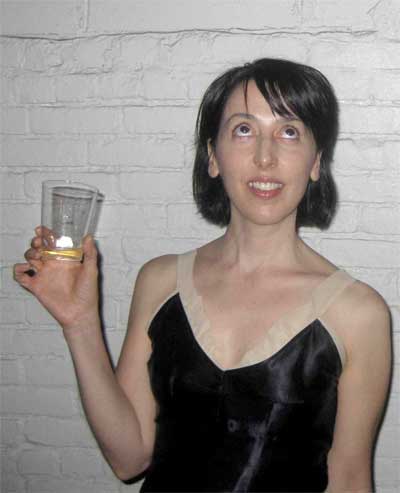
(Image: Meghan Kenny)

The Bat Segundo Show #386: Deb Olin Unferth (Download MP3)

This text will be replaced

The Bat Segundo Show: Insulted by Authors

Bill Ryan recently appeared on The Bat Segundo Show #384. He is the proprietor of the website Insulted by Authors.

Condition of Mr. Segundo: Insulted by humorless people.

Guest: Bill Ryan

Subjects Discussed: Taking unexpected tumbles in life, why insults are the best way to pop the cherry of the author-reader relationship, being the son of a scientist, dodging dodgy publicists, being identified as “The Bill Plus Insult Guy,” picking away at the celebrity industrial complex that has been built up around the author, being frightened by Salman Rushdie, whether there is something inherently wrong in asking an author to insult the reader, difficulties with humorless authors, Nicole Krauss’s post-profanity titter, how the prelude to an author interaction sets up strange expectations, Rick Moody’s refusal to sign older books, book autograph prospectors, being afraid of preconceptions, taking the denial of an insult personally, when joie de vivre is mistaken as a threat, hero worship and naivete, the protective personality traits of authors, looking at the dilemma from the “why not an insult?” position, ideal readers vs. material readers, Banksy, being inclusive of quirky ideas within a marginalized medium, non-monetary value and books, and the dangers of being drawn too close to the apotheosis of fame.

EXCERPT FROM SHOW:

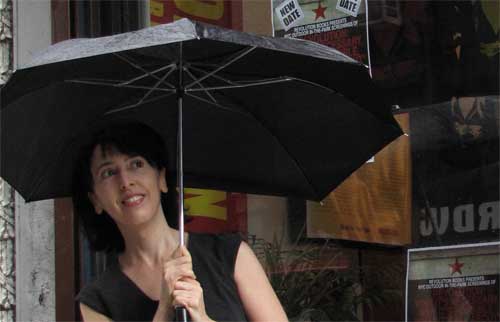
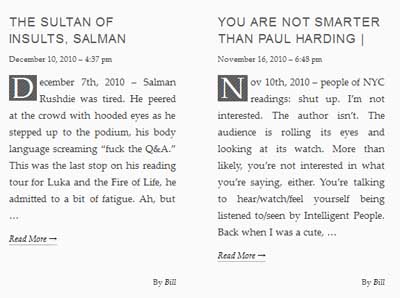
Ryan: Salman Rushdie was in my top four of insults I’d love to get. The Mount Rushmore of insults or whatever. I was so frightened ahead of time for some reason, despite the fact that this is a guy who’s reading a children’s book in front of a crowd of people who showed up at an art gallery. To hear someone read a children’s book. I was nervous! Because it’s Salman Rushdie. And I approached him. And I have tweaked my approach, depending upon the author. Like with Salman Rushdie, I was very deferent. “Mr. Rushdie, I’m sorry to be the kind of person to ask you this. But if you have a moment, if that’s okay, could you add an insult to my personalization?” And I’m worried almost that the fact that I’m scared, intimidated by the very thing that I kinda want to break down, is maybe a problem with my scientific approach. (laughs) Do you know what I mean?

Correspondent: Well, maybe it’s an emotional approach. Because here you have Rushdie. You hope that he will defy your expectation, that he will insult you. And what does he do? He decides, “Why do you want to do that?” And it’s sort of a big letdown. It’s almost like maybe you were nervous about setting yourself up for this letdown. Is that safe to say?

Ryan: It’s like: What did I do wrong? Okay. Exactly, yes! The scientific approach where I was waiting in line and I had everything lined up like a series of actions that I had just lined up in my mind. And I’m like, “Okay, I’m going to approach Mr. Rushdie. I’m going to set down my book. Very gently.” I’m going to say, “Mr. Rushdie, thank you very much. Blah blah blah. By the way, my name’s Bill. Insulted by Authors.” So I went back over after the fact. And for whatever reason, I got really really nervous and really excited. Just the fact that I’m disrupting whatever silly little convention that there is behind the whole signing of a book. I may be blowing it up way, way too big in my mind. But afterwards, my heart was pumping. And I was like, “Okay, what did I do wrong? What was it that Mr. Rushdie didn’t understand about….”

Correspondent: Just call him Salman. (laughs) Mr. Rushdie? He won’t appear on this program. So we can go ahead and be informal about him. If it’s any consolation.

Ryan: (laughs) So Salman. Yeah, I had to go over for the next twenty minutes. And I actually, literally, sat right outside the signing — or stood right outside the signing — and was breathing deep. And all these people.

Correspondent: Breathing deep?

Ryan: Yeah. I was breathing deep. I was actually…

Correspondent: Hope you weren’t hyperventilating.

Ryan: A little bit! A little bit, man. This is how much I put into this for whatever stupid reason. And all these people who had heard me talking to myself in line slowly filtered out around the corner. What did I do wrong? How can I perfect this asking for an insult? How can I make this more accessible to the Rushdies of the world? But also equally accessible to the AL Kennedys of the world.

Correspondent: Or the Amy Sedarises.

Ryan: Exactly. Exactly.

Correspondent: Well, on the other hand, what do you to deal with the reality that some authors — particularly the Old World, anti-online, anti-Tumblr, anti-Twitter types — they’re going to go ahead and say, “I’ll never stoop to that. Because I am an author.” Rushdie may be one of the last ones. Along with say, maybe, Richard Ford. I don’t think he would insult you.

Ryan: Probably not.

Correspondent: Philip Roth might, I think.

Ryan: I’d like to think that.

Correspondent: (laughs) I’d like to think that he would. Cynthia Ozick might, if you could get her.

Ryan: Yes!

Correspondent: But, on the other hand, you’re dealing with a lot of self-important authors who, let’s face the facts, are humorless. So where does the challenge kick in? Is it less about trying to bump your head against the wall? And more about seeing how they will react? I mean, it was actually rather astonishing to me to learn that Allegra Goodman would refuse to insult you and that post has not gone up, I noticed.

Ryan: Not yet. Not yet. I went through a transition between — I still don’t quite know what I’m trying to do with all this. Like I’m just trying to have fun. And I’m a book collector, in general. And I treat books as objects in addition to being books. Which is somewhat tragic, I’m sure. But also — whatever. I mean, everybody has something they’re trying to change about them. But I feel like everyone would be able to give me an insult if I somehow approached them in the right way or it was the right situation. Or something. There’s all these other outline — like little things that can mess with my amazing idea, incredible idea for insults.

Correspondent: You think you can develop the perfect pretext for any situation.

Ryan: (laughs) Exactly.

The Bat Segundo Show #384: Insulted by Authors (Download MP3)

This text will be replaced

The Bat Segundo Show: Aminatta Forna

Aminatta Forna appeared on The Bat Segundo Show #383. She is most recently the author of The Memory of Love.

Condition of Mr. Segundo: Trying to remember where his lost car keys are so he can learn to love again.

Author: Aminatta Forna

Subjects Discussed: Writing about Sierra Leone without naming the country, adopting a tone that is simultaneously universal and specific, combating the “news vision” of the Western mind set, the moon landing and the historical sense, “Kung Fu Fighting” in a different context, media mechanisms and attempts to memorialize, Albert Dada and roaming travelers, fugue controversy, narrative ideas emerging out of research, having to leave some research behind, entering other people’s lives, spending two weeks in an operating theater, carrying over the character of Adrian from Ancestor Stones, when “lesser” countries are asked to explain their existence, Adrian playing a role for the reader, the disparities between Kai and Adrian in The Memory of Love, kinship between cooking and surgery, challenging someone to a race on a beach and breaking an Achilles tendon, how similar character qualities can be a benefit and a risk, characters and a prefigured narrative, writing a perspective from the male vantage point, roadside stops and car moments used to foreshadow tragic events, getting arrested, the ethics of colluding with corruption, “writing like a scientist,” avoiding conscious thinking about metaphor, conflating fiction with fact, how a “unique” Sierra Leone story is ubiquitous in Sierra Leone, Argentina as an early influence for The Memory of Love, “pasting the facsimile of a smile on my face,” being a people person, why “not being evil” doesn’t necessarily make you good, PTSD as a normal characteristic, “write about what you know” versus “write about what you want to find out,” and the novel as a medium for relative normality.

EXCERPT FROM SHOW:

Correspondent: I wanted to talk about Albert Dada, who is a figure in A History of Mental Illness, the invented book within the book. You have Adrian come across the case of this guy, who decided to abandon his gas station. And this, interestingly enough, is a psychiatrist. And then he goes ahead and starts traveling at 70 kilometers a day. Just becoming this crazy, wild, roaming traveler. I’m curious how that served as this cultural reference point. Because he’s not exactly as popular as, say, Neil Armstrong.

Forna: Oh, well it went the other way around actually. It went the other way around. I was told a story about a woman. A true story. By a human rights worker. A Sierra Leone human rights worker. And I was told a story about what this woman had suffered during the war. How she had fled to a refugee camp in a neighboring country and then come back. And what she found, this human rights worker told me. And I don’t want to give the story away. But it was so shocking. It absolutely left me speechless. And that story returned to me when I came to write The Memory of Love. And I wanted to create a patient for Adrian. You know, Adrian is there looking — he’s there to help himself as well. But anyway, what happened was that I tried to think of, to actually imagine, if that happened to you, what your mind would do. Or what it would do to your mind. How can we survive that? And I came up with something that I had already seen happen a little in Sierra Leone, which was that people often did step out of their lives. And women in particular often did just step out of their lives and go walking. Not in that fugue state. Not in a dissociative state. It was just a self-healing thing. They would say, “I’ve got to get away from here for a bit.” And they would just go traveling and they would come back. And nobody thought this was curious. It was just part of the culture. So I thought, “Well, here’s something she might do.” Because she has suffered this extreme trauma.

So I began to read about fugue. And then I realized that there was this whole controversy around it. I wrote a book about it. And it all seemed to fit. It fit with what Adrian was there to do, which was try to find something that might advance his career. As well as help the country, of course. But you know, he had other motivations. It fit with Agnes: the character, the patient he sees. So these are wonderful moments where you get this perfect storm in your research. But that’s the way I work. I do quite a lot of research and after the research comes the ideas usually. I go places. I know some writers work like this and others have a plot and then they fit everything to the plot. But I tend to go and see. And then the stories arise out of that.

Correspondent: But there must be a danger in getting bogged down in too much research. The idea perhaps that you attempt a narrative, but that it doesn’t necessarily flesh out. Is this an issue with you?

Forna: Yes. Both of them. (laughs) The “too much research” — it’s less of a problem because I used to be a journalist. So we got used to having to leave some of our research out. We knew that you can’t get it all in. Which is always the danger. The first failing of young journalists. Attempt to use everything they’ve discovered. I know that there will always be a place for it in a later book. And I was once asked this by a creative writing class that I was talking to. “Well, what do you do with the research that you don’t use?” And I said, “Well, it’s usually the next book.” Or it’s the one after it. So nothing’s ever lost. I don’t worry too much about that. And what was the other part of the question?

Correspondent: Oh. It was about the amount of research and also what happens if some finding doesn’t work its way into the narrative. Yes.

Forna: Well, of course, my books are character-led rather than plot-led. So I will always refine the plot to what they are likely to do. But research is important for all kinds of reasons to me. Because it sparks so much. I love it. The reason I am a writer, the reason I was a journalist, is because I love entering other people’s lives. So in that period before I actually sit down to inhabit the character that I’ve created and become that person, I spend quite a lot of time trying on parts of their life. So for Kai, I spent two weeks in an operating theater. For Adrian and Attila, the African psychiatrist that is rather ill-tempered who he works with, I also spent two weeks in a mental hospital in Sierra Leone. So I try on their lives to see if they’ll fit when I come to create the characters. Somebody called it “method writing.” And maybe sometimes I go too far. But I enjoy it a great deal. I enjoy all of that. And when I come to write it, I feel that I fully constructed this person. And now I can be them.

The Bat Segundo Show #383: Aminatta Forna (Download MP3)

This text will be replaced

The Bat Segundo Show: Adrian Tomine

Adrian Tomine appeared on The Bat Segundo Show #382. He is most recently the author of Scenes from an Impending Marriage.

Condition of Mr. Segundo: Attempting to reconcile the impending with illustrations depicting events from years ago.

Author: Adrian Tomine

Subjects Discussed: Doing time in Sacramento, veiling a personal experience with a sex change, which of Tomine’s characters is least like him, the liberation that comes in fabrication, scratched out names and Victorian literature, the original small audiences for Scenes and 32 Stories, the father’s fund, taking criticisms to heart, the drawbacks of working in the same realist vein, Tomine’s wife as the “first audience,” the artist’s fragile ego, the influence of printed literature and storytelling upon art, humbling versions of inspiration, Tomine’s degrees of aspiration and ambition, living a life in service to the drawing, facing the world, the “strenuous” exigencies of cartoonists, drawing panels without decor, Tomine’s perfectionist qualities, the freedom in pursuing work that isn’t going to be reviewed, feeling highly scrutinized, the pleasure in publishing harsh letters, the look of the ranger, using the fewest lines to get the maximum amount of detail, settling upon the three panel approach, maintaining a private style in secret scrapbooks, varying levels of creative insulation from the public, the very low frequency of sound words, the tongue licking in “Alter Ego,” seeing external details that other characters cannot, the grotesque reality of Chris Ware’s furry cats, the number of people who read books in Tomine’s New Yorker illustrations, the Venn diagram between 1990s subcultures and digital culture, disappearing subcultures, cartoonists who detest hippie and hipster culture, gesture and look, Alison Bechdel’s elaborate photographic process, and the pursuit of “realism” in an “unreal” medium.

EXCERPT FROM SHOW:

Correspondent: I wanted to get into the ineluctable autobiographical angle through a different mechanism. Interviewers, critics — they’ve all said, “Oh, well, Tomine is totally autobiographical.” But here, you are tempting fate again with the subtitle of the book: “prenuptial memoir.”

Tomine: Right.

Correspondent: You mentioned in the introduction to 32 Stories that you “learned the useful trick of taking a personal experience and veiling it with a sex change or two.”

Tomine: Right.

Correspondent: So we have to talk about this. But I’m going to ask you: Which of your characters is least like you? How much of Scenes [From an Impending Marriage] emerged out of your reality? Or is there some liberation, so to speak, in the fabrication?

Tomine: Oh completely. I mean, everybody has been focusing on the autobiographical nature of this book and I think some of the promotional materials are talking about how it’s such a personal work or something. But I think in truth, in some ways — well, I wouldn’t say the least personal, but it’s certainly no more personal than the other books. And I think that definitely in the fictional stories, I feel a lot of the freedom that you refer to. And the flip side to that is there’s an inhibition that comes along with drawing yourself as the main character. And I think this book, this current one, is all definitely drawn from real experience, but very carefully edited and selected.

Correspondent: Yeah. Starting with the first story, where we see scratched out words of names and places and the like. Which, to my mind, didn’t necessarily mean privacy, but possibly meant an ode to the Victorian literature, where you have the first letter and the line long after that.

Tomine: Yeah. And also I think that this was the first time I just embraced the idea that this would be intended for as wide of an audience as possible. So it set up the ending, where I have the one swear word of the book scratched out too. So it doesn’t quite jump out as much as it would otherwise.

Correspondent: So wait a minute. I understood that this started out as something to be disseminated to wedding guests.

Tomine: Yes, that’s right.

Correspondent: Okay. So was it always intended for public consumption?

Tomine: No.

Correspondent: No.

Tomine: No. The original version that was slimmer. There were fewer pages. It was basically just Xeroxed and assembled. And it was meant to just be given out at the wedding. So the only audience was really going to be our close friends and family.

Correspondent: Well, this is interesting. Because 32 Stories came back in a third life, I suppose, by having that box of minicomics. And it seemed to me from the introduction that it also came about under a certain amount of duress. I’m wondering if people have to push you or kick you into getting things published these days. How does this come about?

Tomine: Well, I think that if someone really wanted to read between the lines and investigate. The dedication of this book explains a lot about why it’s now in stores. Because it’s dedicated to Nora, who’s my one-year-old daughter.

Correspondent: Aha! The father’s fund.

Tomine: Yeah, exactly. We know a lot of people are confused. They say that in the book you say your wife’s name is Sarah. Who’s this Nora that this book is dedicated to?

Correspondent: Your mistress, I thought.

Tomine: (laughs) Right. My Irish mistress.

Correspondent: (laughs) Yes.

Tomine: Yeah, my wife was actually joking about that and saying, “Nobody ever has an Irish mistress.” I mean, there were a lot of reasons that went into the decision to actually publish it. But if I’m honest, one of them would definitely be just a bit of that new father panic of “I’ve got a life that I’m responsible for other than mine now.” So that was part of the thought process. At the same time, there was also the element of just how off the beaten path this book was for me. And that was appealing. Because when I finished my previous book, and digested a lot of the reviews and the response, that it was really clear to me that whatever it is that I publish next had to be pretty different. I think people had their fill of that specific tone and that meticulous realistic style of drawing. I don’t think it was — well, I take — the criticisms of that I took to heart. Not that it was poorly done, but that I’d been putting out a lot of that in that same vein for a number of years. So I didn’t really have a plan of what I was going to do next. But then it was kind of a relief to me when I realized that I basically had a complete book just sitting in my sketchbook. And it was as dramatic of a change as I was looking for.

Correspondent: Well, we’ve brought up a number of things just in the first few minutes.

Tomine: Right. I derailed you.

Correspondent: No, no. It’s great. I love this. Working on art for money. Working on art for audience response. And then simultaneously mining from your own personal life to generate narratives that often take an immense amount of time. In the case of Shortcomings, four years. So this leads me to wonder whether there’s possibly a double-edged sword here, if you are revolving your creative process around what the audience is telling you. Clearly, you still read reviews.

Tomine: Yeah.

Correspondent: Clearly, there is an interest to stay in this business. Obviously. But on the other hand, the fact that this book, this latest volume, came from a safe place. Where you were almost buffered by the possibility of critics dissecting every little aspect of your work. I mean, how does this work? How do you gravitate between the two? Or is it all one unified theory here? So to speak.

Tomine: No. I think you touched on a lot of the things that were in my mind really. Because this wedding book was definitely the most breezy and loose and — a word that’s never applied to my work, but — fun. And I think it was because of what you’re talking about. The idea that it basically wasn’t meant to be published. And that no one but a handful of people that I knew and loved would be seeing it. And really, even though I knew the people at the wedding would be seeing it, the only real audience I had in mind when I was creating it was my wife, Sarah. A lot of it was just a question of not “Is this going to be a great strip?” or “Is this going to be beautifully drawn?” or anything like that. But just “Is this going to make her chuckle at the end of the day?”

Correspondent: So really she’s your first audience.

Tomine: For this, especially.

Correspondent: Do you see that being — she’s going to be your future audience? Her and Nora perhaps?

Tomine: Yeah.

Correspondent: I mean, how do you insulate yourself from the constant probing?

Tomine: Well, I mean, whether I like it or not, she’s going to be my first audience. Just as the nature of working at home, and her curiosity. When she scrolls through my studio each day, she does take a look at what I’m working on. But at least so far, it’s been a real asset to me. Because she’s more well-read than I am. She used to work in publishing. And she has editing experience. She also, along with that, knows the fine art of dealing with the fragile ego of the writer or the artist. And she also just has a really good sense of humor. And I think that she’s, if anything, encouraged me over the years to try and tap into that a little bit more in my work.

(Image: Sarah Brennan)

The Bat Segundo Show #382: Adrian Tomine (Download MP3)

This text will be replaced