Review: Blessed is the Match

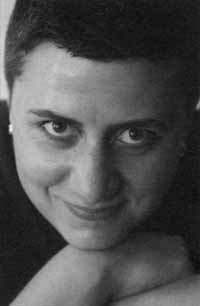
seneshThe most truthful moment contained within Roberta Grossman’s documentary, Blessed is the Match, comes from parachutist Reuven Dafni. Dafni reveals, in what Grossman bills as his final interview, that he did not like the widely celebrated Hannah Senesh very much, but that he admired her stubbornness. One is curious to know why. But the question is never asked.

It is this journalistic diffidence that prevents Grossman’s documentary from being anything more than a helpful yet tendentious refresher course for those who wish to learn more about the intriguing Senesh. The film, littered with spoon-fed “recreations” of existing photos, Indiana Jones-style animated trails across maps, and Joan Allen’s stately, Oscar-nominated voice reading Catherine Senesh’s writings, chooses to present Hannah Senesh as a martyr, but doesn’t make any serious efforts to ask whether Senesh’s martyrdom was premeditated, or whether history has the right to judge Senesh’s life almost exclusively from her final days. All this is a pity and a missed opportunity. For are not noble actions committed without the expectation of credit? If Senesh set herself up to be a martyr, and there exists some possibility that she did, is there not more wisdom to be found crawling around the gray areas?

Senesh, of course, is known for her courage in parachuting into Yugoslavia, working her way to Nazi-occupied Hungary to rescue imprisoned Jews, only to be captured by Arrow Cross soldiers and systematically tortured in prison. But Senesh offered hope to her fellow inmates, singing songs and flashing vital signals with a mirror through her cell window. She communicated to her fellow inmates that there was indeed an end in sight, and Senesh did all this while brutal interrogators continued to beat her, punching out her teeth, and bringing her mother into the cell in an attempt to loosen the information.

Senesh did not talk. Her mother, Catherine, wandered up and down the streets of Budapest hoping to obtain her release. But despite Hannah’s reported eloquence before the judges during her tribunal, she was tried for treason and executed.

It is difficult to argue against the idea that Senesh espoused bravery. But Senesh was also a human being, flawed as human beings are. In 1939, she emigrated to Palestine to attend the Nahalal Agricultural School. Grossman presents but smooths over the fact that Senesh skipped town just after the First Jewish Law was passed in 1938, which restricted the number of Jews employed in liberal vocations to 20%. Known as a precocious intellectual among her largely upper-class peers in Budapest, the documentary informs us that Senesh wrote haughtily back to her family that she could put her abilities to better use. We are also informed that Senesh was exceptionally idealistic, but that she kept largely to herself and couldn’t share any of her concerns with others in the kibbutz. But instead of examining all this through interviews with surviving members of Senesh’s family, or even “recreating” these flawed moments, we’re given a film with an inflexible and somewhat primitive perspective, all set to Todd Boekelheide’s heavy-handed orchestral music.

Here is a fascinating and complex figure who deserves better than the Biography Channel treatment. Sir Martin Gilbert lends some gravitas to the project, providing extremely useful historical context. But what’s troubling about this film is that, long before the film is over, the audience has already made up its mind about Senesh’s virtues. As the current atrocities in Gaza cause any feeling mind to draw uncomfortable parallels with other historical actions, Blessed is the Match arrives in theaters without an ability to expand its perspective beyond simplistic good vs. evil dichotomies. With the high watermarks established by Marcel Ophuls and Claude Lanzmann, this is a film terrified of offending and presenting, and not altogether different from hundreds of other Holocaust documentaries.

Coming in March

knightsround

For those readers who have enjoyed our lengthy roundtable discussions of Richard Powers’s The Echo Maker, Nicholson Baker’s Human Smoke, and various other books, let it be known that, during the first week of March, this website will be devoting an entire week to another elaborate roundtable discussion. (There will likely be a quite lengthy podcast interview as a supplement to the discussion.) The novel in question, which we will reveal at some point in February, comes from a writer you may not have heard of. (Indeed, it has been surprising to discover just how many have not heard of this writer.) But I can tell you this: the writer is ambitious, the writer has written several books pertaining to one character, and the writer is very much interested in the relationship between text and reality. There will be more details when we get closer to the date.

Conversations In the Book Trade

Deadlines and line dancing which pertains to deadlines will keep me occupied for the better part of today. So pardon the silence while I clack away on the keyboard. In the meantime, I should observe that Finn Harvor has managed to extract some possibly interesting answers from me on the publishing industry, e-books, the Internet, which mediums work best for fiction, online bookstores, literary agents, and numerous other topics.

(Also, as both the Washington Post‘s Bob Thompson and The New York Times‘s Motoko Rich observed this morning, the NEA’s outgoing chairman Dana Gioia seems to believe that the rise in blogs and online reading over the past five years had no effect on the rise in American fiction reading, but had everything to do with The Big Read program. What next? Will Gioia be attempting to persuade us that he invented the Internet? I also love how the NEA’s smugness, emerging from research director Sunil Iyengar in the Thompson article, is on full display in relation to genre. “Literary” doesn’t imply “highbrow,” says Iyengar. And that goes for mysteries, which the report recognized as the most popular genre. Well, considering that Kipen and company were actively pushing The Maltese Falcon as one of the Big Read choices last year, it seems to me that the NEA is eating a cold bowl of hypocritical stew.)

The Bat Segundo Show: Chazz Palminteri & Robert Celestino

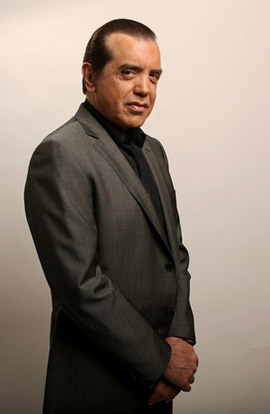
Chazz Palminteri and Robert Celestino both appeared on The Bat Segundo Show #259.

Chazz Palminteri is the star of Yonkers Joe. Robert Celestino is the writer and director of Yonkers Joe. The film opens in theaters on January 9, 2009.

segundo259

Condition of Mr. Segundo: Fleeing the scene to avoid “coming together” with the imposing Mr. Palminteri.

Guests: Chazz Palminteri and Robert Celestino

Subjects Discussed: Robert Mitchum’s theory of the actor merging into the landscape, cinematic tempo, research for Yonkers Joe, eye contact, the script as the authoritative text, script embellishments from actors, overpreparation, performance in relation to camera placement, “artistic differences” with directors, the thespic advantages of wardrobe, playing an entire scene with a newspaper under your arm, the national revival of A Bronx Tour, the future of theater in an economic crisis, wasted talent, whether the casino heist genre now requires an unusual secondary plot, balancing intuitive insights about human behavior and cinematic reality, the inability for most people to observe mechanics in action, the distinctions between con men and mechanics, how Celestino was able to film in casinos, advancing the narrative while sacrificing believability, concocting the big score, the qualities of casino dice, the eleventh-hour casting of Christine Lahti, keeping symbols in the background, symmetrical semiotics, layering visual elements, and establishing the tell signs among the actors.

EXCERPT FROM SHOW:

chazz-4Correspondent: Going back to the issue of preparation, perhaps you can talk about it in light of this particular movie. I’m curious if there is such a thing as overpreparation for you. For a performance like this, for a performance elsewhere. Where if you plan something too much, then you’re going to lose the spontaneity, you’re going to lose the naturalness of human behavior, and the like.

Palminteri: Right.

Correspondent: Has this been a scenario with you? Have you had to…?

Palminteri: That never happened to me. Because I don’t overplan things. I plan it. I know where I’m going. I have a road map. Okay, and then I’m able to change that roadmap if I have to. You have to. Because you meet with the director, and you meet with the other actors. And all of a sudden, you get on the set and it’s not like you thought what it was going to be. It changes. For some reason, an actor does something else and it doesn’t match what you felt what you should do. Alright, now we got to talk about this now. Is this going to work? Maybe it works better or maybe it works worse. So if you think that your way might still be better, that’s when you have to talk with the director, and say, “Well, I’m feeling this way.” And that’s why sometimes people leave movies. There are artistic differences. It doesn’t work. I usually try and make it work. I hope I can.

Correspondent: Are there such situations in which you’ve felt hamstrung by a particular director’s decision? Or do you simply work within those particular confines?

Palminteri: I’ve always been able to work with directors who respect my opinion. And no director wants an actor to be uncomfortable.

Correspondent: Sure.

Palminteri: “To be uncomfortable.” I mean, once you say those words to a director, “I’m just not feeling comfortable here,” then he’s willing to listen to anything you’ve got to say. I mean, one thing, I’m a director. You know, I’m directing movies. If an actor’s telling me he’s uncomfortable, I’ve got to make him comfortable. No matter what.

* * *

Celestino: I don’t know of too many filmmakers who get to shoot in casinos. Because casinos are not in the business of making movies. They’re in the business of making money. So we were very fortunate, as some of our investors were casino owners. So not only did we get to shoot in the casinos, but we got to shoot it during the day. And they would rope off a section to us. And they really opened up everything to us. There’s five people who work in a casino, who are allowed into the surveillance rooms. So we were allowed to go into the surveillance rooms just to look around. We didn’t actually shoot in there. We built that set. But we did match it identical to what we’d seen. And also, they’re not ever going to bring a suspected mechanic up into the surveillance room. So what they do have is an outer room, where they would show somebody something in case there was a question. Like they did in Yonkers Joe. But the surveillance room was actually in another room where Yonkers Joe got to take a peek at.

Correspondent: Some suspension here to move the plot. Again, this goes back to the other question about how much you stray from reality. In this case, certainly, you had to in service of the narrative. But perhaps when you were writing the script, were there questions that you were asking? “Well, okay, I need to move the narrative along. So there’s a tradeoff here.” I mean, what criteria was here? Okay, I have to advance the narrative. But there’s this tradeoff in believability. Was this an issue when you were writing the script?

Celestino: Well, that’s always a balancing act. Ironically, in this script and movie, it really didn’t come about that much. Pretty much, everything that happens in the movie pretty much can happen. You know, the thing at the end and all that. That all can really happen. In fact, when the security people — the surveillance people — were reading the script, they said that when this movie comes out, casinos will probably start putting blacklight gel in their dice. And that was where I had to reinvent a bit. Because loaded dice are very easy to see. That’s why they make the dice clear. So you can see the loads in them. But if you have something in them where you don’t have to look at the dice, like blacklight gel, then there’s no reason to even look.

BSS #259: Chazz Palminteri and Robert Celestino (Download MP3)

This text will be replaced

The Bat Segundo Show: Norah Vincent

Norah Vincent appeared on The Bat Segundo Show #258.

Norah Vincent is most recently the author of Voluntary Madness.

segundo258

Condition of Mr. Segundo: Challenging pseudonymous authorities about his voluntary commitment.

Author: Norah Vincent

Subjects Discussed: The Lanterman-Petris-Short Act, homelessness and mental health care, the revolving door of mental institutions, Marvin Olasky and community responsibility, the bureaucratic process of mental health care, why Vincent didn’t break down the costs of staying in pseudonymous institutions, the unwillingness of Vincent’s health care provider to have Vincent pay for her stay in these institutions, experiential journalism vs. objective journalism, the trouble with corroborating stories within Vincent’s books, setting limits and journalistic ethics, quibbling with the term “diagnosis,” the distinction between psychotics and psychopathics, care for dangerous people, antipsychotic drugs, counseling vs. drugs, empirical solutions vs. medical expertise without arrogance, the moral question of whether or not doctors should inform psychopathics about the effects of drugs, the issue of consent in medicine and journalism, whether regular “reality checks” can help a psychotic improves her mental condition, and happiness vs. getting better.

EXCERPT FROM SHOW:

nvincentCorrespondent: You quibble with the term “diagnosis.” You write, “There are no diagnoses in psychiatry. Only umbrella terms for observed patterns of complaint, groupings of symptoms given names, and oversimplified, and assigned what are probably erroneous causes because these erroneous causes can be medicated. And then both the drug and the supposed disease are made legitimate, and thus the profession as well as the patient legitimized, too, by those magical words going hand in hand to the insurance company ‘Diagnosis’ and ‘It’s not your fault.’” But if there are no diagnoses in psychiatry, well, where is the starting point? I mean, obviously, you have to start somewhere and identify a particular problem — even on a simplistic level — in order to help another person. So what of this?

Vincent: Well, yeah, that’s the difficulty, I guess. Right now, we don’t have a test that can tell you, “You’ve got bipolar disorder” or you’ve got any number of all these so-called illnesses. Which I don’t doubt are real entities. Clearly, when you see enough of these patients, you see the patterns that they’re describing. And people who are schizophrenic tend to be paranoid. All these various things that — it’s not that the groupings are illegitimate in that way or the observations are wrong. It’s just that it does leave an enormous gray area. And it means that you can diagnose somebody as having this thing without any really concrete way of knowing that they do, in fact, have it. And I do think that can lead to a lot of problems. Such as, for example, people again have written a lot about the way that diagnoses of depression have, I don’t know, tripled in the last ten or fifteen years. And I think you have to ask yourself how many of those people have something that’s a pathological depression. Or is it a situational depression? Not being able to distinguish between those two things is, I think, problematic.

Correspondent: We’re talking then largely about the specific difference between someone who is psychotic, who is merely someone who cannot properly distinguish between their reality and their imagination and their dreams, and is not necessarily violent, versus someone who is psychopathic. Who is going to be prone to violent behavior and the like. Certainly there has to be some degree in which we have to prevent people from harming themselves or harming other particular people. I agree with you that “psychotic” does, in fact, get a bad rap. But nevertheless, there is this larger term of people who are, in fact, going to be committing violent behavior. So I’m wondering. Why quibble with the notion, as you do in one of the interim moments in the book, about this impression between so-called psychotics in movies and everything? When, in fact, there are dangerous people out there.

Vincent: Oh yeah. And there’s no question that, right now, medication and, in some cases, putting these people into an environment where they can’t hurt people is all that we have. It’s the best that we have right now. I would hope that someday we would have medications, for example, that can specifically address what’s going wrong in the brain of a schizophrenic person. And that’s just something we don’t have right now. We don’t know. We don’t understand the mechanisms of schizophrenia. Or what appears to be. There again is the question. Well, you may appear to be schizophrenic. But without a test that can tell us, we don’t actually know whether you are or not. Or whether you’re manifesting symptoms that may be entirely something else. An allergy. I mean, think about if you were to go to the hospital and say, “I’m having terrible chest pains.” And you were assuming you were having a heart attack. And there was no way to know whether it was that or indigestion. There are a lot of symptoms that can be caused by various different things. And I think that’s the part that’s missing for us right now.

BSS #258: Norah Vincent (Download MP3)

This text will be replaced