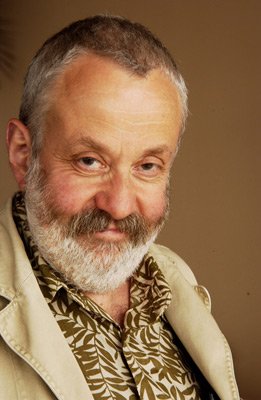
A Brief Interlude

Some brief housekeeping between these longass NYFF reports: I had intended to write a report on Saturday afternoon’s panel, which I believe was called “Holy Shit! The End of Film Criticism is Nigh! It’s the End of the World!” But it appears my work has already been done for me. Details of what went down, not as hysterical as the title implied, can be found over at Mr. Hudson’s place. There are links to reports and even an MP3. Last I checked the thread at Mr. Hudson’s, there was some modest shit-talking of Cahiers du cinema editor Emmanuel Burdeau. But Burdeau, despite being French, is okay in my book. Burdeau and Jonathan Rosenbaum, sitting on the left wing of the panel, offered thoughtful and progressive answers that made up for the out-of-touch blathering from Kent “I don’t watch TV but The Wire is okay” Jones on the right wing of the panel. (I am assured by a third party that Kent Jones is an okay bloke. But from what I observed of him on Saturday, Jones has the finest worldview that 1989 had to offer.)

Due to deadlines, I had to miss this morning’s screening of Changeling. But why bother with it? It’s coming out later down the pipeline. Well, Clint Eastwood was holding a press conference. Well, with all due respect to Mr. Eastwood’s talent, big whoop. Yesterday, I left midway through the press conference for The Wrestler because I was hopelessly bored. The questions dealt predominantly with the cliched “how difficult it must have been” line of inquiry that one sees too often in these silly affairs.

I bring this up not to impugn those who were questioned, but only to remark upon the media’s relentless concern with superficiality. Many media outlets, including Reuters, have only now begun offering some coverage of the New York Film Festival. But most of these bloated entities have concerned themselves only with Steven Soderbergh and Mickey Rourke. And isn’t the whole point about the NYFF to celebrate filmmaking talent from around the world?

I made a personal promise to myself that I wanted to give as many of the films that didn’t have distributors a chance, and, rest assured, more reports are coming. (Still to be reviewed here are Waltz with Bashir, Hunger, and The Wrestler. But these big-ticket items can wait a bit. Because they all have distributors.) Unfortunately, it appears that not even The New York Times is willing to devote its considerable resources to in-depth reviews of such unusual films as Tokyo Sonata. Don’t they have a whole team of reporters over there for this? I’ve conducted a New York Times search for “New York Film Festival” and all we’ve had since A.O. Scott’s jejune list of film summaries is Manohla Dargis on Che, which, again, has distribution.

Well, this cannot continue if film journalism is expected to survive in any decent form. As I have discovered in the past two weeks, it doesn’t take that much effort to turn out a few thoughtful paragraphs for every film. You can stay on top of the situation if you constantly keep on top of the films you watch, meaning sitting down at the end of the day and writing reviews for all the films you’ve seen that day. You can even set up radio interviews. And you can also work on other professional obligations at the same time.

That the New York Times is incapable of doing this, even through the Web, makes me conclude that the newspaper isn’t really that serious about film. Not even the major film festival that operates within its own metropolitan area. If this is the kind of cultural journalism the print mavens are championing, then I believe the time has come to replace it with something else.
The Bat Segundo Show: Jerzy Skolimowski

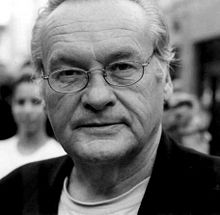
Jerzy Skolimowski appeared on The Bat Segundo Show #239. Skolimowski is a filmmaker, and is most recently the director of Four Nights with Anna, which is currently playing at the New York Film Festival.

Condition of Mr. Segundo: Waiting for the fifth night.

Guest: Jerzy Skolimowski

Subjects Discussed: Moonlighting (1982), starting from a home to get the lay of the land, the importance of place, how location dictates character motivations, Bruce Hodsdon’s observations about Skolimowski’s objective-subjective dialectic, the importance of story, Leon’s movement in Four Nights with Anna, using sparse dialogue, sticking with the script vs. accidental improvisation, how one of Anna’s reactions originated from an unexpected problem with noisy boots, inserting moments of sympathy for Leon and cleaning Leon’s image, the film’s flashbacks/flash forwards, dead cows floating in the river, decorating Anna’s room, artificial waterfalls, explaining the seventeen-year gap between Ferdyduke and Four Nights with Anna, Skolimowski’s problems with Ferdyduke, the pursuit for artistic satisfaction, Skolimowski’s career as a painter, acting as “easy money,” observing KGB agents and White Nights, collaborating with Polanski on the Knife in the Water script, Skolimowski’s early efforts at poetry, dialogue getting in the way of the visuals, the relationship between political tension in Poland and Skolimowski’s art, and the problems of thinking about money when pursuing art.

EXCERPT FROM SHOW:

Skolimowski: For me, the most important thing is the story. I’m telling the story. And I’m not speculating on what it means more than it is. It’s a story. And of course, one can always find some additional interpretation and some theoretical sightseeing into it.
Correspondent: But I’m wondering if you’re perhaps being a little disingenuous here with your answer. After all, there is this chronicle with the ring. Which, of course, made me think logically of the old Jewish tale of putting the ring on the corpse and the like. And here you have it in reverse. And here Leon actually uses this as a kind of code with which to act and use his severance pay on purchasing a new particular ring. And so I’m wondering, when you think about a situation involving a ring, I mean, clearly that is a symbol. So it’s not entirely just basic storytelling, I would think.

Skolimowski: But to me, it is a basic story. And I don’t treat it as a symbol at all. Because logically this ring belongs into the story. He buys this ring for a specific purpose. He executes that purpose. And again, if that means something more, fine. It’s the benefit of it.

Correspondent: This is where audiences come in. You essentially exculpate yourself from responsibility for symbolism and critical analysis and things like this.

Skolimowski: I rather do. Because I think, once again, I have to say the story is the most important. Everything else is just, you know, how would I describe it? It’s….

Correspondent: The additional icing on the cake, I suppose.

Skolimowski: Exactly! Those are the words.

Correspondent: Okay. Fair enough. Well, let’s talk about Leon’s movement. I was really fascinated by it. Because he constantly circles around people. He’s clumsy. He slips in the mud. And again, I was rather taken with a larger allegorical meaning of what this particular movement might mean. Because it’s definitely misfit-like movement from him. And I’m wondering how this came about and how this emerged.

Skolimowski: When I was writing this story, I thought that the character should have a specific complex. That he should be extremely withdrawn and shy. And to manifest it, the best way — as you probably noticed, there’s very little dialogue in the movie. So he is practically not saying anything. He’s got maybe three dozen words through the whole film. But physically, he has to present that character which I wanted to create. So I thought that his walk should be kind of specific. And therefore when I choose the actor, I put some heavy stuff into his boots. I put some lead so each of his boots were like five kilograms heavy. Therefore, he had to walk like this natural.

Correspondent: That explains it. Did he slip because of this? Or was that planned? I’m sure.

Skolimowski: No, the slips were done for purpose. Because I need some light moments. You know, it’s a very gloomy story, and I didn’t want to have the audience be sad all the time. So I purposely planted those moments where one can laugh or at least smile, and have a little bit of relaxation from that tragedy. Because this is a tragic story. Tragic love.

(For related information about the film, here’s our review of Four Nights with Anna.)

BSS #239: Jerzy Skolimowski (Download MP3)

This text will be replaced

NYFF: Summer Hours (2008)

[This is the eleventh part in an open series of reports from the New York Film Festival.]

Olivier Assayas is a prolific auteur. Summer Hours is Assayas’s third feature in two years, following Boarding Gate, a muddled dimebag noir depicting an implausible relationship between the gravel-voiced Michael Madsen and the melodramatically languorous Asia Argento, and Eldorado, a television documentary chronicling Angelin Preljocaj’s efforts to choreograph Karlheinz Stockhausen’s imposing Sonntags-Abschied. Summer Hours, with a premise nowhere nearly as Chekhovian as the situation suggests, is a considerable improvement from Boarding Gate, involving three middle-aged scions in an artistic family attempting to corral a family legacy against their own financial needs.

It doesn’t quite live up to its full potential, but it certainly comes close. Mother, a cheerfully depressed and easily tired woman who we get to know in the film’s first half hour, dies. Father — a renowned artist named Paul Berthier — has been dead for some time. The Berthier home, built over the years into a summer retreat for the family and populated with expensive furniture and art, is ready for the auction block.

Assayas is on point here thematically. Charles Berling, who is looking more and more like Aidan Quinn with each movie, plays Frédéric, the most interesting character of the three. He’s an economist courting controversy with his books, but remains very much in doubt about who he is. He cannot connect with his teenage daughter, but attempts to reach out to her with liberalism, only to see these slippy efforts resisted. He lives very much in his father’s shadow, but Assayas is wise enough to keep this detail under the surface. (Indeed, Paul Berthier survives in this film largely as a memory.) We do see Frédéric break down in a car hours after he has learned that his mother has died: the suggestion here being that the responsibilities of being “adult” have led Frédéric to defer his emotions. This breakdown comes shortly after a radio appearance in which he has calmly duked it out with cultural pundits. (Later, when a major decision has been reached, he sits in a dark room staring out the window. He cannot confess to his understanding wife that he is crying.) The bookstores want him for readings and appearances. But Frédéric says in response to this success, “Writing this book has just brought me trouble.” But he insists on overseeing the family legacy. He wants the family to hold onto the home, but it’s largely because he’s incapable of seeing the developments in the present.

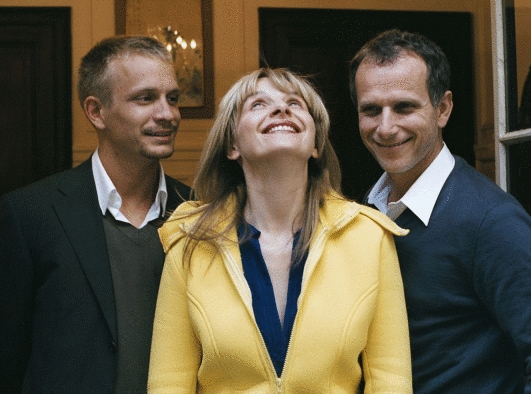
Frédéric’s other two siblings are Adrienne (a blonde Juliette Binoche who is given top billing here, but whose contributions are supporting at best), a fashion designer in New York now trying for Husband No. 2 in the dubious form of an “artistic director of an Internet magazine” (played, with a nod to Assayas’s next generation theme, by Clint Eastwood’s son) and whose feelings are often given the short end of the stick (even her engagement announcement is trumped by family news), and Jérémie (played by the striking Jérémie Renier), an industrialist looking for lucre with a shoe company in the Far East who has no problem rattling off such pronouncements as “The future is making cheap sneakers by exploiting cheap labor” in front of the family. So if Frédéric can’t pave his own way, then it’s either hard art or hard business for the next generation of Berthiers. But these respective overseas circumstances will certainly keep the other two from visiting the summer home.

Aside from these two siblings, Assayas suggests quite adeptly with his editing that time will march on despite Frédéric’s emotions. Months often pass by during the course of the film, but Assayas keeps his transitions quite muted, sometimes cutting directly to the next scene, which is set weeks later, and sometimes finishing up a scene with an unobtrusive fadeout. For example, at one point, we see that Frédéric has grown a beard. Fifteen minutes later in film time, the beard is gone. Cinematographer Eric Gautier, who also shot A Christmas Tale, likewise keeps his camera whipping and panning at the fleeting pace of the present. The camera frequently dollies up to a door, slightly ajar or open, but very rarely moves through it, as if to suggest the inability of these characters to make an active decision.

This intriguing visual psychology anchors the film thematically, but Assayas’s ending, which involves something of a handover of the home to free market forces and the next generation, suggests a stylistic imbalance between characters and theme. The cherry picking is intended to connote Chekhov, but it’s far more literal-minded in its execution. These characters are left sitting in museums, no more different from the caged objects that once presided in the family home. But Assayas’s inability to focus on how these people will move forward comes off as considerably disingenuous in light of the complexities he embeds beneath the surface. But if Charles Berling is Assayas’s DeNiro, perhaps he might find a more satisfying balance in a future offering.

NYFF: The Northern Land (2008)

[This is the tenth part in an open series of reports from the New York Film Festival.]

In considering The Northern Land (aka A Corte do Norte), adapted from a Agustina Bessa-Luís novel by director João Botelho and José Álvaro Morais (mysteriously listed in the IMDB as dead, which suggests an intriguing collaboration if you believe in the afterlife), I am compelled to present the following positive facts about Portugal:

  • Portugal has a high Human Development Index and is among the world’s 20 highest countries rated in terms of quality of life.
  • Portugal is ranked as the 8th freest press in the world. (This beats out the United States, quite a bit, in case you were wondering.
  • Portugal has its own form of martial arts called jogo du pau, in which fighters kick the asses of other fighters using staffs.
  • As we all know, Portugal’s capital is Lisbon. And as names for capital cities go, this is quite pleasant to say. Because it sounds much colder than it really is. And then after you’ve said “Lisbon” for the seventy-seventh time, you realize that this is a city name with some character.
  • According to the CIA World Factbook’s page on Portugal, “Azores and Madeira Islands occupy strategic locations along western sea approaches to Strait of Gibraltar.” I do not know the degree to which the Portuguese population itself is aware of these places of beauty as “strategic locations,” but given that The Northern Land is set in this area, I suspect that, on this level, filmmaker Botelho knew what he was doing.
  • You can expect to live about 74.78 years if you are a Portuguese man and 81.53 years if you are a Portuguese woman.
  • Portugal’s literacy rate? 93.3%!

And this is only scratching the surface. There are many good things that one can say about Portugal. I am trying to stay positive. This film’s muddled digital look did not help matters. (And should one call this a film if it does not look like a film?)

However, I am struggling to find something cheery to say about this film. (Let us be fair and aesthetically progressive here.) On a rather base T&A level, Botelho is to be commended for including one interesting costume featuring a single boob sticking out. No doubt the intention here was to bring a peculiar sartorial quality to the proceedings. But this is essentially a Merchant-Ivory-style film that will put any sensible person to sleep. I should note that I checked my cell phone five times during the course of this film to determine the time, and I am a very patient person. I should also note that this film attempts to express sympathy for a family that is squandering its considerable affluence over the course of a century. In light of the current economic disaster and the egregious bailout bill (a zombie in Congress?) that is currently scaring the hell out of anyone with money, this was not exactly a theme that floated my own particular dinghy.

Botelho also has a rather intrusive narrator describing the action for us. The narrator was so lifeless that I longed for a bon mot from Guy Debord. But here’s the thing. Botelho resists dramatizing this action. And what’s more, he has the characters on the screen frozen in their actions while the narrator continues her plodding narration. And the actors deliver their most impassioned performances while they are frozen. When they are released by the narrator, they became less interesting to me. And I was so disinterested in their lives that I longed for them to kill themselves. Fortunately, Botelho does kill a few of them off. But it’s simply not enough.

This, I would contend, is a bad cinematic strategy. When the most compelling visual that a filmmaker presents is a smug and affluent man sitting naked in a large bathing dish, waiting for servants to douse him with water, I likewise must suggest that the filmmaker has failed in some sense. Let me put it this way. I longed to revisit Bullet in the Head and Serbis.

But that’s just me. This is, after all, the New York Film Festival. And that cultural imprimatur will persuade enough misguided cineastes that The Northern Land is a beautiful film. And it certainly is beautiful in the same way that a particularly striking postcard purchased at Duane Reade is beautiful. The people who inhabit this film are not beautiful. Nor are they particularly interesting.

“This island is killing me,” says one member of the spoiled Barros family. And I suppose that this individual had a point. When your biggest worry in life is a bunch of people laughing at you, and when you declare such a common snafu to be an unmitigated “disaster,” and when the insult itself involves being called a “smelly Boal” (about as tepid an insult in any epoch), chances are that just about anything is going to kill your oversensitive soul. Such is the Barros family.

But if you’re the kind of person who genuinely believes that “I have never looked upon my father as a rich man” is the worst insult known to humankind, I suspect you’ll have a better time at this film than I did.

The Bat Segundo Show: Mike Leigh

Mike Leigh is the filmmaker behind Naked, Life is Sweet, Vera Drake, and, most recently, Happy-Go-Lucky, which is currently playing the New York Film Festival (among many others) and opens in the United States on October 10.

Condition of Mr. Segundo: Too unhappy and too unlucky.

Guest: Mike Leigh

Subjects Discussed: Vocational symmetries within Leigh’s films, Oscar Wilde, looking at a community, bad teachers, Leigh’s considerable frustrations about Poppy being “too happy,” the difficulties of filming Poppy’s jewelry, audience members misperceiving details, the confusion over Scott being a taxi driver, Bechdel’s Rule, depicting women who aren’t in relationships, the duty to portray life, Leigh’s problems with semiotics, collaborating with cinematographer Dick Pope, feeling the buzz of a visual instinct, devising Naked‘s opening shot, getting an Ozu fix, pursuing the issue of technology, flamenco dancing, MySpace, drawings and investigating domestic violence, “En-ra-ha,” Aleister Crowley, gloomy bookstore employees and literary references, shooting in High Definition, and film financing.

EXCERPT FROM SHOW:

Leigh: But as to the jewelry as a symbol of cyclical anything, I don’t know whether I’d go along with that one.

Correspondent: Okay. Well, fair enough.

Leigh: (laughs) Nice try.

Correspondent: Well, let’s talk about another possible symbol. The back pain that she experiences. This to me suggests that here we have Poppy moving forward as her specific identity — “happy-go-lucky” — and yet there is this pain in the back. And, of course, she laughs it off while she’s at the chiropractor’s office. But the thing that’s fascinating about this to me is that, well, this is behind her. So it’s almost as if she has her blinders on. She’s so focused in on moving forward that she doesn’t notice what she’s feeling in the back. And I’m wondering again how much one should read symbols into these particular choices.

Leigh: I think as we progress into this conversation — I think you are plainly a fundamental, unreconstituted, top-rate intellectual. Which I’m not. I think it’s fascinating, your analysis. But I think it’s a load of old rope. Basically. And I can’t go along with it at all. I mean, the fact is, she gets a bend in the back because she pulls her back when she’s trampolining. And it happens to be her back because that’s what she pulls. The back muscle. I think what’s more interesting about that unfortunate thing that happens to her, which gets fixed by an osteopath, not a chiropractor…

Correspondent: My apologies.

Leigh: No, no, you couldn’t, you know. But I think what is interesting, I’ve found, is that, you know, a lot of people — this has nothing to do with your question, but it’s talking about the same part of the film.

Correspondent: Sure.

Leigh: The same aspect of what happens to Poppy. You know, people are conditioned — mainly, courtesy of Hollywood — into the inevitability that something terrible is going to happen. And a number of people have thought, “Oh! She’s got cancer of the kidneys! That’s what this film is about!” Partly because the last film I made was about an abortionist. The fact is that it’s not about that. People say, “Well, couldn’t something terrible happen to her in the film?” And then you think of that. And you say, “No. Because that’s not what it’s about.” Of course, this could become a film about a woman who dies of cancer of the kidneys. But so what? That’s not what it’s about. It’s about somebody who giggles at stuff and is positive.

Correspondent: You also quibbled in another interview over people identifying Scott as a taxi driver instead of a driving instructor.

Leigh: Yeah, people say “that scene with the taxi driver.” I mean, it’s amazing. The number of people everywhere — here, in Paris, in London, in Berlin, and we’re talking about international fests — who call him a taxi driver. And it’s very curious. It’s as though this is a film about an airline pilot and people are calling him a doctor. It’s very strange.

Correspondent: I mean, I’m wondering. Could it be the way that you actually shot him? Because I know that you and Mr. Pope actually used lipstick cams to get…

Leigh: No, no. Come on. You cannot construct any correlation between how the film was shot and the fact that, for some reason, people call a driving instructor a taxi driver. You really can’t do that.

Correspondent: So it’s the audience’s problem. Not yours.

Leigh: No, no. It’s just a weird thing. I mean, I don’t think it’s even a problem. It’s just a strange quirk. But I don’t think anything should be made of it really.

BSS #238: Mike Leigh (Download MP3)

This text will be replaced