Unfiltered Agony

Agony. My life, like the lives of so many Americans quietly quivering with fear, has drifted into some alien realm I scarcely recognize. It is a dystopian wasteland populated by techbro serpents and slimy venture capitalists cooking the books to disguise and delay our inevitable economic collapse. And it is little more than agony.

I walk the streets with gushing exuberance and cautious optimism. Because kindness and good times require no effort and it makes me happy to give someone else a reason to carry on fighting another day. It is also my responsibility as a citizen. I crack jokes and smiles. If a modest reserve of energy overtakes me, I spend it on others who need my guidance and reassurance and who have less than I do.

I generate this vital inner fuel by taking in the many sights and sounds and figures who make life so precious and special, all the while nursing the Matroyshka doll of hopeless hurt and suffering that bounces within me, caused in part by the worst and cruelest breakup of my life (this time, not my fault) that transpired six weeks ago and the significant energy and maintenance I have had to expend to secure a permanent roof over my head during the worst housing crisis in a century.

Take the top half of one painful layer and there’s another sad face, the mouth caught in an exasperated Soviet O, to unscrew beneath. Sometimes an invisible hand adds another doll to dwarf and occlude and ensnare the full nest. But I have agile and resilient hands. I am often surprised to find that I can organize these dolls within dolls of pain, even as these dolls keep multiplying like some porcelain cancer that won’t stop metastasizing.

Small wonder that Backrooms and It Ends, genre flicks that brilliantly captured the Sisyphean hellscape of American life, have been hits this year. Their cinematic cousin, Obsession, sealed the triptych by adding incel coercion and toxic masculinity to the grisly Joycean nightmare that we all can’t wake up from and we are all desperately trying to escape. Horror movies have become more dutiful in documenting American life in 2026 than our increasingly censored news outlets.

Why do I not give up? Well, it is because I am a student of history. You have to keep moving like a shark during dark times to get to the light that awaits you on the other side. And rest assured. There is something after the Orange Fuhrer’s demise. Though how many of us will be irreparably broken when that joyful moment arrives? This is why empathy now operates at “too big to fail” levels (though not at the expense of people’s homes or financial portfolios). I want to help as many souls as I can, but I am learning that even I can max out. It is a weird guilt to possess about one’s finite limits, but I cannot seem to shake it.

It is the promise of this future luminescence that keeps me going. But am I believing in a lie? Prosperity is just around the corner! That was muttered by a fraud malingering in the executive branch one hundred years before us. He was, if you can believe it, more capable than Donny, the eighty-year-old monster who will not die — even as the Grim Reaper smites national treasures like Dolly Parton and Tim Curry. I have to consider the possibility that this small and diminishing aperture into a more secure life that is situated so far ahead, so indeterminate in its timing, may not arrive until my own existence terminates. And isn’t that a depressing thought! But that is the hellscape of Trumpism and rising rents and escalating prices and dodgy unregulated food and diminishing shots at affordability. All Americans have dreams but we increasingly don’t have the means. Corporate profits go up. Data centers plunder our water and our power and cause the good people of Gary, Indiana to suffer without electricity. And if you’re unemployed, it’s now a game of Beat the AI Algorithm! Be prepared to apply for four thousand jobs minimum.

And that is what I mean by agony. Unfiltered agony rather than “depression.” Originating from agōnia in Greek. A constant jostling for victory. An endless series of struggles. Contests, countless contests.

I am a man of words and I choose “agony” with care. Agōnia came from agōn — a public gathering for games. Does that not bear an uncanny cadence to the whims of social media? I was a main character well before it was fashionable and nobody outside of a small group of people knows the true story. I have spent the last twelve years of my creative life in exile, expressing my deepest fears and anxieties bluntly and baldly in multiple media formats (and even through the prism of award-winning audio drama), knowing that I am rebuked by media people who have lied and prevaricated about my history because they resented my voice and my knack for getting through to people. They invented whole incidents that never happened and that they never questioned. They could never get me on my work and they will never stop me from writing. And now that they are losing their jobs, they are discovering that they cannot stand with robust legs against the vicious wakes of the sea. But I can. I’m actually somewhat grateful to them in a morbid way. When you have defeated Erebus once, you can defeat him again.

Still, this is agony. A neverending series of contests. I am constantly wrestling with a grave sadness that threatens to jostle the robustly jocular foundations of my spirit. Because now everyone on every point of the political spectrum can say anything. Alternative facts have become democratized. AI has twisted the knife further by turning vast swaths of our population into softheaded morons cutting and pasting pablum. The craziest thing is that they feel entitled to being a fraud.

In Everything is Now, J. Hoberman rightly noted that cheap rent was one of the mechanisms that allowed New York to be the center of American culture for many decades in the 20th century. It was a great shock to learn that the average one bedroom apartment — even in Brooklyn — now goes for $3500. Multiply by forty and that means you need $140k/year just to live here. And even if your credit is very good, they’ll still demand that you sign with a guarantor. Just to humiliate you.

When I first moved to Prospect Lefferts Gardens a little less than twenty years ago, I paid $900 in rent. You only needed $36k/year to sign a lease. And I somehow managed to generate enough money as a full-time writer for a while. But those days are now gone. A recent Streeteasy listing showed that the present rent is now three times what I paid.

I still wrote. I can’t not write. It is how I stay sane and kind and honest. It is how I am able to give and help.

Before she wounded me this summer, my ex said one very smart thing: “You put the worst parts of yourself online, Ed. Why don’t you put the best parts?”

Well, this is the first essay I’ve written in six weeks. I don’t know if this reflects my good parts or my bad parts. Maybe it’s all parts. We’ve become so accustomed to presenting nothing but our best parts that life has become little more than a performance. Why then can we not perform truthfully even under these imaginary circumstances?

Withdrawing

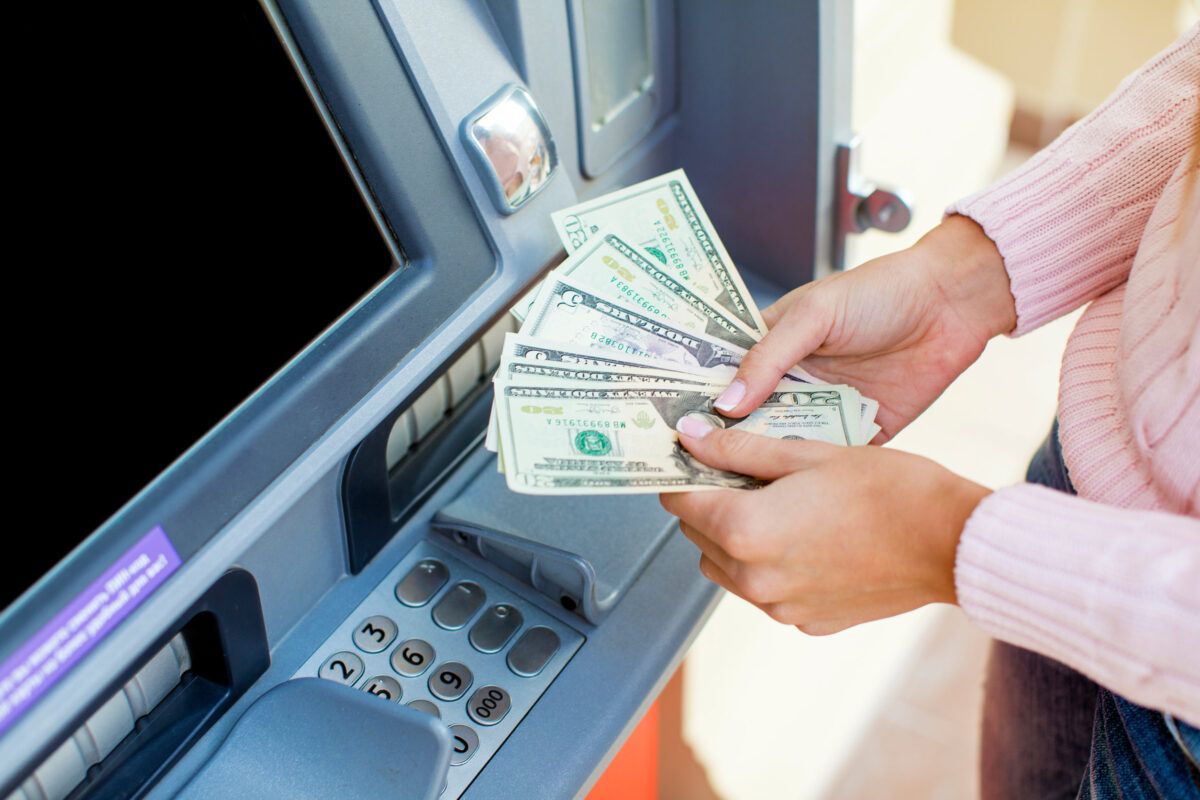
Most of us withdraw money from our checking accounts at least once a week. We do, after all, have to survive in this wildly flawed and ever more hurtful world. Even when the money we withdraw doesn’t mean much. Slips of green paper that have touched several hands before us, used to acquire food and other items that allow us to survive. And with inflation, the value of money increasingly means much less. The quiet joke about money is more apparent these days. A dollar bill and a euro walk into a bar. They both measure their value against each other, which is subject to whims that are beyond their control. The dollar bill says to the euro, “Whose wallet or purse do you think you’ll end up in this week?” The euro replies, “I don’t know. But I’m sure some stranger will slide me across a counter to buy something before I have time to get comfortable.” “It’s a transient life, to be sure.” “A transactional one.” “Same diff.” “When do you think you’ll die?” asks the dollar bill. “I don’t know,” says the euro, “we don’t live as long as dogs. Maybe eight years if we’re lucky. All the wear and tear.” “I know,” says the dollar, “I’m starting to feel my age.” “You’re holding up very well,” says the euro, “let me buy you a beer.” But in the euro’s noble quest to honor the camaraderie that he has just established with the dollar, he has no alternative but to submit himself as the instrument of payment when the bartender arrives. And while the dollar enjoys his beer (only to be scooped up from the barstool after a mere two sips by a bipedal ape-descended life form in great financial need), the euro finds himself spending the next several hours inside the dark boxy abyss of a cash register cage before he is eventually transferred to a safe, which is an even more depressing place to exist than the cash register. Small wonder that currency has no soul. This is no way to live.

Not that money has ever meant all that much to me — except as a means to carry on surviving. The things I enjoy doing and that I am particularly good at are far from lucrative. In fact, I tend to lose time and money when I’m doing these things, although I do not consider that I am withdrawing from anything when I am happily doing these things. I have all the books I could possibly need — even if I cannot stop buying them. It is not so much the money I care about, but the books, which have become increasingly more reliable than people in 2022 and appear to be the foundation for whatever sanity I possess. I have all the things I could possibly need. I don’t need anything more. And the idea of playing the crypto market strikes me as one of the most boring pastimes imaginable. Even more boring than gambling, which I also do not do often. The last time I gambled, it was three years ago and on a whim. I had stopped at Atlantic City after recording with an actor in Virginia. I had a car to return the next morning. And it seemed ridiculous to drive all the way back to Brooklyn, only to drive to Newark to return the car, when I could simply stay in New Jersey and thus delude myself into believing that I was still on a journey. I had not been in Atlantic City before and felt, after living in New York City for more than a decade, that the time had come to finally visit this seedy place — a venue perhaps best memorialized by Joshua Cohen in an essay for a magazine run (in part) by someone I strongly detest and who has proven, as I suspected all along, to be largely in this for the money. Anyway, I was in a casino for less than an hour and won big at the craps table and I walked away with my winnings, which most people do not do. Quit while they’re ahead, that is. I had enough for a hotel room and more. Why give this small fortune back to the casino? Yet while I was waiting for an overworked man with a sad angular face to book me a hotel room, and affording the man great leeway because he looked as if he was having a very bad day, I stepped to the side and played the slots and won another jackpot. And these combined winnings were enough for me to live like a king that night — even though I had no aspirations to royalty. I certainly didn’t have any particular desire to throw money around. I didn’t need to withdraw anything. I still don’t feel any overwhelming need to withdraw money unless I need to buy a sandwich or something. But I will stick up for my worth.

The more noble of us withdraw blood. Often for doctors, who request to see it and study it. More often, in my case, for blood banks. Because people need it. And even though I tend to be squeamish around needles when I donate blood (although not so much when it came to getting vaccinated) — a quality which guarantees that I’ll never attempt heroin as long as I walk this earth — I still do this for the greater good. Whatever displeasure I have when a nurse draws blood from me is worth it. And I can usually disguise or distract myself from my discomfort with a fusillade of jokes that, in turn, helps the nurse to have a better day as she treats largely ungrateful patients. (I know how ungrateful people can be. I once worked in a vaccination center. I still treated everyone like royalty, even when they were rude to me.) But maybe I’m overestimating my squeamishness. Or even the quality of my wit. I recently saw a doctor and sat stoically as great pain flooded throughout my body. And the nurse replied, “You know, most men who go through this cry. You don’t.” And it was true. I am better with my pain threshold these days than I used to be. But I have no idea if this is because of maturity or increased resignation. And the nurse proceeded to flirt with me and asked me why I was still single — this as I was in a largely naked and vulnerable position, this as pain continued to shoot through my corpus. I did my best to be present and not withdraw — even as bits of organic matter were being withdrawn from me. Because the operation needed to happen. There was no way around it. Encounters with doctors become more frequent as you get older. Aging is the body’s ignoble way of announcing that you are inevitably going to die.

The funny thing about the word “withdraw” is that its original meaning involved taking back something. To draw away. A possible variation of retrahere, which is Latin for “retract.” But when we say that we withdraw now, what are we taking back exactly? The money we withdraw from a bank is usually spent on something. The blood that is withdrawn from our bodies doesn’t return to us. But this etymology does provide me with some comfort. Because I find myself withdrawing from people more these days out of self-preservation. People are becoming crueler and more selfish. And it all makes me very sad. The mass shootings. The anti-choicers who want women to suffer and to give up all their autonomy and their identity. The ineptitude of Democrats. The cruelty of Republicans. But I don’t want to have the soul of a lonely euro whimpering in the dark heavy jail of a safe.

And it’s not just political. People who I thought were friends have demonstrated that they do not care about my feelings. They have their reasons. It has nothing to do with me, but that doesn’t stop their egotistical acts from causing hurt. They see the way that I live, which is entirely on my own terms and very much about being there for others, and they resent me for it. While more deranged members of our society would be more inclined to shoot up a school to contend with this imbalance, I’m not a violent man. And my response has been to withdraw from them. I mean, if you’re texting with an ostensible “friend” and pointing out that you’re not feeling all that great these days, and that “friend” replies “lol,” that’s not really someone you want to be friends with, is it? In the last two weeks, I have largely withdrawn from writing — something that I very much enjoy doing — because I am still dealing with the great hurt of busting my ass for someone who claimed to vouch for me and who even called me a “genius” (I’m not) and who fed me to the lions and who betrayed the many hours I put in. This two thousand word essay (or whatever the fuck it is) that I am writing right now is the most writing I have done in one sitting in eight days. And I have enjoyed writing it. And I feel right now a sense of catharsis. And coming to terms with all the flotsam in my head is helping me. And hopefully it will likewise help you — that is, if you’ve read this far. I’m sure that many people will resent me for enjoying the experience of writing this. Certainly someone as bitter as Fran Lebowitz, who I am increasingly believing to be a fraud and who will probably never read this, will see my enjoyment of writing as suspicious, if not worthy of censure. But then Fran Lebowitz likes to complain. It’s her schtick. And it has a limited range and repertoire. It’s enjoyable to some extent, but increasingly less so as I get older. She is not as bad as Ricky Gervais, who is a truly sad and hateful and mediocre man. His most recent transphobic “comedy” special caused me to cancel my Netflix account. Because I don’t need that kind of ugliness in my life. And I don’t want to support that. The world is ugly enough. My schtick is to try not to complain (except in the case of notable injustices, such as various Supreme Court rulings devised by soi-disant “originalists” or income inequality, or to stump on behalf of the many people who seem to trust me with their most vulnerable and heartbreaking stories and whose trust I feel the need to honor and to never betray because I don’t understand why they trust me and see me as a man who they can be open with), but to see and depict quotidian wonder, particularly strange quotidian wonder. And that is the basis for what I do. That’s who I am. I cannot be anybody else but me.

But back to this “friend.” I believed, after all the years we had known each other, that he would have my back. Much as I have always had his back and have taken significant risk to stick up for him because that is the kind of loyalty I have for people in my life. Because loyalty and honesty and good faith matter more to me than how anyone perceives me. But it was not to be. I was forced to withdraw.

So I am withdrawing from certain people. And my choice to withdraw has proven to reveal who certain people truly are and how little my honest passion and my fierce advocacy has truly mattered to them. I am withdrawing to take back something, per the original definition of “withdrawing.” And the hope is that I can find people who understand what I’m talking about here. Who intuitively know the big problem we’re not talking about. Who can read the room and see that a lot of us are scared and that inaction is no way to go about this tricky business known as life. I am withdrawing in order to be more present. To live to fight another day in a long and difficult fight that is increasingly essential to preserve the joy and beauty of the universe and to inspire other people to live their best lives and to accomplish great things. Which now seems like the hardest fucking thing in the world. It used to be simpler. But it has to be done.

Decline of a Wandering Brooklynite

My friends know me as someone who can easily locate some recherche venue in a city I’ve just set foot into for the first time. Even without GPS, I can usually drive my way to where I need to be. It’s a blind instinct. The seeds for this sense of direction were planted when I was four years old. There was a large map of Santa Clara County hanging on my bedroom wall and I memorized all the streets to pass the time. I asked my mother to order more free maps from AAA and I scooped up these new geographical sectors with relish, happily adding these fresh streets to the spatial depository of my ravening mind. My mother was someone who could get easily lost. But I had traced the clover leaves and followed the construction of new freeways with my little fingers. I had calculated the shortcuts that got you to your destinations faster. At four years old. A few years later, I would sneak out of the house and spend the entire day bicycling to areas on the map that I was curious about. I once got into trouble when a neighbor ratted me out after discovering that I had high-tailed it six miles away. I’ve always felt wanderlust was something vital that binded you to a community. My heart flows with a great hunger to investigate every nook and cranny of any neighborhood I live in.

I learned yesterday that the pandemic has destroyed this essential part of me.

There was a place in Queens that I needed to be at. Anybody who lives off the 2 line in Brooklyn knows that the easiest way to get there is through one simple transfer move. In the Before Times, that free-wheeling maskless epoch now so inconsolably long ago, the switch between Hoyt and Hoyt-Schermerhorn was as easy as breathing oxygen. You’d shuttle up the stairs from the 2, walk a few blocks over, and descend into the subway system’s subterranean bowels to catch the A.

But yesterday, as I squinted into the early morning light, I found myself incapable of recognizing whether I was north or south. I didn’t seem to know where I was at. It was shocking. The stores along Fulton Street seemed as foreign to me as they were fourteen years ago, when I had first mapped Downtown Brooklyn’s bustling blocks onto my mind, pleasantly amazed that I was ambling down the same strip that Spike Lee and Ernest Dickerson had captured in beautiful black-and-white in She’s Gotta Have It.

Perhaps I was fated to feel confused because I had excavated four pairs of pants from the closet that very morning — slacks and trousers that I had not worn in a good two years and that I had replaced with more elastic jeans — and discovered that only one pair still fit me. My waistline had expanded under lockdown by a few inches. It was bad enough that the pandemic had saddled me with a burgeoning mass of neck fat that had nestled uninvitingly beneath my chin. I lost a lot of weight seven years ago and had always kept it off through exercise. But the exercise bike in my apartment, which I once used regularly with gusto, has lost any allure and now feels as tedious as taxes. My three hour constitutionals had been denied me. My long walks through New York didn’t feel fun anymore because, even with the double mask protection, my glasses still fogged up. Whenever I leave the house, my only choice to stumble blindly into a metropolis I love but can now no longer see, with everything five feet ahead of me rendered into some blur, the muddy vista of a previous city that now lurks only on the mnemonic fringes. The random social encounters and the trips to new places no longer exist. So any saunter feels tiresome. The only geography that most of us have are the cells we now call home.

Earlier this week, Ellen Cushing noted our collective decline in The Atlantic, pointing to an epidemic of people forgetting words or names and succumbing to absent-mindedness. Like Cushing, I can trace the decline of my motivation and my productivity to the grim cold of late December, in which the risk of hypothermia became the prerequisite for safe socializing. I saw my friends less. I dated less. Even when I did the math to meet someone in socially distanced real life, I would find that the date or the friend would backpedal at the last minute, disrespecting the two weeks of self-quarantine I had subjected myself to before meeting anyone (and only meeting one person at a time). Life increasingly became a relentlessly bleak calendar of entombed solitude. I would go weeks or months without smoking or drinking, only to take one or both up again. Anything to change the grim and hopeless cadences of routine. My mind and body atrophied. My progress on my audio drama and the wild novel that I had drafted in a gleeful three-month summer frenzy stalled. Without the social glue to keep me effervescent, there really wasn’t much point in doing anything. It didn’t help that looking for work was becoming increasingly demoralizing. I had always been able to land a job before with a phone call or, in a few daring cases, showing up in person, cracking jokes, and introducing myself. I was still able to play guitar. I started learning keyboard, but found that this was increasingly pointless. I obtained a ukulele at the start of this month, learned it fairly fast, and that lifted my spirits a bit. I became prolific on TikTok in an attempt to remedy some of the loneliness of living alone. I read books at a ridiculous rate, slamming back nearly a book a day during the month of February. But even that part of me surrendered to dismal pandemic perdition.

One year of this. Who knows how many more months? We weren’t built to live like this. But we have no other choice.

But I’m most disturbed by the fact that I can’t find my way in a city anymore. Even one that I’m deeply familiar with. I’m terribly alarmed that something that was as vital to me as food and water seems to be permanently lost. While Cushing ends her Atlantic essay on a sanguine note, I’m not sure if my synapses or hers are as plastic as she thinks they are. Even if we somehow hit the magical goal of mass vaccination by the summer, we cannot deny the reality that our collective mental health will take years, maybe even decades, to repair. Maybe there’s a case to be made for human beings showing more kindness and understanding to each other, given that we all know that nobody has escaped this pandemic without some kind of crippling toll. But I’m not so sure. Those who have been lucky enough to be vaccinated have developed signs of what I call “vaccine privilege,” where they are boasting about how invincible they are and eagerly making plans to be social while leaving the unvaccinated sad sacks in the dust. Selfishness seems to be an ineluctable part of the grim equation, perhaps more so now than ever. And we can’t even begin to rebuild our social fabric unless we relearn how to be there for other people and to include them. But many of us can’t or won’t be able to do this. Our vital parts have been deracinated. The qualities that once made us distinct are trapped in amber. What kind of community can anyone build when our personalities are so lobotomized?

Appraisal

It’s a wonder you’re not dead. What keeps you alive? The shining hope you mine from the mire of dark dreams. An occasional kindness you didn’t expect from a stranger. The news that some fierce and sincere pep talk you delivered years ago resulted in someone living a better life. You saved two lives just this year alone: a friend who you tracked down in a doorway just north of Union Square who was carving into herself with a knife and who spilled blood in the tony entrance of a women’s clothing store, a woman who you patched up and took care of and eventually had to call an ambulance for, and another friend who was about to down a full bottle of Ambien in a East Village establishment that shall remain unnamed. You saw his mouth and the open orange container and you sprinted with every ounce of fortitude you had. If you had arrived just a moment later, he would have swallowed the pills. But you tackled him at just the right time. You’re still haunted by the relentless clatter of the bottle’s contents spilling onto the grimy bathroom tile. It took ten minutes to buy him a beer and to calm him down and to get him to laugh and to remind him why life was worth living. Which you seem to be good at doing.

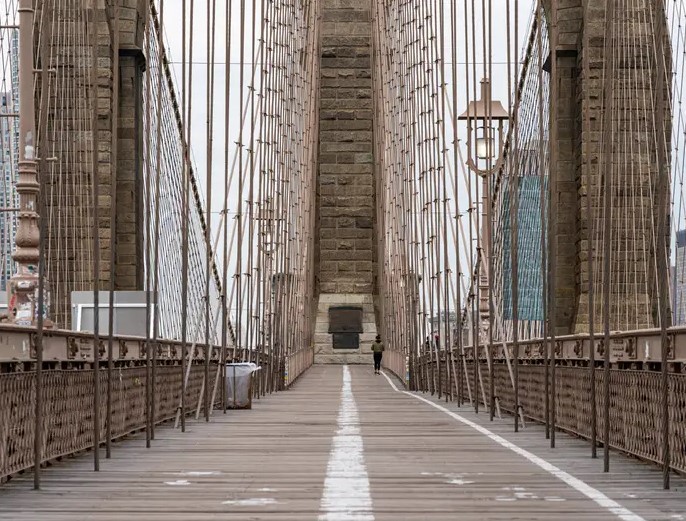
You didn’t want either of them to die because New York needed them both. You were so certain of that and you were proven right. Both now thrive. And perhaps your empathy went into overdrive not just because you care about other people more than you let on, but because you had been there yourself five years before and little trickles of that fateful morning on the bridge, a morning in which a teeny isthmus separated you from Kings County and the undiscovered country, have sometimes dropped into your mindscape in the intervening time. When a spritzer of ideations sprinkled into your head after a resentful and hateful gang invented convincing lies and hounded for your blood, your therapist ghosted you because she had had enough of your blubbering feelings. The latest development seemed to confirm that you were a fuckup, even though you were doing much better. Or maybe the therapist saw you, as so many do, as an insignificant spectre. You seem to project such confidence and authority that it’s impossible for people to see that you want to stitch up the remaining wounds. They can never praise your accomplishments and will never see all the good that you do (not that you advertise this), but they always magnify one pedantic fault. Such is life in the 21st century. If you can’t live up to the unreasonably golden ideal, then get lost. And now no mental health professional in the New York metropolitan area seems to want to take you on, especially after you slam them with a precis of what’s troubling you. The war against authenticity includes even those who are supposed to provide help to those who are trying to be more real and thus more connected to others in an increasingly isolated age. Your messages fall on deaf clinical ears. And it reinforces this idea that you don’t belong or that you are unworthy of succor. Well, you privileged white male son of a bitch, what do you have to complain about? You had a free ride because of your genetics and you blew it and you deserve every hell for every mistake I’ve heard about. And you say solo and sotto voce, “No, I don’t. Who does? Aren’t you a humanist?”

You played two jokes in the first week of April, issuing a fake apology on Instagram and writing a goofy essay in which you claimed to have two daughters. But your problem is that you’re just too damn persuasive and convincing. Because people wrote in and asked if you were okay and who was the lucky woman and when did this happen and mazel tov. So many people seem to want you married, a condition that, in most cases, represents an illusory felicity. But the truth is that, well, maybe you’d like to be. Well, not necessarily. You just want to be involved in a situation in which your apparent attributes and considerable attention to detail after midnight don’t represent the sole reasons why a woman sleeps over. People never seem to see your kindness and your empathy and your affection, in part because you keep this on the q.t. and it seems churlish at this stage in your life to announce it. And it’s also difficult to articulate your feelings because it’s construed as a form of emotional manipulation, even as you are careful to find the gentlest candor to stand up for who you are. They say that you can’t beat the house. So maybe there’s just no one out there for you, other than that dude in the mirror. The only recent woman who seemed to care for you, who accepted you and offered handwritten cards, turned out to be married and was seeking multiple dalliances. You had to laugh at the irony, given how so many others had believed in the faith of this imperfect institution. So you had to say sayonara to her. At this stage of the game, you’re the “if only” choice. But you really want to be somebody’s only. This puerile game of musical bodies grows so tiresome. You’re far from the only one experiencing this plight. So why not shut the hell up? Besides, maybe it’s too late for you.

Still, there’s no getting around the fact that any self-appraisal inevitably turns you into the ignoble hero of your own self-serving story. In some sense, as Kiese Laymon has recently observed in his excellent memoir Heavy, you need to tell lies before you tango with the truth. Which is exactly what you did last week. So let’s do better. You feel that you give and they take, despite the fact that you also believe that life should never involve a ledger. But, hey, we all contain quite a few contradictions. You love and it’s always unrequited. You frequently wonder if your desire to be loved for who you are is the most selfish thing to ask for. You ask for favors once in a cerulean moon yet there’s always some camarera gently placing the onyx check presenter upon your mesa. You’re tired of paying your dues, but there’s no other choice. Men who have done far worse things than you are alleged to have committed are allowed to write cover stories for major magazines to state the bleeding obvious. It’s not that you’re resentful or envious. You don’t have a competitive bone in your body. But you do despise the mediocre and you want your work, especially the stuff for which you put in serious time, to be respected. But there’s no chance of that happening. Not in an age in which a tweet composed in five seconds is now considered just as worthy as a work of art that took years to put together. Your ship sailed in on the strength of your achievements last December and a feral horde collected invidious myths to smear you. Because of this, you put on about five, maybe ten pounds. And you’re now within a few tenths of that BMI sliver between normal and overweight that becomes ever more difficult to shave off at this metabolic stage of your life. The winter prohibited the walks that make you feel more alive and the stress-fueled drinking eroded your thinness. Now it’s spring and you’re pushing yourself hard, shaving sleep to dream, which is the one thing you live for and that you do best at and the one thing that keeps you sane. But it’s incompatible with the profit motive of the venal bean counters. You cut all ties with your selfish fucked up family. And when you tell a friend, only a few nights ago, why you’ve done this, pointing to the fact (among many others) that you attended five different schools during five formative years, and all this while enduring physical and emotional abuse, your friend replies, “Jesus, Ed, you have the most fucked up family out of anybody I’ve ever known. Now I understand.” Well, at least someone does. At least you’re committed to sharing more of yourself with the people who actually take the time to know you.

What ultimately keeps you giddy and alive is knowing that you refuse to play the sick game of being a saint in paradise. Likes, favorites, popularity. Christ, you actually bought into that horseshit not all that long ago. What you can do is allow the world to come around to you. Maybe one day they’ll see that you have a huge heart and that you have a lot to give. But, for now, anyone who wants in is going to have to talk to that big muscular guy standing next to the velvet rope. He’s pretty damn scary to most people in the club, but you’re not going to make the mistake of believing that all visitors into your VIP lounge are acting with the best of intentions. On the other hand, you’re really pulling all the stops in the places that count. So be you and let the haters choke on the bile of their failure to speak in a real voice. If you want to truly feel for others and make waves, then you have to be true to yourself. Don’t let the seductive propaganda steer you any other way.

Claire Messud II (The Bat Segundo Show #504)

Claire Messud is most recently the author of The Woman Upstairs. She previously appeared on The Bat Segundo Show #86.

Author: Claire Messud

Subjects Discussed: How living in a surveillance state will affect contemporary fiction, the disappearing interior life, Sabbath’s Theater, proper norms and sentences that are alive, transgressions in fiction, girls who get up early to put on makeup, This American Life‘s climate change program, climatologists vs. novelists, the downside of promoting individual agency, why social novels are associated with “big books” and how “small books” can be just as big, James Joyce, reading Finnegans Wake, Ulysses references in The Woman Upstairs, A Doll’s House, how literary and ontological snippets float within your head throughout your life, Nora’s evolution, having to contend with the narrative in your head, people who are against universal health care, when interior selves set themselves up for disappointment, the fury guiding the first chapter, cultural osmosis, the glibness of assigning invisibility to a class of people, “The Ballad of Lucy Jordan” (Dr. Hook version and Marianne Faithfull version) Shel Silverstein’s songwriting career, not looking for original points or antecedents with family and culture, the “being wrong” speech in American Pastoral, Teju Cole’s Open City, always being a hero in your own story, peregrinations of memory, Chekhov’s “The Black Monk,” why investigation into the mind inevitably leads to the corporeal, interpretive liberation, being profoundly disembodied, Nora and foreign voices, multiculturalism and inverted xenophobia, Pierre Nora’s interpretation of the Pieds-Noirs, living a life somewhere between desperation and wanting to count, fakery and personas, giving other people what they want, how the semi-autistic genius myth has become defined by gender roles, Temple Grandin, the Google People in San Francisco, the Publishers Weekly controversy, Enlightened, Roxana Robinson’s Sparta, the unlikable character debate, why America is presently frightened by unlikable characters in art, why likability is uninteresting, +1 culture, how authors are held hostage by Goodreads reviews, the limitations of literature as escapism, how social media is regulated in the Wood-Messud household, and attempts to find a verb which adequately appreciates a difficult work of art.

EXCERPT FROM SHOW:

Correspondent: I don’t want to get into the ending of The Woman Upstairs, but it would appear that recent events — certain reports by Glenn Greenwald — would have the rare notion of reinforcing your ending in terms of what privacy means. And I wanted to start off this conversation because I have to address it in some way. Now that we are aware that we are living in a surveillance state, do you think this is going to do anything for contemporary fiction? Is America going to produce its share of Kunderas and Dostoevskys? I was wondering if you had any thoughts on this.

Messud: That’s an interesting question and I don’t necessarily have an answer. But one of the things that I was thinking about when writing this book — well, I was setting out to write somebody’s interior life. And the interior life is fast disappearing. The interior life was always invisible. But now, in the highly mediated world that we live in, nothing exists unless it is manifest. My daughter photographs her breakfast and puts it on Instagram. And by the same token, maybe there’s something satisfying. I mean, where’s the line between our own willful destruction of privacy and the intrusion of government agencies or whatever into our privacy? They meet somewhere in the middle, right?

Correspondent: You’ve just given me a very terrible idea. That PRISM exists to reproduce the interior monologue. That there will be some new version of Ulysses that is generated entirely by NSA wiretapping. I mean, it could happen! It seems crazy.

Messud: One of the things I’ve been thinking too — you know, we were talking earlier about the somewhat parlous state of literary life. I think it is both a great thing and a terrible thing, but literature may just become samizdat. It may become the underground form of communication. That one’s beneath the other forms of mediated communication.

Correspondent: Aha! So in other words, by going ahead and focusing on the interior through ornate, detailed, subtle sentences that convey several meanings, we are in some way revolting against this.

Messud: Yes. I believe it.

Correspondent: Okay. Well, you know, with that in mind, I’m going to have to bring up your epigraph. “Fuck the laudable ideologies,” from Sabbath’s Theater. I do know that in your husband’s book, How Fiction Works, he singles out this sentence as “utterly alive, alive by virtue of the way it scandalizes proper norms.” So this leads me to ask. How much did you hope to scandalize proper norms with the writing of this book? I mean, what transgressions do you think are left in our oversharing age? How do novelists answer to this?

Messud: You know, it’s interesting. I think I did see in my mind Nora and the story she has to tell as transgressive. In part because she is not lovely, glamorous, fascinating. A model in New York City. She’s a schoolteacher. Part of her transgression is the fact that she’s leading a completely ordinary life in which officially nobody has any interest whatsoever. And I do think in this increasingly mediated culture where we all want to be represented, she is somebody who is completely unrepresented. So it felt like a transgression to give her a voice.

Correspondent: So today’s fiction transgressions are giving voice to those types of characters who normally don’t get on the page? I don’t know. Do you think literature is now that limited? That we can’t have anything other than a certain kind of perspective? Where is this coming from?

Messud: No, no. There’s room for everybody.

Correspondent: Absolutely.

Messud: But I wouldn’t set any limits on what can be said. But one thing that felt liberating to me was to be writing her interior life, which she was accused of being dislikable, to which you want to say, “No, no. If you met her, she would be totally charming.” Because that’s who she is on the surface. He or she is showing you what nobody gets to see. And because I have some feeling — apprehension; some of it personal, but also observed — that that is to a greater extent the lot of women than it is the lot of men. Which is not to say it isn’t in part the lot of men. But we’re all expected to put on a game face. So I felt in writing somebody where the point was precisely to express and articulate unseemly and unacceptable emotions and reactions, that felt like a great liberation. And my hope would be that for people reading it, who might have shared even one of her thoughts at some point along the way, that it would be a liberation for them too. To say, “You know, actually, nobody ever talks about it. But this is life too.”

Correspondent: Yeah. Well, I mean I want to get into the unlikable situation later. And I will do so through not just having you reiterate your points. But I want to talk about the proper norms thing and why you think perhaps people are reacting hostilely to Nora in this. Because as you say, any solipsist you meet in life is, of course, yes, going to have this wonderful epidermal layer. That once you peer and get to talking with them a little more, oh dear. There’s actually a lot of fury. There’s something else going on. And we’re living in a society now where you’re supposed to tough it up, bucko. So as a result, it would seem to me that writing about these perspectives would be increasingly necessary. Why do you think there’s this reluctance to explore the interior of something that is seemingly roseate?

Messud: Well, I think there are lots of answers to that. One is that we live now — she says it. We do live in a time that is particularly preoccupied with the surface. And the surface is what counts. I went to boarding school. I went back — this was already some years ago — to my old high school. And one of the very lovely teachers who was a dorm mother said to me, “Did you know that all the girls get up at six in the morning to blow dry their hair and put on makeup?” Which in the early 1980s, you wouldn’t have been caught dead doing. And her point was they have an hour less sleep than the boys do. Because the boys don’t have to blow dry their hair. I guess in the ’70s maybe the boys blow dried their hair too. Anyway, you realize that how you present yourself to the world counts significantly more than at one time it did. That’s a subset or a function of this mediated world. If everything’s going to be represented, then you don’t want to be represented with dirty hair on your dressing gown. Now I’m forgetting the rest of the question. But that was only part of what I was going to answer. But I can’t remember.

Correspondent: Oh, no, no, no. Free form is great on this program. I guess I was trying to tie this all into proper norms and the fact that, well, we all live lives in which we’re putting on masks. And there’s this reluctance to really penetrate further and actually wrestle with this problem. I mean, it’s not just with characters. I heard this This American Life program recently where they were talking about how people who talk about climate change are now incapable of actually being honest about it. Climatologists cannot actually mention climate change until after they have delivered two hours of lectures and a Powerpoint presentation. And this is increasingly getting in the way of having an honest look at what our world is.

Messud: Why can’t they? Why? What’s the obstacle?

Correspondent: They fear their jobs. They are afraid of losing their income. They may piss off people who may actually take away their income.

Messud: Right.

Correspondent: Obviously being a novelist is not quite on that level. Although in the likable/unlikable debate, there is nevertheless that particular reluctance. Don’t rock the boat. Maybe you can tell me what you think about this. Because I grew up and you grew up in an age where we could actually talk about things like adults and disagree and get into really shocking topics. And we wouldn’t be mortal enemies. It wouldn’t involve, “Well, how dare you say that. You’re not going to get work.” Or something like that. And now it seems like it’s moving more towards that. So it’s a reluctance to address issues in combination possibly with some aspects of the 2008 crash. What are your thoughts on this? And how do we bring this back to fiction? And that’s a very elaborate longueur! (laughs)

Messud: Well, I think — certainly there’s the sound byte problem. Jokingly, you said earlier that maybe writing complex-compound sentences that have multiple possible interpretations is an act of rebellion. Increasingly, it is. Because along with the interior life, certain modes of reflection are, if not disappearing, certainly not to the fore. So I think that’s a problem. If you want to say something complicated, but only half of it is going to be shrunk down to some supposed essence, it could easily be a misapprehension of what you were trying to say. So I think that makes people leery of saying unseemly things. But I also think — and it’s linked, it’s another conversation but it is linked — we are a nation always championing the individual, but now has put human agency, individual agency, to the fore to a ludicrous point where, if you get cancer, that would be your fault. You made bad choices. If you have negative thoughts, that can make you ill. Right? In which context everybody wants to become their mask. Everybody wants to be the cheerful, bright, upbeat, healthy, fun-loving self. That’s who you want to be. You don’t want to be the depressive, negative, whiny, anxious naysayer. Nobody wants to be the person who just says, “Climate change has reached a point where we are doomed.” Nobody wants to be that person.

Correspondent: Yes. Well, actually, I’m going to tie this in directly to your book. Because Nora does in fact say something along those lines. [searching through notes] I had a quote here. It appears to have disappeared. I’m going to have to use my damn memory.

Messud: (laughs) The incredible disappearing quote!

Correspondent: I actually had it all here. It somehow disappeared. Well, the quote is — at one point, she’s talking about Sirena and about what her allure is in terms of how the art world is drawn to her. And she basically says that Sirena is, in fact, living a persona. Or something to that effect. And it’s a shame I somehow didn’t actually type up my quote. I meant to type it up. I meant to include it. But anyway, I think this draws on the predicament. Clearly, if we are going to explore the interior, we’re going to have to explore the persona. Do you think that fiction that does this is the way to address this problem we’re talking about? That we can only look at the self as reflective of a larger ill of society through the interior, through how other people are looked at, through a persona. Issues like that. Does that make sense?

Messud: I feel as though — that’s a really complicated question!

Correspondent: It is.

Messud: And I’m not sure I can properly address it. But obviously different types of fiction address these things in different ways. I do think — and this will seem perhaps a tangent — but I think…you know, somebody asked me, “The Emperor’s Children was a big book. Is this a small book?” And I said, “Absolutely not for me.” I can’t say what it is for other people. But absolutely not for me. I do actually feel that the only way to address the biggest issues is through the smallest mouse hole, if you will. That that is the way forward. But on the other hand, it’s true that big social novels in which characters may appear largely in their personas rather than unmasked, if you will, are able to articulate a different part of the dynamic and a different relationship that then extends that to the larger systems of society and government, if you will. And I would maintain that you could follow Nora through to a commentary about broader American society, if you so chose.

Correspondent: The novel is open enough for you to find another road to somewhere else. This is where the reader comes in.

Messud: That would be my hope. Certainly I liked that you used the word “open.” Because my hope with this book is that, in a funny way, it’s more open than almost anything I’ve written before. That that was part of the enterprise: it was to write something that each person would have their own reaction to rather than there being a template of how the novel should be read.

Correspondent: Sure. I had a very geeky question for you concerning James Joyce. There’s an obvious Ulysses connection with Nora, the name of the character. But I wanted to get into a number of Ulysses connections I found in the book. Because I am presently attempting to read Finnegans Wake and I will make it to the end.

Messud: Oh my goodness. I’m impressed.

Correspondent: It’s not easy. And that has actually necessitated going back to Ulysses as well. So I’m in a James Joyce fugue state probably for the next year or two. Anyway. Sirena, of course, referencing the Sirens. There is one “Yes Yes Yes” moment…

Messud: Yes.

Correspondent: …which mimics Molly Bloom. There’s one point where Nora says that she’s “oblivious like a lotus eater.” Which is interesting. Because “The Lotus Eaters” is the first chapter in Ulysses where we suddenly start to understand, “Oh, well! It goes back to Homer.” And then with Wonderland, Sirena’s project, it’s almost kind of a response to James Joyce’s famous remark where he said you could construct all of Dublin from the brickstones that are laid down in Ulysses. And it is interesting that Sirena’s project is very much a schematic recreation. And she has also done, oddly enough, an installation of Elsinore. Which also takes us backs to Ulysses. Because that’s Hamlet and all that. And the subject of art and photos reminded me very much of “Scylla and Charybdis” and Stephen Dedalus’s speech on Hamlet. I have to ask. It’s clear to me that Ulysses was your muse in some sense. And I was wondering if you could talk about this for these references and more.

Messud: Well, I thought…you’ve done a better reading. Some were conscious and some not! I mean, certainly the photography: well, that was not on purpose. Some of them were definitely not on purpose. Others were more deliberate. This is the sort of shaming admission though. As I say, some of those are very deliberate. But the other reference that people have said. Nora. Ibsen. A Doll’s House. And the terrible truth is was when I first sent the manuscript to my editor, she said, “You refer here to Nora’s ‘doll-housed labor.’ That seems a little heavy-handed.” And that was the first moment where I thought, “Oh God, it’s true!” I had forgotten that Ibsen’s Nora was Nora. I had read the play more than once. I had seen the play maybe twelve years ago on stage. I did not reread Ulysses in the planning of this book. My father always would say, “Civilization is what’s left when you’ve forgotten everything.”

Correspondent: (laughs)

Messud: So we can say it’s a relief to know that even in my midlife Alzheimer’s state, I have still some collective memory of what I read in my youth.

Correspondent: Yeah. But I think also with Ulysses, it’s a book that’s very difficult to shake. Because you’re doing a lot of heavy lifting with all of Joyce, pretty much from Ulysses onward and Portrait to some degree. So it seems to me that in exploring Nora’s past and in flashing back, you were going to perhaps certain literary highlights, which may have included Ulysses, which may have been A Doll’s House. Numerous other references as well. This leads me to wonder how your own reading serves as, I suppose, beacon points in trying to really pinpoint who Nora is. Which we haven’t really talked about! (laughs)

Messud: Well, you know, I think there’s no question. There are little snippets that you have in your head as you go through life. Literary snippets. I mean, there are other snippets. But the number of times in my life — this sounds crazy, but the number of times in my life I have had occasion just sitting there to say, “I have heard the mermaids singing, each to each; I do not think they will sing to me.” You know? Which also — it’s not quoted in the book, but in some way it’s in the book. There’s your mermaid. And there she is.

(Loops for this program provided by JorgeDanielRamirez, MaMaGBeats, and KristiJann.)

The Bat Segundo Show #504: Claire Messud (Download MP3)

This text will be replaced