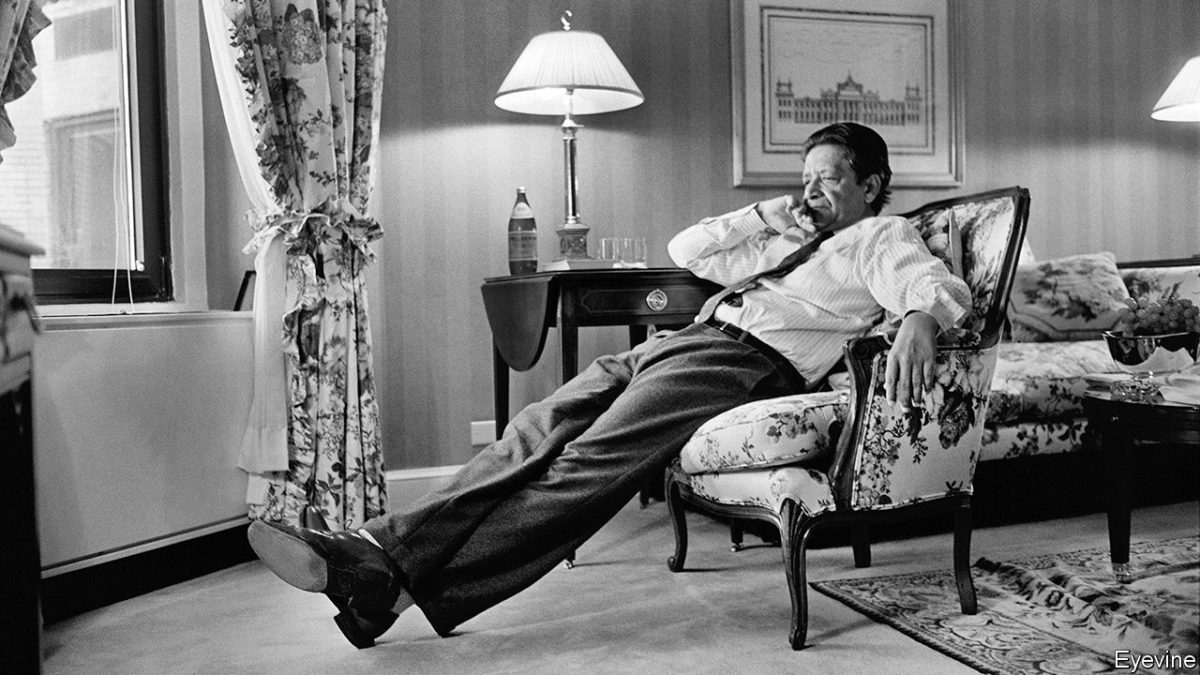
A House for Mr. Biswas (Modern Library #72)

(This is the twenty-ninth entry in the The Modern Library Reading Challenge, an ambitious project to read the entire Modern Library from #100 to #1. Previous entry: The Day of the Locust.)

I have to be honest. V.S. Naipaul’s literary work is so abominably heartless that I would be greatly tempted to fire bottlerockets all night from my Brooklyn rooftop while wearing nothing more than a male monokini if his scabrous worldview and his pointless head games were permanently erased from the canon. He is surely the most overrated writer of the 20th century.

I’ve delivered variations of these sentiments over the phone to amused literary friends, who, when they weren’t laughing their asses off over my five minute anti-Naipaul soliloquies, were good enough to urge me to forgo the semi-scholarly format of this ridiculous years-long project and simply speak from the heart. I shall do my best to be as thoughtful as I can about my Naipaul bellicosity, which is, alas, the only way to move forward with this project. I can tell you this much. Not even Finnegans Wake, which took me five years to read and eventually write about, made me feel as frustrated as I was with A House for Mr. Biswas. Even the books on the list that I haven’t cared for all that much (The Old Wives’ Tale, the wildly overrated Ragtime, the failings of Kim) still contained something essential or interesting. You could see why a bunch of old white dudes decided to canonize the books even if they seemed to be speaking a hoary language — even accounting for the folkways and mores of 1998. But A House for Mr. Biswas was a joyless chore during the two times I read it. It is a reactionary monument to imperialistic ugliness that isn’t so much a thoughtful examination of colonialism as it is an author catching mice in a glue trap and watching them squirm their way into a slow and painful death instead of putting them out of their misery with a hammer.
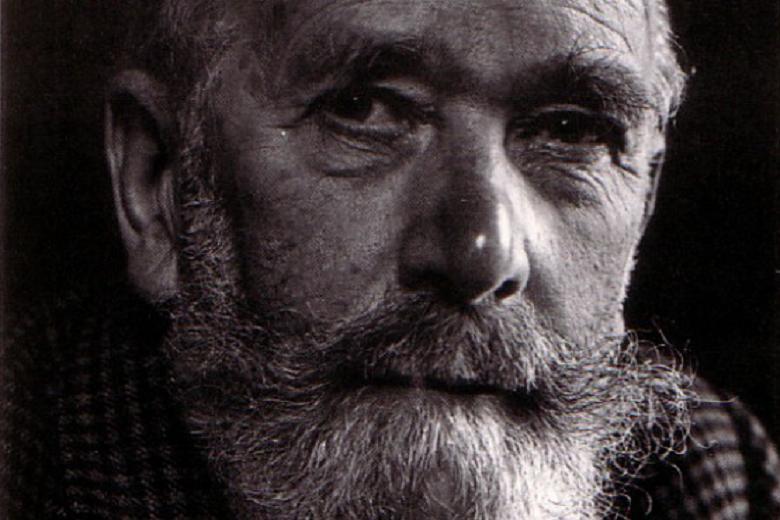
In his life and his work, Naipaul was a sadistic bully, a narcissistic tyrant, and a mean-spirited man who used his powers to punch down. The only quality that distinguishes Naipaul from Donald Trump is his descriptive acumen and his honed prose. There is a moment in A House for Mr. Biswas in which Naipaul has a mother snap off branches from a hibiscus bush to discipline her child and it represents that brilliant exactitude. But that’s pretty much it. There isn’t a single Nobel laureate who basks in repugnancy like this simply because he can. Knut Hamsun was a terrible person (who later turned Nazi), but his masterpiece Hunger actually made you feel something about the down-and-out impoverished wretch at the center of the novel. The late great Toni Morrison, inexplicably omitted from the Modern Library canon, used ugly imagery to reveal the deep humanity within victims of racism and oppression. But what does Naipaul offer other than pointless cruelty? James Wood offered the hamfisted theory that Naipaul adopted the dual role of the colonizer and the colonized to adopt “a cool, summary omniscience that he uses to provoke our rebellious compassion.” But I personally could not feel any compassion for Biswas, in large part because I was constantly aware of the manipulative way that Naipaul had rigged the game. Naipaul, in other words, is an old school bully lulling and gaslighting the reader into a phony empathy. Having no empathy to offer, Naipaul leaves such overanalytical and generous critics as Wood to mine the gelid prose and do the work that Naipaul himself couldn’t be bothered to do. That Naipaul was able to play this game of three-card monte on so many says a great deal about how the literary establishment has a knack for propping up bona-fide sociopaths. Even progressive-minded naifs like Teju Cole stumped for this novel, claiming House to be “a masterwork of realism,” but largely on the basis of its itemized lists and of the way that the book encumbers the reader with its turgid pace. Both Wood and Cole acknowledge that it falls upon the reader to provide the munificence that Naipaul himself cannot. But they refuse to acknowledge that the faults of House‘s thin characterizations very much fall on Naipaul’s shoulders. If a writer isn’t committed to depicting the human, then why even bother praising the writer?

For the Spainards, Mr. Biswas knew, had surrendered the island one hundred years before, and their descendants had disappeared; yet they left a memory of reckless valour, and this memory had passed to people who came from another continent and didn’t know what a Spainard was, people who, in their huts of mud and grass where time and distance were obliterated, still frightened their children with the name of Alexander, of whose greatness they knew nothing.

I don’t gainsay Naipaul’s command at the sentence level, such as the measured passage above. At times, Naipaul comes across as the holistic sage reminding us that all of our lives are mired in historical cycles in which we often forget the final festoons of the previous arc. But grifters often talk in cant that suggest a larger tapestry. If you speak in ways that suggest larger cosmic contours, many people are going to assume that there’s something more to your tale than a mean monodimensional character who treats his family badly and who spends most of the goddamned novel writhing in anger and resentment simply because he never has the guts to make a real decision. I suspect Naipaul has bamboozled so many otherwise cogent minds because this kind of pedestrian toxic masculinity, especially in an older book, can be easily excused as a “sign of the times.” But even with Wuthering Heights‘s Heathcliff, named by Bustle‘s Charlotte Ahlin as the “most toxic male character in all of literature,” we can still understand why he forces his son Linton to marry. Heathcliff grows nastier as the novel continues. But he’s still tormented by Catherine’s ghost and the dregs of being bullied and locked in an attic. Mr. Biswas, by contrast, loses his father Raghu early on in the book after Mr. Biswas, entrusted to take care of a neighbor’s calf, falls into a stream and drowns. Mr. Biswas hides beneath his bed in shame. Raghu dives in for the missing calf and his own son. Raghu dies. Emily Bronte had the smarts to connect Heathcliff’s psychology to the past, which makes him more than merely a “toxic male character.” We want to understand why he behaves as he does. But, with Naipaul, the drowning incident is rarely referenced again in the novel. So Mr. Biswas is a man flung into misfortunes in the present without really acknowledging his past. Does this make him as much of a dope as any other ostensible cipher living out a failed life on a former Spanish colony? Apparently.

But there’s something much seedier at work here. As I pointed out with A Bend in the River, Naipual’s bad faith portrayal of low-caste types has always felt supererogatory. He isn’t taking potshots in an interesting or bona-fide punk rock way that challenges the audience. He revels in filth and ugliness and he chooses targets who are just too easy to flambee. You may recall my love for Erskine Caldwell’s Tobacco Road, which featured some wild and outlandish depictions of degeneracy, but Caldwell used his broad caricatures to implicate his audience for their generalizations about the poor. It’s clear to me that Naipaul doesn’t have any such grand game afoot here, other than reveling in his hideous hubris. He’s happy to see his inventions rot. The man lived to hurl unpleasant observations about unpleasant people, both in his life and in his fiction. And I say this as a huge fan of unlikable characters. Naipaul’s ensemble isn’t terribly interesting or dimensional. For all my complaints about Evelyn Waugh, at least that reactionary clown was committed to some kind of beauty. A throwback beauty that came from a repressed Catholicism, but a beauty nonetheless. What do we get with Naipaul? Hari “humming from some hymn book in his cheerless way.”

While I commend Naiapul’s prose powers (his description of a box imprinted with the circles of condensed milk cans and his evocation of gods for the Tulsi house are two of many examples of what make him a commendable stylist), I really don’t see why Mr. Biswas deserves such an expansive volume. He is mean, arrogant, cowardly, and an altogether predictable specimen of 20th century masculinity. He possesses no empathy for the people who surround him, looking at his future wife Shama not with compassion as she is berated by a customer, but “as a child.” He expresses flights of wild behavior that might be characterized as bipolar. He throws fits, feels as if he is entitled to a job. Even in describing Mr. Biswas in the way I am here, I fear that I am making him more interesting he deserves to be portrayed. Naipaul doesn’t give us a real reason for Mr. Biswaa’s ego or his cruelty — despite the fact that we are constantly surrounded by his family, which include in-laws who are too numerous to track without notes. He would prefer to wallow in ugliness — both in the ramshackle aesthetic of rural Trinidad and the boorish behavior of his many side characters. There are unlikable characters and villains in literature who deserve our attention because we want to know how they came to be who they are. But with Mr. Biswas, I never felt any strong pull to know him any further. Mr. Biswas is an unremarkable reader, a mediocre sign-painter, and a ham-fisted writer who never has anything especially interesting to say, but always has an especially monstrous act to mete out to anyone in his surrounding orbit.

So I’m quite happy to be rid of Naipaul. I will never read him again. There are people who still swear by Naipaul. Robert McCrum once declared Naipaul to be “the greatest living writer of English prose.” But what’s the point of picking up the pen when you don’t have a pulse?

Next Up: Richard Hughes, A High Wind in Jamaica!

The Day of the Locust (Modern Library #73)

(This is the twenty-eighth entry in the The Modern Library Reading Challenge, an ambitious project to read the entire Modern Library from #100 to #1. Previous entry: A Farewell to Arms.)

December 22, 1940 may be literature’s answer to July 4, 1826, the day in which John Adams rasped his last words on his deathbed. “Thomas Jefferson still survives,” he gasped, not knowing that Jefferson himself had passed away only five hours before. One hundred and fourteen years later, two towering literary titans, far more obscure in their time than Adams and Jefferson had been in theirs, met their end at a needlessly early age. On December 21, 1940, F. Scott Fitzgerald collapsed inside a ground-floor apartment not far from the Sunset Strip at the age of 44. The alcohol had finally caught up with him. He believed himself a failure. He would never know that his tragically brief life and his coruscating work would be rediscovered only a handful of years later — not long after 155,000 copies of The Great Gatsby were distributed to World War II servicemen. The next day, about two hundred miles southwest of Fitzgerald’s home, Nathanael West and his wife Eileen McKenney (whose sprightly spirit would be immortalized by her sister Ruth in a series of light but amusing New Yorker pieces later turned into a wildly successful stage show called My Sister Eileen) would be killed instantly in a car collision on their way back from Mexico. West was, by all reports, a notoriously awful driver and he was even younger than Fitzgerald. Just thirty-seven.

Both men had turned to screenwriting to stay afloat during the Great Depression. Both men had much to say about the traps and illusions of American life. But it would take longer for West to be reassessed and appreciated — in large part because he was arguably fiercer than Fitz with his fiction. He had his finger firmly on the troubling pulse of feral American life and he wasn’t afraid to use it with the other nine at his typewriter. In a short essay called “Some Notes on Violence,” West pointed to the idiomatic violence that had permeated every corner of printed media: “We did not start with the ideas of printing tales of violence. We now believe that we would be doing violence by suppressing them.” His razor-sharp satire featured philandering dwarves, skewered the hideous contradictions of gaudy Hollywood spectacle, and, in just one of many enthralling flashes of his grimly hilarious invention, depicted a dead horse serving as au courant decor at the bottom of a swimming pool. (In an age in which urine-drinking is prescribed as a COVID remedy and reality star Stephanie Matto makes $200,000 selling her farts in a jar, one wonders why the present fictional landscape doesn’t reflect our scabrous realities and why 85% of today’s gatekeepers are so hostile to such a necessary dialogue between fiction and life. But then this is the same universe in which Hanya Yanagihara’s excellent, quite readable, and wildly ambitious new novel, To Paradise, is framed by The New York Times in belittingly racist and sexist terms, assuaging an increasingly unadventurous bourgeois readership: “Can an Asian American woman write a great American novel?” (Well, of course, she can. Why even summon the rhetoric?))
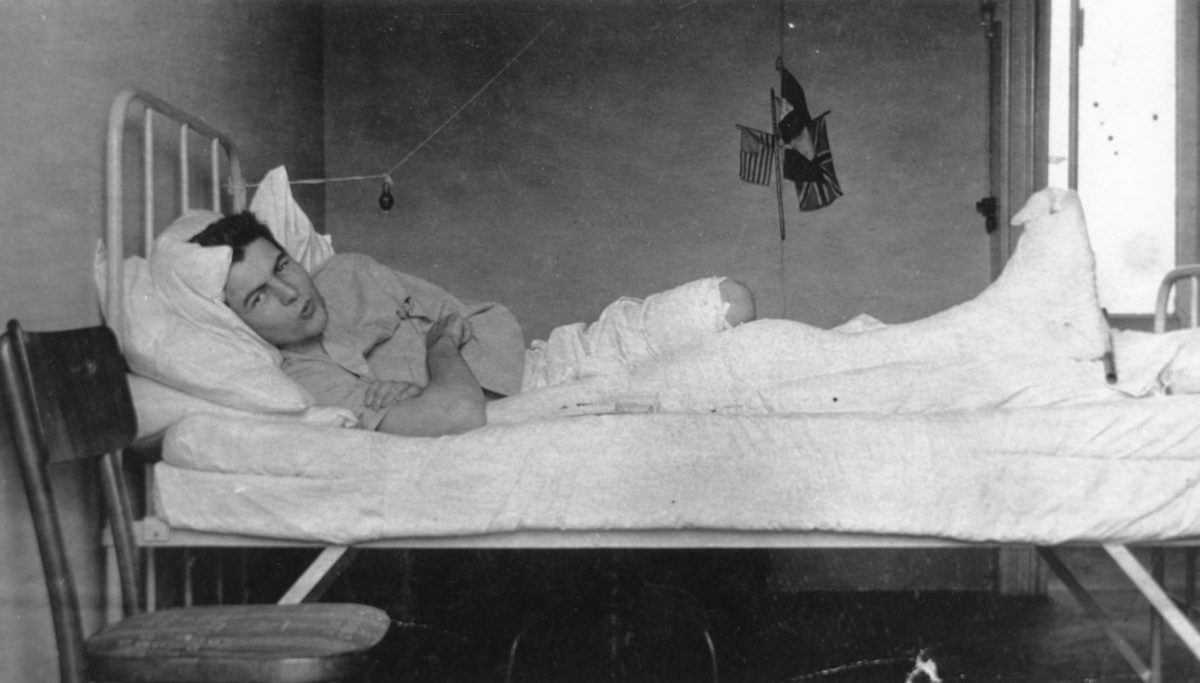
West’s high point as a novelist was arguably The Day of the Locust — just as compact as Gatsby in its length and sentences, but more wryly surreal than ethereal. And he had a genius for fusing this talent with a theatrically visceral and often bleakly comic strain revealing the FOMO and desperate collective belonging at any vicious cost that one sees prominently among numerous Instagram influencers today. Consider this scene at a funeral:

He knew their kind. While not torch-bearers themselves, they would run behind the fire and do a great deal of the shouting. They had come to see Harry buried, hoping for a dramatic incident of some sort, hoping at least for one of the mourners to be led weeping hysterically from the chapel. It seemed to Tod that they stared back at him with an expression of vicious, acrid boredom that trembled on the edge of violence.

This is followed not long after by an old woman who shows up with “a face pulled out of shape by badly-fitting store teeth” whispering to “a man sucking on the handle of a home-made walking stick.” This close attention to background characters making do with either the remaining scraps they could cobble together or the insufficient products on sale at a store obviously sprang from the Great Depression and West’s own experience working at a hotel, where he undoubtedly observed a motley array of eccentrics and strange outliers. (Jay Martin’s excellent biography, Nathanael West: The Art of His Life, covers quite a bit of these hotel days and reveals West to be an impeccable bullshit artist in his life, wheeling deals to help other writers land rooms and constantly reinventing the details of his life to negotiate a failing capitalist system.) But West’s panoramic description also feels unsettlingly close to our present time, in which inflation, the supply chain, and an inept framework increasingly leaving Americans out in the cold produces the same plausible character types. And in another eerie parallel to the present, The Day of the Locust also includes a dismal romantic rival named Homer Simpson. The only song Homer knows is the national anthem

The novel follows Tod Hackett, an artist who has moved to Hollywood to find inspiration for what he hopes will be his masterwork painting, “The Burning of Los Angeles.” (I casually wondered if Rage Against the Machine’s album The Battle of Los Angeles took titular inspiration from West. But sadly no interviewer appears to have asked Zack de la Rocha and company this.) He swoons for Faye Greener after seeing her in the hall at a dismal complex called San Berdoo. But Faye can “only love a handsome man and would only let a wealthy man love her.” Tod harbors disturbingly intense and violent fantasies towards Faye. Is Tod mentally unbalanced? Or is this the inevitable byproduct of trying to find inspiration in a landscape of contradictions? West smartly leaves these questions open for the reader to infer.

One reads this masterpiece in 2022 greatly saddened by the possibilities of what West could have become. Would he have floundered like Erskine Caldwell or soured into a bitter reactionary like Evelyn Waugh? I don’t think he would have. West was committed to grim playful truth right out of the gate — as his scatologically driven first work, The Dream Life of Balso Snell, made abundantly clear. It says quite a lot about the bleak tenor of the prewar Depression period that so many wild and dark comic novelists flourished. Much as one reads the fiction published just before World War I and marvels at the flowing frankness that just preceded Hemingway permanently altering the English language with his declarative sentences, so too does one approach Tobacco Road, Scoop, and The Day of the Locust with a sense of what might have been in literature if the Second World War had never happened. One then turns to our present pandemic age and wonders why most of today’s contemporary fiction writers remain so spineless, so dully vanilla and offensively weak-kneed and uninventive, so hostile to serving up appropriate pushback against our present devil’s bargain of late-stage capitalism and all of its concomitant horrors.

West would have been canceled quite swiftly if he were starting out today. Joe Woodward’s biography of Nathanael West, Alive Inside the Wreck, points to a fascinating review from Ben Abramson that appeared in Reading and Collecting in which he suggested that West’s books should be reviewed two or three years after publication so that they could be reviewed on “merits” rather than “merchandise.” Indeed, it is the mercantile thrust of vapid careerist “critics” on social media these days — the type epitomized by so many mediocre Twitter addicts who wouldn’t know, appreciate or stump for bona-fide punk rock even if they traveled back in time and became desecrated by excrement while standing in the front row of a GG Allin show — that motivates their own sham criteria and their head-in-the-sand approach to our societal ills. But eighty-three years after The Day of the Locust‘s publication — well past Abramson’s prescription for proper consideration — The Day of the Locust says more about the eternal and seemingly unfixable ailments of American life than most of today’s writers can summon over the course of a career. Despite being cut down in his prime, Nathanael West still survives.

Next Up: V.S. Naipaul’s A House for Mr. Biswas!

A Farewell to Arms (Modern Library #74)

(This is the twenty-seventh entry in the The Modern Library Reading Challenge, an ambitious project to read the entire Modern Library from #100 to #1. Previous entry: Scoop.)

You likely know the basics: An American goes to Italy and enlists as a “tenente.” He drives a battlefield ambulance just before his nation enters World War I. He gets wounded. He meets a nurse at a hospital. He falls in love. He feels free as he recovers. He feels trapped as he returns to the front. He gets disillusioned. He flees. He finds her again. Bad things happen. But A Farewell to Arms is so much more than this. It is a heartbreaking love story. It is a remarkably subtle indictment of war. It shows how people bury their romantic longings behind duty and how there’s a greater bravery in fulfilling what you owe to your heart. It argues for life and love. Its final paragraph is devastating. It zooms along with masterly prose that is buried with treasure. It is one of the greatest novels of the early 20th century. This statement is not hyperbole.


It is now quite fashionable to bash Hemingway rather than praise him, as the flip Paul Levy recently did in his oh so hip and not very bright “hot take”: “The Hemingway corpus is full of artistic failure.” Well, sure it is. I’ve read it all three times at different periods in my life and I don’t think any honest reader would deny that. When I was an obnoxious punk in my twenties, I resisted Hem big time, feeling that he could not teach me to be a man in the way that James Baldwin and F. Scott Fitzgerald had, yet I somehow held onto his books, sensing that I could be colossally wrong. (I was.) Even today, I have to acknowledge that To Have and Have Not is an embarrassment. The Garden of Eden is an interesting but unconsummated train wreck. For Whom the Bell Tolls has its moments, but the Old English verbs and the lack of subtlety can be risible. I’ve never quite been able to leap into The Old Man and the Sea, but that says more about me than Hem. The upshot is that there are quite a few clunkers in Hem’s collected works and some of the Nick Adams tales ain’t all that, but one could make this claim about any author. In the end, when you have a masterpiece like A Farewell to Arms that never grows tedious no matter how many times you reread it, who in the hell cares about the misses? There’s no profit in calculating a shallow statement when the crown jewels shine bright in your face.

The other way that people ding Hem these days is by singling out his macho posturing or peering at his pages through the prism of unbridled masculine hubris. The naysayers dismiss Lady Brett Astley in The Sun Also Rises as an archetype without recognizing her enigma or the way she aptly epitomized the Lost Generation. They don’t acknowledge how Hem had to prostrate himself before Beryl Markham in a letter to Maxwell Perkins and that he did get on (for a time) with Martha Gellhorn, who neither suffered fools nor caved to condescension.

Yet there is certainly something to Hemingway’s women problem, especially as seen in the correspondence between Fitzgerald and Hemingway. In June 1929, F. Scott Fitzgerald sent Hem a letter and observed how, in his early work, “you were really listening to women — here you’re only listening to yourself, to your own mind beating out facily a sort of sense that isn’t really interesting.” (Hemingway’s reply: “Kiss my ass.”)

Scott’s warning remains a very shrewd assessment on what’s so fascinating and frustrating about Hemingway. I’d argue that one of the best ways to ken Hem is to recognize that he was a wildly accomplished giant when he placed his own ego last and that any transgressions that today’s readers detect only emerged when Hem became overly absorbed in his own self. And on this point, one can find a strange sympathy for the man, thanks in part to Andrew Farah’s recent biography, Hemingway’s Brain, which points to Ernest’s many head injuries (which included nine concussions) and concludes that he suffered from CTE, the brain disease seen in professional football players after too many years of violent tackles. This theory, which takes into account the decline of Hemingway’s handwriting in his latter years, would also offer an explanation for the wildly disparate writing quality and thus invalidates Mr. Levy’s foolish pronouncement.

* * *

The world breaks every one and afterward many are strong at the broken places. But those that will not break it kills. It kills the very good and the very gentle and the very brave impartially. If you are none of these you can be sure it will kill you too but there will be no special hurry.

A Farewell to Arms thankfully places us shortly after the rising sun of Hem’s career and, like its predecessor, the book contains razor-sharp prose, keen observations (ranging from Umberto Notani’s infamous The Black Pig, trains packed with soldiers, and the repugnant wartime indignity of a hopped up tyrant fiercely questioning a man who is fated to be shot), and a beautiful epitomization of the famous “iceberg theory” that Hemingway posited in Death in the Afternoon:

If a writer of prose knows enough of what he is writing about he may omit things that he knows and the reader, if the writer is writing truly enough, will have a feeling of those things as strongly as though the writer had stated them. The dignity of movement of an ice-berg is due to only one-eighth of it being above water. A writer who omits things because he does not know them only makes hollow places in his writing.

Much has been spilled over Hemingway’s declarative sentences, which are beautifully honed in this masterpiece. (Hem wrote 47 versions of the ending.) But I’d like to single out “was,” the most frequently used word in this novel. On a surface level, “was” is the most expedient way to hurl us into Frederic’s world: a simple verb of action and hard deets, but one that likewise deflects interior thought. It’s easy to dis Hem as a man’s man summing up life and the earth and the grit and all else that makes us want to ape him even though there can be only one, but the key to seeing the beauty of “was” is knowing that this book is all about pursuing a lost and deeply moving romantic vision, one kept carefully hidden from the beginning. Style advances the perspective and keeps us curious and lets us in and “was” is the way Hem gets us there.

Hemingway uses language with extraordinary command to clue us in on the distinct possibility that this story is in some sense a dream — indeed, a dream involving death based on what Hem was never able to make with the nurse Agnes von Kurowsky while holed up in a ward. There’s the makeshift hospital office, with its “many marble busts on painted wooden pillars,” which is further compared to a cemetery. In the novel’s first part, there are very few adverbs — save “winefully” early on and “evidently” and “directly” in the same sentence as guns rupture Frederic’s existence. The first rare simile (“seeing it all ahead like moves in a chess game”) occurs when Frederic first tries to kiss Catherine and is greeted with a slap (which Catherine apologizes for). This is a far cry indeed from what The Daily Beast‘s Allen Barra recently claimed, without citing a single example, as “flowery and overwritten.” A Farewell to Arms basks in the same beautiful realm between the real and the ethereal that The Great Gatsby does, albeit in a different landscape altogether, but it offers enough ambiguity to speculate about the characters while encouraging numerous rereads.

Language also carries the deep resonances of what people mean to each other. Catherine cannot stand a triple-wounded vet named Ettore and repeats “dreadful” twice and “bore” four times when she vents to Frederic. The words “She won’t die” are also repeated in one harrowing paragraph near the end. (Indeed, if you see a word or a phrase repeated in Hemingway’s fiction, there’s a good chance that something bad will happen.) Shortly after Frederic is moved to the freshly built hospital in Milan (itself a marvelous metaphor for the fresh start of Frederic’s blossoming love for Catherine), he takes to Dr. Valentini, who speaks in a series of short sentences over the course of a paragraph (a small sample: “A fine blonde like she is. That’s fine. That’s all right. What a lovely girl.”) and who Frederic later calls “grand.” The syntax, chopped and sheared and housed within manageable units, represents a telegraph from the human heart like no other.

Frederic acknowledges that he lies to Catherine when he tells her that she’s the first woman he’s loved. Now it’s tempting to roll your eyes over the “I’ll be a good girl” business that often comes from Catherine, but it’s also a safe bet to speculate that Frederic is likewise lying about what Catherine has actually told him, much as Hem himself has fudged the full extent of his “affair” with Agnes von Kurowsky through fiction. (“Now, Ernest Hemingway has a case on me, or thinks he has,” wrote von Kurowsky in her diary on August 25, 1918. “He is a dear boy & so cute about it.”)

An enduring romance is often built on a pack of lies. We often fail to recognize the full totality of who a lover was until we are well outside of the relationship. As for friendship, I’d like to argue that Miss Gage is a fascinating side character who stands up for this. She’s someone who ribs Frederic about not fully understanding what friendship is. Later, when Frederic returns to the front lines, Rinaldi tells him, “I don’t want to be your friend. I am your friend.” And if Frederic can’t recognize friendship, does he really know how to read the room when Cupid shows up with a puckish smile? Hem’s subtle acknowledgment of these basic truths allows us to trust and become invested in Frederic’s voice. And I’d like to think that even Hem’s opponents could get behind such idyllic imagery as Frederic and Catherine “putting thoughts in the other one’s head while we were in different rooms” or agreeing to sneak off to Switzerland together or even the funny “winter sport” business with customs. These are endearing and beautiful romantic moments that certainly show that Hem is far more than a repugnant hulk.

Love is a high stakes game, but it’s always a game worth playing. If you beat the odds, the payout is incalculable. Small wonder that the happy couple ends up throwing their lire into a rigged horse race. Indeed, Frederic’s early days with Catherine are a game like bridge where “you had to pretend you were playing for money or playing for some stakes.” For all of Frederic’s apparent confidence in not knowing the stakes, he does not reveal his name for a while — on its first mention, Frederic only partially spills his name as he is drinking. He is also more taken with the allure of being alone — as seen later in a Donnean nod when he says that “[w]hat made [Ireland] pretty was that it sounded like Island.” His loneliness is further cemented when Miss Ferguson says that Catherine cannot see him.

Is this the loneliness of war? We learn later that Frederic came to Rome to be an architect, although this is likely a lie, given that it is repeated a second time to a customs officer. But it does suggest that Frederic cannot build his own life without another. Perhaps this is the solitude that comes from the relentless pursuit of manly vigor (boxing, bullfighting, hunting) that Hemingway was to explore throughout his life? There is one clue late in the book when Hemingway writes, “The war seemed as far away as the football game of someone else’s college,” and another midway through when Frederic wonders if major league baseball will be shut down if America entered the war. (Fun fact: There was indeed a World War I deadline put into place, but the two leagues squeezed in numerous doubleheaders to ensure that the season could play out.) If the First World War arose in part because humanity was involved in a vicious game, then Hemingway seems to be suggesting that further games rooted in play and peace must be promulgated to restore the human condition. Frederic cynically quips to the 94-year-old Count Greffi, “No, that is the great fallacy; the wisdom of old men. They do not grow wise. They grow careful.” But if being careful is the true measure of existence, why then do we celebrate valor that often emerges from reckless circumstances? Indeed, Hemingway sends up the very nature of heroism up when Frederic wakes up in the hospital and is greeted by Rinaldi, who presses him to confess the specific act he committed to earn his medal. “No,” replies Frederic. “I was blown up while we were eating cheese.”

In an age where razor blade ads are urging us to question what manhood should represent, there’s something to be said about studying what’s contained within masculinity’s ostensible ur-texts and with how careful men are in saying nothing but everything. A Farewell to Arms is a far more sophisticated and deeply beautiful novel when you start examining its sentences and questioning its motivations. Caught in a mire between love and war, Frederic opts for the laconic rather than the prolix. And in doing so, he tells us far more about what it means to love and lose than most authors can convey in a lifetime.

Next Up: Nathanael West’s Day of the Locust!

Scoop (Modern Library #75)

(This is the twenty-sixth entry in the The Modern Library Reading Challenge, an ambitious project to read the entire Modern Library from #100 to #1. Previous entry: The Prime of Miss Jean Brodie.)

When I last dived into Evelyn Waugh’s exquisite comic fiction for this crazy project nearly six years ago, I wrote a sour essay in which I permitted my hostility towards Waugh’s pugnacious life and his reactionary politics to overshadow my appreciation for his art. Perhaps the way I read fiction has changed or the idea of completely discounting a writer’s achievements with the histrionic tone of an upbraiding Pollyanna who doesn’t possess a scintilla of self-awareness fills me with a dread I usually associate with wincing at a tax bill or standing in a needlessly long line for a pizza slice. Whatever the case, I allowed myself to zero in on Brideshead Revisited‘s weaker elements (namely, the deplorable gay stereotype Anthony Blanche) without possessing the decency to praise that novel’s excellent prose in any way. This was decidedly uncharitable of me. For Waugh was, for all of his faults, a master stylist. That I was also bold enough to rank Wodehouse over Waugh was likewise problematic (although I would still rather read Pip and I have never been able to get into the Sword of Honour trilogy and I still feel that Waugh was more or less finished as an author after The Loved One; incidentally, Waugh himself called Wodehouse “the Master”). At the time, the eminently reasonable Cynthia Haven offered what I now deem to be appropriate pushback, observing that I brought a lot of “post-modern baggage” into my reading. My “take” on that novel’s Catholic dialogue was, I now realize after diving into Waugh again, driven by a cocky yahooism that is perhaps better deployed while knocking back pints in a sports bar and claiming that you’re a big fan of the team everybody else is cheering for. Never mind that the names of the players are only lodged in your memory by the blinding Chryon reminders and the bellowing cries of histrionic announcers that work together to perfect a sense-deadening television experience.

Anyway, I’ll leave cloud cuckoos like Dave Eggers to remain dishonest and pretend they never despised great novels. I’d rather be candid about where I may have strayed in my literary judgement and how I have tried to reckon with it. In a literary climate of “No haters” (and thus no chances), we are apparently no longer allowed to (a) voice dissenting opinions or (b) take the time to reassess our youthful follies and better appreciate a novel that rubbed us the wrong way on the first read. Wrestling with fiction should involve expressing our hesitations and confessing our evolving sensibilities and perceiving what a problematic author did right. And so here we are. It has taken many months to get here, but it does take time to articulate a personal contradiction.

So here goes: As much as I appreciate Scoop‘s considerable merits (particularly the fine and often hilarious satire when the book takes place on Waugh’s home turf), I cannot find it within me to endorse this novel’s abysmally tone-deaf observations on a fictitious Abyssinia — here, Ishmaelia. There are unsophisticated thoughts cloaked beneath the light fluidity of Waugh’s exacting pen that many of his acolytes — including The Observer‘s Robert McCrum and NPR’s Alexander Nazaryan — refuse to acknowledge. There’s no other way to say this, but Waugh is more nimble with his gifts when he bakes his pies with an anglophonic upper crust. And that ugly truth should give any reader or admirer great pause. (Even Selina Hastings, one of his biographers, was forced to concede this. And McCrum, to his credit, does at least write that “Scoop derives less inspiration from Ethiopia,” although this is a bit like stating that Paul Manafort merely muttered a little white lie.) Waugh’s limitations in Scoop are not as scabrous as Black Mischief — a novel so packed with racism that it’s almost the literary equivalent to Louis C.K.’s recent attempts at a comeback. But his “insights” into Africa are still very bad, despite all the other rich wit contained within the book. Waugh cannot see anyone who does not share his lily-white complexion as human. His creatively bankrupt view of Africans as bloodthirsty cannibals or “crapulous black servants” or “a natty young Negro smoking from a long cigarette holder” carries over from Black Mischief. “A pious old darky named Mr. Samuel Smiles Jackson” is installed President. I was rankled by the constant cries of “Boy!” from the assorted journos, late risers who complain about not getting swift servitude with a smile. (“Six bloody black servants and no breakfast,” sneers the entitled Corker at one point.) Even the potentially interesting politics behind Ishmaelia’s upheaval are coarse and general, with the arrival of Dr. Benito at a press conference described in one paragraph with a contrast of “blacks” and “whites” that show the force and timing of a man determined to be vituperative, but without substantive subtlety. One of the book’s jokes involves a nonexistent city on the nation’s map identified as “Laku,” which is Ishmaelite for “I don’t know.” And while it does allow for a decent setup in which numerous journalists expend lavish resources to find Laku for their stories, I suspect that this is really Waugh confessing he doesn’t know and can’t know because he doesn’t want to.

Still, in approaching Scoop, I was determined to give this book more care than what I doled out to Brideshead. Not only did I spend a few months rereading all of Waugh’s novels up through Brideshead, finding them considerably richer than I did on my first two canon reads, but I also dived into the Selina Hastings and Martin Stannard biographies, along with numerous other texts pertaining to Scoop. And one cannot completely invalidate Waugh’s talent:

“Why, once Jakes went out to cover a revolution in one of the Balkan capitals. He overslept in a carriage, woke up at the wrong station, didn’t know any different, got out, went straight to a hotel, and cabled off a thousand-word story about barricades in the streets, flaming churches, machine guns answering the rattle of his typewriter as he wrote, a dead child, like a broken doll, spreadeagled in the deserted roadway below his window — you know. Well, they were pretty surprised at his office, getting a story like that from the wrong country, but they trusted Jakes and splashed it in six national newspapers. That day every special in Europe got orders to rush to the new revolution.”

This is pitch-perfect Waugh. Sadly, the wanton laziness of journalists and willful opportunism of newspaper publishers remain very applicable eighty-one years after Scoop‘s publication. In 2015, a Hardin County newspaper misreported that the local sheriff had said that “those who go into the law enforcement profession typically do it because they have a desire to shoot minorities.” And this was before The New York Times became an apologist outlet for Nazis (the original title of that linked article was “In America’s Heartland, the Nazi Sympathizer Next Door”) and didn’t even bother to fact-check an infamous climate change denial article from Bret Stephens published on April 28, 2017.

So Scoop does deserve our attention in an age devoted to “alternative facts” and a vulgar leader who routinely squeezes savage whoppers through his soulless teeth. Waugh uses a familiar but extremely effective series of misunderstandings to kickstart his often razor-sharp sendup, whereby a hot writer by the name of John Courtney Boot is considered to be the ideal candidate to cover a war in Ishamelia for The Daily Beast (not to be confused with the present Daily Beast founded by Tina Brown, who took the name from Waugh — and, while we’re on the subject of contemporary parallels, Scoop also features a character by the name of Nannie Bloggs, quite fitting in an epoch populated with dozens of nanny blogs). John Boot is confused with William Boot, a bucolic man who writes a nature column known as Lush Places and believes himself to be in trouble with the top brass for substituting “beaver” with “great crested grebe” in a recent installment. He is sent to cover a war that nobody understands.

The novel is funny and thrilling in its first one hundred pages, with Waugh deftly balancing his keen eye for decor (he did study architecture) with these goofy mixups. Rather tellingly, however, Waugh does spend a lot of time with William Boot in transit to Ishamelia, almost as if Waugh is reluctant to get to the country and write about the adventure. And it is within the regions of East Africa that Waugh is on less firm footing, especially when he strays from the journalists. Stannard has helpfully observed that, of all Waugh’s pre-war novels, Scoop was the most heavily edited and that it was the “political” sections with which Waugh had “structural problems.” But Scoop‘s problems really amount to tonal ones. Where Erskine Caldwell’s Tobacco Road (ML #91) brilliantly holds up a mirror to expose the audience’s assumptions about people (with the novel’s Broadway adaptation inspiring a tremendously interesting Ralph Ellison essay called “An Extravagance of Laughter,” which many of today’s self-righteous vigilantes should read), Scoop seems more content to revel in its atavistic prejudices.

In 2003, Christopher Hitchens gently bemoaned the “rank crudity” of Waugh’s childish names for side characters. And I think he was right to pinpoint Waugh’s declining powers of invention. For all of Scoop‘s blazing panoramas and descriptive sheen (the prose committed to the Megalopilitan offices is brilliant), the ultimate weakness of the book is that Waugh seems incapable of imbuing Ishamelia with the same inventive life with which he devotes to England. When one looks at the travel writing that came before this, even the high points of Waugh in Abyssinia are the sections where he bitches about his boredom.

Waugh’s writing was often fueled by a vicious need for revenge and an inability to let things go. Take the case of Charles Crutwell, the Hertford dean who praised Waugh on his writing and awarded him an Oxford scholarship as a young man. Waugh proceeded to be incredibly lazy about his studies, deciding that he had earned this financial reward, that he no longer needed to exert himself in any way, and that he would spend his time boozing it up and getting tight with his mates. Crutwell told Waugh that he needed to take his research more seriously. He could have had Waugh expelled, but he didn’t. And for this, Crutwell became the target of Waugh’s savage barbs throughout much of his early writing and many of his novels. In Decline and Fall, you’ll find Toby Crutwell as an insane burglar turned MP. In Vile Bodies, a “Captain Crutwell” is the snobby member of the Committee of the Ladies’ Conservative Association at Chesham Bois. There’s a Crutwell in Black Mischief and A Handful of Dust. Waugh’s story “Mr. Loveday’s Little Outing” was originally titled “Mr. Crutwell’s Little Outing.” And in one of Scoop‘s supererogatory chapters, William Boot meets a General Crutwell who has had numerous landmarks named after him. Keep in mind that this is sixteen years after the events in Hertford. You want to take Waugh aside, buy him a beer, and say, “Bro, walk away.”

Now I have to confess that this type of brutal targeted satire was catnip for me at a certain impressionable age that lingered embarrassingly long into my late thirties. The very kind George Saunders tried to get me to understand this twelve years ago during an episode of my old literary podcast, The Bat Segundo Show, in which we were discussing the way Sacha Baron Cohen singled out people with total malice. Cohen’s recent television series Who is America certainly upheld Saunders’s point. Of course, I stubbornly pushed back. Because ridicule is a hell of a drug. Just ask anyone with a Twitter account. But I now understand, especially after contending with Waugh again, that effective satire needs to be more concerned with exposing and virulently denouncing those in actual power, railing against the tyrannical institutions that diminish individual lives, and, of course, exposing the follies of human behavior. Waugh does this to a large extent in Scoop and his observations about newspapermen running up large tabs on their expense accounts and manipulating the competition are both funny and beautiful, but he also appears to have been operating from an inferiority complex, an intense need for victory against his perceived oppressors and something that, truth be told, represents a minor but nevertheless troubling trait I recognize in myself and that has caused much of my own writing and communications with people to be vehemently misunderstood, if not outright distorted into libelous and untrue allegations. When your motivation to write involves the expression of childish snubs and pedantic rage without a corresponding set of virtues, it is, from my standpoint, failed satire. And I don’t know about you, but my feeling is that, if you’re still holding a grudge against someone after five or six years, then the issue is no longer about the person who wronged you, but about a petty and enduring narcissism on behalf of the grudgeholder. What precisely do these many Crutwells add to Waugh’s writing? Not much, to tell you the truth.

We do know that, when Waugh covered Abyssinia, he wrote in a letter to Penelope Betjeman, “I am a very bad journalist, well only a shit could be good on this particular job.” So perhaps there was a part of Waugh that needed to construct a biting novel from his own toxic combination of arrogance and self-loathing.

But Waugh’s biggest flaw as a writer, however great his talent, was his inability to summon empathy or a humanistic vision throughout his work, even if it is there in spurts in Brideshead and perhaps best realized in his finest novel, A Handful of Dust. When William Boot foot falls in love with Kätchen, a poorly realized character at best, Waugh has no interest in portraying Boot’s feelings as anything more than that of a dopey cipher who deserves our contempt: “For twenty-three years he had remained celibate and and heart-whole; landbound. Now for the first time he was far from sure, submerged among deep waters, below wind and tide, where huge trees raised their spongy flowers and monstrous things without fur or feather, wing or foot, passed silently in submarine twilight. A lush place.” It is one thing to present Boot clumsily setting up an unnecessary canoe or showing the way he gets hoodwinked over a heavy package of stones or not understanding basic journalism jargon and to let Boot’s bumbling behavior (or, for that matter, the apposite metaphor of a three-legged dog barking in a barrel just outside Kätchen’s home) speak for itself. It is quite another thing to stack the deck against your protagonist with a passage like this, however eloquently condemned. What Waugh had not learned from Wodehouse was that there was a way of both recognizing the ineptitude of a dunderhead while also humanizing his feelings. You can lay down as many barbs as you like in art, but, at a certain point, if you’re any good, the artistic expression itself has to evolve beyond mere virtuosic style. This, in my view, is the main reason why Waugh crumbled and why I think his standing should be reassessed. The vindictiveness in Black Mischief, however crucially transgressive at the time, still represented a failure of creative powers. All Waugh had left at the end was a bitter nostalgia for a lost Britannia and a fear of modernity, which amounted to little more than an old man pining for the good old days by the time Waugh got to his wildly overrated Sword of Honour trilogy (and by the time Louis C.K. returned on stage with his first full set littered with racism, transphobia, and scorn for the young generation). If Waugh had learned to see the marvel of a changing world and if he had embraced human progress rather than fleeing from it, he might have produced more substantive work. But, hey, here I am talking about the guy nearly a century later, largely because he’s on a list. Still, even today, young conservative men have adopted the tweedy analog look of a “better time.” So maybe the joke’s on me. Thankfully the next Waugh novel book I have to write about, A Handful of Dust (ML #34), is a legitimate masterpiece. So I will try to give Waugh a more generous hearing when we get there in a few years. For now, I’m trying to shake off his seductive spite as well as the few remaining dregs of my own.

Next Up: Ernest Hemingway’s A Farewell to Arms!

The Prime of Miss Jean Brodie (Modern Library #76)

(This is the twenty-fifth entry in the The Modern Library Reading Challenge, an ambitious project to read the entire Modern Library from #100 to #1. Previous entry: Finnegans Wake.)

We are two days away from the great Muriel Spark’s 100th birthday. Yet, despite New Directions’s valiant reissue of her remarkable work only a few years ago (along with a quiet event planned on Thursday at the 92nd Street Y, which stands incommensurately like a shaking child in the vast shadow of Edinburgh’s impressive celebratory blowout), we are no closer to literary people universally singing her praises on this side of the Atlantic than we are in stopping men from wearing black socks to bed. And that’s a shame. Because Muriel Spark was truly one of the most innovative writers of the 20th century. She was a bold and an economical stylist who packed far more attentive detail and character speculation into one paragraph than most contemporary writers wrangle into a chapter, and she did so with high style, grace, and ferocious wit. The Prime of Miss Jean Brodie, her most enduring and popular novel (and, through a magical twist of fate, the next volume in the Modern Library Reading Challenge), certainly sees Spark’s great gifts on full display, but it is also a book that demands constant and even obsessive study.

I have read Brodie four times within the last two years. It is very possible I will read it four more times within the next two. I am inclined to press this richly entertaining book, no more than a hundred pages, into the hands of anyone who purports to take literature seriously, but who has somehow ignored Spark to hold up some bland offering from one of those “Most Anticipated” lists published at The Millions that nobody will remember or quote from in a decade.

Brodie is both a portrait of an exuberant teacher determined to educate a carefully selected group of girls so that they may be better equipped when “in their prime” and an incredible tableau of 1930s Edinburgh, such as the “wind-swept hockey fields which lay like the graves of the martyrs exposed to the weather in an outer suburb.” Miss Brodie may or may not be a tyrant. (She is fond of Mussolini and Italian culture.) One can read the book anew and come away with an entirely different opinion of the title character. The novel tantalizes us with flash-forwards (which can also be found in many of Spark’s later novels, such as The Driver’s Seat and Territorial Rights, which are also well worth your time) revealing the fates of the schoolgirls in adult life, leaving us with impressions of how formative life and education influences unknowingly in later years. One reads little snippets of the six girls under Miss Brodie’s tutelage from the present and the future– Rose “pulling threads from the girdle of her gym tunic” in class or Jenny not experiencing any sexual awe “until suddenly one day when she was nearly forty, an actress of moderate reputation married to a theatrical manager” — and asks how much Miss Brodie is responsible for corrupting fate, with Spark slyly implicating us as we become more curious.

Muriel Spark wrote this masterpiece in less than a month. This is especially amazing because, much like the magnetic properties contained within the glowing amber necklace Miss Brodie wears when off-screen romance inspires a new step in her exacting stride, this short novel reads as if an exquisite jeweler had painstakingly ensured that not a single element could ever fall out of alignment. And Spark sculpts many glistening carats along the way: the fictitious letters that two girls write after imagining Miss Spark’s love life, the creepy, one-armed artist Teddy Lloyd who also teaches at the school and disguises his true pedophilc nature through the sham panacea of Catholicism and family life, and the lingering question of which schoolgirl betrays Miss Brodie and causes her to lose her job. The novel presents us with many hints and details that hide in plain sight, but that all contribute to an atmosphere in which the girls end up coming up with explanations (often fictitious and sometimes apostate) for what is both seen and not seen. Miss Brodie’s careful lessons, which include a field trip into a rougher part of Edingburgh and often involve knowing the roots of words to better understand them, are perhaps being applied in dangerous ways. And in an age where people judge people who they haven’t met based on what they think they know from a social media profile, The Prime of Miss Jean Brodie remains potent and necessary reading.

Spark’s lecture “The Desegregation of Art,” delivered before a crowd of New York literati on May 26, 1970, offers useful insights into the ambitious gauntlet she felt obliged to throw down as an artist and gives us a sense of what is very much at stake in Brodie. She firmly believed that literature existed to infiltrate and fertilize the mind and denounced any fiction that stood in the way of this lofty artistic goal. If that meant tossing out socially conscious art that was not “achieving its end or illuminating our lives any more,” then this was the price to pay for better art that reflected the depths and thorny hurdles of life. She insisted that “ridicule is the only honourable weapon we have left” and believed that addressing wrongs emerged not so much from instant outrage, but through “a more deliberate cunning, a more derisive undermining of what is wrong. I would like to see less emotion and more intelligence in these efforts to impress our minds and hearts.” Much as Spark detested being a victim in her life, she believed that art reveling in victimhood turned readers into oppressors.

So we are left with Brodie as a remarkable volume that fertilizes our minds even as it challenges our own interpretations. Spark’s honorable ridicule in Brodie may very well lie with the way she shrewdly sends up how people are perceived for their failings based on superficial shorthand. And this extends even to the hypnotic allure of Miss Brodie’s own teaching. At one point, Miss Brodie observes that “John Stuart Mill used to rise at dawn to learn Greek at the age of five” and that the teacher herself learned from this lesson. Mill is a particularly funny choice, given that this philosopher was known for utilitarianism and that we are seemingly experiencing a short “utilitarian” novel when we read Brodie. But, of course, we aren’t. For one wants to reread it yet again.

The intrepid literary adventurer plunging forward on a bold bender for real-life inspiration is often viewed with contempt by any practitioner transforming bits of his life into analeptic artistic truth withstanding the test of time. The adventurer shakily balances the author’s complete works like vertiginous trays stacked tall enough to scrape plaster flakes off the ceiling as the letters and the collected marginalia and the autobiographical tidbits are swirled into a overflowing flute by a jittery finger serving as a makeshift cocktail straw. If not written off as a slightly smarter TMZ reporter who has somehow retained the ability to read despite being barraged daily by Harvey Levin’s soul-destroying smile, such an apparent gossipmonger, even if she is cogent enough to know that fictional characters rarely spring from a singular source, is still tarnished as that rakish yenta who reads fiction for the wrong reasons.

As I have ventured further into this years-long Modern Library project, I’ve come around to the daring idea that, for certain sui generis authors (and Muriel Spark is certainly one of them), one may indeed find deeper appreciation in the way they forge art from the people surrounding them. It isn’t so much the schema of who matches up with whom that should concern us, but rather the fascinating way in which characters defy an easily identifiable origin, turning into a form of fictionalized life that feels just as real on the page as any spellbinding life experience. There is a fundamental difference between the novelist who runs out of raw biographical material mid-career, her limited inventive faculties and inherent disconnection with humanity dishearteningly revealed with mediocre and unconvincing and blandly repetitive offerings in late career (see, for example, the wildly overrated Joyce Carol Oates, surely one of the great living literary embarrassments in the early 21st century), and the novelist who seizes the reins of an indefatigable spirit that runs quite giddily to the very end.

For someone like Muriel Spark, who was fiercely protective of her privacy and her public image, this is not necessarily a slam-dunk proposition even when many of the real life details match up. The formidable literary biographer Martin Stannard secured Spark’s reluctant blessing to get his hands dirty on details occluded in Spark’s remarkably opaque autobiography, Curriculum Vitae. Stannard, like many before him, pegged Christina Kay, the schoolteacher who taught Spark at the age of twelve, as the predominant inspiration for “the real Miss Jean Brodie.” Both Kay and Brodie insisted that their girls were the “crème de la crème.” Miss Kay also took Spark and her fellow students on great cultural adventures into Edinburgh. Both were keen on Italy and shared a rather clueless interest in Mussolini. (As late as 1979, Spark would insist that Miss Brodie was not a fascist and that Brodie’s admiration for Il Duce had more to do with Benito’s powerful masculinity, as it was perceived in 1930, which leads one to ponder the 53 percent of white women voted for Trump in 2016. Some weaknesses in human perception regrettably endure, despite the best history lessons.)

But much as the great Iris Murdoch regularly transcended reality to achieve jaw-droppingly marvelous art, which she defined as that which “invigorates without consoling,” one finds a similarly spellbinding spirit within Spark’s equally incredible novels. Once you read The Girls of Slender Means, The Prime of Miss Jean Brodie, Memento Mori, The Driver’s Seat, or A Far Cry from Kensington, if you have even the faintest desire of wanting to know how art works, you may find yourself obsessing over just how she was able to put so much into her novels. Ian Rankin, writer of the rightfully well-regarded Rebus novels, found himself precisely in this very position, reading The Prime of Miss Jean Brodie over and over again over the course of thirty years and always finding new details, even wondering if the titular character was the hero or the villain. (Some of Rankin’s work on Spark when he was pursuing a Ph.D is available online behind a paywall.)

And if you read Brodie, you may very well join us on this pleasantly fanatical quest. We are told at the end, with one of the characters hiding from the truth of how her life has been altered, “There was a Miss Jean Brodie in her prime.” And that seemingly innocent notion, in Spark’s nimble hands, is the white whale that turns any reader into Ahab.

Next Up: Evelyn Waugh’s Scoop!