Decline of a Wandering Brooklynite

My friends know me as someone who can easily locate some recherche venue in a city I’ve just set foot into for the first time. Even without GPS, I can usually drive my way to where I need to be. It’s a blind instinct. The seeds for this sense of direction were planted when I was four years old. There was a large map of Santa Clara County hanging on my bedroom wall and I memorized all the streets to pass the time. I asked my mother to order more free maps from AAA and I scooped up these new geographical sectors with relish, happily adding these fresh streets to the spatial depository of my ravening mind. My mother was someone who could get easily lost. But I had traced the clover leaves and followed the construction of new freeways with my little fingers. I had calculated the shortcuts that got you to your destinations faster. At four years old. A few years later, I would sneak out of the house and spend the entire day bicycling to areas on the map that I was curious about. I once got into trouble when a neighbor ratted me out after discovering that I had high-tailed it six miles away. I’ve always felt wanderlust was something vital that binded you to a community. My heart flows with a great hunger to investigate every nook and cranny of any neighborhood I live in.

I learned yesterday that the pandemic has destroyed this essential part of me.

There was a place in Queens that I needed to be at. Anybody who lives off the 2 line in Brooklyn knows that the easiest way to get there is through one simple transfer move. In the Before Times, that free-wheeling maskless epoch now so inconsolably long ago, the switch between Hoyt and Hoyt-Schermerhorn was as easy as breathing oxygen. You’d shuttle up the stairs from the 2, walk a few blocks over, and descend into the subway system’s subterranean bowels to catch the A.

But yesterday, as I squinted into the early morning light, I found myself incapable of recognizing whether I was north or south. I didn’t seem to know where I was at. It was shocking. The stores along Fulton Street seemed as foreign to me as they were fourteen years ago, when I had first mapped Downtown Brooklyn’s bustling blocks onto my mind, pleasantly amazed that I was ambling down the same strip that Spike Lee and Ernest Dickerson had captured in beautiful black-and-white in She’s Gotta Have It.

Perhaps I was fated to feel confused because I had excavated four pairs of pants from the closet that very morning — slacks and trousers that I had not worn in a good two years and that I had replaced with more elastic jeans — and discovered that only one pair still fit me. My waistline had expanded under lockdown by a few inches. It was bad enough that the pandemic had saddled me with a burgeoning mass of neck fat that had nestled uninvitingly beneath my chin. I lost a lot of weight seven years ago and had always kept it off through exercise. But the exercise bike in my apartment, which I once used regularly with gusto, has lost any allure and now feels as tedious as taxes. My three hour constitutionals had been denied me. My long walks through New York didn’t feel fun anymore because, even with the double mask protection, my glasses still fogged up. Whenever I leave the house, my only choice to stumble blindly into a metropolis I love but can now no longer see, with everything five feet ahead of me rendered into some blur, the muddy vista of a previous city that now lurks only on the mnemonic fringes. The random social encounters and the trips to new places no longer exist. So any saunter feels tiresome. The only geography that most of us have are the cells we now call home.

Earlier this week, Ellen Cushing noted our collective decline in The Atlantic, pointing to an epidemic of people forgetting words or names and succumbing to absent-mindedness. Like Cushing, I can trace the decline of my motivation and my productivity to the grim cold of late December, in which the risk of hypothermia became the prerequisite for safe socializing. I saw my friends less. I dated less. Even when I did the math to meet someone in socially distanced real life, I would find that the date or the friend would backpedal at the last minute, disrespecting the two weeks of self-quarantine I had subjected myself to before meeting anyone (and only meeting one person at a time). Life increasingly became a relentlessly bleak calendar of entombed solitude. I would go weeks or months without smoking or drinking, only to take one or both up again. Anything to change the grim and hopeless cadences of routine. My mind and body atrophied. My progress on my audio drama and the wild novel that I had drafted in a gleeful three-month summer frenzy stalled. Without the social glue to keep me effervescent, there really wasn’t much point in doing anything. It didn’t help that looking for work was becoming increasingly demoralizing. I had always been able to land a job before with a phone call or, in a few daring cases, showing up in person, cracking jokes, and introducing myself. I was still able to play guitar. I started learning keyboard, but found that this was increasingly pointless. I obtained a ukulele at the start of this month, learned it fairly fast, and that lifted my spirits a bit. I became prolific on TikTok in an attempt to remedy some of the loneliness of living alone. I read books at a ridiculous rate, slamming back nearly a book a day during the month of February. But even that part of me surrendered to dismal pandemic perdition.

One year of this. Who knows how many more months? We weren’t built to live like this. But we have no other choice.

But I’m most disturbed by the fact that I can’t find my way in a city anymore. Even one that I’m deeply familiar with. I’m terribly alarmed that something that was as vital to me as food and water seems to be permanently lost. While Cushing ends her Atlantic essay on a sanguine note, I’m not sure if my synapses or hers are as plastic as she thinks they are. Even if we somehow hit the magical goal of mass vaccination by the summer, we cannot deny the reality that our collective mental health will take years, maybe even decades, to repair. Maybe there’s a case to be made for human beings showing more kindness and understanding to each other, given that we all know that nobody has escaped this pandemic without some kind of crippling toll. But I’m not so sure. Those who have been lucky enough to be vaccinated have developed signs of what I call “vaccine privilege,” where they are boasting about how invincible they are and eagerly making plans to be social while leaving the unvaccinated sad sacks in the dust. Selfishness seems to be an ineluctable part of the grim equation, perhaps more so now than ever. And we can’t even begin to rebuild our social fabric unless we relearn how to be there for other people and to include them. But many of us can’t or won’t be able to do this. Our vital parts have been deracinated. The qualities that once made us distinct are trapped in amber. What kind of community can anyone build when our personalities are so lobotomized?
The Alt-Journalist Sociopath

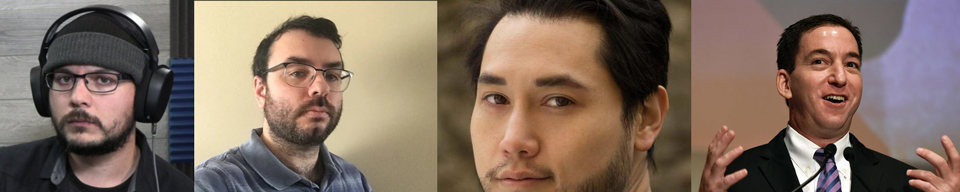
Now that the “fake news” braying from the frayed Trump cabal has faded into the obscurity of a horrifying age feeling improbably older than its actual position on the Gregorian calendar, the time has come to reckon with the alt-journalist sociopath, who may represent one of the greatest threats to empathy and thoughtful reflection in 2021. I speak, of course, of the Tim Pools, the Glenn Greenwalds, the Andy Ngôs, and, most recently, the Michael Traceys of the universe. These scenery-chewing and humorless offshoots of the so-called “intellectual dark web” live for ruining people even as they pretend to espouse some greater “truth-telling” ideal. They have picked up the slack left by Trump’s ban from all social media, catering to the ravenous hordes who wish to believe that the earth is flat and that the illusory Democratic conspiracy against them is very real.

If you are fortunate enough to have never encountered the alt-journalist sociopath, then let me fill you in on his common qualities. For the alt-journalist sociopath is almost invariably a “he” and really makes you aware of this fact by callously disregarding how other people use pronouns. (Ngô has gone to the trouble of deadnaming one of his victims. The YouTube commentator Vaush has limned Pool’s transphobic positions in an epic 85 minute video. Greenwald stumps for transphobic authors. Tulsi Gabbard tag-teamed with Tracey to ridicule the nonbinary.)

The alt-journalist sociopath is usually a white male, ousted from traditional platforms because of seasoned incompetence, outright hubris, or routine dereliction of basic journalistic practice. Facts, or even a cogent argument, do not matter to the alt-journalist sociopath. What does matter is the “truth,” which is often nebulous and subject to constant revision, but almost always tendered as something outside the purview of mainstream media and thus somehow nobler. This gives the alt-journalist sociopath a certain cachet shared by trendy serial killers or domestic terrorists who appeal to the fawning interest of incel shut-ins. This alt-right leaning crowd tends to represent the vast majority of the alt-journalist sociopath’s audience.

By so placing himself as an outlier upholder of dodgy “principles,” the alt-journalist sociopath anoints himself as a kind of deity, usually amassing several hundred thousand followers on his Twitter account. Yes, social media is the wild kingdom for this bilious animal. And because there are no zookeepers to administer to the alt-journalist sociopath’s unhinged rage and false sense of entitlement, the uncaged alt-journalist sociopath paws at his outsize megaphone rather than rattling the bars of his holding cell. These environmental conditions allow the alt-journalist sociopath to stir his legions of febrile acolytes into vengeful id-driven troglodytes.

Despite having the wide reach of a cult leader, the alt-journalist sociopath’s raison is to portray himself as a frail outlier even as he possesses no compassion or remorse for anyone beyond himself. In 2017, Michael Tracey ludicrously attempted to frame a modest brush from then 79-year-old Rep. Maxine Waters as a “shove” in a pathetic attempt to depict himself as victim.

Two years later, Andy Ngô went further than Tracey and secured fame and admiration from mainstream outlets after experiencing alleged violence during the Portland Black Lives Matter protests. The greatest problem with Ngô, aside from the relentless fabrication of his reporting (of which more anon), is that the details didn’t quite add up. Ngô claimed that he had been diagnosed with a brain hemorrhage after being hit with a milkshake mixed with quick-drying cement, but the cement angle was later debunked. Ngô told BuzzFeed reporter Joseph Bernstein, “I don’t feel obliged to share my personal medical records publicly to satisfy internet trolls.” (Bernstein reports that he reviewed a copy of hospital discharge paperwork confirming that he had suffered from a “subarachnoid hemorrhage.”) While no journalist, even dubious ones like Ngô, should experience any form of violence, it’s rather remarkable how Ngô mustered such sympathy for being “attacked” by antifa protesters. He secured a $195,000 GoFundMe nest egg from his ultraconservative enablers.

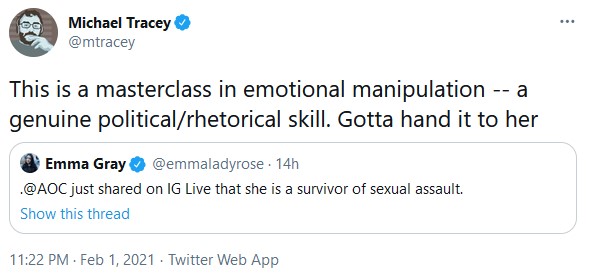
Being a victim is the alt-journalist sociopath’s bread and butter. It’s the winning lottery ticket that secures him some questionable legitimacy in the media food chain. Yet the alt-journalist sociopath is so self-absorbed that he will never consider the misfortunes, much less the victimhood, of anyone beyond himself. If anything, he goes out of his way to denigrate or disparage anyone whom he perceives as a threat. After Rep. Alexandria Ocasio-Cortez bravely revealed that she was a victim of sexual assault on Instagram Live, Tracey claimed this to be “a masterclass in emotional manipulation.”

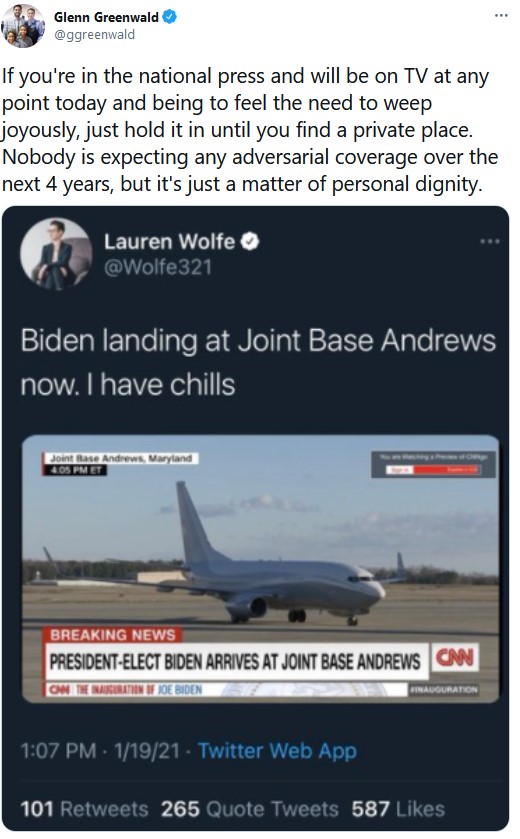
Similarly, Glenn Greenwald inspired a campaign that resulted in New York Times contributor Lauren Wolfe being fired from her job. Why? Because she had the audacity to express that she had “chills” after seeing Biden’s plane land before his inauguration. Wolfe’s tweet was a relatively innocuous statement. Reporters are, after all, human just like the rest of us. But Greenwald’s 1.6 million followers took the catnip and responded with the fierce force of unhinged vigilantes, claiming Wolfe to be a demonic transgressor against journalistic objectivity. Greenwald neither took his original tweet down nor called for the Times to reverse its decision. Because the alt-journalist sociopath is usually a narcissist, Greenwald instead made it about himself, whinging that he bore no responsibility for the results of his reckless tweets and disingenuously cleaving to the great “speak truth to power” lie that all alt-journalist sociopaths champion.

The remarkably indefatigable Twitter account, @TimPoolClips, has tackled Pool and Ngô at length, exquisitely filleting these charlatans down to their oleaginous essence. These two have been highly selective and ideologically convenient about how they frame the “news” they purport to report on. As documented by Jacobin‘s Arun Gupta, in an article for the Wall Street Journal, Ngô omitted key evidence of a driver striking a protester, claiming his falsely edited clip to be the work of “angry, agitated ingrates and criminals.” As Gupta has outlined, Ngô’s journalistic liberties have resulted in other conservative outlets becoming emboldened to commit similarly egregious omissions. In a September 2, 2020 YouTube video, Vaush detailed the “Tim Pool Grift” as follows: Tim Pool has weaved a narrative in which has painted himself as “a liberal who is merely criticizing the Democrat Party” throughout his YouTube existence. But Vaush pointed out that the clickbait titles of Pool’s videos, often factually inaccurate, were more indicative of a Republican.

In any other world, these agitprop quacks would be laughed off the public stage for their risible anti-intellectualism and tendentious cartoonishness. But it is a regrettable truth that these sociopaths are largely impervious to castigation — in large part because they are regularly in the habit of doxxing and shaming their critics or anyone perceived to be “against” their mission. As The New York Times has increasingly shifted to glossy profiles of insurrectionists (the “Nazis! They’re just like us!” school of journalism) and Marjorie Taylor Greene faces no repercussions for expressing the desire to execute prominent Democrats, it’s not much of a surprise to see the alt-journalist sociopath thriving quite well. And since the nadir of what now constitutes “journalism” continues to slip lower than any other time in American history (even the notorious James Callender faced consequences!), the question we must ask is this: What will it take for the public to uproot these toxic demagogues from their perches?

2/2/2021 7:30 PM UPDATE:

Mere hours after I published this essay, Glenn Greenwald further cemented himself as an alt-journalist sociopath, aligning himself with Michael Tracy’s misogyny by belittling AOC’s story. He also offered the false and hyperbolic claim, “All she wants to do is attack Republicans and fortify the Democratic Party.” This, of course, is a Pool/Ngô style airbrushing of actual history. Ocasio-Cortez tweeted just six days ago, “I am happy to work with Republicans on this issue where there’s common ground, but you almost had me murdered 3 weeks ago so you can sit this one out. Happy to work w/ almost any other GOP that aren’t trying to get me killed.”

In Praise of the Block Button — A Reconsideration

Back in November 2012, I wrote an essay arguing that the block button was an insidious attack on communicating with each other. I wrote that it was a “poor and inefficient mechanism that has deigned to place judgment in the hands of the users, but that has mostly encouraged our worst instincts and clearly not learned from history.” My motive in writing the piece represented a failure on my part to understand that the smart and giddy conversations that I was having with regular people in the real world, people who often possessed diametrically opposing viewpoints to mine, was completely incapable of being replicated in a digital medium that was devoted to instant id, followed by swift condemnation.

The fact of the matter is that anyone who is determined to perceive you and disparage you for what you are not — even going to the trouble of inventing false stories about you — is never going to view you as a human being. Brene Brown coined the phrase “counterfeit intimacy” on a 2019 Marc Maron podcast when discussing emotional vulnerability. When you sign up to publicly shame someone online, there may be the illusion of a shared intimacy because you are part of a group. But the common goal isn’t upholding some shared set of values or getting someone to change. It involves amassing as much hatred as possible against the perceived transgressor. The real work of reaching someone involves time, patience, and efforts to see the situation from the perceived transgressor’s perspective.

I’m a thinking, feeling, and deeply caring man who lives with 5,000 books and who tends to read about one hundred volumes each year. I work happily with several dozen actors from a wide range of backgrounds on a ridiculously ambitious audio drama. Anyone who has met me would describe me as goofy and easygoing. As someone who has racked up nearly twenty years listening to other people (including 550 episodes of a thoughtful and well-regarded literary podcast that involved a number of heavy hitters), there’s a pretty good chance that I’ll listen to you, especially if you approach me without throwing a Molotov in my face. But if your first instinct is to gainsay my identity and to view me as an uncomprehending animal, I don’t care who you are. I’m going to block you. You’ve made up your mind to stand with the Neanderthals. And I have better things to do with my time.

We now live in a digital world in which anyone with an unusual or idiosyncratic voice is instantly shamed if they make even one mistake that is easily pardoned in the real world. Our intoxicating frenzy to stand with the herd and win likes and followers has us willfully turning against people we’ve actually spent quality time with in the far more vital face-to-face realm.

In the last year, as I’ve started to aggressively block people rather than attempt to explain my feelings or my point of view, this has not affected my ability to interact with a wide range of people from many different backgrounds and political viewpoints. If anything, my vital dialogues with people who I wildly disagree with have become smarter and more nuanced. And I’m a lot less angry. Well, except towards Republicans and the thugs who allow systemic sexism and racism and fascism to flourish. This is where I now deposit my indignation.

Has my shift in views altered my faith in humankind? Not at all. I still remain cautiously optimistic about the future. But if you wish to sustain any hope in your life — and in these tumultuous times, we need all the rosiness we can summon — then you need to acknowledge the fact that petty nastiness isn’t something you have to countenance. Not if you value your identity.

A Dark Day for America

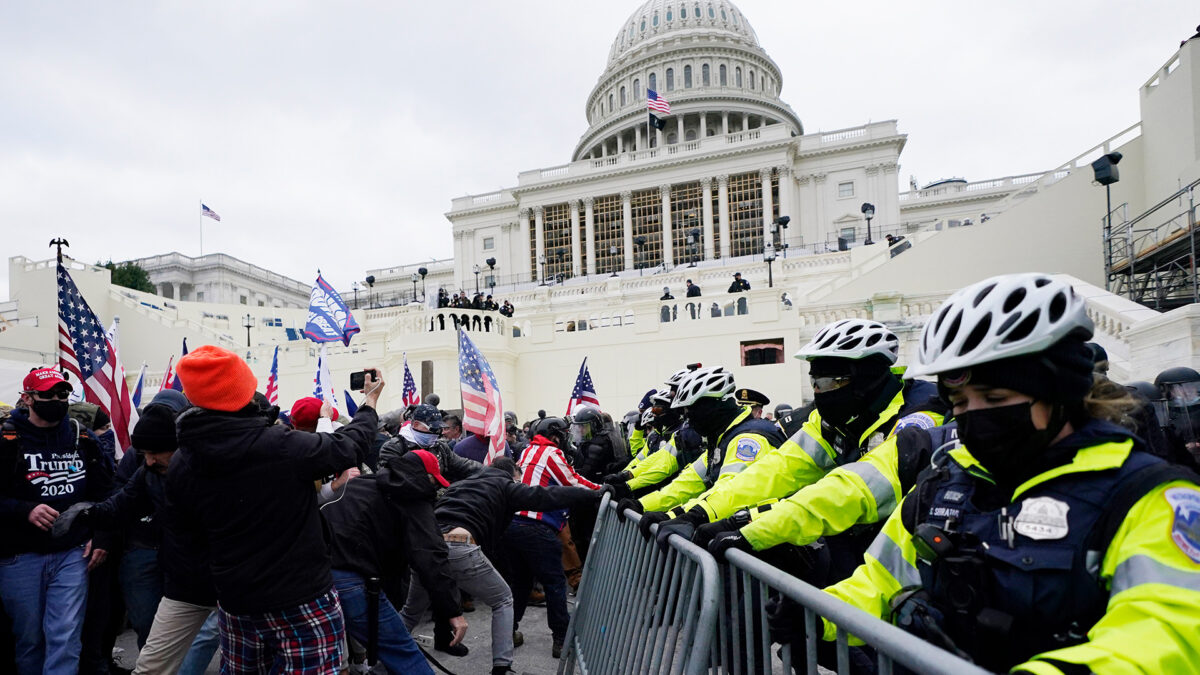
The siege on the Capitol didn’t just represent Trump pushing his already dangerous envelope further into the realm of lunacy. It further exposed America as a nation that is hell-bent on abandoning facts, democracy, science, and basic decency. We have two weeks left with the Madman-in-Chief and there can be little doubt now that anyone who continues to support this monster is malleable clay for his cheap authoritarian tyranny. This would include the 11 Senators who opposed the Electoral College as well as the mindless sycophants who bend to his every word.

“We love you,” said Trump. “You’re very special.”

He knows exactly what he’s doing. When sedition becomes aligned with Leo Buscalgia, you know you’re dealing with a particularly sinister strain of outreach.

But let’s not just pin this on the pinhead. Jack Dorsey, who is now inexplicably being heralded as a saint for suspending Trump’s Twitter account for twelve hours, is also responsible for what happening. As is Dean Baquet of The New York Times for legitimizing right-wing extremism under the false “all the news that’s fit to print” covenant. It was Baquet who allowed a Tom Cotton op-ed arguing for brutality against peaceful protesters. Yet the brutality ultimately emerged from Cotton’s own political party and has been increasingly normalized. It was Dorsey who issued an apology to alt-right provocateur Candace Owens — getting on his profiteering hands and knees to apologize for calling her “far right.”

Dorsey and Baquet — in making right-wing extremism and white supremacy as commonplace as a leisurely walk in the park — used their power and media influence to hone the cornerstones of “both-siderism,” where we are now supposed to entertain the alarming notion that Nazis and antidemocratic terrorism should be afforded the same intellectual weight as any sane political position.

If we don’t remove Trump and his enablers soon — and there has been talk of a second impeachment — then the next two weeks could very well be the end of America. If we don’t immediately arrest and try every single thug who stormed the Capitol, then this will send a message that domestic terrorism is as casual as asking a hot dog vendor for extra mustard and sauerkraut. The question of how many Republicans will continue to align themselves with treason and treachery remains an open and likely preordained one. They’ve marched this far in the swamp without a whit of self-reflection and they know very well what butters their bread. But the additional enemies of America are those who continue to pretend that the daily dose of fascism and violent spectacle is something that should be as normal as thousands of Americans dropping dead every day from COVID. The people in power want us to be conditioned to accept all of this as business-as-usual, to capitulate our shock and outrage and to be divested of what remains of our virtues.

If you have rats in your home, you call an exterminator. But Dorsey and Baquet are more interested in growing their fortunes than standing for decency. They have cynically opted for the bottom line of profitability and dishonesty. And if we hope to heal America and secure a peaceful presidential transition, then we need to be very vocal and condemn every known influence that has allowed this repugnant state of affairs. The pestilence that is eating away at the American promise needs to twitch in glue traps.

The Ghosts of Flatbush

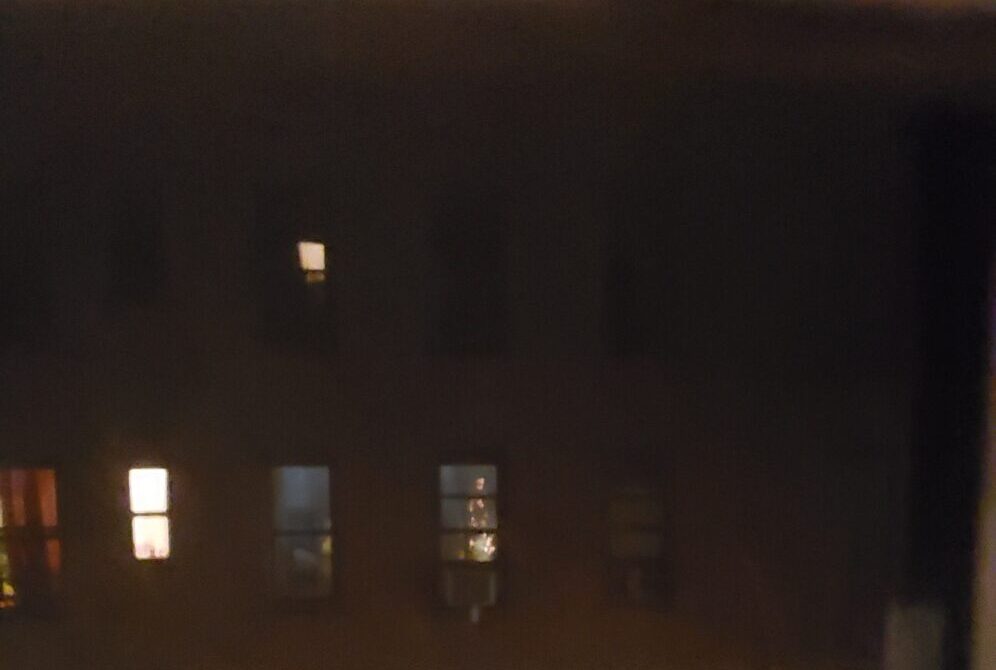
The sun set only a few hours ago and my hood is quiet. The building across from me is dark, with only half of the windows revealing the dependable orange glow of incandescent light. In one window, I see a Christmas tree. Nobody blasts music. Nobody even washes their cars anymore. The streets are lined with metal carcasses that don’t seem to move for alternate side parking, which is rarely enforced anymore.

Nobody in the building across from me utters a peep. I wonder if some of the residents have left, unable to pay their rent. Or maybe they lie there waiting. Waiting in the dark for the pandemic to be over. Waiting for some hope that neither the city nor the state nor the nation can give them.

There are two kids I once saw on a regular basis in one of the windows. They jumped up and down on their bed sometime around ten and engaged in pillow fights. And they did this through October. When I went into my kitchen to pour a nightcap, I would watch them, feeling some hope that joy and life had not died in Flatbush. But I haven’t seen them in the last six weeks. And I worry about them. I worry that they have been forced out of their unit or that their ability to make the most of a bad situation had reached a natural end point.

Even the guys who used to hang out for hours on the corner are gone. Last year, they stood there until December, pulling hoodies over their heads and chatting and smiling through shivers on chilly days. They likewise departed the streets sometime after Halloween. The only trace that they ever existed are a few bottles left on the sidewalk from their outdoor drinking. The only sign of their conviviality. Nobody has touched the bottles. In ordinary times, I would probably dispose of the trash. But I can’t find it within me to do so. Because those bottles are the only remaining indicator that people were there. I suspect that other neighborhood neatniks, the many here who silently pine for our old ways to return, feel the same way. The empty bottles serve as a memorial. A memorial to how the hood used to be. To how it might be again.

Over Thanksgiving, there was a lot of festive music played in my building. But nobody blasts any music now. They preserve the funereal silence of waiting and not knowing and staying quiet. Of knowing that we’re at the beginning of another crest of COVID infections and who knows how many deaths. Of understanding this is just the beginning of a dark time. A repeat of what went down here in March. The ambulance sirens are more frequent. They often wake me up at 3 AM. And I always think of the person inside ushered at high speeds to an ICU. My eyes moisten as I understand that the patient will probably die, leaving further grief for the patient’s friends and family.

The fight has gone out of people. We’ve accepted this as the new normal. We’ve accepted Trump’s indefensible inaction. We’ve accepted Governor Cuomo’s present “policy” to pledge “very strong action” while not actually doing anything. While keeping indoor dining and gyms open. Sure, there’s a vaccine on the horizon, but it won’t be here for months. We’re not even halfway through this long pain. Every other developed nation has a monthly stimulus check. We have nothing. Unemployment if we’re lucky.

So we sit in our apartments like ghosts. Because to inhabit the corporeal in any form is more exhausting these days, even when we are not in motion. And we need all the energy we can get. Because it’s going to be a long time before things return to normal again.