Posts by Edward Champion

Edward Champion is the Managing Editor of Reluctant Habits.

Roundtable Discussion Coming in July

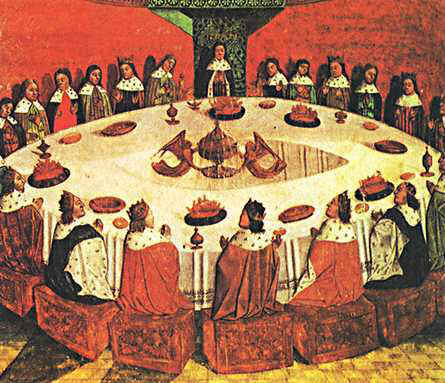
knightsround

It came together at the last minute, but this website is going to be featuring a roundtable discussion during the week of July 8, 2009. For those readers who have enjoyed our previous roundtable discussions of Richard Powers’s The Echo Maker, Nicholson Baker’s Human Smoke, Eric Kraft’s Flying, and various other books, this casual but thoughtful symposium in July will operate along similar lines.

I cannot reveal the book at this time. But I can tell you that the book is nonfiction and deals with a significant issue — something that all of us deal with, but many of us take for granted. I can also tell you that the letters P, H, and C are in the book’s title, and that the book cover features an icon that reminds me of a regrettable period in my life approximately fifteen years ago in which I believed, in all seriousness, that a Franklin Planner was a pretty good idea.

I should have more details about the book (and the topic) in question when we get closer to pub date. And we’ll reveal the book early enough so that those wishing to follow along.

I should also note that I’m hoping to increase the frequency of roundtable discussions in the future. More on these many developments later!

BEA 2009: The Cool-Er Reader

As widely reported over the past week, BookExpo America featured several $249 e-readers. And while I certainly observed many people salivating over e-readers as a whole, a good deal of drool congealed around the edges of Interead’s Cool-Er Reader. Teleread’s Paul Biba reported that the Cool-Er is “very light and feels good on the hand.” (The Interread people did not allow me to corroborate Mr. Biba’s findings. While I don’t desire to undermine Mr. Biba’s understandable excitement, I would not be doing my duty if I didn’t point out that the same words might be said of a freshly washed and folded beach towel.) Wet Asphalt’s Eric Rosenfield reported that the Cool-Er people were very defensive when their device was compared with other e-readers. And I suppose that companies are indeed prone to getting a little defensive when are greeted with legitimate questions instead of marketing opportunities.

On Sunday, May 31, 2009, I was more or less off-duty and somewhat hungover. I had devoted the morning to baking cookies and alotted the afternoon to my theatrical appearance at the Firebrand blogger signing. Under such conditions, the only apparel you can really wear is a Cocaine Fiends t-shirt. Nevertheless, I felt it necessary to check the Cool-Er Reader out for myself. I talked with marketing director Phil Wood and did my best to separate the booth’s beach imagery from all the hype.

The Bat Segundo Show: Mark Kurlansky II

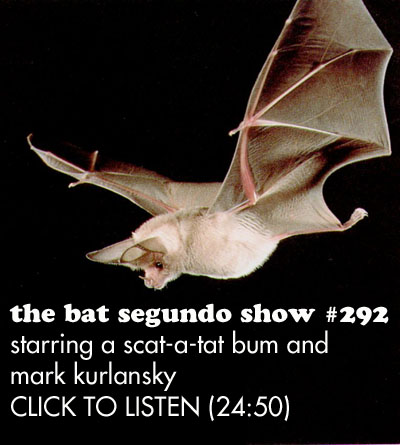
Mark Kurlansky recently appeared on The Bat Segundo Show #292.

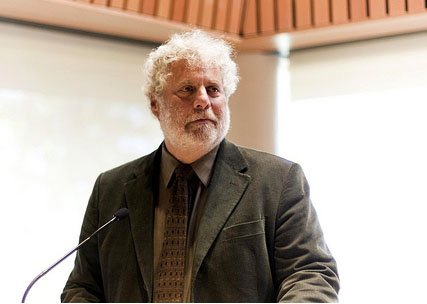
Mark Kurlansky is most recently the translator of Emile Zola’s The Belly of Paris and the editor of The Food of a Younger Land. He previously appeared on The Bat Segundo Show #220.

segundo292

Condition of Mr. Segundo: Pushing past the patois of a forgotten linguistic formation.

Author: Mark Kurlansky

Subjects Discussed: Wanting to be Zola as a kid, thorough food research, the difficulties imposed by lawyers, racist patois, Don Dolan’s failure to understand the burrito, why so many unqualified people got jobs with the Federal Writers Project, Nelson Algren, Richard Wright, manuscripts that were never intended for publication become published thanks to Kurlansky, investigative anthropologists, Coca-Cola parties, lost culinary rituals, Brunswick stew and the original recipe involving squirrel, Kurlansky’s obsession with recipes involving beaver tail, Vermont maple trees, “Nebraskans Eat the Weiners,” corroborating dishes and rituals that made it into the present day, the Nebraskan Popcorn Queen, trying to whittle down Library of Congress material for a book, food conflicts, regional gaps in the America Eats project, Kenneth Rexroth, Basque inaccuracies, Claire Warner Churchill’s extraordinary fury concerning mashed potatoes, World War II’s effect on the WPA, editorial oversight with the Federal Writers Project, geoducks, rarefied cuisine, drying meat over an open fire, hoecakes, low-class and slave forms of cornbread, an altogether different notion of Texas chuck wagon, sheriff’s barbeque, and the mint julep controversy.

EXCERPT FROM SHOW:

kurlansky4Correspondent: First off, just a general question to tie in Zola with the Federal Writers Project book. In an introduction to The Belly of Paris, you confess that, in fact, you wanted to be Zola when you grow up. And this is very interesting because Zola, of course, was a serious investigator. And, of course, going through the endnotes of The Belly of Paris, I see all these references to sausage and meat, and simultaneously I’m thinking in terms of the investigations in this book, The Food of a Younger Land. I’m curious if you think that investigation of that particular time is comparable with Zola and the Federal Writers Project and whether you think perhaps that there’s something that is missing from that type of investigation today. What are your thoughts on all this? Just to start off here.


Kurlansky: Well, Zola was — especially as fiction writers go — a very thorough researcher. This book takes place in the Les Halles market. And he spends a lot of time in the Les Halles market and actually followed wagons from the entry of Paris to the Les Halles market. And when he did Germinal, he spent weeks and weeks in the mines with the miners. I don’t know how much writers do that now. I certainly do. And I think other writers must. Of course, there’s a lot of things where it’s getting more difficult in America to do these things. Because lawyers won’t let you.

Correspondent: (laughs) Yeah.

Kurlansky: There are all these legal issues if it’s a dangerous workplace.

Correspondent: Is this why the time of the past is better then?

Kurlansky: (laughs)

Correspondent: Because you have the statute of limitations.

Well, the concept of “proceed at your own risk” has been lost through lawyers. I’m married to a lawyer. I understand this.

Correspondent: (laughs)

Kurlansky: I mean, part of the reason I admired Zola, outside of the fact that he was such a great writer, was that he had deep political commitments. And those commitments can be found in his writing. But his writing never descends into political diatribe. He always had it very clear in his mind that art was above that kind of thing. That in art, you could show society with all its faults, but you couldn’t rant about it. And, in fact, in The Belly of Paris, he has characters who he probably very much agreed with who he makes look ridiculous. Because they go into these rants all the time.

Correspondent: But in terms of this level of investigation, also in the anthropological folklore component of many of the Federal Writers Project’s writers, I mean, there is something interesting in reading an entry or an article in a particular dialect and essentially listening on the page to someone essentially listening a recipe. The question though is whether this is entirely accurate of the patois at the particular time or whether there are problems. I mean, you allude to a lot of racism that you uncovered and that you didn’t put into the book.

Kurlansky: Yeah, well, some I did. My original reaction was not to put any of it in. But since my whole idea of doing Food of a Younger Land was that I wanted to give readers the experience that I had when I looked through these boxes and accidentally falling into another time into 1940 America, and how different it was, and different in a lot of positive ways. And why cover up the negative ways? This was pre-civil rights South. Black people were referred to by their first name, comma “a Negro.” And a lot of the dialogue sounds like master and slave. And the black dialect is stretched to absurdity. To a point where it’s clearly racist.

(Photo: Lawrence Sumulong)

BSS #292: Mark Kurlansky II (Download MP3)

This text will be replaced

The Bat Segundo Show: Laila Lalami II

Laila Lalami recently appeared on The Bat Segundo Show #291.

Laila Lalami is most recently the author of Secret Son. She previously appeared on The Bat Segundo Show #11.

segundo291

Condition of Mr. Segundo: Unpersuaded by fictive convictions.

Author: Laila Lalami

Subjects Discussed: Interviewing enthusiasm, similarities between Secret Son and Richard Wright’s Native Son, Invisible Man, the original title of The Outsider, Ayelet Waldman’s similar title, the maximum number of story and title configurations, the Brooklyn titular fiasco, depicting scenes from multiple perspectives, character restrictions, masculinity and swagger, fiction and personal experience, blogging and silly distinctions, not having time to pay attention to the publishing industry, violence and representative characters from the slums, subverting terrorist expectations in fiction, brown falcons with twigs in their beaks, symbolism vs. emotional and psychological signs, not having a sense of home, censorship in Morocco, the Western Sahara Separatist Movement, TelQuel, questionable freelancing circumstances portrayed in Secret Son, questioning acts of generosity in the novel, inconsistent character qualities and financial transactions, Chekhov’s gun, personal experiences with paperweights, the problems with making things up, Nadeem Aslam’s Maps for Lost Lovers, being more comfortable with the least strange aspect of invention, government bailouts, legalized pot, and truth vs. believability.

EXCERPT FROM SHOW:

llalamiCorrespondent: Do you view Youssef stealing the paperweight as a financial transaction?

Lalami: Do you know, to this day, I have no idea why he does that?

Correspondent: Really?

Lalami: Yeah, I was just in the middle of the scene. And before I knew it, he was walking down the elevator with it. And it just…I don’t know.

Correspondent: I kept thinking it was like Biff from Death of a Salesman or something.

Lalami: Oh my god. (laughs)

Correspondent: But instead of the fountain pen, it was a paperweight. I don’t know.

Lalami: Very clever. No, no. I wasn’t thinking of that. You know, to this day, I don’t know why he does that. I mean, I think — I don’t know. And the fact that it turns up later on in the book, that again. I mean, literally, two lines before it happened, I didn’t know it was going to be on that desk.

Correspondent: Maybe you needed Chekhov’s gun.

Lalami: (laughs)

Correspondent: Maybe that’s what this is all about.

Lalami: Yes, maybe.

Correspondent: I mean, intuitively, when you introduce a character or an element or an object along these lines, to what degree is your subconscious saying, “Hey, I’ve got to go ahead and put things in here that I can follow up later, and resolve, and wrap things up.”

Lalami: Honestly, yes. Honestly, it really did happen at the level of the subconscious. And I couldn’t tell you why he steals it. Or why? I mean, it seemed fitting to me that the friend would convince him to sell it. I mean, that was just something that fit with the character. But why it would then turn up on Hateem’s desk, I don’t know. You know, honestly, it just seemed to be intuitive. I was just following my intuition with that. Maybe there is a larger symbolic subconscious meaning to it.

Correspondent: Or maybe you had a really painful, cathartic, and emotional experience with a paperweight.

Lalami: No.

Correspondent: That you’re just not going to share.

Lalami: (laughs) Then the story would be a lot more interesting.

BSS #291: Laila Lalami (Download MP3)

This text will be replaced

RIP David Carradine

David Carradine was one of the last grungy B-movie kings. The fight scene above from Kung Fu: The Movie, featuring Carradine fighting against Brandon Lee, is preposterous by just about every measure. But it captures our interest because Carradine truly wanted to sell the scene in his strange and distinctive manner. Carradine was the master of the silly gesture and the rip-your-guts-out expression, a combination rarely seen in contemporary cinema and, for that matter, rarely seen in the 1970s and the 1980s. But Carradine had the boldness to make it work. As Caine, Carradine had a higher tenor than you expected. His voice was slightly unsuited to his character. The constant declarations that he would not fight or that he was not interested in money proved to be a load of bollocks. But goddammit, he was interesting. He came up during a time in which schlocky filmmakers compensated for cheesy scripts by giving actors bizarre things to do. He was quirky yet strangely masculine. And it’s doubtful we’ll see his like again for some time.