The Bat Segundo Show: Sheila McClear

Sheila McClear appeared on The Bat Segundo Show #412. She is most recently the author of The Last of the Live Nude Girls.

Condition of Mr. Segundo: Embracing the diminishing returns of Old New York.

Author: Sheila McClear

Subjects Discussed: Peter Pan Donuts as a point of meaning in one’s life, Hunter S. Thompson and breakfast, Old New York, staying in New York by any means necessary, having unique issues with your parents, having problems with authority, the swift manner in which money disappears in New York, contending with siblings who tap parents for money, personal responsibility vs. economic victimhood, shyness and job interviews, latent rebellion, zoning out during a peep show strip, whether those who work in the nude can be turned on sexually, the many levels of compartmentalization as a stripper, zoning out in relation to performance and being uncomfortable, transactional relationships and comparisons between stripping and psychiatry, writing as a partition between shyness and performance, being charmed by wolves, how long it takes to a Midwesterner to become a true-blue New Yorker, worldliness, not talking with anybody for two weeks, writing about co-workers and allaying concerns, scribbling on the job and maintaining a notebook, memory as a great liar, expanding anecdotes into stories, how patterns inform the narrative, rebelling and dropping out, freedom and reality, being a reg, healthy addictions and obsessions, the advantages of having a focus, McClear’s reluctance to use the words “object” and “objectify,” difficulties with didacticism, the power dynamic between a stripper and a client, dealing with the inevitability of being objectified, losing one’s virginity later in life, working the same peep show stint as a top draw, Fashion Week, the importance of clothes and theatricality in the peep show, the advantages of wearing a schoolgirl skirt, how piercings trick people, guys who read your energy, not being able to hide behind your clothes, dressing like your archetype, subconscious authenticity, making more money when ovulating, the uselessness of wigs, split-second decisions, racism in the peep show industry, racial profiling and men’s sexual preferences, troubling generalizations, race and hiring practices in strip clubs, hygiene at strip clubs, the dangers of mops, sterilizing dollar bills, the necessity of internships to get a foothold in the New York media industry, Ivy League pedigrees, unemployment claims towards Gawker, improving labor conditions for sex workers, exploitation, stage fees, the difficulties of worker organization, what might have happened to McClear without the peep show industry, and the just safe enough nature of peep shows.

EXCERPT FROM SHOW:

McClear: I have problems with all authorities in general. It makes sense.

Correspondent: It makes sense. Your parents were both lawyers. When you were out here trying to survive, did you ever tap them for money? Because that was a question that was never answered in the book.

McClear: My mom gave me two grand when I moved. And every once in a while, she’d send like a hundred dollars in the mail. I never asked them for money. Occasionally, they would send it. No, I would say, other than the two grand — which, God, that disappeared so quickly.

Correspondent: It does in New York. Yeah.

McClear: I already had money too and…well, not a lot. But no. No. I didn’t. It was that and occasional things in the mail. Also my sister was tapping them for a decent amount of money.

Correspondent: Oh, I see. You wanted to be the more respectable sister? (laughs)

McClear: I felt it was unfair to pile on.

Correspondent: Yeah.

McClear: Then there was also the point of, well, at least then I…you know?

Correspondent: Yeah. Yeah. Of other attempts at employment, you write, “It wasn’t as if I didn’t try and do something else.” And I’m curious. To what extent could you be said to be personally responsible for finding work in a peep show? I mean, you were determined to stay in New York by any means necessary. You wanted to prove something to yourself. So obviously you made the decision. So how responsible are you for something like this? Or do you view yourself as a bit of an economic victim?

McClear: Oh, not at all. No one forced me to work there. And it wasn’t my first choice at all. But as I got more and more and more — I mean, everyone has a hard time finding work.

Correspondent: Sure.

McClear; And I probably — I don’t know. I was probably doing something wrong in my job search.

Correspondent: You really think that? I mean, how many resumes did you send? How many job interviews did you go on?

McClear: I don’t know. I think I was so shy back then that I probably came off as bad in an interview. You know, a little awkward. But I was totally — I had this sort of latent thing where I never had rebelled. And I had never been a slacker. I never did drugs really. I never had acted out or been promiscuous. And like there was sort of that going on. And that sort of felt like the first excuse. Especially now that I was by myself and didn’t know anyone to reprimand me or find out what I was doing. It was sort of the first excuse that I found to act out in what was sort of a safe and controlled environment. I took it. And there are other things leading to that decision. Like needing a job and stuff. But I was looking for a way to act out obviously. It had to happen sometime.

Correspondent: Sure.

McClear: Like when people go through their drug phase or their sleeping around phase or their slacker phase. I never did any of it. And I was 25.

Correspondent: You were feeling left out?

McClear: I was feeling left out! And totally uncool. (laughs)

Correspondent: Uncool? I mean, why? I mean, by what metric, if you are so anti-authority, did you feel uncool or not hep or not with it? I mean, who gives a fuck about that?

McClear: I guess I did give a fuck. (laughs)

Correspondent: Many times in the book, you describe zoning out and shutting your brain off during a peep show strip. Of a photography modeling job that steered into an entirely unusual direction…

McClear: (laughs)

Correspondent: …you write, “I had already floated away inside my head, detaching my mind from my body. Nearly three hours had passed before we were done.” But I have to point out even before you arrived in New York, when you performed with the Terranauts in Michigan, you write, “The rush of performing canceled out the noise in my head.” So it seems to me you’re describing here this need to act out. But I should point out that there has been, at least in my reading, this tendency to want to check your brain in or zone out or just not focus. To what degree was it there before you worked in the peep show? And do you think that working at the peep show exacerbated this tendency?

McClear: Yeah. I think it was there. Because my personality type is more of an observer. A little bit of a depressive. And sort of an introverted person. And a tendency to overthink things. Which is probably like…

Correspondent: (laughs) This is going the other way!

McClear: Well, it’s probably describing most writers. So it’s always a vacation if you can find a way — whether it’s meditation or exercise or playing in a band or whatever — to put your mind at ease. But then, of course, being in the peep show was just so — doing the show was much too personal. It was uncomfortable to be present. So I would always check out. And then it did exacerbate that tendency. Just like I described. Of turning a light switch on and off until the breaks. Because you’re like unsure of like “Am I on or off?” Or you can’t toggle between them as much anymore. Which is why I flipped out that one time and went to Bellevue.

Correspondent: Yeah.

McClear: And then I think it just ends up in you withdrawing more. Or just being less present. I actually had a friend who was a nude massage therapist at the time. And she was like, “Um, are you able to be turned on sexually anymore? Because I’m not.”

Correspondent: (laughs)

McClear: And I was like, “Oh. Me neither.” And she was like, “Yeah, I think it’s my job.” “Yeah, probably mine too.”

Correspondent: You couldn’t compartmentalize in any way? That Chelsea [Sheila’s peep show identity] was one type of sex and Sheila was another?

McClear: I could have. But I felt, and I did to an extent, that compartmentalizing too much would almost be like losing some core part of your personality. And I worked with a lot of girls who compartmentalized to the point where they were not the person they used to be before they worked in the business. So I didn’t want to be like that.

The Bat Segundo Show #412: Sheila McClear(Download MP3)
This text will be replaced

Occupy Wall Street: Nine Conversations and a Protest Song

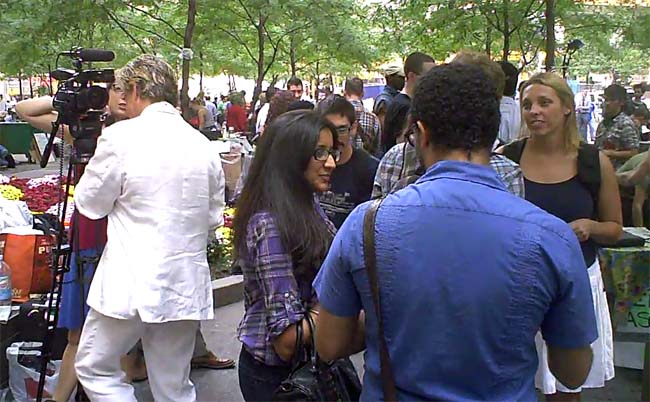
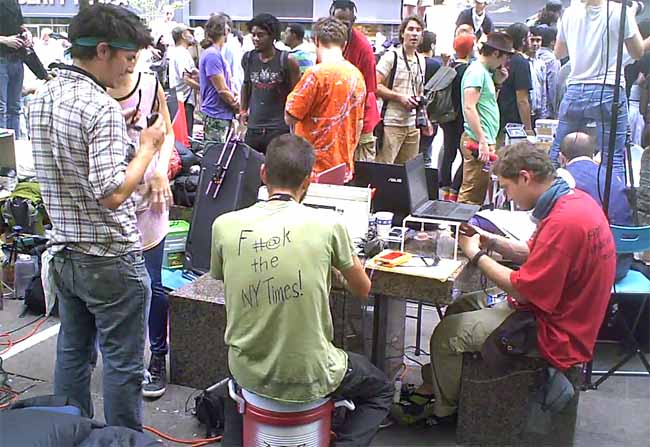
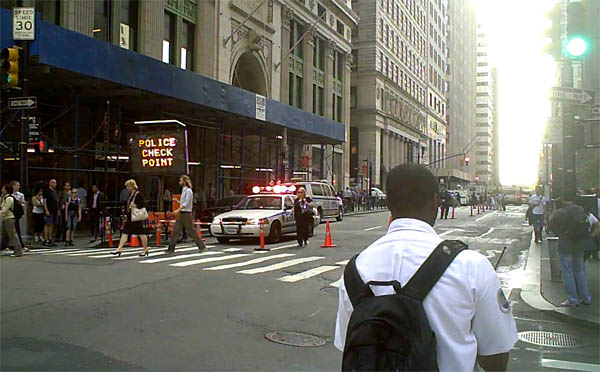
On Tuesday afternoon, I discovered this report from NPR Ombudsman Edward Schumacher-Matos. NPR hadn’t aired a single story in relation to the Occupy Wall Street protests, which I had reported about on Sunday in relation to the pepper spraying incident. I decided to walk across the Brooklyn Bridge and attend the protests myself. What follows are nine conversations I had with various individuals at the protests.

Douglas: “I’m here because I’m American. I was born here in New York. I was born here in Manhattan.”

This text will be replaced

Jeff and Miike came from Colorado.

Miike: “We came on Sunday specifically for this. And we decided we wanted to come down for the week also.”
Jeff: “We had already planned a trip to New York. And then they were talking about it on the radio station that I listen to in Denver. And they were saying there’s a total media blackout on this whole thing. And so I said I’m going to go down there. I called them up and said I’m going to go down there.”

This text will be replaced

Dorjee: “I hope it brings it down completely and we get a completely new system of human respect with viable resources and fair trade, instead of I lend you. You, you need a thousand dollars. Okay, I’ll give you a thousand dollars if you pay me back $1,000 plus $200.”

Me to Dorjee: “Be careful with that fist. Because you’re trying to be peaceful, right?”

This text will be replaced

Marvin was holding a sign that read JESUS IS NOT FOR CORPORATE GREED. What will the protest actually do?

Marvin: “It will make people more aware that we live in a capitalist system where more people are living in poverty than ever. And the most ironic part of it is that it’s a capitalist system, but we live off the Communists. We have to borrow money from Communists to even exist.”

This text will be replaced

Mary was a tourist who had stopped by Liberty Square on the last day of her vacation.

Mary: “I’m surprised it hasn’t happened earlier. Now it has. I started following it on Twitter. And then I thought I’d come down and see what was happening.”

This text will be replaced

Ed and Robin came to the protests all the way from West Virginia.

Robin: “The corporations have done a great job in dividing people, separating people into issues. People are coming together here and realizing that we have much more in common with each other than we do with the people who are trying to sell us on what a good way of life is here.”

This text will be replaced

Ed and Robin were also kind enough to perform their song “Let ‘Em Eat Cake” for me. Here is Uncle Eddie & Robin’s website.

This text will be replaced

Roman carried a sign calling for President Paris Hilton and had some unusual ideas about making sex appeal a more predominant characteristic than others.

Roman: “I’m an aspiring, you know, Paris Hilton. I want to just be able to live and party. I live with my parents right now but we don’t have much money. And I think that if Paris Hilton becomes President, you know, she can help everybody just party.”

This text will be replaced

Brian worked very close to Liberty Square. He was checking out the protests on his lunch break.

Brian: “This is funny anyway. [indicating sign] I mean, who hasn’t tried to go to school looking for a job when they first get out of school. I mean, that’s what we all do. It’s hard to find a job. But, like anything, you continue to look and try until you find one and do what most of us have done.”

This text will be replaced

[EDITORIAL NOTE: Please note that an earlier version of this story misidentified “Steven Levy” as “Wired senior writer Steven Levy.” Reluctant Habits expresses its apologies to Wired‘s Steven Levy and greatly regrets the error.]

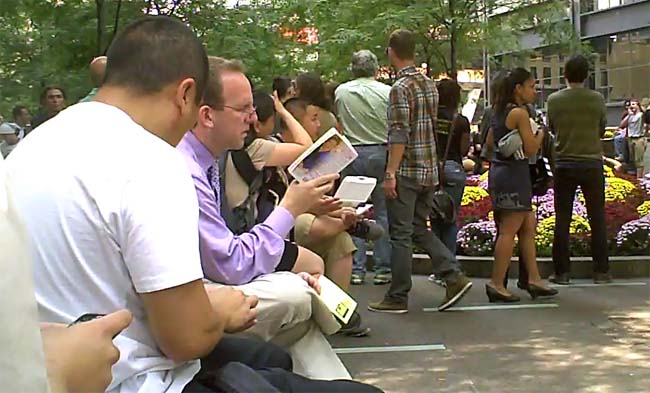
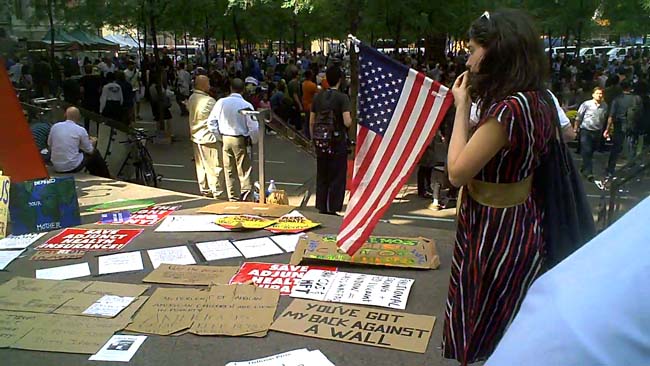
As I was circling Liberty Square and talking with many people about what it meant to protest, I observed an older man berating a young man going by the name of Matt. It was the only contentious banter I had observed in what was otherwise a peaceful gathering — complete with donated food, plentiful signs laid along the ground, activists singing protest songs on banjos and guitars, and even a library established in close proximity to the main dais.

I was curious about what had caused this older man to lose his gasket. Because while I had talked with people who did not approve of the protest (including some cops who declined to go on the record, but all NYPD officers I observed were calm and professional), the older man was the only one prepared to go ballistic. This being a public space, I naturally began recording audio and approached the shrieking man, hoping that I might use this moment to generate a civil discussion. But the man, who identified himself as “Steven Levy” (not to be confused with the Wired senior writer) wasn’t especially interested in explaining to me why he was upset at Matt.

“He and I were just talking with another woman,” explained Matt after the exchange. “And I think they’re more on the liberal interventionist side of the economic policies — at least in terms of their opinions. And I was like saying, ‘Look, I’m personally against Keynesianism. Because I think Keynes is all about government spending. And I don’t believe government is a good allocator of spending.'”

This position apparently infuriated Levy. When I approached Levy and Matt, Matt was explaining to Levy that the two of them were on the same side. Levy responded, “You don’t read well.”

I decided to intervene. I merely wanted to know what Matt was misrepresenting. The results can be listened to below:

This text will be replaced

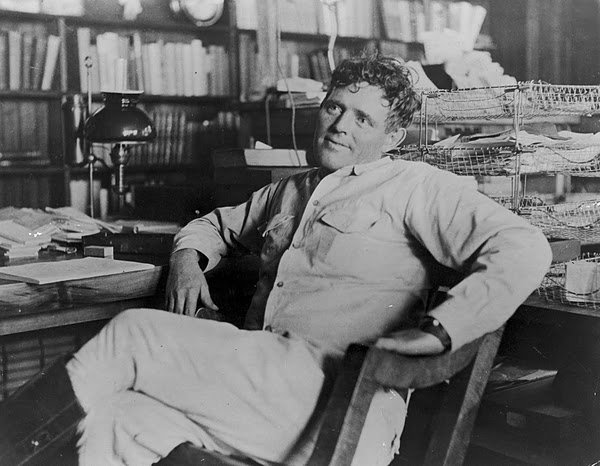
The Call of the Wild (Modern Library #88)

(This is the thirteenth entry in the The Modern Library Reading Challenge, an ambitious project to read the entire Modern Library from #100 to #1. Previous entry: Loving)

In June 1902, Cosmopolitan published “Diable — A Dog” (the original title “Bâtard” had been softened by squeamish editors) by an emerging young writer named Jack London. This gripping tale involves a dog (“illegitimate” like London: his father a timberwolf, his mother a husky) battling his vicious master Leclère as the two wander the Yukon — seemingly with the sole purpose of rending each other at any opportunity. London describes how “hate bound them together as love could never bind,” not unlike Edward Albee’s George and Martha or Eminem and Kimberly Scott. And like the most extreme bonds of blinding enmity, for Diable and Leclère, this leads to a fatal end.

In December of that year and in a lonely place, London began work on a 4,000 word short story — a companion piece to “Bâtard” involving a civilized dog named Buck, who is also a mongrel, and his adventures in the Alaskan wilderness. Two months later, London had a novel. But he he would make a catastrophic business decision: $2,000 in cash from Macmillan for all rights with a further $750 to the Saturday Evening Post. Given the millions of copies that Call would go on to sell, and given London’s constant financial woes, this transaction may very well be American literature’s answer to the Dutch snapping up Manhattan from the Lenape for a mere 60 guilders.

Despite this bad business, Call would cement London’s literary reputation. And I am pleased to report that, a little less than three decades after I first read it, Call holds up remarkably well on a second and third read — so much so that I was compelled to read White Fang, a London biography, numerous critical responses, and countless other texts directly and indirectly related to Call before a kind friend cut me off from this London monomania in the manner of a respectful bartender telling an exuberant customer to go home and sleep it off. Additional friends encouraged me to read sections of White Fang aloud to an especially finicky cat and were surprised when I found that I could not stop. I could go on reading London for days. The man is that good.

My obsession likely emerged from the startling rediscovery that London’s prose remains alive in a way one would not expect from a novel published in 1903, especially since London found his inspiration to write from a somewhat incongruous source: Ouida‘s Signa. Soon after Buck is kidnapped from the “big house in the sun-kissed Santa Clara Valley,” where he lives with Judge Miller and his family, London masterfully establishes the way that the setting is changing by throwing the reader off with subtle syntactic shifts:

Several times during the night he sprang to his feet when the shed door rattled open, expecting to see the Judge, or the boys at least. But each time the joyful bark that trembled in Buck’s throat was twisted into a savage growl.

We believe that Buck springing to his feet will spawn an escape or that the door rattling open will precipitate some further action, but London establishes an uncertain feeling between understated fear and expectation. And he neatly foreshadows Buck’s inevitable transformation with the “joyful bark” twisting “into a savage growl.” This style might be identified as highly refined Alger, but it also allows us to become invested in Buck’s inner life in a manner that feels tough rather than sappy, transcendental rather than fixed. And we become so involved with Buck’s struggles that we forget we are reading an animal tale.

But Call has more going on than a soft Southland mutt growing into a legendary Ghost Dog who “sings a song of the younger world.” London, who spent much of his formative years laboring hard as a “work beast,” is also writing about the honor and integrity that emerge from doing a job well even in the worst of all possible worlds. This wild world of hard labor, in which one must eat faster and push one’s muzzle harder to grab that bit of protein needed to keep pulling the sleds and one must ward off belligerent “co-workers” like Spitz (if you think you’ve got annoying cubemates, wait until you meet this dog), still has its virtues:

Best of all, perhaps, he loved to lie near the fire, hind legs crouched under him, fore legs stretched out in front, head raised, and eyes blinking drearily at the flames. Sometimes he thought of Judge Miller’s big house in the sun-kissed Santa Clara Valley, and of the cement swimming tank, and Ysabel, the Mexican hairless, and Toots, the Japanese pug; but oftener he remembered the man in the red sweater, the death of Curly, the great fight with Spitz and the good things he had eaten or would like to eat. He was not homesick. The Sunland was very dim and distant, and such memories had no power over him. Far more potent were the memories of his heredity that gave things he had never seen before a seeming familiarity; the instincts (which were but the memories of his ancestors become habits) which had lapsed in later days, and still later, in him, quickened and became alive again.

Work, which comes by necessity in the wild, overcomes the distressing prospect of being crippled by memory. It unites disparate souls, even those who are lashing at each other, and even causes experienced men to protest the clueless chekakos. Midway through the novel, three greenhorns show up with canned goods, “blankets for a hotel,” and beat their dogs into submission without lightening the load. Later in the novel, Buck makes his escape from this unthinking and irresponsible trio into John Thornton’s care.

While it’s true that unfastening a lock can require pluck, some critics have made too much hey now over certain autobiographical connections between Jack and Buck. It is true that London was writing The Call of the Wild as his first marriage was disintegrating. Buck does describes his love for John Thornton with lilting romance (“But love that was feverish and burning, that was adoration, that was madness, it had taken John Thornton to arouse”*), but London wrote these words before he had Charmian Kittredge, the woman who could match London’s libido and physical activity (she even boxed with him) and who would become his second wife. (And since I’m dishing out gossip, I should probably point out that London, licentious even as his belly bulged from drink, still cheated on her.)

If work can save you, it doesn’t necessarily eliminate class struggle, which London would explore more fully in his needlessly overlooked novel, Martin Eden. London’s daughter, Joan, would write that Call was “the story of all strong people who use the cunning of their minds and the strength of their bodies to adapt themselves to a difficult environment and win through to live,” but this strikes me as a little pat. It is certainly interesting that The Call of the Wild and The Sea-Wolf both rely on bourgeois protagonists being plucked from their safe environments in order to learn invaluable lessons in individualism and morality. Perhaps you can learn such lessons within middle-class comforts. But London’s romantic view makes a compelling case that it is better for instincts to quicken and become alive when you are thrown outside your comfort zone. In other words, every MFA student and passive-aggressive vacillator needs to read Jack London pronto.

* — This seems as good a time as any to bring up the relationship between The Call of the Wild and London’s companion novel, White Fang, which depicts the transformation in reverse (wild wolf turning into civilized dog, complete with another judge taking care of White Fang near the end, suggesting a symmetry with London’s earlier volume). While I enjoyed White Fang quite a lot, I consider it to be the inferior volume, rehashing many story elements of Call (wolves getting into a squabble over a rabbit, rising to sled leader, and so forth) and not quite possessing the poetry and the tautness and the keen insight and the gripping gusto that’s there in Call. The passage I quote here about Buck’s love for John Thornton doesn’t feel nearly as schmaltzy as its heavy-handed counterpart in White Fang: “Human kindness was like a sun shining upon him, and he flourished like a flower planted in good soil.”

Next Up: Arnold Bennett’s The Old Wives’ Tale!

Occupy Wall Street: Was the NYPD Authorized to Pepper Spray Peaceful Observers?

On Saturday, the New York Police Department arrested approximately 80 people — many participating as part of Occupy Wall Street, a peaceful protest against Wall Street and the economy.

But one incident suggests very strongly that the NYPD exceeded its authority and failed to follow appropriate procedure. In videos that have been making the rounds in the past 24 hours, three bystanders — all occupying the street and captured inside orange netting erected by the police — shout “What are you doing?” and “Oh my God!” in response to unseen arrests in the distance. The women, who offer no resistance or violent behavior, are seen and heard shrieking in pain as police officers pepper spray them without any apparent warning. On the main video, the young woman on the right clutches her hand over her mouth in shock, looking around and doing nothing, just standing there. She is clearly unaware that she is about to be maced. (The Daily Kos’s MinistryOfTruth talked with one of the women. She confessed in the report that she had no idea what prompted the attack.)

Two police officers clad in white shirts approach the women. One of them is equipped with pepper spray. He has been busy off-screen. He points fiercely at the three penned women, barking, “You guys are all going to be going” — presumably in response to the legitimate question “What are you doing?” The young woman on the right, still stunned, stretches out her hand. And he responds by spraying her in the face with pepper spray. He moves his arm to the right and sprays the others.

As the three women scream in pain and flail their arms, the netted orange perimeter is broadened. But not a single police officer steps inside to aid the women, much less arrest them. Other people scream for someone to bring water to the three women.

Here is the original video:

Here is the original video slowed down:

Here is the incident from another angle:

The NYPD would not confirm with The Gothamist whether or not it used pepper spray in any of the arrests. Yet the videos clearly indicate that it did. According to CBS News, the NYPD called every arrest justified. But an equally important question is this: Why did these officers consider the use of OC justifiable against these peaceful observers?

These three videos contain enough information about the macing incident to reconstruct a substantial portion of it. Reluctant Habits has also obtained a 2005 edition of the New York Police Department Patrol Guide, which outlines the specific use of pepper spray in Section 212-95. By the 2005 standards and based on the available evidence, it is clear that the NYPD did not follow appropriate measures.

In most cases, pepper spray is used to effect the arrest of a resisting subject. And the Patrol Guide specifies five uses for OC pepper spray:

  • Protect self, or another from unlawful use of force (e.g., assault)
  • Effect an arrest, or establish physical control of a subject resisting arrest
  • Establish physical control of a subject attempting to flee from arrest or custody
  • Establish physical control of an emotionally disturbed person (EDP)
  • Control a dangerous animal, by deterring an attack, to prevent injury to persons
    or animals present.

We see in the above videos that the women were not assaulting the police officers (unless stretching out one’s hand to get one’s bearings is considered “assault”). There was no need to establish physical control. They were not fleeing from arrest. (Indeed, how could they when they were trapped in orange police netting?) They were not emotionally disturbed persons. They were not dangerous animals who were going to injure anybody.

In looking at the Patrol Guide, we learn that the police are obligated to arrest the person who is pepper sprayed and charge them with a crime. Yet we see that the police do not make any moves towards the three women. They are left to scream, kneeled in the streets and in pain. They are not criminals. But they are clearly examples of what befalls “bad” citizens.

The Patrol Guide specifically orders the uniformed officer not to use pepper spray on “subjects who passively resist (e.g., going limp, offering no active physical resistance).” But the white shirted policeman has clearly ignored this procedure. In the same note, the uniformed officer is instructed to “avoid using O.C. spray in small contained areas such as automobiles and closets.” It is hard to determine with all the pandemonium going on in the video, but the orange netting erected by the police may very well fall into the scope of “small contained area.”

Patrol Guide procedures also request Emergency Medical Services “once the situation is under control.” But we see these women screaming and no apparent EMS members in the frame. Did the NYPD fulfill this option? Probably not. Because the women were left in the contaminated area to scream. They were not relocated to fresh air, contrary to another Patrol Guide mandate: “Remove the subject from the contaminated area and expose to fresh air while awaiting the arrival of EMS, or transportation to hospital/stationhouse if tactically feasible.”

Given the distance of the officers from the victims, it’s likely that none of the officers asked the women if they were wearing contact lenses. Nor were the women placed in a sitting position to promote free breathing. They were left to fall to the ground and suffer. The Patrol Guide also specifies that officers should provide a source of water and flush the contaminated skin of those who are pepper-spayed. Even if we give the NYPD the benefit of the doubt, and accept that the situation was an anarchic one and that it was hard to enforce these guidelines, one would think that this flushing proviso would be followed to the letter — if not as an enforced code, then at least as a basic quality of humanism that requires no explanation. But for a good twenty seconds, the women are left to scream and to experience pain, with one woman stretching her arms in an effort to find some relief for her anguish. The women who are not sprayed appear to want to help her, but, trapped inside the orange netting, they cannot offer water.

The NYPD’s conduct does not fall into the five general categories of pepper spray use. It fails to adhere to the NYPD’s own guidelines. And since the NYPD cannot own up to its inhumane behavior, despite repeat inquiries, it suggests very highly that the police are not especially committed to Fidelis ad Mortem — especially that vital faith in innocent bystanders whose only crime was to ask what was happening to fellow human beings.

Here is P.G. 212-95 reproduced in its entirety:

P.G. 212-95 Use Of Pepper Spray Devices

Date Effective: 01-01-00

PURPOSE

To inform uniformed members of the service of circumstances under which pepper spray
may be intentionally discharged and to record instances where pepper spray has been
discharged, intentionally or accidentally.

SCOPE

Use of Oleoresin Capsicum (O.C.) pepper spray constitutes physical force under the New
York State Penal Law. Use of pepper spray is proper when used in accordance with
Article 35 of the Penal Law and Department procedures. O.C. pepper spray may be used
when a member reasonably believes it is necessary to effect an arrest of a resisting
suspect, for self-defense or defense of another from unlawful force, or to take a
resisting emotionally disturbed person into custody. In many cases, pepper spray will
reduce or eliminate the need for substantial physical force to effect an arrest or
gain custody. It will often reduce the potential for injuries to members and suspects
that may result from physical restraint and it should be regarded as a possible
alternative to such force and restraint, where practical. Pepper spray shall not be
used in situations that do not require the use of physical force. O.C. pepper spray
may be used in arrest or custodial restraint situations where physical presence and/or
verbal commands have not been, or would not be, effective in overcoming physical
resistance.

PROCEDURE

When necessary to use pepper spray device:

UNIFORMED MEMBER OF THE SERVICE

1. Hold pepper spray in an upright position, aim and discharge pepper spray into a
subject’s eyes for maximum effectiveness, using two (2) one second bursts, at a
minimum distance of three (3) feet, and only in situations when the uniformed member
of the service reasonably believes that it is necessary to:

a. Protect self, or another from unlawful use of force (e.g., assault)

b. Effect an arrest, or establish physical control of a subject resisting arrest

c. Establish physical control of a subject attempting to flee from arrest or custody

d. Establish physical control of an emotionally disturbed person (EDP)

e. Control a dangerous animal, by deterring an attack, to prevent injury to persons
or animals present.

2. Effect arrest of criminal suspect against who pepper spray was used and charge with
crime which initiated use of the pepper spray.

a. Add resisting arrest charge, when appropriate

b. P.G. 210-13, “Release Of Prisoners – General Procedure” will be complied with if
it is determined that arrested person did not commit the crime or that no crime was
committed.

c. P.G. 216-05, “Mentally Ill Or Emotionally Disturbed Persons,” will be complied
with, when appropriate.

NOTE: Do not use pepper spray on subjects who passively resist (e.g., going limp,
offering no active physical resistance). If possible, avoid using pepper spray on
persons who appear to be in frail health, young children, women believed to be
pregnant, or persons with known respiratory conditions. Avoid discharging pepper
spray indiscriminately over a large area for disorder control. (Members who are
specifically trained in the use of pepper spray for disorder control may use pepper
spray in accordance with their training, and within Department guidelines, and as
authorized by supervisors.). In addition, avoid using O.C. spray in small contained
areas such as automobiles and closets.

3. Request response of Emergency Medical Service (EMS) once the situation is under
control.

a. Advise person sprayed that EMS is responding.

4. Remove the subject from the contaminated area and expose to fresh air while
awaiting the arrival of EMS, or transportation to hospital/stationhouse if tactically
feasible.

a. Determine whether the person sprayed is wearing contact lenses. (It is strongly
recommended that contact lenses be removed as soon as possible after exposure to O.C.
spray.)

5. Position subject on his/her side or in a sitting position to promote free
breathing.

a. The subject should never be maintained or transported in a face down position.

b. Do not sit, stand, or kneel on subject’s chest or back.

6. Provide assistance to subject as follows:

a. When consistent with member’s safety, and provided a source of water is readily
available, the uniformed member should flush the contaminated skin area of a subject
with profuse amounts of water.

b. Repeat flushing at short intervals, if necessary, until symptoms of distress
subside.

c. Continue flushing the contaminated skin of the subject in custody, at the
stationhouse as needed.

d. Commence the flushing of a subject’s contaminated skin upon arrival at the
stationhouse, if this has not already been done.

NOTE: Do not rub or touch skin of contaminated person, as the initial effect of
pepper spray does not dissipate for 15 – 20 minutes. Also, do not use salves, creams,
ointments, commercial eye washes or bandages. The desk officer will ensure that all
prisoners who have been sprayed with pepper spray receive appropriate first aid, if
needed, upon arrival at the stationhouse. Desk officers are also responsible for
ensuring that prisoners who have been sprayed with pepper spray are properly observed
throughout the arrest process, and that they receive prompt medical attention if they
need or request it. A Command Log entry will be made stating whether the prisoner has
had his/her skin flushed with water, been examined by EMS, or been transported to the
hospital.

7. Transport prisoner immediately to the emergency room of the nearest hospital if
he/she is demonstrating difficulty breathing, or exhibiting signs of severe stress,
hyperventilation etc.

a. Windows of transport vehicle should be kept open

b. Members who come in contact with persons who have been exposed to pepper spray
must thoroughly wash their hands afterward and avoid having any contaminated clothing
make contact with their face

c. Advise hospital staff that pepper spray has been used on prisoner.

8. Prepare ON LINE BOOKING SYSTEM ARREST WORKSHEET (PD 244-159) and MEDICAL TREATMENT
OF PRISONER (PD 244-150) in arrest situations.

9. Complete the AIDED REPORT WORKSHEET (PD 304-152b) in non-arrest situations, e.g.
EDP, and:

a. Check box “O.C. Spray Used”

b. Enter rank, name, and tax registry number, of each MOS who discharged spray in
the “Details” caption

c. List the time, doctor’s name, and diagnosis under “Details” caption, when
applicable.

COMMANDING OFFICER, M.I.S.D.

10. Provide a quarterly printout of all arrest and aided incidents where pepper spray
was discharged to the commanding officer, Firearms and Tactics Section.

COMMANDING OFFICER, FIREARMS AND TACTICS SECTION

11. Analyze situations where O.C. spray was employed to evaluate its effectiveness.
a. As appropriate, modify existing training/tactics relative to the use of pepper
spray.

ADDITIONAL DATA

The only pepper spray authorized for use is the type issued to all uniformed members
through the Firearms and Tactics Section.

In order to maintain the effectiveness of the spray, it is recommended that the device
be shaken at the start of each tour. Carrying the pepper spray device during normal
patrol duty should be sufficient to keep the solution thoroughly mixed.

Pepper spray will not automatically stop all subjects, and even when it does
incapacitate, the effects are temporary. Members should therefore be ready to use
other appropriate force options and tactics.

When performing duty in uniform, the pepper spray shall be carried in its holster
attached to the non-shooting side of the gun belt. When performing enforcement duty
in civilian clothes the pepper spray must be carried, in the holster attached either
to a belt or in another appropriate manner. Undercover members may opt not to carry
the pepper spray. Members of the service may carry the pepper spray device during off
duty hours.

UPDATE: The Village Voice talks with Chelsea Elliott, one of the protesters: “We lay on the ground like little worms. One of the other girls was a medic, and was able to pour milk in her eyes. The cops left. They moved the net. All I know from what happened afterward, I watched on YouTube. For like 15 minutes, I couldn’t see; I couldn’t breathe at first. It was so out of the ordinary and unprovoked. Our medical group poured milk into my eyes for like 10 minutes, and apple cider vinegar on my face.”

UPDATE 2: The NYPD officer who pepper sprayed the protesters has been identified as Anthony Bologna. A Downtown Express profile of Bologna reveals that he became a police officer late in life and there is this telling quote: “You read in the papers about cops doing things that you can’t believe because you think everybody’s like you. But a department this large can’t really be completely free of it. If you don’t find anything wrong, you’re in real trouble because you’re not looking.” I am also investigating this article from 2001, which suggests the possibility that Anthony Bolgona attacked another protester at a Mayday NYC protest in 2001.

UPDATE 3: Jeanne Mansfield, “Why I Was Maced at the Wall Street Protests.”

UPDATE 4: The Guardian reports that Anthony Bologna may have committed civil rights abuses during the 2004 demonstrations at the Republican National Convention.

Another Review of Moneyball

This is the second of two Moneyball reviews we’ve published. The first, featuring two fictitious sportscasters, can be read here.

I came to Moneyball not having read Michael Lewis’s book. There wasn’t really a good reason. Because I do read source material for a film whenever possible. Why? Because I like to play comparison games in my head. And because if the film doesn’t match up to the book, then I can figure out why. Or if it does measure up (and then some), I can analyze the differences.

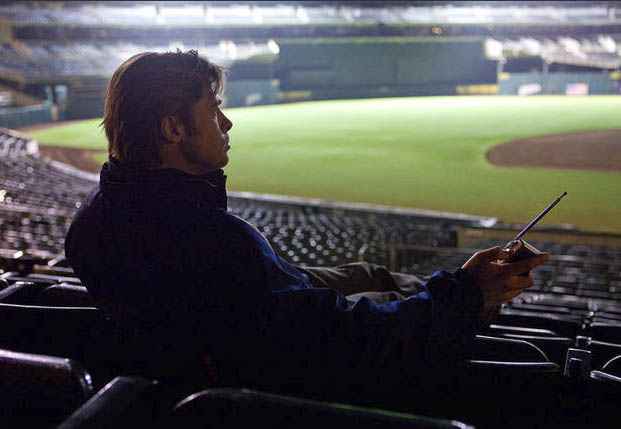
Oddly, I didn’t do so when I saw The Social Network, which Moneyball is clearly trying to ape: from the Sorkin dialogue that managed to survive a zillion rewrites and doctoring to the shots of 21st century retro computing (2001 in Moneyball, 2004ish in TSN) to the meetings where old people need to be convinced of something new and foreign (in TSN‘s case, when the fictional Zuckerberg is being deposed by lawyers or telling the Harvard people why he doesn’t give a fuck about them but does about Facebook; in Moneyball, when beatific Brad Pitt as Billy Beane drops his masks and tells a room full of Fathers Know Best scouts they don’t know what they are doing.) Maybe Moneyball needed full-blown Sorkin, but I don’t think his script could have saved the movie, which was pretty much unsaveable from the get-go.

Here’s why: it opens with footage (real? doctored? who cares?) of the Oakland Athletics’s 2001 wild card playoffs, a strike against my childhood self who cried out for her 1994 Expos, their bound-for-playoff run aborted by the strike that killed the game and ushered in three rounds of post-season. There’s Jason Giambi before we knew he took steroids. There’s Roger Clemens before we knew he took steroids, perjured himself, and generally revealed himself to be a colossal douchebag of the highest order. And I’m distracted, thinking of the Mitchell Report, Itamar Moses’s amazing play about the late 1980s A’s, Canseco introducing McGwire to the magical elixir of what these drugs can do. And oh yeah, the A’s lose, Schott won’t give Beane any money, and everybody’s fucked until the Fat Kid Math Whiz comes along to save the day and make Beane look good with his Sabermetric-based statistical analysis of underappreciated players.

Moneyball did pick up. I admit, when the movie turned to the streak, the grinding gears caused me to get caught up in the manufactured excitement. I mean, truth sometimes does trump fiction, and Hatteberg’s homer really was something else. But we’re only a couple of clicks away from finding out that Jonah Hill’s character is pure fiction (the truth, in the form of Paul DePodesta, Beane’s real-life assistant GM, got edited out because it wasn’t convenient, so DePodesta refused to have his name included), Beane was only following in predecessor Sandy Alderson’s footsteps, and going the quant route only works for the scrappers if the big guns haven’t figured it out. Also, I was kind of hoping for a cameo by some Theo Epstein stand-in, aka the man who ended up with Beane’s promised GM job at the Boston Red Sox. In fact, why hasn’t Ben Mezrich written about him yet?

Anyway, Beane is still with Oakland, though possibly not for long, as this New York Times Magazine piece reveals. He still hasn’t won a playoff. And that’s great, but is this a movie? It’s not that the lack of a Hollywood ending galls. Because it doesn’t. It’s that the lack of a Hollywood ending reinforces the fact that there wasn’t much of a Hollywood beginning or a middle. In other words, I want my damn 1994 Expos. Now there’s a team that might have changed the game further, and their shot wasn’t just ruined then, it was taken away forever.