Scoop (Modern Library #75)

(This is the twenty-sixth entry in the The Modern Library Reading Challenge, an ambitious project to read the entire Modern Library from #100 to #1. Previous entry: The Prime of Miss Jean Brodie.)

When I last dived into Evelyn Waugh’s exquisite comic fiction for this crazy project nearly six years ago, I wrote a sour essay in which I permitted my hostility towards Waugh’s pugnacious life and his reactionary politics to overshadow my appreciation for his art. Perhaps the way I read fiction has changed or the idea of completely discounting a writer’s achievements with the histrionic tone of an upbraiding Pollyanna who doesn’t possess a scintilla of self-awareness fills me with a dread I usually associate with wincing at a tax bill or standing in a needlessly long line for a pizza slice. Whatever the case, I allowed myself to zero in on Brideshead Revisited‘s weaker elements (namely, the deplorable gay stereotype Anthony Blanche) without possessing the decency to praise that novel’s excellent prose in any way. This was decidedly uncharitable of me. For Waugh was, for all of his faults, a master stylist. That I was also bold enough to rank Wodehouse over Waugh was likewise problematic (although I would still rather read Pip and I have never been able to get into the Sword of Honour trilogy and I still feel that Waugh was more or less finished as an author after The Loved One; incidentally, Waugh himself called Wodehouse “the Master”). At the time, the eminently reasonable Cynthia Haven offered what I now deem to be appropriate pushback, observing that I brought a lot of “post-modern baggage” into my reading. My “take” on that novel’s Catholic dialogue was, I now realize after diving into Waugh again, driven by a cocky yahooism that is perhaps better deployed while knocking back pints in a sports bar and claiming that you’re a big fan of the team everybody else is cheering for. Never mind that the names of the players are only lodged in your memory by the blinding Chryon reminders and the bellowing cries of histrionic announcers that work together to perfect a sense-deadening television experience.

Anyway, I’ll leave cloud cuckoos like Dave Eggers to remain dishonest and pretend they never despised great novels. I’d rather be candid about where I may have strayed in my literary judgement and how I have tried to reckon with it. In a literary climate of “No haters” (and thus no chances), we are apparently no longer allowed to (a) voice dissenting opinions or (b) take the time to reassess our youthful follies and better appreciate a novel that rubbed us the wrong way on the first read. Wrestling with fiction should involve expressing our hesitations and confessing our evolving sensibilities and perceiving what a problematic author did right. And so here we are. It has taken many months to get here, but it does take time to articulate a personal contradiction.

So here goes: As much as I appreciate Scoop‘s considerable merits (particularly the fine and often hilarious satire when the book takes place on Waugh’s home turf), I cannot find it within me to endorse this novel’s abysmally tone-deaf observations on a fictitious Abyssinia — here, Ishmaelia. There are unsophisticated thoughts cloaked beneath the light fluidity of Waugh’s exacting pen that many of his acolytes — including The Observer‘s Robert McCrum and NPR’s Alexander Nazaryan — refuse to acknowledge. There’s no other way to say this, but Waugh is more nimble with his gifts when he bakes his pies with an anglophonic upper crust. And that ugly truth should give any reader or admirer great pause. (Even Selina Hastings, one of his biographers, was forced to concede this. And McCrum, to his credit, does at least write that “Scoop derives less inspiration from Ethiopia,” although this is a bit like stating that Paul Manafort merely muttered a little white lie.) Waugh’s limitations in Scoop are not as scabrous as Black Mischief — a novel so packed with racism that it’s almost the literary equivalent to Louis C.K.’s recent attempts at a comeback. But his “insights” into Africa are still very bad, despite all the other rich wit contained within the book. Waugh cannot see anyone who does not share his lily-white complexion as human. His creatively bankrupt view of Africans as bloodthirsty cannibals or “crapulous black servants” or “a natty young Negro smoking from a long cigarette holder” carries over from Black Mischief. “A pious old darky named Mr. Samuel Smiles Jackson” is installed President. I was rankled by the constant cries of “Boy!” from the assorted journos, late risers who complain about not getting swift servitude with a smile. (“Six bloody black servants and no breakfast,” sneers the entitled Corker at one point.) Even the potentially interesting politics behind Ishmaelia’s upheaval are coarse and general, with the arrival of Dr. Benito at a press conference described in one paragraph with a contrast of “blacks” and “whites” that show the force and timing of a man determined to be vituperative, but without substantive subtlety. One of the book’s jokes involves a nonexistent city on the nation’s map identified as “Laku,” which is Ishmaelite for “I don’t know.” And while it does allow for a decent setup in which numerous journalists expend lavish resources to find Laku for their stories, I suspect that this is really Waugh confessing he doesn’t know and can’t know because he doesn’t want to.

Still, in approaching Scoop, I was determined to give this book more care than what I doled out to Brideshead. Not only did I spend a few months rereading all of Waugh’s novels up through Brideshead, finding them considerably richer than I did on my first two canon reads, but I also dived into the Selina Hastings and Martin Stannard biographies, along with numerous other texts pertaining to Scoop. And one cannot completely invalidate Waugh’s talent:

“Why, once Jakes went out to cover a revolution in one of the Balkan capitals. He overslept in a carriage, woke up at the wrong station, didn’t know any different, got out, went straight to a hotel, and cabled off a thousand-word story about barricades in the streets, flaming churches, machine guns answering the rattle of his typewriter as he wrote, a dead child, like a broken doll, spreadeagled in the deserted roadway below his window — you know. Well, they were pretty surprised at his office, getting a story like that from the wrong country, but they trusted Jakes and splashed it in six national newspapers. That day every special in Europe got orders to rush to the new revolution.”

This is pitch-perfect Waugh. Sadly, the wanton laziness of journalists and willful opportunism of newspaper publishers remain very applicable eighty-one years after Scoop‘s publication. In 2015, a Hardin County newspaper misreported that the local sheriff had said that “those who go into the law enforcement profession typically do it because they have a desire to shoot minorities.” And this was before The New York Times became an apologist outlet for Nazis (the original title of that linked article was “In America’s Heartland, the Nazi Sympathizer Next Door”) and didn’t even bother to fact-check an infamous climate change denial article from Bret Stephens published on April 28, 2017.

So Scoop does deserve our attention in an age devoted to “alternative facts” and a vulgar leader who routinely squeezes savage whoppers through his soulless teeth. Waugh uses a familiar but extremely effective series of misunderstandings to kickstart his often razor-sharp sendup, whereby a hot writer by the name of John Courtney Boot is considered to be the ideal candidate to cover a war in Ishamelia for The Daily Beast (not to be confused with the present Daily Beast founded by Tina Brown, who took the name from Waugh — and, while we’re on the subject of contemporary parallels, Scoop also features a character by the name of Nannie Bloggs, quite fitting in an epoch populated with dozens of nanny blogs). John Boot is confused with William Boot, a bucolic man who writes a nature column known as Lush Places and believes himself to be in trouble with the top brass for substituting “beaver” with “great crested grebe” in a recent installment. He is sent to cover a war that nobody understands.

The novel is funny and thrilling in its first one hundred pages, with Waugh deftly balancing his keen eye for decor (he did study architecture) with these goofy mixups. Rather tellingly, however, Waugh does spend a lot of time with William Boot in transit to Ishamelia, almost as if Waugh is reluctant to get to the country and write about the adventure. And it is within the regions of East Africa that Waugh is on less firm footing, especially when he strays from the journalists. Stannard has helpfully observed that, of all Waugh’s pre-war novels, Scoop was the most heavily edited and that it was the “political” sections with which Waugh had “structural problems.” But Scoop‘s problems really amount to tonal ones. Where Erskine Caldwell’s Tobacco Road (ML #91) brilliantly holds up a mirror to expose the audience’s assumptions about people (with the novel’s Broadway adaptation inspiring a tremendously interesting Ralph Ellison essay called “An Extravagance of Laughter,” which many of today’s self-righteous vigilantes should read), Scoop seems more content to revel in its atavistic prejudices.

In 2003, Christopher Hitchens gently bemoaned the “rank crudity” of Waugh’s childish names for side characters. And I think he was right to pinpoint Waugh’s declining powers of invention. For all of Scoop‘s blazing panoramas and descriptive sheen (the prose committed to the Megalopilitan offices is brilliant), the ultimate weakness of the book is that Waugh seems incapable of imbuing Ishamelia with the same inventive life with which he devotes to England. When one looks at the travel writing that came before this, even the high points of Waugh in Abyssinia are the sections where he bitches about his boredom.

Waugh’s writing was often fueled by a vicious need for revenge and an inability to let things go. Take the case of Charles Crutwell, the Hertford dean who praised Waugh on his writing and awarded him an Oxford scholarship as a young man. Waugh proceeded to be incredibly lazy about his studies, deciding that he had earned this financial reward, that he no longer needed to exert himself in any way, and that he would spend his time boozing it up and getting tight with his mates. Crutwell told Waugh that he needed to take his research more seriously. He could have had Waugh expelled, but he didn’t. And for this, Crutwell became the target of Waugh’s savage barbs throughout much of his early writing and many of his novels. In Decline and Fall, you’ll find Toby Crutwell as an insane burglar turned MP. In Vile Bodies, a “Captain Crutwell” is the snobby member of the Committee of the Ladies’ Conservative Association at Chesham Bois. There’s a Crutwell in Black Mischief and A Handful of Dust. Waugh’s story “Mr. Loveday’s Little Outing” was originally titled “Mr. Crutwell’s Little Outing.” And in one of Scoop‘s supererogatory chapters, William Boot meets a General Crutwell who has had numerous landmarks named after him. Keep in mind that this is sixteen years after the events in Hertford. You want to take Waugh aside, buy him a beer, and say, “Bro, walk away.”

Now I have to confess that this type of brutal targeted satire was catnip for me at a certain impressionable age that lingered embarrassingly long into my late thirties. The very kind George Saunders tried to get me to understand this twelve years ago during an episode of my old literary podcast, The Bat Segundo Show, in which we were discussing the way Sacha Baron Cohen singled out people with total malice. Cohen’s recent television series Who is America certainly upheld Saunders’s point. Of course, I stubbornly pushed back. Because ridicule is a hell of a drug. Just ask anyone with a Twitter account. But I now understand, especially after contending with Waugh again, that effective satire needs to be more concerned with exposing and virulently denouncing those in actual power, railing against the tyrannical institutions that diminish individual lives, and, of course, exposing the follies of human behavior. Waugh does this to a large extent in Scoop and his observations about newspapermen running up large tabs on their expense accounts and manipulating the competition are both funny and beautiful, but he also appears to have been operating from an inferiority complex, an intense need for victory against his perceived oppressors and something that, truth be told, represents a minor but nevertheless troubling trait I recognize in myself and that has caused much of my own writing and communications with people to be vehemently misunderstood, if not outright distorted into libelous and untrue allegations. When your motivation to write involves the expression of childish snubs and pedantic rage without a corresponding set of virtues, it is, from my standpoint, failed satire. And I don’t know about you, but my feeling is that, if you’re still holding a grudge against someone after five or six years, then the issue is no longer about the person who wronged you, but about a petty and enduring narcissism on behalf of the grudgeholder. What precisely do these many Crutwells add to Waugh’s writing? Not much, to tell you the truth.

We do know that, when Waugh covered Abyssinia, he wrote in a letter to Penelope Betjeman, “I am a very bad journalist, well only a shit could be good on this particular job.” So perhaps there was a part of Waugh that needed to construct a biting novel from his own toxic combination of arrogance and self-loathing.

But Waugh’s biggest flaw as a writer, however great his talent, was his inability to summon empathy or a humanistic vision throughout his work, even if it is there in spurts in Brideshead and perhaps best realized in his finest novel, A Handful of Dust. When William Boot foot falls in love with Kätchen, a poorly realized character at best, Waugh has no interest in portraying Boot’s feelings as anything more than that of a dopey cipher who deserves our contempt: “For twenty-three years he had remained celibate and and heart-whole; landbound. Now for the first time he was far from sure, submerged among deep waters, below wind and tide, where huge trees raised their spongy flowers and monstrous things without fur or feather, wing or foot, passed silently in submarine twilight. A lush place.” It is one thing to present Boot clumsily setting up an unnecessary canoe or showing the way he gets hoodwinked over a heavy package of stones or not understanding basic journalism jargon and to let Boot’s bumbling behavior (or, for that matter, the apposite metaphor of a three-legged dog barking in a barrel just outside Kätchen’s home) speak for itself. It is quite another thing to stack the deck against your protagonist with a passage like this, however eloquently condemned. What Waugh had not learned from Wodehouse was that there was a way of both recognizing the ineptitude of a dunderhead while also humanizing his feelings. You can lay down as many barbs as you like in art, but, at a certain point, if you’re any good, the artistic expression itself has to evolve beyond mere virtuosic style. This, in my view, is the main reason why Waugh crumbled and why I think his standing should be reassessed. The vindictiveness in Black Mischief, however crucially transgressive at the time, still represented a failure of creative powers. All Waugh had left at the end was a bitter nostalgia for a lost Britannia and a fear of modernity, which amounted to little more than an old man pining for the good old days by the time Waugh got to his wildly overrated Sword of Honour trilogy (and by the time Louis C.K. returned on stage with his first full set littered with racism, transphobia, and scorn for the young generation). If Waugh had learned to see the marvel of a changing world and if he had embraced human progress rather than fleeing from it, he might have produced more substantive work. But, hey, here I am talking about the guy nearly a century later, largely because he’s on a list. Still, even today, young conservative men have adopted the tweedy analog look of a “better time.” So maybe the joke’s on me. Thankfully the next Waugh novel book I have to write about, A Handful of Dust (ML #34), is a legitimate masterpiece. So I will try to give Waugh a more generous hearing when we get there in a few years. For now, I’m trying to shake off his seductive spite as well as the few remaining dregs of my own.

Next Up: Ernest Hemingway’s A Farewell to Arms!
The Strange Death of Liberal England (Modern Library Nonfiction #82)

(This is the nineteenth entry in The Modern Library Nonfiction Challenge, an ambitious project to read and write about the Modern Library Nonfiction books from #100 to #1. There is also The Modern Library Reading Challenge, a fiction-based counterpart to this list. Previous entry: Vermeer.)

It was a picnic-perfect summer in 1914. The rich flaunted their wealth with all the subtlety of rats leaping onto a pristine wedding dress. The newspapers steered their coverage away from serious events to pursue lurid items about sports and celebrity gossip. A comic double act by the name of Collins & Harlan recorded an absurd ditty called “Aba Daba Honeymoon,” which Thomas Pynchon was to describe fifty years later as “the nadir of all American expression.” Few human souls twirling their canes and parasols in these conditions of unbridled frivolity could have anticipated that an archduke’s assassination in late June would plunge Europe into a gruesome war that would leave twenty million dead, permanently altering notions of honor, bloodshed, and noblesse oblige.

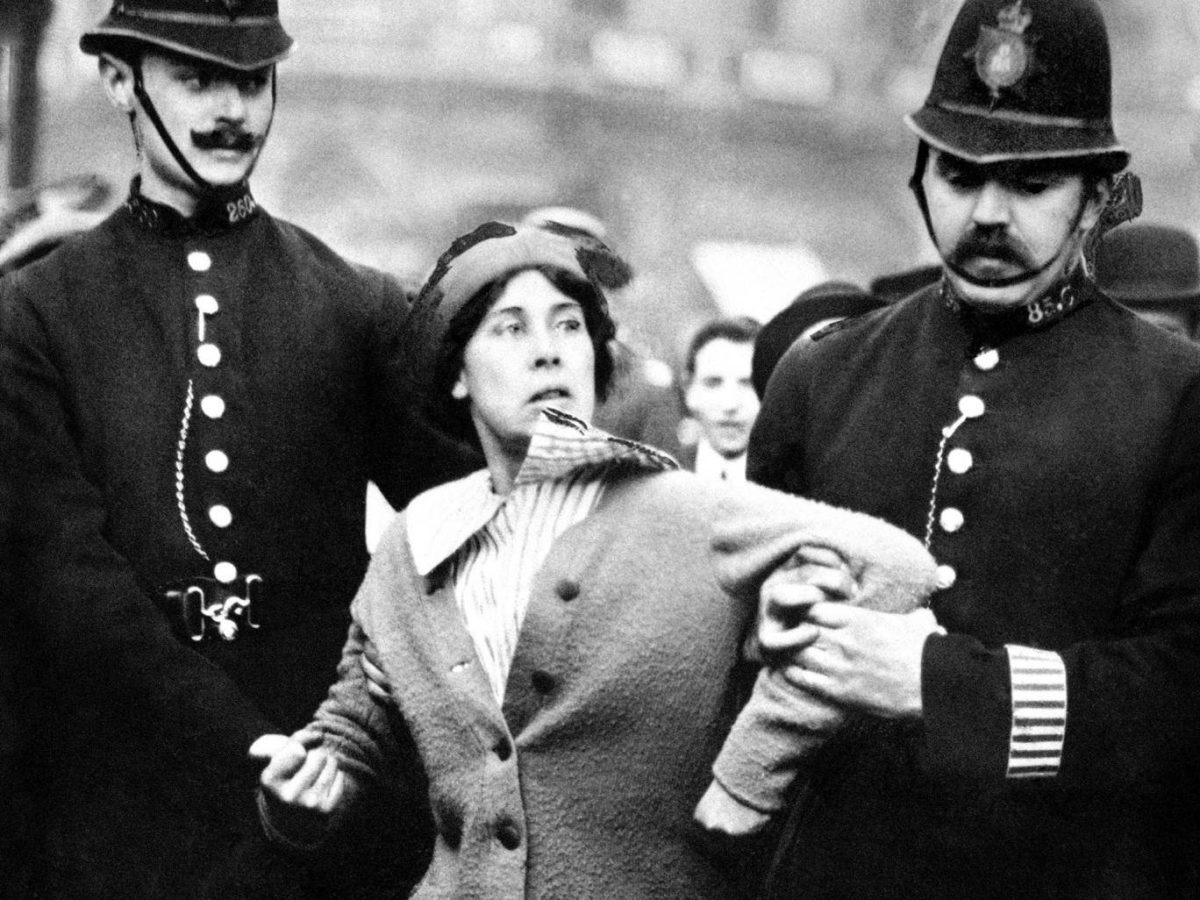
But even a few years before the July Crisis, there were strong signs in England that something was amiss. Politicians demonstrated a cataclysmic failure to read or address the natural trajectory of human progress. Women justly demanded the right to vote and were very willing to starve themselves in prison and burn down many buildings for it. Workers fought violently for fair wages, often locked into stalemates with greedy mining companies. They were intoxicated by a new militant brand of syndicalism from France then popularized by Georges Sorel. The atmosphere was one of increasing upheaval and escalated incoherence, even among the most noble-minded revolutionaries. The influx of gold from Africa inspired both lavish spending and an inflated currency. The liberals in power were supposed to stand up for the working stiffs who couldn’t quite meet the rising prices for boots and food and clothes with their take home pay. And much like today’s Democratic Party in the States, these tepid Parliamentary wafflers past their Fabian prime revealed a commitment to ineptitude over nuts-and-bolts pragmatism. They allowed the Tories to play them like rubes losing easy games of three-card monte. Amidst such madness, England became a place of oblivious tension not dissimilar to the nonstop nonsense that currently plagues both sides of the Atlantic. With the middle and upper classes keeping their heads in the clouds and their spirits saturated in moonbeam dreams and a bubble gum aura, is it any wonder that people were willing to incite war and violence for the most impulsive reasons?

George Dangerfield’s The Strange Death of Liberal England examines this crazed period between 1910 and 1914 with an exacting and quite entertaining poetic eye. Dangerfield, an erudite journalist who parlayed his zingy word-slinging into a teaching career, is somewhat neglected today, but his remarkable knack for knowing when to suggest and when to stick with the facts is worthy of careful study, a summation of the beautifully mordant touch he brought as a historian. He describes, for example, the “dismal, rattling sound” of Liberalism refusing to adjust to the times, and eloquently sends up the out-of-touch movement in a manner that might also apply to today’s neoliberals, who stubbornly refuse to consider the lives and needs of the working class even as they profess to know what’s best for them:

[I]t was just as if some unfortunate miracle had been performed upon its contents, turning them into nothing more than bits of old iron, fragments of intimate crockery, and other relics of a domestic past. What could be the matter? Liberalism was still embodied in a large political party; it enjoyed the support of philosophy and religion; it was intelligible, and it was English. But it was also slow; and it so far transcended politics and economics as to impose itself upon behaviour as well. For a nation which wanted to revive a sluggish blood by running very fast and in any direction, Liberalism was clearly an inconvenient burden.

Dangerfield knew when to let other people hang themselves by their own words. The infamous Margot Asquith, the starry-eyed socialite married to the Prime Minister who led England into World War I, is quoted at length from her letters to Robert Smillie, the brave union organizer who fought on behalf of the Miners’ Federation of Great Britain. Asquith, so fundamentally clueless about diplomacy, could not understand why meeting Smillie might be a bad idea given the tense negotiations.

I did feel that Dangerfield was unduly harsh on Sylvia Pankhurst, one of the key organizers behind the suffragette movement. His wry fixation upon Pankhurst’s indomitable commitment — what he styles “the fantastic Eden of militant exaltation” — to starvation and brutality from the police, all in the brave and honorable fight for women, may very well be a product of the 1930s boys’ club mentality, but it seems slightly cheap given how otherwise astute Dangerfield is in heightening just the right personality flaws among other key figures of the time. The Pankhurst family was certainly eccentric, but surely they were deserving of more than just cheap quips, such as the volley Dangerfield lobs as Christabel announces the Pankhurst withdrawal from the WSPU (“She made this long-expected remark quite casually — she might almost have been talking to the little Pomeranian dog which she was nursing.”).

Still, Dangerfield was the master of the interregnum history. His later volume, The Era of Good Feelings, examined the period between Jefferson and Jackson and is almost as good as The Strange Death. One reads the book and sees the model for Christopher Hitchens’s biting erudite style. (The book was a favorite of Hitch’s and frequently cited in his essays.)

But it is clear that Dangerfield’s heart and his mischievous vivacity resided with his homeland rather than the nation he emigrated to later in life. In all of his work, especially the material dwelling on the United Kingdom, Dangerfield knew precisely what years to hit, the pivotal moments that encapsulated specific actions that triggered political movements. As he chronicles the repercussions of the June 14, 1911 strike in Southampton, he is careful to remark upon how “it is impossible not to be surprised at the little physical violence that was done — only a few men killed, in Wales in 1912, and two or three in Dublin in 1913; in England itself not a death. Is this the effect of revolutionary methods, and, if so, do the methods deserve the word?” He then carries on speculating about the pros and cons of peaceful revolution and ties this into the “spiritual death and rebirth” of English character. And we see that Dangerfield isn’t just a smartypants funnyman, but a subtle philosopher who leaves human possibilities open to the reader. He is a welcome reminder that seeing the real doesn’t necessarily emerge when you lock eyes on an alluring Twitch stream or a hypnotic Instagram feed. It comes when you take the time to step away, to focus on the events that are truly important, and to ruminate upon the incredible progress that human beings still remain quite capable of making.

Next Up: John Keegan’s The Face of Battle!

The Prime of Miss Jean Brodie (Modern Library #76)

(This is the twenty-fifth entry in the The Modern Library Reading Challenge, an ambitious project to read the entire Modern Library from #100 to #1. Previous entry: Finnegans Wake.)

We are two days away from the great Muriel Spark’s 100th birthday. Yet, despite New Directions’s valiant reissue of her remarkable work only a few years ago (along with a quiet event planned on Thursday at the 92nd Street Y, which stands incommensurately like a shaking child in the vast shadow of Edinburgh’s impressive celebratory blowout), we are no closer to literary people universally singing her praises on this side of the Atlantic than we are in stopping men from wearing black socks to bed. And that’s a shame. Because Muriel Spark was truly one of the most innovative writers of the 20th century. She was a bold and an economical stylist who packed far more attentive detail and character speculation into one paragraph than most contemporary writers wrangle into a chapter, and she did so with high style, grace, and ferocious wit. The Prime of Miss Jean Brodie, her most enduring and popular novel (and, through a magical twist of fate, the next volume in the Modern Library Reading Challenge), certainly sees Spark’s great gifts on full display, but it is also a book that demands constant and even obsessive study.

I have read Brodie four times within the last two years. It is very possible I will read it four more times within the next two. I am inclined to press this richly entertaining book, no more than a hundred pages, into the hands of anyone who purports to take literature seriously, but who has somehow ignored Spark to hold up some bland offering from one of those “Most Anticipated” lists published at The Millions that nobody will remember or quote from in a decade.

Brodie is both a portrait of an exuberant teacher determined to educate a carefully selected group of girls so that they may be better equipped when “in their prime” and an incredible tableau of 1930s Edinburgh, such as the “wind-swept hockey fields which lay like the graves of the martyrs exposed to the weather in an outer suburb.” Miss Brodie may or may not be a tyrant. (She is fond of Mussolini and Italian culture.) One can read the book anew and come away with an entirely different opinion of the title character. The novel tantalizes us with flash-forwards (which can also be found in many of Spark’s later novels, such as The Driver’s Seat and Territorial Rights, which are also well worth your time) revealing the fates of the schoolgirls in adult life, leaving us with impressions of how formative life and education influences unknowingly in later years. One reads little snippets of the six girls under Miss Brodie’s tutelage from the present and the future– Rose “pulling threads from the girdle of her gym tunic” in class or Jenny not experiencing any sexual awe “until suddenly one day when she was nearly forty, an actress of moderate reputation married to a theatrical manager” — and asks how much Miss Brodie is responsible for corrupting fate, with Spark slyly implicating us as we become more curious.

Muriel Spark wrote this masterpiece in less than a month. This is especially amazing because, much like the magnetic properties contained within the glowing amber necklace Miss Brodie wears when off-screen romance inspires a new step in her exacting stride, this short novel reads as if an exquisite jeweler had painstakingly ensured that not a single element could ever fall out of alignment. And Spark sculpts many glistening carats along the way: the fictitious letters that two girls write after imagining Miss Spark’s love life, the creepy, one-armed artist Teddy Lloyd who also teaches at the school and disguises his true pedophilc nature through the sham panacea of Catholicism and family life, and the lingering question of which schoolgirl betrays Miss Brodie and causes her to lose her job. The novel presents us with many hints and details that hide in plain sight, but that all contribute to an atmosphere in which the girls end up coming up with explanations (often fictitious and sometimes apostate) for what is both seen and not seen. Miss Brodie’s careful lessons, which include a field trip into a rougher part of Edingburgh and often involve knowing the roots of words to better understand them, are perhaps being applied in dangerous ways. And in an age where people judge people who they haven’t met based on what they think they know from a social media profile, The Prime of Miss Jean Brodie remains potent and necessary reading.

Spark’s lecture “The Desegregation of Art,” delivered before a crowd of New York literati on May 26, 1970, offers useful insights into the ambitious gauntlet she felt obliged to throw down as an artist and gives us a sense of what is very much at stake in Brodie. She firmly believed that literature existed to infiltrate and fertilize the mind and denounced any fiction that stood in the way of this lofty artistic goal. If that meant tossing out socially conscious art that was not “achieving its end or illuminating our lives any more,” then this was the price to pay for better art that reflected the depths and thorny hurdles of life. She insisted that “ridicule is the only honourable weapon we have left” and believed that addressing wrongs emerged not so much from instant outrage, but through “a more deliberate cunning, a more derisive undermining of what is wrong. I would like to see less emotion and more intelligence in these efforts to impress our minds and hearts.” Much as Spark detested being a victim in her life, she believed that art reveling in victimhood turned readers into oppressors.

So we are left with Brodie as a remarkable volume that fertilizes our minds even as it challenges our own interpretations. Spark’s honorable ridicule in Brodie may very well lie with the way she shrewdly sends up how people are perceived for their failings based on superficial shorthand. And this extends even to the hypnotic allure of Miss Brodie’s own teaching. At one point, Miss Brodie observes that “John Stuart Mill used to rise at dawn to learn Greek at the age of five” and that the teacher herself learned from this lesson. Mill is a particularly funny choice, given that this philosopher was known for utilitarianism and that we are seemingly experiencing a short “utilitarian” novel when we read Brodie. But, of course, we aren’t. For one wants to reread it yet again.

The intrepid literary adventurer plunging forward on a bold bender for real-life inspiration is often viewed with contempt by any practitioner transforming bits of his life into analeptic artistic truth withstanding the test of time. The adventurer shakily balances the author’s complete works like vertiginous trays stacked tall enough to scrape plaster flakes off the ceiling as the letters and the collected marginalia and the autobiographical tidbits are swirled into a overflowing flute by a jittery finger serving as a makeshift cocktail straw. If not written off as a slightly smarter TMZ reporter who has somehow retained the ability to read despite being barraged daily by Harvey Levin’s soul-destroying smile, such an apparent gossipmonger, even if she is cogent enough to know that fictional characters rarely spring from a singular source, is still tarnished as that rakish yenta who reads fiction for the wrong reasons.

As I have ventured further into this years-long Modern Library project, I’ve come around to the daring idea that, for certain sui generis authors (and Muriel Spark is certainly one of them), one may indeed find deeper appreciation in the way they forge art from the people surrounding them. It isn’t so much the schema of who matches up with whom that should concern us, but rather the fascinating way in which characters defy an easily identifiable origin, turning into a form of fictionalized life that feels just as real on the page as any spellbinding life experience. There is a fundamental difference between the novelist who runs out of raw biographical material mid-career, her limited inventive faculties and inherent disconnection with humanity dishearteningly revealed with mediocre and unconvincing and blandly repetitive offerings in late career (see, for example, the wildly overrated Joyce Carol Oates, surely one of the great living literary embarrassments in the early 21st century), and the novelist who seizes the reins of an indefatigable spirit that runs quite giddily to the very end.

For someone like Muriel Spark, who was fiercely protective of her privacy and her public image, this is not necessarily a slam-dunk proposition even when many of the real life details match up. The formidable literary biographer Martin Stannard secured Spark’s reluctant blessing to get his hands dirty on details occluded in Spark’s remarkably opaque autobiography, Curriculum Vitae. Stannard, like many before him, pegged Christina Kay, the schoolteacher who taught Spark at the age of twelve, as the predominant inspiration for “the real Miss Jean Brodie.” Both Kay and Brodie insisted that their girls were the “crème de la crème.” Miss Kay also took Spark and her fellow students on great cultural adventures into Edinburgh. Both were keen on Italy and shared a rather clueless interest in Mussolini. (As late as 1979, Spark would insist that Miss Brodie was not a fascist and that Brodie’s admiration for Il Duce had more to do with Benito’s powerful masculinity, as it was perceived in 1930, which leads one to ponder the 53 percent of white women voted for Trump in 2016. Some weaknesses in human perception regrettably endure, despite the best history lessons.)

But much as the great Iris Murdoch regularly transcended reality to achieve jaw-droppingly marvelous art, which she defined as that which “invigorates without consoling,” one finds a similarly spellbinding spirit within Spark’s equally incredible novels. Once you read The Girls of Slender Means, The Prime of Miss Jean Brodie, Memento Mori, The Driver’s Seat, or A Far Cry from Kensington, if you have even the faintest desire of wanting to know how art works, you may find yourself obsessing over just how she was able to put so much into her novels. Ian Rankin, writer of the rightfully well-regarded Rebus novels, found himself precisely in this very position, reading The Prime of Miss Jean Brodie over and over again over the course of thirty years and always finding new details, even wondering if the titular character was the hero or the villain. (Some of Rankin’s work on Spark when he was pursuing a Ph.D is available online behind a paywall.)

And if you read Brodie, you may very well join us on this pleasantly fanatical quest. We are told at the end, with one of the characters hiding from the truth of how her life has been altered, “There was a Miss Jean Brodie in her prime.” And that seemingly innocent notion, in Spark’s nimble hands, is the white whale that turns any reader into Ahab.

Next Up: Evelyn Waugh’s Scoop!

Finnegans Wake (Modern Library #77)

(This is the twenty-fourth entry in the The Modern Library Reading Challenge, an ambitious project to read the entire Modern Library from #100 to #1. Previous entry: Kim.)

It has been five years since I last tendered any heartfelt words about 20th century fiction for the Modern Library Reading Challenge. An infernal yet magnificent Irish genius is to blame for the delay. Five years is frankly too damned long, especially if I hope to complete this massive and somewhat insane project before I croak my own answer to Joyce’s “Does nobody understand?” Frank Delaney’s recent passing has made me keenly cognizant that being a wallflower is not an option when any of us could fall off the wall. (The poor man never got to finish Re: Joyce, his wonderful podcast on Ulysses.) So here we go.
What I have wondered during this Joyce-populated reading period is whether one should even attempt to match Jimmy Jimmy Jo Jo Bop’s unquestionable erudition, for this is the kooky bodkin he has wielded before readers. A Wake expert once told me that fencing with this book is comparable to being diagnosed with a disease. A good friend, as deeply moved by Ulysses as I am, told me that he never bothered with Finnegans Wake. I asked why. He said that he refused to play James Joyce’s game. I replied, “Yes, but in the name of Annah the Allmaziful, the Everliving, the Bringer of Plurabilities, you are missing out on some marvelous puns and portmanteaus and the limitless richness of an obscurant dreamscape!” But I do see my pal’s point. Where Ulysses provides us with an invitational beauty to be treasured and reconsidered at nearly any time in life, Finnegans Wake is the loutish intoxicating charmer for the young, the book declaring itself the cleverest in the room, the novel above all novels that says, “Well, if you really love literature…”

In attempting to come to terms with the Wake, I certainly don’t wish to align myself with such execrable anti-intellectual oafs like Dan Kois, who see the joyful act of great art mesmerizing a daredevil reader as something akin to eating cultural vegetables. I have enjoyed longass offerings from Marugerite Young, Samuel R. Delany, Laurence Sterne, Umberto Eco, Leo Tolstoy, Marcel Proust, Gertrude Stein, Mark Z. Danielewski (see The Familiar, the fifth of its twenty-seven volumes will be released in October), and William T. Vollmann, but none of this could prepare me for the Wake. Finnegans Wake is worth the cerebral sweat if you are willing to sign up for the gym package, which involves knowing a little German, Gaelic, and French, familiarizing yourself with Vedic commentary, reading up on Giambattista Vico and Irish history, and doing your best to encourage and resist the urge to plunge further. It is certainly difficult to argue against the Wake‘s enchanting use of language. But if cleverness — even from a bedazzling and often sprightly brainiac such as the Wake — involves adjusting one’s mind and heart entirely to that of the author, there is unquestionably a form of literary tyranny involved. On the other hand, the Wake, unlike any other book I have ever read, does test the limits of what we’re willing to know and how you can live with not knowing. It took me an embarrassingly long time to realize that reading the Wake aloud and letting much of the esoterica wash over you is the best way to approach it and to love it. The only sane option is to accept that you will never know all the answers, that Joyce is smarter than you, and to enjoy the experience.

The book left me baffled, delighted, and often drove me mad. I am not sure that I want to read it again, although who’s kidding whom? I probably will. Finnegans Wake often felt like some bright and charming friend with benefits who texts you at 2AM, asking if you’re down to hook up, only to make you its bottom and leaving you cooking breakfast the next morning as your sexy lover basks in languor in your bed, singing pitch-perfect melodic ballads and cracking the smartest jokes in German. You sometimes wonder if you’re receiving any pleasure in a consummation that was supposed to be fun and spontaneous. Did I catch a case of the ten thunderclap words sprinkled throughout the book (Adam Harvey has kindly made YouTube videos on how to pronounce these) or merely the clap? These carnal metaphors on a book that essentially builds a dreamy narrative from an episode of sexual humiliation are no accident. Like Tinder, Finnegans Wake is a young man’s game. I would recommend attempting it before the age of forty, when there is still the time and the hunger to unravel the arcane wisecracking. Perhaps my mistake was reading this book on both sides of forty, with one foot steeped in bountiful possibility and the other more aware of mortality and the grave. My earlier plunges were largely felicitous. My subsequent belly flops were coated with the minor sting of missing out on something vital in the real world. And given the choice between staying home with the Wake or having a fun night out, it was a fairly easy decision. Many unreportable evenings later, I still believe I made the right choice. But how could any sensible reader not be wowed and enamored by Joyce’s uncompromising commitment to a difficult aesthetic?

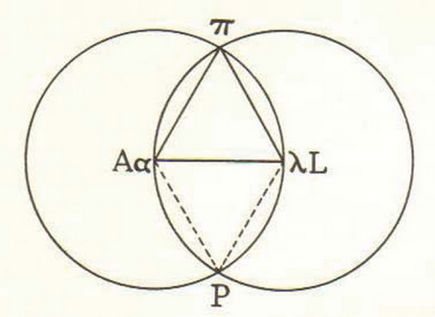
All told, I worked my way through this intoxicating and frustrating melange in its full inimitable entirety twice, returning to the beginning of the Earwicker saga and then rereading other bits out of sequence, such as the mirthful and genuinely pleasurable showdown between Shaun and Shem in Book I, Chapter 7, which is among my favorite parts of the book. I can certainly follow the primary points of this “commodious vicus of recirculation,” even if the music of words usually triumphs over narrative coherence, which is often sandbagged altogether by later events such as Shaun’s ever-shifting identity. While I have largely enjoyed my journey, there were several points in which I cursed out Joyce for leading me down another rabbit hole. (The Dubliners’ low-key musical version of “The Ballad of Persse O’Reilly? My weeks-long obsession with the Wellington Monument near the south of Dublin’s Phoenix Park? My futile attempts to learn Gaelic on Duolingo? My concern with ellipses and a surprising preoccupation for how reels of film turned upon encountering “the lazily eye of his lupis” and the diagram above? My efforts to reconcile Butt and Taff with Mutt and Jute and follow the batty Irish-American connections — extending to a few visiting American characters and the dual Dublin in Laurens County, Georgia, which Joyce cites?) It has left me to ponder in all this time if Finnegans Wake and its “futurist onehorse balletbattle pictures” were entirely worth understanding. It has left me feeling very sorry indeed for Joyce’s very patient benefactor, Harriet Shaw Weaver. The phrase “tough sledding” is an understatement.

Still, you can’t help but sympathize with a man who, buttressed by the wealth and the literary notoriety that came after Ulysses, saw his “Work in Progress” (early selections of the Wake published in journals) abandoned by many of his prominent supporters as he was going blind. Stanislaus Joyce had already become suspicious of Ulysses‘s famously difficult “Oxen of the Sun” chapter and proceeded to condemn his brother further for the bits of the Wake that had appeared in the transatlantic review and would later tell Jim to his face that his “book of the night” was impenetrable. His benefactor Harriet Shaw Weaver went along with Joyce’s new direction for a while, with Joyce providing her with a pre-Campbell skeleton key on January 27, 1925, but later that year, some printers refused to set the type for these new excerpts. And two years later, Weaver would condemn the “Wholesale Safety Pun Factory” that Joyce had wrought. Ezra Pound, the putative paragon of poetic innovation, turned on Joyce, badmouthing this “circumambient peripherization.” H.G. Wells called it a dead end. (Did Rebecca West put a burr in Herbert’s ear?) In the face of declining love, Joyce’s remaining admirers published Our Exagmination Round His Factification for Incamination of Work in Progress, featuring the likes of Samuel Beckett, Frank Budgen, and William Carlos Williams defending Joyce’s new direction. Beckett would write:

Here form is content, content is form. You complaint that this stuff is not written in English. It is not written at all. It is not to be read — or rather it is not only to be read. It is to be looked at and listened to. His writing is not about something: it is that something itself….When the sense is sleep, the words go to sleep….When the sense is dancing, the words dance.

It was believed that Joyce himself wrote one of the two letters of protest featured in this small volume. Certainly the voice in the letter is unmistakably recognizable:

You must not stink I am attempting to ridicul (de sac! )you or to be smart, but I am so disturd by my inhumility to onthorstand most of the impsolocations constrained in your work…

Joyce wanted to have it both ways. He both longed for recognition and was contemptuous of anyone who didn’t recognize his genius. The remarkably vanilla-minded Arnold Bennett, a troublesome gnat who I wrote about earlier and who only boorish bores like Philip Hensher now have wet dreams about, redoubled the troubling conventionalism that he had expressed for Ulysses and continued to attack Joyce in the press, which inspired Joyce to send him up as Jute.

In reading the Wake, I have often wondered if I have understood anything at all, but I cannot abide by D.H. Lawrence’s characterization of Joyce as “too terribly would-be and done-on purpose, utterly without spontaneity or real life.” For Joyce does not bore me. He merely maddens me with his demands on my time. I ken the puns in many tongues and can divine much of the history blurring into alluring verbs. Joyce’s wildly arrogant but nonetheless remarkable goal was to keep the professors arguing over enigmas and riddles for centuries. And with the Internet, he has succeeded. Finnegans Wiki is a vital companion when you first start reading and hope to know everything, until you realize that you never will. What is more important here is to feel the book, to take in its miasmic rushes and quell the urge to order mimosas when your noggin explodes from too much “folkenfather of familyans.”

In my early days of reading the Wake, I kept up a Tumblr on my notes. I filled up a five subject notebook with crazed and often indecipherable notes. And then I realized that to carry on like this was futile. It would be akin to resolving every unsolved mystery about life. The Wake contains almost as many tributaries.

Finnegans Wake is not a book to be read. It is a book to be lived, ideally with fellow travelers. So if you have a very rich and active life, there’s no getting around the need to make time for it. Fortunately, it has inspired any number of marvelous online offerings. The incredible project, Waywords and Meansigns, has performed three different musical versions of the Wake. Listening to these interpretations helped lift my spirits when I wondered if I should give up entirely (the bluesy interpretation of the pearlagraph episode near the beginning of Book II came at a time when I was about to throw my book into the wall for the seventh time). I attended a meeting of The Finnegans Wake Society of New York, which not only led me to this invaluable annotative resource, but allowed me to understand that even the smartest and most literary people imaginable could not entirely make head or tail of Joyce and that any and all interpretive suggestions were fair game.

If Joyce wrote Ulysses for people to reconstruct Dublin brick by brick after the apocalypse, then Finnegans Wake was written to reconstruct the whole of human existence, albeit a region teetering somewhere between reality and dreams. There are crazed Russian generals and discordance and recursiveness and twins and families and lust and religion and bawdiness and drinking and blasphemy, but, much like Molly Bloom’s beautifully baring “Penelope” monologue, the Wake ends with the singular motive voice of a woman:

First we feel. Then we fall. And let her rain now if she likes. Gently or strongly as she likes. Anyway let her rain for my time is come. I done me best when I was let. Thinking always if I go all goes. A hundred cares, a tithe of troubles and is there one who understands me? One in a thousand of years of the nights? All me life I have been lived among them but now they are becoming lothed to me. And I am lothing their little warm tricks. And lothing their mean cosy turns. And all the greedy gushes out through their small souls. And all the lazy leaks down over their brash bodies. How small it’s all! And me letting on to meself always. And lilting on all the time. I thought you were all glittering with the noblest of carriage. You’re only a bumpkin. I thought you the great in all things, in guilt and in glory. You’re but a puny. Home! My people were not their sort out beyond there so far as I can. For all the bold and bad and bleary they are blamed, the seahags. No! Nor for all our wild dances in all their wild din.

And then we read “A way a lone a last a loved a long the,” and feel and fall some more, and turn back to the beginning to finish the aborted sentence. And every time we run through the loop, there is laughter, marvel, something we missed, something that aggravates us, and something that makes the rest of literature feel irrelevant.

Next Up: Muriel Spark’s The Prime of Miss Jean Brodie!

West with the Night (Modern Library Nonfiction #85)

(This is the sixteenth entry in The Modern Library Nonfiction Challenge, an ambitious project to read and write about the Modern Library Nonfiction books from #100 to #1. There is also The Modern Library Reading Challenge, a fiction-based counterpart to this list. Previous entry: This Boy’s Life.)

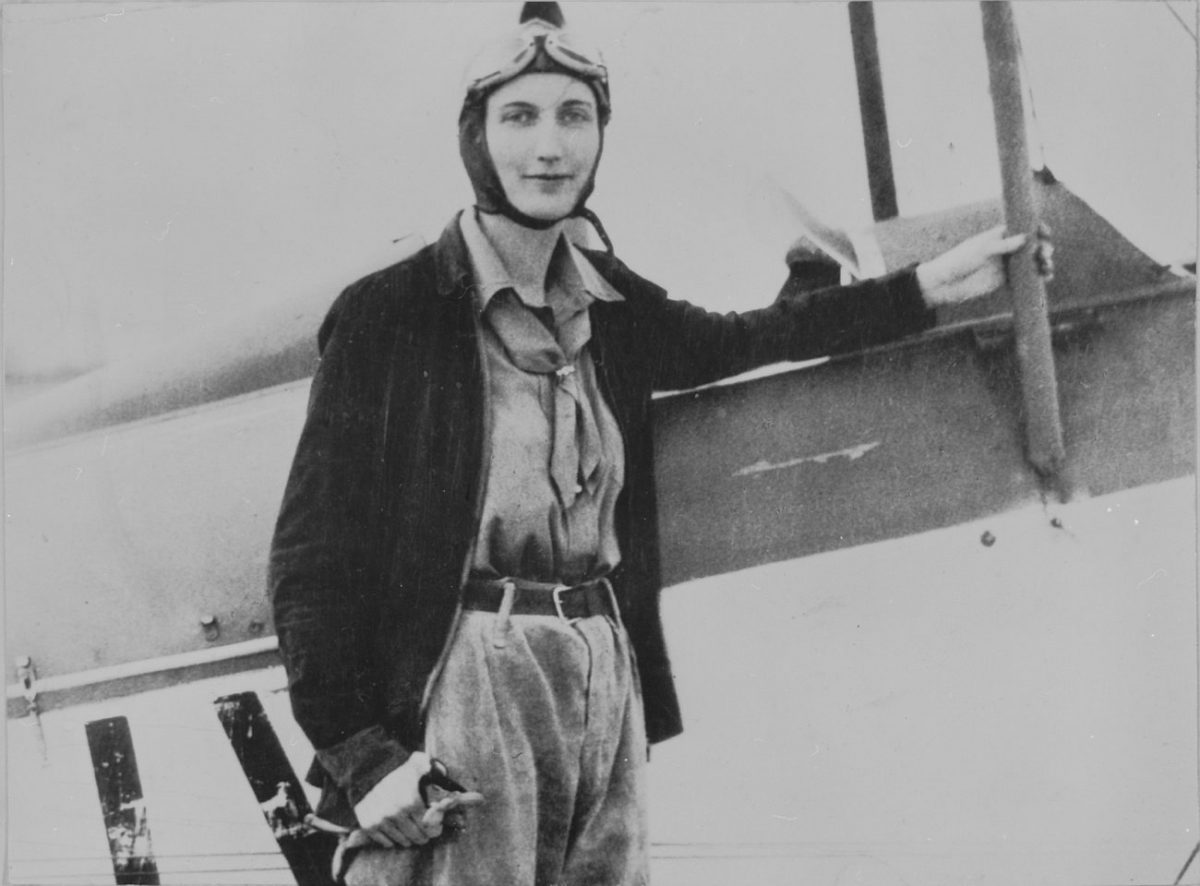
She remains a bold and inspiring figure, a galvanizing tonic shimmering into the empty glass of a bleak political clime. She was bright and uncompromising and had piercingly beautiful eyes. She was a stratospheric human spire who stood tall and tough and resolute above a patriarchal sargasso. Three decades after her death, she really should be better known. Her name is Beryl Markham and this extraordinary woman has occupied my time and attentions for many months. She has even haunted my dreams. Forget merely persisting, which implies a life where one settles for the weaker hand. Beryl Markham existed, plowing through nearly every challenge presented to her with an exquisite equipoise as coolly resilient as the Black Lives Matter activist fearlessly approaching thuggish cops in a fluttering dress. I have now read her memoir West with the Night three times. There is a pretty good chance I will pore through its poetic commitment to fate and feats again before the year is up. If you are seeking ways to be braver, West with the Night is your guidebook.

She grew up in Kenya, became an expert horse trainer, and befriended the hunters of her adopted nation, where she smoothly communed with dangerous animals. For Markham, the wilderness was something to be welcomed rather than dreaded. Her natural panorama provided “silences that can speak” that were pregnant with natural wonder even while being sliced up by the cutting whirl of a propeller blade. But Markham believed in being present well before mindfulness became a widely adopted panacea. She cultivated a resilient and uncanny prescience as her instinct galvanized her to live with beasts and brethren of all types. It was a presence mastered through constant motion. “Never turn your back and never believe that an hour you remember is a better hour because it is dead,” wrote Markham when considering how to leave a place where one has lived and loved. This sentiment may no longer be possible in an era where one’s every word and move is monitored, exhumed by the easily outraged and the unadventurous for even the faintest malfeasance, but it is still worth holding close to one’s heart.

In her adult life, Markham carried on many scandalous affairs with prominent men (including Denys Finch Hatton, who Markham wooed away from Karen Blixen, the Danish author best known for Out of Africa (to be chronicled in MLNF #58)) and fell almost by accident into a life commanding planes, often scouting landscapes from above for safari hunts. Yet Markham saw the butcherous brio for game as an act of impudence, even as she viewed elephant hunting as no “more brutal than ninety per cent of all other human activities.” This may seem a pessimistic observation, although Markham’s memoir doesn’t feel sour because it always considers the world holistically. At one point, Markham writes, “Nothing is more common than birth: a million creatures are born in the time it takes to turn this page, and another million die.” And this grander vantage point, which would certainly be arrived at by someone who viewed the earth so frequently from the sky, somehow renders Markham’s more brusque views as pragmatic. She preferred the company of men to women, perhaps because her own mother abandoned her at a very young age. Yet I suspect that this fierce lifelong grudge was likely aligned with Markham’s drive to succeed with a carefully honed and almost effortlessly superhuman strength.

Markham endured pain and fear and discomfort without complaint, even when she was attacked by a lion, and somehow remained casual about her vivacious life, even after she became the first person to fly solo without a radio in a buckling plane across the Atlantic from east to west, where she soldiered on through brutal winds and reputational jeers from those who believed she could not make the journey. But she did. Because her habitually adventurous temperament, which always recognized the importance of pushing forward with your gut, would not stop her. And if all this were not enough, Markham wrote a masterpiece so powerful that even the macho egotist Ernest Hemingway was forced to prostrate himself to editor Maxwell Perkins in a letter: “She has written so well, and marvelously well, that I was completely ashamed of myself as a writer.” (Alas, this did not stop Hemingway from undermining her in the same paragraph as “a high-grade bitch” and “very unpleasant” with his typically sexist belittlement, a passage conveniently elided from most citations. Still, there’s something immensely satisfying in knowing that the bloated and overly imitated impostor, who plundered Martha Gellhorn’s column inches in Collier’s because he couldn’t handle his own wife being a far superior journalist, could get knocked off his peg by a woman who simply lived.)

In considering the human relationship to animals, Markham writes, “You cannot discredit truth merely because legend has grown out of it.” She details the beauty of elephants going out of their way to hide their dead, dragging corpses well outside the gaze of ape-descended midgets and other predators. And there is something about Markham’s majestic perspective that causes one to reject popular legends, creating alternative stories about the earth that are rooted in the more reliable soil of intuitive and compassionate experience. For Markham, imagination arrived through adventure rather than dreams. She declares that she “seldom dreamed a dream worth dreaming again, or at least none worth recording,” yet the fatigue of flying does cause her to perceive a rock as “a crumpled plane or a mass of twisted metal.”

Yet this considerable literary accomplishment (to say nothing of Markham’s significant aviation achievements) has been sullied by allegations of plagiarism. It was a scandal that caused even The Rumpus‘s Megan Mayhew Bergman to lose faith in Markham’s bravery. Raoul Schumacher, Markham’s third husband, was an alcoholic and a largely mediocre ghost writer who, much like Derek Stanford to Muriel Spark, could not seem to countenance that his life and work would never measure up to the woman he was with. Fragile male ego is a most curious phenomenon that one often finds when plunging into the lives of great women: not only are these women attracted to dissolute losers who usually fail to produce any noteworthy work of their own, but these men attempt to make up for their failings by installing or inventing themselves as collaborators, later claiming to be the indispensable muse or the true author all along, which is advantageously announced only after a great woman has secured her success. Biographers and critics who write about these incidents years later often accept the male stories (one rarely encounters this in reverse), even when the details contain the distinct whiff of a football field mired in bullshit.

I was not satisfied with the superficial acceptance of these rumors by Wikipedia, Robert O’Brien, and Michiko Kakutani. So I took it upon myself to read two Markham biographies (Mary S. Lovell’s Straight on Till Morning and Errol Trzebinski’s The Lives of Beryl Markham), where I hoped that the sourcing would offer a more reliable explanation.

I discovered that Trzebinski was largely conjectural, distressingly close to the infamous Kitty Kelley with her scabrous insinuations (accusations of illiteracy, suggestions that Markham could not pronounce words), and that Lovell was by far the more doggedly reliable and diligent source. Trzebinski also waited until many of the players were dead before publishing her biography, which is rather convenient timing, given that she relies heavily on conversations she had with them for sources.

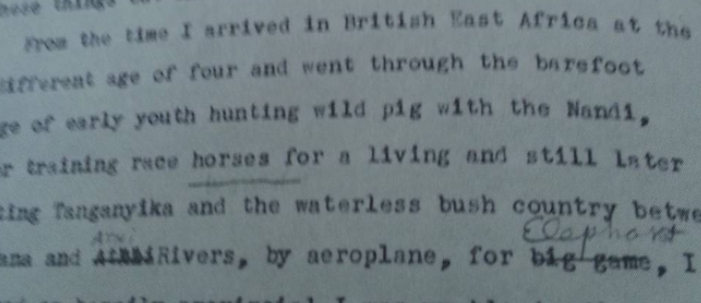
The problem with Schumacher’s claim is that one can’t easily resolve the issue by going to a handwritten manuscript. West with the Night‘s manuscript was typed, dictated to Schumacher by Markham (see the above photo). The only photograph I have found (from the Lovell biography) shows Markham offering clear handwritten edits. So there is little physical evidence to suggest that Schumacher was the secret pilot. We have only his word for it and that of the friends he told, who include Scott O’Dell. Trzebinski, who is the main promulgator of these rumors, is slipshod with her sources, relying only upon a nebulous “Fox/Markham/Schumacher data” cluster (with references to “int. the late Scott O’Dell/James Fox, New York, April 1987” and “15/5/87” — presumably the same material drawn upon for James Fox’s “The Beryl Markham Mystery,” which appeared in the March 1987 issue of Vanity Fair, as well as a Scott O’Dell letter that was also published in the magazine) that fails to cite anything specific and relies on hearsay. When one factors in an incredulous story that Trzebinski spread about her own son’s death that the capable detectives at Scotland Yard were unable to corroborate, along with Trzebinski’s insistence on camera in the 1986 documentary World Without Walls that only a woman could have written West with the Night, one gets the sense that Trzebinski is the more unreliable and gossipy biographer. And Lovell offers definitive evidence which cast aspersions on Tzrebinski’s notion that Markham was something of a starry-eyed cipher:

But this proof of editing by Raoul, which some see as evidence that Beryl might not have been the sole author of the book, surely proved only that he acted as editor. Indeed his editing may have been responsible for the minor errors such as the title arap appearing as Arab. Together with the Americanization of Beryl’s Anglicized spelling, such changes could well have been standard editorial conversions (by either Raoul or Lee Barker – Houghton Mifflin’s commissioning editor) for a work aimed primarily at an American readership.

The incorrect spelling of Swahili words has an obvious explanation. In all cases they were written as Beryl pronounced them. She had learned the language as a child from her African friends but had probably never given much thought to the spelling. Neither Raoul nor anyone at Houghton Mifflin would have known either way.

In his letter to Vanity Fair, and in two subsequent telephone conversations with me, Scott O’Dell claimed that after he introduced Beryl and Raoul “they disappeared and surfaced four months later,” when Raoul told him that Beryl had written a memoir and asked what they should do with it. This is at odds with the surviving correspondence and other archived material which proves that the book was in production from early 1941 to January 1942, and that almost from the start Beryl was in contact with Lee Barker of Houghton Mifflin.

When Raoul told his friend that it was he who had written the book, could the explanation not be that he was embittered by his own inability to write without Beryl’s inspiration? That he exaggerated his editorial assistance into authorship to cover his own lack of words as a writer?

From the series of letters between Beryl and Houghton Mifflin, it is clear that Beryl had sent regular batches of work to the publishers before Raoul came into the picture. As explained earlier, Dr. Warren Austin lived in the Bahamas from 1942 to 1944, was physician to HRH the Duke of Windsor and became friends with Major Gray Phillips. Subsequently Dr. Austin lived for a while with Beryl and Raoul whilst he was looking for a house in Santa Barbara. The two often discussed their mutual connections in Raoul’s presence. Dr. Austin is certain that Raoul had never visited the Bahamas, reasoning that it would certainly have been mentioned during these conversations if he had. This speaks for itself. If Raoul was not even present when such a significant quantity of work was produced, then that part – at the very least – must have been written by Beryl.

Lovell’s supportive claims have not gone without challenge. James Fox claimed in The Spectator that he had seen “photostated documents, from the trunk since apparently removed as ‘souvenirs’ and thus not available to Lovell, which show that Schumacher took part in the earliest planning of the contents and the draft outline for the publisher and show whole passages written by Schumacher in handwriting.” But even he is forced to walk the ball back and claim that this “proves nothing in terms of authorship.” Since Fox is so fixated on “seeing” evidence rather than producing it, he may as well declare that he visited Alaska and could see Russia from his AirBnB or that he once observed giant six-legged wombats flying from the deliquescent soup he had for supper. If this is the “Fox/Markham/Schumacher data” that Trzebinski relied upon, then the plagiarism charge is poor scholarship and poor journalism indeed.

So I think it’s safe for us to accept Markham’s authorship unless something provable and concrete appears and still justifiably admire a woman who caused Hemingway to stop in his tracks, a woman who outmatched him in insight and words, a woman – who like many incredible women – was belittled by a sloppy, gossip-peddling, and opportunistic biographer looking to make name for herself (and the puff piece hack who enabled her) rather than providing us with the genuine and deserved insight on a truly remarkable figure of the 20th century.

Next Up: Neil Sheehan’s A Bright Shining Lie!