The Bat Segundo Show: David Mitchell III

David Mitchell appeared on The Bat Segundo Show #350. He is most recently the author of The Thousand Autumns of Jacob de Zoet. He previously appeared on The Bat Segundo Show #1 — the very program that started it all — along with a two-part podcast from 2006 (Show #54 and Show #55).

Condition of Mr. Segundo: Annoyed by hotel security.

Author: David Mitchell

Subjects Discussed: [List forthcoming]

EXCERPT FROM SHOW:

Mitchell: I think of words as vehicles that convey what is in my imagination into someone else’s. And we’re sort of in a dialogue. Because they don’t just replicate what’s in the imagination. They can alter it. You can mistype and you get a word that actually can be better than the one you meant. Words can feed back and suggest to the imagination, “Well, would it be neater if you imagine this instead?” Language itself is a kind of a writing partner, separate to the writer, who is deploying the language. I think. I think this is true. Has that answered your question?

Correspondent: It sort of does. Actually, there’s one thing I wanted to ask you and that is with Orito. You investigate the flashback of her sexual assault. Yet in the shrine, we don’t really see the true horror of what’s going on. I mean, granted it’s from Orito’s perspective. But I’m wondering why you didn’t really go into what was happening. I mean, she could have observed the engifting. I mean, it sounds horrific in terms of a “what is not seen” standpoint. To use a cinematic idea. But I’m wondering why you didn’t go full-borne. Or if there was a draft where you did in fact go into that dark territory and it proved just too disturbing? I don’t know.

Mitchell: I didn’t know how to do a sex scene that involved engiftment for it to not stink of misogyny. And as a male writer, that’s even worse. You know, in blunt terms, if you can ever hear a writer jerking off as he’s writing, then that’s it. Then the book’s dead. That’s a crude thing to have said.

Correspondent: You can say whatever crude things you like here.

Mitchell: But it’s what I meant. And you kind of know what I mean.

Correspondent: Yeah, I do. But on the other hand, you are dealing with an age from centuries ago where it was in fact a very misogynistic atmosphere.

Mitchell: Oh certainly. Certainly!

Correspondent: You certainly get a lot of that in the book. But I’m just curious why. I mean, don’t we have to really look at these terrible dark feelings squarely in the face in order to really get at the truth?

Mitchell: If it’s happening now — at a place about a quarter of a mile from the Helmsley Hotel that we’ve just been kicked out of in downtown New York, and it’s a social wrong, and women have been trafficked from godforsaken parts of the world and are being exploited like this — dead right. Shine cold hard truth or truth of light onto it. Please. It’s got to be stopped.

This is fiction. Two hundred years ago. And it hasn’t got that same imperative. That wrong, in this day and age, does not exist to be righted. If there’s an echo of Dejima, which is also a place that no longer exists, it’s a novelist’s requisite. That’s what the shrine on Mount Shiranui is. And for me to be offering the scenes — sort of on camera as opposed to off stage, where such physical exploitation is taking place — I think would have gone over a kind of writerly ethical mark in the sand. Which I chose not to go over.

Correspondent: What would that ethical mark in the sand be for you? I mean, it seems to me that other people — like Brian Evenson, who comes to mind — will go across that mark. And by doing so, really risk the idea of being impugned as a misogynist. Even though there is no misogyny in their particular intent. I’m wondering if it’s an overstated concern perhaps on your part. Or whether this is just one of those lines in the sand that you will possibly cross in the future or some capacity. Staring some really terrible truth in the face like that. I mean, you do. Don’t get me wrong. But this is an interesting question.

Mitchell: If it’s a real terrible truth, it has to be stared at the face. If it’s an unreal, made up, quasi-historical fictitious terrible truth, then to be describing institutionalized rape on the page in hard porn vocabulary terms, I feel that it sounds like me jerking off into my laptop. And all of a sudden, 98% of my readers have left the building. And I probably have gone with them, had I been a reader of the book.

Correspondent: Would you call something like Bret Easton Ellis’s American Psycho jerking off?

Mitchell: Firstly, I can’t say what I’ll be writing in the future. I don’t know. Secondly, to go back to the question that you’ve — well, two questions ago and actually one question ago as well. I don’t begin to sit in judgment on other writers who handle this, who make this call in a different way. And I’ve read that book. And it works very well. It’s distressing and awful and upsetting. And it works very well. And good luck to him really. But here in my book, in The Thousand Autumns of Jacob de Zoet, it felt wrong. And I’ve had a really blessed life. But I’ve also had enough hurt and pain to know it’s real stuff. And it’s not to be toyed around with just because, “Hey, I’m going somewhere no one else has gone before.” No. You have to treat your own female characters with respect as a male writer. Why I’ll stop being afraid to show the moral hypocrisies going on and the way that these things are justified quite plausibly, quite kindly, by the men who are conducting this kind of farm — that I’m not afraid of at all. Why would I be? But the language that they use. Just like a term like “ethnic cleansing.” These soft little euphemisms when reality is too horrific to be true. What gives? What bends? There’s actually language used to describe it. And these euphemisms. Rendering. Waterboarding. They sound quite pleasant. They sound quite Beach Boy-esque, don’t they? Always watch out when you hear words like that. Because it means reality is too horrific for that spade to be called a spade. Now this kind of thing, I really have to explore in the book. And I do it. And that’s great. But the thing itself that is being euphemized about — this farming of newborn children for purposes I’m not going to talk about, because I don’t want to spoil the book for anyone who hasn’t read it — it’s crucial that I don’t wobble my fingers in that gore in a sort of gratifying, self-regarding, “Look how brave I’m being” kind of a way.

Correspondent: I bring that up because it does resemble the farm that’s in the midsection of Cloud Atlas.

Mitchell: Yeah, it does. Doesn’t it? I hadn’t thought of that. So it does.

Correspondent: And you seem to be really concerned with the idea of slavery. Particularly in the first two parts of the book. And this is why I’m convinced that what we’re talking about here is an interesting fusion between these moral hypocrisies and, of course, the narrative steam engine. At the end, we’ve got the clearly influenced Patrick O’Brian. Which is great and all. But what I’m wondering is: Can you really pursue these dark and dangerous and really heavy topics that involve serious exploitation? I mean, I haven’t even brought up the slave chapter that was from the perspective of Weh. The only time the book slips into the first person. This is also interesting to this question. Can you really explore dark terrain like this and stop short of the mark? That’s the question. Is this something you’re still figuring out?

Mitchell: It is. And it’s an ongoing debate I have with myself. If you feel the book works, then I can and one can. If you feel the book doesn’t work, then perhaps one of the reasons it doesn’t work is because it can’t be done. You do have to slip into — not sexual porn, but a kind of pornography of violence. Maybe you do. I can’t judge my own books. I’ve no idea if they work or not. I never do. Never do.

The Bat Segundo Show #350: David Mitchell III (Download MP3)
This text will be replaced

The Bat Segundo Show: Vincent Cassel & Rachel Shukert II

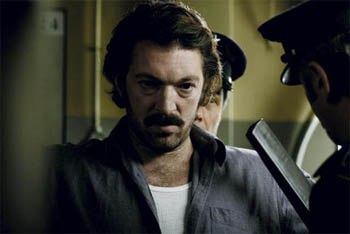
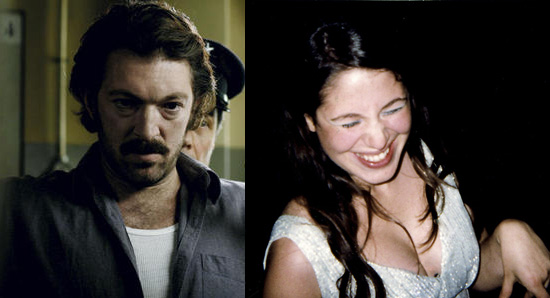
Vincent Cassel and Rachel Shukert both appeared on The Bat Segundo Show #351. Mr. Cassel stars in Mesrine: Killer Instinct, which opens in limited release on August 27, 2010, followed by Mesrine: Public Enemy No. 1 on September 3, 2010. Ms. Shukert is most recently the author of Everything is Going to Be Just Great and previously appeared on Show #217. (The true Shukert completist can also listen to Ms. Shukert on Show #173, where she appears in a group discussion on sex writing.)

Condition of Mr. Segundo: Dodging persuasive serial killers and angry Swiss listeners.

Guests: Vincent Cassel and Rachel Shukert

Subjects Discussed: [List forthcoming]

EXCERPTS FROM SHOW:

Correspodnent: Does movement offer a more creative place to establish a character? More so than the backstory, research, or anything?

Cassel: Of course it does. I mean, look, you walk down the street. You see somebody that you’ve never met. And you see him walking. You just see his back. And you already can say a lot of things about him. Is he drunk? Is he somebody sad? Happy? What kind of energy he has. You know, all that.

Correspondent: I’m glad you mentioned that you use different movement. Because I have noticed that about your performances. I mean, Mesrine and your role in Irreversible are two completely different movements. What do you do to prevent yourself from repeating a particular gait? Or a particular walk? Or a particular way of entering a room? Or a way of inhabiting an atmosphere or what not? Do you worry about this? Repeating yourself for each character?

Cassel: No, of course. I mean, I think it’s important that you not do twice the same. But the main reason is that otherwise I get bored. So what I do is that — I’m very instinctive, I have to say. It’s not really something I think of in a very precise way. But I can feel if it’s something — actually sometimes, I start a scene and I have this feeling of deja vu. And sometimes I don’t really understand where it comes from. But that’s enough for me to just [snap] switch to something else and try something else on the moment, and then think about it. Afterwards, I understand. “Oh yeah. I did this on that scene from that movie.” But at the time, on the moment, I don’t really analyze. It’s just a question of feeling. Like most of acting is really.

Correspondent: Have you ever had a situation where an entire scene needed to be altered because you were physically adopting some cliche that you couldn’t quite identify? But it just didn’t feel right.

Cassel: Very much so. Especially in a movie like Mesrine. Because I’m so close to Jean-François Richet, the director. We were literally: get on the set in the morning. We would try. And suddenly something is wrong. Let’s change everything. Because I think acting and moviemaking in general — maybe more for an actor than for a director — it has to be organic. Whatever that word means. You don’t have too much time to think on a movie. It’s very much about the acting and being involved physically in what you do. That’s the only way to see if it’s real or not really. So, yes, you try things. It’s about trying and finding solutions.

* * *

Correspondent: You note of [your future husband] Ben that, as you watched him calmly rub soap into his hands by the communal sink, you realized that you had known all along that you would see him again. I’m wondering what it is about hand hygiene that serves as your personal madeleine.


Shukert: (laughs) I don’t know. I remember that moment. It was very calm. And he didn’t seem surprised to see me. And I had been thinking about him and having this sense that we would bump into each other again. I think it was seeing him doing something that was very mundane. We were at home together. Even like moments now. It felt almost as if we had skipped in time and we were standing in our own bathroom while he was brushing his teeth and I was trying to put my makeup on. Do you know what I mean? It felt very familiar in that sense. It’s sort of an instance of fact seeing somebody washing themselves in some way or grooming.

Correspondent: So really any guy could have come along, if they had done any remotely regular gesture at that point. They could have swept you off your feet!

Shukert: I don’t know. I was definitely in a different place. (laughs)

Correspondent: The title Everything is Going to Be Great comes from a sentiment expressed by Pete — a guy with a girlfriend who you got involved with and who had a problem of hitting on other women in restaurants. Including you. You became involved with him, justified your involvement by noting a Dutch study where a woman’s neural activity at the moment of climax is equal to that of someone in a vegetative state. I must go ahead and ask. Surely hindsight offers the basis of 20/20. Lust may indeed make us do stupid things. But there’s often another reason why we’re driven to the irrational. So I’m wondering why you’re content to throw away this particular introspection.

Shukert: But I feel that it’s really describing that moment more. I feel like later, in the exploration of that relationship, other reasons come to light. The fact that we were both — and I feel that this is there in the book — that sort of explains why I couldn’t slap him across the face in that moment. Do you know what I mean? But as far as getting involved with him later, we were both kind of lost. We were both adrift. I was, at the time, really lonely. And things were not working out the way that they were supposed to. I think I mentioned how he suddenly gauged escape to this adventure that he was supposed to be having. He made it feel like there was a point, that I was here to fall in love and have this incredible adventure. And it turned it into a narrative. It turned it into a story, as opposed to this aimless time-waster. And I feel that if I had been here, if I had been on my home turf, I don’t think that we would have gotten involved. I feel that being abroad, you are off your center of balance. Away from the practical things that you really think about. You’re removed from all of that. And there were so many things I didn’t have to deal with.

The Bat Segundo Show #351: Vincent Cassel & Rachel Shukert II (Download MP3)

This text will be replaced

The Bat Segundo Show: Adam Ross

Adam Ross recently appeared on The Bat Segundo Show #349. Mr. Ross is most recently the author of Mr. Peanut.

Condition of Mr. Segundo: Caught within the vertiginous sensation of a Mobius strip.

Author: Adam Ross

Subjects Discussed: [List forthcoming]

EXCERPT FROM SHOW:

Ross: I think that what keeps us going day in and day out as we live our lives — and certainly we live our lives, hopefully, as members of caring relationships — is the belief that we can improve and change. And when I think of the idea of change, progress, and the improvability of character, that to me is a belief that character is somewhat linear. Right? That, okay, I learned that lesson back then. I’m never going to do it again. And yet my experience as a guy who’s been successfully married for fifteen years is that the experience of living with someone you care about a great deal for a long period of time is to come up against the reef of circularity, but also to enjoy the bliss of recurrence, right? So it’s paradoxical. There are these competing desires. The closed circles that Mr. Peanut presents. The entrapment, which is the same experience, I think, of looking at Escher. Which is that weird — you look at the art object from the outside. But if you really enter an Escher, you have this perceptual experience, where it’s inescapable and then you have to step back. It’s to me kind of analogous to the experience we often feel with those closest to us. Whether it’s brothers/sisters, mothers/fathers, or husbands/wives, we want to believe that we could get past X. But we often don’t. And that, to me, is the heaven and hell of marriage.

Correspondent: Yeah. So what you are suggesting here….

Ross: I’m suggesting tension. I’m suggesting a tension between those two.

Correspondent: Well, that’s true. But you’re also suggesting that by David embarking on this manuscript, by embarking on his marriage from the outside, and then also actively discouraging himself to look at the actual symbols — everything lines up. That’s really the dilemma that you’re laying down here. And then simultaneously you add an additional meta element by having the reader involved. Because then the reader is looking from the outside from the outside from the outside.

Ross: Yes. Well, let’s — because there’s nothing better to me as the writer than having this kind of a conversation. Because you’re putting your finger exactly onto me. What I was trying to examine. And so the first question I would say, in terms of decoding some aspects of Mr. Peanut is this. When is David writing this? Because essentially the book hints that there is a period of him being terribly blocked. And then there is a period where he is liberated to close the circle. Close the Mobius band, right? At the same time, it is, to me, powerful works of art — a movie that comes to mind just off the top of my head is either something like Nicolas Roeg’s Don’t Look Now or the great movie, Francis with Jessica Lange — where the effect of the work is to shock you and stun you. Another book like this would be John Hawkes’s The Lime Twig. Where the power of the nightmare is forceful enough that you emerge from it not just still reeling from the things you’ve seen, but also hopefully more awake to what’s right in front of you in the real. And so the question is: Is the virtual a prophylactic from life? Or does it have this possible saving power? Does a reader — who I bring in and as you say look from the outside in at all these moments that are fraught with conflict and violence and moments of joy and missed opportunities — is the reader there more awake to his or her life? Or, to the reader, is it just another entertainment? Is it just another enchantment? I don’t have the answer to that. My hope would be that it’s a wake-up call. But my experience is that these wake-up calls — we’re on the band also. We’re constantly forgetting. Does that make sense?

Correspondent: No, it totally does. And actually I want to lay out just a sampling of the numerous Hitchcock references in this book to jump off of this point.

Ross: Sure.

Correspondent: You have, for example, Nurse Ritter referencing Thelma Ritter in Rear Window. David encounters business cards made out to Dr. Fred Richmond from Psycho, Dr. Alex Brulov from Spellbound, which is also the name of his software company. Jesslyn Fax is a co-worker of Alice’s, but also the actress who played Miss Hearing Aid in Rear Window.

Ross: Yes.

Correspondent: And so on. So I’m wondering, based off of your last answer, whether there was a specific science in these particular references. Or whether they were all pure MacGuffins. Pure ways of detracting the reader, of inviting the reader to look in at something — again, going back to the question of semiotics — that is either complete bullshit. Or whether there is any kind of remote justification. Or whether it was just you having fun. Again, it works on this level of “Here, reader, look from the outside. But if you peer in, you will find nothing.”

Ross: I’ve been watching Hitchcock films intensively for twenty years. And it would be pure postmodern kitsch — pure postmodern trash — if those references didn’t have, as it were — that they didn’t rhyme thematically. In fact, there is, throughout the novel, a semiotics of naming which you’ve already put your finger on. And with some of the names you’ve already brought up for instance. Ward Hastroll is an anagram for Lars Thorwald [Raymond Burr’s character from Rear Window]. It’s the Hastroll section in terms of the way names are used. And not just names. They’re the Escher obverse of Rear Window. So, for instance, and I’ll only give a few of these away, but to give you an idea that there is method to the madness, I mean, the newlyweds that Ward Hastroll interviews are named the same actors in Rear Window.

Correspondent: Yes.

Ross: And if you go through, it actually in some ways — for instance, in that case — it modernizes the conflict that the couple has in Rear Window. Ross Bagdasarian is the name of the piano player in Rear Window. And his wife — that’s Judith, he says — is the woman who’s also named Miss Lonelyhearts. And so they clearly — in that one quick cameo that Ross Bagdasarian has — they clearly had a happy life. But now their life is fading from memory because of his Alzheimer’s. So there’s that. There is the superstructure. But more importantly, in the Sheppard section — and I wouldn’t want to give too much of this away, because I’m waiting for people like yourself to start really dealing with it. The Sheppard section is comprised both in terms of content and certain kinds of rhyming themes of multiple Hitchcock narratives. Vertigo plays an enormous part, both in terms of content and thematically in the Sheppard section. Shadow of a Doubt. Strangers on a Train. Marnie. Rear Window. To name but a few. Spellbound, as you said, does reemerge. I could go on. North by Northwest. Which also has its very clear semiotics of the kind of spy action caper. Because I think Hitchcock, at the time, was very tired of the action caper MacGuffin and wanted to introduce an element of absurdity. So, for instance, Cary Grant’s wallet in North by Northwest — this teeny little wallet — never empties of money. And he’s constantly doling out cash throughout the whole film. Little tricks like that. A Hitchcock scholar will start to enter that labyrinth and will start to see a way in which these themes — even on the level of mise en scene. I mean, if you look at the way certain characters are dressed in the Sheppard section, and where they go to buy clothes, it is not just using Hitchcock locales and settings.

The Bat Segundo Show #349: Adam Ross (Download MP3)

This text will be replaced

The Bat Segundo Show: Ken Russell

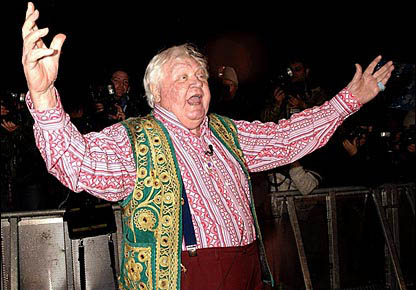
Ken Russell recently appeared on The Bat Segundo Show #348. Mr. Russell is the director of such films as The Devils, Women in Love, Tommy, The Music Lovers, and Altered States. Beginning today, Russell’s films will be playing at the Film Society of Lincoln Center for one week (many of which are unavailable on video), where Russell himself will be appearing each evening. Considerable thanks to Elize Russell and Shade Rupe for their invaluable assistance.

Condition of Mr. Segundo: Wrestling nude with 83-year-old directors.

Guest: Ken Russell

Subjects Discussed: [List forthcoming]

EXCERPT FROM SHOW:

Correspondent: You got into a fight with Alexander Walker, a man who, by the way, you’ve outlived. Other critics have called your films monstrously indecent. Walker was not the first one. So why did you hit tap him on the head, or beat him on the head, with a newspaper. I’m curious. Do you remember what was going on in your mind at the time? Or did you finally have enough of all these critics who were needlessly shitting upon what I think is a remarkable output?

Russell: Well, I guess I got tired of him putting me down. When he said, “You change things. We actually see Oliver Reed’s testicles crushed.” And I said, “Excuse me. That’s in your mind.” We don’t see his testicles crushed. Because they weren’t crushed. Only in your dirty little mind, you pig. And so he took exception to that. So I hit him over the head with his own review. Which happened to be a tissue of lies from start to finish. So that was a reason.

Correspondent: One of the few filmmakers to really get pugilistic about your critics there.

Russell: Yeah, well, he shouldn’t have said that. I mean, we didn’t see Oliver Reed’s testicles crushed. He may have wished we had. But we didn’t.

Correspondent: It was really — you were sticking up more for Ollie than you were for yourself?

Russell: That’s right. Yes.

Correspondent: I’m curious about a couple of things I’ve heard. One being that Oliver Reed apparently slammed you to the kitchen floor so that you would include the nude wrestling scene in Women in Love. I’m not sure if that’s true. Wanted to run that one by you. There’s another rumor going around that Ollie and Keith Moon were so drunk on the set of Tommy that they were improvising their lines. And then there’s another one that you guys got kicked out of the resort that you were filming at because of Ollie’s behavior. First of all, I wanted to find out if these stories were true. And second of all, given that this obviously must have been a very difficult working relationship at times and I know that you Ollie again until Prisoner of Honor, what accounts for the delay between Tommy and Prisoner of Honor?

Russell: Well, the delay between the two films was simply down to the fact of availability. Oliver Reed was only available at certain times and he wasn’t available. In Prisoner of Honor, that was why I didn’t use him before.

Elize Russell: You got along with him well.

Russell: Yeah, I got along with him very well. He…

Elize Russell: He called him Jesus.

Correspondent: He called you Jesus?

Russell: Yes. That wasn’t a compliment.

Correspondent: (laughs) So a little tempestuous there.

Russell: (laughs) Yeah.

Elize Russell: But he did throw you to the floor and you said that he convinced you to do the scene.

Russell: Oh yes. Yes, he did. I wasn’t going to do the nude wrestling scene. Because I couldn’t think of a way to do it. Because nude wrestling was frowned upon in British cinema.

Correspondent: In more ways than one.

Russell: In more ways than one, yes. So finally, he agreed to do the nude wrestling as long as there was no nude wrestling to be seen. (laughs)

Elize Russell: And how did he convince you to do it in front of the fireplace?

Russell: Well, he dropped round to my house for supper and said, “It could be done! It was very simple to do.” And he showed me how easy it was. You just faced each other, put out your hand and shook it, and threw each other onto the ground.

Correspondent: Did he often persuade you to insert scenes along these lines? Because I’m sure it couldn’t have been limited to Women in Love.

Russell: No. It was one of his favorite methods of perusasion.

Correspondent: Throwing you to the kitchen floor? That wasn’t the only time then.

Russell: Oh no.

Elize Russell: There was a sword fight.

Correspondent: Aha!

Elize Russell: But you won that one by mistake and closed your eyes.

Russell: Yeah.

The Bat Segundo Show #348: Ken Russell (Download MP3)

This text will be replaced

The Bat Segundo Show: Sally Potter

Sally Potter appeared on The Bat Segundo Show #347. Ms. Potter is the writer and director of the 1992 film Orlando, adapted from the Virginia Woolf novel, which opens in re-release on July 23, 2010.

Condition of Mr. Segundo: Hoping to live forever or die trying.

Guest: Sally Potter

Subjects Discussed: [List forthcoming]

EXCERPT FROM SHOW:

Correspondent: One interesting aspect about Orlando, from my standpoint, is that it’s almost a textual collage. You don’t really use a lot of the prose that’s in Virginia Woolf’s book. And if you do use it, you often modify one word or two words. There’s Spenser’s The Faerie Queene. There’s Joseph Addison’s The Tattler. There’s Shelley’s “I Arise From Dreams of Thee.” If you’re a literate person, there’s a smorgasbord of collage and possibilities. And I’m curious why you made this particular decision. Was the idea here to reinforce some of the sexism of the literary world? That Virginia Woolf’s true prose would not be represented in the film version of her work? What happened here?

Potter: Well, I think the essence of her prose is the skeleton of the film. I tried to make a distillation of what she’d done to further distill her own project of distillation. She writes in her diaries about wanting to exteriorize consciousness, writing in images rather than language. And where usually she was working with a kind of inner monologue — the stream-of-consciousness project through the word — in this case, she was working through the description of images that were like watching the inner mind unfold, but not as one individual’s mind. A kind of collective mind. Now she was also working with a tapestry of references. So the book is littered with one reference after another. When you go back to her diaries, and look at her essays — which I did — and go back to her sources, you see that she was doing a kind of postmodern collage herself.

Correspondent: Yes.

Potter: So all I tried to do was stay true to that principle, but make it work in cinematic terms. Anything else would have been a disservice to her as a writer.

Correspondent: But in terms of using the other — mostly; in fact, all male — writers, instead of specific quotes — with the exception of, for example, the trial and the poetry scene with Greene, I’m curious how you made that selective process. Did some reference in the book cause you to grab for the Norton Anthology? What happened there? And also, I was curious in terms of changing one specific word from a passage. Did you encourage the actors to paraphrase from the script? Or did you actually have the…

Potter: Oh no no.

Correspondent: Okay.

Potter: No. But I did so many drafts. My first draft — in fact, when I took it to my script editor at Faber & Faber. He picked it up, weighed it, and said, “Go and take out a hundred pages.” It was really long. The first adaptation. So it was clear that it had to be cut. And some words work spoken. And some words work written. And so through the very long development process — I mean, multiple redrafts and redrafts and redrafts. And Tilda [Swinton] reading aloud to me. And so on. First of all, I learned about the importance of things actually working, rather than working in theory, as you intended them, and to try to be very open to listening and observing what worked, and make things fit so that they had, in a sense, a natural feeling for voice and body of that particular actor who’s manifesting the idea. So that entails changing things from time to time. But, for example, Nick Greene’s satiric poem about Orlando and Orlando’s bad poetry are not in the book. I had to write them.

Correspondent: I figured as much.

Potter: From clues. So I had to fill in, in a way, certain gaps that, had she written them on the page, they would have had a different status. And also, from her, she does a sort of sketch of 18th century authors. And you know who she’s referring to. And again, I had to fill them with actual quotations. So my guiding principle always was: Stay true to the spirit and the intention, but not to the letter of the book.

The Bat Segundo Show #347: Sally Potter (Download MP3)

This text will be replaced