Wayne Shannon: A Video Tribute

A few days ago, I reported the death of Wayne Shannon, whose legacy as a broadcasting innovator and precursor to Jon Stewart, Stephen Colbert, and and Michael Moore had been needlessly overlooked in recent years. Wayne was also a friend. And last night, the cause of Wayne’s death was revealed to be a suicide. Wayne’s body had been found by two hunters in Northern Idaho. His body had been there for many months.

As of Friday morning, the San Francisco TV station (KRON) where Wayne worked for many years, has not acknowledged Wayne Shannon’s death in any way. Last night, I contacted KRON by telephone. I spoke with Bonnie Hitch, who was kind and who offered me a few minutes of her time. Ms. Hitch told me that KRON still hadn’t decided on whether or not it would recognize Wayne Shannon, but that they had learned of his death. KRON had not been aware of Wayne’s suicide.

I also asked Ms. Hitch about how well the KRON news archives were preserved. What was the state of Wayne’s numerous commentaries? His segments in the field? His body of work? She informed me that there wasn’t even an archivist employed at KRON these days. “It’s a very different news station,” said Ms. Hitch. KRON culture had changed. Ms. Hitch wasn’t even sure that the airchecks had been preserved. She told me that she would put me in touch with the person in charge of the news archives, and it is my hope to contact someone at KRON who is even remotely interested in preserving KRON’s long legacy as a major news station.

In his final years, Wayne had assembled a disc containing a small handful of his work. Was this all he had? Unfortunately it was. This disc was all that remained of his considerable work. “It took me months to pile through boxes and boxes of old tapes,” Wayne had written to me. “You got the best of what was available…and some of that — as you have doubtless noticed — is well below par.”

Shortly after talking with Ms. Hitch, I went through my files and located Wayne’s disc. It contained this note:

Yo Ed:

A few weeks before Noel Coward died he held an intimate soiree at his home during which, by all accounts, he performed for the very last time.

Those in attendance, if memory serves, were Lunt and Fontanne, Oliver and Leigh, Oscar Wilde, Jascha Heifitz, the Raymond Masseys and the Rex Harrisons, the latter naming their first born son after Noel.

We are assured that it was an exquisitely memorable night of much wine and laughter and tears born of same, along with a game that developed whereby participants challenged their memories by trying to match some of the more obscure lines of dialogue from his plays — with the titles of his many Broadway and Piccadilly triumphs.

This was followed by a medley on the piano of Coward’s many hit songs, accompanied by Heifitz, which naturally concluded with his immortal, “Mad Dogs and Englishmen.”

I am, of course, no Noel Coward and, unfortunately, have more years to live than I doubtless deserve. However, I wanted you to know that to me…you are not only to be numbered among the “luminaries” he had about him that evening those many, many decades ago…but, had I been able to do so…you would have been invited to such a gathering — though you may very well have had the good sense not to attend or, perhaps, admit to it later.

However, if you had done so, you too would have seen my final performance — from virtually my first words ever on American TV — to undeniably my last, “Yahoo!”

I cannot accept Wayne’s work falling into obscurity. I cannot accept his self-deprecatory nature refusing to understand, even in this note, that people loved and respected what he did. And I cannot accept his work not getting its proper due.

So I have uploaded nearly all of the video I have so that people can see how Wayne was ahead of his time. The twenty-one segment salute below reveals that Wayne, who won six Emmys for his work, was a wily reporter, a witty commentator, a skilled performer, a gleeful satirist, and a man who was very good at talking with people.

Star Wars: This is one of Wayne’s earliest television appearances, in which he talks with Mark Hamill, Harrison Ford, and Carrie Fisher. He even asks Carrie for a kiss, a move that would be unthinkable in today’s junket climate.

Rocks (1980): This is a great example of the muckraking multipart series Wayne was known for during his days in Detroit. (Indeed, as I learned in a 2008 radio interview I conducted with Wayne, many of Wayne’s pioneering concepts during these days would be stolen by Michael Moore and used in Roger & Me.) Wayne fearlessly took on many of the auto manufacturers and was run out of Detroit for this (despite the fact that his segments greatly improved the evening news ratings). And the “All by Myself” montage where Wayne abandons his “rock” on the freeway and rollerskates away is an unusual break from the hard journalism that local television news was then known for.

Lemons: In Philadelphia, Shannon was known as the “TV 2 Troubleshooter.” His coverage, as we learn here, could be hilariously epic (in this case, the segment above is “part three of his ten part series on lemons,” as Robbie Timmons introduces) — almost as if he was working on one giant documentary film split into neat segments for the evening news. Wayne’s ability to combine consumer advocacy with comedy is in great form here, especially with the concluding Rocky homage.

Hedgehogs: This “TV 2 Troubleshooter” segment sees Wayne fleshing out his satirical journalism. There’s the opening sound gag, along with some folksy banter with a stamp collector (“Ever been took?”).

The Box Top Rebellion: In this segment on coupon clippers (which contains some eerie parallels to post-2008 economic life), we see that Wayne was very keen on highly theatrical introduction sequences. But he was also very good about learning how a system worked, as seen from the fascinating clips inside a coupon clearing house (“where old coupons go for that big redemption in the sky”).

Magic Nails: Not only do we get a quick glimpse of a young Maury Povich, but we see Wayne taking on “Magic Nails” — a dangerous toy manufactured at a Burger King restaurant. Wayne’s journalistic rigor is on display. He talks with pediatrician Alan Freedman and updates the story with some shoe leather reporting.

The Vent People: I don’t know if the success of Wayne’s consumer advocacy had Channel 3 assigning Wayne to more hard reporting. Perhaps they didn’t quite know what to do with him. But this segment also shows that Wayne was a good journalist. He reveals efforts to uncover how the homeless sleep on the steam vents at night, along with the reasons why others aren’t allowed to help the vent people.

Wayne-Bo and Tom: The first part of this clip is rather baffling. It features “Wayne-Bo” entertaining kids and talking with Eagles quarterback Ron Jaworski. Was this a bona-fide children’s show hosted by Wayne which aired in Philadelphia? The second part features a clip of Tom Snyder extolling Wayne at the end for an episode of The Tomorrow Show, which Wayne made an appearance on. (Note to self: A trip to Paley is in order.)

Santa and Thermatron: The Santa bit is from a bizarre 1981 program that Wayne did called Santa and Son. I have no idea if it even aired anywhere. Then there’s a “Thinking Out Loud” segment on the Thermatron, a precursor to the commentaries that Wayne would be known for during his KRON days.

KRON Clips: Wayne, now at Channel 4, talks with Jonathan Winters. There are three additional segments: (1) a Wayne commentary on how laser beams are being used to cut through clogged arteries (and how Wayne has sought “a revisionist nutritionist”), (2) a closing credits monologue of Wayne on the road, and (3) a Wayne commentary on how to celebrate California adventure (with some inside dirt about then Carmel Mayor Clint Eastwood).

The Merv Griffin Show: Merv Griffin, who lived in Monterey, was a Wayne Shannon fan and invited Wayne to appear on his program. Wayne reveals the trouble he got into for suggesting that dumping atomic waste into the ocean might be a possible solution. “I guess you don’t hear that viewpoint that often.” “Why would you advocate that?” asks Merv. “Well,” replies Wayne, “because everybody else isn’t.”

Claim to Fame Promo: Wayne appeared on another locally produced KRON show called Claim to Fame, in which an assembled panel tried to guess who the person was based on their vocation. Wayne was one of the regulars, along with Ann Jones, Charlie Haas, and Sylvia Brown (later with an E). This promo for the show features Wayne prominently. There is also a ten second clip from the show attached.

Claim to Fame: Here’s a longer part of Claim to Fame, which features a more spartan set than the one with the FAME lights. (Budget cuts at KRON?)

Bay Area Minute: This short KRON segment features Wayne rhapsodizing about the Bay Bridge.

Three KRON Commentaries: In these collected clips, Wayne offers a commentary on Tanzanian chimpanzees getting high on leaves, another commentary on pesticides, and a third commentary on Fleet Week.

CNBC: In these clips from his CNBC days (featuring some charmingly retro graphics), Wayne provides a commentary on Norplant, sits patiently at the ACE Awards (for which he is nominated), co-anchors a Real Estate Report, and interviews Ken Hakuta, the inventor of the Wacky Wall Walker (and self-styled “Dr. Fad”), with absurd results.

TV 25 Vancouver: In this TV 25 Vancouver segment, Wayne investigates a post office branch in Vancouver, Washington, discovering how postal workers toil and the impact of a holiday package influx.

TV 49 Portland: In the first clip from Wayne’s TV 49 Portland days, Wayne probes Nick’s Famous Coney Island, talks with owner Frank Nudo, and contends with hot dogs. The second clip features Wayne’s movie reviews of Mad Love, Judge Dredd, and Crimson Tide>

TV 6 Portland: In this clip from TV 6 Portland, Wayne goes out in search of white deer in Redland.

Ask the Weather Guru: This interview with Wayne Shannon (just after his television days) has Wayne coming out as the “Ask the Weather Guru” man at Yahoo. He attempts to explain what an occluded front is. But I can’t help but focus on just how small his apartment is at this time.

The Memorial Wall: Wayne’s last appearance on television, from August 2011. He was in Idaho, visiting the Vietnam Memorial Moving Wall and wanting to know if three people from his hometown of Moses Lake, Washington had been killed during the war. He didn’t see their names. Months later, he would walk into the woods and never come out.

The Bat Segundo Show: Stewart O’Nan II

Stewart O’Nan appeared on The Bat Segundo Show #454. He is most recently the author of The Odds. He previously appeared on The Bat Segundo Show #161. You can also read our lengthy conversation by email in 2011. This 2012 talk was recorded before a live audience at McNally Jackson. My gratitude to Michele Filgate, Langan Kingsley, Holly Watson, and, of course, Stewart O’Nan for their help in putting this event together.

Condition of Mr. Segundo: Inexplicably hungering for Wendy’s hamburgers.

Author: Stewart O’Nan

Subjects Discussed: [forthcoming later this afternoon]

EXCERPT FROM SHOW:

Correspondent: Niagara Falls. Here is a location that’s loaded with all sorts of associations. Joyce Carol Oates wrote a book there.

O’Nan: The Falls.

Correspondent: Yes, exactly.

O’Nan: Yes, I was introduced the other night as “the author of The Falls.”

Correspondent: (laughs)

O’Nan: And I was like, “Not that prolific.” Not nearly.

Correspondent: (laughs) Well, you are churning them out one a year.

O’Nan: Oh thank you. Churning them out. You said cranking before.

Correspondent: Crafting! Cranking, churning. All right. But they’re short! They’re short.

O’Nan: They’re tiny.

Correspondent: There’s craftsmanship in there. Don’t worry.

O’Nan: I understand.

Correspondent: But I’m wondering. You’re taking a location that’s loaded with all sorts of cultural baggage. There’s that Marilyn Monroe/Joseph Cotten film.

O’Nan: Gotta love it.

Correspondent: But I’m wondering. Here you are taking two characters and putting them in a touristy location. I’m wondering if you did that to work up against limitations and see what kind of behavior you could mine based off of that. I’m wondering why you chose this. What was the process of selecting the Ice Bridge or the details of the customs location? What went into nailing Niagara?

O’Nan: Well, it’s a ready made stage. Usually when I take on an area or a setting, it’s virgin territory in a way. Conneaut, Ohio. Kingsville in Songs for the Missing. No one’s ever written about that in any kind of novel. Western Pennsylvania. Butler, PA in 1974. So I always say I’ve written the best Butler, Pennsylvania novel ever written.

Correspondent: (laughs)

O’Nan: Or Avon, Connecticut. Usually these are overlooked places. Like New Britain, Connecticut, that Last Night at the Lobster takes place in. I write in that interzone, that nowhere America of strip malls. It has been kicked around forever. But in the new book, I thought, let’s focus solely on the characters and put them on a stage that everybody knows. So I don’t have to do that disorienting, here is the place that you don’t know and now I’m going to tell you about it. So I had a little less responsibility to the setting and I could spend a little bit more time on the characters.

Correspondent: I have to ask you about the odds as chapter headers for all of these. Some are, in fact, true. “Odds of a black number coming up in roulette: 1 in 2.06.” I Wikipediaed that. Some are unscientifically true. “Odds of a marriage proposal being accepted: 1 in 1.001.” So I’m wondering. How many odds did you collect? I mean, I’m wondering if you were sitting on a bunch of odds sets.

O’Nan: Yes. Yes.

Correspondent: You were?

O’Nan: Yes, I was. And I was trying to figure out: How do I weave these into the book and what effect are they going to have when I get them in there? And they seemed to me to work. When I thought of using them rather than chapter headings, in the way I did with, say, Emily or in Songs of the Missing, I saw them as how the chapter headings are in something like Blood Meridian or in, say, 19th century fiction work, which is “In this chapter I am eaten by sharks.” And before you even get into the chapter, you’re like, “Oh sharks! This could be cool!” So it kind of brings the reader and it gives them an expectation of what may happen in this chapter. Not necessarily has to happen. But it may happen. The odds of dying in a bus crash. Whoa! There might be a bus crash. I’ll stick around and find out.

Correspondent: It’s interesting. Because here you are in one sense messing with the reader for the first ten pages, repelling them, and then on this, you’re subverting their expectations. It’s actually, “Ooh! I want to continue to read this chapter.”

O’Nan: Well, you hope.

Correspondent: What of this bipolar approach to fiction writing?

O’Nan: Flannery O’Cononr. Flannery O’Connor said, “Distract them and hit them over the head.” Absolutely right. Absolutely right. Give them a reason to come into the place. A Prayer for the Dying. The opening sections are very — it’s a terrible thing to say, very beautifully written. I use the language. I make the beauty of the language a key thing to hang into. And so the reader gets rewarded somehow. And by the time they have to go through the book, they’re kind of stuck. They’re like, “Well, I don’t really want to hang around and watch this guy go crazy while I’m inside of his mind.” Well, it’s too late. So like Poe, say, in “The Black Cat.” Once you get them in the door, then after a certain point, they’re kind of yours. They have to follow along. Or you hope so. You always hope so.

Correspondent: I’m curious if the odds sets actually were methods for you to riff off of Art and Marion. If you were stuck at a certain place. Is this a point? I mean, you’re a former engineer. I presume that this was either heavily designed. Or were there false starts? And did the odds help you in anything?

O’Nan: No. There weren’t a whole lot of false starts. I knew the characters very well before I opened up. It’s also a small novel. It’s very much sort of a drawing room novel in a way. It’s the one weekend. You’ve got the unity of place. The unity of time. You’ve got a lot of pressure on them from the memories. This is their second honeymoon. They’re in Niagara Falls. And you have the time pressure of, well, at some point, they’re going to have to put their money down on the wheel. And they’re always kind of at odds with one another. They’re always picking at one another. So I had a lot to work with. The plates were already spinning when I started getting into it.

Correspondent: I wanted to also ask you. One interesting thing that you also do with Marion is body image. She doesn’t like Art to see her undress. And in one of the passages you’re going to read tonight, the only thing you mention is her stomach. We actually don’t really know what she looks like physically. So I’m wondering if this is a method for you to not reveal certain details to the reader or this reflects your relationship to the reader. Is this your way to protect your own characters? To not divulge all? Or is this your way to encourage judgment? Perception on the reader’s behalf?

O’Nan: This is more to encourage the reader to join in the process of creating the work. And I don’t say what the character looks like unless it’s really necessary to the arc of the story there. So what the characters look like is completely up to the reader there. And I leave judgment to the reader. I don’t try to steer the reader too much in terms of who’s good, who’s bad, who’s right, who’s wrong. And it’s always sort of that inkblot that shows how generous the reader can be or how, on the flip side, how stingy they can be. “I hate Marion. I hate her so much.” It’s like, “Easy there, lady. Easy there.”

Correspondent: Have you had this happen before?

O’Nan: Oh yeah.

Correspondent: Wow. Really?

O’Nan: In Wichita of all places.

Correspondent: Wichita!

O’Nan: “I didn’t like her.” Well, that’s good. That’s your prerogative. That’s fine. That’s you.

Correspondent: You know, one of the interesting things — I’ve read a number of reviews of this book. And they actually don’t mention, for example, Karen or these two characters who are having affairs with the couple. And I’m curious about this. Maybe this relates to this issue of giving the reader something. Maybe they don’t want to talk about this aspect of Art and Marion. What do you think of this?

O’Nan: Yeah. I think they want to key more on Art and Marion and just say, “Look, there are problems in the marriage.” And this is how they work them out over this weekend. Or don’t work them out.

Correspondent: Inevitably, because you do deal with Heart, I have to bring up celebrity gossip.

O’Nan: Heart.

Correspondent: So in late 2010, Nancy Wilson and Cameron Crowe initiated divorce proceedings. It was a great shocker to certain waves.

O’Nan: So sad. They had everything going for them, didn’t they? They did.

Correspondent: Yeah. I’m wondering if you including the Heart concert before or after you heard this news. Or if you possibly predicted this dissolution in anyway. I mean, what of this?

O’Nan: I don’t know.

Correspondent: Some sort of angle here.

O’Nan: No. I don’t know. It’s accidental subtext, I guess. I guess it happens from time to time.

Correspondent: Another silly question. Wendy is a character. And I have to ask you, and I know this is really pedantic, but I have noticed in all of your books — nearly all of your books — there’s a moment where someone eats Wendy’s. A Wendy’s hamburger.

O’Nan: Really?

Correspondent: But not, not in The Odds. The last time I saw this was Last Night at the Lobster. There was a Wendy’s moment. It was the Stewart O’Nan Wendy’s moment!

O’Nan: He doesn’t go to Wendy’s.

Correspondent: Oh, he doesn’t go to Wendy’s?

O’Nan: He decides not to go to Wendy’s.

Correspondent: But he does actually consider it!

O’Nan: This is a climax. This is a climax in an actual work of fiction. “Want to go to Wendy’s? Nah.”

Correspondent: Do you eat at Wendy’s quite a bit?

O’Nan: No. Maybe that’s it. Maybe I want to eat at Wendy’s more. I can see my biographer doing a lot on Wendy’s now. A map of all the Wendy’s around my house.

(Photo credit: Here)

The Bat Segundo Show: Annalena McAfee

Annalena McAfee appeared on The Bat Segundo Show #453. Ms. McAfee is most recently the author of The Spoiler.

[PROGRAM NOTE: In the first few minutes of the conversation, one of the microphones decided to blow out. And while Our Correspondent was equipped with two microphones, the microphone that blew out wasn’t the one on Our Correspondent’s voice, but the one that was on the author’s voice. Ms. McAffee’s words can be detected during this program, but if her voice sounds like it’s coming out of a small radiator, well, you now know why. Many apologies for the low quality to Ms. McAfee and to our listeners. We have done our best in post-production to preserve this conversation despite this setback.]

Condition of Mr. Segundo: Selling his scandalous tales to the highest bidder.

Author: Annalena McAfee

Subjects Discussed: The journalism novel’s long tradition, Evelyn Waugh’s Scoop, P.G. Wodehouse’s Psmith, Journalist, Guy de Maupassant, the number of women working as journalists, Michael Frayn’s Towards the End of the Morning, the lack of women journalists in Tom Rachman’s The Imperfectionists, Nellie Bly, Hedda Hopper, Louella Parsons, using phrases as “nasal plainchant,” how style and language allows one to escape tropes, plucky newsboys, formality, balancing characters, botching an interview, Tamara Sim’s entitlement, finding redeeming value in characters who don’t comprehend basic journalism, how to counter your own biases when writing fiction, providing what the newspapers want, narcissistic protagonists, 1997 as a cusp moment in journalism, journalistic ethics, the desperate scramble to be first with a story, cash for stories, single-source Fleet Street exposés, prostitutes and TV presenters, Tory MPs and tabloid scandals, the impulse to tear people down as a journalist, including a virtuous side character, the Conservative Monday Club vs. a fictitious Monday Club, Sherman Duffy’s idea of a journalist being “somewhere between a whore and a bartender,” the differences between US and UK journalism, whether or not cultural journalism is a slightly higher form of tabloid journalism, David Simon’s Q&A comments being needlessly dissected by short-sighted journalists, the problems with celebrity journalism, Ian McEwan as in-house editor, Amsterdam, Enduring Love, being grilled on television through personal connection, Marguerite Higgins, women war journalists, the infamous hostile showdown between Gloria Emerson and John Lennon, how Higgins inspired two novels, what journalism has lost because of the Internet, needless length caps applied to present-day journalism, Kindle Singles, the influence of Maxim in the early noughts, aggregate sites, The Browser, Twitter and the move to individual curators, obsession, and internal pressure for journalists.

EXCERPT FROM SHOW:

McAfee: In terms of tearing people down, I did not work in that world really. I worked on The Financial Times. It’s a fantastic paper and the probity is unimpeachable. I worked on The Guardian on the culture. I founded and edited The Guardian Review. Again, that’s a paper that’s on the side of angels. I was very, very lucky. I had a spell on the Evening Standard. But I was arts editor and theater critic. And I suppose in my capacity as theater critic, sometimes I might have been less than kind. But it certainly wasn’t the kind of sustained bullying. Or I didn’t have that opportunity. And I hope that if I did, I would be able to resist it.

Correspondent: So you were really perhaps comparable to the Monitor‘s books editor the morning after the party.

McAfee: Yes.

Correspondent: Where everybody else was completely trashed and their heads were throbbing and they were incapable of any conversation. And meanwhile, those who chose not to imbibe in this debauchery, they were able to seize the reins here, so to speak. (laughs)

McAfee: Well, books editor do debauchery too.

Correspondent: Of course. Most people do. We all know this.

McAfee: There’s no character assassinations or kiss-and-tells on my particular beat, thankfully.

Correspondent: Sure. I wanted to go back to the question of character balance. Because you have this confident young woman named Tania. She’s dutifully reading books. She’s researching her subjects.

McAfee: She’s called Tamara. But the old woman gets her name wrong and calls her Tania sometimes.

Correspondent: I’m sorry. I’m talking about — anyway, she even is very nice to respond to the quip.

McAfee: Oh, Tania.

Correspondent: Tania. That’s who I’m saying. Tania.

McAfee: You know my book better than I do.

Correspondent: I know that Honor, in a joke, actually calls her Tania. And that’s the clue that there is actually something askew because she completely insists on Tania. You have that email joke. Okay. Now that we’re on the same page, so you’ve got Tania.

McAfee: Yeah.

Correspondent: She’s this erudite person who’s incredibly capable and she’s even kind enough to offer this tinselly chime that you describe when Tamara says, “Oh, well, the future is unisex jumpsuits and time travel.” But this does not exactly help us in warming to Tamara. I was reading this book and I’m saying to myself, “You know, Tania, this woman’s got her stuff together.” But I’m wondering how you worked out your method of parceling out Tania’s appearances throughout the book. Because they tend to be somewhat sparse near the beginning. And I almost got the sense that, as you were working on this, you wanted to have not so much of Tania. Because then all of a sudden, we’ll really not like Tamara. I’m wondering how you balanced the Ts here.

McAfee: Well, I did kind of concede Tania as the future. The only capable young woman journalist. Brilliant and completely ahead of the game as far as technology. And, of course, as I say, that was a time — 1997 — it was still possible to believe that the Internet was a passing fad. And indeed some of our great commentators said so. “It will be over soon. It’s like Citizens Band radio. It’s like Esperanto. It’s a craze. It will pass.” I use a quote from one of our great commentators saying exactly that in January 1997. So that’s what Tamara and all her colleagues are thinking. But gradually I hope that as a young woman who runs a website, as the future makes itself plain, as we see what direction it’s going in, that was the aim. That ultimately the future belongs to Tania and she claims it.

Correspondent: But did you worry that she might, in fact, be too virtuous? I mean, you’ve got two characters who have issues with Tamara and Honor. You’ve got Tania, who has not a single bad bone as far as I know. So how do you deal with this balance? Because if you have too much of Tania, then it gets away from the two central characters here. And so I’m wondering if there was more of Tania in an earlier draft perhaps or you had to say to yourself, “Well, I have to wait twenty or thirty pages before she appears again.”

McAfee: Well, no, there wasn’t more of Tania. And actually, again, I’m trying for complexity. And to be perfectly honest, I find Tania’s virtuousness and her capabilities slightly irritating. She’s the person who does one’s own job better than one can ever do and is always the last to leave the office. And she doesn’t laugh much. Her tinselly chimes are part of a game rather than a sense of humor.

Correspondent: No, it’s more of a polite gesture, I thought. I mean, here, she has been just totally insulted and instead of actually allowing herself to be steamrolled, she decides to respond with some grace. The tinselly chimes.

McAfee: Grace? Well, the tear of the victor.

Correspondent: Here’s the other thing about Tania. I mean, I know people like this. They go ahead and they work very hard, but they have a dark side. So I was reading this book thinking, “You know, Tania’s probably doing something we don’t know.” But we never actually get there. So I’m wondering: why? (laughs)

McAfee: Well, that’s true. That is probably true. And, in fact, she does move in on people.

Correspondent: That’s true.

McAfee: She’s incredibly attractive. That’s another of her irritating virtues.

Correspondent: (laughs)

McAfee: But she uses it and is jockeying for position and is not afraid to use her sexuality.

Correspondent: Nevertheless, you find her irritating.

McAfee: Well…

Correspondent: The successful woman is irritating. Wait a minute here. (laughs)

McAfee: She doesn’t have warmth, I suppose. And that’s really it. She’s hard to read and she doesn’t seem generous to her colleagues.

Correspondent: I see.

McAfee: She lacks generosity.

Correspondent: She moves in on the territory and she does so without really seeing what the pecking order is.

McAFee: As I say, she’s got the ambition of a young person.

Correspondent: That’s an annoying quality. I’ll give you that. So it’s interesting that you have the Monday Club in this book. Because it’s far more liberal than the conservative Monday Club. Because you have the Twisk Foundation fighting child exploitation wherever it is to be found. You have the war correspondent. And I’m saying to myself, “You know, this is almost a Bizarro World Monday Club.” And so I’m wondering why you decided to go for a more progressive form of something that is a conservative institution in the UK.

McAFee: Well, they meet on a Monday. But I chose…

Correspondent: It could have been the Tuesday Club. (laughs)

McAfee: But I quite liked it. And I think I do say an ironic reference to the conservative, right-wing thinktank of the same name. Or whatever. So I quite liked playing with that. I mean, these are bien-pensant liberals and they’ve taken the name of the arch factory of Thatcherism.

Correspondent: Do you have any personal experience with the real Monday Club at all?

McAfee: No.

Correspondent: Any efforts to peek in there?

McAfee: No. Not at all. I can’t think of any.

Correspondent: So Sherman Duffy — he was a reporter friend of Ben Hecht’s — and he has this very famous maxim. He said, “Socially a journalist fits somewhere between a whore and a bartender.” Wonderful, wonderful line. Now in the Monday Club chapter, you not only have Tamara serving canapes to these affluent types. But you also have Ruth, Honor’s publisher — she’s actually engaged in this service sector activity as well. She’s unpacking the pastries on the plate and so forth. So I’m wondering if you were thinking of the Duffy maxim when you were considering this. This is a natural extension. Is there any way that fiction can help us and assist us in rehabilitating a journalist’s social status from somewhere between the whore and the bartender?

McAfee: Well, I mean, journalists are happy to see themselves as mavericks. Aren’t they? Certainly British journalists. I know that American journalism is a more honorable tradition.

Correspondent: Really? (laughs)

McAfee: I was talking to a friend about this the other night. And she said that there’s more of a public service attitude. And it can make for more solemn journalism. But in the UK, it’s well, you know, anything can go.

Correspondent: So you would say that journalism in the UK has declined considerably in the last ten years.

McAFee: Oh no.

Correspondent: Or twenty years.

McAfee: I wouldn’t. I wouldn’t. I mean, I think there’s marvelous stuff going on. Absolutely marvelous. In fact, all that’s changed is the medium really. My war correspondent is not — she’s a bit of a dragon. And she resents the fact that the world has turned and she is not the top of the pile anymore. In fact, if she’d looked around, she would have much to celebrate. Particularly women in journalism. Women like Marie Colvin, the late Marie Colvin. In Russia, Anna Politkovskaya, as she died in the cause of her work. There’s marvelous reporting going on. But there’s also a lot of dross. That’s all mainstream. I don’t get celebrity journalism. I just can’t understand the appeal.

Correspondent: But some would argue that cultural journalism is, I suppose, a classier version of celebrity journalism. What do you think?

McAfee: Yeah.

Correspondent: I ask myself this question too. I mean, look, I’ve read the book and I’m trying to tie it into a culture here. And I don’t want it to be about gossip. But at the same time, is this conversation also part of the problem? Even though it’s slightly higher on the brow? (laughs)

McAfee: Somebody said that novels were higher gossip.

Correspondent: (laughs) Yes.

McAfee: That’s the level of celebrity journalism that appeals to me. But yeah, TV stars. Reality TV shows. I mean, I don’t want to go on to that. But that seems to be cheap television and cheap journalism. And I don’t think there’s anything edifying that one gets from it.

Correspondent: Well, the problem we have here too — and this is really frustrating. David Simon, for example, recently said some things in an interview. He didn’t quite express himself very well. But he basically implied that people who didn’t watch The Wire from beginning to middle to end were not watching it according to his vision. And I can totally understand his sentiment. But from my standpoint, I was saying, “Well, this is really nothing to get all that worked up about.” But, of course, television journalists completely flipped out over this and said, “David Simon is being an ass.” And Simon then has to spend an hour of his life talking to this TV critic named Sepinwall, basically clarifying what he was saying, where he was coming from. And this, to my mind, is the epitome. This says nothing about The Wire. It says absolutely nothing about the actual relationship to art. And there were several people — including a New Yorker TV critic on Twitter — who were going off about this. And I was saying to myself, “You know, why are you devoting so much of your energy to try and systematically dismantle and deconstruct a quote that really has no bearing on what David Simon is doing as an artist?” The suggestion I’m making here — and I’m going off on a total tangent and we will get back to your book — is that, well, do you think that cultural journalism might be suffering from the same problems that reality TV, this sensationalistic journalism, is?

McAfee: Oh yes. I do. I find that a lot of interviews — and I know we’re having an interview.

Correspondent: Yeah, I know. It’s very meta here. (laughs)

McAfee: They concentrate on rehashing old stuff. Rehashing cuttings basically. Inquiring, as Tamara does, about affairs, about the personal life and not about the work. And when I was on the Guardian, we started a profile which was an essential interview about a writer or an artist. And the one rule was it was about the work. We don’t care about the personal life. If anyone cares about the personal life, they can read it. They can look it up. They can read it elsewhere. But what’s really interesting is the work. And I find that so much more enriching.

Correspondent: There is one question I have about your husband [Ian McEwan] and you, and it has nothing to do really with the personal. Although it may have something to do with the personal. But we’re talking about purely artistic terms. Okay. One, you’ve got an in-house editor. I’m really curious about how you two work as in-house editors. And, two, I noticed that this book had quite a bit in common with Amsterdam. You have a photo that is released. You have editors who are sacked. And so I wondered first of all if Amsterdam was hovering over you as you were writing this and, second, how do you guys edit each other’s work? That’s all I care about.

McAfee: Well…

Correspondent: Or do you? Or do you leave each other alone?

McAfee: Yes. We do read. I read his work. I’m his first reader with a pencil. And he returned the compliment. In terms of Amsterdam, which I love — it’s a great newspaper novel actually, though it’s guys again. I hadn’t reread it for a while. But I guess any newspaper novel about modern journalism is going to have this scandal element to it. And, in fact, what you ask me is a fairer question, less compromising. When I was on the FT, I was editing the arts and books page. I was invited to the BBC. And it was around the time of the Booker Prize, when the Booker Prize was just going to be announced. The shortlist was going to be announced. And I was asked to come on as a literary editor of the Financial Times. So I turned up. And I’m very nervous on television. And I’m in absolute agony. And I turn up in this bright lit studio. And the guy turns to me and says, “So did you help hubby write the book?” Oh, what do you say? I said, “He’s perfectly capable of writing it himself. Thanks very much. But, nope, he wrote Amsterdam by himself. Unassisted.” As I wrote The Spoiler.

Correspondent: I would have said, “Did your wife help you with that question?”

McAfee: You know, that’s good.

Correspondent: So you guys edit each other’s work. Is there a point where you say, “Hey, hands off, Ian, I’ve got this”? I mean, does he become too vigorous with the pen? Or do you become in turn too vigorous with the pen? How do you keep each other’s hands off? What’s the deal with you guys?

McAfee: Well, it’s very companionable and decent. We both make suggestions and we both know that we’re at liberty to ignore them. Which is what happens. But when I read his first — the first book when we were together was Enduring Love. And I read that. And he asked me. “Be as free as you like and put pencil marks wherever there’s any kind of doubt.” And I was very tentative about it. I mean, I was used to editing for a living. But I was very tentative about hurting things. And I’ve written children’s books.

Correspondent: Yes, I know.

McAfee: I had a children’s book that was just coming out. And so he said, “Oh, I’d like to see that.” And he went through it. And there were pencil marks and suggestions.

Correspondent: (laughs)

McAfee: I thought, “Right. That’s how it’s done. No holds barred.” I went back to Enduring Love and pulled no punches.

Correspondent: (laughs) Wow. Did you pull no punches on the opening scene? I’m curious. No one can…

McAfee: There was no work required. Absolutely. It’s superb.

(Photo: Richard Saker)

The Bat Segundo Show #453: Annalena McAfee (Download MP3)

This text will be replaced
The Bat Segundo Show: Eric Kandel

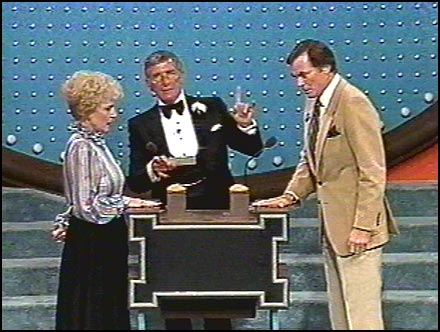
Eric Kandel recently appeared on The Bat Segundo Show #452. He is most recently the author of The Age of Insight and was the 2000 recipient of the Nobel Prize in Physiology or Medicine.

Condition of Mr. Segundo: Checking his brain in for artistic purposes.

Author: Eric Kandel

Subjects Discussed: The interdisciplinary possibilities in Vienna 1900, Gustav Klimt, Berta Zuckerkandl, how Rokitansky’s leadership at the Vienna School of Medicine influenced Freud and numerous others, Kokoschka, Egon Schiele, how the beholder plays into artistic representation, Semir Zeki and the Kanizsa triangle, how the brain distinguishes between artists based on cues, the effect of Klimt’s Judith I upon the brain, unity between the science and the humanities, Leonardo da Vinci’s reliance upon anatomy, two-directional relationships between art and neuroscience, the region of the brain that is devoted to facial representation, prosopagnosia, autism and empathy, theory of mind, Freud’s “Leonardo da Vinci, A Memory of His Childhood,” Freud and art history, Alois Riegl’s historic and critical innovations, external coherence, the futility of psychoanalyzing an artist when he’s dead, Ernst Gombrich, modern cognitive psychology emerging from Freud, an artist’s biographical details in the relationship between art and neuroscience, Kokoschka’s The Wind’s Fiancée and Schiele’s Death and the Maiden, recruiting different parts of the brain to respond to different emotional states, how the brain responds to exaggeration and hands, faces and the inferotemporal cortex, caricatures and the brain, autism and responding to bodily motion, James-Lange theory, Walter Cannon, Hugo Critchley, how much we presently understand the insula, top-down processing, the universal functions of art, Dennis Dutton’s two views of art (the mind as a blank slate, art as an instinctive evolutionary trait), Arthur Schnitzler’s interior monologues, whether art can be on the same evolutionary level as the opposable thumb, retinal ganglion cells, Stephen W. Kuffler and on-center and off-center neurons, Mach bands, the dalmatian illusion, how the brain uses contrast, Ramachandran and peak shift, gestaltian intake of faces, the symbolic value of Velázquez’s Las Meninas, and when reductionist approaches to science are helpful.

EXCERPT FROM SHOW:

Correspondent: You point out quite early on in this book that there was something about the liberal intellectual spirit in Vienna 1900 that permitted all these fascinating interdisciplinary possibilities. You have the Vienna School of Medicine, which becomes this vital part of culture for Viennese artists and intellectuals. You have Klimt, who’s studying biology informally with Berta Zuckerkandl and he also has these amazing three panels that he does for the University of Vienna. As you point, they are rejected for being too radical, too pornographic, and too ugly. So just to start things off here, and we’ll get into the science in a bit, what specific factors do you feel allowed this golden age of collisional ideas to happen? I mean, from the vantage point of the 21st century, what lessons can neuroscience and biology take away from this really flourishing period?

Kandel: I think what is really so important is, as you pointed out, that there was an interaction between science, literature, and arts that was really unusual. And this began with the School of Medicine, which had great leadership at that time. Under the leadership of a guy called Rokitansky who introduced modern scientific medical practice by developing clinical/pathological correlations to a more systematic way than it had ever been. He felt that when you listened to a patient’s heart and you hear an abnormal sound, you don’t know which valve it’s coming from or exactly what is the disorder of the valve. And so he collaborated with a clinician. And the clinician described the patient’s sounds from the heart and the lungs in great detail. But if the patient died, they collaborated together to do an autopsy on him to figure out exactly what valve was involved and how. And that gave rise to the scientific medicine we now practice. And Rokitansky realized that the truth is often hidden from the surface. And you have to go deep below the surface to get there.

And that is a metaphor that influenced Freud, that influenced Klimt, that influenced all of these people. That surface appearances are misleading. They were also influenced by Darwin and they realized that humans are wonderful creatures, but they involved from simple animal ancestors and we have instinctual drives that we share with other animals. And Freud picked this up — he was sort of the Darwin of the mind — and realized that when human beings interact, they interact through surface appearances. There are a lot of processes that are hidden from them. The unconscious mind, which he really developed in great detail. And these ideas were also picked up by the artists. They were in part influenced by Freud, but in part on their own. So Freud had a very good understanding of many aspects of the human mind, but didn’t understand female sexuality at all. Klimt had a very profound understanding of female sexuality and in his drawings of women, which are absolutely just marvelous, he depicts women having their own independent sexual life, masturbating, pleasuring themselves without the presence of a man, without feeling obligated to look out at the viewer, as if that was the necessary thing for satisfying them. They could have their own fantasy life. And also that eroticism could be fused with aggression, as in a very famous painting of Judith and Holofernes. So he had tremendous insight into the human psychology. This was carried further by Kokoschka and Schiele, two of his disciples if you will. Kokoschka focused this self-analysis on himself. This analysis on himself showed how his own unconscious processes were recruited, realized that he could depict adolescent sexuality. He was the first artist to depict adolescent female nudes, pointed out sexual struggles between really young children. He has a very famous painting of the Stein children. A brother and sister. Both aggressive and erotic components involved in their interaction. And then finally Schiele, who studied himself almost exclusively, using himself as an object for exploring unconscious mental processes. Just an extraordinary period.

Correspondent: Sure. Well, let’s talk about Egon Schiele. His self-portraits in the book, many of which expressed, as you were saying here, this eroticism, this anxiety. In the case of Self-Portrait with Striped Armlets, it depicts him as a fool. He depicts himself as a fool. So his anxiety may very well evoke this fear in the beholder, or the viewer. But there’s a difference between what Schiele experienced and what he chose to express. So it’s possible that he may have exaggerated or distorted.

Kandel: Oh, there’s no question. I mean, I think what he tried to depict is the essential anxiety of modern man. And he depicted this in a lot of artificial ways in order to bring them out. He was very much influenced by Charcot and the postures that people could assume while under hypnosis. And he actually postured in order to convey these emotions. And also he was shocking. He painted himself masturbating in the mirror in order to make clear that no emotion is alien to him. And he’s willing to share that with the beholder.

Correspondent: Well, if a painting is a buffer between the artist and the beholder, how do scientific developments account for what the artist withholds or decides to distort? Or what the beholder might in fact misinterpreted or be tricked into interpreting? There are many illusions in this book too.

Kandeel: This is, of course, true. The sign of a great painting is its ambiguity. It allows you and me to bring different things to bear on it. And depending upon our relative sophistication on a particular subject, or a particular sub-subject, we would interpret it in different ways. So I think this is part of the greatness of art, that it allows different people to bring their own experiences to bear on it in an individualistic way.

Correspondent: The key element in assessing the relationship between art and neuroscience is the beholder. Now Semir Zeki has argued that the Kanizsa triangle, where we see these three…

Kandel: These illusory contours. They’re not there. We make them up. Zeki, of course, one of the pioneers in visual perception, is in an ideal position to point out that the brain is a creativity machine, which art historians in Vienna 1900 began to appreciate. That we don’t reproduce in our head what we see in the outside world. That’s not a detail of reproduction. We construct it. We take it apart. And we build it together again. So the beholder undergoes a creative process that parallels what the artist undergoes. It’s an amazing set of insights.

Correspondent: And that Zeki experiment is one example of the beholder responding to cues. Zeki also discovered in another experiment that no matter what type of art was presented to the subject, the same areas of the prefrontal cortex are going to light up. So if the biology of beauty, as you write, has varied very little over the centuries and also across cultures, my question to you is why are these cues and our biases so universal? I mean, how does the brain distinguish between, say, Klimt and Hopper?

Kandel: Well, it clearly sees different forms. But that does not mean that those two painters can evoke certain common responses. And what you’re seeing is the common responses. There are also distinctive elements between the two. So there’s a loneliness that Hopper depicts that you never see in Klimt.

Correspondent: You are very precise when speculating upon Klimt’s Judith and its effect on the brain. You write that the gold hues, the soft body, and the colors trigger the release of dopamine and that Judith’s sadistic gaze might release norepinephrine. And this demonstrates that art has an effect on neuroscience. But it also seems to imply that this connection is almost a one directional flow. In light of E.O. Wilson’s hope for unity between biology and the humanities, and in consideration of the impact of Freud’s ideas have had on the Viennese Secession, I’m wondering how 21st century neuroscience has an effect on art in the other direction.

Kandel: You mean, how neuroscientists are likely to influence the arts?

Correspondent: Exactly. Anything on the level of how they influenced in Vienna.

Kandel: As you pointed out, it’s very easy to see how art influences science. Neuroscientists consider it as one of the great aspirations of the field to understand how we respond to works of art, how artists and how creativity takes place. What can art historians and artists take away from neuroscience? Well, Leonardo da Vinci spent a lot of time dissecting bodies when he was interested in getting a realistic depiction of human form, of people walking, of just how the various bones go together in order to form the body, and he learned an enormous amount by studying anatomy. So the hope is that as we know more about the biology of creativity, we know more about perception, we will excite artists to think about new art forms that may bring those things out even more effectively. Also, if they learn one of the kinds of stimuli that really turn on different regions of the brain, they might be able to play upon their skills to bring out those things even more. So one would hope this would be a dialogue that would go in both directions and have some impact on art as well.

The Bat Segundo Show #451: Eric Kandel (Download MP3)

This text will be replaced
Remembering Wayne Shannon (1948-2012)

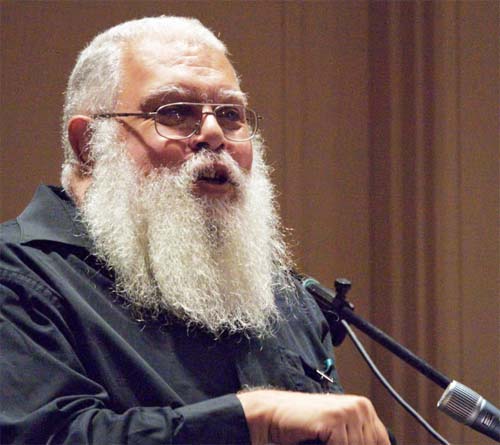
In September 2006, I wrote an essay about a local television commentator by the name of Wayne Shannon. Shannon appeared frequently on KRON 4 Evening News, in the San Francisco Bay Area where I grew up, in the 1980s. I was to learn later that Shannon had an illustrious career, with stints in Philadelphia and Detroit. I wondered why there was no online record of a man who had touched millions, a man who was a little ahead of his time with his acerbic television commentaries. Two decades later, there had been something about Shannon’s approach that had caked its way into my noggin. Was it his common sense arguments? His acid barbs? I remember that he had been so funny that even the guys behind the camera couldn’t suppress their laughter. Yet nobody had thought to memorialize him or write about him or upload video clips so that future people could see what he was all about.

I was able to piece together some information, learning that Shannon had left KRON in 1988 when news director Herb Dudnick became tired of his commentaries and after Wayne had tried to negotiate a new deal unsuccessfully with the appropriate brass. I learned that he had a stint on CNBC. But there was no real luck with the San Francisco Chronicle archives. Richard Grayson was kind enough to check LexisNexis, but that only went back to 1990. Shannon had been supremely popular in the San Francisco Bay Area, but he represented someone who had needlessly slipped through the cracks — the victim of being professionally active during an era that, from the vantage point of the last five years, allows some of its more localized and esoteric figures to slip.

So I put up my post and discovered that I wasn’t the only one searching for Wayne Shannon. There were a few emails and comments. And then Wayne Shannon himself showed up, leaving a comment (partially quoted below):

Hi Edward:

Wayne Shannon here. About once a year I get on the web and type in my name and see what I do/do not get.

And there you were. Thanks for remembering me at all, web failure or not.

My privacy continues to be paramount in my life, so, unfortunately, the email address above no longer exists. Sorry about that, but I’m not inclined to divulge the one I use these days.

An entry that had started from a single question turned into a veritable Wayne Shannon party. Other people named Wayne Shannon showed up, including an Atlanta-based arborist who wrote, “I am still around. You didn’t search hard enough.” But soon more people from Wayne’s life appeared, all of them remembering Wayne fondly. Wayne showed up intermittently. And I opened up another thread for Wayne to talk with his fans.

Wayne and I began corresponding. He graciously offered to send me a DVD featuring some of his clips (or as he called it “hatest grits”), and I said, yes, absolutely, send it my way. I’d love to see it.

My partner and I watched all the clips in one sitting. We couldn’t stop. It was absolutely clear that Wayne Shannon was a television talent, somewhere between consumer crusader and comedian, who was decades ahead of Jon Stewart and Stephen Colbert. He took on auto manufacturers over epic ten part segments (and I would later learn that Michael Moore would pilfer some of Shannon’s comedic approach with Roger & Me). He would assemble homages and parodies to popular movies on the local evening news during a time in which such experimentation was unthinkable. (But in an age in which The Daily Show pours out a steady stream of satirical graphics, this is now commonplace.)

What happened to Wayne Shannon? The biggest question I had was why this man had stopped.

My partner and I did some additional research and made sure that Wayne got a Wikipedia page. We made sure some of the clips found their way onto YouTube.

I asked Wayne if he would appear on The Bat Segundo Show. He agreed. You can listen to our conversation here.

He threw himself into his work, recording commentaries at a flurrious rate to keep what remained of his family together.

He had been through a brutal, an especially brutal divorce.

His kids had been taken away from him. His soon-to-be ex-wife demonstrated no quarter.

He suffered from low self-esteem for most of his life.

I learned all this from the interview. Listening to the conversation now, after hours of wrapping my head around a world without Wayne Shannon, I’m not only condemning myself for my journalistic detachment. I’m wondering if I should have done more. Wayne was crying at the end of the interview because I had dredged up terrible personal revelations. And I quickly put an end to our talk. Who the hell was I to push further? What good was this nostalgia? My efforts to tell the world about Wayne Shannon? Wasn’t the man in enough pain?

But Wayne and I still emailed. Wayne thanked me for “what will likely be my last interview.” He insisted that Wayne-Bo, the personality he had created for his commentaries, was dead.

I sent Wayne information on how to pitch NPR. I tried to persuade him to get on Twitter. I insisted that he needed to write. It was not the time for goodbye, but a time for revival. Surely there were other tapes of Wayne’s segments. We could get the entire video collection up somewhere.

No, Wayne reported back to me. The disc I had was all that remained. “It took me months to pile through boxes and boxes of old tapes,” Wayne wrote back to me. “You got the best of what was available…and some of that — as you have doubtless noticed — is well below par.”

Wayne was needlessly self-deprecatory to the end.

What I didn’t count on was that Wayne’s children would discover him on the Web — thanks to my page. He was able to send all of the information that chronicled and collected his life to his kids, including the “surprisingly accurate bio” on Wikipedia that my partner and I had assembled.

For a long time, he wondered if his children had been figments of his imagination.

For a while, I thought Wayne had been a figment of my imagination.

This was not the case.

* * *

The last time we contacted each other was a few years ago. His health was going. He said he was in pain. But he was cracking jokes to the end. He said that he was packing up his computer. That he was going offline for good. Well, wait just a goddam minute.

The last words he wrote: “Write like you’ve got less time than you think you have. It worked for me.”

I tried emailing Wayne back. The email bounced. I tried the phone number I had. It was disconnected.

I never heard from him again.

And then on May 1, 2012, I learned from his son that he had passed away.

* * *

It started with a question. Basic curiosity. Is there some marginalized figure who isn’t getting his due? Someone who Google can’t pick up?

Sometimes the difference between remembering and forgetting someone is what gives that person a new reason to live.

I miss Wayne Shannon.

[5/3/12 UPDATE: More information here. Wayne appears to have taken his own life. I’m utterly gutted about this.]

[5/4/12 UPDATE: For this unfamiliar with Wayne’s work, I have assembled a video tribute, featuring 21 videos from throughout Shannon’s career.]

[5/6/12 UPDATE: A new Tumblr, Wayne Shannon: What’s It All Mean?, has been started, featuring Shannon’s many commentaries.]