The Bat Segundo Show: David Mitchell III

David Mitchell appeared on The Bat Segundo Show #350. He is most recently the author of The Thousand Autumns of Jacob de Zoet. He previously appeared on The Bat Segundo Show #1 — the very program that started it all — along with a two-part podcast from 2006 (Show #54 and Show #55).

Condition of Mr. Segundo: Annoyed by hotel security.

Author: David Mitchell

Subjects Discussed: [List forthcoming]

EXCERPT FROM SHOW:

Mitchell: I think of words as vehicles that convey what is in my imagination into someone else’s. And we’re sort of in a dialogue. Because they don’t just replicate what’s in the imagination. They can alter it. You can mistype and you get a word that actually can be better than the one you meant. Words can feed back and suggest to the imagination, “Well, would it be neater if you imagine this instead?” Language itself is a kind of a writing partner, separate to the writer, who is deploying the language. I think. I think this is true. Has that answered your question?

Correspondent: It sort of does. Actually, there’s one thing I wanted to ask you and that is with Orito. You investigate the flashback of her sexual assault. Yet in the shrine, we don’t really see the true horror of what’s going on. I mean, granted it’s from Orito’s perspective. But I’m wondering why you didn’t really go into what was happening. I mean, she could have observed the engifting. I mean, it sounds horrific in terms of a “what is not seen” standpoint. To use a cinematic idea. But I’m wondering why you didn’t go full-borne. Or if there was a draft where you did in fact go into that dark territory and it proved just too disturbing? I don’t know.

Mitchell: I didn’t know how to do a sex scene that involved engiftment for it to not stink of misogyny. And as a male writer, that’s even worse. You know, in blunt terms, if you can ever hear a writer jerking off as he’s writing, then that’s it. Then the book’s dead. That’s a crude thing to have said.

Correspondent: You can say whatever crude things you like here.

Mitchell: But it’s what I meant. And you kind of know what I mean.

Correspondent: Yeah, I do. But on the other hand, you are dealing with an age from centuries ago where it was in fact a very misogynistic atmosphere.

Mitchell: Oh certainly. Certainly!

Correspondent: You certainly get a lot of that in the book. But I’m just curious why. I mean, don’t we have to really look at these terrible dark feelings squarely in the face in order to really get at the truth?

Mitchell: If it’s happening now — at a place about a quarter of a mile from the Helmsley Hotel that we’ve just been kicked out of in downtown New York, and it’s a social wrong, and women have been trafficked from godforsaken parts of the world and are being exploited like this — dead right. Shine cold hard truth or truth of light onto it. Please. It’s got to be stopped.

This is fiction. Two hundred years ago. And it hasn’t got that same imperative. That wrong, in this day and age, does not exist to be righted. If there’s an echo of Dejima, which is also a place that no longer exists, it’s a novelist’s requisite. That’s what the shrine on Mount Shiranui is. And for me to be offering the scenes — sort of on camera as opposed to off stage, where such physical exploitation is taking place — I think would have gone over a kind of writerly ethical mark in the sand. Which I chose not to go over.

Correspondent: What would that ethical mark in the sand be for you? I mean, it seems to me that other people — like Brian Evenson, who comes to mind — will go across that mark. And by doing so, really risk the idea of being impugned as a misogynist. Even though there is no misogyny in their particular intent. I’m wondering if it’s an overstated concern perhaps on your part. Or whether this is just one of those lines in the sand that you will possibly cross in the future or some capacity. Staring some really terrible truth in the face like that. I mean, you do. Don’t get me wrong. But this is an interesting question.

Mitchell: If it’s a real terrible truth, it has to be stared at the face. If it’s an unreal, made up, quasi-historical fictitious terrible truth, then to be describing institutionalized rape on the page in hard porn vocabulary terms, I feel that it sounds like me jerking off into my laptop. And all of a sudden, 98% of my readers have left the building. And I probably have gone with them, had I been a reader of the book.

Correspondent: Would you call something like Bret Easton Ellis’s American Psycho jerking off?

Mitchell: Firstly, I can’t say what I’ll be writing in the future. I don’t know. Secondly, to go back to the question that you’ve — well, two questions ago and actually one question ago as well. I don’t begin to sit in judgment on other writers who handle this, who make this call in a different way. And I’ve read that book. And it works very well. It’s distressing and awful and upsetting. And it works very well. And good luck to him really. But here in my book, in The Thousand Autumns of Jacob de Zoet, it felt wrong. And I’ve had a really blessed life. But I’ve also had enough hurt and pain to know it’s real stuff. And it’s not to be toyed around with just because, “Hey, I’m going somewhere no one else has gone before.” No. You have to treat your own female characters with respect as a male writer. Why I’ll stop being afraid to show the moral hypocrisies going on and the way that these things are justified quite plausibly, quite kindly, by the men who are conducting this kind of farm — that I’m not afraid of at all. Why would I be? But the language that they use. Just like a term like “ethnic cleansing.” These soft little euphemisms when reality is too horrific to be true. What gives? What bends? There’s actually language used to describe it. And these euphemisms. Rendering. Waterboarding. They sound quite pleasant. They sound quite Beach Boy-esque, don’t they? Always watch out when you hear words like that. Because it means reality is too horrific for that spade to be called a spade. Now this kind of thing, I really have to explore in the book. And I do it. And that’s great. But the thing itself that is being euphemized about — this farming of newborn children for purposes I’m not going to talk about, because I don’t want to spoil the book for anyone who hasn’t read it — it’s crucial that I don’t wobble my fingers in that gore in a sort of gratifying, self-regarding, “Look how brave I’m being” kind of a way.

Correspondent: I bring that up because it does resemble the farm that’s in the midsection of Cloud Atlas.

Mitchell: Yeah, it does. Doesn’t it? I hadn’t thought of that. So it does.

Correspondent: And you seem to be really concerned with the idea of slavery. Particularly in the first two parts of the book. And this is why I’m convinced that what we’re talking about here is an interesting fusion between these moral hypocrisies and, of course, the narrative steam engine. At the end, we’ve got the clearly influenced Patrick O’Brian. Which is great and all. But what I’m wondering is: Can you really pursue these dark and dangerous and really heavy topics that involve serious exploitation? I mean, I haven’t even brought up the slave chapter that was from the perspective of Weh. The only time the book slips into the first person. This is also interesting to this question. Can you really explore dark terrain like this and stop short of the mark? That’s the question. Is this something you’re still figuring out?

Mitchell: It is. And it’s an ongoing debate I have with myself. If you feel the book works, then I can and one can. If you feel the book doesn’t work, then perhaps one of the reasons it doesn’t work is because it can’t be done. You do have to slip into — not sexual porn, but a kind of pornography of violence. Maybe you do. I can’t judge my own books. I’ve no idea if they work or not. I never do. Never do.

The Bat Segundo Show #350: David Mitchell III (Download MP3)
This text will be replaced

The Bat Segundo Show: Vincent Cassel & Rachel Shukert II

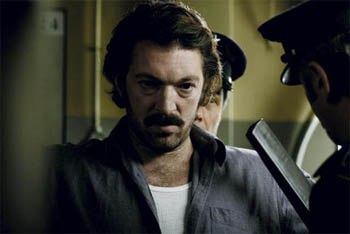
Vincent Cassel and Rachel Shukert both appeared on The Bat Segundo Show #351. Mr. Cassel stars in Mesrine: Killer Instinct, which opens in limited release on August 27, 2010, followed by Mesrine: Public Enemy No. 1 on September 3, 2010. Ms. Shukert is most recently the author of Everything is Going to Be Just Great and previously appeared on Show #217. (The true Shukert completist can also listen to Ms. Shukert on Show #173, where she appears in a group discussion on sex writing.)

Condition of Mr. Segundo: Dodging persuasive serial killers and angry Swiss listeners.

Guests: Vincent Cassel and Rachel Shukert

Subjects Discussed: [List forthcoming]

EXCERPTS FROM SHOW:

Correspodnent: Does movement offer a more creative place to establish a character? More so than the backstory, research, or anything?

Cassel: Of course it does. I mean, look, you walk down the street. You see somebody that you’ve never met. And you see him walking. You just see his back. And you already can say a lot of things about him. Is he drunk? Is he somebody sad? Happy? What kind of energy he has. You know, all that.

Correspondent: I’m glad you mentioned that you use different movement. Because I have noticed that about your performances. I mean, Mesrine and your role in Irreversible are two completely different movements. What do you do to prevent yourself from repeating a particular gait? Or a particular walk? Or a particular way of entering a room? Or a way of inhabiting an atmosphere or what not? Do you worry about this? Repeating yourself for each character?

Cassel: No, of course. I mean, I think it’s important that you not do twice the same. But the main reason is that otherwise I get bored. So what I do is that — I’m very instinctive, I have to say. It’s not really something I think of in a very precise way. But I can feel if it’s something — actually sometimes, I start a scene and I have this feeling of deja vu. And sometimes I don’t really understand where it comes from. But that’s enough for me to just [snap] switch to something else and try something else on the moment, and then think about it. Afterwards, I understand. “Oh yeah. I did this on that scene from that movie.” But at the time, on the moment, I don’t really analyze. It’s just a question of feeling. Like most of acting is really.

Correspondent: Have you ever had a situation where an entire scene needed to be altered because you were physically adopting some cliche that you couldn’t quite identify? But it just didn’t feel right.

Cassel: Very much so. Especially in a movie like Mesrine. Because I’m so close to Jean-François Richet, the director. We were literally: get on the set in the morning. We would try. And suddenly something is wrong. Let’s change everything. Because I think acting and moviemaking in general — maybe more for an actor than for a director — it has to be organic. Whatever that word means. You don’t have too much time to think on a movie. It’s very much about the acting and being involved physically in what you do. That’s the only way to see if it’s real or not really. So, yes, you try things. It’s about trying and finding solutions.

* * *

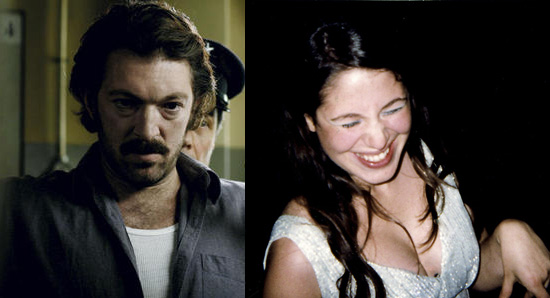
Correspondent: You note of [your future husband] Ben that, as you watched him calmly rub soap into his hands by the communal sink, you realized that you had known all along that you would see him again. I’m wondering what it is about hand hygiene that serves as your personal madeleine.


Shukert: (laughs) I don’t know. I remember that moment. It was very calm. And he didn’t seem surprised to see me. And I had been thinking about him and having this sense that we would bump into each other again. I think it was seeing him doing something that was very mundane. We were at home together. Even like moments now. It felt almost as if we had skipped in time and we were standing in our own bathroom while he was brushing his teeth and I was trying to put my makeup on. Do you know what I mean? It felt very familiar in that sense. It’s sort of an instance of fact seeing somebody washing themselves in some way or grooming.

Correspondent: So really any guy could have come along, if they had done any remotely regular gesture at that point. They could have swept you off your feet!

Shukert: I don’t know. I was definitely in a different place. (laughs)

Correspondent: The title Everything is Going to Be Great comes from a sentiment expressed by Pete — a guy with a girlfriend who you got involved with and who had a problem of hitting on other women in restaurants. Including you. You became involved with him, justified your involvement by noting a Dutch study where a woman’s neural activity at the moment of climax is equal to that of someone in a vegetative state. I must go ahead and ask. Surely hindsight offers the basis of 20/20. Lust may indeed make us do stupid things. But there’s often another reason why we’re driven to the irrational. So I’m wondering why you’re content to throw away this particular introspection.

Shukert: But I feel that it’s really describing that moment more. I feel like later, in the exploration of that relationship, other reasons come to light. The fact that we were both — and I feel that this is there in the book — that sort of explains why I couldn’t slap him across the face in that moment. Do you know what I mean? But as far as getting involved with him later, we were both kind of lost. We were both adrift. I was, at the time, really lonely. And things were not working out the way that they were supposed to. I think I mentioned how he suddenly gauged escape to this adventure that he was supposed to be having. He made it feel like there was a point, that I was here to fall in love and have this incredible adventure. And it turned it into a narrative. It turned it into a story, as opposed to this aimless time-waster. And I feel that if I had been here, if I had been on my home turf, I don’t think that we would have gotten involved. I feel that being abroad, you are off your center of balance. Away from the practical things that you really think about. You’re removed from all of that. And there were so many things I didn’t have to deal with.

The Bat Segundo Show #351: Vincent Cassel & Rachel Shukert II (Download MP3)

This text will be replaced

Review: The Expendables (2010)

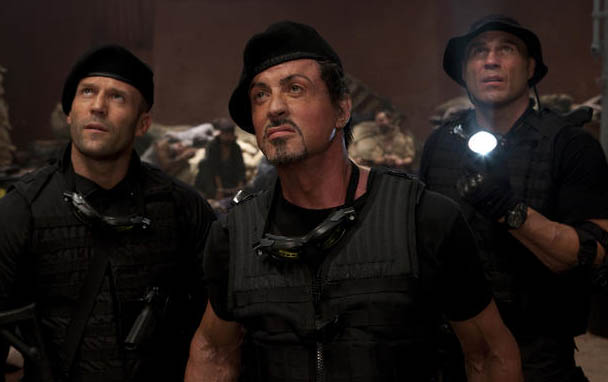
On Wednesday night, there were two press screening options in New York. The dichotomous choice fell along gender lines. One involved three verbs slammed together in the title and starred Julia Roberts. I had the feeling that it would anger me. The other one involved an aging action star who was still inexplicably given millions of dollars to make movies. Presumably his movies had made money or he was highly persuasive. Since I was too lazy and too busy and too hazy to decide, I naturally went with the choice carefully marketed to appeal to the bulge I was born with, that mighty chorizo contained within my boxers. But because I am committed to the truth, I am sorry to report that I could not summon up an erection during the entirety of The Expendables. I have failed my fellow men. Either that or I have an independent mind.

It’s quite possible that I was distracted by the fact that the 65-year-old Kurt Loder (a man who has, rather sadly, pretended to be young for half his life) was sitting nearby. Loder was there watching (reporting for MTV?) a movie co-written and directed by a 64-year-old action star (also starring) who was trying to recapture his former glory. The irony had not escaped me. It’s quite possible that I was distracted by the rather cheesy-looking CGI dismemberment — a stylistic tic that Stallone had carried over from his last film, Rambo in Denial: Death to the AARP.

But the truth is that I had hoped for more masculinity. More style. More the orphaned action movie I had grown up watching. I expected fading action stars to shoot hard bullets into silly supporting characters and demonstrate their right to cinematic existence by channeling some entirely unforeseen element from a hackneyed script. Dolph Lundgren, for example, redeeming himself for being forced to appear in Universal Soldier: Regeneration. In The Expendables, Lundgren does have a great moment when he stomps a man’s head, the bootprint still visible on his dead opponent’s face, with Lundgren simply replying, “Insect.” But for the most part, Lundgren’s character is fairly useless to the team and negligible to the movie. Yes, there’s a minor scene in which Stallone meets up with Bruce Willis and Arnold Schwarzenegger. But the scene is so poorly written and pointless that it feels more like a contractually obligated Planet Hollywood commercial filmed fifteen years too late.

I expected men to ride highly efficient killing machines and display an expertise in weapons and destroy mighty topographies in five minutes. But what has Stallone done with The Expendables? Well, he (with fellow Expendable Jason Statham) sets a pier on fire after spilling two lines of fuel from an airplane and igniting the charge. Is that really manhood? Not in my book, if the lessons I learned from VHS are anything to go by. A real man kills twenty men with his bare hands or, if he must, uses weapons with style. And he does it on the ground. Stallone and Statham have to do it from an aircraft. That’s not manhood. That’s cowardice.

Statham does, however, have a rather hilarious moment that pretty much sums up what this film is: namely, a big-budget Golan-Globus homage. Statham, seeing that his former girlfriend has been given a shiner by the man she’s now with (this movie, needless to say, isn’t kind to women: one even gets waterboarded), tracks down the abusive man at a basketball game. He punches the man repeatedly in the face, grabs the basketball, kills it with a knife, and then says, “Next time I’ll deflate all your balls,” while laying on top of him with the blade. And it’s silly juxtapositions like this keep The Expendables a somewhat fun diversion for anyone who once raided the action movie section at a 1980s video store. But for some inexplicable reason, The Expendables doesn’t quite have the courage to go over-the-top. A car chase sequence that should be either silly or preposterously derivative, featuring Jet Li shooting a machine gun in the trunk of a truck, is merely ho-hum. The conclusive hacienda battle wishes to mimic Commando‘s gloriously violent finale. But in Stallone’s hands, it just feels perfunctory.

And let’s face the hard truth. I don’t hate Stallone. But as a director, Stallone isn’t nearly as interesting as Mark L. Lester or the late George P. Cosmatos. What makes a film like Cobra (starring Stallone, directed by Cosmatos) unintentionally entertaining is the bizarre backlighting when the cult is practicing. Yes, it’s a failed artistic choice. But it is a choice. And you have to give Cosmatos credit for trying something different. (Same goes for the exploding soldier near the end of Rambo: First Blood Part II. No, it doesn’t work. But why on earth does Cosmatos bother to build up the tension when this soldier can’t even shoot straight? If you’re anything like me, you’re left wondering about Cosmatos’s strange artistic decisions for years.) Even Lester’s Showdown in Little Tokyo (which shouldn’t be nearly as entertaining as it is) managed to get several funny moments from Dolph Lundgren, an actor who is hardly known for his range. Indeed, with Lundgren so thoroughly wasted in The Expendables, one wishes that Stallone would have done the gentlemanly thing, getting Lester some much-needed work (that is, if Lester’s presently scattershot credits on the IMDB are any indication).

Within these mostly forgotten action movies from two to three decades ago (and not just the ones made by Cannon), there are failed yet interesting efforts to create cinema. There are filmmakers attempting to exert voices, to offer personalities. The guys making these movies are truly having a ball, even when they are making disastrous movies. And what makes The Expendables so frustrating at times is that it wishes to honor these films without putting itself on the line.

The only actor in The Expendables who seems to understand what’s going on is Eric Roberts. This shouldn’t be a surprise, seeing as how Roberts cut his teeth on silly movies like Best of the Best and Blood Red and he is cast (thank you, Stallone!) as the bad guy. Roberts is one of the few working actors whose scenery-chewing appetite only grows with age. That’s intended as a compliment. I’m convinced that if you threw Eric Roberts into the middle of a soporific art house movie, he’d figure out a way to get the pretentious actors to up their game and he’d certainly get the audience awake. If you give the man an apple to smell, as Stallone is good enough to do, he will find a melodramatic way to signify its presence. In The Expendables, Roberts’s character enters the movie shooting a man and uttering the line, “Now I can see inside of him. And I see lies.” Preposterous, right? Absolutely. In the hands of any other actor, this moment would be disastrous. But Roberts manages to sell it. Because Roberts is smart enough to understand that contemporary cinema presently has a paucity of melodramatic villains — which, incidentally enough, was the action movie’s (circa 1989) bread and butter.

I can’t say that I hated The Expendables. But if you really want a lively action flick, you’re better off with Mesrine: Killer Instinct (coming out on August 27th), a must-see gangster movie with a fantastic performance by Vincent Cassel which I’m hoping to find time to write about. If anything, The Expendables has caused me to unintentionally come out as a cheesy action movie fan. Well, so be it. But when a movie causes you to remember its predecessors and its influences, is it really a movie to remember?

Chris Abani Censored by Florida School District

On Friday afternoon, JAX-4 TV reported that Chris Abani’s Graceland — a book that had been placed on a 10th grade summer reading list — was pulled because of a parent objecting to its content. The mother, who contacted JAX-4 anonymously by email, objected to the following passage:

Then, whistling softly under his breath, he began rubbing a cool white paste all over Elvis’s body. It felt good, soothing almost. Jerome smiled as he noted the expression. Still smiling, he took Elvis’s penis in one hand and gently smoothed the paste over it, working it up and down. Elvis felt himself swell. Jerome laughed and massaged Elvis’s penis faster and faster. It was not long before Elvis shuddered and shot semen all over his torturer’s hand.

Of course, if you think that Abani’s passage is hot stuff, consider how tame it is in comparison to the language found within Deuteronomy 23 — which comes from a book that I understand is quite widely available in Jacksonville, Florida:

He that is wounded in the stones, or hath his privy member cut off, shall not enter into the congregation of the Lord. A bastard shall not enter into the congregation of the Lord; even to his tenth generation shall he not enter into the congregation of the Lord.

So castration and violent warnings are okay for kids. But the consensus from this Florida handful is that the Abanai passage isn’t. It remains unclear how many parents objected. But it’s worth pointing out that the book is being banned at the high school sophomore level, not the elementary school level.

JAX-4 reported that the Mandarin High principal agreed with the complaint and proceeded to pull the book from the reading list.

What’s extremely curious is that another Mandarin High summer reading list for this year includes Chimamanda Adichie’s Purple Hibiscus for tenth-grade students. And if Jacksonville parents are truly frightened by the prospect of high school students reading about sexuality, Adichie’s novel features the following passage:

“Obiora says you must be having sex, or something close to sex, with Father Amadi. We have never seen Father Amadi look so bright-eyed.” Amaka was laughing.

I did not know whether or not she was serious. I did not want to dwell on how strange it felt discussing whether or not I had had sex with Father Amadi.

So it seems quite hypocritical to remove one book for sexual description while keeping another openly available. Yet this is precisely the tactic that Duval County Public Schools has taken, fitting in with its prohibitive history.

The Chris Abani ban is hardly the first time that DCPS has removed or attempted to remove books from school libraries. In 1992, J.D. Salinger’s Catcher in the Rye was removed from DCPS libraries for “lurid passages about sex.” Additionally, in 1992, Shel Silverstein’s A Light in the Attic was restricted to students who had parental permission to read the book. The cause? Because the book featured a caricature of a bare-bottomed individual stung by a bee. And according to the book Banned in the USA, in 1997, the Reverend Dale Shaw, president of the North Florida Ministerial Alliance, attempted to remove Richard Wright’s Black Boy from libraries, complaining of profanity at a Duval County School Board meeting. “It has historical value,” said Shaw at the time, “but that doesn’t make it right for high school students.”

But what’s the basis for Duval County’s protective approach? How precisely does Abani’s passage offend? Whatever the reason, the authorities in question appear to be just as anonymous as the mother who complained to JAX-4 News. As of Monday afternoon, representatives from DCPS and Mandarin High did not return my telephone calls for comment.

Review: Lebanon (2009)

Back in March, The New York Times published a Michael Kamber essay in which Kamber took The Hurt Locker to task for its “realistic depiction.” While the film went on to garner numerous awards, including the Best Picture Oscar, its apparent inaccuracies were enough to unsettle Kamber and others who had served in combat. Despite The Hurt Locker feeling “realistic” to those who had never set foot into a war zone, the film was a sham for Baghdad vets.

The criticisms against The Hurt Locker are hardly a new development for the war movie. Full Metal Jacket, Flags of Our Fathers, Michael Bay’s Pearl Harbor (no surprise), We Were Soldiers, Glory, 300, and Apocalypse Now — just to name a few — have all been saddled with the “inaccurate” charge, leaving one to wonder the war movie’s purpose. Just how accurate does the narrative experience have to be? We accept the subjective nature of a documentary. Why can’t we do so in a cinematic narrative?

It’s possible that Lebanon, which is photographed primarily from a tank’s viewpoint, works as well as it does primarily because it has the audacity to be subjective from the get-go. Aside from an image of flowers that bookends the film’s beginning and end, Lebanon remains quite resolutely within the interior. I have no idea how accurate writer-director Samuel Maoz’s film is in relation to the 1982 Lebanon War, and I don’t very much care. What matters here most is that Maoz has established a horrific simulacrum from personal combat experience. We feel as confined as he once did. His frequent shots of dripping black fluid, the terrible blur of dead bodies thrown into the interior with cold alacrity, the squeals of men being chained up and tortured in multiple languages, and the tank’s terrifying whines as it attempts to tread across a battlefield while both severely damaged and under attack unsettled my senses. But then I have never served in combat. Is Lebanon meant for people like me? Or must I recuse myself from the question of accuracy because of my inexperience? If so, I would happily join the company of Stephen Crane, who wrote The Red Badge of Courage despite never having observed a battle.

Whether one insists upon accuracy or not, Samuel Maoz’s movie has rather bravely taken on the same perspective that we’re used to “seeing” or “perceiving” a military environment from a first-person shooter’s detached comfort zone. Iis the video game’s detached alternative more faithful or “accurate” to the combat experience? If you’ve ever played Call of Duty or Day of Defeat: Source online, you’ll inevitably encounter a server populated by former or active servicemen. One rarely hears these men complaining about the “accuracy” of a first-person shooter, perhaps because the video game is more participatory (and therefore perceived as less agenda-driven) than the war movie.

Some critics have called Lebanon an “anti-war movie,” but I don’t think this simplistic label does Maoz’s film justice. Yes, it does feature moments that discourages damn near anybody from wishing to participate in war. A gunner is ordered to fire upon a building and hesitates when he realizes that people will die. His pause causes a soldier on his side to die. Every action — the decision to fire or the decision to freeze up — has a mortal consequence. But is that anti-war? Or is that reflective of human behavior?

I would argue that it better fulfills the second question. A war movie works not so much for its “accuracy,” but for its willingness to explore uncomfortable or conflicted feelings. I’ve described Lebanon to some friends as “Das Boot in a tank,” but, in hindsight, this is probably too formulaic a description. For Lebanon is courteous enough to remind us that these flawed soldiers are caught within a mobile prison, and that the jail cell extends to curtailed interaction. One young man asks if a message can be sent to his parents and is denied. Another man thinks he speaks another language, but remains unfamiliar with the dialect of the man he needs to talk with. These crushing moments of isolation offer us some idea of the fortitude it takes to stick through a neverending war stint. Perhaps there will be ferocious discussions among about whether Lebanon does such communication among soldiers justice. Maoz has stated that he wishes to open up a dialogue with this movie and get people talking about vital issues. And if a film (or a filmmaker) is open to such dialogue, the question of “accuracy” is largely irrelevant.