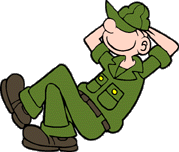
Mort Walker appeared on The Bat Segundo Show #216. Mort Walker is the creator of Beetle Bailey. A volume of the first two years of Beetle Bailey is now out.
Condition of the Show: Observing fifty years of development.
Author: Mort Walker
Subjects Discussed: Walker’s drawing pace, the Beetle Bailey production cycle, filtering through the gags, rejected strips sent to Sweden, Beetle’s early days as a slacker in college, the military as the common experience, Walker’s relationship with the syndicate, the curly hair look of Buzz and Lois, portrait-like illustrations of women, early attention to background, the shrinking space of newspaper comics, Berkeley Breathed and Bill Watterson’s fights for space, appealing to the greatest number of readers, the development of Sarge’s girth and teeth, Plato as the only other character carryover, covering the eyes of characters, Dik Browne, Beetle’s early square form and perpendicular limbs, Walker as Lt. Fuzz, Lt. Jack Flap, African-American characters in comic strips, being confronted by editors by Ebony, Colin Powell’s approval of Flap, code numbers associated with the comic strip, writing a military-based comic strip without reference to Iraq, General Halftrack’s skirt-chasing and later sensitivity training, the circumstances that will cause Walker to change his strip, why Walker hasn’t included women soldiers, aborted cliffhangers, and characters staying the same in the Beetle Bailey universe.
EXCERPT FROM SHOW:
 Correspondent: Here we have a military strip. But there’s no reference to Iraq. And I wanted to ask you about this kind of balance.
Walker: I try to avoid anything controversial. Because if you do something pro-Bush, fifty percent of your readers are going to get mad, fifty percent of your readers might like it. But I’m after the whole broad spectrum. So I’m really avoid those things.
Correspondent: But to talk about the broader audience, I mean, Bush’s approval rating isn’t exactly the best in the world. It’s under 30%. So you have 70% of the audience if you were to play around with this kind of thing.
Walker: Yeah. Well, anyway, I try not to get too topical or controversial. That’s why I’ve avoided the war pretty much. I don’t mention Iraq very much. Very seldom.
Correspondent: Even though this war has lasted longer than World War II? I mean, doesn’t it seem…?
Walker: But there’s so many people that are angry about it that I’ve got to be really careful about how I treat it. Mostly, I just ignore it. People say, “Well, when is Beetle going to go to Iraq?” I said, “Jesus Christ. I hope never!” You know, I don’t want to send him there because it’s very difficult to deal with. I’m just keeping him in basic training. It’s the common experience that all soldiers have. If I take him out somewhere and specify into some particular kind of work, I’ll lose a lot of my readers there. They won’t be interested or they won’t understand it. But everybody understands basic training. That’s where I keep him.
Correspondent: I mean, you had this similar situation with Jack Flap. That’s why I present this as well. I mean, that didn’t hurt you. In fact, that got Beetle Bailey more attention, you know?
Walker: Yeah, but it was a common experience. Anyway, that hasn’t hurt me.
Listen: Play in new window | Download
 Correspondent: You have this particular rock ‘n’ roll novel dwelling upon Hoboken, as well as Mona Smith, who is this Erica Jong-like figure, who is the mother of Thatcher. But I wanted to ask you about this. Because it’s very fascinating to me. I have the belief that if you write a rock ‘n’ roll novel, there needs to be some additional element. Some additional hook. Because if you dwell too much on rock ‘n’ roll music, well, it’s going to possibly be something of a circlejerk. So I wanted to ask you. Was this a consideration in setting this book in Hoboken? The Hoboken aspect came first? What happened here?
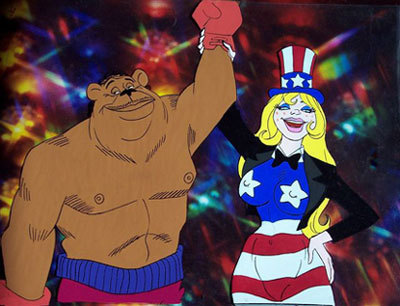 Correspondent: I wanted to ask you about music in your films. It’s certainly important in American Pop. You pilfered from your record collection for that, as well as the “Maybelline” sequence in Heavy Traffic. And there’s “Ah’m a Niggerman” from Coonskin, which you wrote. I’m wondering if you did this because you have an aversion to Carl Stalling-style orchestral music.
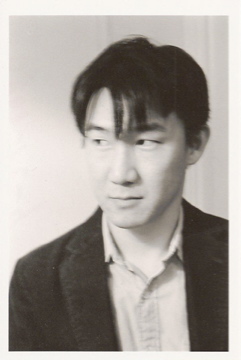 Park: It’s such a pleasure to talk to someone who’s also named Ed.
 Correspondent: I wanted to ask you about “Dictation,” the title story. This was very interesting to me for a number of reasons. Because here you have two writers, Henry James and Joseph Conrad, two secretaries of Henry James and Joseph Conrad, and then on top of that, you have a number of repetitions throughout the story, as if to echo or beckon the typewriter. Like in the very beginning, when you have Henry James describing Almayer’s Folly, you kept saying, “He saw. He saw.” And there’s a number of interesting things you are doing in the syntax of the story that almost echoes the typewriter. So I wanted to ask how this particular stylistic device came about. I know you spend a lot of time on your sentences. So you had to have been at least somewhat aware of this.